On Dissent In The Mainstream Media

Not in Abby Martin's name
Not in Abby Martin’s name


Glenn Greenwald, now writing for The Intercept, makes a very good point about journalistic integrity in the context of the ongoing Russian invasion and occupation of Crimea.

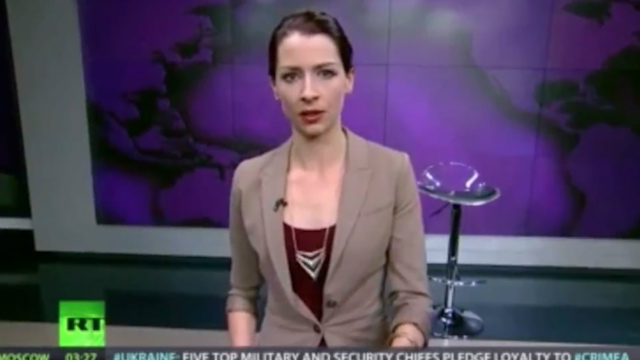
In the midst of this developing story, one of the anchors at Russia Today, the Kremlin-funded English-language news channel presenting a Russian perspective on the world, made news of her own by denouncing Russia’s actions at the end of her segment. The clip is available to view here:


The money quote is this:

I can’t stress enough how strongly I am against any state intervention in a sovereign nation’s affairs. What Russia did is wrong. I admittedly don’t know as much as I should about Ukraine’s history or the cultural dynamics of the region, but what I do know is that military intervention is never the answer. And I will not sit here and apologise or defend military aggression.

Greenwald wonders aloud how so many of those voices condemning Russia for invading a sovereign country can do so with a straight face when they themselves agitated for, or were apologists for the US-led war in Iraq:

Enthusiastic supporters of a wide range of other U.S. interventions in sovereign states, both past and present and in and out of government, are equally righteous in their newfound contempt for invasions – when done by Russia. Secretary of State John Kerry – who stood on the Senate floor in 2002 and voted to authorize the invasion of Iraq because “Saddam Hussein [is] sitting in Baghdad with an arsenal of weapons of mass destruction” and there is “little doubt that Saddam Hussein wants to retain his arsenal of weapons of mass destruction” – told Face the Nation on Sunday: “You just don’t in the 21st Century behave in 19th Century fashion by invading another country on completely trumped-up pretext.” The supremely sycophantic Face the Nation host Bob Schieffer – as he demanded to know how Russia would be punished – never once bothered Kerry (or his other Iraq-war-advocating guests, including Defense Secretary Chuck Hagel and Washington Post columnist David Ignatius) by asking about any of that unpleasantness (is it hard at all for you to sermonize against invasions of sovereign countries given, you know, how often you yourself support them?)

This is just as true for the press as it is for television talking heads or armchair generals. As Greenwald shows by quoting the example of CBS’s Bob Schieffer, the implicit assumption in many questions asked by television news hosts in America (and indeed in Britain) is that the invasion is unprecedented, wrong and contrary to international law. And while the invasion is indeed all of these things, this same level of proper journalistic scepticism was mysteriously missing when we were the aggressor.

Indeed, those few brave American media personalities who did speak out against the impending invasion of Iraq, and who dared to question the legitimacy of the Bush Administration’s every unconstitutional action, soon found themselves banished to the western journalistic equivalent of Siberia. Well known journalists or personalities such as MSNBC’s Phil Donohue and Ashleigh Banfield certainly felt the consequences, as Greenwald points out in an addendum to his piece:

Both Donahue and Arnett were fired because of their opposition to the U.S. war. Arnett was fired instantly by NBC after he made critical comments about the war effort on Iraqi television, while a memo from MSNBC executives made clear they were firing Donahue despite his show being the network’s highest-rated program because he would be “a difficult public face for NBC in a time of war”.

During that same time, MSNBC’s rising star Ashleigh Banfield was demoted and then fired after she delivered a stinging rebuke of misleading pro-war TV coverage by U.S. outlets, while Jessica Yellin, at MSNBC during the time of the war, admitted in 2008 that “the press corps was under enormous pressure from corporate executives, frankly, to make sure that this was a war that was presented in a way that was consistent with the patriotic fever in the nation and the president’s high approval ratings” and that executives would change stories to make them more pro-war.

While it is too soon to determine the medium-longer term impact of Abby Martin’s words on her career at RT, the contrast between this act of journalistic independence on a news channel so close to the Kremlin and the recent history of the American (and British) news media is sobering and discomforting. Though the post-PATRIOT Act consensus is finally starting to fray given the recent NSA scandals and revelations, at a crucial period in American history significant dissent or journalistic scepticism was almost entirely absent from the domestic press.

That is not to say that press freedom in America/Britain and Russia are in any way comparable – despite a worrying background noise of increasing official encroachments, regulation and intimidation, the press is far more free in America than in Russia, and any sane journalist would wish to operate in the former climate rather than the latter.

But while infinitely preferable to homogenised Russian state propaganda, western media has shown itself capable of being bullied into self-censorship on occasions, be it the panicked urge to appear ‘acceptably’ pro-war and support the policies of George W. Bush in 2003 or the far more recent insidious suggestion by David Gregory in 2013 that journalists who report on leaked classified information should consider themselves co-conspirators.

As always, before climbing atop the highest parapet and waving the Stars and Stripes or the Union Jack, we would do well to re-examine our own recent, tarnished history – be it our history of military intervention abroad or journalistic coverage of those adventures.

Doing so will not make Russia’s egregious actions in Crimea any more palatable or legitimate, but it will at least allow us to look Russia in the eye as we denounce them.

Who Really Wants A Free Press?

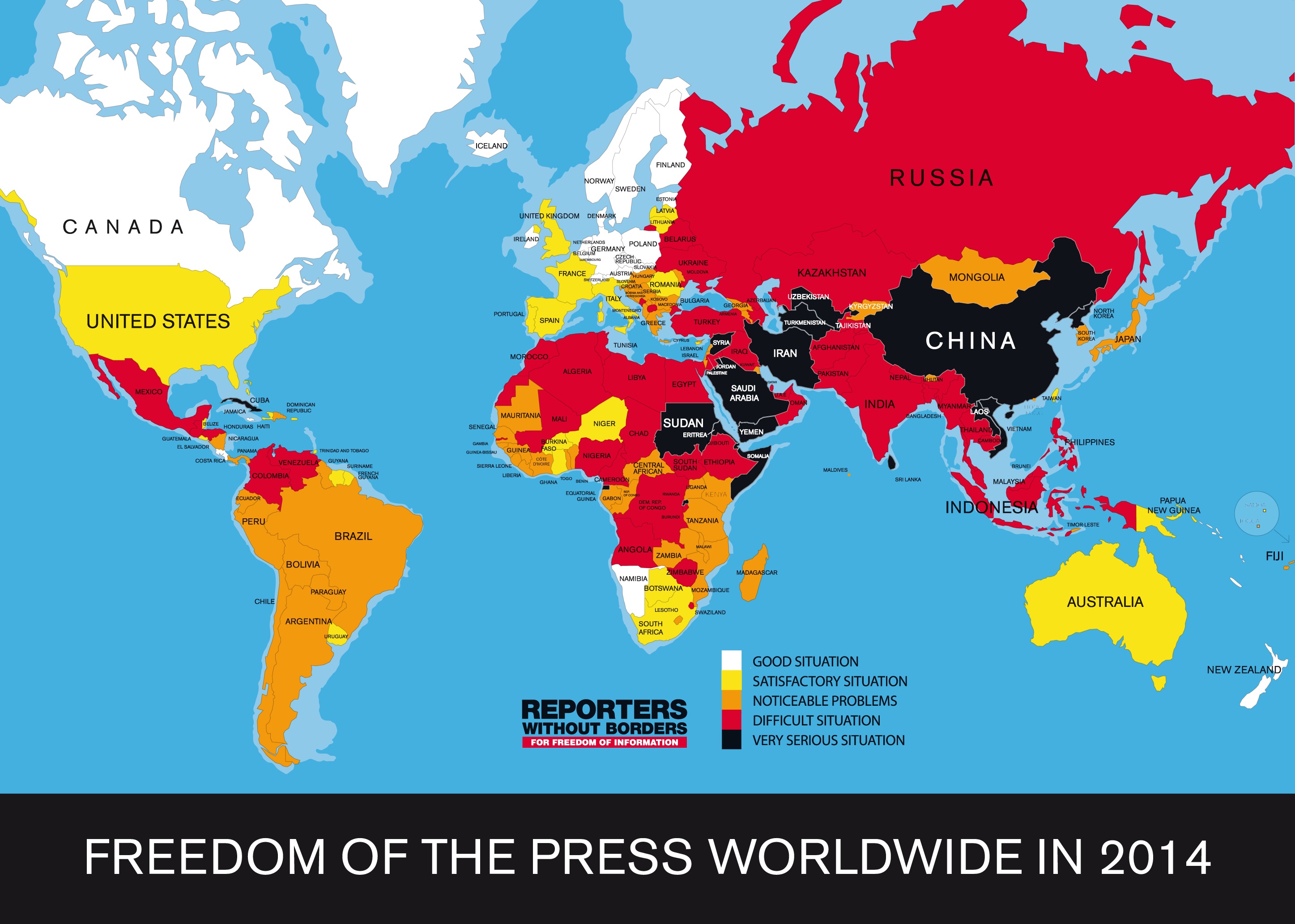
MapRSF


The United Kingdom has fallen from 29th to 33rd in the world in the World Press Freedoms Index 2014.

The report, compiled annually by Reporters Without Borders (RSF) is scrupulous in methodology and incorporates both qualitative and quantitative data. And for a country like Britain, which likes nothing more than to strut around the world proclaiming its comparative virtues, it makes for some dismal reading.

RSF’s summary of Britain is dominated by the British government’s chilling and bullying treatment of the Guardian newspaper as it sought to suppress the publication of information based on the NSA leaks by Edward Snowden, as well as the fallout from the Leveson Enquiry into the press behaviour and the prospect for further stultifying regulation of the industry:

In the United Kingdom, the government sent officials to The Guardian’s basement to supervise destruction of the newspaper’s computer hard disks containing information from whistleblower Edward Snowden about the practices of GCHQ, Britain’s signals intelligence agency. Shortly thereafter, the partner of Glenn Greenwald, the former Guardian star reporter who had worked closely with Snowden, was held at Heathrow Airport for nine hours under the Terrorism Act. By identifying journalism with terrorism with such disturbing ease, the UK authorities are following one of the most widespread practices of authoritarian regimes. Against this backdrop, civil society could only be alarmed by a Royal Charter for regulating the press. Adopted in response to the outcry about the News of the World tabloid’s scandalous phone hacking, its impact on freedom of information in the UK will be assessed in the next index.

Britain isn’t always called out by name, but there can be little doubt which European country was the intended target of this particularly barbed comment:

These developments showed that, while freedom of information has an excellent legal framework and is exercised in a relatively satisfactory manner overall in the European Union, it is put to a severe test in some member countries including those that most pride themselves on respecting civil liberties.

How true this is. Britain has long been (and has long considered itself) a stalwart defender of free speech, but the recent thuggish attempt to use anti-terrorism laws to detain a relative of a journalist and to threaten a national newspaper with closure unless it destroyed information which had the potential to embarrass the government are more worthy of Vladimir Putin’s Russia than the land of Magna Carta.

The New York Times, on the other hand, looks at the same report and seems to take succour from it, which is very surprising given the fact that their journalists have worked so closely with their beleaguered colleagues at The Guardian.

Their editorial board is celebrating the 50th anniversary of the landmark New York Times vs. Sullivan case, which set the bar for winning libel or defamation claims much higher than in Europe and thus created a bulwark protecting press freedom in the United States. This excerpt from the majority opinion in that case should be mandatory reading for all British politicians and those involved in public life, who are often all too keen to clamp down on free speech at the first sign of discord:

The Supreme Court voted unanimously to overturn that verdict. The country’s founders believed, Justice William Brennan Jr. wrote, quoting an earlier decision, “that public discussion is a political duty, and that this should be a fundamental principle of the American government.” Such discussion, he added, must be “uninhibited, robust, and wide-open,” and “may well include vehement, caustic, and sometimes unpleasantly sharp attacks on government and public officials.”

While the New York Times is absolutely right to recall and celebrate this landmark victory – libel laws in many other countries, especially Britain, are far too plaintiff-friendly – they seem all too willing to ignore the negative actions that have chipped away at this victory in the intervening half century, the various acts of craven self-censorship or collusion with imperial government overreach or the undermining of factfinding by the ongoing war on whistleblowers.

This selective amnesia leads to the following self-congratulatory pronouncement by the Times editorial board:

Still, American press freedoms rank among the broadest in the world. Citizens and media organizations in countries from China to India to Britain do not enjoy the same protections. In many parts of the world, journalists are censored, harassed, imprisoned and worse, simply for doing their jobs and challenging or criticizing government officials. In this area of the law, at least, the United States remains a laudable example.

The only problem with this statement? The United States ranks thirteen places behind the United Kingdom, at 46th in the world.

Fortunately for the New York Times and the reputation of the American press, the RSF world press freedom index does not take quality of journalism into account, only the ability of the journalist to practice their trade freely – otherwise they could have found themselves docked another few positions for that howler of an America-must-be-best presumption.

The truth is that neither Britain or America have anything to be proud of faced with this latest report. In an ideal world, David Cameron and Barack Obama would be held to account and hauled over the coals for presiding over such a poor performance. A backbench MP looking to bolster his or her civil liberties credentials could do worse than to ask the prime minister to defend or account for his government’s performance on press freedom at Prime Minister’s Questions this coming Wednesday.

But regrettably, a place in the mid-low 30s ranking is exactly where David Cameron, Barack Obama and many of those in power in Britain and America want their respective countries to sit. It allows for a press that is boisterous and noisy in all of the areas that don’t really matter (and so showing every outward appearance of being free), but that meekly tows the line when it comes to critical issues such as national security, civil liberties and holding those in power to account for their actions.

We in Britain or America may not think of countries such as Finland, Norway, Luxembourg or Liechtenstein as shining role models to emulate, if indeed we ever think about them at all. But in some key aspects, it is they who now carry the torch for freedom of speech and the free press, not the traditional Anglo-American partnership who held it aloft so dutifully for so long.

The Morning After In Arizona

Andrew Sullivan’s reflections on the vetoing of SB1062 by the Arizona Governor, Jan Brewer. We are in agreement, with one significant exception – Andrew sees no issue with discrimination against gays (or any other minority or class of individuals) in the private realm, only the public realm where government is an actor. While I admire his magnanimity in being willing to shrug off the hate and intolerance of certain fundamentalists, I cannot agree that this is the right approach. It is all very well to favour “maximal liberty”, but taken to its (logical, not extreme) conclusion, this would open the door for arbitrary refusal of service to anyone on the grounds of anything masquerading as religious conscience.

Andrew Sullivan's avatarThe Dish

[Re-posted from earlier today]

Here’s the money quote from Jan Brewer’s veto statement last night:

Senate Bill 1062 does not address a specific and present concern related to religious liberty in Arizona. I have not heard of one example in Arizona where a business owner’s religious liberty has been violated … Religious liberty is a core American and Arizona value, so is non-discrimination.

As I’ve mulled this over and over, I have a few straggling thoughts. Against the bill: it had two terrible features. The first was the breadth of the religious liberty invoked. The real innovation in Arizona was the extension of religious liberty claims against other citizens, rather than against the government itself. That’s a big leap, and trivializes religious liberty in some ways. No individual can coerce, even with a lawsuit, the way the government can. The second is the environment in which this bill was…

View original post 369 more words

Triangulating On Gay Rights

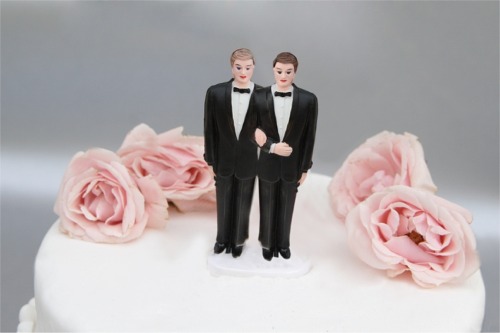
gayweddingcake


A surprising piece today from Andrew Sullivan, in which he distances himself from certain aspects of the opposition to the anti-gay discriminatory legislation currently working its way through the usual-suspect state legislatures.

Sullivan, gradually sensing victory in his long struggle and seeking (perhaps overly so) to be magnanimous in the face of it, writes:

The truth is: we’re winning this argument. We’ve made the compelling moral case that gay citizens should be treated no differently by their government than straight citizens. And the world has shifted dramatically in our direction. Inevitably, many fundamentalist Christians and Orthodox Jews and many Muslims feel threatened and bewildered by such change and feel that it inchoately affects their religious convictions. I think they’re mistaken – but we’re not talking logic here. We’re talking religious conviction. My view is that in a free and live-and-let-live society, we should give them space. As long as our government is not discriminating against us, we should be tolerant of prejudice as long as it does not truly hurt us. And finding another florist may be a bother, and even upsetting, as one reader expressed so well. But we can surely handle it. And should.

I have read and re-read this paragraph multiple times, and this argument both surprises and concerns me. Boiled down to its essence, it is frankly disturbing – in essence, Sullivan is saying that discrimination in the private sector should be allowed and that a blind eye should be turned, and that we only have real cause for concern if gays (or presumably other minorities) face discrimination at the hands of the government.

Sullivan is also willing to play along with the fairly innocuous example of the gay couple approaching a florist to cater their wedding. It may well be the case that such a couple, spurned by one business, will be able to find an alternative provider in their town. But equally, it may not. There may be only one business of its kind in the vicinity, or there may not be the time or money to go on a Nativity-style trek through town trying to find a spare room at the inn.

More seriously, the business in question may be more important than providing flowers for a social occasion. What if it is accounting services? Or social care? A funeral home? Or medicine? Would it be permissible to deny services to gay or lesbian couples in one of these fields? If so, which ones? And what would be the logic behind such a consideration?

Sullivan’s desire to reach out to the viscerally anti-gay hold-outs in society (and if your beliefs prompt you to deny service to someone based on them, they are visceral) comes at the expense of the logic of his own argument. Sullivan remains fully cognisant of the danger of using religious freedom arguments to permit discrimination:

But the wording of the bills in question – from Kansas to Arizona – is a veritable, icy piste for widespread religious discrimination. And that’s for an obvious reason. If legislatures were to craft bills specifically allowing discrimination only in the case of services for weddings for gay couples, as Erickson says he wants, it would seem not only bizarre but obviously unconstitutional – clearly targeting a named minority for legal discrimination. So they had to broaden it, and in broadening it, came careening into their own double standards. Allow a religious exemption for interacting with gays, and you beg the question: why not other types of sinners? If the principle is not violating sincere religious belief, then discriminating against the divorced or those who use contraception would naturally follow.

This awareness only makes Sullivan’s desire to reach an accord with those who want to enshrine discrimination in law all the more bizarre. Sullivan seems to want to have it both ways – to point out the impossibility of the “religious freedom” bills, while also holding out an undeserved olive branch to the fundamentalists and proclaiming his unwillingness to force them to stop discriminating.

Sometimes it is appealing to float serenely above the fray and call for moderation and respect. Most of the time, it is probably the right course of action. But sometimes it is not.

The people currently trying to enshrine anti-gay discrimination into law want nothing more than to hoodwink the public into fretting about an imaginary future where beleaguered mom-and-pop businesses are forced at shotgun to commit acts in violation of their religious beliefs, acts that risk sending them straight to the pits of hell.

They want to recast the ignorant, the hateful and the prejudiced in the role of the plucky underdog hero, humbly attempting to live their simple lives according to their God-fearing values, but being thwarted and dictated to by the arrogant metropolitan elites. This image is sensationalist and false.

And the last thing that these cynical people deserve is the sympathy and respect of Andrew Sullivan or anyone else who has fought so hard to end discrimination.

Stop Building Palaces While The People Suffer

newarkarchdiocese

At a time when the Catholic and Anglican churches on either side of the Atlantic have been parading their advocacy on behalf of the poor and the powerless, they might have bothered to put their own houses in order first. But, once again, through acts of bad timing and breathtaking bad taste, they have shot themselves in the foot.

In the UK, a Conservative MP hit back at the twenty-seven Church of England bishops who signed an open letter condemning the British government’s welfare reforms and labeling them “punitive”. Charlotte Leslie MP rightly pointed out that the church has considerable assets of its own that it could deploy in service of the poor before it becomes necessary to start badgering the government to redistribute more income between private individuals:

They say charity starts at home. Lambeth Palace [the official London residence of the Archbishop of Canterbury] is a rather nice home.

If you are invited to a reception there, you pad up richly carpeted stairs, along corridors of gold-framed paintings, before being treated to quails eggs with a delicate celery salt dip, and freely flowing wine. It’s rather a long way away from the local churches with crumbling roofs, serving damp biscuits and coffee in cracked mugs after the service.

One can’t help but think that this luxurious, and historic Palace might not be put to better use, more in line with the New Testament , if it was rented out to those who would pay dearly for such luxury, and the operation of the Church of England were to decamp to an industrial estate, outside Slough.

Just think of the number of church roofs that could be repaired from the income, and indeed the number of hungry people who could be fed.

The church’s ill-advised foray into campaigning for the Labour Party is encountering much-deserved resistance because the views of twenty-seven relatively coddled bishops with little recent experience of real life are not in tune with the sentiments of the people, and because they displayed a fundamental misunderstanding of the government’s own policy and its application.

Not very impressive from a large faith organisation seeking to influence the public debate.

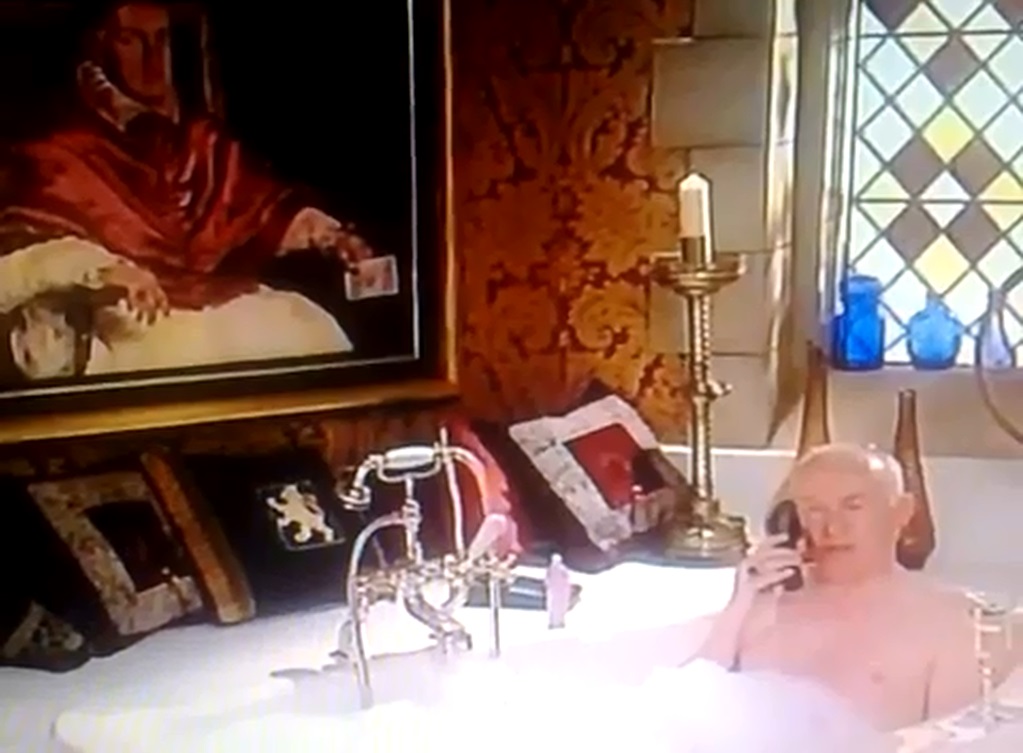
Father Ted's Bishop Brennan - not a role model for the Church leadership
Father Ted’s Bishop Brennan – not a role model for the Church leadership


Meanwhile, the New York Times reports on the attempts by the Archdiocese of Newark to lavish over $500,000 on upgrades to a residence for the bishop – not his primary residence, but his separate vacation home:

John J. Myers, the archbishop of the Newark Archdiocese, comes to this vacation home on many weekends. The 4,500-square-foot home has a handsome amoeba-shaped swimming pool out back. And as he’s 72, and retirement beckons in two years, he has renovations in mind. A small army of workers are framing a 3,000-square-foot addition.

This new wing will have an indoor exercise pool, three fireplaces and an elevator. The Star-Ledger of Newark has noted that the half-million-dollar tab for this wing does not include architects’ fees or furnishings.

The expansion of the bishop’s vacation home will be funded by the sale of other properties owned by the archdiocese, they claim, as though this detail somehow makes the outrage more palatable. It does not. Either the sold buildings served an important purpose for the archdiocese which was suddenly ripped away in order to provide a little more luxury for the bishop, or they were unused and deserved to be sold so that the equity can be released in service of the church’s core mission.

A just reward for a job well done?


Neither is the lucky beneficiary, Archbishop John J. Myers, a particularly lovable figure whose flock would be particularly thrilled to see treated in so generous a way:

So many leaders of the church have served it so badly for so many decades that it’s hard to keep track of their maledictions. Archbishop Myers provides one-stop shopping. He is known to insist on being addressed as “Your Grace.” And his self-regard is matched by his refusal to apologize for more or less anything.

It was revealed last year that a priest seemed to have broken his legally binding agreement with Bergen County prosecutors to never again work unsupervised with children or to minister to them so long as he remained a priest. When next found, he was involved with a youth ministry in the Newark Archdiocese.

Parishioners in Oradell, N.J., also discovered that the archdiocese had allowed a priest accused of sexual abuse to live in their parish’s rectory. A furor arose, and last summer the archbishop sat down and wrote an open letter to his flock. He conceded not a stumble. Those who claim, he wrote, that he and the church had not protected children were “simply evil, wrong, immoral and seemingly focused on their own self-aggrandizement.”

It is hard to see how frittering away scarce diocesan resources in order to build an MTV Crib-style McMansion for a mediocre bishop on the verge of retirement constitutes good stewardship of the church finances. And it is equally regrettable that given opportunity after opportunity to rehabilitate its battered image and start practicing humility and restraint, the hierarchy of the American Catholic church is unable to do so, and – worse still – feels no need to do so.

The church seeks to add its voice to important political debates on both sides of the Atlantic – concerning freedom of religion and abortion in America, and on welfare reform in Britain. In both countries, church leaders seek to portray themselves as spokespeople for the poor, the voiceless and the powerless.

This message would be slightly more credible if church leaders could somehow find it within themselves to stop building swanky palace extensions for their hedonistic bishops.


Image – a palace fit for a mediocre, hypocritical bishop. The new extension being built at the vacation home of Newark Archbishop John J. Myers.