RNC 2016: Republican National Convention – Night 2 Summary

Donald Trump - RNC - Republican National Convention - Cleveland - Nomination

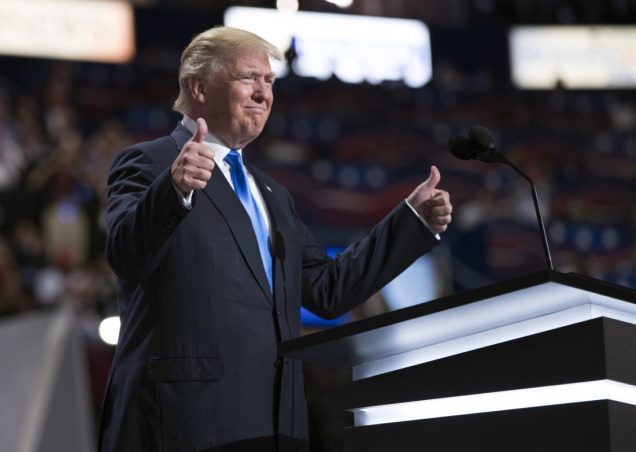
Donald Trump is now the Republican Party’s official presidential nominee. And there is plenty of blame to go around.

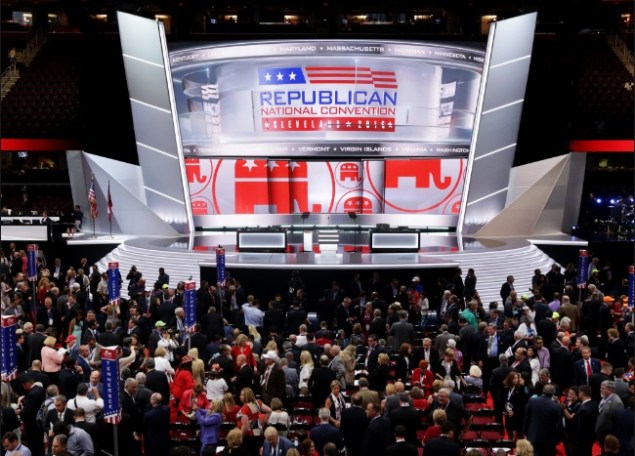
The theme of Night 2 of the Republican Party convention was “Make America Work Again”. Not that you would have noticed any great difference from Night 1, titled “Make America Safe Again”.

The speeches were the same – long diatribes against Hillary Clinton’s criminality, endless unproductive hysteria about terrorism, creeping paranoia about Iran and constant assertions from speaker after speaker that President Obama’s America is a weak cuckold of a country, being fleeced left, right and centre by enemies and allies alike.

Chris Christie was the highlight of the evening. No matter how much the New Jersey governor may have debased himself since dropping out of the presidential race himself to become Donald Trump’s first and loudest establishment cheerleader, one cannot deny the effectiveness of his prosecutorial convention speech, calling out a litany of Hillary Clinton’s transgressions and inviting delegates to pronounce her guilty or not guilty of each charge (spoiler: the Republican delegates convicted Clinton on all counts).

But that was the prime time agenda, the face that the Republican Party actually wanted to show the country. Before the eyes of America fell on them, the GOP held its state roll-call and officially confirmed Donald Trump as their 2016 presidential nominee.

While some rejoice at the ascendance of a man touting such a populist, anti-establishment agenda – and I can identify with that impulse, in part – there is no denying that this is anything other than a profound defeat for American conservatism, an even lower low than that reached by the Bush-Cheney administration with their fiscal incontinence and calamitous decision to play at nation building in the Middle East.

For Donald Trump is anything but a conservative. He has no respect for the United States Constitution, or for individual liberty – precious things to which the old Republican Party would at least pay lip service. He is an authoritarian, ideologically rootless wannabe strongman who actively scorns policy and loudly insists that all of America’s problems can be solved by simply deciding to start “winning” again. Rather than engage his brain and think about education policy or immigration, or globalisation and free trade, Trump merely promises to hire “the best people” to get the job done.

It should come as no surprise, then, that Trump apparently offered to make Ohio governor John Kasich the “most powerful” vice president in America’s history:

One day this past May, Donald Trump’s eldest son, Donald Trump Jr., reached out to a senior adviser to Gov. John Kasich of Ohio, who left the presidential race just a few weeks before. As a candidate, Kasich declared in March that Trump was “really not prepared to be president of the United States,” and the following month he took the highly unusual step of coordinating with his rival Senator Ted Cruz in an effort to deny Trump the nomination. But according to the Kasich adviser (who spoke only under the condition that he not be named), Donald Jr. wanted to make him an offer nonetheless: Did he have any interest in being the most powerful vice president in history?

When Kasich’s adviser asked how this would be the case, Donald Jr. explained that his father’s vice president would be in charge of domestic and foreign policy.

Then what, the adviser asked, would Trump be in charge of?

“Making America great again” was the casual reply.

In other words, Donald Trump cares so little about actually governing that he was willing to outsource both domestic and foreign policy – that is, the entire US presidency, bar the annual pardoning of the Thanksgiving turkey – to his VP, someone who would deal with all of the boring stuff while Trump jetted around insulting foreign heads of state and acting as America’s global brand ambassador.

This – this – is the depth to which the party of Abraham Lincoln has sunk.

But how? Daniel Larison’s painful evisceration of the rotten Republican Party says it best:

Like Rod Dreher, I see Trump’s success as proof that “the people who run [the GOP] and the institutions surrounding it failed.” They not only failed in their immediate task of preventing the nomination of a candidate that party leaders loathed, but failed repeatedly over at least the last fifteen years to govern well or even to represent the interests and concerns of most Republican voters.

Had the Bush administration not presided over multiple disasters, most of them of their own making, there would have been no opening or occasion for the repudiation of the party’s leaders that we have seen this year. Had the party served the interests of most of its voters instead of catering to the preferences of their donors and corporations, there would have been much less support for someone like Trump. Party leaders spent decades conning Republican voters with promises they knew they wouldn’t or couldn’t fulfill, and then were shocked when most of those voters turned against them. Trump is millions of Republican voters’ judgment against a party that failed them, and the fact that Trump is thoroughly unqualified for the office he seeks makes that judgment all the more damning.

While as Tucker Carlson pointed out back in January (h/t Dreher):

In the case of Trump, though, the GOP shares the blame, and not just because his fellow Republicans misdirected their ad buys or waited so long to criticize him. Trump is in part a reaction to the intellectual corruption of the Republican Party. That ought to be obvious to his critics, yet somehow it isn’t.

Consider the conservative nonprofit establishment, which seems to employ most right-of-center adults in Washington. Over the past 40 years, how much donated money have all those think tanks and foundations consumed? Billions, certainly. (Someone better at math and less prone to melancholy should probably figure out the precise number.) Has America become more conservative over that same period? Come on. Most of that cash went to self-perpetuation: Salaries, bonuses, retirement funds, medical, dental, lunches, car services, leases on high-end office space, retreats in Mexico, more fundraising. Unless you were the direct beneficiary of any of that, you’d have to consider it wasted.

Pretty embarrassing. And yet they’re not embarrassed. Many of those same overpaid, underperforming tax-exempt sinecure-holders are now demanding that Trump be stopped. Why? Because, as his critics have noted in a rising chorus of hysteria, Trump represents “an existential threat to conservatism.”

Let that sink in. Conservative voters are being scolded for supporting a candidate they consider conservative because it would be bad for conservatism? And by the way, the people doing the scolding? They’re the ones who’ve been advocating for open borders, and nation-building in countries whose populations hate us, and trade deals that eliminated jobs while enriching their donors, all while implicitly mocking the base for its worries about abortion and gay marriage and the pace of demographic change. Now they’re telling their voters to shut up and obey, and if they don’t, they’re liberal.

It turns out the GOP wasn’t simply out of touch with its voters; the party had no idea who its voters were or what they believed. For decades, party leaders and intellectuals imagined that most Republicans were broadly libertarian on economics and basically neoconservative on foreign policy. That may sound absurd now, after Trump has attacked nearly the entire Republican catechism (he savaged the Iraq War and hedge fund managers in the same debate) and been greatly rewarded for it, but that was the assumption the GOP brain trust operated under. They had no way of knowing otherwise. The only Republicans they talked to read the Wall Street Journal too.

On immigration policy, party elders were caught completely by surprise. Even canny operators like Ted Cruz didn’t appreciate the depth of voter anger on the subject. And why would they? If you live in an affluent ZIP code, it’s hard to see a downside to mass low-wage immigration. Your kids don’t go to public school. You don’t take the bus or use the emergency room for health care. No immigrant is competing for your job. (The day Hondurans start getting hired as green energy lobbyists is the day my neighbors become nativists.) Plus, you get cheap servants, and get to feel welcoming and virtuous while paying them less per hour than your kids make at a summer job on Nantucket. It’s all good.

This blog agrees: Donald Trump is the fault of every single American conservative who has been in government since the turn of the millennium. It is hard to think of any other political party which so thoroughly alienated its own base through a deliberate campaign of ignoring their interests and showering them with contempt since… since centrist Labour was blown apart by the Jeremy Corbyn revolution in Britain.

The GOP’s corrupt leadership and willingness to con their own voters (particularly by exploiting wedge social issues to little effect while pursuing the same old failed economic policies) is the reason why the Republican base turned en masse against establishment conservatism, preferring even an authoritarian strongman like Trump to another moment of their sanctimonious, self-serving rule.

This is happening. There will be no white knight to swoop in and save the day, snatching the nomination away from Donald Trump. The Republican Party have already bestowed their blessing and their nomination. And everybody who shares the same stage in Cleveland – even the good ones, like Paul Ryan – are now tainted by association with him.

And when the Republican Party is picking through the wreckage on Wednesday 9th November, there will be plenty of blame to go around.
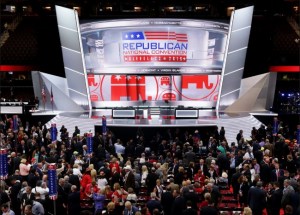
 

RNC - Republican National Convention - Cleveland - Quicken Loans Arena Floor

Top Image: The Intelligencer

Support Semi-Partisan Politics with a one-time or recurring donation:

Agree with this article? Violently disagree? Scroll down to leave a comment.

Follow Semi-Partisan Politics on TwitterFacebook and Medium.

RNC 2016: Republican National Convention – Night 1 Summary

RNC - Republican National Convention - Cleveland - Quicken Loans Arena Floor

As the Republican National Convention gets underway in Cleveland, it is hard to recall a time when American conservatism has been in so parlous a condition

Andrew Sullivan (in a most welcome return to political live-blogging) captured the ugly essence of Night 1 of the Republican National Convention in Cleveland, Ohio:

Just mulling over the events tonight, there’s one obvious stand-out. I didn’t hear any specific policy proposals to tackle clearly stated public problems. It is almost as if governing, for the Republican right, is fundamentally about an attitude, rather than about experience or practicality or reasoning. The degeneracy of conservatism – its descent into literally mindless appeals to tribalism and fear and hatred – was on full display. You might also say the same about the religious right, the members of whom have eagerly embraced a racist, a nativist, a believer in war crimes, and a lover of the tyrants that conservatism once defined itself against. Their movement long lost any claim to a serious Christian conscience. But that they would so readily embrace such an unreconstructed pagan is indeed a revelation.

If you think of the conservative movement as beginning in 1964 and climaxing in the 1990s, then the era we are now in is suffering from a cancer of the mind and the soul. That the GOP has finally found a creature that can personify these urges to purge, a man for whom the word “shameless” could have been invented, a bully and a creep, a liar and cheat, a con man and wannabe tyrant, a dedicated loather of individual liberty, and an opponent of the pricelessly important conventions of liberal democracy is perhaps a fitting end.

Well, quite.

What struck me most from the first night of the Republican convention, as speaker after speaker stood and railed against President Obama, called for Hillary Clinton to be thrown in jail and led the delegates in endless chants of “USA! USA!”, was the fact that these people were all scared. Scared of the future, scared of their economic prospects, scared of Islamist terrorism, scared of national decline.

Rudy Giuliani, appearing a very shrunken figure since his glory days in the late 1990s and during 9/11, sounded like a fearful pensioner shouting at the television when he gave his barnstorming prime-time speech. Where had his America gone, he shouted, and who would keep them all safe in these dangerous times? The answer, of course, was always Donald Trump.

We know that some American conservatives have skipped the convention entirely in disgust – and who can blame them? But of those in the convention hall – or the Quicken Loans arena, to give its full title – the vast majority seem to be drinking the Kool-Aid, or have at least reluctantly reconciled themselves to the fact that Donald Trump is their presidential nominee.

Something has changed in the soul of the Republican Party. One can argue endlessly about the reasons why – this blog believes that the continued failure of Republican government to benefit the struggling middle classes, the failure of the Tea Party to make a positive difference despite its loud rhetoric together with the ill-fated adventurism of the neoconservatives, has done much to alienate working class Americans from a conservative political class who have little to offer them but shallow patriotism.

Of course, Donald Trump offers shallow patriotism too. But he is also a strongman. Where President Obama wrings his hands and attempts to explain the complexity of the world and the problems facing America – often to excess – Donald Trump offers clarity and bold, oversimplified solutions. ISIS can be defeated without putting American boots on the ground, just by America deciding to “lead” again. Semi-skilled manufacturing jobs can be repatriated to America simply by “standing up” to nefarious foreign countries like China and Mexico. And apparently, after having been ground down by two stalled wars and a financial crisis, American conservatism was sufficiently dejected and debased to pick up that message and run with it.

I came of age (and became aware of American politics) in the late 1990s, in the tail end of the Clinton presidency and into the George W. Bush era. And in that time, in books and speeches by prominent conservatives, American conservatism was clearly dedicated – in rhetoric, if not always in practice – to advancing freedom. Freedom for the individual in America, and (sometimes disastrously) freedom for people in other parts of the world.

But the Republican Party of 2016 barely talks about freedom at all. On the first night of the RNC in Cleveland, speakers and delegates gathered under a massive sign proclaiming “Make America Safe Again”. Freedom has apparently gone out the window completely – why else would Republicans nominate an authoritarian like Donald Trump, a man who expresses contempt for freedom of speech, freedom of the press, freedom of religion and human rights? And in freedom’s place comes the soothing, reassuring, beguiling promise of safety.

The America I now see through the prism of the current Republican Party – thankfully quite a distorted prism – is one where the American Dream has died for millions of people, or is at best on life support. The Republican primary voters who overwhelmingly voted to make Donald Trump their presidential nominee, and who are now gathered in Cleveland for the quadrennial party convention, were motivated by not by a sense of opportunity but by fear. Fear for their physical safety from terrorism. Fear of economic instability. Fear of relative decline.

Tim Stanley agrees:

Note: preserve. Not build more, not expand, not create – but preserve. You might argue that Trump is conservatism in its purest sense, the sense of being about conserving the best of the past. You might also argue that this represents a break from Reaganism, which is optimistic and about growing the economy to the advantage of the individual.

I’ve been a US conservative convention goer for eight years and I can tell that a change has come over them. You used to hear a lot about defending the Constitution and shrinking the government. Not so much anymore.

The people who are interested in those things are here. On Monday afternoon, God bless them, they tried to kick Trump off the ticket with a rules challenge on the convention floor. They failed and stormed off. They never had the numbers necessary to do it and the Republican establishment has reconciled itself to Trump anyway – so no dice.

And that’s the most depressing thing of all – there is no longer a major political party in the United States remotely dedicated to expanding freedom for the individual and defending against the encroachment of the state.

Lord knows that the Democrats will not be championing liberty now that they are led by Hillary Clinton and nearly entirely captured by the Cult of Social Justice and Identity Politics. For small-c conservatives, libertarian and conservatarians, this election is very much a case of pick your poison.

Andrew Sullivan is quite right to highlight the lack of any serious policy discussion on Day 1 of the convention (and if you don’t get any on the traditionally less TV-worthy opening days then you won’t get any at all). Trumpian conservatism clearly is not interested in solutions. Like their strongman hero, the Republican Party of 2016 has decided that the difficult, intractable problems of Islamist terror, deindustrialisation, global competitiveness and social mobility can be solved simply by willing them away, by “standing up to America’s enemies” and being swept along by Trump’s strong leadership.

Maybe it will take defeat in the 2016 presidential election for the Republican Party to be shocked out of its current stupor and invigorated to find a way to appeal to Trump’s broad coalition of voters with a more optimistic, pro-liberty message.

The nightmare scenario, though, is a Trump victory, which would gild this fear-based, revanchist form of conservatism with the prestige that comes with winning (never mind posing a serious threat to the American republic) and has the potential to transform Donald Trump from an unfortunate blip on the political landscape to an early 21st century Ronald Reagan.

In short, it is hard to see any grounds for hope at all going into this Republican Party convention. But this blog will continue to watch and hope for the green shoots of a future conservative revival, something better to come once this Trumpian nightmare is over.


Donald Trump Hosts Nevada Caucus Night Watch Party In Las Vegas

Support Semi-Partisan Politics with a one-time or recurring donation:

Agree with this article? Violently disagree? Scroll down to leave a comment.

Follow Semi-Partisan Politics on TwitterFacebook and Medium.

Bernie Sanders Is Right To Seek To Ban Private Prisons

Bernie Sanders - Abolish Private Prisons

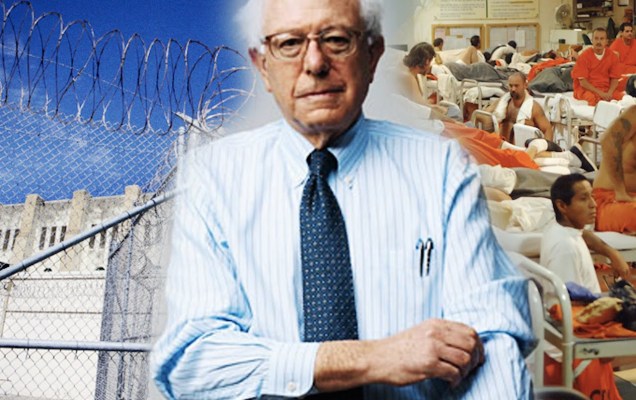
Free market and small government arguments are immaterial: privately run jails and prisons are morally repugnant and should be banned

As yet more evidence that the world is rapidly going insane, I find myself in agreement with Bernie Sanders on a matter of domestic policy.

The Washington Post reports:

Sen. Bernie Sanders (I-Vt.) will unveil a plan Thursday to ban privately run jails and prisons, which he says have a “perverse incentive” to increase the number of incarcerated people in the country.

Under the proposal by the Democratic presidential hopeful, the federal government would have three years to end its practice of using private companies to keep people behind bars. The ban would also apply to state and local governments, which have increasingly turned to private contractors in a bid to save money.

“It runs counter to the best interests of our country,” Sanders said in an interview Wednesday. “You should not be making a profit off of putting people in prison.”

Sanders’s “Justice Is Not For Sale Act,” which he plans to introduce as legislation in Congress, also includes several provisions intended to dramatically reduce the number of immigrants who are held in detention facilities while awaiting court hearings on their legal status.

Good. This blog is all for privatisation of state-owned industries and competitive free markets, but there is a limit to how far small government absolutism should go.

The most sacred and fundamental powers of any democratic government are the power to wage war and the power to imprison (or in America’s case, even execute) a citizen found guilty of committing a crime. Both matters are far too serious to be left to the private sector, especially for so tawdry a reason as cost reduction.

Just as Western democracies now rely on volunteer armies for defence and (generally – again, with some regrettable exceptions) eschew using paid mercenaries to do their dirty work, so the state, at whatever level of government is best applicable, should be directly responsible for the welfare and rehabilitation of offenders. Contracting the job out to private firms, ostensibly in order to save taxpayer money, is wrong and often counterproductive, producing the kind of perverse incentives correctly identified by Bernie Sanders. Besides which, the idea of private companies incarcerating citizens under government contract is morally repugnant, whether it is done in Britain, America or elsewhere.

There are plenty of things ripe for privatisation in America, including Amtrak (a giant taxpayer subsidy for wealthy elites living in the Acela corridor) and the United States Postal Service. In this day and age, there is less and less argument for the government having an active hand in transporting people, goods or items of correspondence. So by all means, let’s privatise what government has no business doing in the first place.

But when it comes to the most essential functions of government, some things ought never to have been handed over to the private sector in the first place. And the awesome power and responsibility which comes with incarcerating one’s fellow citizens is a case in point.


Corrections Corporation of America

Top Image: The Young Turks

Agree with this article? Violently disagree? Scroll down to leave a comment.

Follow Semi-Partisan Politics on TwitterFacebook and Medium.

Happy Independence Day

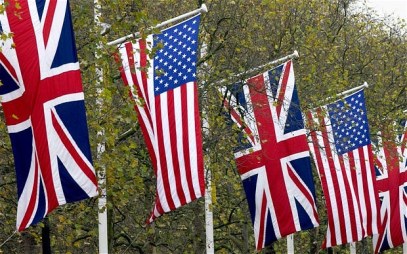
From one soon-to-be independent country to our dear ally, today celebrating 240 years of glorious freedom

A very happy Fourth of July to all of my American readers.

Given recent events, I would also invite those Americans (I’m thinking here of President Obama and the political and economic elites who have the New York Times as their mouthpiece) celebrating their wonderful country’s independence today while looking on Brexit as some kind of terrible catastrophe to ask themselves why they would deny their closest and most reliable ally the same sovereignty and freedom which they rightly demand for themselves.

As America celebrates today, so we in Britain celebrate soon being able to join in the proclamation that “this nation under God shall have a new birth of freedom; and that government of the people, by the people, for the people shall not perish from the earth.”

Happy Independence Day.

Let freedom ring!


US UK British Flags

Top Image: Telegraph

Support Semi-Partisan Politics with a one-time or recurring donation:

Agree with this article? Violently disagree? Scroll down to leave a comment.

Follow Semi-Partisan Politics on TwitterFacebook and Medium.

American Conservatives For Brexit, Part 5 – The National Review Endorses Brexit

Americans for Brexit - EU Referendum

If the future is a post-democratic world then Brexiteers should be proud to have the support of the magazine founded by William F Buckley in order to stand athwart history yelling “Stop!”

“A conservative is someone who stands athwart history, yelling Stop, at a time when no one is inclined to do so, or to have much patience with those who so urge it”William F Buckley

The National Review comes out forcefully for Brexit, in an excellent piece which takes David Cameron to task for the tawdry and nauseatingly left-wing campaign he has run.

Money quote:

One of the less noticed aspects of the referendum campaign has been the extent to which Cameron has had to rely more and more on fundamentally left-wing arguments to make the case for the EU — and, indeed, to rely more and more on Labour and trade-union organizations, too. He removed from the government’s program some items of legislation that were especially offensive to labor unions in return for the unions’ spending more on campaigns to arouse their apathetic members (many of whom are in fact Euro-skeptic). That oddity has gradually revealed two hitherto unseen truths about the campaign: First, the EU is essentially a left-wing corporatist cause that is hard to support on conservative grounds; second, the traditional Tory arguments of patriotism and free enterprise not only can’t be appealed to, but would arouse emotions on the right that would weaken Remain’s entire case, including its only positive argument for staying in.

That argument is that Britain would face ruin outside the EU and prosperity inside, as all “experts” know. Those experts turn out to be (some) corporate businessmen, the leaders of international organizations such as the International Monetary Fund, and heads of governments such as President Obama. Delegations of all three have been turning up in London and issuing grave warnings about Brexit at regular intervals. Small businesses and native entrepreneurs such as inventor James Dyson apparently don’t count as experts, but they have been speaking out in favor of Brexit, as have a significant number of leaders of both British and multinational corporations. What is emerging as a fault line is that this battle is between Davos Man and the rest of us.

The National Review goes on to criticise the sheer defeatism and pessimism of the Remain campaign, whose pitch to the electorate has basically been that Britain is too small, weak and puny to prosper outside of the EU’s political union:

It would be easy to continue rebuking the alarmist scare stories from Remain — and distinguished economists, including two former British finance ministers, have been doing so with zest. What is more important is to realize that they are designed not to persuade but to instil a sense of defeatism in the British people. Their consistent message is that the Brits are rubbish, can’t hack it, need the protection of Europe, and that anyone who differs from this masochistic view is in the grip of an imperialist nostalgia.

That is nonsense. The Brits are an unusually influential middle-ranking power in military, diplomatic, and intelligence terms. Culturally speaking, they are a global superpower. And — to repeat — Britain is the fifth-largest economy in the world, a leading member of all the main international bodies and likely to remain so, and a country which is a byword for effective democratic constitutional governance. It is — or ought to be — shocking that a British government should seek to instil a false sense of failure and dependency in its citizens in order to win a campaign they can’t win on the intellectual merits of the case.

And of the three explanations later offered by the National Review for this appalling behaviour from the British establishment, the third is the most persuasive:

Third, and above all, a half-conscious rejection of democracy. For the EU is a mechanism that enables the political and other elites in Britain to escape from the constraints of democracy. It removes power from institutions subject to the voters in elections, such as the House of Commons, and vests it increasingly in courts and bureaucracies in Brussels that are effectively free of democratic control and even of democratic oversight. As a result, the EU is seductively appealing to those who want to exercise power and who believe they would do so more responsibly and successfully if they did not have to account for their decisions to… well, ordinary people like their relatives.

All three passions are temptations to the power-hungry, and they have shaped a Remain campaign reflecting the interests and values of post-national, post-democratic elites. Once we step outside the moral universe of these elites, however, there is no case whatever for Britain to surrender its self-governing democracy to Brussels.

With the due deference of outsiders, we urge the British people, our friends in peace, our allies in war, to be true to themselves and to their democratic traditions on Thursday. That should be more than enough.

A good argument, well made. When publications as diverse as the National Review and Spiked are making the same case, warning against the attempt by European elites to construct an unaccountable, post-democratic society, alarm bells should seriously start to ring.

And in the fight against the dystopian, post-democratic future heralded by the European Union, it is good to have the endorsement and support of the American publication whose founding mission is to “stand athwart history, yelling Stop!”


European Union - United Kingdom - Britain - Flags

Top Image: CNN

Agree with this article? Violently disagree? Scroll down to leave a comment.

Follow Semi-Partisan Politics on TwitterFacebook and Medium.