The Heineken ‘Worlds Apart’ Ad: Corporate Social Justice Done Right

Finally, a corporate attempt at social awareness advertising that does not devolve into sanctimonious progressive preaching

It generally doesn’t end well when big corporations decide to prove their right-on, progressive credentials with a slick new TV advertisement.

Only four months ago, Pepsi found itself on the receiving end of a heap of bad PR when their insipid commercial, featuring celebrity with no discernible talent Kylie Jenner, was deemed to be trivialising the Black Lives Matter movement (the gravest sin that it is presently possible to commit).

The Pepsi ad was certainly stupid, but not because it made light of a movement which is by no means as pure of character as it likes to pretend. No, the problem with the Pepsi ad was that it tried to cast the soft drink manufacturer in a positive light by clinging on to the coattails of various protest movements, and casting its brown sugary liquid as the balm that could ease tensions between Generic Oppressed Communities and the police. It was glib and superficial and insulting to everyone who was portrayed in it.

And unfortunately that’s how it is with most ads that try to paint the responsible corporation in a positive light by embracing the latest progressive fad or injunction from the Cult of Social Justice and Identity Politics. They politicise that which should not be politicised, needlessly sow division over politically contentious issues, waste shareholder money to burnish the reputations of certain executives and generally fail to serve the corporation’s customers. In Britain, Channel 4’s cynical and self-serving “Gay Mountain” ad, timed to coincide with the Winter Olympics in Sochi, Russia, is another awful example of tawdry corporate behaviour.

That’s not to say that all such ads are bad – by all means, corporations should wade into social territory when the product and the issue actually have some connection with each other and there is a worthy goal in mind. The #LikeAGirl ad campaign by Always, for example, is actually quite moving and packs a real impact. This Barbie ad isn’t half bad either.

Other social justice ads fall into the grey zone, not terrible but not particularly praiseworthy either – or else just plain confusing. Procter & Gamble’s recent ad “The Talk“, highlighting the fact that African American parents have had to teach their children resilience techniques and shore up their self-esteem in ways that white parents generally have not, makes a valid and moving historical point. But it is never quite clear why Procter & Gamble is the one to be making the ad, other than that they cynically calculated that they can burnish their corporate credentials by conspicuously attaching their brand to the worthy cause of anti-racism.

But best of all recent ads where a large corporation dips its toe into the roiling waters of social issues is this one by Heineken, entitled “Worlds Apart“. What makes it so good? The fact that it does not seek to preach any specific value or social outcome besides the importance of tolerance and mutual respect which is too often missing in public discourse. Rather than shoving a particular social cause down the throats of consumers, the ad dares to suggest that more than one opinion (the progressive one) may have value, and that issues should be discussed rather than dissent shut down.

The ad is shot like a reality show, putting various pairs of strangers with diametrically opposed opinions on various issues – feminism, transgenderism, climate change and so on – in a room together, having them perform various icebreaking tasks including assembling furniture, describing both themselves and their partner using five adjectives and then just talking together about their life experiences. It sounds corny, but it actually works quite well – watch the video at the top of this article.

The final task given to the various pairs of strangers is to assemble a construction out of wooden blocks – which turns out to be a bar (see what they did there?) Having cooperated and bonded with each other while completing various tasks, they each then have to watch a video in which the other person talks to the camera about their opinions of various relevant hot-button issues. It then becomes clear that the feminist was paired with the anti-feminist, the climate change sceptic with the environmentalist, the transgender woman with the man who scorned the idea of transgenderism. Having discovered this truth about their partner, they are then offered a choice – either they can leave and never see each other again, or they can discuss their differences over a beer at the bar they just constructed together.

This really is quite effective. You see the shock on each person’s face as they realise this uncomfortable truth about the stranger with whom they have been working and bonding during the various tasks. You see hints of confusion and almost betrayal on some of their faces as they weigh the competing facts – that they got on well with the person, know them through their brief interactions to be decent, yet that they stand on opposite sides of major social wedge issues. Spoiler alert: they all end up deciding to stay and discuss their differences over a nice cool Heineken.

This is a good ad. Firstly in terms of product promotion, it positions Heineken beer as something over which sane, rational people can discuss their differences like adults. In real life, people do discuss their problems and bond over beer. Unlike the Procter & Gamble ad, there is a valid reason for Heineken to be making this commercial. And what’s more, despite only being a commercial the various interactions feel ten times more real than President Obama’s very real and much-publicised “beer summit” in the wake of the Henry Louis Gates arrest controversy.

But more than that, the ad is good because it doesn’t force a set outcome. It doesn’t end with the transgenderism sceptic acknowledging the error of his ways, confessing his sin and being absolved, or the anti-feminist checking his male privilege. Rather, knowing that their partner is more than the sum of his or her political opinions, the various couples are able to forge bonds of mutual respect and friendship. Like adults used to do in the days before social media turbo-charged identity politics.

So why does Heineken succeed where so many other corporations have failed? Again, it’s those three reasons:

  1. A clear link between the issues at stake (in this case various hot-button social issues) and the product (people often discuss their differences over a beer)
  2. Not forcing a preset outcome, and acknowledging that people can be good despite coming down on different sides of an issue
  3. Not alienating any of their customers by charging in with a preachy, absolutist message

If corporations are going to continue to dip their toes into social issues then we need more ads like this. Right now it feels like society is fraying, sometimes even in danger of coming apart at the seams, fuelled by a toxic blend of identity politics zealots, genuine bigots, people who simply dislike being preached to and those who profit from creating friction between them.

Too many people in positions of authority – politicians, media personalities, self-appointed community leaders – fail to encourage understanding and respectful disagreement, preferring to foment mutual intolerance. Only today I was publicly and ostentatiously defriended by a respected acquaintance, someone who suddenly decided that my relatively mainstream and inoffensive conservatarian opinions were beyond the pale and injurious to their mental safety. It isn’t the first time that this has happened. This is what identity politics and leftist intolerance hath wrought.

Retreating into our respective bubbles will not help knit society back together and weave the strands of a common identity and shared purpose around which we can – and must – all unite. The Heineken “Worlds Apart” ad acknowledges this fact and pitches its product as part of the solution.

It shouldn’t take a beer company to say what so many political and community leaders have so conspicuously failed to say themselves, but that’s just what Heineken have done with this ad. And this puts it head and shoulders above the rest.


Heineken - Worlds Apart ad

Support Semi-Partisan Politics with a one-time or recurring donation:

Agree with this article? Violently disagree? Scroll down to leave a comment.

Follow Semi-Partisan Politics on TwitterFacebook and Medium.

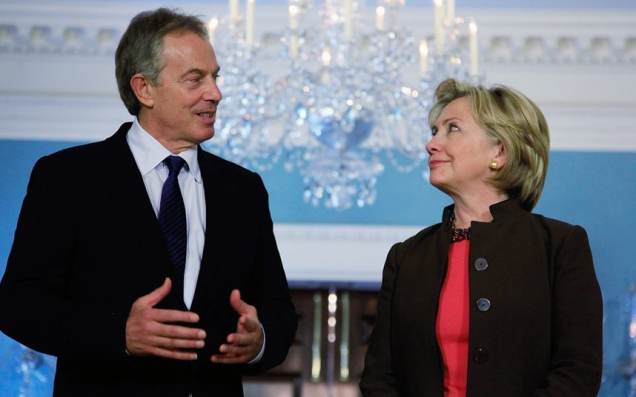
Centrists Cling To Their Failed Dogma Even As It Tears Their Countries Apart

Tony Blair - Hillary Clinton - centrism

In a wide-ranging essay, Michael Lind argues that the elite managerial class have broken their compact with the working classes to the detriment of the country, thus explaining the populist backlashes witnessed in Britain and America

“The New Class War”, an essay in the American Affairs Journal by writer Michael Lind, perfectly captures the intersection between trade regulation, democracy and the interests of the managerial elites which is at the heart of the current debate over sovereignty – and which fuelled the Brexit vote in the UK and Donald Trump’s ascendancy to the presidency in America.

It is necessary to quote at some length from the section entitled “The Politics of Global Arbitrage“, in which Lind discusses the ways in which corporate behaviour has influenced the contours of our democracy:

Even as they have exploited opportunities for international labor and tax-and-subsidy arbitrage, firms in the post–Cold War era of globalization have promoted selective harmonization of laws and rules, when it has been in their interest to do so. In the second half of the twentieth century, successive rounds of negotiation under the auspices of the General Agreement on Tariffs and Trade (GATT) and, more recently, the World Trade Organization (WTO) effectively reduced most traditional tariff barriers. By 2016, when the WTO effectively terminated the failed Doha Development Round of global trade talks, the United States and other leading industrial nations had shifted the emphasis from removing barriers restricting the cross-border flow of goods to harmonizing laws and regulations through “multiregional trade pacts” like the North American Free Trade Agreement (NAFTA), the Trans-Pacific Partnership (TPP), and the Transatlantic Trade and Investment Partnership (TTIP), in the interests of transnational investors and corporations reliant on transnational supply chains.

The areas chosen for arbitrage and harmonization reflect the interests not of national working-class majorities but of the managerial elites that dominate western governments. Harmonizing labor standards or wages would undercut the labor arbitrage strategy, while transnational crackdowns on tax avoidance would thwart the strategy of tax arbitrage by transnational firms. Instead, the emphasis in harmonization policy has been on common industrial standards, the liberalization of financial systems, and intellectual property rights, including pharmaceutical patents. These kinds of harmonization benefit transnational firms, investors on Wall Street or in the City of London, and the holders of intellectual property rights in Silicon Valley and the pharmaceutical industry.

In many cases, this kind of regulatory harmonization makes sense—standardizing product safety measures, for example. But the new regulatory harmonization agreements produce a “democratic deficit” in two ways.

First, they remove whole areas of regulation from the realm of ordinary legislation, replacing it with “legislation by treaty.” Favorable laws and regulations that corporate lobbyists are unable to persuade national democratic legislatures to enact can be repackaged and hidden in harmonization agreements masked as “trade” treaties. These treaties, often thousands of pages long, tend to be drafted in secret by committees involving corporate lobbyists and may be ratified by legislatures without careful scrutiny.

Worse, most of these contemporary regulatory harmonization agreements include “investor-state dispute settlement” (ISDS) provisions that allow individual corporations to sue national governments that change the rules in their countries after the passage of the treaty in private tribunals, dominated by corporate lawyers, with no appeal mechanism. If Congress enacts a statute that adversely affects the interests of Acme Inc., then Acme has few options, other than paying lobbyists and making campaign donations. But if Congress ratifies a treaty, and later changes a provision by passing a new law, Acme can sue the federal government for financial damages. The United States has yet to lose a case to ISDS, but other countries have, and some believe that the prospect of corporate lawsuits has a chilling effect on new laws and regulations of which particular corporations disapprove.

None of this is to imply that the transnational managers of the West and littoral East Asia who control the new global oligopolies are more selfish or less public-spirited than the managers of national corporations during the Second Industrial Era. On the contrary, in personal terms, today’s managerial elite is for the most part less bigoted and often quite philanthropic. The point is simply that the American, German, and Japanese corporations of half a century ago were constrained by kinds of Galbraithian countervailing power and Burnhamite/Moscian juridical defenses that have crumbled. Thanks to globalization, itself a voluntary policy choice enabled but not required by new technology, today’s transnational firms have much more bargaining power in their dealings with workers and democratic nation-states.

My emphasis in bold.

This perfectly sums up a core part of the democratic case for leaving the European Union as it relates to trade, and is very much in line with the analysis and arguments advanced by Dr. Richard North of eureferendum.com and Pete North.

Lind is quite correct to acknowledge that regulatory harmonisation can be an enormous force for good. In fact, the trouble only really comes about when there is no option for a democratic nation state to “opt out” of a certain regulatory change or edict when its imposition would harm the national interest in some way. Obviously there would be consequences for such an action, such as the non-recognition of standards relating to the product or industry in question. But the opt-out is a vital tool which nation states must possess in order to wield sensibly and with restraint on those occasions when the compromise hashed out by 27 EU member states is unacceptable to the sole outvoted dissenting country.

This is what we mean by the outsourcing of sovereignty. Remainers and assorted pro-EU apologists love to make the glib assertion that EU member states retain ultimate sovereignty at all times because they are technically free to leave the EU, but this is an asinine assertion. Sovereignty should not be a choice between having to go along with every diktat from Brussels or deploying the nuclear option and leaving the European Union. Indeed, how can you call it sovereignty when the choice is between accepting papercut after papercut (grave though the cumulative wound may be) or else enduring the disruption of severing ourselves from the union? This isn’t sovereignty, it is blackmail. Thank goodness that Britain finally called the EU’s bluff.

This section is also instructive:

To obtain social peace and mobilize national populations during World War II, the United States and its allies like Britain brokered business-labor pacts and promised welfare benefits to veterans. In the ensuing Cold War, every major industrial democracy devised some kind of “settlement” or compromise among business and labor interests within the nation.

The postwar settlements were a combination of employer-specific welfare capitalism and universal or means-tested, social-democratic welfare states. In West Germany, welfare capitalism took the form of “codetermination,” or union membership on corporate boards. Japan, following intense labor conflict after 1945, developed a system of corporate paternalism and lifetime employment for many workers. Organized labor was weak in the postwar United States, but the “Treaty of Detroit” negotiated among automobile companies and unions was a successful example of informal business-labor corporatism. Low levels of legal and illegal immigration, and social pressure on married mothers to exit the work force to become homemakers, strengthened the bargaining power of mostly male workers by creating tight labor markets.

These corporatist systems of welfare capitalism made the welfare states of the period from the 1940s to the 1970s much smaller than they would have been otherwise. Wage compression brought about by unions in the welfare-capitalist system made it easier for payroll taxes to fund entitlements like public pensions, which in turn were smaller than they might have been because of the widespread existence of private employer pensions.

The post-1945 settlements in the West and Japan demonstrate countervailing power and juridical defense in action. The result was the golden age of capitalism from the 1940s to the 1970s, combining high growth with a more equal distribution of its rewards than has ever existed before or since.

But Lind sees the end of the Cold War as a turning point when the post-war settlements established in the West and Japan began to be fatally undermined:

Following the Cold War, the global business revolution shattered these social compacts. Through the empowerment of multinational corporations and the creation of transnational supply chains, managerial elites disempowered national labor and national governments and transferred political power from national legislatures to executive agencies, transnational bureaucracies, and treaty organizations.

Freed from older constraints, the managerial minorities of Western nations have predictably run amok, using their near-monopoly of power and influence in all sectors—private, public, and nonprofit—to enact policies that advantage their members to the detriment of their fellow citizens. Derided and disempowered, large elements of the native working classes in Western democracies have turned to charismatic tribunes of anti-system populism in electoral rebellions against the selfishness and arrogance of managerial elites.

I have to say that Lind’s essay has given me pause for thought. This blog has consistently championed the Thatcherite revolution which took Britain from being the sick man of 1970s Europe, seemingly in terminal decline, to a revived and confident global power by the 1990s. I did so while acknowledging the various failures of the Thatcher government to ameliorate the decline of heavy industry outside of the wealthy Southeast and its cost in terms of suffering and wasted human potential, but I nonetheless saw (and continue to see) Thatcherism as a necessary if painful tonic for the economically sick Britain of the 1970s.

Lind, however, sees things differently. From Lind’s perspective, the post World War II settlements established between labour and the managerial classes in various Western countries were responsible for the great boost in productivity and living standards, not an anchor on these metrics (as I have always viewed the post-war settlement in Britain, partially deconstructed by Thatcher). To be fair, Lind pinpoints the start of the unravelling to the end of the Cold War when Thatcher’s premiership was nearing an end, but since many of the tenets of Thatcherism continued through the Major and Blair governments into the 21st century once can reasonably infer a criticism of Thatcher’s policies, which merely took a decade to come to full fruition.

This is food for thought for an unabashed Thatcherite like me, and I need to do more reading to decide how much of Lind’s narrative holds water. The narrative arc he constructs is persuasively argued and passes the “common sense” test, but to my mind Britain’s experience stands as an exception to Lind’s rule. In our case, the post-war settlement we constructed (based on the recommendations of the Beveridge Report) grievously held us back as a country. We did not benefit from enlightened German-style corporate governance or Japanese-style jobs for life in the post-war years, but rather sank into decades of adversarial conflict between unions and (largely state-owned) employers, with government policy repeatedly favouring the interests of the producer over those of the consumer.

Now, this could be because British government policy was particularly misguided and the British managerial class particularly useless (an argument I have some sympathy with), but it seems more likely to me that Lind’s blanket assertion that countries prosper most when there is a powerful countervailing force to push back against the elite managerial class is not always correct – or at least is only one of several other key factors determining economic growth and increases in standard of living. I would posit that Thatcher’s Methodist upbringing probably provided a great moral anchor that prevented excessive self-serving policymaking, while today’s decadent and avowedly secular elites are perhaps more prone to corruption and in greater need of the countervailing force that Lind describes (hence the populist backlashes we have witnessed).

Lind then goes on to discuss how labour arbitrage and tax & subsidy arbitrage in our more globalised world have worked to undermine the nation state and empower the corporation – a line of reasoning which would certainly be familiar to anyone on the Left.

He concludes by looking ahead to the likely geopolitical situation in the year 2050, and considers what will be the best strategy for the West to maintain power and influence:

Great-power competition, even in the form of limited cold wars, is likely to reward nations whose economic model is based on developing productive technology and raising the incomes of domestic worker-consumers, rather than engaging in labor and tax arbitrage, regulatory harmonization, and other schemes that boost profits without increasing productivity. In cold wars and trade wars, even if no blood is shed by the contenders, countries and blocs with empowered and patriotic workers are likely to do better than rival nations crippled by immiserated workforces and selfish, nepotistic, oligarchic elites.

[..]

Managerial elites are bound to dominate the economy and society of every modern nation. But if they are not checked, they will overreach and produce a populist backlash in proportion to their excess. By a misguided policy of suppressing wages and thus throttling mass consumption, unchecked managerial elites may inadvertently cripple the technology-driven productivity growth responsible for their rise and accidentally cause the replacement of managerial society itself by a kind of high-tech rentier feudalism.

Managerial society works best when there are not only concessions to national working-class economic interests—the bribes to the “losers” of neoliberalism—but also genuine economic bargaining power and political power wielded by the many. Far from undermining managerial regimes, Burnham’s “juridical check” and Galbraith’s “countervailing power” make them more legitimate and sustainable.

In other words, the policies favoured by the current dispossessed centrists in Britain and America are not as smart and self-evidently beneficial as their advocates love to claim. Status quo globalisation, which increasingly seeks to leverage labour arbitrage, tax arbitrage and selective regulatory harmonisation to benefit the managerial class while doing little to raise productivity (not to mention leaving millions of people in dead-end jobs or the unemployment scrapheap) is not only selfish on the part of the managerial class, it is also injurious to the future prosperity and security of the country.

In fact, according to Lind, it turns out that having a patriotic population and workers with a commitment to the country they live in, together with some degree of bargaining power (preferably due to their possessing valuable skills rather than the threat of withholding their labour, as deployed in the 1970s), is perhaps a net positive after all, particularly in the long term.

Again: I don’t buy everything in Michael Lind’s essay. But he spins a plausible narrative and argues his case well. And if Lind is correct, how regrettable is it, then, that the populist backlashes on both sides of the Atlantic have been held in check partly through their own incompetence (Donald Trump in America and the Tory hard Brexiteers in the UK) and partly by the fact that the resurgent centrists have effectively ground the respective movements to a halt?

Bear in mind, if and when the centrists retake power, they intend to revert to pure business as usual. They have learned nothing from the comprehensive rejection they received from voters only a short time ago, and think that the world can revert to its previous happy state where they got everything that they wanted while anyone who dissented could go jump off a bridge.

I have long contended that such an overturning of these populist movements by the elite would be poisonous, even fatal, to our democracy. But if Lind is correct, it could also be fatal to the future economic prosperity and national security of our countries.


Globalisation

Support Semi-Partisan Politics with a one-time or recurring donation:

Agree with this article? Violently disagree? Scroll down to leave a comment.

Follow Semi-Partisan Politics on TwitterFacebook and Medium.

Barcelona, Donald Trump And The American Media’s Crisis Of Perspective

There is more to the horrific Barcelona terror attack than Donald Trump’s garbled response, but you wouldn’t know that if you are watching CNN

To get a good sense of just how debased and insular the American news media has become, one need only flick over to CNN and watch their coverage of the horrific Islamist terror attack which took place only hours ago in Barcelona.

What you will find is not detailed coverage of the Barcelona attack and how it transpired, or even the mindless banalities and speculation that has become the hallmark of cable news, but rather a bunch of talking heads agreeing with each other that Donald Trump’s response to the terror attack was all wrong.

This is the age where men, women and children being mown down in the middle of a European city street by a van-driving Islamist is secondary news to whatever inanities various celebrities have to say about the event on Twitter, or the word choice of an American president whom we already know to be rash, unstable and in loose command of the facts (at the best of times).

What really got CNN riled up on this occasion is this tweet by Donald Trump, promulgating an unfounded rumour about the supposed action taken by US Army General John Pershing in response to a Muslim-planned terrorist attack in the Philippines at the turn of the 20th century:

The urban legend goes that General Pershing rounded up the culprits and suspects, and had them shot with bullets previously dipped in pigs’ blood. In Trump’s own graphic telling, Pershing shot 49 of the culprits and spared the 50th one so that he could go back and warn others in the movement about America’s swaggering zero-tolerance policy for terrorist shenanigans.

To be clear, there is zero proof that this apocryphal story actually took place, and that the President of the United States would make speeches presenting the tale as fact both during the election campaign and again in the immediate aftermath of an Islamist terror attack on an American ally is bad, wrong and depressing in equal measure.

But for most of the past hour on CNN, the chyron across the bottom of the screen hasn’t reported details of the terror attack, but rather Trump’s entirely typical and unsurprising blustering response to it. That’s not to say that Trump’s actions are unworthy of coverage – and we should certainly never allow ourselves to stop reporting on the president’s misdeeds and objecting to them just because they occur so regularly. But good television news is supposed to educate and inform, not simply encourage people to think myopically about global issues exclusively through the narrow lens of their own country’s political process.

Yet rather than presenting Trump’s dodgy urban myth about General Pershing as one tangential element of the story, CNN did what CNN does best – assemble a multitude of talking heads in boxes, all crammed onto the screen at the same time, to denounce Trump and slot an inconvenient story about terrorist murder in Barcelona into their preferred narrative about Trump’s unfitness for office.

Again – the point is entirely valid, and in an ideal world the President of the United States would neither spread unfounded rumours nor seek to get the more distasteful portions of his base excited by telling them yarns about shooting Muslim terrorists with bullets dipped in pigs’ blood. That would be nice. But this is not the main takeaway from the Barcelona terror attack, and yet both Jake Tapper and now Anderson Cooper seem to be leading with it, to the detriment of telling the more important story about the seemingly unstoppable wave of vehicular Islamist terrorism in Europe and the inability (or unwillingness) of political leaders to take any meaningful action to prevent such massacres.

Meanwhile, television news in Britain – itself hardly a fitting successor to the likes of Edward R. Murrow or Walter Cronkite – is at least reporting the facts and broadcasting footage and eyewitness statements as they emerge. Decent analysis remains beyond them (or at least beyond their willingness to pay a knowledgeable panel of experts and commentators to schlep into the studio) but at least they aren’t using the tragedy as a means of bashing Prime Minister Theresa May. Yet.

If American political discourse is to improve, restraint has to happen both ways. Just as conservatives need to come to terms with the fact that the Alt-Right is an issue in our own back yard which we must disown and work to discredit, so those on the Left – including much of the mainstream media – need to bring some balance back to their coverage and accept that important as the office of President of the United States is, Donald Trump’s reactions are not always the most important part of a breaking news story.

This de-escalation should not be so hard to achieve among adults, but sadly there are too many adult children on both sides who would rather have the last word and advance their political agenda at all costs, even if it debases the office of the presidency, diminishes trust in the media and rips the country apart at the seams, all at the same time.

Donald Trump - Barcelona terror attack - General Pershing rumour

Support Semi-Partisan Politics with a one-time or recurring donation:

Agree with this article? Violently disagree? Scroll down to leave a comment.

Follow Semi-Partisan Politics on TwitterFacebook and Medium.

A Final Word On Charlottesville

I want to talk about one rather overlooked aspect of the Alt-Right vs Counterprotesters + Antifa demonstrations which roiled Charlottesville, Virigina last weekend and left one young woman dead as the result of a far right domestic terrorist attack.

To listen to Donald Trump and his cheerleaders on one hand and the arrayed forces of the mainstream media on the other, one would be forgiven for thinking that ideology and conduct are one and the same thing.

On the Left, a strong insinuation has been made that because neo-nazis hold abhorrent views their violence is to be condemned while those who oppose them should get a free pass whenever they breach the peace – as evidenced by the fact that the “is it okay to punch a Nazi?” conversations and articles are bubbling up again. Meanwhile, on the Right, too many apologists are claiming that because both sets of protesters committed atrocities there is some kind of exculpatory moral equivalence, overlooking the fact that the AltRight saw Antifa’s standard street brawling tactics and raised them an Islamist-style car terror attack.

Let’s be clear – ideology and conduct are in fact separate, a fact which is particularly important in a country like the United States which at least nominally respects the right to free speech. Violent actions are unlawful and punishable. Provocative speech is not.

Most decent people should be able to agree that neo-nazis hold repugnant and immoral views which humankind really should have transcended by this point. Whatever the president says, there were no “fine” people at this Unite the Right rally – any decent person would have taken one look at the company around them and either gone home or rapidly joined the counterprotest. But nonetheless, free speech means that these far-right activists have every right to express their views and peaceably gather to protest if they wish to do so.

The counterprotesters, on the other hand, were not a homogenous bloc of people. Many were decent, upstanding citizens outraged at the resurgence of neo-Nazism in their hometown and determined to express their opposing view. But a significant contingent were Antifa troublemakers – Antifa being anarchist at best, communist at worst and always inclined to use their fists (and baseball bats) rather than their words in either case. These people do not have the right to silence the expression of any idea, however abhorrent and immoral, by force. There is no rioter’s veto over free speech, and nor should there be – though craven authorities too frequently allow violent leftist groups to enforce one.

The neo-Nazis who assembled in Charlottesville clearly lose the ideological argument. Their political ideas are bad, and so are the acts of violence they committed – particularly the act of domestic terror carried out by James Fields. But the fact that the Antifa elements of the counterprotest oppose the racist views of the neo-Nazis does not excuse the violent acts committed on their own side, including more than one attack against journalists.

One would think this would be a simple concept to grasp, but numerous partisan commentators on Right and Left prefer to engage in whataboutism, pointing to the sins of the opposing side while exonerating their own. This is asinine. The counterprotesters clearly win the moral argument insofar as they oppose white supremacy. The identity politics which many of them peddle may be supremely unhelpful and damaging to the fabric of American society – Lord knows that this blog spends enough time analysing and criticising it – but it doesn’t hold a candle to the very real and tangible damage wrought by white supremacy in America’s history.

Pretending otherwise is stupid, and only diminishes the moral authority of the Right, opening conservatives up to criticism that they are complicit in the white nationalist Alt-Right agenda.

That’s not to say that conservatives should engage in self-flagellation or admit any responsibility for the violent actions of Alt-Left extremists when these odious people inhabit an entirely lower moral plane. But neither should we shower undue blanket praise on all of the people who opposed the neo-nazis in Charlottesville – many of the violent Antifa contingent in particular hold abhorrent and totalitarian ideas of their own, a fact overlooked by some conservative apologists such as Mitt Romney:

Doubling down and allowing the Left to claim the moral high ground – either by furiously denying that the Alt-Right is a problem or by overcompensating and suggesting that the Right has a monopoly on evil – is political suicide for conservatives, reputationally speaking. People will not listen to our valid complaints about identity politics and leftist intolerance if we fail to clear the very low bar of unequivocally condemning the odious Alt-Right infiltrators who seek to piggyback on the wider conservative movement.

As I wrote the other day, when the devil is in our house – as it is right now – conservatives of conscience should spend less time pointing out the flaws of the Left (however real) and more time getting our house in order.


Charlottesville protest - alt right march tiki torches

Support Semi-Partisan Politics with a one-time or recurring donation:

Agree with this article? Violently disagree? Scroll down to leave a comment.

Follow Semi-Partisan Politics on TwitterFacebook and Medium.

When The Devil Is In Your House: Charlottesville, The Alt Right And Conservatism

There is nothing conservative about the resurgent white identitarian movement taking root in America, and all decent conservatives must vehemently reject this toxic ideology – and its adherents – before we are further tarred by association

There seem to be two main responses from conservatives to the awful violence which took place in Charlottesville, Virginia last weekend.

One approach – and the correct one – is to forcefully condemn the rise in white nationalism and the specific act of domestic terror which one individual from that movement perpetrated on society, pointing out that no matter what these people call themselves (Alt Right, Far Right or anything else) there is no place for them in the conservative movement.

The other approach is to point angrily at the leftist counterprotesters, particularly the militant Antifa contingent, and point out that these thugs were also violent, punching people, wielding clubs and attacking journalists with very little intervention from the police. This is the “whataboutism” approach – pointing out the speck in your brother’s eye while ignoring the beam in your own.

Sadly, we have seen too much of the second approach and not enough of the first in the days since violence came to Charlottesville.

The video above is a segment of the Andrew Klavan show. Klavan is a podcast host on Ben Shapiro’s conservative website The Daily Wire, and in this segment he demonstrates by example the way that conservatives should respond when racist, far right fanatics try to hijack our movement and sabotage our policy agenda in service of their own warped agenda.

Beginning at 6 minutes into the video, Klavan says:

Let us start among ourselves, because we’re all good conservatives here. Let us gather together and just remind ourselves – these clowns are in our house, okay? These evil, satanic clowns are in our house.

And it’s no good saying “well, they don’t believe what we believe”, of course they don’t believe what we believe. Of course they don’t. They don’t believe in the Constitution, they don’t believe in E Pluribus Unum, they don’t believe in the great American tradition of bringing people in, transforming them into America through our creed that we conservatives are fighting so hard to defend, they don’t believe in low taxes, they don’t believe in any of this stuff. They don’t believe in America, they don’t believe in the whole thing that makes America what it is.

But they’re in our house. They identify themselves as right wing, they vote for the people we vote for, they have their slogans “Unite the Right” and all this stuff. It’s no good – when the devil is in your house you gotta take care of that, it’s no good saying “well, the devil is in the other guy’s house too” – of course he is. But let’s not mince words about it.

Absolutely. And conservatives cannot afford to be hypocrites here. Whenever a terrorist atrocity is committed by a radical Islamist, many of us on the political Right correctly demand that the Muslim community do more to confront and defeat extremist Islamist ideology wherever it manifests in their mosques, their workplaces, their social circles or even their own homes. The state can not be fully responsible for making radical or violent interpretations of Islam unacceptable to susceptible people, and its attempts to do so (through the PREVENT programme in Britain, for example) will only ever be partially acceptable. The ultimate solution to Islamist extremism cannot be enforced from outside, it must be midwifed by responsible people within the community.

But if we make this demand of our Muslim compatriots, friends and neighbours, we conservatives must also be honest when a violent and extremist ideology is lurking in the fringes of our own movement. The domestic terrorist who killed one person and injured many more in Charlottesville, Virginia last Saturday is no more representative of the conservative movement than the depraved Islamist terrorists who kill innocent people in London, Paris or Brussels is representative of all Muslims – possibly even less so. But still we have an obligation to stand up and vociferously object when our movement is hijacked by those who would seek to appropriate our language, policies and even our political parties for their own warped purposes. It is only fair to be morally consistent in this way.

In the face of resurgent (or at least emboldened) white nationalism it is not enough to do what some stalwarts of the American Right did, and loudly proclaim that Nazism is actually a far-left ideology, trying to pretend that the white nationalist identitarian resurgence is not a problem primarily of the Right:

This is just supremely unhelpful, not because Dinesh D’Souza doesn’t have a point but because this “whataboutism” makes it look – quite reasonably – as though conservatives are deflecting. Yet D’Souza seemed to spend most of the weekend labouring this angle of attack, which while technically true does nothing to purge conservatism of the parasites in our midst, or convince sceptical people that we have our house in order.

Right now I don’t think Republicans or many American conservatives realise just what a severe reputational issue they are facing at the hands of this president. Is the media always fair with its coverage? Of course not. Does the media lazily try to fit every story into their “conservatives are racist” framework much of the time? Yes. But that only makes it more important for us to be whiter than white at all times (if you’ll pardon the unintentional pun).

Conservatives know that they will be attacked for racism if there is even the slightest possibility of malice, while leftists will be given a free pass. We know this, so there is absolutely no excuse for acts like Donald Trump’s latest press conference where he opened himself up to valid accusations by the media that he was drawing a moral equivalence between the violence of the neo-Nazi thugs and the actions of the counterprotesters (yes of course violence took place on both sides, but the ideologies in question are not morally equivalent, and only one side committed an act of domestic terrorism).

And yes, sometimes the Republican Party has been too willing to make a home for racists in their house, a fact which is not expunged by the fact that Democrats did the same in the 1960s. Engaging in whataboutism does not shift the spotlight away from conservatives, it merely makes it look to ordinary people as though we have something to hide.

At this point we are rapidly running out of excuses and mitigating factors for Trump’s behaviour. No, scratch that – the reserve of excuses has long since been exhausted, and the barrel is now bare. And if this presidential behaviour continues largely unchallenged by mainstream conservatives then only one of two things can happen – either conservative and Republican elected officials face deserved electoral annihilation in the midterms and the next presidential election cycle, or they are propped up and kept in office not by genuine conservatives but by uber-motivated Alt Right types – at which point small-government, constitutional conservatives will have been definitively pushed out of their own party.

This is untenable. The white nationalist and white supremacist Alt Right is a cancer on conservatism because they choose to align themselves with conservatism and live in our house, and rather than administering a welcome dose of chemotherapy the President of the United States is allowing the tumour to grow unchecked – either for cynical political ends, or else for a much darker purpose.

Meanwhile, every hysterical criticism and slander of conservatism ever made by leftists becomes slightly more plausible when Donald Trump, face of the Republican Party, cannot bring himself to disavow gushing words of praise from white supremacists like David Duke.

Abraham Lincoln once said:

Fellow-citizens, we cannot escape history. We of this Congress and this administration, will be remembered in spite of ourselves. No personal significance, or insignificance, can spare one or another of us. The fiery trial through which we pass, will light us down, in honor or dishonor, to the latest generation [..] We — even we here — hold the power, and bear the responsibility.

We are rapidly reaching the point where all conservatives of conscience who have not already done so – including elected officials at all levels – must take a public stand and declare whether they accept the White House’s inexplicable Entente Cordiale with the Alt Right, or whether they repudiate it as a matter of conscience.

Those people who choose the wrong side of this existential debate, or who shamefully sit on the fence, will be remembered in spite of themselves.  And one day they will have to answer for their cowardice.


White Supremacists March with Torches in Charlottesville

Support Semi-Partisan Politics with a one-time or recurring donation:

Agree with this article? Violently disagree? Scroll down to leave a comment.

Follow Semi-Partisan Politics on TwitterFacebook and Medium.