The New Statesman Is Preaching Hatred And Fear Of Conservatives

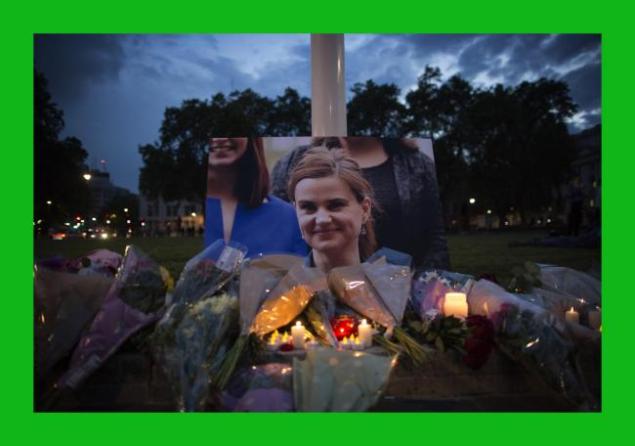
Jo Cox Tolerance

Be tolerant and respect the sincerely held political views of other people. Unless those people happen to be Tory Scum…

Apparently, as we seek to move on from the EU referendum in the post Jo Cox era, we are all supposed to be more civil to one another and focus on what unites us rather than what divides us.

We know this, because the New Statesman high-mindedly told us so:

I believe the horrific killing of Jo Cox is a moment for this New Generation of us to speak more openly about what has gone wrong and how we must, collectively, tackle it. Fundamentally, I believe we must see this as a moment in our history to re-covenant our respect as a society for politics done well. Democracy can ultimately only be as good as the society it represents. We must all learn once again to value free speech and civilised debate, led by open, accessible and accountable Parliamentarians. We must pledge ourselves to continuing the fight for freedom, for tolerance and for understanding between individuals, nations and peoples. We must ensure that love, hope and understanding will always triumph over hate, fear and despair.

We must reject the politics of alarmist language, personal attacks and fear.

A noble sentiment which surely we can all take to heart – it should certainly be possible for all of us to watch our rhetoric in the heat of debate, as none of us benefit from the current toxic political climate.

So why, then, is the New Statesman now actively trying to whip its readership into a quivering fear at the prospect of Andrea Leadsom winning the Conservative Party leadership contest and becoming prime minister?

Having apparently forgotten their own edict to respect people with different political views, the New Statesman instead lists nine reasons why its readers should be terrified – yes, terrified, that emotion which would be more appropriate if masked intruders had just smashed down their front doors – by this relatively unknown politician.

From “9 reasons you should be truly terrified of Andrea Leadsom becoming prime minister“:

With polls suggesting Andrea Leadsom will be one of the two Tory leadership candidates put to a vote of the members, it’s only natural to be curious about what this potential prime minister believes.

Luckily, she’s been busily keeping a blog for the last decade.

It turns out she has strong views on babies’ brains, and thinks she may have discovered the secret to preventing a repeat of the riots which plagued London in 2011.

So far they seem to be trying harder to make Leadsom seem ridiculous than terrifying.

There then follows a list of generally banal and uninteresting statements which Leadsom has made, or policy positions which she has taken, including:

1. Gay couples to the back of the adoption queue

Back in 2009, Leadsom used an adoption case – in which the two children of a heroin addict were given to a GAY couple (!?!?) – to question just when enough is enough when it comes to gay rights. “And if that weren’t enough, the two strangers are a gay couple, who have been selected ahead of several heterosexual couples.”

and

2. Watch out for those single parents

In 2006, she wrote that “the child of a single parent family is 70 per cent more likely (than the child of a two-parent family) to have problems at school, and even to become a drug addict or a criminal.”

and

3. And that anti-marriage media

“The self indulgence and carelessness of non-committed adult relationships is proving fatal to the next generation,” she wrote in 2008.

and

5. Those baby-brained rioters

“I explained how secure attachment or parental love literally hard wires the baby’s brain,” Leadsom wrote in 2012.

and

6. No money for wind farms

“I completely welcome the announcement from the European Commission made recently regarding the possibility of ending all subsidies for winds farms,” she wrote in 2014.

and, particularly ludicrously

8. Those US presidents getting invites before us

“How can France be hosting the 65th anniversary of the Normandy landings with Sarkozy and Obama (neither of them a twinkle in their father’s eye in 1945) in attendance, and yet the Queen of Britain, Canada, and Australia (who was not only alive, but who also served in the war) was not invited until two weeks ago?”

Now, one can disagree vehemently with one or many of these points. This blog certainly does not share Andrea Leadsom’s reflexive opposition to gay couples adopting children, for example. But sincere political disagreements on social, cultural and economic issues – the full range cited throughout the New Statesman’s tawdry hit piece – should be possible without us becoming physically afraid of one another.

Yet the New Statesman presents these rather pedestrian conservative positions and then exhorts its readers to be “truly terrified” by what they see. The magazine does not encourage them to challenge the validity of Leadsom’s views, much less offer its own point-by-point rebuttal. The fact that Leadsom is wrong is taken for granted, which is bad enough, but worse still is the fact that the New Statesman seeks to provoke an emotional rather than an intellectual reaction.

This is exactly what so many commentators (including that magazine) were telling us we should not be doing in the wake of the murder of Jo Cox MP. Less than a month ago we were being told to respect one another’s opinions and engage in calm, rational dialogue. Yet when it comes to confronting conservatives, many opinion leaders on the Left are more than happy to provoke angry, confrontational responses – whether they take the form of hateful mobs outside the home of Boris Johnson on the morning after the EU referendum or articles instructing people to actively fear conservatives.

This is an exclusively left-wing phenomenon. While there are plenty of nasty, stupid reactionaries on the conservative side, rarely do they treat left-wingers as a physical or emotional threat. The murderer of Jo Cox, to the extent that he was motivated by politics rather than madness, is the great exception to this rule. The Left, by contrast – particularly that part of the Left which has been captured by the Cult of Social Justice and Identity Politics – are starting to treat anybody who does not agree with and actively validate their ideas as enemies, literal enemies who mean them harm. If this atmosphere persists, how long will it be until some mentally unstable left-winger, taught by the commentariat to believe that political disagreement is akin to an act of harm, lashes out at an opponent with potentially tragic consequences?

One way or another, we are all going to have to coexist on this island – at least, those of us who are not bizarrely reacting to the Brexit vote by flouncing off to independent countries without an NHS will still have to deal with each other. Treating half of the country as actively dangerous people of whom we should be terrified is about the least conducive thing to bringing about that spirit of tolerance, and the New Statesman should be ashamed for its part in feeding this atmosphere of hysteria.

And look at some of the things which the New Statesman wants its readers to be terrified about. Andrea Leadsom celebrated the potential end of subsidies for wind farms – how scary! Leadsom wants to invest in “psychotherapeutic support for families struggling with the earliest relationship with their baby” – why, she’s just like Genghis Khan! She didn’t take kindly to President Barack Obama interfering in our internal EU referendum debate, and dared to say so – what an awful, America-hating isolationist!

The disbelieving hysteria which greeted Ed Miliband’s 2015 general election loss and now the 2016 EU referendum result shows that much of the modern Left is already utterly incapable of empathising with those holding other viewpoints – and in some cases simply cannot conceive of their existence. Time and time again we hear tearful sob stories from disappointed lefties that they don’t understand how they lost, because everyone they know voted the “right” way.

But with tawdry articles such as this, the New Statesman seeks to turn that gulf of incomprehension into a gnawing, corrosive and dangerous fear of conservatives, and of any ideas outside of the insular leftist orthodoxy. And this could potentially be disastrous for our country, not to mention for individual conservatives currently being demonised as terrifying, two-dimensional cartoon bogeymen rather than thinking, decent people who just happen to have a different outlook on life.

So how should we respond to opposing political views in the post Jo Cox era? Here’s a tip for the New Statesman and everyone else in the media:

If your article encourages people to learn more about those opposing views, or presents an intellectually grounded rebuttal of them, then you’re doing it right.

If your article is a smug, self-satisfied and fundamentally uncurious exercise in confirmation bias, designed to delegitimise and vilify the sincerely held political views of others, then you haven’t learned a damn thing.

 

Trigger Warning

Top Image: Herald Scotland

Agree with this article? Violently disagree? Scroll down to leave a comment.

Follow Semi-Partisan Politics on TwitterFacebook and Medium.

Vote Leave’s Stupidity Echoes On, Threatening To Undermine Brexit

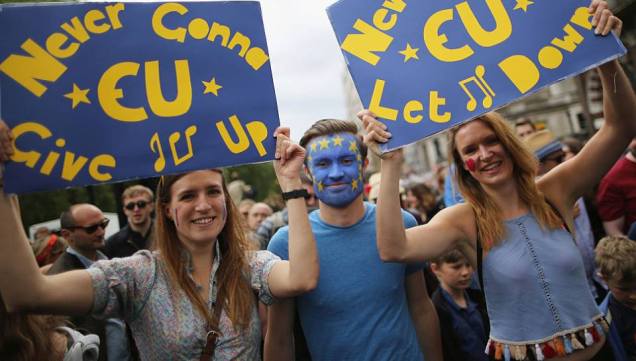
Thousands Of People Take Part In The March For Europe

The flimsy, amateurish lies told by Vote Leave are coming back to bite, and threaten to undermine and unnecessarily complicate Brexit

Two weeks after the astonishing vote for Brexit in the EU referendum, and the sheer amateur stupidity of the official Vote Leave campaign is still causing problems, exactly as this blog and others predicted that it would.

The Guardian reports:

In a separate development, Anthony Eskander, a criminal barrister at Church Court Chambers in London, has posted an opinion arguing that politicians supporting the Vote Leave campaign might have opened themselves up to legal action for alleged misrepresentations over claims that quitting the EU would allow an extra £350m to be spent on the NHS.

It claims politicians might have committed offences of misconduct in public office by promoting the £350m claim. The figure has been called “potentially misleading” by the independent UK Statistics Authority, for failing to take into account the UK’s rebate from the EU. Vote Leave denied during the referendum campaign that it was misleading the public.

We’ve heard this charge that politicians’ claims should be vetted by some kind of Ministry of Truth levelled by lots of people, including an audience member on last night’s Question Time. But this is the first time I have seen it translated into legalese, and even if nothing comes of it (as is likely) it further chips away at the legitimacy of the Brexit vote, further dividing the country and encouraging pro-EU supporters to dig in and calcify their positions rather than accepting the country’s verdict and coming together to make the best of Brexit.

Now, of course if they were not hung up on the false £350 million claim they would have found something else to moan about. Many prominent Remainers (and those in the general public) have shown themselves to be exceedingly sore losers in the aftermath of the Brexit vote, seizing on the slightest fault, misstep or constitutional ambiguity to claim that democracy should be suspended and the result of the referendum overturned.

But still, there was no need for the supposed grown-ups in charge of Vote Leave to make it quite so easy for them. There was no need to persist in publicly airing a patently false and comprehensively debunked (by activists on both sides including thinking Brexiteers, incidentally) claim about how much money the UK stood to save from leaving the EU.

The true figure – closer to £160 million once the UK rebate and EU disbursements back to Britain are taken into account – is still a lot of money, and would have looked just as effective plastered on the side of a bus. But no, the Boris/Gove/Cummings triumvirate decreed that £350 was the magic number, and far too many prominent Brexiteers squandered their credibility by repeating it in some form or another over the course of the campaign.

It is now becoming crystal clear that rather than accepting the result of the EU referendum, many disappointed Remainers are determined to wage a guerilla campaign of attrition against Brexit, a last-ditch rearguard effort to prevent the UK from leaving the European Union. They will use the claims of prominent Brexiteers against them (while sweeping their own dubious claims and falsehoods under the carpet, naturally), explore legal loopholes, use delaying tactics and throw every procedural obstacle they can find across our path out of the EU.

None of this is remotely surprising. All of it could have been predicted – and was predicted by this blog. But still the shining ones at Vote Leave persisted with their strategy, handing the pro-EU crowd more ammunition with every new over-hyped soundbite.

That’s why it is good that both Boris Johnson and Michael Gove are now no longer in the running for the Conservative Party leadership, however dubious the choice before us now is. Remainers (and their celebrity chums) talk about the unravelling of Johnson, Gove and Farage as being akin to the captain abandoning ship after steering his vessel onto the rocks. But the Brexit vote was achieved in spite, not because of, the campaigning of Vote Leave. The fact that some of their leading lights have now been snuffed out is cause for satisfaction, not concern, because it increases the chances of a mature adult taking the reins and negotiating Brexit like a grown-up.

I don’t want somebody who stubbornly persisted in broadcasting a patently, risibly false claim – like a petulant child caught in an obvious lie – to represent Britain in the coming difficult secession negotiations with the EU. I don’t want anybody leading this country whose antics during the referendum and in its immediate aftermath make Brexit any more complicated than it needs to be.

And regrettably, that rules out many of the people most closely connected with the official Leave campaign.


Brexit - EU - European Union Flag - Missing Star - Britain - UK

Top Image: Spiked

Agree with this article? Violently disagree? Scroll down to leave a comment.

Follow Semi-Partisan Politics on TwitterFacebook and Medium.

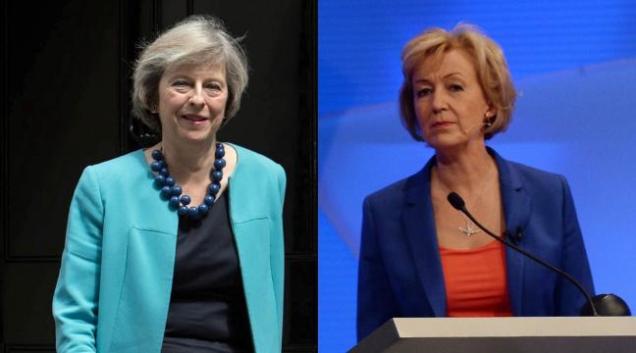
Leadsom vs May – Two Risky Options

Theresa May - Andrea Leadsom - Conservative Tory Party leadership

The very qualities which make Theresa May an awful Conservative leadership candidate on domestic policy mean that she is best equipped to handle our tough secession negotiations with the EU in Brussels. But the future leadership of the United Kingdom cannot be viewed solely through the lens of Brexit…

Dr. Richard North perfectly captures this blog’s dilemma in trying to choose between two highly sub-optimal candidates for Conservative Party leader and the next prime minister:

With a final contest between May and Leadsom, [if] Leadsom wins, we are faced with the great danger of having a woman as prime minister who has little understanding of what it takes to negotiate a successful withdrawal from the EU, and no capacity to develop that understanding.

On the other hand, if May is elected, we are faced with a danger just as great, in having a prime minister who brokers an exit plan which is so successful that we end up stuck with it, and in a position far worse than we are at present.

If this sounds perverse, it is. What we are seeing from the “remains” is a sudden enthusiasm for the Efta/EEA or “Norway option”, an option which, prior to the referendum, they had all been falling over themselves to demolish.

This, as readers here well know, we support as an interim option, acknowledging that it would be completely untenable for the United Kingdom in the longer term. We thus look for a different end game, which then takes us out of the EEA – with other Efta members – leaving the Agreement to collapse.

Unfortunately, the opposition is wise to the flaws of the EEA option and, from the Robert Schuman Foundation, the intellectual heart of the EU, we see proposals to modify the EEA to such an extent that it will soften some of the worst features of the EEA, and thus weaken the pressure to move on.

Dr. North goes on to describe the chicanery by which this might be accomplished – basically by making the EEA Council rather than the Council of the European Union the lead body in approving single market legislation, tackling the (already disingenuous) complaint that being in the EEA means accepting all of the rules while “having no say”.

While superficially appealing, this could lead to Britain being permanently parked in a significantly sub-optimal position on the edge of a still-integrating Core EU in which the eurozone would inevitably be dominant. It would certainly undermine one of the key benefits of Brexit to an interim EFTA/EEA access “departure lounge”, namely the restoration of Britain’s right of reservation which we could apply to new regulation which threatened to inflict significant or unacceptable harm on our key industries or vital national interests.

But while a Theresa May premiership increases the risk that Britain is sucked into a sub-optimal “associate member” status on the EU’s margins, Andrea Leadsom would do almost the exact opposite – invoke Article 50 almost immediately and then effectively let Jesus take the wheel, hoping that something satisfactory is miraculously negotiated within two years. Having recently started to appreciate the true complexity of the global trading and regulatory environment, largely thanks to my involvement with The Leave Alliance, it is immediately apparent that Leadsom’s cavalier approach to our EU secession negotiations is fundamentally unserious, no matter how genuine her euroscepticism.

Leaving aside issues of personality, experience and gravitas – for few could seriously deny that May would be the more formidable negotiator to fight Britain’s corner – it is hard to see how a Leadsom negotiation could succeed when the candidate seems sure of little besides her impulse to take Britain out of the EEA, making our trade subject to the EU’s common external tariff in the far from certain hope that doing so dramatically cuts immigration.

Therefore, from a purely Brexit-related perspective, Theresa May seems (counter-intuitively) to be the better choice if we want to maximise our chances of escaping from the EU’s always-tightening political union while disrupting trade as little as possible – even if this means that we have to remain permanently vigilant to ensure that May does not backslide from her commitment that Brexit means Brexit.

But of course this Tory leadership election is not only about Brexit – though our secession from the European Union is by far the most important issue on our national plate, and will be for some time. Still, other issues cannot be overlooked entirely. Foreign policy, civil liberties, economic freedom, education, healthcare and the role of government matter enormously too. And in many of these areas, Theresa May is extraordinarily deficient.

This is why I cannot simply swallow my distaste and endorse Theresa May outright. All of these other policy considerations must also be factored into the mix – which is what I shall attempt to do in my next blog post.


Brexit - EU - European Union Flag - Missing Star - Britain - UK

Top Image: BT

Agree with this article? Violently disagree? Scroll down to leave a comment.

Follow Semi-Partisan Politics on TwitterFacebook and Medium.

Quote Of The Day


“Not all Remain voters think the white working classes are ignorant, parochial trash, but all people who think the white working classes are ignorant, parochial trash voted Remain.”

– Brendan O’Neill


A welcome, witty and accurate antidote to the sanctimonious “not all Brexiteers are racists…” guilt by association theme doing the rounds on social media (and echoed by much of the commentariat) at present.


Brexit - EU - European Union Flag - Missing Star - Britain - UK

Agree with this article? Violently disagree? Scroll down to leave a comment.

Follow Semi-Partisan Politics on TwitterFacebook and Medium.

George Osborne Must Resign, Now

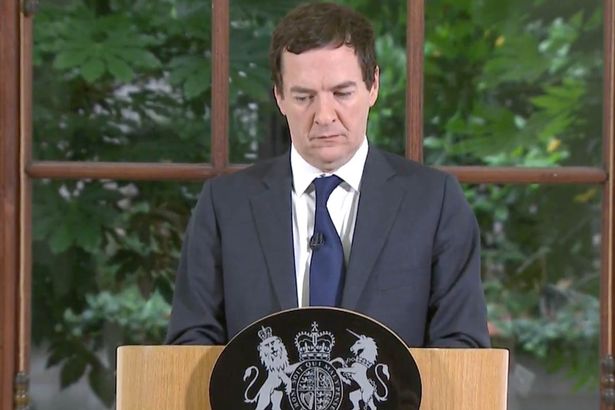
George Osborne - EU Referendum - Brexit - Resign

Worse than useless

Ben Kelly of The Sceptic Isle makes a devastating case for George Osborne’s immediate dismissal from the Treasury:

During the campaign Osborne forgot his responsibilities as Chancellor and showed himself willing to damage the economy by deliberately fomenting uncertainty and prophesising catastrophe. This has aggravated the economic fallout in the aftermath. He wasted £9million of taxpayer’s money on pro-EU leaflets and converted the Treasury into a partisan propaganda machine. He pressed public officials to publish dodgy dossiers predicting economic doom if we left the EU. This can only have increased the cynicism that the public feel towards politicians and damaged the reputation of the Treasury.

For the entire first weekend after the referendum, with the markets panicking, George Osborne apparently went into hiding. We needed him to offer reassurance and some indication that the Treasury was prepared. When Osborne finally appeared he made it “very clear” that the country would be poorer following the people’s decision to leave the EU. In an interview with Nick Robinson on the Today programme, he repeated his pre-referendum threat of a tax increases and spending cuts. Instead of offering reassurance he is making the situation worse and rather than revealing contingency plans he has petulantly insisted that “it was not the responsibility of those who wanted to remain in the EU to explain what plan we would follow if we voted to quit the EU.” This is the second most powerful man in our government abdicating responsibility.

With that, it became abundantly clear that he could no longer perform his role as Chancellor and was incapable of restoring economic confidence. With this man in charge project fear will be a self-fulfilling prophesy.

We now know that Wolfgang Schäuble issued his warning that we couldn’t participate in the Single Market if we left the EU at the behest of George Osborne. I have no doubt that in time we will find out that the Chancellor spent the months before the referendum making many calls and pulling in favours in order to boost his fear mongering campaign. Just think about that! A British Chancellor appealing for authoritative institutions and economists to warn that the British economy was weak and risked collapse outside the EU. Has there ever been a Chancellor so aggressive in his desire to run his own country down?

Remainers now point to our current economic turmoil as proof that they were right all along, but it was always inevitable that a political decision of this magnitude, with such huge potential for change, was going to cause economic uncertainty and short term pain. Now we need people in government to restore confidence and map out the future. The Chancellor who has been actively sabotaging our economy is the wrong man for the job. There should be no place for him in government.

Osborne took a huge gamble with a scorched Earth policy, he lost; and we are now suffering the consequences. Now he must go. It is too late to do the honourable thing now, but he can at least finally do the right thing and signal his intent to leave office when the next Conservative leader is elected.

I am very sympathetic to Kelly’s argument. It would be one thing if George Osborne had graciously accepted the result of the referendum and then immediately and publicly got to work ensuring that Britain’s sails were perfectly trimmed as we sailed into the short-term storm of post-Brexit hysteria. It would definitely have been positive if Osborne had pulled a secret Brexit plan from his back pocket and set the Treasury to implementing it.

But Osborne did none of these things. The submarine chancellor did as he always does – disappear for days on end while others take the flak, appearing before television cameras only when it absolutely cannot be avoided (such as at Treasury Questions in Parliament).

And while it was inevitable that there would be market turbulence following geopolitical news of the magnitude of Brexit, it is hard to deny that Osborne almost certainly exacerbated this fallout – the steepness of the fall in the pound, the stock market fluctuations, the delayed investment decisions by firms – by endlessly catastrophising Brexit in his failed bid to win the referendum for the Remain side. Of course this was a difficult line for a Remain-supporting chancellor to take, wanting to make his case but careful not to “talk down Britain” at any point. A true statesman would have successfully trodden this fine line. George Osborne stepped way over it.

But most damning of all is the way that Osborne helped to furtively arrange for senior foreign voices – politicians, NGO heads and others – to make their own interventions in our national EU referendum debate, actively putting words in their mouths. In many cases these words turned out to be unduly harsh and threatening words, representing the chancellor’s own bluster more than the sincere and considered opinion of the speaker concerned – which is why we are now seeing partial recantations from the likes of Wolfgang Schäuble.

As the EU referendum campaign drew to its hysterical, bad tempered climax, this blog openly wondered what T-word best describes a senior serving politician who deliberately seeks the help of foreign leaders, business moguls and NGO heads to bully and threaten his own people into making a certain decision.

I do not regret floating the T-word for a single second. As Chancellor of the Exchequer, George Osborne debased and demeaned himself and his high office. He came down hard on the wrong side of the most profound and existentially important question to face Britain since 1945, and made almost zero preparation for the eventuality of a “Leave” vote in the referendum. By his words and actions he sullied both the tone of the EU referendum campaign and contributed toward the subsequent instability.

As Ben Kelly says, the time for George Osborne to do the honourable thing has long since passed. But this failed chancellor – who proved himself unable to deal with Britain’s deficit and unable to plan strategically in the event of a Leave vote – must now do the right thing and quit the British political scene at the earliest responsible opportunity.


Brexit - EU - European Union Flag - Missing Star - Britain - UK

Top Image: Daily Record

Agree with this article? Violently disagree? Scroll down to leave a comment.

Follow Semi-Partisan Politics on TwitterFacebook and Medium.