Donald Trump vs Hillary Clinton: A Nauseating Choice But An Easy Decision

Faced with a choice between Donald Trump and Hillary Clinton, nobody will come away from this American presidential election looking very good. But there is still a right choice, and a wrong one

Faced with the choice between Donald Trump and Hillary Clinton, I’m with her.

I do so with zero enthusiasm – certainly far less than Andrew Sullivan, once the most vocal of Clinton’s enemies, now seems to be displaying:

Some readers think I’ve been too negative, even cynical, tonight. Believe me, I am utterly uncynical about this election. I’m worried sick. We need to put behind us any lingering beefs, any grudges, any memories from the past – and you know how I feel about the Clintons’ past – in order to save liberal democracy. The only thing between him and us is her. So – against all my previous emphatic denials – I’m with her now. As passionately as I ever was with Obama. For his legacy is at stake as well.

I support Hillary Clinton over Donald Trump not in the expectation that a second Clinton family presidency will do anything to make America significantly better – she is nothing if not a continuity candidate, the living embodiment of a third (and quite possibly fourth) Obama term. I find myself supporting Clinton because the anti-establishment wave which helped deliver Brexit and the hope of return to self-government for Britain promises no equally great benefits for America so long as it is led by a charlatan like Trump.

However tawdry and oversimplified the mainstream Brexit campaign may have been, the dream of freeing Britain from a suffocating, steadily tightening political union with Europe was and remains a noble and vital goal. Trump’s goal for his own country consists of Making America Great Again (MAGA), which he plans to accomplish by building a massive wall and sending the bill to a country who will refuse to pay it, and by defeating the Islamic State and ending the scourge of Islamist terror attacks “very quickly” with a few harsh words from the Oval Office and no American boots on the ground.

Of course the United States has constitutional firewalls and checks & balances to prevent excessive overreach by the executive branch, but the man is just appalling – a shallow, vindictive egotist with almost zero attention span (as proved by his reputed offer to give John Kasich complete control of foreign and domestic policy, and nearly every speech he has ever given).

Many of Trump’s apologists in the Republican Party have been reduced to saying “oh, it’s just a persona” as if that somehow makes it better. Either he means what he says when he promises authoritarian, big government solutions or his populism is just a lie and he is going to massively let down his voters in office, creating an even more wild backlash which nobody will be able to control. Neither option bodes well for sensible conservative government.

And so while a Hillary Clinton presidency will be technocratic, soul-sappingly un-ideological, politically calculating and almost certainly stymied by furious GOP obstructionism, at least it buys time for the Republicans to wake up and try to engage with the public anger against the political elites in a more constructive way.

The Republicans have tried riding the Tea Party tiger, and were consumed by it. Now they have hitched their fortunes to Donald Trump, who will (barring further Islamist attacks or police shootings) lead them to defeat with dishonour. It is difficult to imagine a rock bottom lower than being led to defeat against Hillary Clinton by Donald Trump. Hopefully this is that rock bottom, and the party of Abraham Lincoln will rise from the ashes of defeat in 2016 chastened and renewed.

But even if none of this comes to pass, even if the GOP learns absolutely nothing and goes on to nominate Herman Cain or Sarah Palin in 2020, at least we have bought four more years of relative stability. If you take Donald Trump at his word, he is a dangerous demagogue. If you belong to the school of thought which says that it is all an act, then he is perpetrating a fraud on those millions of his supporters who take his public utterances seriously. Neither option is good. This is not somebody fit for the presidency.

Many of the scandals hanging over Hillary Clinton have substance, and she undoubtedly has been dishonest in her handling of the email scandal – she was wrong to conduct sensitive government business over a bootleg server installed in her home, and she was most definitely wrong to be so evasive and even downright false in her subsequent explanations of her behaviour. In any other circumstance – and I mean any other circumstance – this alone would disqualify Clinton from the presidency.

But these are extenuating circumstances. I’m sorry Trump supporters, but I have searched and searched and I cannot see in Donald Trump the principled, fearless happy warrior fighting the elite on behalf of ordinary Americans which you see. I see a shrewd, calculating and undeniably effective demagogue, one who understands better than any other recent insurgent politician how to command public attention, and who was aided in this tawdry work by a debased American media class whose great crime in giving undeserved oxygen to the Trump campaign in the hunt for ratings surpasses even their craven and servile attitude toward the Bush administration in the years after 9/11.

And in these exceptional times, the only responsible thing to do is to pick the lesser of two evils. Hillary Clinton continues the dubious tradition of American presidential dynasties. She has a perpetual cloud of scandal hanging over her head which cannot all be dismissed as the fact-free imaginings of Newt Gingrich. And she is a political weathervane with seemingly no fixed political convictions or guiding ideology. But even for all of these flaws, at least she is not Donald J Trump.

However, this blog is concerned that the current Hollywood celebrity love-fest taking place at the DNC convention in Philadelphia, while buoying the spirits of Hillary fans (and disappointed Bernie Sanders supporters) is actually feeding the Trump campaign’s effective – and partially true – message that the American cultural elite is bullying ordinary people into feeling ashamed of their often perfectly legitimate political concerns.

And never more so than on the topic of immigration, where whatever racism and xenophobia exists at the fringe of the Republican Party is more than cancelled out by the gleeful subversion of law and language encouraged by many mainstream Democrats, with their embrace of the exculpatory term “undocumented immigrants” and repeated, tawdry attempts to ennoble the idea of living in America illegally.

As Jeremy Carl fumes in the National Review:

Witness what we have just seen: One candidate for president has been the first-ever candidate for president endorsed by the union of Border Patrol agents. The other candidate proudly features, on the first night of her convention, illegal aliens up on the main stage, while Democrats nationwide cheer.

If you wanted to understand the hold that Donald Trump has on a large swathe of conservatives and even fed-up Democrats and independents, the Democratic convention is pretty much a living explanation.

At this point, we’ve become so accustomed to the Democrats’ immigration lawlessness that too many of us accept it. We think there is simply nothing strange about one of our two political parties happily parading lawbreakers in a forum where they are celebrated for their law-breaking.

As a future American citizen (proudly married to a Texan, with the ultimate intention of living back in the United States) who will one day gratefully join the back of the line and emigrate the lawful way, nothing enrages me more than this holding-hands-underneath-a-rainbow celebration of people who either snuck into America illegally or otherwise outstayed their visas. But the Clinton campaign’s emotion-based, identity politics-ridden position on “undocumenteds” (whoops, where did their documents go? Never mind, no point being a stickler for the rules) should not just be offensive to current and future legal immigrants who played by the rules. It should be offensive to every single person who places value in the rule of law.

And still Clinton is better than Trump. Some of Trump’s ideas on immigration – such as defunding “sanctuary cities” which refuse to cooperate with federal immigration rules and officials, and ending the anachronism of birthright citizenship – are entirely sensible. But the sanctions with which Trump intends to threaten Mexico in order to coerce payment for building his wall would greatly hamper cross border trade and actually put people out of work, as would many of his other protectionist policies.

Donald Trump has the greatest potential to harm America in the sphere of foreign policy. When it comes to domestic matters, the ability of the executive branch to take drastic or radical action is fairly well constraint by the checks and balances built into the American system of government. But in managing America’s relationship with other countries, President Donald Trump would have wide-ranging abilities to antagonise or alienate other countries in a way which the Constitution is not designed to constrain. Now, some of those countries may well deserve a tongue-lashing from Donald Trump – that is a large part of his appeal, the ability to come out strongly against the indefensible. But if Donald Trump has a coherent foreign policy, it is a closely guarded secret. There is certainly no mention on his campaign website. Therefore, there is no guarantee that Trump will antagonise only those countries which America can afford to alienate.

One may disagree with many of Hillary Clinton’s decisions while serving as Secretary of State, but at least she knows her way around foreign policy and will not need to keep Wikipedia to hand as she takes congratulatory calls from world leaders if she wins the election. That matters. Leadership matters, even if the direction of that leadership is sometimes less than optimal. While the American presidency always involves on-the-job training with incredibly high stakes, to bestow that office on somebody with no record of or interest in public service prior to this point would be reckless in the extreme.

Yet Hillary Clinton can easily lose this election. More to the point, her supporters can lose this election for her with their sanctimonious moral grandstanding, finger-wagging lectures to Middle America and constant diminution of the issues and concerns which motivate Trump supporters. In Britain we have already seen how endless celebrity interventions accusing Brexit supporters of racism and evil intent quite rightly provoked a backlash against the bien-pensant clerisy who haughtily preached that Britain is no good and that we could not survive without the EU’s antidemocratic supranational government. Piling up the celebrity endorsements could end up harming Hillary Clinton more than helping her.

And so the need now comes hardest upon the Clinton campaign manager, Robby Mook, to be a skilled and fearless strategist. Trump will not be beaten easily. The gaffes and missteps which harm normal political candidates only further cement his popularity among his most ardent supporters. And Hillary Clinton is a famously weak political candidate, less effective on the campaign trail than she is when in office.

This blog takes absolutely no delight in making its choice for the 2016 presidential race. I would have leapt at the chance to support a smart, sane conservative alternative to Democratic Party occupancy of the White House. But eight years of hysterical, hyperbolic opposition to Barack Obama effectively put rocket boosters on the GOP’s crazy wing, and now there is no smart, sane conservative left to support. In fact, there is no small-c conservative running in this presidential race at all.

That failure is not the fault of Barack Obama. He did not spike the juice of every Republican politician with crazy powder over the past seven years. This is an entirely self-inflicted wound struck by obstructionist conservative politicians who chose to make American politics this angry and volatile, aided by the conservative-industrial complex of media and punditry who cynically portrayed what has been a frustratingly uneven economic recovery and an overly timid and contradictory foreign policy as an unprecedented American decline brought about by Kenyan socialism.

In short, it is the fault of the political-media class, and the opportunistic Republican Party in particular, that Donald Trump was able to take over the GOP so easily. It is their fault that the only semi-responsible choice on the ballot paper will be for Hillary Clinton’s predictable, uninspiring centre-leftism.

And it is their fault that this blog is left with no choice but to follow my conscience and support Hillary Rodham Clinton for president – very much the lesser of two evils.
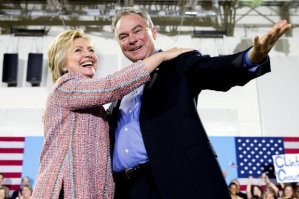
 

Hillary Clinton - Tim Kaine

Support Semi-Partisan Politics with a one-time or recurring donation:

Agree with this article? Violently disagree? Scroll down to leave a comment.

Follow Semi-Partisan Politics on TwitterFacebook and Medium.

Fr. Jacques Hamel, Martyred By Islamist Thugs Acting In The Name Of ISIS

ISIS hostage - catholic church

The cold blooded murder of a Catholic priest, executed at the altar of his own church by young Islamist thugs, demands a greater response from us than the usual standard, sorrowful Twitter hashtag

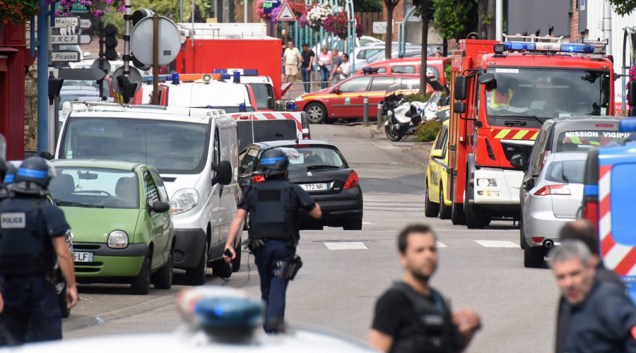
Another day, another abhorrent, despicable and unacceptable Islamo-fascist terror attack in France, this time targeting a Catholic church in which an 86 year old priest had his throat slit – while celebrating Mass – by Islamist thugs acting in the name of ISIS.

What happens when the sheer number of small and medium size Islamo-fascist terror attacks (or the aura of politically correct unease at confronting them) becomes so great that the media simply stop reporting them fully?

Melanie McDonagh wonders in The Spectator:

In Michel Houellebecq’s novel, Submission, about a Muslim Brotherhood takeover of the French government (liberals and conservatives agreed this would be preferable to a National Front government), the interestingly prescient element was the non-reporting by television and papers of outbreaks of violence prior to the change of government (Twitter didn’t really feature in this novel). And that rings true. We’ve already got self-censorship when it comes to reporting attacks by Muslim refugees (the gun attack by a German-Iranian patently fell into a different category) in Germany and Scandinavia, and an almost comical reluctance anywhere in Europe to identify Islamist attacks as such – until IS takes credit for them, even the work of freelances. Plainly we have to guard against language that would demonise an entire community, but within that reasonable limit, we must require both politicians and public service broadcasters to talk plainly. And when Muslim extremists slit the throat of a priest in his own church, we’re looking at religiously motivated murder, entirely of a piece with the same religiously motivated murder of Christians and others being carried out in the Middle East. Shall we say so?

This is my concern too. While reading Houllebecq’s Soumission last year I was struck by the plausibility of the author’s scenario – a craven political/media class desperate to avoid facing up to the nature of the threat ultimately ceasing to report on the fundamentalist religious violence even as it grew. One scene features a wealthy society event attended by the academic elite of Paris, interrupted by the sounds of distant gunfire in Paris – an Islamist attack or far-right counter-attack which was barely acknowledged by the partygoers let alone mentioned on the later television news bulletins.

Already we have seen the first signs of “terror fatigue” in the mainstream media. When a suicide bomber detonated his explosives at the gates of a music festival in Ansbach, Germany late on Sunday night, Britain’s rolling TV news channels briefly mentioned that an incident was underway, but otherwise continued with their normal programming. By the early hours of Monday morning they had bothered to get a couple of eyewitnesses on air via telephone, but it was not until the breakfast news that they gave it the full terror attack treatment which we have come to expect from the news. Evidently these incidents are now coming so thick and fast that the BBC did not consider it worthwhile waking up their A-team presenters or reporters in the middle of the night for “just another” suicide attack on the streets of Europe.

This is the new normal. And as this blog argued yesterday, Europe’s political class and virtue-signalling members of the public must shoulder their share of the responsibility for our increased vulnerability to attack. Whether it is by cheering on the opening of Europe’s gates to millions of improperly-vetted migrants, a small number of whom have deadly intent, or furiously refusing to confront the fundamentalist religious nature behind that evil intent, we have denied ourselves the ideological, spiritual, procedural and technological means to properly defend ourselves and our civilisation.

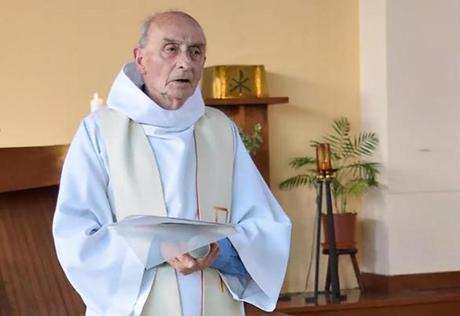
Father Jacques Hamel died doing what he had done for 58 years of faithful service – proclaiming the Word of the Lord and celebrating the Eucharist. Though his death was unimaginably barbaric and violent, at least the name of Fr. Jacques will live on as somebody who proclaimed his truth and defended his values to his last day. Can the same be said for many of us, especially those of us who seek to reach some kind of appalling and unachievable truce with the Islamo-fascists? How will those of us be remembered in history who seek to excuse Islamist terror, laughably excusing it or explaining it away on the grounds of foreign policy or housing policy or welfare cuts?

On this one grim occasion we can at least be grateful for France’s historically strong secular traditions. The cold-blooded murder of a priest celebrating Mass in a more devout country could well have lit the touchpaper for religious war and serious civil strife. France, being more secular, will likely not see as great an anti-Islamic backlash as if this had happened in more Catholic country like Poland.

But there the good news ends. If they were not already high on the list of potential targets, churches, synagogues and the priests and rabbis who lead worship in them will now be in the crosshairs of every budding wannabe jihadist already in Europe, as well as those who have yet to arrive. Every parishioner going to Mass will now have pause to stop and consider their safety as they fill the pews this Sunday, and every subsequent Sunday. It is physically impossible to protect every church in the country, particularly against assailants armed only with knives and fake explosives.

On the plus side, President Francois Hollande has finally been shamed by events (the weekly accumulation of terrorist atrocities and the growing death toll) into declaring that France is at war with the Islamic State and therefore, by extension, with the extremist fundamentalist ideology behind it. But it is too little, too late.

As Harry de Quetteville puts it in the Telegraph:

So we should remember this: the truly great leaders now, those who can genuinely bring security and are worth voting for, will not be those such as Marine Le Pen who seek to exploit division for power. But neither, crucially, will they come from the ranks of those who fail to address what voters see as blindingly obvious: that terror and immigration are connected. If Angela Merkel persists in doing so, even she will be brought low by it. If the Democrats continue not to talk about terror, it could cost Hillary Clinton the White House.

In Britain we have grown used to talking throughout the Brexit campaign about a disconnect between politicians and the public. “They just don’t get it,” said the ranks of the disaffected, as they deserted Labour for Ukip and voted Leave. Even now, our main parties are struggling to offer even an initial response to the economic impacts of globalisation.

But the consequences of a similar disconnection between public and politicians over terror would be unthinkable – menacing to the liberty and liberal values that define our societies.

The politicians to prize, then, are those who can pull their heads out of the sand without stirring up the mob.

Such prize politicians seem few and far between in France, Germany and Britain. In fact it is hard to remember a time when the quality of leadership was held in such low esteem by a political class who now prize the ability to pander to chosen voting constituencies above all else. With the partial exception of Jeremy Corbyn on the Left, Britain’s major political parties have zero interest in telling hard truths to the British people or proposing anything other than glib, painless (and ultimately unworkable) fixes.

One faction of the country in particular – the Guardianista metro left – is not even yet willing to describe these attacks as religiously motivated, ascribing them simply to “troubled individuals”. When half the country is unable (or stubbornly, desperately refuses) to identify the ideology which murdered an octogenarian priest at the altar of his own church, how do we ever confront it?

May God grant eternal rest to His faithful servant Fr. Jacques Hamel.

May he rest in peace and rise in glory.

And may we finally come up with a response to this sustained Islamist assault on democracy and freedom of speech and religion which amounts to more than a Twitter hashtag and a few bunches of flowers.


Fr Jacques Hamel - Catholic Priest

Support Semi-Partisan Politics with a one-time or recurring donation:

Agree with this article? Violently disagree? Scroll down to leave a comment.

Follow Semi-Partisan Politics on TwitterFacebook and Medium.

Brexiteers Are Not Violent Savages. In Fact, More Brexiteers Than Remainers Strongly Oppose The Death Penalty

Darwin - Evolution of man - EU Referendum - Brexiteers

The BBC uncovers ‘devastating evidence’ linking support for Brexit with being a primitive Neanderthal

The latest act in the BBC’s ongoing effort to catastrophise Brexit and discredit Brexiteers is this delightful article from last week’s News Magazine, exploring the link between Brexit and the death penalty:

Immediately after the vote, commentators said it was about class – about professionals living and working in big cities, especially London (who voted Remain), versus working class people in smaller towns, especially in the north of England (who voted Leave).

So you would think that if you know that someone is working class and has a low income, you’d be able to confidently guess they voted Leave. But according to Stian Westlake, Head of Research at the think tank Nesta, this is not the case.

“If you look at someone’s class status and their income, and you try and use that to guess whether or not they voted Remain, it turns out it’s not that much better than guesswork. It gives you around 55% accuracy, and obviously a guess would give you 50% accuracy,” Westlake says.

His figures come from the British Election Study, in which around 24,000 people were asked about their voting intentions in the EU referendum.

Respondents to the survey were also questioned on their views on other things, such as the death penalty – and this provides a much better indicator of how people voted, Westlake argues.

“If you look at attitudes to questions such as, ‘Do you think criminals should be publicly whipped?’ or ‘Are you in favour of the death penalty?’ – those things are much better predictors, and you get over 70% accuracy,” he says.

“To give you an idea of how good a predictor that is, if you ask someone, ‘Do you think there is too much European integration?’ – which you’d think is a pretty good indicator – that only gets you to the high 70s. So if you can get to 71% or 72% prediction from these questions about traditional values, then it suggests it is that, rather than income or class, that is really driving the vote for Leave.”

So now Brexiteers are violent savages, dangerous authoritarian people who cannot keep their base desire for retribution and “an eye for an eye” under control. Brexit Britain will see a return of the stocks, the scold’s bridle and even the gallows in the town square if we get our way, the BBC is effectively telling its readers.

And of course this fits in with everything that Remainers like to think about themselves, and tell themselves about those who want Britain out of the European Union. To their minds, Remainers are compassionate, progressive, outward-looking, tolerant and fair, while Leavers are sneaky, conniving, closed-minded, inward-looking, highly intolerant and “post-factual”. Remainers want to hug a hoodie. We, apparently, want to bash their heads in with a brick and hang them from lamp posts as a warning to others.

Except that in their haste to demonise Brexiteers, the BBC neglected to mention the percentage of Remainers who also back the authoritarian policies cited in the survey. And there is a reason for this – to some extent, the data actually exonerates Brexiteers, while painting Remainers in an equally bad light, if not worse.

BES - Death penalty - Brexit

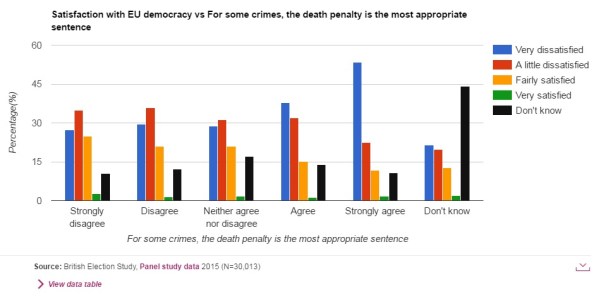
This chart plots satisfaction with EU democracy (a reasonable indicator of general euroscepticism given the fact that sovereignty and democracy were given as the primary motivation for voting to leave, according to post-referendum polling) against strength of agreement with the death penalty. The data is taken from the British Election Study, and and can be freely found and researched on their website.

And what we see here is that of those who strongly oppose the death penalty, over 62% are eurosceptic (that is, either very dissatisfied or a little dissatisfied with EU democracy). Of those who disagree with the death penalty a little less staunchly, over 65% are eurosceptic.

Admittedly, more staunch eurosceptics take up a much larger proportion of those who agree or strongly agree with the death penalty. But the europhiles (taken as those fairly satisfied or very satisfied with EU democracy) hardly cover themselves in glory as principled death penalty abolitionists. The proportion of europhiles either against or strongly against the death penalty struggles to break much above 20%.

This would seem to suggest that however much the BBC’s “traditionalist” narrative may play a part, there are also a significant number of very firm eurosceptic death penalty opponents who supported Brexit. That would make sense. This blog is one of them, as is nearly every other Brexiteer I happen to know. But why report on the principled band of anti death penalty Brexiteers when you can just play to the gallery and point at those eurosceptics who want to bring back hanging? It just fits so neatly into the tidy little narrative about primitive, left-behind idiots voting for Brexit against their own supposed interests.

But perhaps if the data tells us anything  at all, it is that people with strong opinions on either side of the death penalty issue (and perhaps other issues too) tended to favour leaving the European Union, while Britain’s army of vague, wishy-washy and noncommittal people wanted us to remain, guided as always by their dithering uncertainty and fear of change. After all, when it came to strongly disagreeing (or even strongly agreeing) with the death penalty, Britain’s EU cheerleaders are almost nowhere to be seen. That hardly fits with their sanctimonious claim to be more open and tolerant than the rest of us.

But that doesn’t quite fit the BBC’s preferred narrative. Far better to concentrate on the spike and declare all Brexiteers to be violent, vengeful authoritarians. That is the narrative the BBC loves to tell and Remainers love to hear, so that is the narrative which we will continue to get.


Abolish death penalty

Bottom Image: ForceChange

Support Semi-Partisan Politics with a one-time or recurring donation:

Agree with this article? Violently disagree? Scroll down to leave a comment.

Follow Semi-Partisan Politics on TwitterFacebook and Medium.

Theresa May’s Government Should Dramatically Increase Defence Spending

USO lounge airport

It is time to reject David Cameron’s lazy, noncommittal approach to our armed forces and national defence

After a rather assured start as Britain’s new prime minister, will Theresa May act to beef up Britain’s flagging and cash-starved armed forces, making them as steely and formidable as her own carefully cultivated image?

Conservative Home makes the case:

The introductions to British defence reports are characterised by assurances of the UK’s continued global relevance and ambitions. By contrast the bodies of most reports are composed of capabilities we allegedly no longer require. At some point rhetoric and reality inevitably collide.

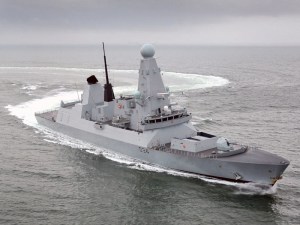
The Royal Navy now has 19 frigates and destroyers where in 1998 it had 34. The UK has fewer tanks than Switzerland. The British MOD leads the world in operating at the extreme edge of the possible.

Our current defence strategy is largely premised on not having to defend ourselves. The lifecycle of the defence systems and equipment procured today is up to 45 years. Forty-five years ago, in 1971, the Iron Curtain was as firm as ever, Deng Xiaoping was yet to take power and introduce China’s transformative market reforms and Osama Bin Laden was merely a wealthy Saudi teenager. By historical standards these strategic shifts are reasonably minor. Nevertheless government strategic analyses generally assume the relative stability of the last 15 years will continue indefinitely; the 2010 and 2015 defence reviews inexplicably argues the UK will no longer need the capability to deploy an expeditionary force of the size sent to Iraq or to conduct two simultaneous medium sized operations as in Iraq and Afghanistan. Hopefully the 2020s are indeed an exceptionally peaceful decade, but premising our defence policy on an unstated and unjustifiable assumption they will be appears unwise.

Three illusions aid this approach to defence. Firstly over-dependence on Trident; if we continue to rely so heavily on our nuclear capabilities some scenarios will confront us with a choice between launching an immoral first-strike nuclear attack or doing absolutely nothing. Secondly over-dependence on NATO; the British Army is intended to act as an interoperable auxiliary to a much larger US force. Perhaps the US will remain highly committed to the defence of Europe, but Donald Trump is cheered when he denounces NATO and Newt Gingrich has publicly dubbed Estonia to be “a suburb of St Petersburg”. In 2012 Obama’s (largely rhetorical) pivot to Asia attempted to shift the US’s strategic and economic centre of gravity from the Atlantic to the Pacific. In this political environment, it would be unwise to have no plan for US disengagement from Nato. Finally, British defence planning tends to assume lost capabilities can be regenerated rapidly in the event of a crisis. Given the extraordinary logistical hurdles which confronted the Ministry of Defence in the run-up the Invasion of Iraq, a scenario consistent with defence planning assumptions, wide scale attempts to regenerated lost capabilities would probably be impossible except in the long-term.

Fundamentally only a very few voters have any personal contact with the military. Servicemen and women are constitutionally forbidden from protesting. The Ministry of Defence is therefore at a crucial disadvantage in interdepartmental budgetary warfare. Parliamentarians have a duty to compensate by holding the government to account. Of course there is no shortage of Conservative MPs who would favour higher defence spending but they face the challenge of highlighting less deserving areas of spending to cut instead.

Absolutely. And over-reliance on Trident in particular can only lead to a never-ending series of national humiliations, as adversaries test us and find us continually unwilling or unable to respond with conventional forces.

The military in particular needs to start throwing its weight around more, agitating for lost capabilities to be restored and highlighting the risks to Britain if they are not, rather than their current approach of quietly begging for cash behind the scenes but maintaining a brave face to the world. Sometimes, politicians need to be shamed into doing the right thing, perhaps especially when the government is a lily-livered centrist Conservative administration more concerned about pursuing “social justice” than defending the country. Operation Shame should therefore begin now.

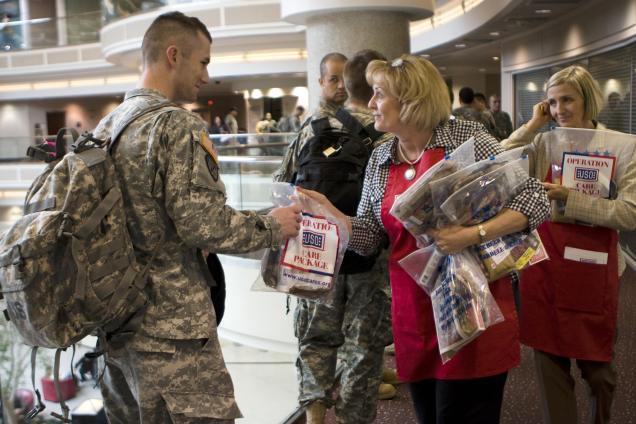
ConHome are also right to point out that very few voters have any personal contact with the military. This is in marked contrast to countries such as the United States, where armed forces veterans are not only more visible, but much more highly honoured too. People visiting America for the first time are often struck by the frequent presence of soldiers in transit at airports, USO lounges set aside for them, and veterans being honoured at public events such as sports games or political rallies, often asked to stand as the crowd show their appreciation. Many restaurants and businesses offer a discount to veterans. In nearly every way, American society is geared to respect and honour the military more than is now the case in Britain.

The effects of the armed force’s diminished role in public life are telling. When the military is so invisible to most people most of the time, it naturally loses out in the endless departmental cash grabs every year when the government announces its budget. The NHS has a dedicated army of online priests and priestesses, endlessly and mindlessly singing the praise of the health service from dawn to dusk. Consequently, politicians terrified of electoral retribution throw more money at the NHS every year while rarely standing up to the many entrenched special interests which corrupt the working of the world’s fifth largest employer.

We need to start taking the defence and security of our country as seriously as many of us seem to take defending the NHS from criticism, reform or privatisation by the “Evil Tories”. That means putting great pressure on Theresa May and her government to show a steely resolve when it comes to protecting and growing the MOD’s share of government spending. Somebody needs to send a memo reminding Cabinet that NATO’s 2% of GDP target is a minimum aspiration, and not a level to be particularly proud of.

And we all need to let this government know that whatever other fiscal and political pressures there may be, doing the bare minimum when it comes to our national defence is simply no longer acceptable.


PHOTEX-HMS DIAMOND

Top Image: Nicholas Kralev

Bottom Image: Defence Industry Daily

Support Semi-Partisan Politics with a one-time or recurring donation:

Agree with this article? Violently disagree? Scroll down to leave a comment.

Follow Semi-Partisan Politics on TwitterFacebook and Medium.

Weekly Terror Attacks Are Europe’s New Normal – For This, You Can Blame Angela Merkel And The Virtue Signallers

Angela Merkel - Migrant Crisis

Terror is the new normal, and Europe’s progressive virtue-signallers must shoulder their share of the blame

Douglas Murray has no time for a craven German government which prioritised the burnishing of its humanitarian credentials over the safety of its own citizens:

The Thursday before last it was Nice.  But already the slaughter of 84 people in France is just so, like, a fortnight ago.  Last Monday an ‘Afghan’ ‘teenager’ called Mohammed Riyad screamed ‘Allahu Akbar’ (‘Allah is greatest’) on a Bavarian train and started chopping people up with an axe.  I put ‘Afghan’ and ‘teenager’ in quotation marks because Mohammed was probably from Pakistan and is no more likely to be a ‘teenager’ than the thousands of other Peter Pans who Chancellor Merkel welcomed into her country last year.  Still, she gets to feel good about herself.  Shame the same can’t be said for the family from Hong Kong who had the misfortune to be sharing a train carriage with Frau Merkel’s latest conscience-cleaning import. Their relatives are still trying to arrange for the less badly injured family members to return home.

On Tuesday last week it was a 37-year old man called Mohamed Boufarkouch who started shouting ‘Allahu Akbar’ near Montpelier and stabbed a French woman and her three daughters (aged 8,12 and 14).  Then yesterday a ‘Syrian asylum seeker’ used a machete to kill a pregnant woman and injure two others in Reutlingen, near Stuttgart. Perhaps it was terrorism. Perhaps it was traditional domestic violence with larger weaponry than has lately been traditional in Germany.

Then yesterday evening another ‘Syrian asylum seeker’ killed himself and injured 12 others in a bomb attack in the German town of Ansbach. At the time of writing there hasn’t been an attack in France or Germany for several hours so I am sure life will be returning to normal.

This constant, low-level Age of Anxiety does indeed seem to be the new normal in Europe. And it is about time that some of the virtue-signalling, Holier And More Compassionate Than Thou brigade began taking their (overwhelmingly large) share of responsibility for facilitating the wave of violence and murder which is now befalling France, Germany and Belgium.

While quick and dirty, fast online radicalisations are becoming an increasingly common remote method for Islamists to strike in Western countries (see Orlando, where many people are furiously talking down the ideological motive even now), there is still nothing as effective as letting vast swathes of unvetted people into Europe to generate an immediate uptick in acts of violence, be it the New Year’s Eve sexual assaults (also in Germany, also denied until they could be denied no longer) or lone wolf terror attacks, or worse.

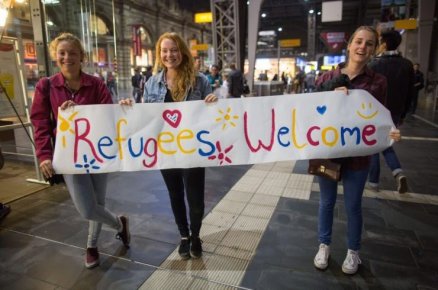
And that small percentage of refugees and migrants (for many are the latter, not the former) who do intend to do us harm have been greatly aided in their efforts by the German Chancellor and all those who stood with her, using the #RefugeesWelcome hashtag to signal their own virtue while accusing anybody who voiced the slightest reservation of harbouring selfish, xenophobic motivations.

But after what appears to be a suicide bomb attack in Ansbach, following on from a massacre by truck in Nice on Bastille Day, following on from attacks in Brussels and Paris and elsewhere, it is high time for the virtue signallers to accept some responsibility for the entirely self-inflicted lapses in national security for which they so lustily campaigned.

Of course genuine refugees should always be welcome in Europe. But those who encouraged and cheered for the open door now have more than a speck of blood on their hands, just as those who passionately inveighed against turning back migrant boats heading for Europe are somewhat responsible for the lost lives of the hundreds who have drowned in the Mediterranean Sea after being encouraged to make the treacherous crossing.

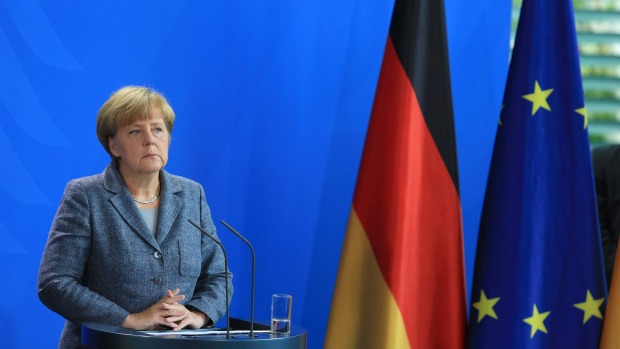
But more to blame than almost anyone else (save the despots, theocrats, thugs and murderers currently making life impossible in Syria) is Angela Merkel, and what Douglas Murray termed her “conscience-cleaning” attempt to atone for Germany’s past sins, supposedly wiping them out with one single bold statement of humanitarian generosity. For in so doing, Merkel made a decision on behalf of Germans which was not hers alone to make.

There was no way of foreseeing the present dire circumstances when Germans went to the polls at the last federal election in 2013 – transforming Germany into a haven for over a million recent arrivals was not in any party manifesto at that time. And though many Germans have shown incredible generosity of spirit in opening their homes and communities to these migrants and refugees, Merkel deserves to face a fierce political backlash for not having put such a major decision to the people before acting.

All too often, the response of our politicians (and their cheerleaders, particularly on the Left) has been to do the thing which feels good in the moment, or which addresses the immediate crisis, even if it goes on to create far greater problems further down the line. The impulse to let in all of the world’s tired, huddled masses – even those not in immediate physical danger – satisfies the urge to be seen to be doing something. But worse, it encourages a tendency in the political class to make ostentatious displays of generosity when it is largely other people writing the cheques. Angela Merkel, with her protection detail, is thankfully never going to be sexually assaulted on the streets of Cologne. Nor is a suicide bomber likely to penetrate her security bubble, or a machete-wielding attacker corner her on a train. Ordinary Germans cannot say the same.

Likewise, those who painted their child-like “refugees welcome” signs and vaunted themselves as saints on social media got to look kind and virtuous in front of their peers while often remaining insulated from the negative consequences. But those consequences are real. They are manifested in the expectation that European lives will now be lost to terrorist attacks on a weekly basis – probably not in a grandiose 9/11 style attack, but through the constant attrition of mini massacres in second-tier provincial cities.

This is now the new normal – a reality where before much longer on our present trajectory, every day will bring the anniversary of a deadly Islamist terror attack somewhere in Europe, where the news reports blend into one another and the cycle of atrocity followed by vigil followed by hashtag followed by complacency followed by atrocity becomes unremarkable.

Europe’s progressive virtue-signallers took the credit for being enlightened, wonderful humanitarians. Now let them shoulder their fair share of the blame for each life lost to the terrorism which their open door inevitably beckoned.


Refugees Welcome Banner

Greece - EU - Euro Crisis - Angela Merkel - Germany

Support Semi-Partisan Politics with a one-time or recurring donation:

Agree with this article? Violently disagree? Scroll down to leave a comment.

Follow Semi-Partisan Politics on TwitterFacebook and Medium.