The Very Model Of A Modern Citizen Politician?

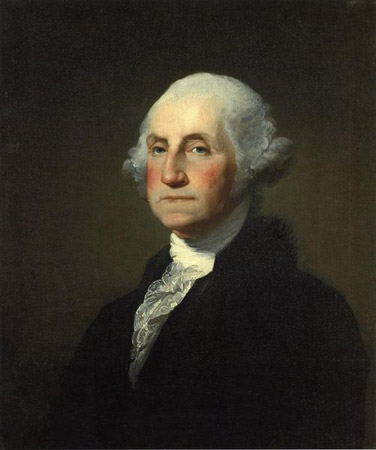
George Washington


Dan Byles, the Conservative MP notable for holding the party’s most marginal seat (North Warwickshire, majority of 54 votes) has announced his intention to stand down at the 2015 general election.

In a statement published on his website, the MP notes:

Before becoming an MP I served in the Army for nine years, deploying on operational tours in Bosnia and Kosovo. By the time of the 2015 General Election, serving my country will have been the primary focus of my professional life for some 14 years. For myself and for my family, whose support and understanding have been unerring throughout, I believe it is now time to move on to new challenges. I will therefore not be standing for re-election in 2015.

While it is sad to see Parliament lose a member of such evident patriotic devotion as Mr. Byles, more than anything else, the news comes as a tremendous surprise because it is so rare to see someone give up power and office so gracefully in modern British politics. Unless they are so unfortunate as to lose their seat in an election, MPs usually cling to their Westminster offices like barnacles to a ship’s hull.

Having undertaken whatever questionable manoeuverings were necessary to be selected as a candidate and then elected to Parliament in the first place, many MPs choose to stay in the politics game for the rest of their careers. And just as the baby boomers delaying retirement creates a lack of entry-level openings at the junior end of the job market, so the legion of sixty and seventy-year-old MPs refusing to step off the gravy train prevents any significant injection of young blood into the senior levels of British politics.

Of course, not all legislators can (or should) breeze into Parliament for a single term as a mere sabbatical from their real-life careers. Parliamentary business (particularly the important, mostly unseen work done in committees) depends on there being knowledgeable, experienced veterans able to see through the nonsense and bring their vast wisdom to bear on proceedings. Just as it would be damaging to have a Parliament exclusively full of big beasts and old-timers, so a Parliament of young and ambitious whippersnappers with their eye on a Cabinet position (or higher) would also be harmful.

But Dan Byles represents a type of politician that is far too rare in Britain – someone willing to serve his constituents in our national legislature with seemingly no further ambition to climb the greasy pole or to engage in Westminster’s devious games.

Sure, there are other young politicians who stay in Parliament for only a short term – as the BBC rightly notes, Byles represents the 23rd Conservative MP to stand down 2015, a significant number of whom also come from the 2010 intake. But this is not the dawn of the citizen politician that it appears to be – the ranks of the departed include those such as Louise Mensch, who arrived with expectations of power and rapid promotion, chafed at the club-like nature of Westminster and the unglamorous life of a backbencher, and departed early after focusing too much on what their government could do for them, as opposed to what they could do for their government.

Think also of the one-time rising stars of the New Labour governments such as James Purnell, who leveraged his brief ministerial career and failed attempt to destabilise Gordon Brown to secure himself a plum job at the publicly-owned BBC (after a spell as chairman of a think tank and public sector advisor to a global consultancy firm).

While there is very little to praise in a long life lived out on the backbench easy street, or a brief incandescent Parliamentary career aborted when the office holder realised there was no room for further personal advancement, there is a lot to praise in someone devoting a limited period of their life – either relatively early in their career like Dan Byles, or later in life at the apex of their career – to serve their constituents and countrymen.

George Washington, the first President of the United States, retired from the presidency in 1797 to tend to his farm and his business interests. True, there was not the same temptation to found self-aggrandising global initiatives, join the ranks of the lobbying industry or make the transition into television punditry back in the late eighteenth century – but even if there were, one suspects that George Washington would have had none of it. After a lifetime of service to his newly born country, he was happy to dissolve back into civilian life. How glib, shallow and egotistical do so many of our contemporary leaders and politicians appear when compared to this Washingtonian ideal of the citizen politician?

It may be the smallest of beginnings, but let the national service and brief Parliamentary career of Dan Byles be a reminder to others – particularly those who hold the most sway over candidate selection, both in the constituencies and in Westminster – that while there is no one model political career, that of the citizen politician is one to aspire to, and one to respect.

As MPs Debate Making Eid and Diwali Public Holidays, The Wall of Separation Is Under New Threat

Leicester Diwali celebration


The wall of separation between church and state is under threat once again.

Not officially, of course. We in Britain have no written constitution, no final recourse to turn to in the event of gross government or judicial overreach, or the flagrant violation of our natural rights. But nonetheless, just as progress is being made elsewhere in placing religion in mutually beneficial quarantine from government, the parties of God (a term coined by the late Christopher Hitchens) are launching a counter-attack. And this time the attack comes not from the aggrieved Christian plurality, but the Muslim and Hindu minorities.

The BBC reports:

MPs are set to debate an e-petition aiming to make Eid and Diwali public holidays in the UK.

The e-petition is being championed in Parliament by Conservative MP Bob Blackman, after being signed by more than 120,000 people.

It is only fair that Muslims and Hindus have “the most important days in their faiths recognised in law”, the petition argues.

It should be noted that the government has already rejected the petition. But the fact that a Member of Parliament (and a conservative one at that) is willing to publicly go against the grain and argue for greater, not less government enforced religion in the lives of the people is worrying, and a sign that must be watched carefully.

The reasons for not widening the UK’s current public holidays are many, the first being the fact that shoehorning in another two religious public holidays which are set according to religious timetables rather than the economic rhythm and needs of the nation will only further exacerbate the current skewed system. At present, the UK’s bank holidays are concentrated very unequally in the early part of the year: a brace over the Easter weekend, a volley in May, a last hurrah in August and then the long, slow autumnal death march through the rest of the year until the people are saved by the Christmas holidays. This does little to take into account the needs of businesses (who lose their labour for a day), or for people who might wish the days to be spaced out more evenly.

Secondly, unlike many other countries, none of Britain’s public holidays are used for the beneficial purpose of celebrating our entire nation, our shared culture (as opposed to niche interests – a category under which Christianity increasingly falls) or our collective accomplishments as a British people. Unlike the United States, we have no equivalent to Independence Day, when we can all celebrate being British and indulge in an important exercise in positive patriotism. Unlike France, we have no Bastille Day, celebrating pivotal moments in our national history.

Aside from the fact that recognising pivotal days in our nation’s history helps to nurture the ties that bind us all together, it can be a money-maker too – the American economy may lose a day of labour every year on July 4 and Thanksgiving, but how much is injected into their economy through family gatherings, travel and public celebrations? And how great are the non-monetary benefits of fostering a shared sense of collective identity – one which Britain sometimes sorely lacks?

Thirdly, expanding the public holiday schedule to include more religious days would ignore the simultaneous (and popular) campaign underway to make St. George’s Day a national holiday. The saints days for the home nations are not recognised as UK-wide public holidays, which only fosters internal resentment and fuels the nationalist separatist causes which threaten the balkanisation of Britain.

And finally, written constitution or none, Britain urgently needs to raise a wall of separation between religion and our government, a cause that would be significantly set back by bestowing official government sponsorship on even more faiths. That is not to denigrate the great good that many religious congregations, parishes, charities and organisations do every day. But this social good cannot be used as a bargaining chip to blackmail the rest of the country (an increasingly secular one, for good or ill) into following the same lifestyle practices, moral codes or days of observance as the faithful.

Taken to its logical conclusion, ceteris parabus, this would mean the disestablishment of the Easter and Christmas public holidays. But this would not be a good idea. The Christian holidays, by virtue of having been part of our national fabric for so long, now occupy a place in our culture which transcends their religious origin. Many millions of people celebrate Christmas and Easter who have never set foot in a church, and could not name even the most fundamental tenets of the Christian faith. Furthermore, businesses and organisations around the world – especially in Britain’s main trading partners in North America and Europe – also observe these days as public holidays, making it unwise for Britain to deliberately put itself out of sync. Thus, because the Christian holidays are so embedded in our national life, and are an important reminder to our nation’s history and Christian heritage, there should (and will likely never) be no move to end these holidays.

(This is in no way to suggest that religious festivals and holidays cannot or should not be observed in other ways. The annual Diwali celebration in Leicester, for example, is rightly acclaimed as one of the finest in the world – though such celebrations should at all times be privately funded through sponsorship, and never from public money).

Race, culture and religion often make a volatile, contentious mixture. By granting special rights and favours to some, it can only lead to resentment among the unfavoured, and embolden the beneficiaries to ask for yet further recognition in the future. We already live in an age of religious persecution complexes and exaggerated victimhood – from the mild culture war still fought by the socially conservative Christian rearguard in Britain to the disillusioned British youths jetting off to fight for their so-called faith in Syria – and the very last thing we should be doing is anything that fans the fames of discord at home.

The UK’s Hindus and Muslims (and Christians, and everyone else) are all equally British under the law, and have an equal, important stake in our society, to the extent that they are willing to be British first and foremost. Only recently in the Birmingham schools scandal we have seen the damage that can be done to education and to young minds when religion is placed on a pedestal and sycophantic multiculturalist apologists are too petrified of causing offence to stand up for British values against religious extremism.

Rather than debating the admission of two more exclusionary, religion-oriented public holidays to the British calendar, Parliament should be debating a root and branch review of all our existing holidays as part of a broader effort to make our days off count for something more than a chance for a long weekend and an excuse to jet off out of the country.

What if together we celebrated the Acts of Union which created Great Britain? Or Nelson’s victory at Trafalgar in the Napoleonic wars? Victory in Europe day? Or any one of many other days that could plausibly be used to draw us together as people of a United Kingdom rather than a fractured coalition of different faiths, interests, grudges and resentments?

For the sake of our fraying national unity, admitting more faiths into the elite club of state sponsorship and approval must be rejected as the misconceived idea that it is.

Strike!

SPS strike protest 0b


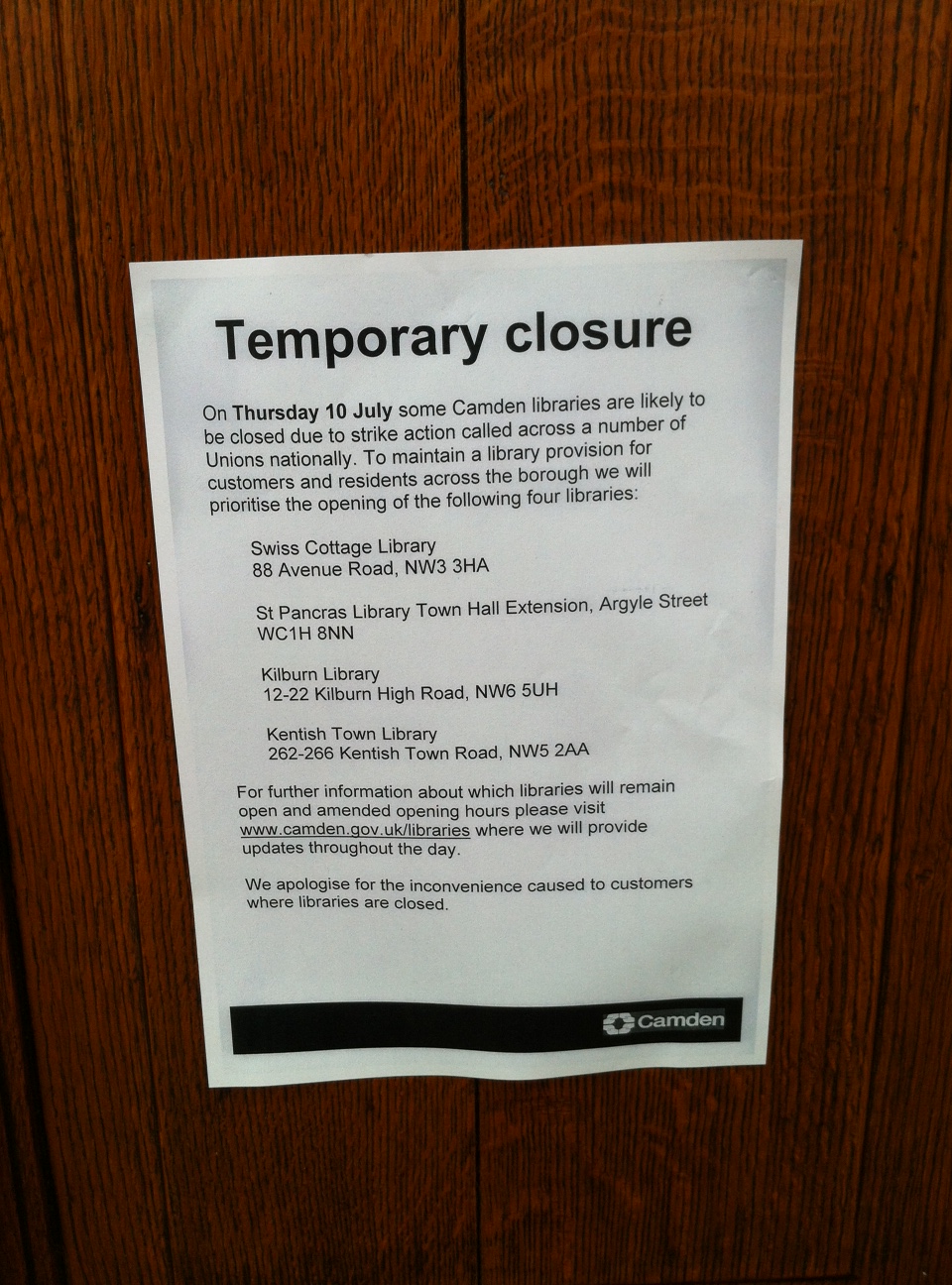
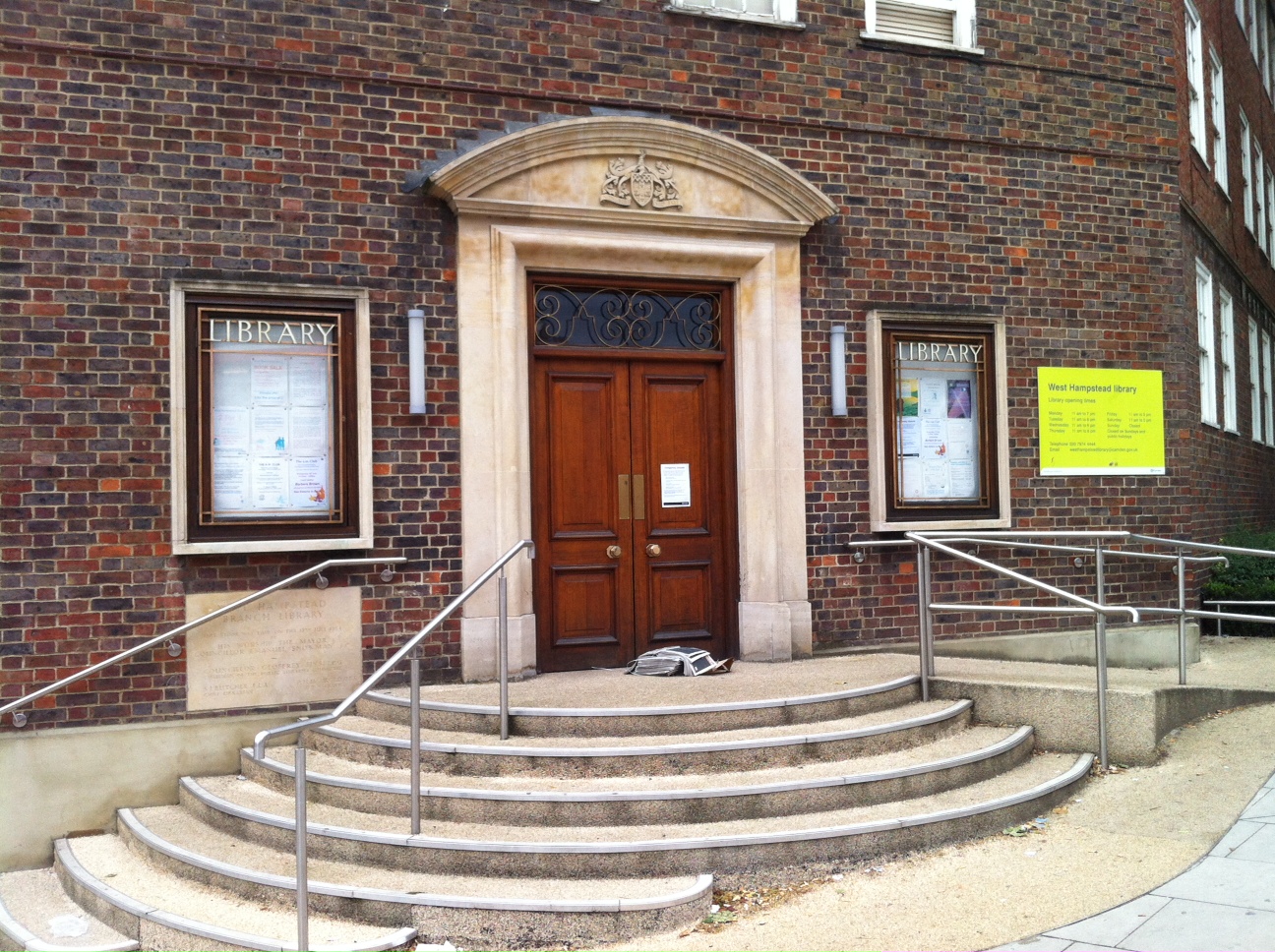
Did life as you know it come grinding to a halt during yesterday’s strike?

Probably not, unless you are a parent who had to make last-minute childcare arrangements because of the teachers walkout and school closures, or you were one of the zero reported cases of people whose houses burned down in the temporary absence of the fire brigade.

The failure of the strikers and the public sector unions to capture the public imagination and win their support is largely down to the fact that the majority of Brits generally accept the need for pay restraint and fiscal conservatism on the part of government, even if they also acknowledge that the clumsy imposition of “austerity” is causing unnecessary hardship and suffering for some of the people most reliant on a big-spending government.

As this blog argued yesterday, it is not enough for opponents of austerity to rail against the “bankers, toffs and Tory scum”, the usual bogeymen of the Left – not if they want to win the next general election. Voters rarely kick out incumbent governments when the economy is on a positive trajectory, and particularly not when the opposition struggles to articulate a convincing vision of how different life would be under their rule.

What, precisely, do the strikers and anti-Austerity demonstrators want? Is it simply a return to pre-austerity 2010 levels of government spending, as though Gordon Brown were still in office? Is it that plus inflation-busting public sector pay raises (at a time when many in the private sector cannot hope for the same)? Or is it something bigger, along the lines of the joyful hippie revolution called for by Russell Brand?

From observing and talking with some of those on strike and others supporting them, it was clear that they have no single answer, no solid idea to rally behind other than to point at the Conservative-led coalition government and say “down with this sort of thing!”

One cannot necessarily expect the grassroots and those on the cutting edge of austerity to be articulate creators of alternative government policy, but from the Labour leadership’s awkward dance around whether they supported the strikes or not, it is clear that they are also stumped for a workable, electorally viable alternative.

With the general election less than 10 months away, the opposition (both official and the activist base) looks and feels very much divided and conquered.

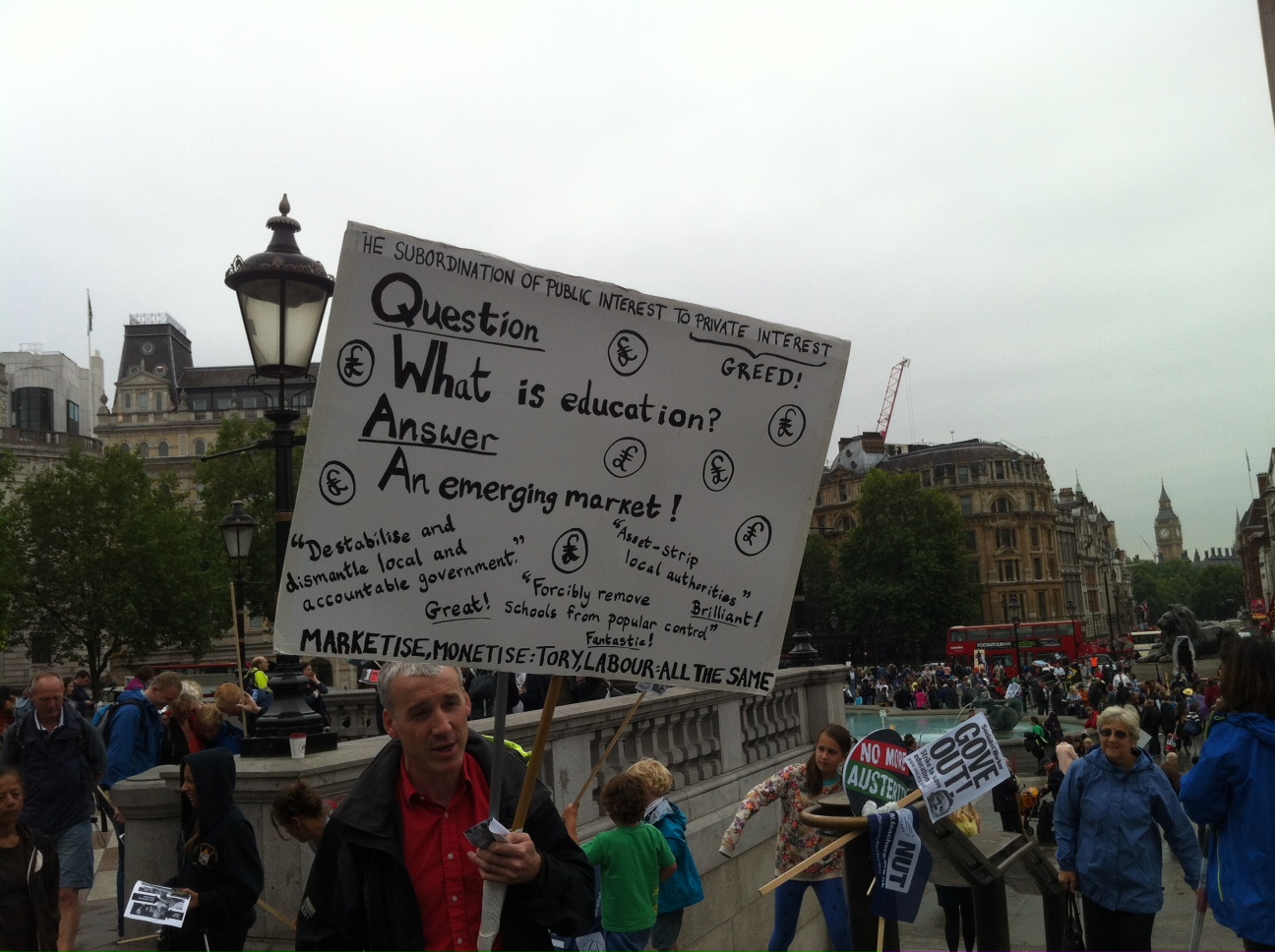
Here are some telling images from the strike which sum up the prevailing atmosphere, taken in London by Semi-Partisan Sam:

SPS strike protest 3 SPS strike protest 4 SPS strike protest 5 SPS strike protest 6 SPS strike protest 7 SPS strike protest 8 SPS strike protest 9

Bankers, Toffs and Tory Scum

SPS strike protest 2b


“Chav-bashing draws on a long, ignoble tradition of class hatred” – Owen Jones, Chavs: The Demonization Of The Working Class


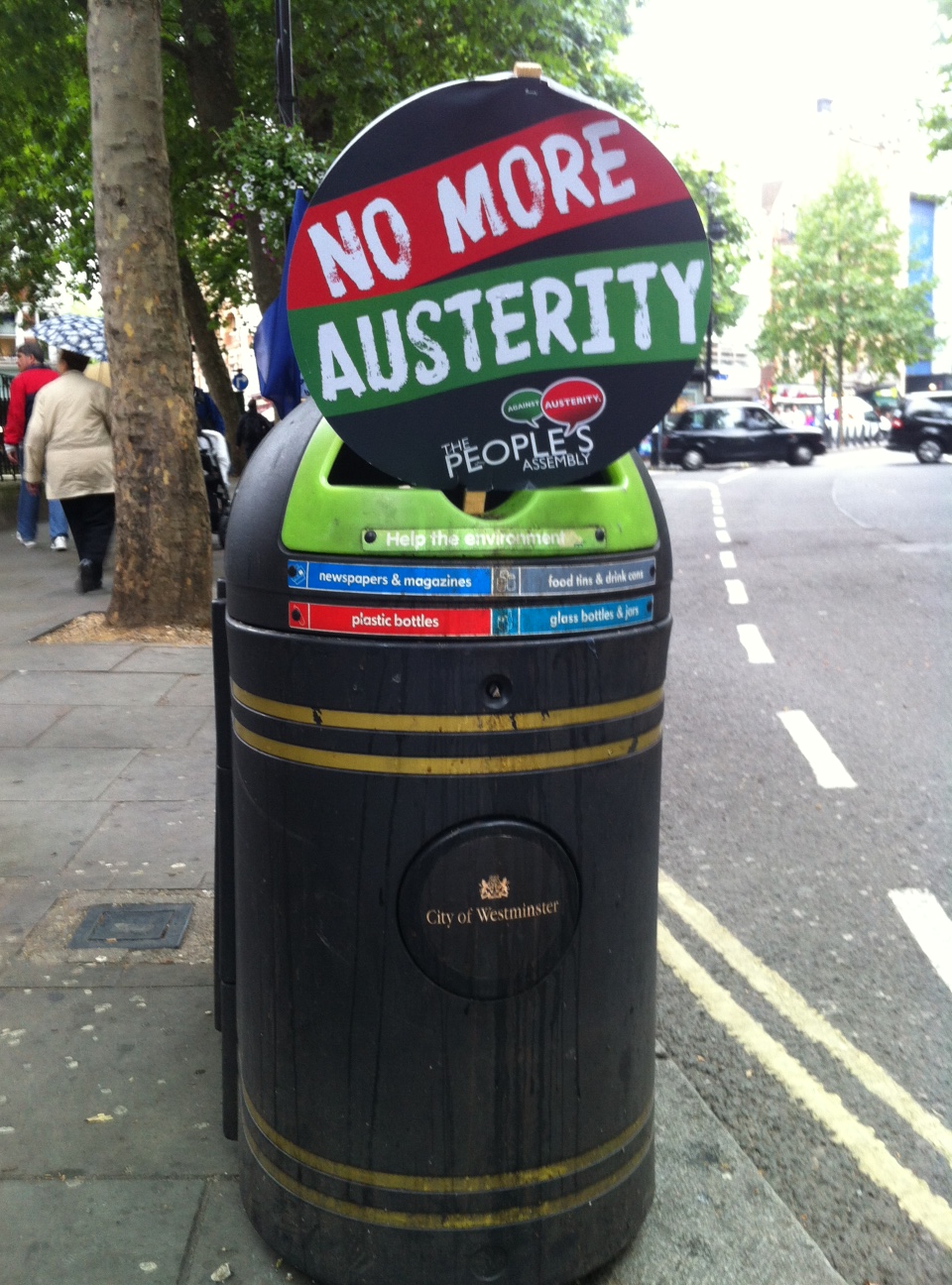
Less than three weeks ago, fifty thousand people marched through central London almost entirely unnoticed. They came to protest the coalition government’s so-called “austerity” policies and to “demand the alternative”, but their message was lost in a fog of confusion about the undefined alternative they wanted to bring about. Was it the rose-tinted stroll back to the 1970s advocated by Owen Jones, or the peaceful, effortless and joyful revolution promised by Russell Brand? We still don’t know, because they still can’t decide.

Today, Britain observed what was hailed as the largest coordinated industrial action since the general strike of 1926 – but apart from some inconvenienced parents who had to endure the closure of their children’s schools, nobody seemed to notice that anything much was different. And what little serious press attention the strikes garnered was focused mainly on Ed Miliband’s untenable balancing act of supporting the strikers but deploring the strike, and the eyebrow-raising fact that the National Union of Teachers was legally permitted to use a 2012 vote by a fraction of its membership to hold a strike in 2014.

There is a lot of frustration on the British activist Left that they are not being listened to or taken seriously – by the public, the media, the Labour Party, anyone at all. But at some point soon, those people hawking conspiracy theories about a right-wing media cover-up or the dead hand of Ed Balls will have to turn the accusing gaze back in on themselves.

The Left has been shrieking about austerity for four years now, but have utterly failed to convince the electorate that they have a workable alternative. Indeed no alternative has been suggested – save for pumping pre-2010 (or even higher) levels of taxpayer money into the same unreformed government programmes, which is as patronising a suggestion as it is lazy. Worse still, the Left’s level of empathy or willingness to understand the viewpoints of others who do not agree with the “Down With Austerity” mantra is almost non-existent.

Big government apologists on the Left forever accuse the Conservative Party, UKIP and others on the right of stoking fears and indulging in emotional manipulation. Cases of grotesque welfare fraud are cherry-picked and non-representative, they insist, while questioning Britain’s immigration policy and relationship with the European Union is narrow minded at best, but more often a sign of shocking, premeditated race-baiting. But the left use these same techniques freely and often, and they do so in a way that hampers their ability to think of bold new policies to connect with middle Britain.

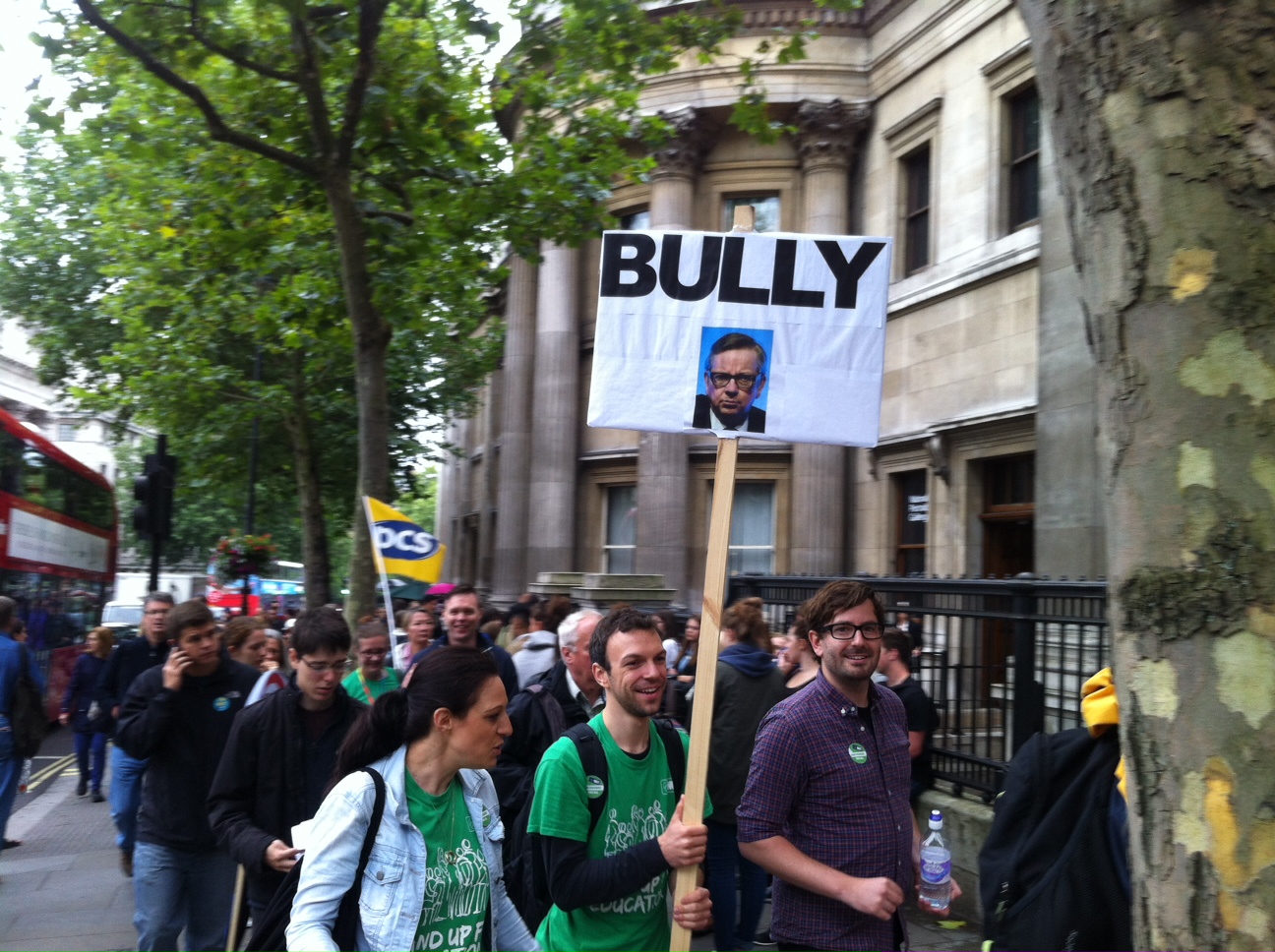
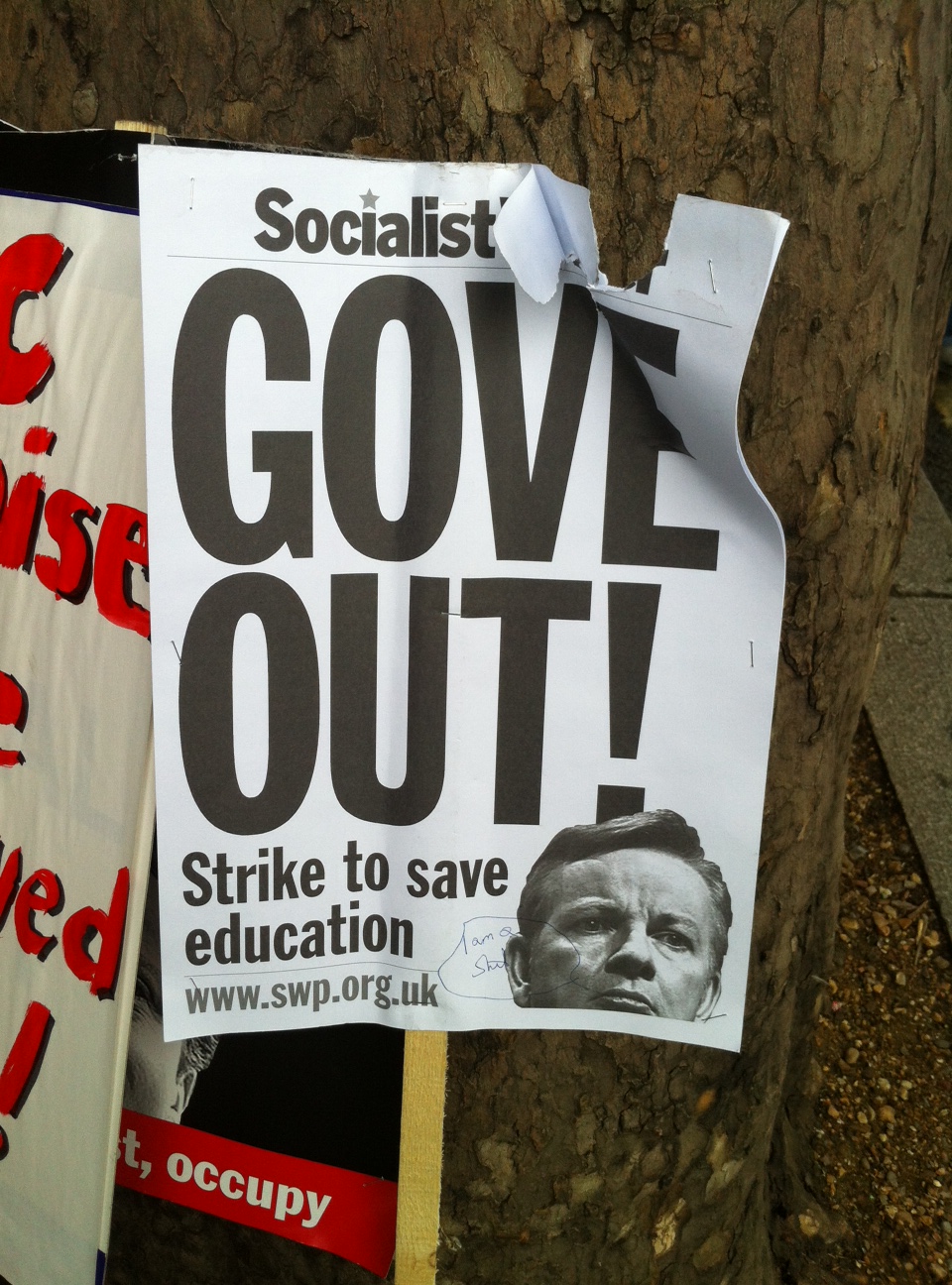
The bankers. David Cameron’s cabinet of millionaires. Billionaire non-doms. Tory scum. According to many on the Left, this motley crew of villains are not only deliberately rigging the system in their favour (arguably true), they actively delight in hurting the poor at every turn. Michael Gove is an arrogant bully and persecutor of teachers, Iain Duncan Smith is a virtual psychopath in his hounding of the destitute and David Cameron is the evil mastermind at the top, answerable only to Rupert Murdoch. It’s the age-old divide: those on the right think that Left-wingers are well-meaning but misguided, while those on the Left seem to sincerely believe that their right-wing opposites are actually evil.

The anti-Tory slogans and bitter invective have always had their place in Britain’s left-wing grass roots, but when this stubborn inability to empathise with or think like the other side starts to infect people who are supposedly the Labour movement’s greatest minds and political leaders, they have a real problem. The British Left, from Ed Miliband’s shadow cabinet on downwards, can’t seem to get past the mistaken notion – perhaps sincerely believed after so many years of constant, mindless repetition – that those on the right really do hate the poor and long to trample them underfoot.

But the anti-austerity protesters, the public sector strikers and their sympathisers on the Left are fighting a bitter battle against a straw man, a distorted vision of the real spectrum of right-wing thinking. While the British right generates ideas and (albeit limited by coalition) implements them in government, the Left rail against a cartoon foe of their own imagining, and almost completely fail to engage with the substance. Voters are able to discern this disconnect – the British left’s gradual conscious uncoupling from reality – which is one of the reasons why the Labour Party is making so little traction in what should be very fair political weather.

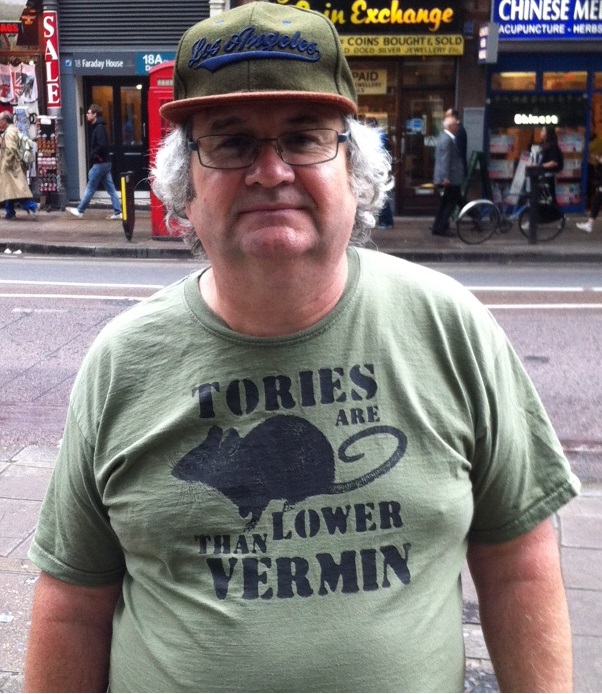
Attacking the usual left wing bogeymen – the bankers, toffs and Tory scum – is not an exciting, compelling pitch for an alternative to our present course. It’s the equivalent of a child’s temper tantrum. And whatever truth there is in the insults does not make up for the yawning chasm that exists where viable alternative left-wing policies should be.

In fact, such is the degree of hysteria and inability to comprehend the attitudes of others on the British Left, it is becoming comparable to the worst excesses of the Tea Party in America, where die-hard “patriots” can see no other motive for Barack Obama’s actions than the deliberate, treasonous undermining of the United States by a foreign-born, illegitimate president.

The hardcore US tea partiers have their hallucination of a Kenyan-born, Marxist stooge sent to make America collapse from within, while the British activist Left have their two-dimensional cartoon of the Bullingdon-bred, Eton-educated aristocrat who wants nothing less than the total dismantling of the social safety net and the subjugation of the poor in permanent poverty to be a source of cheap, expendable labour for his friends and benefactors in big business.

In America, the Republican Party tried to ride the Tea Party tiger, but ended up being eaten. The GOP is now completely beholden to its extremist base, and as a result is entirely unable to propose meaningful, workable legislation on anything from deficit reduction to healthcare to immigration reform. In Britain, the Labour Party is perilously close to suffering the same fate – willingly believing its own hyperbole about the callous Tories, and trying to convince itself (and us, the voters) that everything will be okay if only we start pumping more money into existing government programmes and taxing “the bankers” to pay for it all.

This is a depressing state of affairs on both sides of the Atlantic. To self-identify as a Republican in America today is increasingly akin to admitting that you are a reactionary, bigoted nincompoop, either beholden to corporate special interests or too stupid to realise that you are being manipulated by them. And unless something changes very soon, to self identify as a Labour supporter in Britain will proclaim to the world that you are a success-fearing simpleton who would rather see everyone dragged down to the same level of mediocrity than permit spectacular achievement at the expense of government-enforced equality of outcome.

The infinite monkey theorem states that a chimp sat in front of a typewriter will, given infinite time, at some point be bound to unthinkingly hit upon the long and complex sequence of keys that reproduces the complete works of William Shakespeare. By the same logic, if the British Left continue to hold strikes and mass rallies against austerity, probability dictates that eventually they will quite accidentally come up with a politically viable alternative to the coalition government’s spending plans. But unlike the monkeys, they and the Labour Party do not have infinite time.

The 2015 general election is less than ten months away.