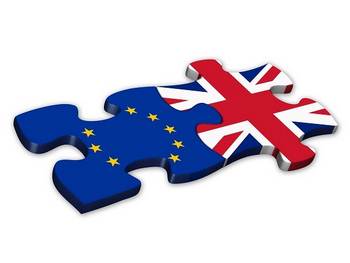
You may not realise it, but there’s an election campaign in full swing at the moment.
No, not the one in the news where everyone screams about immigration and take turns accusing one other of being either fascists or traitors – that campaign is certainly happening, but it’s an exclusively British affair. The rest of Europe, on the other hand, is engrossed in quite a different campaign, focused on the policies and initiatives to be pursued by the European Union.
There’s a cuddly-looking German chap named Martin Schulz running for José Manuel Barroso’s soon-to-be-vacated job as President of the European Commission – in fact, Schulz is quite likely to win. He has been busily campaigning for the job, holding events in cities throughout Europe, but you won’t see him talking to prospective voters anywhere in Britain. People here would be bemused to see him even if he came, failing to understand the significance of the role he seeks or the details of his specific policies (such as they are).
In short – Britain is continuing its introspective (and perpetually unresolved) debate over whether or not to remain a member of the European Union, while the the twenty-seven other member states discuss how to shape and influence European policy, having already decided (or resigned themselves) to their secure place within the EU club. Guess whose voices are heeded and turned into tangible actions, and whose voice is either politely ignored or never heard at all?

There is plenty of blame to go around for this wretched and depressingly familiar state of affairs.
The lions share of the blame must rest with successive British governments and prime ministers who failed to check back with the British people as the European Community (which won 66% approval in the 1975 referendum) slowly morphed into something much grander and more far-reaching than the common market that so appealed to the voters in Harold Wilson’s day. Each subsequent treaty and tightening of the ever-closer union served only to increase the disquiet and pushback against what was happening, and rather than hold a fresh debate over Britain’s membership or make ratification of the new treaties subject to a national referendum, the British government cut the people out of the loop on fundamental matters of sovereignty.
There is plenty of blame to be lavished on the europhiles, too. For decades now, their mantra has been that “of course Europe needs reform”, but that this can only be achieved with Britain as an active and participating member, not as a surly observer from the sidelines. Unfortunately, by continually fighting the eurosceptics to a draw, Britain’s negotiating stance has barely budged in all that time – we neither became deeply committed members at the vanguard of European policymaking, but neither did we leave our continental neighbours to their own devices.
But there is also blame for the eurosceptic movement, whose chief advocates have often been their own worst enemy when it comes to advancing their agenda. Doom-laden apocalyptic predictions of Britain’s demise within a suffocating EU were revealed time and again to be overblown. The EU was certainly a drag on economic growth and job creation, but it was not the nail in the coffin of the UK as an independent entity that some insisted it would be.
More recently, eurosceptics – particularly UKIP – have been at fault for focusing so much of the debate on immigration, specifically the number of economic migrants entering the UK from eastern Europe in order to work. In their effort to ride the tiger of British anti-immigration sentiment, UKIP has become a lightning-rod for criticism about their real motivations (read: accusations of racism) and the immigration debate has drowned out many of the other eurosceptic points about loss of sovereignty, burden of regulation and misspent money.
In all of these failings, the British media have been complicit. Given the choice between explaining the technical workings of a byzantine EU organisation structure and policy debates or playing exciting footage of Nick Clegg and Nigel Farage ripping chunks out of each other in a televised debate, the press has consistently taken the low road, abdicating any real responsibility to inform and educate.
And so it is that with the European Parliament up for election and powerful EU positions also in play, the campaign in Britain is being fought almost exclusively along domestic political lines. If you like the Labour Party and plan to vote for them in the concurrent local council elections, chances are you will vote the same way when you fill in the European election ballot paper. Complex issues such as regulation or taxation of financial transactions, and other contentious policy debates that will occupy Europe in the months ahead, are covered only from the topmost level of detail (regulation good / regulation bad) with none of the detail and nuance that makes for informed decision-making.
This blog is unabashedly eurosceptic, appreciating what the EU has done to forge links between the nations of Europe and prevent further twentieth century bloodshed, but balking at the fact that the goals of ‘ever-closer union’ and the creation of a supra-national and undemocratically accountable superstate are being so vigorously pursued without the full cognisance or permission of the people of Europe. Nonetheless, given the extent to which EU laws, regulations and institutions are currently intertwined with the fabric of Britain, on balance it could well be better for Britain to enthusiastically embrace the EU than to maintain the current harmful ‘half-in, half-out’ status quo.
Today we in Britain truly do enjoy the worst of both worlds – subject to all of the rules and requirements of EU membership but only half-committed to the decision making process, and alarmingly ignorant of the European institutions and how they work. While a negotiated and amicable secession would be the best option, better to join France as the EU’s co-head cheerleader than remain dissatisfied on the margins any longer.
This is why David Cameron’s proposition to the electorate – that we vote Conservative in exchange for an in-out referendum in 2017 after certain nebulous ‘concessions’ have been negotiated for Britain – is so unappealing. Putting aside the fact that promises to hold referenda are routinely discarded by politicians without a second thought, endorsing this policy only condemns Britain to two more years of limbo and unnecessarily limited influence over EU policy while any potentially fruitless renegotiation takes place.
There are two parties who proudly distrust the British people to make an informed decision and advocate for continued membership of the European Union, public opinion be damned – but since the Liberal Democrats are likely to be wiped out as an electoral force at these elections based on current polling, Labour is the party to choose if you adhere to this vantage point. And this essentially makes it a two-horse race.
UKIP vs Labour. Amicable secession from the EU vs continued membership and slightly more enthusiastic engagement with Brussels. At this point either option will do. What we cannot, must not do is continue to have the same navel-gazing debate for another wasted decade.
If Britain is to continue going to the trouble and expense of sending elected representatives to Brussels (and Strasbourg), her people deserve a real European election campaign.

 Semi-Partisan Politics
In Brussels, no-one can hear you scream…
LikeLike
Ha! How true…
LikeLike
Incredibly interesting article Sam!
LikeLike
Thanks Victoria!
LikeLike
Reblogged this on oogenhand and commented:
UKIP is fake opposition. The problem isn’t the EU, the problem are the ruling ideologies.
LikeLike