Britain And The Church Of England Must File For Divorce

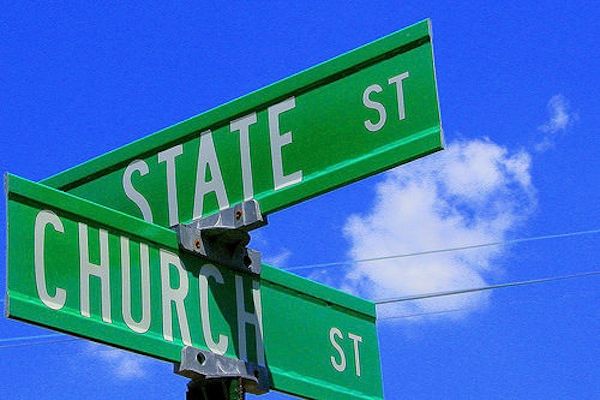
Church v State

One of the aspects of British life that this blog finds hardest to tolerate and justify – aside from our lack of a written constitution, the complete absence of checks on Parliamentary power, our deference to government authority and the eternally unrealistic expectations heaped upon the England football team – is the fact that in the year 2014, our supposedly liberal democracy maintains the absurdity that is an established church (and de facto national religion).

The notion that Britain is a Christian nation has been a laughable, if ubiquitous proposition for many years now. To arrive at the conclusion that the UK is a Christian land, one has to redefine Christianity not as a religion, a set of beliefs, teachings or practices, but rather as some woolly abstract incorporating cherry-picked elements of history, patriotism, nationalism, whiteness, tradition, middle class anxiety and fear of change. The rather more trustworthy indicators such as weekly church attendancechanging census data and the public’s knowledge of basic Christian tenets point stubbornly and persistently in the opposite direction.

David Cameron, always more comfortable on the woollier side of a debate, naturally favoured the abstract markers of Britain as a “Christian” nation when he made his recent intervention, a rare instance of a senior politician addressing matters of faith which also conveniently eclipsed the ongoing media coverage of his incompetent handling of the Maria Miller expenses scandal.

First comes Cameron’s woolliness:

In an article in the Church Times ahead of Easter Sunday, Mr Cameron acknowledged that he is a “bit vague” on the “more difficult parts of faith” but said he has “deep respect” for the national role of the Church.

He said: “I am a member of the Church of England, and, I suspect, a rather classic one: not that regular in attendance, and a bit vague on some of the more difficult parts of the faith.

And then the pivot toward the bold assertion that despite the fact that Cameron is a religious zealot by today’s standards, “vague faith” such as this on the part of a dwindling segment of the population can be extrapolated to mean broad national consent for the primacy of one religion and denomination over all others:

He said: “I believe we should be more confident about our status as a Christian country, more ambitious about expanding the role of faith-based organisations, and, frankly, more evangelical about a faith that compels us to get out there and make a difference to people’s lives.

But the emphasis really is on the word ‘dwindling’. The Rt Rev Graham James, Bishop of Norwich, inadvertently gives the game away when he seeks to explain what he claims are “heartening” church attendance figures:

These figures are a welcome reminder of the work and service undertaken by the Church of England annually – 1,000 couples married, 2,600 baptisms celebrated and over 3,000 funerals conducted every week of the year.

The fact that there were 400 more departures than additions to the ranks of the faithful in his diocese may have failed to set off alarm bells in the head of the Bishop of Norwich, but for the more numerate reader it does illustrate rather starkly the problem faced by the wider church.

Once it has been explained that 2,600 minus 3,000 equals a net loss of 400, the Rt Rev Graham James (and the Church of England as a whole) must concede the fact that a higher number of Christian funerals than baptisms represents a real and existential threat, or else they are essentially admitting that the sacraments of the church are no real way to measure the faith of the people, and that they therefore no longer matter. An admission of the latter seems unlikely.

The response of many – both to the decline in church attendance and in attempts to loosen the Church of England’s disproportionate grip on the levers of power – has been to rail against the damage of that destructive group known as the “militant atheists”, those shadowy PC paramilitaries who fight the War On Christmas and dare to suggest that claiming religious objection does not exempt a person from their contract of employment or license to do business. The Daily Mail leads the charge from this side:

The truth is that there is a new breed of militant atheists who are capable of being as unreasoning as the most bone-headed creationist. Their intolerance is a strange mirror reflection of the bigotry of religious extremists.

‘Intolerance’ here is given the broad definition of the perpetual victim, an insult hurled by those who suddenly find themselves losing their ability to impose their values and lifestyle choices on everyone else.

According to this school of thought, it is bone-headedly ignorant to see anything wrong in the fact that our Head of State has a constitutional duty to defend one faith above all others, or that twenty-six members of that one faith alone are entitled to sit in the upper house of the British Parliament and participate in our lawmaking.

Neither do the traditionalist defenders agree on when, if at all, Britain might no longer be considered a Christian country. Would it be when more people regularly attend another faith or denomination’s services? If so, that ship has already sailed and Britain should once again be pledging fealty to Rome and the Holy See. Or perhaps the moment of severance can be declared when a majority of people no longer agree with Church teaching on matters such as gay marriage or equality for women? But again, that moment has been passed. More likely, their answer would be “never”, simply because they will it to be so.

Parliament and the Church - divorce is needed to save both institutions
Parliament and the Church – divorce is needed to save both institutions


None of this means that Christianity has lost its place as the predominant religion in Britain – indeed, this is one thing clearly supported by the 2011 census data. It is certainly true that among people expressing a religious affiliation, the vast majority identify as Christians. But there is a huge gulf between acknowledging this fact and deciding that British laws and the British system of government itself should continue to be organised around and influenced by the teachings of a religion that most people only identify with on a nominal, cultural basis.

And it is on this this basis that the Deputy Prime Minister, Nick Clegg, joined the debate with a proposal to disestablish the Church of England, in order to prevent any more unnecessary harm coming either to that church or to the rest of us.

The Guardian reports:

Nick Clegg has said the church and state should be separated, a view he has expressed before but one that is likely to gain fresh currency after David Cameron described Britain as a Christian country.

Clegg, an atheist, said he would like to see the disestablishment of the Church of England, which would lead to the Queen’s removal as the head of the church.

“In the long run it would be better for the church and better for people of faith, and better for Anglicans, if the church and the state were over time to stand on their own two separate feet,” the deputy prime minister said on his LBC radio phone-in show. He said he did not think this would happen overnight.

Heads will surely explode at The Daily Mail, and the likes of Cristina Odone will stay up late into the night to pen angry rebuttals, but in fact here is a very sensible proposal that would help to keep the church out of some of the more hot-button political and social debates affecting the country as a whole, while going a few steps toward establishing a more sane, comprehensible constitution for the United Kingdom.

Indeed, many of the reasons given by apologists for why the UK is a Christian country are symptoms of an established church, not justifications for continuing to tolerate one – artefacts such as the Queen’s role as the head of the church, or the presence of the Lords Spiritual in the House of Lords, for example. But this is akin to claiming that an Egyptian mummy is a living, breathing human being – sure, the body parts are in the right place (just as the constitutional elements are in place for a British theocracy) but the heart does not beat, the blood does not flow and the brain does not think like a living person.

Nick Clegg goes on to claim that the Church of England would “thrive” if disestablishment were to occur, and this may well be the case. At present, the Church has to walk a tightrope with doctrine on one side and popular opinion on the other, making it appear weak and indecisive, and pleasing to no one. Unshackled from the state, however, the church could continue to discriminate against gays and women (or more hopefully recognise their equality) without dragging the rest of the country into the debate.

Naturally, David Cameron disagrees:

Mr Cameron said: “I think our arrangements work well in this country. We are a Christian country, we have an established church,” adding that disestablishment was “a long term Liberal idea but it is not a Conservative one.” 

This is conservatism of the bad kind, the reflexive hanging on to tradition not because the alternative is untried and the status quo works well, but simply out of a reluctance to rock the boat, upset the party base or start a real, informed debate. Cameron believes that the current constitutional arrangement “works well”, but take this with a pinch of salt – he also believes that parliamentary oversight of the security services works very well indeed, though it transpired that they were undertaking far more extensive and intrusive surveillance than the public had ever been aware of or given their consent.

The New Statesman naturally comes down on the side of disestablishment, and they come armed with the words of the most recent former Archbishop of Canterbury:

Religious believers who oppose such a move should look to the US, where faith has flourished alongside the country’s secular constitution. Indeed, in an interview with the New Statesman in 2008, the then Archbishop of Canterbury, Rowan Williams, (who went on to famously guest-edit the magazine) suggested that the church might benefit from such a move: “I can see that it’s by no means the end of the world if the establishment disappears. The strength of it is that the last vestiges of state sanction disappeared, so when you took a vote at the Welsh synod, it didn’t have to be nodded through by parliament afterwards. There is a certain integrity to that.”

What Rowan Williams delicately calls a “certain integrity” is actually just plain old democracy, properly executed, with each citizen having a voice and no powerful interests able to sway policy based on their own narrow interests. Both church and state can make decisions in their own interests without running to each other for contentious debate or rubber-stamp approval.

The British people, usually so quick to voice their distaste for money in politics and big donations from wealthy individuals, corporations or trades union, should ponder this simple fact: of all the business moguls, special interest groups and union barons jostling to influence British government policy in their favour, only one organisation is powerful enough to boast twenty-six loyal, paid representatives ready to do its bidding in the upper house of the British Parliament. Britain’s 100 biggest employers, ten largest unions and her wealthiest people combined do not have the lobbying and legislative clout of the Church of England, an organisation that commands a weekly attendance of just 1.8% of the UK’s population.

To say all of these things does not imply a hostility of any kind to religion and faith-based organisations, despite the misleading accusations of the traditionalists; regular readers will know that this blogger is a practicing (if somewhat Cameron-vague) Catholic. Indeed, disestablishment of the Church of England, combined with a loosening of the government’s hand on all matters of faith, can only benefit religious organisations, schools, charities and initiatives through the plurality that would immediately be created.

But even if disestablishment would cause difficulty or a degree of harm to the church, that alone is not a sufficient reason to preserve the status quo. It is not the business of government to pick winners and losers, to favour some more than others, and institutions (corporate or otherwise) who rely on state aid of any kind tend to fail regardless in the longer term.

Christianity – and the Church of England – have formed a huge part of who we are as a country, influencing our laws, culture, art and traditions. We should be very grateful for this – just ask anyone who suffers or whose life prospects are narrowed or extinguished under a modern day Muslim theocracy. But we should not be content merely to be better than Iran or Saudi Arabia – the time has come to do away with an established state church entirely.

In the year 2014, it is time to finally remove the theological shackles from the British constitution, and to take the state church off life support so it may live and breathe unaided. Committed Christians and Church of England members should have the confidence in their faith and institutions to accept, if not actively welcome, this change.

Should We Punish Artists For Their Political Beliefs?

LSO Valery Gergiev
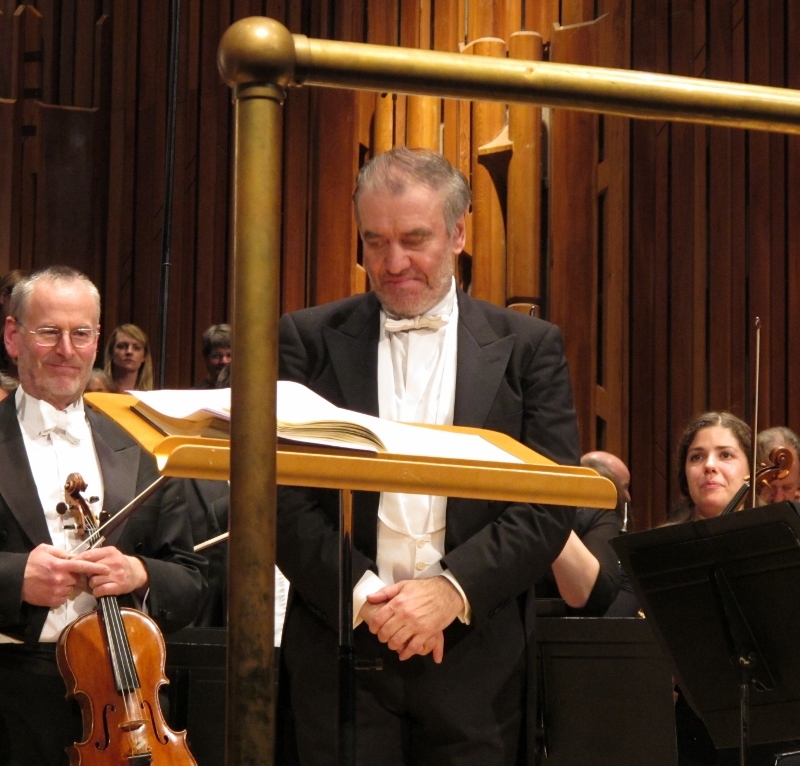
Maestro Valery Gergiev with the London Symphony Orchestra


Music and politics make uneasy bedfellows, and this timeless truth has only been reconfirmed with the continuing tumult and unrest in Ukraine.

Russia, the protagonist in this latest crisis, provides ample recent evidence that politics and music are best kept apart. The punk band Pussy Riot, for example, is hardly ever out of the headlines in recent months, with members being jailed, released, threatened and attacked by the authorities merely for adding their voices to the civic discourse, for wanting to make themselves and their beliefs heard.

But at the other end of the artistic spectrum, for the fine arts – especially classical music – the problem is not the Russian government’s persecution of artists, but artists’ apparent eagerness to praise the political leadership and to lend President Vladimir Putin their credibility.

The most famous current case is the Russian conductor Valery Gergiev, principal conductor of the London Symphony Orchestra. Gergiev was one of the most prominent Russian artists to sign an open letter in support of Vlarimir Putin’s foreign policy towards Ukraine. Part of the letter’s text reads:

In the days when the fate of our compatriots in the Crimea is decided, Russian cultural figures can not be indifferent observers with a cold heart . Our common history, our cultural roots and spiritual origins , our fundamental values ​​and language have united us forever. We want to see the commonality of our peoples and our cultures have a strong future. That is why we firmly reiterate support for the position of President of the Russian Federation and Ukraine Crimea.

Sometimes, these messages of support for Vladimir Putin’s policy of aggression are downright perplexing, such as when the Russian Writer’s Union decided to make their love and support for Putin known in a very Soviet style open letter, a sloppy wet kiss to power. Craven though they can sometimes be, one can hardly imagine the British or American press joining together as one to praise and defend the Cameron or Obama foreign policies.

At other times, however, particularly in the case of artists responsible for institutions that depend on government support, the situation is not so clear-cut and such acts of public sycophancy may be part of the inevitable cost of doing business. The Financial Times picks up on this point:

There is little doubt [Gergiev’s] position is compromised. Deep down he is a nationalist, as his ill-judged support for the Russian intervention in Georgia in 2008 demonstrated. At his two Mariinsky theatres in St Petersburg, he has 3,000 employees on his payroll and a rich tradition to maintain. No other figure could raise the kind of money that Gergiev does to keep the Mariinsky going. Much of that money comes from members of the Putin circle. If Gergiev is presented with a petition in support of government policy, he is obliged to sign – unlike prominent freelance musicians such as Denis Matsuev and Yuri Bashmet, who have foolishly toed the line.

This is perhaps a distinction worth making, though it could equally be argued that the brave and moral thing to do would be to speak out against government malfeasance, consequences be damned. US country music group The Dixie Chicks tried this approach in 2003 when they spoke out against their president and their country’s imminent invasion of Iraq.

The aftermath was not pleasant, and it is a brave person who now does what the Dixie Chicks did – and this was in the United States, where the rule of law still means something. One can only imagine what might befall the likes of Gergiev if they actively spoke out against their government, when even maintaining a diplomatic silence would invite negative repercussions.

But of course Valery Gergiev would not speak out against Vladimir Putin’s policy of bullying and undermining Ukraine; he actively supports it, his signature to the open letter was enthusiastically given. So the question then becomes one of whether artists with differing political or world views should continue to be welcomed in foreign concert halls, or be else ostracised and made artistic pariahs?

A significant weight of critical opinion seems to be coming down on the side of ostracisation and intolerance. Prominent human rights campaigner Peter Tatchell has already made headlines by protesting Valery Gergiev’s continued association with a top-flight British artistic institution, going so far as to hijack the opening night of the London Symphony Orchestra’s Berlioz season in November 2013 and later issuing an open letter to the LSO, effectively demanding Gergiev’s dismissal. The letter concludes:

It is our view that Mr Gergiev’s current position is untenable and he should be suspended with immediate effect until he officially withdraws his name from the list published on the Russian Culture Ministry’s website and fully explains his position on the Anti-Homosexual Propaganda Bill.

If he decides he is not prepared to do this, his employment should be terminated as he is not an appropriate person to be in receipt of UK public funding. He supports discriminatory legislation which goes against the UK values of equality and diversity, and he supports Russian military action which the prime minister and foreign secretary have unequivocally condemned.

Ironically, the open letter sent by the Peter Tatchell Foundation and the Ukrainian Institute uses the same basis of government-policy-as-justification that we see in the Russian Ministry of Culture’s letter of support from Russian artists. Tatchell’s letter demands that Gergiev be fired because he supports a policy “which the prime minister and foreign secretary have unequivocally condemned”. Does this then mean that any artist or artistic institution not in complete accordance with the current views of the British government should be denied funding and actively picketed?

As is so often the case with campaigners from the political left, it is never enough to let the people vote with their feet on matters of moral principle. Rather, they instinctively turn to the government to invoke its power to make people fall into line. If it transpired that Valery Gergiev was jetting off between concerts to personally help foment unrest in eastern Ukrainian cities, people would be outraged and his situation would immediately become untenable. But he has not, and would never do this. Ultimately, Gergiev is guilty of little more than supporting the overwhelming view – however wrong it may be – among his own countrymen, something that most of us would likely do ourselves.

The Washington Post also picks up on this point, noting that famous Soviet artists were welcomed when they performed in the West even at the height of the Cold War, at a time when diplomatic relations were far more precarious than they are now:

If a musician chooses not to take a stand, he or she is often automatically charged with collaboration in any case. Gergiev, through his support of a challenging regime, may have in some sense “deserved” the protests at some of his concerts in 2013 (though this was not a reaction many Soviet artists got when they performed in the West at the height of the Cold War, sent by an even more suspect government).

For those in the West who watch Russia’s bullying and takeover of parts of Ukraine with mounting concern and anger, it may well provide a moment of catharsis and sweet justice to send the likes of Valery Gergiev packing prematurely from the London Symphony Orchestra, and to see other prominent Russian artists who do not disavow their country similarly exiled.

But it is precisely at times like these – when passions are high and tempers flared – that humanity most needs to remain in touch with the few common threads that unite us all. Music is perhaps the most precious of these unifying threads. After all, while the West may have a legitimate quarrel with the Russian government, the Russian people are largely innocent, as much victims of Putin’s repressive regime as the people of Ukraine and Crimea.

And even when prominent artists such as Valery Gergiev weigh in on the “wrong” side of an international dispute or a political debate, how can it be right to sever an important international cultural tie, a key reminder (to quote John F. Kennedy) that whatever our many differences, “We all inhabit this small planet. We all breathe the same air. We all cherish our children’s futures. And we are all mortal”?

In the end, it was Valery Gergiev together with the London Symphony Orchestra and Chorus who answered the conundrum most eloquently, with their recent concert performance of Alexander Scriabin’s First Symphony, part of Gergiev’s ongoing promotion of the Russian classical repertoire and a concert attended by Semi-Partisan Sam.

Sitting in London’s iconic Barbican concert hall, the rich sound of the LSO’s strings and peerless brass section enveloping the audience as the symphony drew toward its noble conclusion, hearing the chorus intone “Slava isskustvu vo veki slava!” – Britain’s finest musicians conducted by a Russian maestro – it hit home that if anything is truly transcendental, if anything must be held sacred and kept apart from our cynical, self-serving and sometimes hypocritical geopolitics, it should be music.

From the text of the choral finale to Scriabin’s first symphony, in praise of art’s unifying gift to humanity:

You are an exalted vision of life,
you are celebration, you are peace,
you bring your enchanted visions
as a gift to humankind.
In those cold, dark moments
when our souls are troubled,
mankind can discover in you
life’s joys, consolation and forgetfulness.

Gather here, all nations of the earth,
let us sing the praises of art!
Glory, eternal glory to art!


More on Scriabin‘s first symphony hereMore on the London Symphony Orchestra here.


Editor Willing To Publish Anything Doesn’t Think Public Deserve To Know About Government Surveillance

Only honourable men wear poppies


The ongoing public debate about the Snowden NSA leaks and government surveillance was effectively settled once and for all today, as former News of The World editor Andy Coulson informed the world how he would have acted had Edward Snowden approached him – rather than The Guardian’s Glenn Greenwald – with his cache of classified security documents.

The Guardian reports:

The former NoW editor Andy Coulson said he would have rejected the Edward Snowden story if it had been offered to him when he was editing the newspaper, the Old Bailey has heard.

Coulson told the phone hacking trial on Tuesday he felt the news story about US National Security Agency surveillance, based upon a cache of documents leaked by the whistleblower Snowden, would have endangered lives.

Andy Coulson – known by many of his peers as the Saint of Fleet Street – distinguished himself throughout his career by his unimpeachable journalistic ethics, frequently declining to run lucrative stories picked up by other newspapers because he could not be absolutely certain that the information had been gleaned from reputable sources or that its publication would serve the public interest.

Showing the steady, high-handed professional judgement which was the hallmark of his tenure as editor of the News of the World, The Guardian reports Coulson as saying:

“It’s a topical example, Edward Snowden. If they came to me at the News of the World, I think I would have turned them down,” he said, adding that the story on sweeping surveillance by the US government had “a potential for lives to be put at risk”.

The fact that Andy Coulson decided to weigh in on this contentious issue can only add further weight and moral credibility to the government’s argument that it has the unlimited right to take any action in the name of national security without either informing or seeking the consent of the public.

Coulson’s intervention is also a tremendous setback for The Guardian and The Washington Post newspapers, who only yesterday were boasting about their newly-won Pulitzer Prize for reporting on the Edward Snowden NSA leaks. Indeed, the judgement and reputation of the entire Pulitzer Prize committee must surely now be called into question for conferring an award on two newspapers who so egregiously violated what is already becoming known as the ‘Coulson Doctrine’ of fastidiously weighing the public interest before publishing sensational material.

Coulson could not be reached for further comment as he is currently standing trial at the Old Bailey on charges of phone hacking and committing perjury, absurd and hurtful accusations that were probably concocted by jealous rivals who can never live up to Coulson’s exemplary standards of professional and moral conduct.

Maria Miller Resigns, But Justice Prevails Too Late

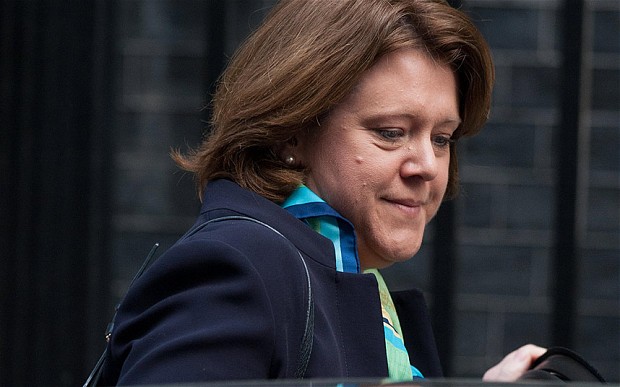
maria miller resignation

After resigning from the Cabinet, her hands finally pried away from her grip on office, Maria Miller actually did something quite rare and notable, which deserves recognition and adoption by other outgoing ministers under similar circumstances. The Telegraph reports:

Mrs Miller said on Wednesday night she was giving her £17,000 ministerial severance payment to a charity in her constituency.

Unlike a number of her colleagues, Maria Miller was not trying to make a fortune at the expense of taxpayers. Her breach of the rules was significant and certainly warranted this outcome (which could have been achieved at much less stress had Miller shown the humility to realise and atone for her errors earlier rather than clinging on for as long as she did), but donating her ministerial severance payment in this way was quite a noble act, one that she was by no means compelled to take.

Miller did not have to do this, especially when there was nothing left to salvage of her ministerial career. For Miller, it seems, it was not so much about the money as it was an ugly manifestation of that right-to-serve mentality and scorn for public disapprobation that still infects so much of the political class.

In truth, the particulars of Maria Miller’s excessive expense claims are quite mild compared to some of the more well publicised excesses of other departed politicians – employing relatives to do fake jobs, claiming rent paid to themselves, expensive furniture, third homes, premium home electronics and moat cleaning – but this is no defence.

Serving as a Member of Parliament and representing your constituents at Westminster is a privilege, not a right. And with that privilege comes the obligation to behave in a manner that is entirely above reproach in all areas related to the carrying out of those parliamentary duties. These obligations, and the commensurate scrutiny, should only increase if the MP is also a minister of state.

Serving in the people’s house is not just another career path where mistakes and transgressions should be overlooked in light of someone being a nice guy, or having had an impeccable record thus far, or having a family to feed. All other considerations are secondary to adherence to a strict code of behaviour and an unwavering following of the spirit – not just the letter – of the rules.

Maria Miller’s expenses intrigue was a remnant from the original expenses scandal, and as such theoretically could not have taken place under the news rules. This much is a far, if mealy-mouthed defence – one cannot retroactively try someone for committing an act that was not illegal at the time. But there, all sympathy for Miller must end. The former Culture Secretary was obstructive and threatening in tone and action, both to the parliamentary expenses commissioner and to the press who were seeking more information. Anything less than full co-operation with such an investigation is unpardonable. These actions alone warranted her resignation from the Cabinet.

Even now, however, it seems as though David Cameron is firmly stuck in denial that Maria Miller had to go and that is unequivocal support of her was wrong and hugely damaging to the public trust. The Telegraph reports:

At Prime Minister’s Questions, Mr Cameron defended his decision to support Mrs Miller. He said: “If people clear themselves of a serious offence, you let them get on with their job. That is actually the right thing to do.”

There was widespread public anger after the standards committee overruled Kathryn Hudson, the independent standards Commissioner, who called for Mrs Miller to repay more that £40,000.

Once again, David Cameron’s blind loyalty prevents him from correctly reading either his moral compass or the public mood, thus helping to reinforce everyone’s worst thoughts and convictions about the political class.

How long will it now take to undo this setback, to repair this damage that could have been almost entirely prevented with a swift and honourable resignation?