Exploiting LGBT People On Gay Mountain

Belgium Russia Gay Rights


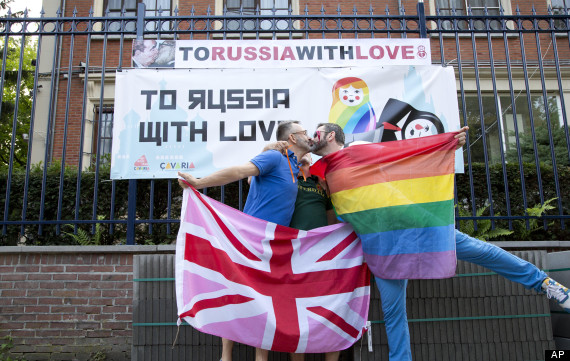
Though it has been depressing to witness the extent to which homophobia and violence against LGBT people remain so widespread in Russia as the Winter Olympics take place, it has been commensurately heartening to see the outpouring of support from so many other countries for Russia’s beleaguered gay population.

Artists, celebrities, politicians, ordinary citizens and fellow sports people have all registered their solidarity with the LGBT community and spoken out against discrimination and Russia’s strict laws against ‘homosexual propaganda’.

This is good – Russia continues its regrettable backward slide from nascent democracy into a corrupt authoritarianism, and as the IOC saw fit to make Sochi the winning bid for the Winter Olympics it is only right that the rest of the world ensures that the event does not descend into a mere forum for pro-Putin glorification.

But as the swell of voices raised in protest at Russia’s treatment of the LGBT population grows, it is becoming increasingly difficult to ignore the fact that many of those people throwing stones are living in enormous glass houses of their own – and that while it is great to revel in being less homophobic than Russia, this achievement alone is not much of an accolade.

As Laurie Penny writes in the Guardian, being less homophobic than Russia is no great feat of tolerance – the bar set by Russia can be cleared by almost anyone:

There’s absolutely nothing wrong with expressing support for LGBT people in Russia, who are facing grotesque discrimination. But being less homophobic than Russia is not necessarily something other countries should give themselves a medal for. A lot of things are less homophobic than Russia.

Queer activists call this sort of thing “pinkwashing” – playing up the gay-friendly branding of a state or corporation to make it seem more liberal than it actually is. Britain likes to think of itself as a tolerant place, but the Border Agency has been accused of almost “systematic homophobia” by the gay rights group Stonewall. Leaked Home Office documents show bisexual asylum seekers being asked degrading questions during hours of interrogation by Home Office officials – questions that included: “What is it about men’s backsides that attracts you?”

This is just one of several examples given by Penny, who points out the less-than-stellar track records of various other supposedly enlightened western countries – even the Canadians.

All too often, a generally increasing acceptance of homosexuality and LGBT people within the general population is not met with an equal acceptance in national bureaucracies and institutions. This is certainly true in Britain, as Penny points out, but is just as true in the United States, where condemnation about Russia’s awful treatment of the gays has been vociferous, but also seemingly ignorant of the many cultural and legal barriers to the full acceptance of gay rights that remain in America.

Britain’s Channel 4 television network apparently decided that the best way to respond to homophobia in Russia would be to make this video – entitled “Gay Mountain” – which has been playing nearly continuously between their scheduled programmes:


The song, which begins in the same portentous style as the Russian national anthem, quickly descends into a camp, colourful, musical extravaganza as the (shirtless) singer exhorts “Good luck Gays, on Gay Mountain”. The profound lyrics continue “Mens and all mens / And womens and all womens / Come together tonight, sing with pride”.

One YouTube user, identifying him or herself as IMB2U, commented:

We should all thank the Russian government for bringing everybody together and creating this huge wave of support and love for the LGBT community. Their hateful ignorance has brought on something wonderful.

Something wonderful? Really? Mildly amusing, perhaps. Entertaining and catchy, yes – if your tastes lean that way. But “wonderful” seems to be overdoing it a little.

While the sentiment behind Channel 4’s video – that of solidarity and support – is certainly admirable on the surface, one has to admit that it does absolutely nothing to improve the lot of gay, lesbian, bisexual or transgender people in Russia. Gay Mountain works perfectly at enabling us Brits – enlightened and sophisticated as we supposedly are – to feel good by sneering at the “backward” Russian people, but does absolutely nothing about actually helping the Russian LGBT community.

Laurie Penny also questions the value of these flamboyant gestures of support which do little, if anything, to help people in real need of tangible help and intervention:

Personally I have no problem with media outlets, businesses and individuals making jokes at the expense of homophobes, or hanging out the queer pride flag. It’s a statement of support that’s fun and costs nothing. But the fact that it costs nothing is precisely the problem. As soon as there’s a price tag attached, the foot-shuffling begins. The rainbow flag is supposed to symbolise safety. Hung over a bar, it’s supposed to mean that this is a place of refuge. For western nations to brand themselves in this way while subjecting LGBT people to humiliation and imprisonment at their borders is simply disingenuous.

While western nations flap the rainbow flag defiantly in Russia’s face, actual lesbian, gay, bisexual and transgender people are being harassed and abused at their borders when they arrive seeking safety. Supporting the rights of LGBT people worldwide is to be commended, but if that sentiment is more than pinkwashing, it should be backed up by action at home.

This just about sums it up. Statements of support from any quarters are welcome, but they don’t mean an awful lot when there is nothing to be lost by making them. Channel 4 has no business interests in Russia, the Russian people will not see the Gay Mountain video in any significant numbers, and Channel 4 has no contracts or revenues at stake in that country. In other words, they have absolutely nothing to lose. Contrast this with the behaviour of a western company such as Coca-Cola, which has a direct financial stake in Russia – both through sales of their product and sponsorship of the Sochi Games – and which has been very timid indeed when it comes to condemning the persecution of gay people there.

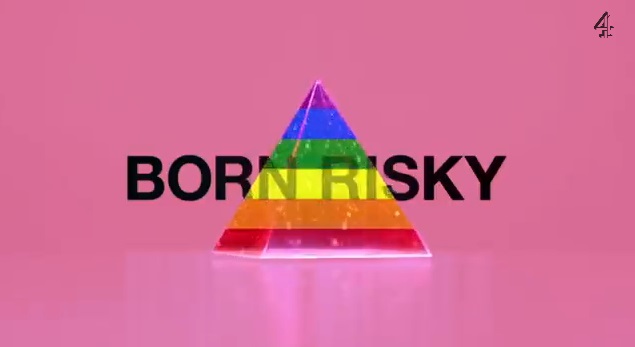
But what really tarnishes Channel 4’s civil rights musical extravaganza is not the pinkwashed song, but the caption that appears on screen at the very end – the words “Born Risky” superimposed on the gay rainbow flag:
So edgy.
So edgy.


What exactly does Channel 4 believe to be “risky”? They risked absolutely nothing, we know that. But we do know that Channel 4 is inordinately proud of the fact that they like to get a rise out of people by setting out to provoke and offend them:

We were set up to experiment, provoke and entertain, and to put our profits into our programmes. You may love us, you may want to punch our lights out, but we make programmes we believe in. We can do this because we were Born Risky. That doesn’t mean “risky” as in naked abseiling, it means creatively risky. Like seeking out undiscovered talent, making films about taboo subjects or championing alternative voices. Born Risky means going where other channels can’t to create something new, alternative and different.

And so the whole campaign is revealed to be not about actually improving the circumstances of gay people in Russia (which we already knew) and not even about believing in or promoting gay rights in general, but rather about product differentiation. It was about burnishing Channel 4’s image as a provocative, edgy television network that likes to push the boat out, defy normal conventions and be a hip alternative to the boring old BBC.

Gay Mountain wasn’t about concern for LGBT people – it was just the next iteration of a very slick, very successful marketing campaign. And that goes rather beyond mere pinkwashing. I’m not sure which colour best represents the soul of a television network which is happy to capitalise on the suffering of foreign LGBT people to show its domestic audience just how cool and trendy it is, but it almost certainly would not be pink.

So by all means, let’s join in another rousing chorus of Gay Mountain. Let us be proud on gay mountain, as the song exhorts us to do. But when the singing is over, let’s not fool ourselves that we have done anything other than disturb the neighbours and make ourselves feel better, comfortably smug in our relative openness and tolerance.

And at least we helped improve the ratings of a certain television network.

Music For The Day

More Brahms, and more Maurizio Pollini at the keyboard. Stick with it, there are rewards to be had. An older recording today, this time of Brahms’ somewhat underrated Second Piano Concerto.


Featuring the Vienna Philharmonic Orchestra, conducted by the late Claudio Abbado.

There is some truly fine Brahms playing going on here. Very fine indeed.

Spare A Thought For Those Who Spy On Us

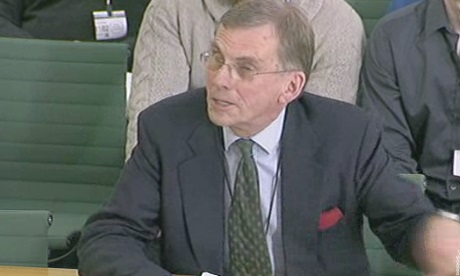
Today saw a rare moment of insight into the workings of Britain’s intelligence services and the mindset of those who lead them. It was but a fleeting glimpse, though – provided by a former employee, summoned to give evidence to the Home Affairs Committee in Parliament.

Unrepentant.
Unrepentant.

The Guardian provides a concise summary of former GCHQ chief Sir David Omand’s testimony, but the real showstopper is this question, posed by Conservative MP Michael Ellis, and the response he receives from Sir David:

Q: Have the unauthorised leaks have a negative effect on morale?

Omand says that his impression, from the outside, is that it has been a bitter blow.

There have been concerns about reputation.

And they have been accused of breaking the law. They have been accused of using the US as a backdoor, to circumvent UK law. Omand says he does not think that is true.

There has been an impact on families too, he says.

And he suggests there has been an impact on recruitment. Would parents encourage their children to join an organisation accused of acting like this.

In other words, as far as David Omand is concerned, the problem is not that the all-powerful British security agencies have been collecting bulk data on the personal communications of British citizens without reasonable suspicion of criminal intent. No, the real outrage is the fact that in protesting the draconian steps taken in the name of our safety (but without our knowledge or consent), having found out about them, we have hurt the feelings of the people who have actually been doing the spying. Never mind the right to privacy – the fragile egos of our intelligence analysts are apparently at stake.

Also of interest is Omand’s opinion on whistleblowing in general, as revealed in his response to a question from Labour MP Paul Flynn:

Q: Don’t we need whistleblowers?

Omand says he supports the free press. In a well-regulated society, you don’t need whistleblowers.

So there we have it. If society is well regulated – meaning, as far as I can tell, if the elites are free to do whatever they think needs to be done under a secret gentlemen’s agreement, and the public are willing to be docile and credulous and to relinquish any expectations of oversight or checks on power – then there would be no need for whistleblowers such as Edward Snowden.

And in a sense, Sir David Omand is right. A “well-regulated” society such as this would not need whistleblowers, because it would have sacrificed so much of its integrity and worth that there would be nothing left for an honourable whistleblower to defend.

This Parliamentary performance by the former head of GCHQ provides a very revealing insight into the self-entitled mind of our political and national security elites. In their worldview, not only are they perfectly entitled to treat the average citizen with suspicion and intercept their personal communications at will, but they should also be allowed to do so with total impunity, and without ever being made to feel the slightest bit bad about their actions, either through having their clandestine work revealed by a whistleblower, or by reading a negative newspaper editorials on the subject in the aftermath.

Omand is essentially telling us that our first thought as members of the public, when confronted with proof of massive government surveillance by whistleblowers such as Edward Snowden, should not be for ourselves, the people whom the security services supposedly exist to protect and serve, but rather for the sensitive feelings of the GCHQ operatives and their political masters.

If that strikes you as being slightly ludicrous, that’s good, because it should.

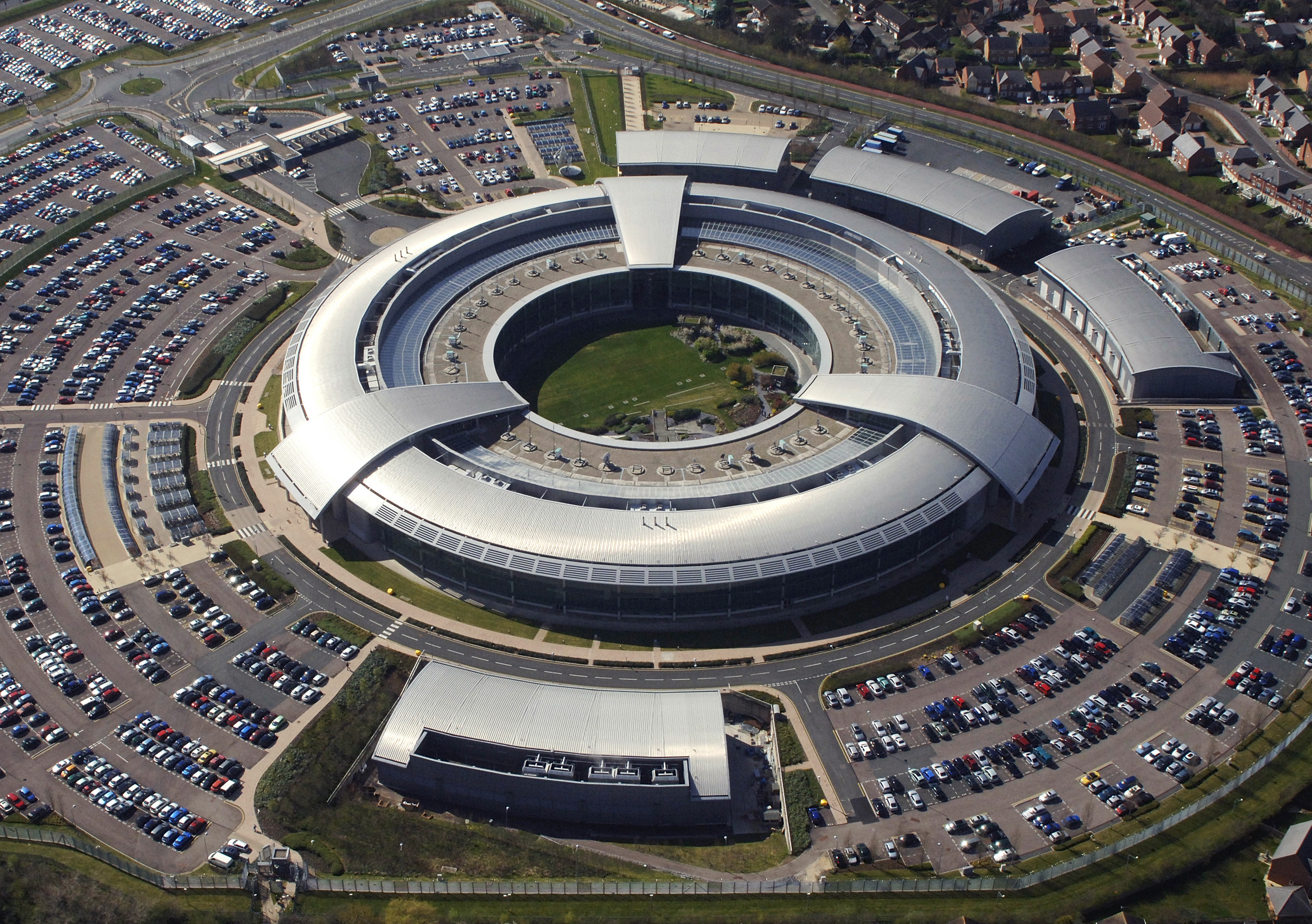
A fearsome building, apparently filled with very sensitive souls.


The impact of the Snowden revelations on morale within GCHQ should not be our overriding concern at this time. The organisation has been flagrantly violating the privacy of fellow British citizens – who should not be their target – unknown and unopposed, and a certain dose of guilt and shame for having done so is probably quite appropriate.

Of course, ultimate responsibility for the actions of the intelligence services rests with the government and the elected politicians who sanctioned the draconian use of surveillance practices without ever seeking the consent of the people. It is true that people working for GCHQ and the intelligence services are given orders and must carry those orders out as part of the job, and I also appreciate the power of organisational or institutional loyalty, and the corrosive effects of groupthink, both of which may play a part in allowing intelligence agency operatives to justify some of the actions that they take. But this does not absolve them of all responsibility.

Yes, the buck stops with the Prime Minister and the Home Secretary, but good men and women at all levels within the hierarchy who knew of what was taking place should have stood up and said something. The sad fact is that were it not for a disgruntled and outraged American citizen blowing the whistle and releasing incriminating documents to the media, the British public would still be blissfully unaware of what has been taking place.

So where is this well-regulated society of which Omand speaks? In Britain, it clearly does not exist, as The Guardian’s summary of another of his responses makes clear:

Omand says a whistleblower has to have exhausted his other options. Edward Snowden could have gone to his employers, or to Congress. Imagine if he had walked into Congress, flanked by the editor of the Guardian, saying you have been lied to. He could have achieved his objectives, without having had to take more than 50,000 documents.

Is it not striking that when pressed to come up with an alternative to releasing sensitive intelligence documents to the media, the only alternative scenario to whistleblowing offered by Omand occurs in the context of the US government, and not the British?

Firstly, it is somewhat ludicrous to suggest that Edward Snowden could have followed this course of action. There were those in Congress, after all, who were aware of the NSA’s activities but who felt bound not to talk about them. And with unrepentant national security fanatics such as Peter King and Mike Rogers in the House, Snowden would likely have been disappeared before he had finished uttering his first sentence.

And secondly, how does Omand picture the same scenario playing out in the United Kingdom? Clearly not well, as he doesn’t expand upon the scenario during his testimony. So the concerned GCHQ analyst walks into Parliament flanked by Alan Rusbridger of the Guardian, and tells MPs that they had been lied to. What happens next? How, in any way, would that analyst’s objectives of raising awareness of the malpractice be accomplished? It wouldn’t.

Whistleblowing actions of the type carried out by Edward Snowden are sadly necessary, because it is simply not enough to flag misbehaviour by the national security complex to elected representatives in Parliament or Congress. In the US Congress there are a sufficient number of cheerleaders for Bush-era, PATRIOT Act-style security that the whistleblower could almost certainly expect immediate reprisal and persecution, and in the case of the British Parliament, there sadly exists a lazy general consensus that the security services should be left in peace to do whatever they think is reasonable to keep us safe.

In neither country, Britain or America, is there a plausible scenario where a concerned citizen could approach elected politicians with evidence of wrongdoing by the state and expect that their personal privacy and liberty to be respected and guaranteed in the aftermath. We know this because time and again, we see the majority of public officials (with a significant but outnumbered minority of brave dissenters) closing ranks to defend the intelligence agencies and the status quo. Therefore, the only way to bring a halt to these practices is by releasing information into the public sphere – which, it should be acknowledged, has been done in a very measured and sensitive way by Snowden, and is certainly no indiscriminate data dump – to increase public awareness and concern.

It would have been foolish to expect the former head of GCHQ to offer anything other than a full-throated defence of the work that he and his agency were so deeply involved in for so long. And so, in that sense, we learned nothing new from Sir David’s testimony to the Home Affairs committee today. There will be no immediate change of policy and no deathbed confessions of wrongdoing from anyone in power just yet.

And yet there was progress today. As well as the softball questions lobbed by sympathetic MPs with a similarly authoritarian outlook, Sir David Omand also had to face some tough and awkward questions. Even in centralised, deferential Britain, there are some MPs willing to do their job and represent the interests of their constituents.

Take this small ray of hope and combine it with Ed Miliband’s curious new-found interest in ensuring that the intelligence agencies receive more thorough public scrutiny and oversight, and you have the makings of what now passes for a good week for civil liberties and citizen privacy in 21st century Britain.

The Storm Cone

A supplemental Music For The Day suggestion: “Look, The Storm Cone” from Act I of Benjamin Britten’s 1945 masterpiece, the opera Peter Grimes.

This music seems particularly apt given the severe weather which continues to batter much of the United Kingdom this week, leading to the first “red warning” of the winter from the Met Office.

britishstorm

As the villagers proclaim at the climax: O tide that waits for no man – spare our coasts!


All
Now the flood tide
And the sea-horses
Will gallop over
The eroded coast
Flooding, flooding
Our seasonal fears.
Look! The storm cone
The wind veers.
A high tide coming
Will eat the land
A tide no breakwaters can withstand.
Fasten your boats. The springtide’s here
With a gale behind.
 
Chorus
Is there much to fear?
 
Ned
Only for the goods you’re rich in:
It won’t drown your conscience, it might flood your kitchen.
 
Boles
God has his ways which are not ours:
His high tide swallows up the shores.
Repent!
 
Ned
And keep your wife upstairs.
 
Omnes
O Tide that waits for no man
Spare our coasts!


Those within traveling distance of London may want to check out the English National Opera’s production of Peter Grimes, running until the 27th February.