On Gun Control In Britain

UKguns


It’s difficult at the moment to know precisely how seriously to take Nigel Farage’s public pronouncements. In a matter of days he has managed to offend a great number of people by suggesting that once you adjust for maternity leave, women working in finance have at least a level playing field with (if not an easier time overall than) men; he appeared to prevaricate when confronted with another loony UKIP local councillor, this one publicly attributing the UK’s recent bad weather to the coalition government’s legalisation of gay marriage; and he publicly disowned the 2010 UKIP manifesto, which he personally helped to launch.

All of this is rather unfortunate, because in many ways Nigel Farage remains one of the most principled and straightforward politicians in Britain today. Aside from some heavy-handed and paternalistic conservative attitudes to social issues such as gay marriage and an excessive obsession with immigration restrictions, the policies currently espoused by UKIP are ones which would appeal to many a libertarian-minded voter grown disenchanted with the Tories under David Cameron – myself included. Therefore, I hope and trust that the PR wobbles of this week will soon be behind him.

But more importantly, I hope that the current furore does not drown out a more important debate that Farage has initiated – whether or not to relax Britain’s stringent gun control laws and relax the blanket ban on handguns. Farage is of the opinion that to do so is right in accordance with conservative principle, with individual liberty and with common sense.

The Guardian reports:

Asked about gun controls, Farage said: “I think proper gun licensing is something we’ve done in this country responsibly and well for a long time, and I think the kneejerk legislation that Blair brought in that meant that the British Olympic pistol team have to go to France to even practise was just crackers.

“If you criminalise handguns then only the criminals carry the guns. It’s really interesting that since Blair brought that piece of law in, gun crime doubled in the next five years in this country.”

“I think that we need a proper gun licensing system, which to a large extent I think we already have, and I think the ban on handguns is ludicrous.”

The initial arguments brought to bear against Farage are not terribly convincing:

Ian Mearns, Labour MP for Gateshead, said the comments were an example of “how extremely dangerous Ukip are”.

“Families facing a cost-of-living crisis will find it bizarre that one of Nigel Farage’s priorities would be to relax Britain’s tough gun controls,” he added.

So we are told that the policy is “dangerous”, and then fed the old line that the British public believe that politicians can and should only ever focus on one issue at the time, and that the economy must crowd out everything else. When someone leads off with the “why aren’t we focusing on something else?” argument, they generally don’t have much else in the way of persuasive arguments.

As a libertarian-minded voter, given a blank slate and in an ideal world I would like to see the blanket bans on handguns in the UK repealed. While recognising that Britain is very different culturally to America on this issue, where the Second Amendment enshrines the right to bear arms very clearly, I believe that our country (at least the people, if not our government) do also place great value on the freedom to defend oneself with any force necessary if required. The strength of public feeling in the Tony Martin case rather proves my point, no matter how much gun control advocates might desire to wish it away.

Where we differ more substantially is the fact that in America, the Constitution makes clear that the right of the people to bear arms shall not be infringed not only for reasons of protection and self-defence against personal violence, but also against oppression by the government. In Britain, where our rights are granted to us by the government and it is our lot to bow and scrape and be thankful for what we are given by way of freedoms, this is clearly not the case. The government is not ours; rather, it belongs to Her Majesty. This may seem like a quibbling detail, but when looking at issues of civil rights and liberties it is an important one.

As a general principle, I don’t think it should be the government’s business to ban or to allow small arms, or to do many other things. I would be quite happy if the government could content itself with competently undertaking its core functions of defending the nation, protecting property rights, providing law and order and providing a framework for other institutions to deliver much of what currently falls under the welfare state. I have sufficient belief in the goodness of human nature to think that, if properly guided and harnessed, this might be achievable.

However, I also recognise that this is not the seventeenth century, and I am not a stockinged, bewigged colonist in the New World. We do not live in a time of attempting bold new methods of self governance – or bold new methods of doing anything at all, and there is little desire among the public to become the kind of country where such experimentation takes place. And this is where conservative pragmatism comes into play. On the topic of gun control specifically in the UK, I cannot support Nigel Farage’s belief that gun control laws should be repealed.

Guns are not plentiful in the UK as they are in the United States. Making it legal for average members of the public to own firearms again would initially empower those people, but there would be a gradual and inexorable drift of firearms from law-abiding citizens to active criminals. Like almost anything, if you are criminally minded and you want to lay your hands on a gun, you can do it if you invest time making the right connections. But it is difficult to do unless you already have those links with the criminal world, and so guns are not purchased in the UK on a whim, or by ordinary folk for use in a moment of high passion – the supply is small and in the hands of professional criminals, and therefore it simply takes too long for someone not in the know to make the purchase. Why expand the supply and start to make it exponentially easier?

In the United States, the case is very different. Guns are a dime a dozen, and any blanket ban on firearms in America, as well as being grossly unconstitutional, would leave law-abiding citizens defenceless in a country where almost every criminal has ready access to a gun. In short, banning guns in the United States would put the population at risk while the population of the United Kingdom would be more endangered by the legalisation of firearms.

I freely admit that a bulk of conservatism and libertarian opinion may differ with me on this issue. Indeed, The Commentator last year revealed something of the depth of feeling on the repeal-gun-control side:

The choices include term limits for Prime Ministers, a flat tax, a law to encourage the ‘greening’ of public spaces and the repealing of Britain’s hand gun ban. Following the Dunblane massacre in 1996, in which 16 schoolchildren were killed, Parliament passed The Firearms Act of 1997, which essentially banned handguns for the atrocity.

But Britons seem unconvinced by the law. The proposer, known as “Colliemum” asked, “…why should only criminals be ‘allowed’ to possess guns and shoot unarmed, defenceless citizens and police officers?”

While the poll continues, so far over 80 percent of the 11,000+ respondents have told the Telegraph that they want to see the handgun ban repealed.

Unscientific, yes. But also highly emphatic.

I have called often and loudly for a constitutional convention for the United Kingdom, to decide once and for all the powers we are willing to give to the government and those which we insist on keeping for ourselves, as well as to fairly and equally devolve powers to the four home nations under a federal system. Part of the output of such a convention would inevitably be a decision on whether we are happy to continue being granted our rights or having them taken away by the whim of each successive Parliament, or if we want to enshrine certain inalienable rights in a more permanent and unyielding document.

But until my call is heard and a Constitution is written and adopted, there is no document to which we British can point to say that government shall not deprive us of the right to own guns. Neither is there precedent, or a persuasive common sense argument. Ceteris parabus, just as there is no sound or legal way in which American citizens can be deprived of their right to bear arms, so there is no reason rooted in law why the British should have theirs returned.

As the American civil war drew to an end, James Russell Lowell wrote:

Among the lessons taught by the French Revolution there is none sadder or more striking than this, that you may make everything else out of the passions of men except a political system that will work, and that there is nothing so pitilessly and unconsciously cruel as sincerity formulated into dogma.

Sincerity formulated into dogma. We see this a lot today, both in Britain and America. In the United States it is manifested most obviously in the Tea Party and the demands of its more fanatical members to immediately roll back the functions of government regardless of the potential suffering of those who have come – and in many cases been encouraged – to depend on it. Pitiless yes, and often cruel too. And in Britain we see this dogmatic approach, I am sad to say, in Nigel Farage’s call to repeal the gun control laws.

When my libertarianism meets the fact of modern Britain, the conservative in me must side with the real world as I find it, and for that I do not apologise.

Nepotism Alert – Stephen Kinnock

Lord Stephen of House Kinnock. Winter is coming.


Watch out, there’s a new man in town. He is going to shake things up. He’s going to get things done. He’s a policy heavyweight and an inspirational leader-in-waiting. He’s going to rise up through the Westminster power structure and eventually become the Labour leader that Ed Miliband can only dream of being. He is Stephen Kinnock.

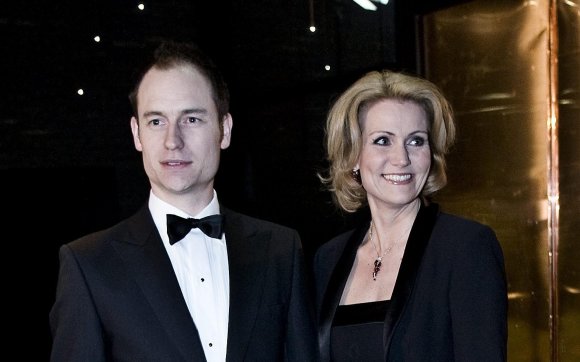
The face has the wistful, simple and vacant look reminiscent of Prince Edward on a bad day, albeit with even less charisma. Presumably he is charming enough in person, as he is happily married to Helle Thorning-Schmidt, the Prime Minister of Denmark. Kinnock Jr. currently lives in London while she and his children reside (naturally) in Copenhagen.

But now Stephen Kinnock, Son of Neil, First of his Name, is throwing his hat into the ring to be the Labour candidate for the Welsh constituency of Aberavon at the next general election.

The Guardian observes that this is by no means the first nonentity with a famous surname to try to make politics a family business in recent years:

Will Straw, son of Jack, will contest Rossendale & Darwen for Labour in next year’s general election. David Prescott, son of John, stood unsuccessfully for selection in the Greenwich and Woolwich constituency in November. There has been speculation that Tony Blair’s eldest son, Euan, might seek a parliamentary seat after he gave up a career in banking to work for a small Coventry charity.

The four young men, were they successful in their ambitions, would be the next wave of political offspring to carry on the family tradition. Hilary Benn, son of Tony, Ben Gummer, son of John, and Nick Hurd, son of Douglas, are all MPs. Anas Sarwar was elected Labour MP for Glasgow Central after his father, Mohammad, stood down from the seat in 2010. Francis Maude, Bernard Jenkin, Andrew Mitchell and several others at Westminster all succeeded a parent to the role. There are plenty of recent historical examples too, from Douglas Hogg, the former Tory agriculture minister, to Estelle Morris, education secretary under Tony Blair, both of whom came from dynasties of MPs.

Just what Parliament needs – another untalented, uninspiring wet rag of a candidate with next to no real life experience (aside from the inevitable internships and think tank jobs that having a politician’s surname makes getting easy) to lower the average IQ of the Commons even further. Stephen Kinnock’s credentials and life experience? Being a research assistant at the European Parliament, a succession of jobs at the British Council, a job for the World Economic Forum and his present role at a consultancy that “helps global businesses go beyond the green basics and reinvent the way they grow”. Make of that last one what you will.

Parliament and politicians are thoroughly despised at this country at the moment. I know they are because I helped to campaign for one in the 2010 general election and many members of the public told me exactly what they thought of the lot of them. The expenses scandal is still fresh in the minds of many, and public fury will surely erupt again when MPs accept their proposed inflation-busting pay raise in the near future. With political engagement at an all time low, is now really the time to be throwing more prime examples of nepotism from the political elites in our faces?

Of course, these shenanigans are not restricted to the Labour Party – though they certainly take the biscuit for nominating Emily Benn to be a candidate back in 2007, when she was still only seventeen years old. There was a time when the runt of the family litter would be encouraged to join the clergy while the oldest son inherited the family estate. I certainly do not propose a return to those days, but surely we can come up with a better career path for the rootless and questionably-talented progeny of famous politicians than our current scheme of packing them back to Westminster before the green benches occupied by their parents have had a chance to grow cold?

And if we must continue to indulge in nepotism in British political life, can we at least try to make it a little more glamorous? In America, they make up for their lack of a royal family by bestowing on their political dynasties a real aura of magic and sparkle, wealth, privilege and scandalous intrigue worthy of a daytime soap opera. The Kennedys, the Bushes, the Clintons – their style of nepotism is no more morally acceptable, but it is a hell of a lot more fun to watch. No television producer is in a hurry to start making Keeping Up With The Kinnocks.

This is the son of a man who fell into the sea while posing for a photo shoot:


Somewhere, lurking well out of sight, are talented potential citizen politicians whose civic instincts we should be tapping to devote five or ten years of their life to serve a term or two in Parliament for the good of the nation.

Stephen Kinnock can sit this one out. The World Economic Forum surely misses his talents.

A Symphony From The Heart Of The City

I strongly encourage all readers with an interest in classical music to read this account of the history of Shostakovich’s Seventh Symphony (“Leningrad”) and to watch the linked videos – a fascinating article about an iconic piece of music.

Andrew Sullivan's avatarThe Dish

Stephen Walsh praises Brian Moynahan’s Leningrad, a book on how the siege of the city influenced the work of composer Dmitri Shostakovich:

Shostakovich, a native of Leningrad/St Petersburg, was in the city for the first few weeks of the siege, and by the time he was flown out in early October 1941 he had composed the bulk of three movements of his Seventh Symphony. He already saw it as a symbol of the city’s defiance, and in Moscow he told an interviewer: ‘In the finale, I want to describe a beautiful future time when the enemy will have been defeated.’

It had become a Leningrad Symphony in all but name. Its composer had been photographed on the roof of the Conservatoire in a fireman’s outfit hosing down a (non-existent) conflagration. Now, in his absence, Leningraders struggled to concerts played by emaciated, half-dead musicians in freezing halls. Music had become an…

View original post 397 more words

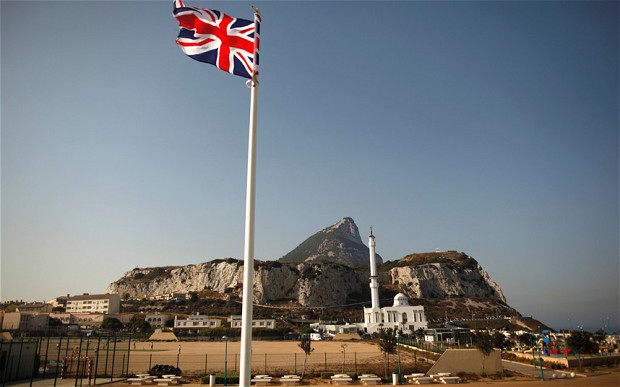
Defending Gibraltar

It is irking see the Conservatives so publicly and comprehensively outmanoeuvred by Labour recently on a variety of issues, most recently related to education and welfare. To witness the same thing now happen in the sphere of foreign policy is yet another worrying sign that the Conservative-led coalition government is coasting at this point, perhaps made complacent by the recent uptick in economic indicators, and taking their eye off the ball.

The Telegraph reports that Gareth Thomas, the Labour shadow minister for Europe, has raised concerns that Britain is not doing enough to forcefully push back against recent Spanish misbehaviour with regard to Gibraltar:

Gibraltar is a territory “under siege” and Spain should be made to account for its actions in relation to The Rock, the shadow minister for Europe has said.

Gareth Thomas, the Labour MP for Harrow West, said that residents of Gibraltar were concerned that Britain was not doing enough to defend them from Spanish harassment. The past 12 months have seen the highest ever number of incursions by Spanish ships into Gibraltar’s waters, with the almost double the incidents from 2012.

“I was struck by the sense that the Gibraltarians have of being under siege,” said Mr Thomas, who visited Gibraltar in November. “Spanish ships are coming into their waters on a regular basis.”

We have seen this before. The leaders of countries that are in the doldrums, facing economic malaise and restive populations (hi, Argentina), suddenly dredging up ancient grievances against Britain. Grievances that were once dead and buried during happier economic times. If you are going to make the case that the absence of the Falkland Islands or Gibraltar is like a gaping hole in your respective nation, I would have slightly more sympathy if we didn’t hear your plaintive appeals only during times of economic recession.

I refer you to the Treaty of Utrecht.

This continual harassment of a British overseas territory is unacceptable, and one cannot help but feel that the diplomatic protest by the UK in response has been far too small. Relying on a corrupt body such as the European Commission to mediate the dispute by visiting Gibraltar was clearly never going to be the answer, and why William Hague thought that this option would be sufficient to resolve the situation is mystifying. Diplomatic pressure is clearly failing in this case, and more stringent unilateral action may be required to bring the Spanish back into line. Bullying behaviour tends only to respond to a show of strength, a clear assertion that the bullying will no longer be tolerated.

Of more concern to me, though, is the fact that William Hague, the Foreign Secretary, has failed to make it sufficiently clear that Britain will not tolerate these childish antics. I had not expected someone so competent and capable to drop the ball or fail to forcefully defend the interests of the UK to the extent that he clearly has. Showing forebearance to Spain on the issue of Gibraltar, particularly given the childish means by which the Spanish government chooses to pursue its non-cause, is no longer cute or charming or patient. It’s weak.

Michael Gove on education, Iain Duncan Smith on welfare and now William Hague on foreign policy, all caught napping and hit from the right by their Labour counterparts. I don’t know whether a weekend retreat is in order at one end of the spectrum, or a wide-ranging cabinet reshuffle at the other, but David Cameron urgently needs to get his cabinet to come out of cruise control.