Mhairi Black’s Overrated Maiden Speech


By most accounts, the SNP’s Mhairi Black – Britain’s youngest MP in several hundred years – gave a great and powerful maiden speech when she finally spoke during the Budget debate this week. And so it was, if you lower the bar for greatness so far that it encompasses earnest, occasionally witty, wide-eyed socialist babble.

Certainly many Labour MPs were enthusiastic, as the Guardian reported approvingly when the speech went viral:

In the anti-austerity speech where Black called herself “the only 20-year-old in the whole of the UK who the chancellor is prepared to help with housing” after the age limit imposed on housing benefit, she also called for a healing of relations with the Labour party.

“I have never been quiet in my assertion that it is the Labour party that left me, not the other way round,” she said in the speech where she also praised the lateLabour grandee Tony Benn. “I reach out a genuine hand of friendship that I can only hope will be taken. Ultimately people are needing a voice, people are needing help. Let’s give them it.”

Several Labour politicians seemed receptive to her call for cooperation. Praise for Black’s speech was tweeted and retweeted by Labour MPs including Tulip Siddiq, Diane Abbott and Sarah Champion, as well as Labour’s Madeleine Jennings, the parliamentary researcher for MP Stephen Kinnock.

This blog disagrees with almost everything that Mhairi Black believes in, but has no personal animosity toward the twenty-year-old parliamentarian. In many ways it is refreshing and long overdue for someone so young to be included in the makeup of parliament, especially at a time when government policy (and state largesse) so overwhelmingly favours older people, with their selfish attitudes and non-means tested benefits. It is only a pity that Mhairi Black doesn’t represent a serious political party but rather a group of zealous, moralising fantasists who would tear up a three hundred year old union in a fit of pique over ten years of Tory Lite rule. But so be it.

Continue reading

Britain Needs A Parliament Fit For the Twenty-First Century

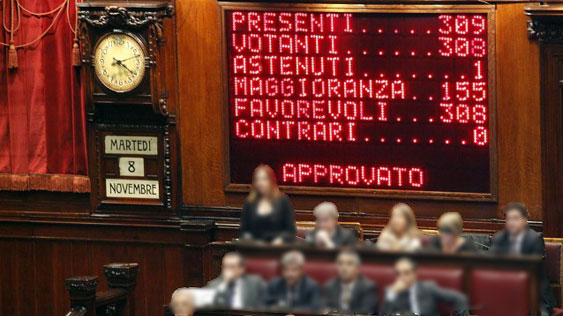
Parliament Electronic Voting 1


Economists and government officials rejoiced this holiday week as new figures revealed that the productivity of British workers, long a cause for concern, finally registered an improvement in the third quarter of the year. In fact, the 0.6 per cent increase in output per hour worked caused a welcome ripple of positive headlines and general satisfaction just as everything prepared to shut down for Christmas. But while the Bank of England takes succour from the fact that British workers are delivering more output per unit of time, can the British people say the same of their elected politicians? And how would we even go about measuring such a thing?

We know that the overall approval rating for Members of Parliament as a group hovers around the low twenties, but the general disdain in which politicians are held does not necessarily have any relation to how productive they are. We could attempt to determine productivity by measuring the number of debates attended and speeches made by MPs over the course of a year or a parliament, but this would fail to take into account the different jobs and roles performed by different MPs – though it would quite rightly expose former prime minister Gordon Brown as the political equivalent of the New York City union boss who spends most of the working day asleep at his desk.

Alternatively, we could try judging MP’s productivity according to the number of bills that they pass – but with fixed term parliaments a very new phenomena, backward comparisons would be almost impossible, not to mention the fact that stopping harmful legislation from reaching the statute books is often a far more valuable service to the country than busily legislating nonsense in pursuit of favourable headlines.

Continue reading

British Politics Has Become A Centrist, Ayn Rand-Style Dystopia

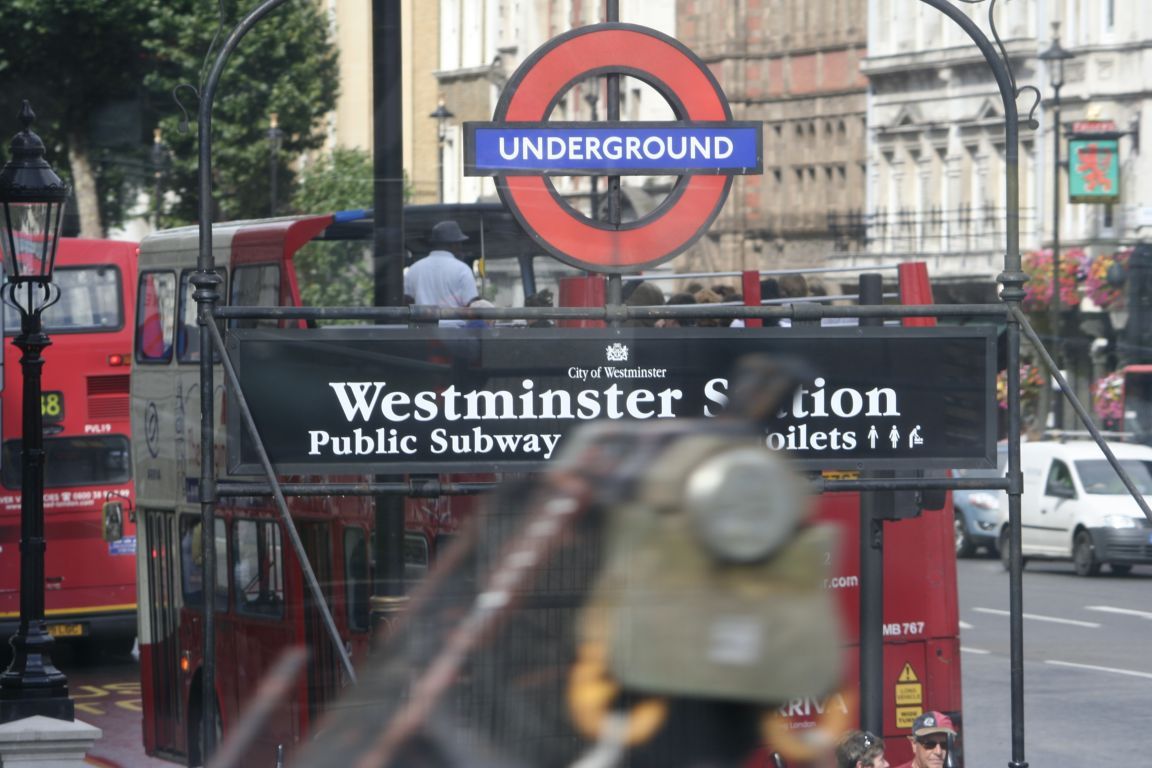
Westminster train 02


Readers of Atlas Shrugged will recall the Taggart Tunnel disaster, a seminal moment in Ayn Rand’s novel. The deadly train accident, an avoidable, man-made calamity, highlights the devastating but inevitable consequence of having too few people of moral fibre, wisdom and intelligence left in positions of power and authority.

For those unfamiliar: in the build-up to the disaster, the Taggart Railroad’s flagship transcontinental service breaks down while passing through Colorado, stranding a trainload of passengers in the mountains. Taggart Transcontinental’s best engineers and executives have long since deserted the company, resigning out of frustration with the endless bureaucratic meddling and the glorification of consensual mediocrity which has taken hold of corporate and political culture in the dying days of the United States. With no replacement diesel locomotives available and with nobody willing to take responsibility or speak truth to power, a self-important politician travelling on the train is able to bully reluctant and inexperienced railroad employees to use a coal-burning engine to pull the train through the long, airless mountain tunnel, resulting in the death by asphyxiation of everyone on board.

The grey characters of modern British politics are far less compelling than those in Ayn Rand’s dystopia, but alarming parallels are starting to appear between the groupthink and instinct for self-preservation shown by  the elite in Atlas Shrugged and the recent behaviour of the Westminster village as it faces the intertwined problems of unfinished constitutional reform, voter apathy, the relentless march of UKIP and an economic recovery that may as well not exist for the low-paid.

Continue reading

Dear Insert Name, Thanks For Your Generic Efforts, Love DC

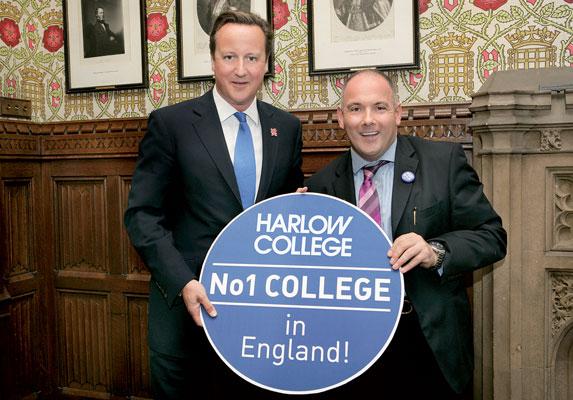
David Cameron Robert Halfon Backbencher MP Conservative


Many people, Semi-Partisan Sam included, receive at least one round-robin letter, trumpeting the glittering achievements and detailing the tribulations experienced by far-flung branches of the family, in the run-up to Christmas each year.

Folksy newsletters of this kind have long-attracted a mixture of ire, derision and pity, but we grudgingly read them because were it not for this (and the real-time bragging that takes place on Facebook), we would otherwise have absolutely no idea what’s new with Aunt Cersei and Uncle Jaime in Kings Lynn or cousin Arya in her gap year travels around the world.

But the one thing we round-robin recipients never do is boast about having received the same mail-merged missive as every single one of our other extended family members. This only makes it more odd that Robert Halfon, the Conservative MP for Harlow, took to Facebook today with evident pride to share a letter purportedly written and sent by David Cameron to celebrate the government’s achievements in the year to date.

The mediocre, mail-merged round-robin letter is shown in its banal entirety below:

David Cameron Robert Halfon Backbencher MP Parliament Letter

Cameron’s attempt at a morale-boosting letter is full of the meaningless platitudes about securing a “brighter future for Britain” that one might expect from a tired politician going through the motions on a local radio interview at 6AM, but it is doubtful that the prime minister personally authored the letter whilst away on vacation in Portugal. Far more likely that the job was delegated to a junior special adviser or some other paint-by-numbers Downing Street aide.

But what is truly interesting about this seemingly dull letter is the fact that the only identifying marker tailoring the letter to Robert Halfon is the inclusion of his name after the word “Dear” at the top. From that point onwards, David Cameron’s missive takes a lazy ramble across the current political landscape, touching on high-level achievements rather than the particular work or campaigning issues of Halfon and his fellow backbenchers.

The prime minister proudly acknowledges the “difficult decisions” that were taken to stabilise and return the British economy to growth. With a fanfare he takes credit for reducing the deficit by a third – some credit, considering that the government fell far short of its target on deficit reduction, and that the national debt continues to grow.

In his summer hubris, Cameron goes on to take personal credit for falling unemployment, reduced immigration (again, far from achieving the targets set out in the 2010 general election campaign), improved schools and, at probability’s furthest stretch, the supposed repatriation of previously outsourced and off-shored jobs to Britain. And the memo ends with a limp call to action, exhorting the prime minister’s Westminster foot soldiers to continue fighting the good fight to keep Ed Miliband out of Number 10 Downing Street (and Cameron on the business side of the famous black door).

But would it really have been so hard to add even a dash of customisation before firing out these letters? The recipient in question, Robert Halfon, is a relative newcomer to Westminster having joined the 2010 parliamentary intake, and so does not have a huge stable of stories, anecdotes, policies or victories for a hapless intern to research. But he does have several solid achievements and bold stances to his name that could have been used, had anyone been bothered.

The top paragraph of the Cameron-O-Gram might have approvingly mentioned the successful Fair Fuel campaign led by Halfon, conveyed thanks for leading the way in advocating more youth apprenticeships, or pledged to work with the Harlow MP to address the problem of prohibitively high car parking prices at NHS hospitals. But it did none of these things. In fact, the standardised email to lowly backbenchers went even further in demonstrating its ignorance or indifference to the work of individual MPs by prominently hedging its bets:

“So a big ‘thank you’ for everything you have done to get us this far. And thank you too for your campaigning this past term – whether that be in the local and European elections in May, or in Newark last month, where our Party came together to win our first by-election in government for 25 years.”

“Whether that be…”? Shockingly, David Cameron and his office seem entirely ignorant as to which MPs contributed the most and the least to recent campaigns, despite Grant Shapps’ threat to shame and punish any MP who failed to pull his or her own weight on the campaign trail. People accuse Ed Miliband’s office of being out of control and unable to properly co-ordinate, but now it seems as though the Conservatives are rapidly falling to a similar dull point.

“Letter-gate” reveals a picture of a prime minister and a government that not so long ago fawned over restive backbench MPs to keep them sweet, but which now believes that they can be treated with any amount of contempt given the fact that they will need help from CCHQ to survive the 2015 general election, and will overlook the snub.

And there can be few better ways to showcase this contempt than spamming hardworking backbench MPs with a cheesy, internal and non-specific campaign memo – ostensibly to give thanks for backbench loyalty – which is hardly different to the regular mailing list bulletins “written” by various Tory ministers and still received by Semi-Partisan Sam as a former member of the Conservative party.

At this point in the life cycle of government, a proactive and attentive leader might take the time to properly shore up morale and accrue some goodwill among his troops heading into party conference season. At the very least, a good party leader might feign an interest in the constituency work or personal causes of their MPs. But Cameron seems unable to even fake this enthusiasm.

Ironically, the earnest and hardworking MP who was so delighted to receive this piece of junk mail from Number 10 – the political equivalent of a pizza delivery leaflet shoved through the letterbox – was chastising his constituents, charities and community groups for spamming / petitioning MPs and adding to their workload in precisely this automated fashion only 30 months ago. In February 2011, Halfon wrote:

So what’s the best way to persuade an MP to support your cause? It’s simple. When I get an invite to visit the local branch of an organisation, I will always go. When I get a personalised letter, hand-signed from a chief executive (as opposed to public affairs officer) that contains local statistics and information, how can I not fail to be interested? When a local constituent calls me asking for a meeting, to talk about his or her involvement in her charity, I will always do it. I remember particularly how I was recently lobbied directly in the Commons by a resident who was involved with a breast cancer charity. She had a profound effect on me. I was only too pleased to support her cause.

So my final advice to charities and the voluntary sector is this: forget the impersonal emails, move away from computer generated email campaigns, stop sending reams of paper by post. Make it personalised and local, and you will not just have my real support, but that of many other MPs as well.

To counsel constituents against using inappropriate forms of communication while lauding precisely the same impersonal tactics when executed by 10 Downing Street, as Halfon seems to be doing, is puzzlingly contradictory to say the least. And at a time when Conservative MPs defending narrow majorities most need the help of their leader to retain their seats in 2015, it is especially odd that at least one backbencher is not more offended at being condescended to in this manner.

As the sweltering Parliamentary summer recess rolls on, the question we are left asking is this: With potent threats from both UKIP on the right and Labour on the left, how on earth does David Cameron expect to lead the Conservatives party to a majority and victory in 2015, when he clearly has so little respect for his generals in the field?

A postcard from Portugal would have cost so little, but said so much more.

The Very Model Of A Modern Citizen Politician?

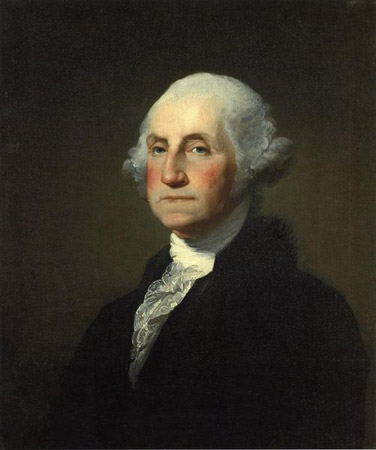
George Washington


Dan Byles, the Conservative MP notable for holding the party’s most marginal seat (North Warwickshire, majority of 54 votes) has announced his intention to stand down at the 2015 general election.

In a statement published on his website, the MP notes:

Before becoming an MP I served in the Army for nine years, deploying on operational tours in Bosnia and Kosovo. By the time of the 2015 General Election, serving my country will have been the primary focus of my professional life for some 14 years. For myself and for my family, whose support and understanding have been unerring throughout, I believe it is now time to move on to new challenges. I will therefore not be standing for re-election in 2015.

While it is sad to see Parliament lose a member of such evident patriotic devotion as Mr. Byles, more than anything else, the news comes as a tremendous surprise because it is so rare to see someone give up power and office so gracefully in modern British politics. Unless they are so unfortunate as to lose their seat in an election, MPs usually cling to their Westminster offices like barnacles to a ship’s hull.

Having undertaken whatever questionable manoeuverings were necessary to be selected as a candidate and then elected to Parliament in the first place, many MPs choose to stay in the politics game for the rest of their careers. And just as the baby boomers delaying retirement creates a lack of entry-level openings at the junior end of the job market, so the legion of sixty and seventy-year-old MPs refusing to step off the gravy train prevents any significant injection of young blood into the senior levels of British politics.

Of course, not all legislators can (or should) breeze into Parliament for a single term as a mere sabbatical from their real-life careers. Parliamentary business (particularly the important, mostly unseen work done in committees) depends on there being knowledgeable, experienced veterans able to see through the nonsense and bring their vast wisdom to bear on proceedings. Just as it would be damaging to have a Parliament exclusively full of big beasts and old-timers, so a Parliament of young and ambitious whippersnappers with their eye on a Cabinet position (or higher) would also be harmful.

But Dan Byles represents a type of politician that is far too rare in Britain – someone willing to serve his constituents in our national legislature with seemingly no further ambition to climb the greasy pole or to engage in Westminster’s devious games.

Sure, there are other young politicians who stay in Parliament for only a short term – as the BBC rightly notes, Byles represents the 23rd Conservative MP to stand down 2015, a significant number of whom also come from the 2010 intake. But this is not the dawn of the citizen politician that it appears to be – the ranks of the departed include those such as Louise Mensch, who arrived with expectations of power and rapid promotion, chafed at the club-like nature of Westminster and the unglamorous life of a backbencher, and departed early after focusing too much on what their government could do for them, as opposed to what they could do for their government.

Think also of the one-time rising stars of the New Labour governments such as James Purnell, who leveraged his brief ministerial career and failed attempt to destabilise Gordon Brown to secure himself a plum job at the publicly-owned BBC (after a spell as chairman of a think tank and public sector advisor to a global consultancy firm).

While there is very little to praise in a long life lived out on the backbench easy street, or a brief incandescent Parliamentary career aborted when the office holder realised there was no room for further personal advancement, there is a lot to praise in someone devoting a limited period of their life – either relatively early in their career like Dan Byles, or later in life at the apex of their career – to serve their constituents and countrymen.

George Washington, the first President of the United States, retired from the presidency in 1797 to tend to his farm and his business interests. True, there was not the same temptation to found self-aggrandising global initiatives, join the ranks of the lobbying industry or make the transition into television punditry back in the late eighteenth century – but even if there were, one suspects that George Washington would have had none of it. After a lifetime of service to his newly born country, he was happy to dissolve back into civilian life. How glib, shallow and egotistical do so many of our contemporary leaders and politicians appear when compared to this Washingtonian ideal of the citizen politician?

It may be the smallest of beginnings, but let the national service and brief Parliamentary career of Dan Byles be a reminder to others – particularly those who hold the most sway over candidate selection, both in the constituencies and in Westminster – that while there is no one model political career, that of the citizen politician is one to aspire to, and one to respect.