Sarah Palin Lurks

The political zombies from previous failed Republican campaigns simply refuse to go quietly into the night.

First we had Rick Santorum maintaining his moral crusader profile and penning articles for conspiracy “news” site World Net Daily as he treads water waiting for 2016.

Then we had Rick Perry announcing his intention to stand down from the Texas governorship after his current term expires, and floating the hilarious possibility of a second presidential run.

And now it is the turn of everyone’s favourite reality TV star, Sarah Palin, to publicly float her future political intentions. Yes. The person who makes Michele Bachmann look cerebral and wise.

The lady with the uncontrollable facial tick thinks that she would make a good US senator.

RealClearPolitics reports on a recent appearance by Palin on Sean Hannity’s radio show:

SEAN HANNITY: There’s been talk that you might run for Senator in Alaska. Have you considered that at all?

SARAH PALIN: I’ve considered it because people have requested me to consider it. But, I’m still waiting to see what the lineup will be and hoping that — there again, there will be some new blood, new energy, not just kind of picking from the same old politicians in the state that come from political families, that have sort of reigned up there for so many years because too many of them have been part of the problem.

I’m glad you brought that up because Senator Mark Begich has got to be replaced. He has not done what he has promised to do for the people of Alaska, and that was to represent what it is that the nation needs in terms of energy development and so many other natural resources — development issues that are near and dear to Alaskans hearts because he is on the wrong side of the aisle he has to go along to get along with his Democrat leadership. And that is a shame. That is a waste of opportunity for our nation.

HANNITY: If you think that whoever is running doesn’t have the ability to win, and you think you could, would that propel you into the race you think?

PALIN: Well, I think any American with a heart for service has to always have in the back of their mind that they would do anything, everything that they could to help the cause, even if perhaps it doesn’t look necessarily appealing or necessarily fitting in with a conventional plan that they tried to orchestrate for themselves or their family. I, along with anybody, would have to say that I would do whatever I could to help. If that was part of that help, then it would have to be considered. (Sean Hannity Show, July 9, 2013)

Of course, this declaration of intent is couched in the usual “reluctant saviour” terms that Palin and others love to use, i.e. they very much enjoy being private citizens, but are reluctantly considering returning to public office because they are being urged by so many people to do so. Because the one thing that the World’s Greatest Deliberative Body (ha!) lacks at present is the wisdom, experience and political conviction of Sarah Palin.

God help us all.

Rick Perry Lurks

The worst news of the day by far: Rick Perry is about to make a Big Announcement today in San Antonio, regarding his political future. There should be no surprises here – he will run again for governor, and (as he has already warned us) has not ruled out a second presidential run in 2016:

Texas Gov. Rick Perry isn’t ruling out another Republican presidential run in 2016. But he didn’t announce on Sunday whether he’ll seek a fourth term as governor.

Asked about 2016 on “Fox News Sunday,” Perry said: “Well, certainly, that’s an option out there, but again, we got a lot of work to do in this building right behind me [the Texas capitol] over the course of the next couple of weeks that have my focus substantially more than even 2014 or 2016.”

As for whether he’ll run for another term as governor, he said he’s making an announcement on Monday.

Because apparently his disastrous, calamitous car-crash of a 2012 campaign has not conclusively deterred him:


Let’s abolish commerce, education and the department of…?

Sigh.

Can someone cheer me up by running a quick poll on a Clinton vs Perry 2016 election?

Why Republicans Lose


Republicans are trapped in a Prisoner's Dilemma of their own making
Republicans are trapped in a Prisoner’s Dilemma of their own making


My early prediction – barring some amazing or cataclysmic event or development, Republicans will comfortably lose the 2016 presidential election and a number of congressional seats (compared to the total that they hold after the 2014 midterms).

I am confident about this because of two intractable characteristics of the current Republican party, and their congressional delegation.

The first is revealed by the Huffington Post, and was picked up on by yours truly, in the context of the House GOP’s current stance on immigration reform:

These Republicans don’t deny that weak support from Hispanic voters is hurting GOP presidential nominees. And they concede the problem may worsen if Latinos think Republicans are blocking “immigration reform.”

These House members, however, worry much more about their own constituents’ opposition to the proposed changes. And they fear a challenge in the next Republican primary if they ignore those concerns.

“It’s hard to argue with the polling they’ve been getting from the national level,” said Rep. Kenny Marchant, R-Texas, referring to signs of serious problems for Republican presidential candidates if immigration laws aren’t rewritten. “I just don’t experience it locally.”

And the second characteristic is sketched out by Politico here:

For years, GOP senators have been stingy with the National Republican Senatorial Committee, refusing to make large transfers of money out of their personal campaign accounts that could help their party compete in neck-and-neck races across the country. For 2012, Democratic senators transferred nearly five times more to the Democratic Senatorial Campaign Committee than Republicans gave to the NRSC.

And just like last year, an initial look at the Senate map shows a path to the majority. It won’t be easy: Republicans will have to knock off well-financed Democratic incumbents, defend Minority Leader Mitch McConnell and limit the internecine primary warfare that has twice cost them a chance at the majority.

Top GOP senators say that’s exactly the point: Not maximizing the NRSC’s operations could be another unforced error. In short, without more money, you’ll still be in the minority.

So there you have it. Republican senators sitting on huge campaign war chests and facing the feeblest of Democratic opposition, are much less willing to give some of their surplus funds to colleagues and candidates desperately in need than their Democratic counterparts are on behalf of their own colleagues. Because current Republican orthodoxy tells them that Redistribution Is Always Bad, even if it takes place through the NRSC to further their supposed political objectives at a national level.

And Republican house members in heavily gerrymandered districts would rather stay in power and thwart a potential chance to get their party’s hands back on the executive branch of government because, though they all scream that more years of Obama or Democratic rule will spell the end for America, they are more worried still about the danger of a primary challenge from the right if they vote for comprehensive immigration reform.

The problem facing the GOP is so beautifully summed up by Alabama (…) Senator Richard Shelby:

But asked why he hasn’t transferred big bucks out of his massive war chest, Shelby said his donors wouldn’t be happy.

“I raise money out of my campaign for myself — not for you or anyone else,” Shelby said. “I tell my givers who it’s for. If they knew I was going to raise it to give it away, they probably wouldn’t give it away.”

My money. Mine.

Just go ahead and add another four years in the political wilderness to the GOP tab.

Who Needs The Voting Rights Act, Anyway?

On a day that ushered in what is seen by many as one of the biggest setbacks for the civil rights movement in many years, with the Supreme Court decision to strike down key provisions of the 1965 Voting Rights Act, we can at least take some small solace in the principled and well-argued dissent, written by Justice Ruth Bader Ginsburg and read by her from the bench.

Yes, it was exactly the usual suspects that you would expect to vote down key VRA provisions.

First, an overview of the day’s events and the court ruling, courtesy of The Guardian:

The US supreme court struck down 48-year-old protections for minority voters in states with a history of racial discrimination on Tuesday, in a decision lamented by campaigners who argued that it gutted the most important civil rights law ever passed by Congress.

The conservative-dominated court argued the act had largely served its purpose in encouraging equal access to the ballot box and said it was unconstitutional to continue singling out southern states for extra scrutiny without new legislation to determine signs of ongoing discrimination.

For nearly 50 years, the law forced certain, mostly southern states to seek permission from federal authorities in Washington for any changes to electoral rules, such as introducing literacy tests to reduce voter registration among minority groups.

However, chief justice John Roberts ruled on Tuesday that although there were some signs of continued racial discrimination, it was no longer sufficient to justify legal discrimination against the southern states caught up by the rules.

This has been a long-cherished goal for many conservatives, and we are already seeing some states (the usual suspects) moving almost immediately to implement new laws that had previously been stymied by section 5 of the Act.

As a general and broad supporter of localism, limited government and states rights, I am naturally sceptical about laws and provisions that make local laws subject to review, alteration or invalidation by an external authority. However, in the case of the Voting Rights Act, specifically the part that makes local authorities with a history of voter discrimination seek approval for changes to voting laws, I believe that the “lesser of two evils” doctrine clearly takes effect. So egregious were the measures used in an attempt to suppress the black and minority vote in many areas, and so important is the ability for all citizens to be able to participate in the democratic process, that a small infringement on local democracy in terms of oversight of local voting laws seems preferable to the larger threat to democracy of risking the exclusion of those same minorities once again.

Of course, the conservative activism which has become an increasingly prevalent hallmark of the Roberts court is unable to see nuance or shades of grey, dealing – as do most ideologues – purely in black and white.

Unfortunately, as Justice Ruth Bader Ginsburg notes in her dissent, numerous instances of blatant attempts to suppress the vote persist to this very day, and are by no means a distant relic of the Jim Crow era. MotherJones summarises some of the more recent examples in a “hall of shame” from Ginsburg’s dissent:

  • “Following the 2000 Census, the City of Albany, Georgia, proposed a redistricting plan that DOJ found to be ‘designed with the purpose to limit and retrogress the increased black voting strength…in the city as a whole.'”
  • “In 2001, the mayor and all-white five-member Board of Aldermen of Kilmichael, Mississippi, abruptly canceled the town’s election after ‘an unprecedented number’ of AfricanAmerican candidates announced they were running for office. DOJ required an election, and the town elected its first black mayor and three black aldermen.”
  • “In 1993, the City of Millen, Georgia, proposed to delay the election in a majority-black district by two years, leaving that district without representation on the city council while the neighboring majority white district would have three representatives…DOJ blocked the proposal. The county then sought to move a polling place from a predominantly black neighborhood in the city to an inaccessible location in a predominantly white neighborhood outside city limits.”
  • “In 2004, Waller County, Texas, threatened to prosecute two black students after they announced their intention to run for office. The county then attempted to reduce the avail ability of early voting in that election at polling places near a historically black university.”

It rather beggars belief that Chief Justice John Roberts and his fellow justices in the majority opinion can look at a political landscape still full of examples such as those shown here, and conclude that the problem is anywhere close to being solved. Or, as Ginsburg puts it:

Throwing out preclearance when it has worked and is continuing to work to stop discriminatory changes is like throwing away your umbrella in a rainstorm because you are not getting wet.

Quite.

The full dissenting opinion can be read here.

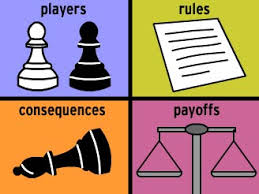
The GOP’s Immigration Reform Game Theory Dilemma

My Nemesis

When I was in primary school, at about the age of eight, we had a class assignment to make our own abacuses out of wood. We lovingly spent ages glueing them together and painting them with bright colours – to this day, I am still quite proud of that piece of craftsmanship.

The next day, we were due to use our homemade abacuses in class as part of the maths lesson, and it was then that I brought disaster upon myself and earned the wrath of my entire class. There was a girl who had been sick at home the previous day when we were engaged in our arts & crafts, and who consequently didn’t have an abacus of her own to use when the time came. Our teacher approached my desk, where I sat with my best friend Scott, and asked us if we could lend one of our abacuses to the girl so that she could participate in the lesson.

Uh-oh. I looked at Scott. He looked at me. I didn’t want to let me new abacus out of my sight – it was brand new and I hadn’t had a chance to use it yet. Scott clearly felt the same way, even though his model was crooked, garishly painted and looked as though someone had taken an axe to it. I broke the silence first: “Scott, do you want to…?” but he countered “Sam, do you want to…?” (originality was never his strong point).

The teacher became impatient and told us to make up our minds who would lend out their abacus, or the lesson would go ahead sans abacuses for everyone in the class. And still we prevaricated. Even though both Scott and I knew that everyone else in the class was getting increasingly pissed off with us, and that we were in grave danger of ruining the fun lesson for everyone, we couldn’t compromise. So the lesson was cancelled, and Scott and I sat alone at lunch that day.

I recall this long-winded story because the Republican Party is currently making the exact same error that I made when I was eight years old and in primary school, with respect to their stance on immigration reform. Only they have infinitely less excuse, because they are not eight years old (perhaps in mental age) and are paid handsome federal salaries to produce legislation to solve problems.

The Huffington Post reports:

Many House Republicans are chilly or openly hostile to the bipartisan bill before the Senate, embraced by President Barack Obama. Even substantial changes to the bill may do little to placate these lawmakers, who demand strict crackdowns on unlawful border crossings and no “amnesty” for people here illegally.

These Republicans don’t deny that weak support from Hispanic voters is hurting GOP presidential nominees. And they concede the problem may worsen if Latinos think Republicans are blocking “immigration reform.”

These House members, however, worry much more about their own constituents’ opposition to the proposed changes. And they fear a challenge in the next Republican primary if they ignore those concerns.

“It’s hard to argue with the polling they’ve been getting from the national level,” said Rep. Kenny Marchant, R-Texas, referring to signs of serious problems for Republican presidential candidates if immigration laws aren’t rewritten. “I just don’t experience it locally.”

Even the house members themselves admit this gap between the interests of the national party and their local districts. The article goes on to explain the reasoning behind House Republicans’ stances in more detail:

House Republicans, however, spend far more time talking and worrying about their own election prospects, not the next presidential nominee’s.

“It’s a classic challenge when the best interests of the party are at odds with the best interests of the majority of the members individually,” said Rep. Tom Cole, R-Okla. He is close to Speaker John Boehner and other Republican leaders who want a major immigration bill to pass.

“What it takes to get a deal with a Democratic Senate and a Democratic president makes it extraordinarily difficult for a lot of (House) members,” Cole said, “because it can cause you a big problem in your primary.”

Ah yes, the much-feared Tea Party challenge from the right. That nagging fear in the back of the minds of all Republican congressmen and women in this age of the Unreasonable GOP. The fear that leads to gems like this:

Rep. Paul Broun, also seeking Georgia’s Senate nomination, said any immigration deal “must make English the official language of the country.” The U.S.-Mexican border, he said, must be secured “totally, whatever it takes. A double fence high enough to make sure it’s secure.”

Some Republicans wince at talk of massive double fences and making English the official language. They say it fuels arguments that the GOP is unwelcoming to all Hispanics, legal or not.

Hispanic voters are not a homogeneous block, and it would be patronising in the extreme to assume (as many do) that Hispanic disenchantment with the GOP is exclusively due to their policy on immigration reform and what to do with illegal immigrants already settled in the country. Hispanics, like every other voter block, have a whole web of different voting priorities. But with language like this from Rep. Paul Broun (incidentally nominated as America’s Craziest Congressman by Bill Maher), it is not hard to understand how the Republicans managed to lose the Hispanic vote 27-71% in 2012.

I generally don’t like to write articles about process, i.e. the mechanics of how a particular bill gets passed, or the ways in which parties and politicians manoeuvre for advantage. That stuff is usually personality-based gossip of secondary importance, and is covered more than enough by the likes of Politico. But in this case, the process is genuinely interesting and has ramifications that go way beyond who wins the news cycle on a given day, and therefore I decided that it is worthy of comment and discussion.

At some point the Republicans are going to have to make a choice. They cannot claim to be a national party with aspirations of winning future presidential elections without addressing the fact that they overwhelmingly lost the Black, Hispanic, Asian and Female vote in 2012. Yes, in the immediate aftermath of Mitt Romney’s implosion there was a little bit of hand-wringing and soul-searching, but we are now very much back to business-as-usual.

Scarcely a week passes without some new Republican (male) politician deciding to hold forth on the topic of rape in front of a live microphone, or accuse American Muslims of being complicit in terrorist attacks when they don’t denounce them as loudly as is apparently required, or talking about the superiority of a “man’s brain” when it comes to analysing the implications of laws such as ObamaCare.

These cheap, nasty little stunts might play very well back home in their heavily gerrymandered conservative districts, but they will be fatal for the Republicans in 2016. But right now, the party that likes to campaign under slogans such as “Country First” is fragmented, self-serving and unable to step back and solve any problem bigger than avoiding a Tea Party primary challenge.