On Political Silly Season

At least it isn't every year.
At least it isn’t every year.


It is party conference season in the UK, with the Labour Party currently enjoying their moment in the spotlight. It is times like these that I envy the Americans, who only have to endure the spectacle of their preferred political party’s most gung-ho, swivel-eyed or greasily ambitious apparatchiks getting together to engage in collective groupthink once every four years, unlike us Brits who are treated to these traveling roadshows each year.

And as usual, we have had our fair share of silliness.

The Liberal Democrat party conference was largely dominated by the news that Sarah Teather, the current government children’s minister (because apparently that is a separate role that we need?) is throwing her toys out of the pram and standing down as an MP at the 2015 general election because the LibDems are not sufficiently like the Labour party for her liking. In a similar vein, much of the remaining press coverage was driven by continual speculation about Nick Clegg’s leadership, and Tim Farron’s (the Liberal Democrat’s party president) evident desire to serve in coalition with Labour rather than the Conservatives, and quite possibly to shack up with Ed Miliband and take romantic mini-breaks together as well.

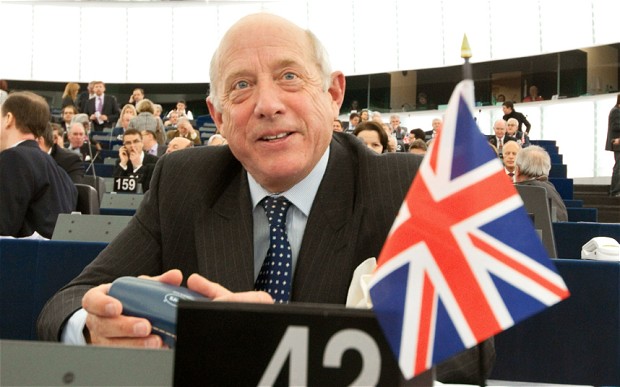
UKIP were hoping for a successful conference to build favourable press in the long run-up to the European Parliamentary elections, where they are expected to do very well and challenge for first place. However, they came a cropper when one of their MEPs hit a journalist and made an inappropriate “slut” joke, all in view of television cameras and witnesses. This is a typical example of the pointless distraction – the actions of a silly activist then overshadow anything substantive that may have been discussed or decided at conference. UKIP’s leader, Nigel Farage, did his frank and inimitable best to salvage some small gain from the smoking wreck and lift the morale of his troops, but the damage was already done.

This man can make positive press conference disappear faster than I can finish this capt---
This man can make positive press coverage disappear faster than I can finish this capt—


Now we are enduring the Labour party conference, another exercise in denial as to the reasons for their 2010 general election loss and their persistent unpopularity throughout the country. Of course, no Labour conference is complete without the proposal for several new and entirely redundant laws. This time, in the wake of the horrific terrorist murder of British soldier Drummer Lee Rigby, Labour are proposing making it a specific crime to attack a member of the armed forces. Because, of course, at the moment anyone could do that and walk away entirely untouched by the criminal justice system. So we have the typical frenetic, pointless legislating that we have come to know and love from the Labour party.

Something to look forward to.


As of press time we can only speculate as to the joys that await us at the Conservative party conference, but as a conservative voter I am filled with my usual apprehension that we will see more moves to make the Tories indistinguishable from Labour, and the unceasing need to try to “outnice” their main electoral rivals by embracing universal benefits for rich and poor alike whilst continuing to clobber the rich with onerous tax rates. If Osborne and Cameron manage to articulate even one original policy that stands a snowball’s chance in hell of shrinking the state and increasing personal freedom, I will not only be delighted but I will eat my hat.

So, in conference season 2013 we have a party in denial about why they were booted out of government and remain widely distrusted, a party in the midst of severe post-wedding remorse pining for the other woman that it didn’t marry, a party whose manifesto and policy announcements were entirely upstaged by an ornery old man unfamiliar with the workings of television and a party calling themselves the Conservatives but who seem to have accidentally picked up the Labour party governing playbook by mistake.

It must be groundhog day.

Analysing The Bilderberg Agenda

Now that the elitist gala known as the 2013 Bilderberg Group Meeting is wrapping up in Watford, England, I thought it would be worth spending some time analysing the agenda that our powerful masters were discussing – at least the topics that they reveal on their official website.

Of course, we will never know the outcome of these discussions, or even if the agenda items published by the Bilderberg Group are accurate, because they hold no press conferences and issue no minutes following the meeting. Not even the democratically elected representatives who attend feel the need to explain to their voters what they were doing inside the luxurious Grove Hotel in the Hertfordshire countryside.

And it should be further obvious that any of the really nefarious decision-making would have taken place in smaller “break-out” sessions and quiet huddles, away from the larger plenary sessions, and will continue to be made now that the Great and the Good have had a chance to network with each other over canapes.

But even assuming the published agenda is fairly representative of what our Betters talked about, safe behind their steel curtain, it is difficult to understand how the group of people huddled inside – published here on the Bilderberg Group website – could have discussed these issues in any other manner than considering how to manipulate each area to their own advantage.

Why? Let’s break it down and take a closer look at the agenda.

1. Can the US and Europe grow faster and create jobs?

See any small business owners on the list of attendees? See any people who have known and experienced unemployment personally? Of course not. We see the likes of Eric Schmidt, Jeff Bezos, Ian Davis and Simon Henry from the worlds of mega-big business, and then a host of top banking CEOs who were responsible for causing the global financial meltdown in the first place. Their profits are returning to record highs during jobless recoveries or double-dip recessions in most western countries. Where are the representatives of the struggling high-street retailers, of all those restauranteurs and small business owners who are shutting down across the world?

There could be no better proof that what we have currently is not capitalism in it’s true and fair form, but rather a corrupt and self-serving corporatism. France, for example has it’s “national champion” firms, whose interests the French government protects and promotes around the world. If you want to start a new energy company in France, good luck trying to ever grow to compete with EDF, France’s “preferred” energy giant.

The people sitting in the meeting rooms in Watford are the rich fat-cats who have kept our national economies chugging along at between 0-2% growth for the last six long years, all the while massively enriching themselves. And we’re supposed to believe that they want faster growth?

2. Jobs, entitlement and debt

Debt, of course, didn’t matter before the financial crisis, when Tony Blair, Gordon Brown and George W. Bush were running up huge deficits and massively expanding the size and scope of the state in both the US and the UK. And yet now, of course, we apparently must have Austerity.

So what the Bilderberg participants have basically done is make a vast number of additional people dependent on the state for some or all of their income, housing, healthcare or nutritional needs over the past decades. Then they wrecked the financial system, became “concerned” about debt (because the liabilities of the failed banks were shifted over to the public sector, i.e. us), and decided that we had to massively roll back government spending in the wake of the “sovereign debt crisis”. But because so many more people are now dependent on the government to partially sustain themselves, just small cuts to spending can cause massive suffering to large swathes of the population. Not the slice of the population chugging champagne at the Grove Hotel though, of course. I’m struggling to think of a word for what these people have done, other than Evil.

3. How big data is changing almost everything

How indeed. In a week where we have seen revelations of the US government collecting almost infinite records in terms of metadata showing the communications of people all around the world, and collecting the telephone records of US wireless telephone customers, it is very appropriate to be discussing the closeness between our biggest telecommunications, internet and technology companies and the government, during everyday interactions and at meetings such as Bilderberg. Given the fact that the Bush Administration gave retroactive immunity to all those US telecoms companies who had participated in the illegal warrantless wiretapping of American citizens, it would seem that all parties will continue to protect each other and flout the law as they please.

4. Nationalism and populism

Both elements are very much on the rise in many western countries, and the Bilderbergers apparently sat down to rub their chins and ponder the reasons why. Those such as US radio presenter and journalist Alex Jones see in the Bilderberg Group a sinister conspiracy to ultimately eliminate national borders and identities entirely, in order to establish one world government, divided into regional areas. They see the formation of super-national institutions such as the European Union and North American Union as nascent steps toward this goal.

While this is somewhat hyperbolic, it is undoubtedly true that many organisations that promote international co-operation and integration have come about, many of which make important regulatory decisions while being unaccountable to the citizens over which they wield power. So this section of the agenda could really be seen as “How do we stop the rise of political parties such as UKIP, which seek to return power to national and local levels?”

5. US foreign policy

Where to start? Given the list of Bilderberg attendees, seriously, where? Why hold this session, when virtually everyone supports the destructive status quo?

6. Africa’s challenges

At a time when South Africa’s former president and civil rights hero, Nelson Mandela, lies in a hospital bed close to death, I really do think it takes a very special level of gall to discuss the challenges facing the African continent and not invite anyone from Africa. One really must wonder whether the Bilderberg attendees are there to discuss the challenges Africa faces in building strong democracies, institutions and economies – or the problems that they face in finding new ways to undermine and exploit the African people for their own gain. Even those participants who do so much philanthropic good to help the people of Africa must marvel at the underrepresentation of African concerns and interests on the panel.

7. Cyber warfare and the proliferation of asymmetric threats

This topic was being simultaneously discussed by President Barack Obama and Chinese President Xi Jinping at an informal, sun-drenched ranch in Palm Springs. The Guardian reported that the summit ended in accord “on all but cyber-espionage”.

This topic – with so much of the electronic espionage being military in nature – would seem to continue to be handled between countries on a bilateral basis rather than on an international level. Indeed, one of the ironies is that the very international networks and organisations that so many of the Bilderberg Group attendees have advocated and helped to establish are also facilitating – through standardised communications protocols, technologies and so forth – the very cyber warfare that political leaders are scrambling to stop.

8. Politics of the European Union

This is a very cryptic agenda item indeed. What could it possibly mean? The internal political workings of the European Union institutions, perhaps? Probably not, because the internal mechanics of the European Commission or Agricultural Committee can hardly be of interest to the people who work in them, let alone the Great and the Good of the world’s economic elite.

No, this section of the agenda probably refers to the politics of how the European Union is portrayed and perceived by the citizens of the member countries. This would certainly be of interest to those in the Bilderberg group because they are heavily invested in the super-national entity not falling apart under the wave of unprecedented disillusionment with – and hostility to – the burdensome, undemocratic structure.

Again, the Bilderberg membership is currently composed of about two thirds European (though not all EU member state citizens) and one third American membership – if the pronouncements on their website are to be believed. Is it really appropriate that the American members are discussing in secret how to devise strategies to make us embrace closer European integration? Indeed, is it appropriate for unelected European members, not accountable to an electorate to do so either?

The good news on this front at least is that the Bilderbergers are firmly on the back foot. Libertarian-leaning parties such as UKIP are rising around Europe, as people are increasingly saying no to the “ever closer union” of European states boldly proclaimed – with no democratic mandate – in the Treaty of Rome.

9. Developments in the Middle East

See point 6 above.

It does not help the west’s image in the Middle East when a group of people as powerful as the Bilderberg attendees – including representation from the oil and energy sector – assemble to discuss “developments in the Middle East” without inviting middle eastern interests to give their input. A cynical person might even come to the conclusion that given the unmitigated failure of the ten year long jaunt in Iraq, Bilderberg members (or at least neo-conservative) people should be expressly prohibited from coming up with new ideas about what to do next in the middle east.

You can look at all of these agenda points for the Bilderberg 2013 meeting more or less charitably, depending on your view of whether the activities of the people inside are truly malevolent (toward the Alex Jones end of the spectrum), or simply highly selfish, chronically misguided, and born of an arrogant assumption of the right to rule over the rest of us (where I currently sit).

One interesting angle on the way in which the Bilderberg Group operates and the terrific way that they seem to keep on making disastrous decisions that lead us further and further away from liberty and prosperity as the years pass is the idea of survivorship bias. In an excellent article by David McRaney, he discusses the way in which only looking at the successful outcomes and people can lead to bad decisions and proscriptions for how to enable others to succeed as well. A key paragraph is here:

You must remind yourself that when you start to pick apart winners and losers, successes and failures, the living and dead, that by paying attention to one side of that equation you are always neglecting the other. If you are thinking about opening a restaurant because there are so many successful restaurants in your hometown, you are ignoring the fact the only successful restaurants survive to become examples. Maybe on average 90 percent of restaurants in your city fail in the first year. You can’t see all those failures because when they fail they also disappear from view.

As Nassim Taleb writes in his book The Black Swan, “The cemetery of failed restaurants is very silent.” Of course the few that don’t fail in that deadly of an environment are wildly successful because only the very best and the very lucky can survive. All you are left with are super successes, and looking at them day after day you might think it’s a great business to get into when you are actually seeing evidence that you should avoid it.

Taking the non-malevolent view of the Bilderberg Group in its current form (or even to account for some of the failures of New World Order Bilderberg), one could posit that the reason that so many of the actions taken by the membership over the years have been so harmful to most is because the membership is comprised entirely of the successful. None of the protesters standing outside were allowed to remonstrate with the Great Ones within. No refugees from the middle east Arab Spring. No malnourished people from Africa. No failed small business owners from the town of Watford itself, which has struggled in the recession.

If every year you and your chums reassemble at the next Bilderberg meeting and find yourselves even more spectacularly successful and wealthy than the last time you met, “more of the same” could start to seem like a pretty good prescription. Of course, this would also take mental blinders of the most immense kind, to remain unaware of the suffering of the majority. But to some extent we all block out the sufferings of the people worse off than us. How much more magnified must this be if you sit at the very pinnacle of society?

An unlikely theory to be sure, but one to chew on as the helicopters and chauffer-driven cars depart from the Grove Hotel in Watford, and the steel fence is deconstructed.

So where do we go from here?

There are few courses of action open to us other than to continue to shine the bright light of scrutiny on the activities of these arrogant people, who presume to come to my country, establish themselves in luxury accommodations behind a steel wall, and make in secret the decisions which will influence the course of our lives.

Patriot Watch, Ctd. 5 – Bilderberg Meeting

I’m removing the ” ” quotation mark symbols around this particular edition of Patriot Watch, because I think Alex Jones is right and undeserving of parody on something rather crucial currently taking place. His show from Wednesday 5th June, broadcast from London, is shown in full below:


Currently, the Bilderberg group of elites from the worlds of royalty, finance, media and industry are meeting at an exclusive hotel in the town of Watford, Hertfordshire, England.

For those who hear the word “Bilderberg” and immediately think “nonsensical conspiracy theory and black helicopters” – it is not – at least not as much as in the group is real and exists. They actually have a website now, which briefly details their official public aims, and meeting dates (but crucially, no minutes of those meetings or list of decisions taken or policies approved to be implemented). You can find their own website here to verify.

Why should any of this matter?

Well, as Alex Jones of InfoWars.com fame (or notoriety) says, if 150 of the biggest entertainers, movie stars and other celebrities, mostly very wealthy private individuals, were meeting for several days at an exclusive resort with tight, taxpayer-funded security around it, not only would the TMZ.com helicopter be flying overhead capturing live footage, but hundreds of thousands of people would converge on the scene to see their favourite stars and find out what was taking place inside.

But when people who hold the real reigns of power in our world – the heads of the largest banks, tech companies, royalty and others – meet with people who are currently in government (both George Osborne and Ed Balls, the UK’s chancellor and shadow chancellor respectively are attending, along with various heads of state and politicians from other countries, no one seems to care.  Even though surely, the least crazy conclusion to reach is that those people serving in government are going to come away from their luxurious meeting and enact policies that primarily serve the interests of the high-flyers with whom they were consorting?

Fortunately, more people are now starting to pay attention to this hide-in-the-open-air tactic of our elites meeting in wide open but unapproachable view to stitch up policies that benefit them but harm almost everybody else. See this interview on-site outside the Bilderberg steel wall, with UKIP MEP for London, Gerard Batten:


As Batten correctly states, people increasingly feel that government is something that is done to them, rather than of them, by them and for them, as is the ideal that we all hopefully still share, and was so eloquently expressed by Abraham Lincoln in his Gettysburg Address of 1863.

Hence, partly, the appeal of the Tea Party in America, and UKIP in Britain. Anything anti-establishment and perceived of being outside the rotten, corrupted system is being embraced with ever-increasing fervour.

I’m not writing this post to announce that I am now a card-carrying InfoWars subscriber, or that now I suddenly believe that the JFK assassination was a conspiracy, in “false flags”, or that the US government perpetrated or allowed the 9/11 attacks or the Boston Marathon bombings. Not at all.

But is it not a mightily strange coincidence that the people currently gathered at the Grove Hotel in Watford, Hertfordshire, UK – the royalty and dignitaries and media moguls and industry titans and captains of finance – have all done extraordinarily well financially and professionally, even since the great recession tore through our countries, while we have faced lost jobs, long term unemployment, fewer prospects, food insecurity, rising inflation, increased taxation and reduced living standards?

If Bilderberg were just a club for the rich of the world to get together and play golf, protected by their own privately-funded security, that would be one thing – even though, as Adam Smith wisely and presciently wrote in The Wealth of Nations:

People of the same trade seldom meet together, even for merriment and diversion, but the conversation ends in a conspiracy against the public, or in some contrivance to raise prices. It is impossible indeed to prevent such meetings, by any law which either could be executed, or would be consistent with liberty or justice. But though the law cannot hinder people of the same trade from sometimes assembling together, it ought to do nothing to facilitate such assemblies; much less to render them necessary. (Chapter X, Part II)

But Bilderberg is more than this because (1) we the people, through our taxes, are paying for these people to be shielded with privacy and protected with armed police, and (2) our elected officials are going to meet with them, and we will have no record of with whom they met, what was discussed in their meetings, or what was decided at the outcome.

There will be no press conference or public statements, as at least you get from self-congratulatory back-slapping events such as the Davos Forum. Just silence, silence that we are supposed to accept from our elected leaders after they share lobster dinners year after year with these elites, whilst meanwhile year after year these elites magically manage to continue to prosper, even as we the people suffer.

And as for the argument that our intrepid media would of course bring it to our attention if anything untoward or bad were taking place, when it comes to journalists and their role covering and exposing nefarious deeds or acts that are contrary to the public good, their credentials and reputations are totally and utterly undermined, in the US by their fawning over power and inability to question the Bush Administration’s feeble reasoning for war with Iraq, and in the UK by the phone hacking scandal, as just two of their most recent abdications of professional ethics failures.

So it can hardly be a surprise when the BBC’s lone reporter on the scene accuses Alex Jones of conspiracy theorising, shares none of his curiosity about what might be going on behind the big steel fence, and tries to provoke him into another one of his famous Piers Morgan show-style rants:


This video clip is many things, but good journalism it is not, from the BBC, and I would defy any right-thinking person to disagree with me. And if this is what we get from one of the most “prestigious” news and media organisations in the world, who knows what other news organisations might have overlooked, disdained, ignored, covered up or fawned over in the past, leaving us all in the dark? Can we then trust Sky News in the UK, or Fox News in the US, given their ownership? Of course not.

I find it strange and somewhat of a stylistic and political departure to be writing this article, but I’m sick and I’m tired. I don’t think it’s right that someone like Mitt Romney can pay a far lower effective rate of tax than me because he derives his income from investments whereas I derive mine from a salary. I think that if fairness means anything, tax rates should be flat.

I don’t understand why it should be that shoplifting or marijuana possession can see a person sent to prison and their life ruined, but conspiring to fix the LIBOR rate doesn’t result in any conviction for any of the people involved.

Oh, I understand why it is, but not why it should be.

And for all of his over-exaggerations, egotism, self-promotion and tendency to see the New World Order in every single event that happens around the world, Alex Jones and others like him are some of the only ones talking about this, even while they are mocked by the haughty, semi-secure, comfortable middle class journalists and newsreaders who are much closer to the edge of the economic precipice than they realise.

I’ve had enough of it. I want to know who my elected representatives are meeting at that sealed-off, taxpayer funded security protected site for wealthy private individuals. I want to see the pertinent minutes after the meeting detailed lists of what was discussed with elected officials, what was decided, and what new cack-handed policies we can expect to germinate in our national and EU legislatures as a result of the super-rich gala bash taking place in Watford this week.

Call me an idealist, but I still believe that my government should be first and foremost accountable to me, a British citizen, and not to Amazon or Starbucks or Google or Jeff Bezos or Eric Schmidt or Bill Gates (for all the excellent philanthropic work his foundation may do), or anyone or anything else other than other living, breathing, British citizens.

Semi-Partisan Sam is saying No.

UKIP Panic Sets In

Nigel Farage UKIP voting


Yesterday I wrote about the rise of the UK Independence Party (UKIP), and the way in which they have transformed themselves over just a few years from being an upstart fringe party full of “fruitcakes and closet racists” (thanks, David Cameron) into a populist, compelling electoral force to be reckoned with.

I set out the reasons why I think that UKIP offer a compelling manifesto, and how they may well escape the usual fate suffered by smaller parties in general elections, i.e. falling back into obscurity, single-digit vote shares and zero parliamentary representation.

Evidently other people see the writing on the wall for the traditional Labour/Conservative/LibDem trifecta too, and none do so with more trepidation than loyal-but-ideologically-compromised traditional Conservative supporters, who rather than re-examining and changing their own faulty policies would rather destroy the newcomers who make them look bad by comparison.

Cue this hit piece from Mary Riddell, writing in The Telegraph. She thunders:

So consider, this morning, what a Ukip Britain would look like. it would be a locked-down land, armed to the hilt, where good foreigners were repelled and bad ones expelled, no questions asked. It would be a country concreted over for extra jails (though never for high speed rail lines). It would be a quaint place – an old curiosity shop of matrons and smoking rooms.

It would be a nation of wild spending, of derisory taxes for the rich and – not least because all talk of climate change would be abandoned – a country programmed for ruin. Welcome to Mr Farage’s Britain.

That future should not only alarm Ed Miliband. It should horrify us all.

More insidiously, she continues the old-guard Tory attempt to paint UKIP as the British National Party in a pin-stripe suit disguise, warning:

Moreover, today’s results are the first sign that Britain is far from immune to the lurch towards extremism that has shadowed other European countries and been exacerbated by recession. For sure, Ukip is no Golden Dawn and Mr Farage no dangerous rabble-rouser. Even so, his party’s performance invites comparison with the progress made by Marine Le Pen’s Front National in France.

If UKIP is no dangerous party and it’s leader no Jean-Marie or Marine Le Pen, why is Liddell then inviting comparison with those very same people and entities? Such a heinous accusation, so innocuously put. And of course the answer is as obvious as the motive of her rhetoric is tawdry – you can put two groups together in the same sentence and protest loudly that you are not comparing one with the other, but all that people will take away and remember is that UKIP and the far right are somehow associated.

Note also the total lack of any evidence to back up her words. Is Mary Riddell being serious? From where is she conjuring this nightmarish dystopia of a UKIP-ruled Britain? Certainly not from their own manifesto, which reads like a broadly libertarian (though a touch too socially authoritarian) set of policies that many Tories and centrists could get behind.

If she is choosing to smear UKIP based on some of their whackier supporters or representatives, she should remember that less mature parties have a harder time screening their candidates as they work to develop a national presence, and that there are plenty of thoroughly cringeworthy people in the Conservative, Labour and Liberal Democrat ranks, too.

I was a UKIP doubter once, but now I’m not so sure. Their advocacy of smaller government, more competition and less regulation in both private and state sectors, and a flat tax are all very appealing to me. If the Conservative Party and their allies in the right wing media want to keep my loyalty and win my vote at the 2015 general election, the surefire way to fail in that task is to tell me that I am an ignorant reactionary being seduced by a borderline nationalist outfit favoured only by curtain-twitchers, closet racists and little-Englanders.

Mary Liddell and her ilk would do well to remember that.


UPDATE (16.25PM) – I took a closer look at the article byline and realised that Mary Riddell is actually a Labour supporting journalist, so my mistake. Of course, she has her own reasons for wishing to bash UKIP. What actually makes my misunderstanding funnier, and even more pertinent, is that her words could be so easily confused with those of any right-leaning journalist or commentator wringing their hands at the rise of UKIP.

The UKIP Insurgency

Nigel Farage UKIP voting


Well, those local council elections across England this past week were quite interesting.

The United Kingdom Independence Party has firmly established itself as Britain’s fourth (or maybe even third) party with a strong showing in which they received over 25% of the vote across those wards where they were able to field candidates.

And this despite a volley of negative and dismissive statements ahead of the elections, in which UKIP’s leadership, membership, policy positions and candidate screening processes were all mocked and derided.

Cue lots of hand-wringing about what the Tories can do to win back their disaffected supporters, etc. etc. As The Guardian reports:

A contrite David Cameron has promised to show a surging UK Independence party respect after it gained more than 130 seats in the English county elections and polled 25% of the national vote. The result led the party’s leader, Nigel Farage, to claim the birth of a new and irreversible era of four-party politics.

Cameron, who once described Ukip as fruitcakes and closet racists, admitted his mistake, saying it was no good insulting a political party that people had chosen to vote for: “We need to show respect for people who have taken the choice to support this party. And we’re going to work really hard to win them back.”

Cue also some quite entertaining journalism about the quirky, eccentric nature of British local politics. As Iain Martin writes in The Telegraph:

What is even funnier is the confusion it is causing the leaders of the established political class. They are already emerging for a round of local election bingo, with the key phrases drawn from the standard issue manual used by all the major parties. “We hear what people are saying… people want to make a protest… they want us to get on with the job… people have very real concerns… it’s mid-term… we’ll be reflecting.” But this time, when they mouth the words, they look as though they know their platitudes have been rumbled.

The distress the voter rebellion causes the bigger parties does seem to be an important part of the appeal of Ukip. Voting for Farage is an entertaining way of giving the Tories, Labour and the Lib Dems two fingers. Of course the longer-term implications are not necessarily funny. This is a country, not a comedy club. But large numbers of voters are so disenchanted that they see no possibility of an answer in the old parties. They are having a lot of fun trying to blow up the system.

Of course, this runs contrary to the counterargument that these were only local elections, that off-cycle elections always see the governing party (or parties in this case) punished at the ballot box, and that people will return to one or other of the Big Three come the general election in 2015.

But a 25% share of the vote, and a national second place position, can start to shift perceptions, a fact that Nigel Farage, UKIP’s leader, is no doubt counting on. If people absorb the consequence of these election results and no longer see UKIP as a party of “fruitcakes and closet racists”, as David Cameron once uncharitably called them, their support may not peel away as it has previously done, and we could see a number of newly minted UKIP MPs entering parliament.

But what is contained within the UKIP manifesto? Well, quirky though some of their individual members and candidates may be, the manifesto on which they are running is actually quite appealing to those who favour smaller government. The BBC offers a fair overview, which includes the following:

EUROPE: Nigel Farage says he wants an “amicable divorce” from the European Union. Britain would retain trading links with its European neighbours but would withdraw from treaties and end subscription payments, adopting a similar relationship with the EU to Norway or Switzerland.

TAX: UKIP favours a flat tax – a single combined rate of income tax and national insurance paid by all workers. It claims this would end the complexity of the current system and allow people to keep more of the money they have earned. It would also lead to a major shrinking of the size of the state, which would revert to a “safety net” for the poorest. The party has yet to decide the rate at which the flat tax would be levied. Its policy at the 2010 election was 31% but a recent policy paper suggested 25%. It is having an internal debate about whether there should be two rates.

EDUCATION: UKIP backs selection by ability and would encourage the creation of new grammar schools. It would give parents vouchers to spend in the state or private education sector. It also advocates the return of the student grant system to replace loans.

DEMOCRACY: The party wants binding local and national referendums on major issues.

Freedom from EU meddling and over-regulation. A fair, flat tax. Freeing the education system from those who want uniform mediocrity at the expense of individual excellence. A strong national defence. All of these are causes dear to the hearts of the small-government conservative, and make the party worthy of support.

Of course, with the good also comes the less-good:

ENERGY AND CLIMATE CHANGE: UKIP is sceptical about the existence of man-made climate change and would scrap all subsidies for renewable energy. It would also cancel all wind farm developments. Instead, it backs the expansion of shale gas extraction, or fracking, and a mass programme of nuclear power stations.

GAY MARRIAGE: UKIP supports the concept of civil partnerships, but opposes the move to legislate for same-sex marriage, which it says risks “the grave harm of undermining the rights of Churches and Faiths to decide for themselves whom they will and will not marry”.

LAW AND ORDER: UKIP would double prison places and protect “frontline” policing to enforce “zero tolerance” of crime.

THE ECONOMY: UKIP is proposing “tens of billions” of tax cuts and had set out £77bn of cuts to public expenditure to deal with the deficit.

Anti-science climate change denial is tempered with a pragmatic approach to ensuring energy security through next generation nuclear power. The unfortunate opposition to gay marriage is at least balanced with support for civil partnerships. The spirit of cutting taxes and controlling spending is absolutely right, but the wisdom to wait until a stronger recovery exists is lacking. And the draconian, counter-productive policies on law and order are just bad.

So there is good and bad in the UKIP manifesto, just as there is in the manifestos of the other main political parties. As always, the ultimate question must be who delivers the best package of policies to improve the country?

Until now, I have been fairly dismissive of UKIP’s offering to the electorate, but no more. Here is a broadly libertarian-leaning party, offering a no-nonsense, very pro-British package of policies. And while there is a little too much authoritarianism and social conservatism still in the mix, the failings of the present Conservative-led government to revitalise the economy and enact any of the urgently-needed supply side reforms in Britain make UKIP a potentially viable alternative for my vote.

The UKIP manifesto is worth a read. Are there unsavoury fringe elements within UKIP, and endorsements from without? Certainly. Are there some rather eccentric characters representing the party at the moment, yes. Are all of the policies fully costed and backed with feasibility studies? Of course not – UKIP has never seen power, and remains a less mature political party. But then so were the Liberal Democrats until the 2010 general election gave them the chance to wield real power and become as dour and unappealing to the electorate as Labour and the Conservatives.

We currently suffer under a Conservative-led government that has done barely anything to shrink the scope and size of the state, and the meddling influence of all levels of government in our lives. UKIP promises to do differently.

And, based on their manifesto if not their fringe supporters, would that not potentially be a very good thing for the cause of smaller government and individual liberty?