British Politicians Ignore The Big Picture – But We Are To Blame

The Prime Ministers Visits Pensioners In Westeminster


In recent months, this blog has grown increasingly exasperated with the lack of anything resembling a coherent, overarching vision for Britain’s future offered by any of the main political parties, with the possible exception of UKIP (whose vision is very specific but not always appealing).

As Britain stumbled out of the financial crisis and Great Recession, we seem to have gone back to the days of fumbling along as a country, lurching from crisis to crisis, permeated throughout with a sense of “managed decline” rather than the positivity and optimism of more crusading governments – Margaret Thatcher’s first two administrations, or even New Labour under Tony Blair.

Yesterday, this sense that our national ambition appears to have evaporated, and that the people vying for the office of Prime Minister are little more than dull technocrats who want to minimise risk and wield power just for the sake of it, led me to ask:

What would it take for a British politician to tear up the current playbook (written by risk-averse party strategists so deeply buried in polling data that they have lost all sight of the bigger picture) and actually speak honestly and from the heart about the challenges facing Britain, and how we will overcome and surpass those challenges together?

What would it take for a British politician to take the moral high road and not seek to play one group of us off against another, instead reminding us that we are all united through our British citizenship, and that our fates – from the richest homeowner in Knightsbridge to the poorest council house tenant in Wolverhampton – are inextricably bound together, for better or worse?

What would it take for a British politician to suggest that as a country we might actually consider setting our national ambitions slightly higher than just having decent public services, that the country of Britten and Shakespeare and Berners-Lee and Hawking is still able to forge and reshape the world in a way that no other nation can?

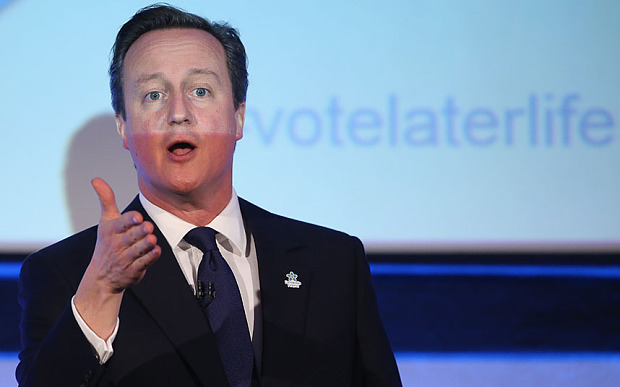
Today, in the course of being heckled by a forum of elderly voters, David Cameron made unfortunate reference to his potential legacy. The Telegraph’s Matthew Holehouse reports in today’s election live blog:

Ill-advisedly, Cameron referred to his “political epitaph” in his speech.

“I don’t just want my political epitaph to read that I balanced the books, and cleared up the mess I inherited.

I am here today because I want a different kind of Britain,” he said.

Okay, so David Cameron wants to do more than balance the budget – probably just as well, considering the fact that even this basic accomplishment seems to be beyond the reach of either Labour or the Conservatives at present. But what is it that Cameron wants to achieve? What is this “different kind of Britain” that he wants to bring about?

Continue reading

Forget David Cameron’s Successor – Who Will Replace Ed Miliband?

David Cameron Breakfast Cereal Terms Are Like Shredded Wheat 2


And so, with a confusing breakfast cereal metaphor, David Cameron announced in an interview with the BBC’s James Landale that he would not seek to run for a third term as Prime Minister should he cling on to the post at the 2015 general election.

From James Landale’s own analysis:

David Cameron’s admission that he will not serve a third term in Downing Street will provoke a flurry of speculation. What was he hoping to achieve? What message was he trying to send?

First things first. I asked him a question and he answered it. It was not something that a helpful Downing Street official had suggested I might ask with a heavy hint that I might get an interesting answer. It was just one of many speculative questions that political journalists like me ask in the hope that just occasionally they might get an answer. And this time it did.

Second, Mr Cameron’s overt aim was to get across the message that he would serve a full second term. He wants to quash speculation that he might stand down early in 2017 after a referendum on the UK’s EU membership.

But by emphasising that he would do another five years, he inevitably has to address what he would do after that. And his answer was clear. Terms in Downing Street, he said, are like Shredded Wheat: “two are wonderful, three might just be too many.”

This is all very interesting, and certainly we should keep an eye on what might happen in the year 2020 and beyond. There is already plenty of good analysis off the back of David Cameron’s off-the-cuff revelation, from the Spectator here, the Times of London here and here, the Guardian here, and Conservative Home here.

But of far more interest than who will be jockeying for position to replace David Cameron (a largely uninspiring field of Theresa May, George Osborne and the unthinkable Boris Johnson) is the more pressing question: who will replace Ed Miliband if Labour lose the election on 7 May?

Continue reading

Where Was Nigel Farage’s Safe Space When Left Wing Bullies Attacked?

Nigel Farage UKIP Pub Protesters Attack Protest Free Speech


It is increasingly fashionable among self-identified progressives and left-wingers, particularly within academic environments, to promote the idea of “safe spaces” – places where the normal right to free speech is heavily curtailed in order to protect designated minorities and victim groups from encountering words and ideas that might cause them mental discomfort.

This blog finds the idea of such “safe spaces” utterly repellent, and a prime symptom of the infantilisation of many students in Britain and America – a generation of cosseted idealists who interpret any political disagreement as a sinister attempt to “invalidate their experiences”, who are unable to tolerate even polite dissent and who are lightning-quick to call for authority figures to come crashing down upon the heads of those who question their “dearly and closely held beliefs”.

But put aside the childishness of the “safe space” and the potentially chilling implication of such policies on the fundamental right to freedom of expression. Put aside the fact that protecting certain ideas from scrutiny, however noble they may be, leads to intellectual atrophy and erodes our democracy in just the same way it undermines the core purpose of a university.

What is really shocking is the double-standard at play. Those designated victim groups and their advocates on the left are free to say and do anything they please, empowered and protected by the perceived righteousness of their cause, while those outside this bien pensant collective have no right to hold their own opinions, let alone to express them or to campaign for them politically.

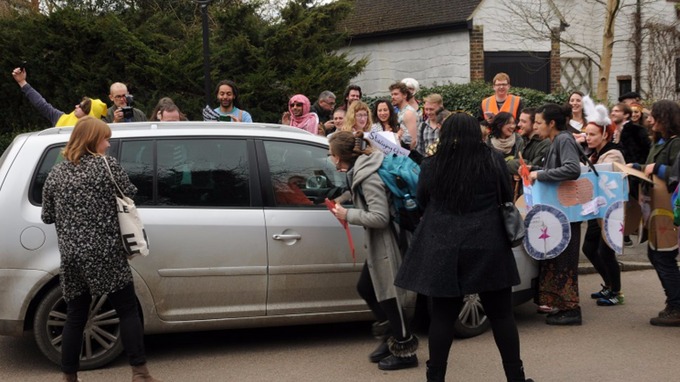
It is this double-standard which allows a mob of young anti-UKIP protesters to invade a London pub far from the campaign trail where UKIP leader Nigel Farage was quietly enjoying lunch with his family, to harass and intimidate Farage’s family to the extent that his young children fled and were separated from their parents, and to jump on the bonnet of his car as he attempted to drive away – and still come away feeling as though it were they, the mob, who had taken a stand for freedom, tolerance and decency.

From the Telegraph’s report:

Continue reading

Labour’s NHS Attack Ad Exemplifies Our Rotten, Uninspiring Politics

General Election 2015 Labour Party Campaign Attack Ad NHS Public Spending


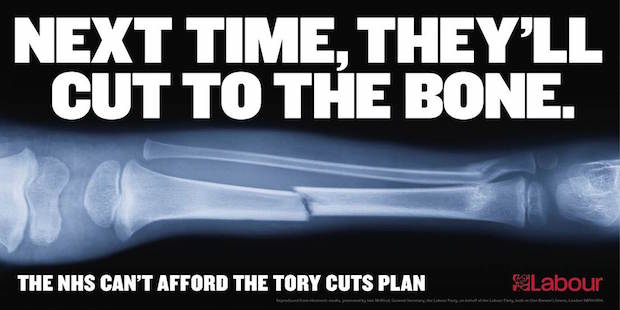
Today we saw the publication of the Labour Party’s first election poster of the 2015 campaign, and it is a nasty, negative little piece of work.

Designed to appear like an X-ray image, the poster shows a broken arm, and the warning “Next Time, They’ll Cut To The Bone. The NHS Can’t Afford The Tory Cuts Plan”.

There’s no point wasting space pointing out that this is not a very promising start from a party that promised to wage a relentlessly upbeat, positive election campaign – that point has already been well made. And it’s a fair point, but perhaps not the most important one.

What is really depressing about this Labour attack ad – and all of the negative campaigning we will soon see from the Conservatives, Liberal Democrats and UKIP too – is the lack of vision, of imagination, of anything resembling a positive outlook for Britain’s future.

Ed Miliband is fervently hoping that he can squeak across the finish line and into Number 10 Downing Street on the back of the British public’s fear that our precious public services will be cut back or degraded under five more years of Tory rule. Nick Clegg and the Liberal Democrats hope to stave off electoral annihilation by likewise preying on the fear of a Tory majority, and by promising that returning a sufficient number of LibDem MPs to Westminster will help to soften the edges of a future coalition as they did in 2010.

Meanwhile, UKIP, for all their anti-establishment fervour and sometime happy warrior image, will be busy preying on fears and resentments about immigration and injustices inflicted upon helpless Britain from Brussels. And David Cameron and the Conservative Party will desperately hope that their own negative campaign ads, designed to make the British public fear the uncertainty and economic chaos that a profligate Labour administration would bring about, will convince us to allow them another term in government.

The common thread? All of the campaigning between now and May 7 will be negative.

Continue reading

The Tories Are Fighting The 2015 General Election On Labour’s Turf

2015 General Election Tory Conservative Campaign Public Services Austerity


Defend our precious public services! All hands to battle stations in defence of our vital public services! Did you know that the 2015 general election is all about our public services?

The endless platitudes about the vital importance of “public services” to all our lives are starting to sound a lot like the ludicrous list of new government-approved slogans and phrases for the North Korean people to shout in praise of their Dear Leader.

Following George Osborne’s 2015 Budget, yet another let-down for small government conservatives and believers in fiscal responsibility, this blog took the Conservative Party to task for failing to extol the virtues of a smaller state and greater personal liberty during the election campaign. And today’s latest motivational email from the Conservative Party only serves to hammer home the extent to which David Cameron’s Conservative Party are on the ideological back foot.

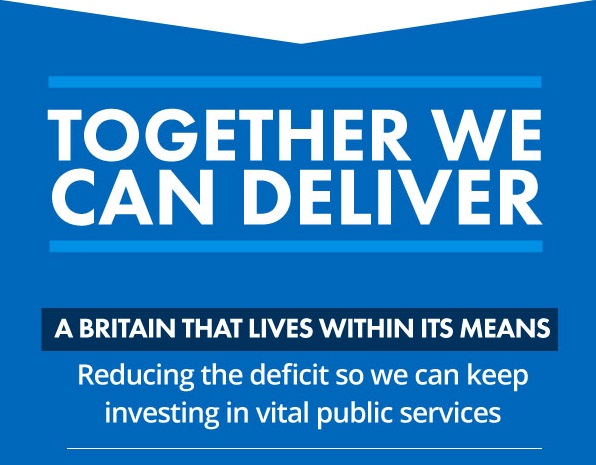
From the latest Conservative Party fundraising email:

Together we can deliver.

A Britain that lives within its means.

Reducing the deficit so we can keep investing in vital public services.

Newsflash, CCHQ: life is not all about public services.

Continue reading