They’ve bribed us with cheap international calls, and threatened us with bogus figures about fictitious job losses. Now, the “Remain” campaigners want us to vote to stay in the EU to save Brussels from itself
What to do when the two best weapons at your disposal – bribery and coercion – are not achieving the desired effect?
Well, if you are the “Remain” campaign and you are desperately trying to come up with plausible new arguments to convince the British people to stay shackled to a failed, anti-democratic political union, then it is eventually going to come down to begging, pure and simple.
Cue Mark Field’s latest piece in CapX, which is dedicated not to any of the things that the European Union can offer Britain, but rather to all the reasons why the EU needs Britain to stick around – namely, to save the Brussels machine from its own worst instincts.
Field recounts conversations with some Swedish legislators, who are apparently “terrified” at the prospect of Brexit:
It took some Swedish counterparts to remind me recently just how crucial Britain’s role in the EU is to fellow members who believe in the Anglo-Saxon values of free trade and competition, and share our desire to resist “ever closer union”. The notion of Brexit is terrifying to Northern European allies who look to the UK as an essential bridge between the EU and the English-speaking world, a critical counterweight to the Franco-German axis and the asker of awkward but essential questions over reform. They see an EU which Britain has been instrumental in shaping, citing the expansion eastwards into pro-western countries like Poland, the promotion of the single market, open competition for goods and services, new trade deals and English as the dominant language.
The “Remain” campaign misrepresent and exaggerate every claim about jobs that might possibly be at risk from Brexit, but fall deafeningly silent on the innumerable jobs which are never created in the first place thanks to Britain’s EU membership
Here is Britain Stronger in Europe’s latest attempt to frighten and deceive the British people into thinking that a vote for independence from the EU’s explicitly political union will somehow cost millions of jobs at home and mysteriously devastate the sixth largest economy in the world.
It’s predictable stuff and spans only 30 seconds – any longer and the cracks in BSE’s argument would start to show – but it is worth watching, if only because it reveals a strategy which will be used to pummel the “Leave campaign” every day between now and the EU referendum.
BSE’s video attempts to take the words of Vote Leave campaign chairman, Dominic Cummings, and use them against the Brexit movement. Whatever Cummings’ other flaws may be (and they are well documented), the point he made here was an honest one and in no way injurious to the Brexit cause, though BSE were more than happy to misrepresent him and throw their hand up in mock horror to score a cheap political point.
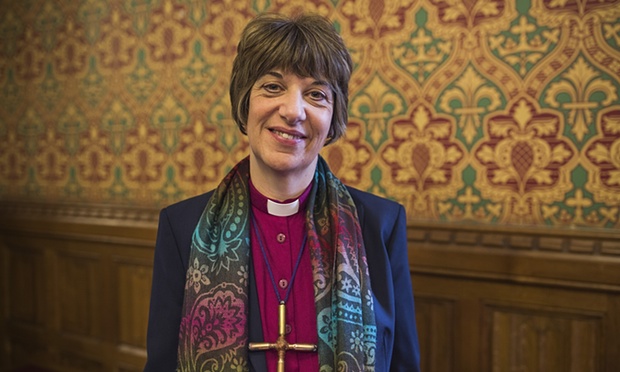
Don’t cheer for Rachel Treweek as she takes up her unelected, theocratic position in the House of Lords. Chase her – and all of her fellow Lords Spiritual – out of Parliament and back to the pulpits where they belong
So let’s get this straight: Scottish National Party MPs are scolded and warned by the Speaker when they spontaneously applaud what they believe to be a good speech in the Commons chamber, because clapping is wrong and unbecoming. But today, peers give a standing ovation to the first female bishop to take her seat in the House of Lords, and that is A-OK?
The appointment of Rachel Treweek, Lord Bishop of Gloucester, to the red benches is nothing to celebrate. Don’t misunderstand – it’s great that the Church of England now allows women bishops, and some of the first female candidates appear to be excellent theologians and pastoral leaders.
But in every other respect, the enoblement of Rachel Treweek is just another case of the British theocracy doing what it always does – appointing clerics of the favoured national church to unelected positions of power and influence in the heart of our political system. Don’t expect us to cheer on this occasion just because the Lord Bishop in question is a woman. Our belief in equal rights and opportunities for women should not be so glib and superficial.
There may be no tanks on the streets, but only because that’s not the EU’s style. The European Union has now mastered the art of the bloodless, self-administered government coup
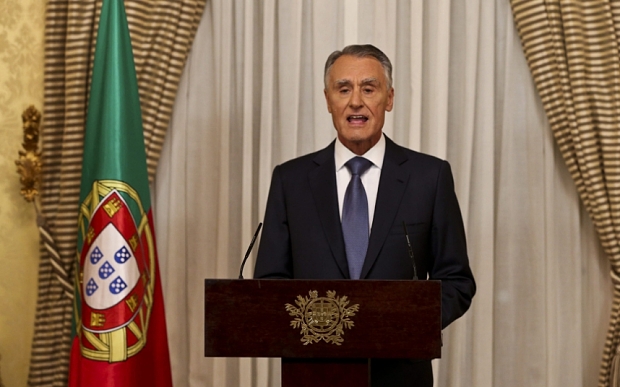
Television stations continue to broadcast. People continue to work, shop and go to school. In fact, life goes on as normal in nearly every way. But there is still a coup taking place in Portugal today.
At the beginning of October there was a general election in Portugal. The governing centre-right government led by prime minister Passos Coelho lost seventeen seats and their parliamentary majority, and though they remained the largest party they were unable to form a new government. After a few weeks of political horse-trading, the leader of the Socialist Party, Antonio Costa, forged a coalition deal with two other left-wing parties, the Left Bloc and the Communists. Together, they held a wafer-thin majority and could plausibly claim the right to govern.
But unfortunately, some of these left-wing parties held the Wrong Views. They were against the existing “austerity” terms of the bailout provided to Portugal by the European Union. Some of them – quick, fetch the smelling salts – were against the European Union entirely. And for holding these eurosceptic positions – views which were validated by the Portuguese electorate less than a month ago – they were prevented from forming a majority coalition government.
With these chilling words, the Portuguese president openly admitted that which has been an unspoken reality in Europe for some time – that democracy may exist, so long as it does not stand in the way of ever-closer European union:
UKIP leader Nigel Farage on UKIP’s post-election party conference, and the long term prospects for the party beyond the EU referendum
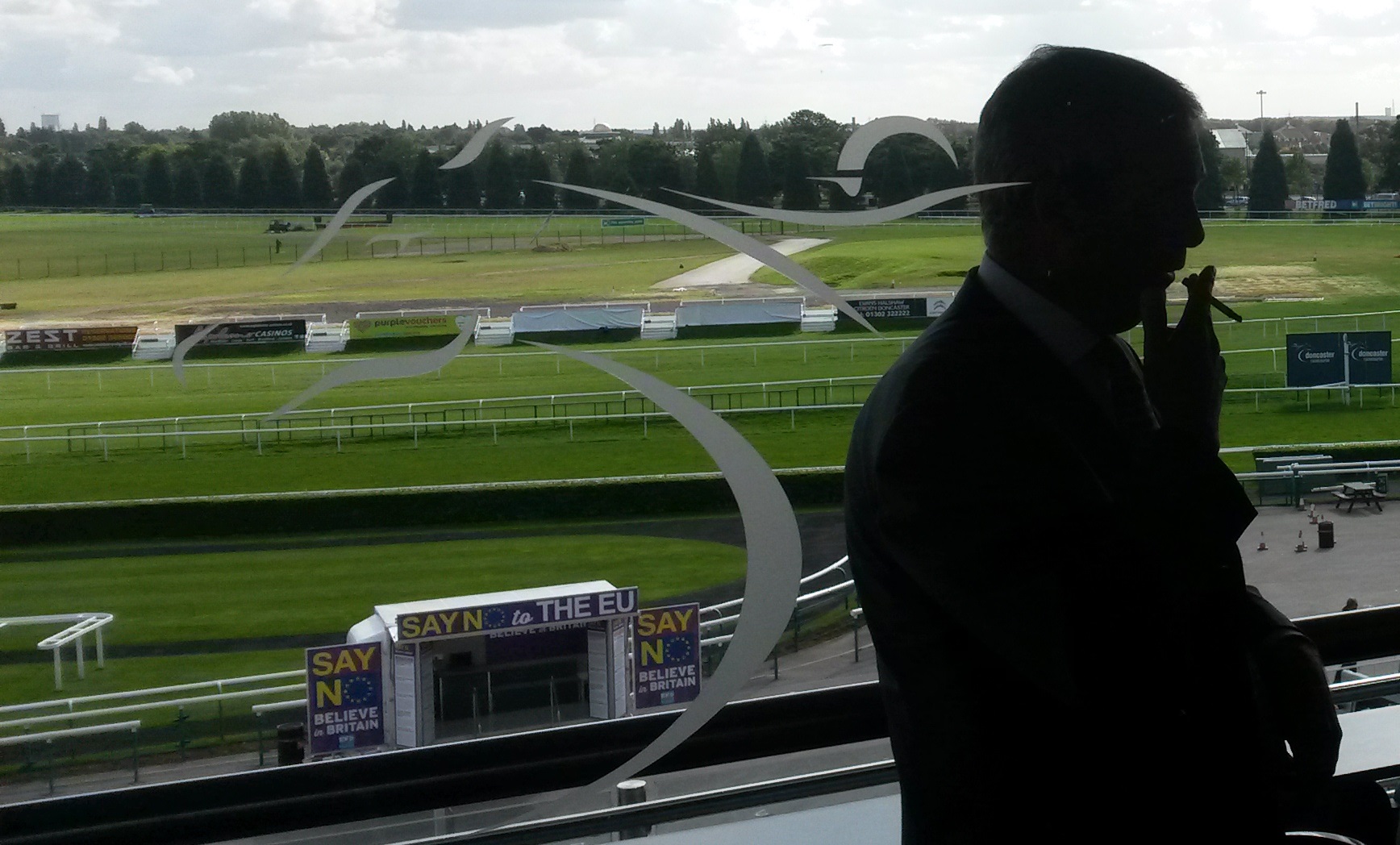
While covering the 2015 UKIP party conference in Doncaster last month, I was able to grab a quick interview with the party leader, Nigel Farage, fresh from the stage after delivering his keynote speech.
This was immediately after what was a successful but fairly unremarkable speech by Farage’s standards, and before Day 1 of the UKIP conference was overshadowed by the row between donor Arron Banks and the party’s sole MP, Douglas Carswell.
As with my interview with Douglas Carswell, I wanted to get Farage to open up about his thoughts for the party looking beyond the Brexit referendum, and how UKIP’s current diverse coalition of different voters could be held together once the unifying goal of the EU referendum has been and gone.
Here is a transcript of my interview with Nigel Farage:
QUESTION: A different tone to this year’s conference. Obviously last year we had the defection of Mark Reckless, looking forward to the election, a bit different this year. Are you pleased with how it went, and are you pleased with the shape of UKIP as you’re fighting the referendum, looking ahead?
NIGEL FARAGE: The general election was very tough for us, you know, a massive amount of effort. Four million votes, very creditable in the circumstances and one seat, so pretty tough. And we’ve had, you know, a summer of regrouping and getting our finances back in shape, we’re now rocking and rolling and ready to go, we’ve got loads of elections to fight next year, but I think winning the referendum matters more than anything and I felt the response I got from the party membership is that they feel the same way too. And we’re going to join hands with the Arron Banks consortium Leave.EU and there’s going to be a united front for those who want to leave the European Union.
QUESTION: Obviously the referendum looms large at the moment, but looking beyond that, how well is UKIP positioned do you think to keep together its diverse support base of ex-Tories, ex-Labour types, libertarians, after the election when that common thread of the referendum is no longer there to hold everyone together?
NIGEL FARAGE: Well you know, there are still plenty of things that will unite us beyond just the European question. A society in which people can aspire to do well, a society where through selection in education we can narrow some of the class gaps, there are lots of things that unite UKIP and I actually think that with Mr. Corbyn as Labour leader there is an even bigger potential marketplace for us there.
To be fair, Farage did not deflect the question, or seek to answer it with some pre-rehearsed talking point. So kudos for that. But his responses did little to change my overall impression of the conference – that UKIP (or at least the party leadership) are so fixated on achieving their long-cherished goal of British secession from the EU that they are willing to let some of the divisions and inherent contradictions within the party go unaddressed for the time being.
There is definitely a degree of Matthew 6:34 to this particular conference (“Take therefore no thought for the morrow: for the morrow shall take thought for the things of itself. Sufficient unto the day is the evil thereof”). And one can understand the strong desire to strive onward to the long-cherished goal of gaining independence from the EU. But I can’t help wondering if UKIP might not pay a price in 2017 or beyond for failing to pay enough heed to the type of party they want to be – and the type of supporters they want – by the time of the next general election.
Time will tell whether this strategy is correct.
Interestingly, both Nigel Farage and Douglas Carswell mentioned the newly-elected Labour leader Jeremy Corbyn, quite unprompted by me. UKIP clearly sees massive potential to win over even more ex-Labour voters, people who may never vote Tory in a million years but who are concerned and repulsed by Labour’s leftward march under Corbyn.
UKIP of course is already the runner-up in well over 100 constituencies, many of them Labour seats in the Midlands and the North. If UKIP are able to stay organised and maintain message discipline – by no means guaranteed – then Labour may well have something to fear on this count.
–
My live blog from Day 1 of the UKIP 2015 party conference is here.
My live blog from Day 2 of the UKIP 2015 party conference is here.





 Semi-Partisan Politics