–
The British people have made clear that they want their two main political parties to once again stand for recognisably different policies, values and objectives. But the response of calculating, stale and ideology-free centrist MPs seems to be to reorganise themselves in order to avoid dealing with a reality they would rather ignore
Politics is finally getting interesting again. After more than two decades of stale, centrist managerialism following the resignation of Margaret Thatcher, we are finally starting to see real ideological and intellectual dividing lines re-emerging in our political discourse.
After a long and dismal period where it barely mattered whether you voted for Team Red or Team Blue, so similar were their policies, we face the delicious prospect of which way people vote actually mattering once again. This is a good thing. Dry, stultifying conformity might just about be acceptable when things are in a good state, everyone is prosperous and happy, and a safe pair of hands is all that is required to keep the good times rolling.
But while many prosperous, metropolitan professional types (including nearly the entire British political class) may have been coasting through life thinking that everything was fine and dandy, in fact things were not fine for millions of their fellow citizens. And when the status quo is failing so many people, a consensual, moderate and determinedly un-radical form of politics is the very last thing which will bring about the required change.
This is why we should celebrate the short-term chaos which is roiling British politics. For too long we have been cursed by a Labour Party which cares more about making its middle class, urban supporters feel good about themselves than actually delivering tangible improvements in the lives of the working poor and the dispossessed or responding to their concerns about our democracy and our country. And since Thatcher’s departure, the ideologically rootless Tory Party – this blog describes the Cameron cohort as Coke Zero Conservatives, the same conservative taste you recognise but with none of the caffeinated, calorific oomph which makes it worth drinking – has adopted one socialist, redistributionist policy after another in a desperate, failed bid to shake off their so-called “Nasty Party” image.
In other words, within the space of twenty years the two major political parties have converged to such an extent that they were almost indistinguishable from one another – Ed Miliband’s Labour Party went into the 2015 general election flogging coffee mugs on their campaign website which promised to “control immigration”, while David Cameron’s Conservative Party manifesto was creepily subtitled “A plan for every stage of your life” – statist control freakery if ever there was.
The result of this, we all know, was the rise of the fringe parties – the incredible success of the Scottish National Party despite their utterly woeful record actually wielding power in Scotland, and the rise and rise of UKIP which set the wheels in motion for David Cameron’s bitterly regretted decision to offer the country a referendum on our continued EU membership.
Since the shock victory for Brexit in the EU referendum, things have only gotten worse for the forces of dull, greyscale centrism. David Cameron resigned in justified humiliation having waged a deceitful and bullying campaign in favour of remaining in the EU, in which he threatened his own citizens with punishment if they voted the “wrong” way, and yet still managed to lose. Meanwhile, the Labour Party, whose parliamentary caucus never accepted Jeremy Corbyn’s leadership and sought to undermine it from Day One, decided to make their last stand. Unfortunately, that last stand appears to be the utterly bland and uninspiring figure of Angela Eagle, whose coming leadership challenge will be utterly obliterated by Jeremy Corbyn, who remains very popular with the expanded Labour Party membership.
In other words, this has been a bad time for the establishment. Our poor superiors have endured setback after setback, with their preferred centrist candidates being routed as the public justifiably yearn for the return of authenticity and ideological coherence to their politics. And now they face a setback which cannot be endured – the prospect of seeing their country taken out of the European Union (that great escape from accountability for Europe’s governing elites) against their will.
But they are not going to take this lying down.
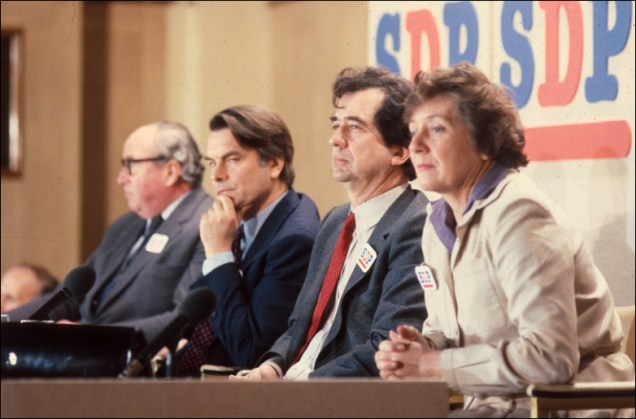
The Guardian reports on an utterly despicable new development – the fact that centrist Tory and Labour MPs, terrified at the prospect of the bland, consensual form of politics in which they thrive being brought to an end, are now proposing to unite in order to form a new centrist political party.
From the Guardian:
Tory and Labour MPs have held informal discussions about establishing a new political party in the event of Andrea Leadsom becoming prime minister and Jeremy Corbyn staying as Labour leader, a cabinet minister has disclosed.
Senior players in the parties have discussed founding a new centrist grouping in the mould of the Social Democratic party (SDP) should the two main parties polarise, according to the minister. Talks should be taken seriously, though they are still at an early stage, according to the source.
“There have been talks between Labour and Tory MPs about a new party,” the minister said. “A number of my colleagues would not feel comfortable in a party led by Andrea Leadsom.”
It is understood that MPs in both parties who campaigned to remain in the European Union believe there is an opportunity to build on the newly founded relationships between centrist MPs in both parties made before the EU referendum.
A Tory party source said Labour and Conservative MPs who campaigned in favour had become closer during the campaign and increasingly come to regard themselves as “a tribe”.
In other words, if the centrists do not get their way (as they have done uninterrupted since at least 1991) then they will take their toys and leave, founding an entirely new political party for their own glorification rather than doing the hard work of convincing existing party members that they are wrong.
This seems to be prompted largely by the fact that certain prima donna centrist MPs, used to enjoying the trappings of power and influence which come from senior positions in government or opposition, are unable to tolerate even a brief period in the wilderness while more unabashedly ideological leaders have their turn running the show, and so must orchestrate a way for their own failed and reviled centrist clan to continue pushing their self-serving, wishy-washy agenda.
In Labour’s case, this is just about understandable. Jeremy Corbyn is indeed vastly different to what we have been trained to think a Labour leader should be since the days of Michael Foot. The post-Clause IV, post-Blair accommodations with capitalism mean nothing to Jeremy Corbyn, and he is proud to admit as much. Under Corbyn’s watch, the Labour Party has indeed become markedly more left wing. Therefore, a convincing case could indeed be made that moderate, centrist Labour MPs have no place in the party of Jeremy Corbyn. But since Corbyn is supported by a thumping majority of Labour Party members, it would rightly be for the centrist MPs to toddle off and find a new home (and new supporters). Labour is Corbyn’s party now, not theirs.
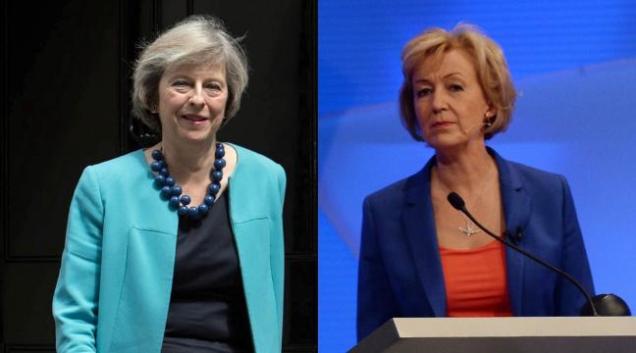
The Conservatives, though, have far less of an excuse. It would be interesting to know whether the Tory SDP plotters come predominantly from the older guard or from the 2010 and 2015 intakes. Logic would suggest that many of the more recent Tory MPs, who entered parliament in the dismal Age of Cameron, are most ill at ease at the prospect of being led by a superficially more Thatcherite leadership candidate like Andrea Leadsom. But then Theresa May hardly fits the profile of progressive conservatism, with her flinty-eyed authoritarianism, disdain for civil liberties and championing of a large, overbearing nanny state to watch over us and regulate our speech and behaviour. None of these are endearing qualities in a future Tory leader and prime minister, so any Conservative MP happy to wear the blue rosette for Theresa May but happy to shack up with Labour in case of Andrea Leadsom clearly has a very broken and opportunistic political compass.
The Guardian article continues:
A senior Labour party source confirmed that at least one Conservative minister and one of the shadow cabinet ministers who resigned last week had been involved in discussions about such a reshaping of British politics.
“There is a feeling that there might have to be a new party at the centre of British politics,” he said. “It’s early days, but the conversations are at a pretty high level.”
The suggestion comes as the Liberal Democrat peer Shirley Williams demands a central role for all pro-EU parties at Westminster in shaping the UK’s relationship with the EU. She warns that, without a cross-party consensus on the final deal, the country could fall apart in bitter post-Brexit division and acrimony.
Trust Shirley Williams to be at the centre of this subversive attempt by the political class to reorganise themselves so as to thwart the will of the people. She may play the part of the kindly faced elderly lady very well, but is there any more noxious emblem of our centrist malaise than Baroness Williams? I can think of none.
We now witness the depressing fact that a group of Conservative and Labour MPs – we do not yet know how large this potential grouping may be – have a shared love for keeping Britain chained to the antidemocratic EU which transcends whatever minor differences they may have on policy. And those policy differences between Tory an Labour are undoubtedly very few in this centrist age. Therefore, in a last-ditch effort to avoid being dragged out of the EU kicking and screaming, these MPs are now willing to betray the constituents who elected them to parliament by defecting to join a “worst of all worlds” Party of the Damned, a cesspit of wishy-washy MPs who startle like shy fauns at the first sign of passionate ideological debate.
Even before the official result of the EU referendum was declared, there were noises being made by pro-EU Remainers in denial that some means should be found to overturn the public’s vote to leave the European Union on one spurious pretext or another. Most popular now is the idea that the referendum should be ignored or re-run because the public are gullible fools who were tricked by the slick lies and distortions of the official Vote Leave campaign (as though the Remain camp was not engaged in lies, threats and downright cheating of its own). And it now seems that this is to be used as cover, an excuse to legitimise the subversion of British democracy by a group of spoiled sore losers accustomed to always getting their way.
We must not allow these machinations to succeed. While Labour MPs – so diametrically at odds with a leader who commands overwhelming support among the party membership – should arguably do the decent thing and walk off into obscurity and irrelevance by attempting to form a new party of the centre-left, there is absolutely no excuse for Tory and Labour MPs joining together to create a hybrid centrist party – particularly when neither of the two remaining Conservative leadership candidates can be described as right-wing ideologues in the mould of Thatcher.
That such a dramatic step is even being considered shows the rot in our national and political life wrought by the EU. We are now lumbered with a largely useless political class, wobbly-lipped MPs who are terrified at the prospect of Britain governing herself and not having our government’s every decision vetted by the omniscient supranational European government in Brussels. These plotting MPs are behaving like children suddenly separated from their parents in a busy crowd – screaming, weeping, arms outstretched in anguish at having been ripped away from that which gives them comfort and succour, their alpha and omega. It is an unseemly, pathetic exhibition which they are putting on in their desperation to stop Brexit, stop the realignment of British politics along more ideological lines and return to the happy days when fast-track ministerial careers were their for the taking so long as they managed to be sufficiently bland, predictable and uncontroversial.
Hopefully before long we will learn the names of these Labour and Tory MPs who care so much about their future career prospects but so little for their own constituents that they would abandon the parties under which they were elected in order to create a new centrist holding party to achieve through political skulduggery what they were not able to achieve at the general election or the EU referendum.
And hopefully those MPs concerned will then quickly face the full wrath of their constituency parties and associations for having entertained such self-serving thoughts.
God willing, none of them will be in parliament by the time of the next general election, having been deselected and replaced by new MPs for whom socialism, conservatism, ideology and principle are not such dirty words.

–
Agree with this article? Violently disagree? Scroll down to leave a comment.
Follow Semi-Partisan Politics on Twitter, Facebook and Medium.




 Semi-Partisan Politics