The Left Wing Case Against Mass Surveillance And The Investigatory Powers Bill

Theresa May - Investigatory Powers Bill - Mass Surveillance

The draft Investigatory Powers Bill will neither increase security nor effectively tackle extremism

Laura Westwood argues in Left Foot Forward that existing mass surveillance techniques have proved ineffective at stopping terror attacks, and that the new measures outlined in the government’s draft Investigatory Powers Bill would further undermine civil liberties with no commensurate reward:

Perhaps most unsettling is the potential harm caused by intruding on the lives of innocent people. Whatever the rationale, mass surveillance practices imperil our rights to privacy and freedom of expression. The UK’s Independent Reviewer of Terrorism Legislation himself warned that taking missteps could sow divisions in society and incubate the problem of ‘home-grown’ terrorists.

Why? Because extremists thrive on exploiting disenfranchisement and grievance. We are told so by former members of Islamist extremist groups. Taking blanket surveillance even further than it already goes is a calculated risk at best, and right now, the sums aren’t adding up.

Already, people languish in British prisons not for committing or inciting terrorist acts, but merely accessing articles and propaganda which praises terrorist acts, or expressing support for them on social media. Such actions may be reprehensible, but bringing the full weight of criminal law crashing down on people with odious foreign policy views and sharp tongues on social media is punishing thought, not words, and is incompatible with a free society.

Furthermore, locking up people like Runa Khan – imprisoned for “disseminating terrorist material”, which basically meant sharing pro-ISIS propaganda articles on Facebook – does nothing to confront and kill the noxious ideas in question, but rather elevates them to an unearned position of nobility, and makes a martyr of their speaker.

As Mick Hume argues in his book “Trigger Warning: Is The Fear Of Being Offensive Killing Free Speech?”:

If she had dressed her young children in suicide vests and sent them out to die in a bomb attack, that would be terrorism. But going online to argue that Muslim mothers should try to raise their sons to grow up as jihadis is something else entirely, more like perverse parenting advice than a military command. Words are not physical weapons and viewpoints are not violence, however ‘radical and extreme’ they might appear to most of us. The opinions expressed by the likes of Runa Khan need to be openly challenged. Trying to bury them instead in prison, on the ground that they are too dangerous to be let loose on Facebook, can only lend their radical message more credence.

At a time when almost all the serious business of governing has ground to a halt for the duration of the EU referendum campaign, mass surveillance is the one area where David Cameron’s ideologically rootless, authoritarian government seems determined to make progress. All other reforms and legislative activity have effectively been placed on hold, yet this most un-conservative government is formalising and expanding the powers of the state to indiscriminately collect and hold data on the private activity of citizens, with the kind of weak and unenforceable safeguards that you would expect from a country with no written constitution.

Why? Because while everything else is allowed to drift as David Cameron seeks to bully and scare the British people into fearfully voting to remain in the European Union, expanding the power and influence of the state over our lives knows no rest.

Those on the Left who oppose this are right to do so – not in pursuit of a political victory over the Evil Tories, but because the Investigatory Powers Bill is bad law and bad policy. And because it will be the poorest, most disadvantaged and least well-connected citizens who first fall prey to the surveillance state, as it always is.

Don't Spy On Me - Mass Surveillance

Agree with this article? Violently disagree? Scroll down to leave a comment.

Follow Semi-Partisan Politics on TwitterFacebook and Medium.

Small Minds Discuss People: The Media’s Coverage Of The EU Referendum

Boris Johnson - Theresa May - EU Referendum - Brexit - Conservative Party

The EU referendum is about the British people, not the Westminster game of thrones

Another day brings another tiresome round of court gossip about which Conservative ministers might potentially campaign for Britain to leave the European Union in the coming referendum.

This time the breathless gossip is reported in Guido Fawkes:

A co-conspirator tucking into his ravioli in Westminster’s Quirinale restaurant looked up to see Theresa May and Liam Fox settling down to lunch. An hour earlier Fox had asked the Home Secretary for assurances over the government’s line on Russia, so you can bet that was on the menu. Though the main topic for discussion will almost certainly have been Europe.

There has been speculation that May has been meeting with leading Eurosceptics as she keeps her options open ahead of the referendum. Where better for Dr Fox to lobby her to lead the Out campaign than one of the pricier Italian restaurants in SW1? 

While the Evening Standard gushes about Boris Johnson:

What vexes the fledgling campaign to stay in the EU is the prospective behaviour of Boris Johnson and Theresa May: in the words of one Westminster insider, “they are the only players who could change the weather”.

True enough. Boris has the popular appeal to make the Out campaign blossom with optimism and good cheer, ridding it at a stroke of its negative, wintry disposition. May, on the other hand, would bring the authority of a great office of state to the Brexit campaign. Both politicians are taken seriously within the Tory tribe as prospective successors to Cameron. Small wonder that their every move is being scrutinised so closely.

Seasoned Boris-watchers (or Bozzologists) admit that his behaviour is presently inscrutable. Those I have spoken to incline — just — to the view that he will decide eventually to stick with the In camp, though without much conviction.

Before going on to say of Theresa May:

In 2010 May was startled to be given such a senior brief. Since then she has become incrementally persuaded that she has what it takes to succeed Cameron. Like Boris, she knows her leadership prospects are intimately entangled with her conduct in the EU referendum. But if she is serious about taking on the boys for the top job, she should give the Out camp a wide berth.

As Michael Heseltine used to say as he prepared his challenge to Margaret Thatcher, most contenders only have one bullet in the chamber. If May aligns herself with the Out movement, she will be handing the gun to others and inviting them to do as they please with her accrued political capital. So if her head has indeed been turned by the flattery of the Brexit crew, it should be turned back — and fast.

Because we all know that the really important thing in this referendum is not the profound and historic choice that the British people will make about how we wish to be governed in the twenty-first century, but rather the salacious court gossip over which cabinet ministers and wannabe future Tory leaders will risk their bright young (or not-so-young) careers by allying themselves with the Brexit cause.

Never mind that awkward S-word, sovereignty. That’s boring. Never mind a detailed and difficult discussion about the realities of global governance. That would require research. Proving the adage that great minds discuss ideas, average minds discuss events and small minds discuss people, most of the British media is happy to talk about people and the petty personalities involved in the public debate, to the near total exclusion of everything else.

If you want serious, granular analysis and argument on either side of the referendum debate, there is no point looking in the pages of the Times, the Telegraph, the Guardian, the Spectator or any other publication claiming prestige. All you will find there are thinly veiled press releases from one or other of the groups squabbling for lead designation, or worryingly naive editorials from household name commentators who sound suspiciously like they have done no independent research of their own. Very unimpressive.

No, for serious analysis you have to turn to the blogosphere, and sites like eureferendum.com and Leave HQ on the Brexit side, or Hugo Dixon on the Remain side. And the difference is like walking from a junior school classroom to a tutorial room at Oxford or Cambridge. Absent are the mindless platitudes and stale (often long-ago disproven) talking points that are so often repeated on television and in the broadsheets, and in their place are references to the real, murky world of global regulation – a world which, once discovered, proves that the EU is not the “top table” as europhiles blithely claim, but also that an orderly Brexit would not lead to an instant “bonfire of the regulations” as some on the Leave side stubbornly insist.

Some eurosceptics and Brexiteers would say I am wasting my time by even bothering to mention low-grade newspaper gossip such as the Boris Johnson vs Theresa May game of thrones. And they have a good point, to a degree. This referendum is about the British people and what they think is best, not what government ministers, opposition politicians or establishment media figures may want. Fair enough.

But you can’t just look at these shenanigans in isolation. Is the coming Brexit referendum the most important thing to happen politically in a generation? Yes, absolutely. But that does not mean that we should focus on the referendum outcome to the extent that we ignore the failings and misdeeds of the political class who were here before the referendum became a reality and will (sadly) be here long after it is but a footnote in history.

There is the future stewardship of the country to think about. And I want Britain’s future political leaders to be (so far as possible) principled people with the courage of their convictions. If they claimed to hold a certain view on an important issue like Britain’s membership of the European Union to get elected, they should then follow that through once in office.

Consequently, this blog will be taking a very dim view indeed of any Conservative politician who wrapped themselves in the cloak of euroscepticism to win selection, only to run loyally to David Cameron’s heels like an obedient dog and campaign for a “Remain” vote when it really counts.

This debate should be about ideas first and foremost. That is where this blog will focus. However – and maybe this a sign that I lack a great mind – I for one will certainly remember those people who put their personal careers ahead of their commitment to democracy when it comes to this existential referendum.

EU Democracy - Brexit

Agree with this article? Violently disagree? Scroll down to leave a comment.

Follow Semi-Partisan Politics on TwitterFacebook and Medium.

Farewell, Civil Liberties

Theresa May - David Cameron - Conservative Party - Civil Liberties- Free Speech


“For too long, we have been a passively tolerant society, saying to our citizens ‘as long as you obey the law, we will leave you alone'”David Cameron, 2015

Pick your poison.

What’s worse? A Labour government that ruins the economy and condemns millions of people to lives of hard subsistence, bleating all the while about how fair and progressive they are, or a Conservative government promising semi-competent handling of the economy but itching to trample away our precious few remaining civil liberties now that they are no longer restrained by coalition?

Britain voted for the latter on May 7 this year, and on balance this was probably the right choice in the short term. But with David Cameron back in Downing Street and Theresa May re-confirmed as Home Secretary, anyone remotely concerned about civil liberties and jealous of their existing freedoms will need to organise to stop them being steamrollered in a flurry of quick legislating while this Conservative majority government is still in its honeymoon phase.

The fact that David Cameron could utter such words as the head of government of a western country is absolutely appalling, and only reconfirms everything that this blog and many others have disliked about the current Conservative Party leadership for some time.

Gone is any sense of small-L liberalism, trusting the people to know and do what is best for themselves and their communities. And in its place comes a heavy-handed, hawkish paternalism, made all the more offensive by the patronising tone in which it seeks to assert control over our lawmaking.

Continue reading

Boris Johnson’s Water Cannon Gambit Proves He Is Unfit For Higher Office

water cannon boris johnson


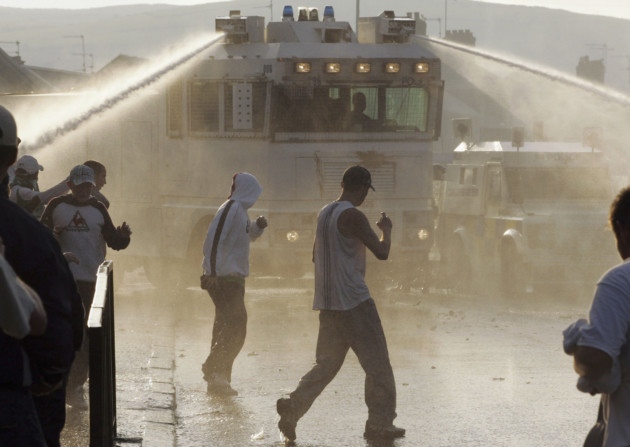
The sinister move by the Association of Chief Police Officers (or ACPO) to seek government approval for the purchase and use of water cannon as a means of crowd control on the British mainland was met with widespread alarm when the idea was first mooted in January.

Even more concerning now is the news that the Mayor of London, Boris Johnson, has unilaterally purchased three such devices from the German police in the presumptuous expectation that the Home Secretary will agree to ACPO’s request before Theresa May has had the opportunity to make her decision.

This blog noted at the time that the ACPO’s move was a transparent power play, that there were no serious concerns about impending violent protests in Britain and that even if there were a repeat of the 2011 riots, water cannon would be uniquely unhelpful to the police in containing the disorder:

So what is this really all about? One explanation could be that ACPO are politically agitating, and trying to send a message of their disapproval of coalition austerity policies to the public and their elected representatives, essentially saying “we told you that cutting government spending would lead to chaos and disorder and we were right; now we have to take the draconian step of procuring water cannon to prevent the country from sliding into anarchy”.

This is one plausible possibility – as we have seen only too recently with the Andrew Mitchell “plebgate” scandal, there are those in the police force with very hardened agendas who would stop at nothing to discredit or cast doubt on the performance of Conservative ministers.

But in truth, a more convincing explanation is that the police just really fancy having these new toys to scare and intimidate people, that they have decided that building good community relations with the public and doing the hard work of policing large scale events just isn’t worth the effort when they can just bully the public into cowed obedience much more easily.

And so it is. The coalition government’s ‘austerity’ policies have now been in effect for over three years, and have yet to provoke widespread public disorder of any significant kind, other than the usual antics of misbehaving students. Why then does ACPO believe that Britain is a smouldering tinder box about to erupt in an explosive delayed reaction to policies which are old news and have already taken effect?

The Guardian also condemns the Mayor of London’s actions in a stinging editorial, and calls on the Home Secretary to refuse ACPO’s request. This would have the double benefit of standing up for civil liberties and giving the mayor of London a slap in the face for presuming to anticipate her decision:

But this cannot be a matter for City Hall and Scotland Yard alone. The Met has a significance that extends beyond London. Westminster should have a say in what would be a profound decision affecting the rights of the UK citizen and the nature of British policing. The mayor will have his water cannon, but cannot use it without the approval of the home secretary. She should ensure it never leaves the depot.

The Guardian’s second point, that Boris Johnson’s move is of particular concern because the significance of the Metropolitan Police extends well beyond London, is also important. With some chief constables up and down the country agitating for water cannon of their own (though to their credit, some realise their lack of utility in policing normal protests), where the Met goes, others would be certain to follow.

The fact that Boris Johnson (in what he thinks is a conciliatory move) is publicly offering to demonstrate the water cannons supposed safety by being blasted by the newly-acquired water cannon himself  is entirely meaningless, unless he intends to be hit directly with the maximum force that the Metropolitan Police will be permitted to use the machines. This is unlikely.

Johnson will almost certainly only submit himself to a light sprinkling from one of the machines at its lowest power setting, and then appear charming and even more bedraggled than usual in front of the television cameras, assuring us that he got a good soaking but is otherwise perfectly unharmed.

Others who have come face to face with the full power of water cannon have not been so fortunate as the Independent notes:

Dietrich Wagner, a German pensioner, remembers the exact moment he was knocked over by a water cannon, in Stuttgart in 2010. It felt as though he was being punched. He fell backwards, lost consciousness, and when he woke, blood was running down his face. “I couldn’t open my eyes,” he says. “I only saw black.”

The former engineer, who turns 70 this year and has had six operations on his eyes, is still almost completely blind. He is in London to warn Home Secretary Theresa May not to authorise the use of water cannons on the streets of mainland Britain.

But the devastating injuries sometimes inflicted by water cannon and the potentially chilling effect on the rights and willingness of people to assemble and protest are already known and much discussed.

Of equal concern is the fact that this draconian, illiberal and presumptuous step was taken by a politician with a fair chance of becoming the next leader of the Conservative Party, and therefore also a potential future prime minister. How will Boris Johnson’s unilateral move to acquire draconian new policing weapons in response to a nonexistent threat affect his already somewhat inexplicable popularity?

The simple fact is that Boris Johnson purchased the water cannon before approval for their use has been given by the Home Secretary. Either he is attempting to strong-arm the government into giving him what he wants in the belief that the Home Secretary will rubber-stamp his decision, in which case he has no respect for the democratic process and the deliberations of government, or he has made a huge gamble and is willing to potentially lose taxpayer money by investing in capital equipment that may not be authorised for use at all, in which case he has committed a major strategic blunder and is terrible guardian of the public purse.

Worse still, if this is about forcing his rival for the future leadership of the Conservative Party into making an illiberal and politically damaging decision that he can somehow later use against her, as is also being suggested, then he is also playing political games with the cherished civil liberties of our country.

None of these possibilities or their associated character traits are desirable in someone who has their sights set on the highest political office in Britain.

The Conservatives After Cameron

Apparently running the Home Office is no longer the political kiss of death that it once was. ConservativeHome highlights an interesting and worrying trend in the sentiments of the party base – a strong, and growing, preference for Theresa May to be the next Conservative Party leader after David Cameron:

Last month, the Home Secretary squeaked it, displacing Boris Johnson from the top of the poll by 22.7 per cent to 22.6 per cent – in other words, there was one vote in it out of some 800 responses.

This month, she does so again, by 23 per cent to 22 per cent – or, if you prefer, by a margin of three votes.  Michael Gove’s rating is down from 17 per cent to 14 per cent; William Hague’s is up from 10 per cent to the same total, 14 per cent.

What’s striking about this month’s result is that the gap between May and Boris is more or less unchanged – but the survey got roughly 200 more replies.

Looking back over the record of previous Home Secretaries, I was recently arguing with a friend about whether the office of Home Secretary tends to naturally attract the authoritarians and those casually dismissive of civil liberties from within their parties, or whether working in the Home Office makes a person that way, and that even an ardent libertarian would come out of the Home Office singing the praises of indefinite detention without charge, bulk data collection and citizenship revocation without criminal conviction. Which came first, the chicken or the egg? In the case of Theresa May, an uninspiring record prior to government has only been tarnished further since 2010.

The only thing more worrying about this preference for Theresa May is that her chief threat is the implausible Boris Johnson. The Mayor of London’s ability to say what he actually thinks, bypassing the usual politician’s filter, is admirable and refreshing in a high profile political figure. But he has a tendency toward the ridiculous, harms London’s competitiveness by his intransigence on the expansion of Heathrow airport, and is weak on free speech issues. His shortcomings exceed his no-nonsense attitude and his love of Latin.

By contrast, the Education Secretary, Michael Gove – perhaps the torchbearer for the more libertarian, small government / maximum personal liberty wing of the Tory party – languishes in third place, tied with William Hague.

Two very different visions for government.

The bright side, as Benedict Brogan points out in his Morning Briefing, is that Theresa May’s popularity with the party base is not matched by equal enthusiasm in the parliamentary party. Since the leadership election rules in the Conservative party give MPs the job of whittling down the field to the final two candidates who stand before the entire party membership, it is possible that May could fall at the first hurdle, perhaps opening the way for someone who does not quite so closely adhere to the authoritarian mould of New Labour.

Talk of the next Conservative leader may be very premature – Cameron could well win a second term in 2015, either to govern as a majority Tory administration (which would be a real test of his principles – no longer would he have the fallback excuse of placating LibDem coalition partners) or in another coalition. And of course the 2015 general election and upcoming European elections this year will change the electoral landscape further still. But it is disconcerting to note that as we stand, after reviewing the performance of all the Conservative ministers in government and comparing their rhetoric to their actions, a substantial part of the Tory base believes that Theresa May represents the best way forward.