REFERENDUM DAY: The Last Word

The last word

I wanted to write one last great exhortation encouraging people to vote Leave today – a grand summary bringing together all of the compelling reason to reject the miserabilist, pessimistic, soul-sickeningly unambitious case put forward by the Remain campaign and embrace instead the possibility of real democratic renewal which can only come about with a Leave vote.

But someone has already made the closing argument much better than I ever could. And they did so before I was even born, in 1975 at the time of our last referendum on whether to remain part of the European Economic Community.

If you read this blog, you already know my thoughts on the EU referendum. And if you follow the work of The Leave Alliance you know the type of Brexiteer that I am.I will not restate all of these arguments now. I will leave you instead with the words of the late Peter Shore MP, a man whose politics could hardly be more different to my own, but whose understanding of and commitment to British democracy is second to none.

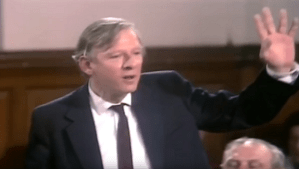
Speaking at a 1975 EU referendum debate at the Oxford Union, Peter Shore MP concluded his remarks with this devastating critique of Britain’s accession negotiation – all of which can be applied to David Cameron’s failed renegotiation – followed by a stirring rejection of the EU’s antidemocratic, supranational form of government in general:

I say to you this is not a treaty which in any way is a fair and equal treaty. It was not negotiated, it was accepted. Not one word, not a comma, let alone a clause, let alone a paragraph of the Rome Treaty – not one comma has been altered in order to meet the perfectly legitimate and serious differences that exist between Britain and the Common Market.

And now the experience itself – three and a half years ago, when they were urging us to go in. Oh, what a campaign it was. “You’ve got to get in to get on” was the slogan of that day. Five or six pounds a week better off for Britain, if we could only get in to the common market. All the goodies were read out – Donald Stokes of Leyland buying one-page advertisements saying all we need is a great domestic market of 250 million, and we will sweep Europe!

[..] When you add to that the burdens I mentioned a moment ago, and we are under great threat, we are in peril at the present time, and the country must know it.

Therefore now what do they say? What is the message that comes now? No longer to tell the British people about the goodies that lie there. No longer that – that won’t wash, will it? Because the evidence will no longer support it. So the message, the message that comes up is fear, fear, fear.

Fear because you won’t have any food. Fear of unemployment. Fear that we’ve somehow been so reduced as a country that we can no longer, as it were, totter about in the world independent as a nation. And a constant attrition of our morale, a constant attempt to tell us that what we have – and what we have is not only our own achievement but what generations of Englishmen have helped us to achieve – is not worth a damn, the kind of laughter that greeted the early references that I made that what was involved was the transfer of the whole of our democratic system to others. Not a damn.

Well I tell you what we now have to face in Britain, what the whole argument is about now that the fraud and the promise has been exposed. What it’s about is basically the morale and the self-confidence of our people. We can shape our future. We are 55 million people. If you look around the world today – I listened to Gough Whitlam and his 14 million Australians, and he trades heavily with Japan, I’m very fond of the Australians – but do you think he’s going to enter into a relationship with Japan where he gives Japan the right to make the laws in Australia? Do you think Canada, 22 million of them, and to the south a great and friendly nation, yes they are, but do you think Canada is going to allow its laws to be written by the 200 million people in some union in America? No, no, of course not. The whole thing is an absurdity.

And therefore I urge you, I urge you to reject it, I urge you to say no to this motion, and I urge the whole British country to say no on Thursday in the referendum.

All of this beautiful prose – a relic from a bygone age when political speeches didn’t make one want to jump out of the window to escape the boredom – was delivered while a stony-faced Edward Heath looked on, chastened.

God willing, today we will have the opportunity to chasten our current prime minister David Cameron – a man who has conducted himself in many ways like a lame Ted Heath tribute act – by ignoring his pro-EU campaign of lies, distortions and intimidation.

I can say no better than Peter Shore. But please – if you have not already done so, go to your polling station and vote for democracy, vote for Britain, vote to leave the European Union.


Polling Station - Voter Apathy - Voter Disengagement - General Election 2015

Peter Shore MP - Oxford Union - EU Referendum - 1975 - Brexit

European Union - United Kingdom - Britain - Flags

Agree with this article? Violently disagree? Scroll down to leave a comment.

Follow Semi-Partisan Politics on TwitterFacebook and Medium.

This EU Referendum Is Of Existential Importance. So Why Is The Campaign Rhetoric So Unequal To The Occasion?

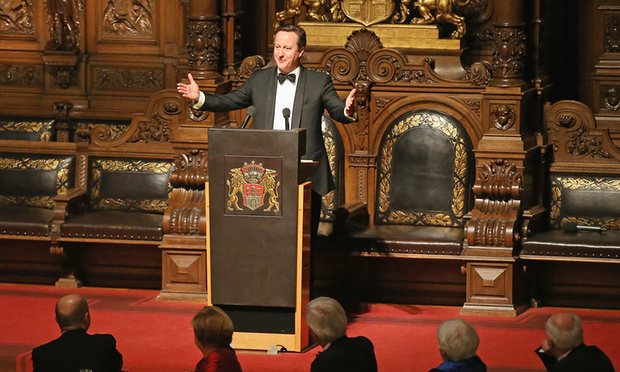
David Cameron - EU Referendum - European Union - Brexit - Speech - Rhetoric

The age of glib soundbites and dumbed-down, instantly shareable viral social media memes is perfectly suited to the Remain campaign’s strategy of sowing fear, uncertainty and doubt as widely as possible. But if we still lived in the age of great political speeches, the Brexiteers would be winning this EU referendum by a landslide

Because I’m an oddball, sometimes I like to spend time reading or listening to great political speeches from the past – particularly those from American politics.

Two of the more obvious such speeches – JFK’s “We Choose To Go To The Moon” and Theodore Roosevelt’s “Dare Mighty Things” – have been forcing themselves repeatedly to the forefront of my mind lately, though until tonight I was unsure why.

Then this evening I stumbled on this 2011 article by Peggy Noonan, Wall Street Journal columnist and former speechwriter for President Ronald Reagan. Though the article’s discussion of social media shows its age, it makes for an interesting read today:

One way to change minds about the current crisis is through information. We all know this, and we all know about the marvellous changes in technology that allow for the spreading of messages that are not necessarily popular with gatekeepers and establishments. But there’s something new happening in the realm of political communication that must be noted. Speeches are back. They have been rescued and restored as a political force by the Internet.

In the past quarter-century or so, the speech as a vehicle of sustained political argument was killed by television and radio. Rhetoric was reduced to the TV producer’s 10-second soundbite, the correspondent’s eight-second insert. The makers of speeches (even the ones capable of sustained argument) saw what was happening and promptly gave up. Why give your brain and soul to a serious, substantive statement when it will all be reduced to a snip of sound? They turned their speeches into soundbite after soundbite, applause line after applause line, and a great political tradition was traduced.

But the Internet is changing all that. It is restoring rhetoric as a force. When Gov. Mitch Daniels made his big speech – a serious, substantive one – two weeks ago, Drudge had the transcript and video up in a few hours. Gov. Chris Christie’s big speech was quickly on the net in its entirety. All the CPAC speeches were up. TED conference speeches are all over the net, as are people making speeches at town-hall meetings. I get links to full speeches every day in my inbox and you probably do too.

People in politics think it’s all Facebook and Twitter now, but it’s not. Not everything is fractured and in pieces, some things are becoming more whole. People hunger for serious, fleshed-out ideas about what is happening in our country. We all know it’s a pivotal time.

Look what happened a year ago to a Wisconsin businessman named Ron Johnson. He was thinking of running for the Senate against an incumbent, Democratic heavy-hitter Russ Feingold. He started making speeches talking about his conception of freedom. They were serious, sober, and not sound-bitey at all. A conservative radio host named Charlie Sykes got hold of a speech Mr. Johnson gave at a Lincoln Day dinner in Oshkosh. He liked it and read it aloud on his show for 20 minutes. A speech! The audience listened and loved it. A man called in and said, “Yes, yes, yes!” Another said, “I have to agree with everything that guy said.” Mr. Johnson decided to run because of that reaction, and in November he won. This week he said, “The reason I’m a U.S. senator is because Charlie Sykes did that.” But the reason Mr. Sykes did it is that Mr. Johnson made a serious speech.

A funny thing about politicians is that they’re all obsessed with “messaging” and “breaking through” and “getting people to listen.” They’re convinced that some special kind of cleverness is needed, that some magical communications formula exists and can be harnessed if only discovered. They should settle down, survey the technological field and get serious. They should give pertinent, truthful, sophisticated and sober-minded speeches. Everyone will listen. They’ll be all over the interwebs.

What a strange idea: the internet restoring rhetoric as an important part of our political debate. While this positive trend may have flared briefly in America for a time as Noonan indicates, we have certainly seen no comparable renaissance of political speechwriting here in Britain. Sure, Nigel Farage can deliver a withering put-down in the European Parliament and the SNP’s Mhairi Black can make sentimental lefties go all misty-eyed, but as a rule, for at least the past thirty years, political speeches in Britain have been pedestrian and utterly forgettable.

This is rather odd. Britain is currently engaged in an existential debate over whether we leave or remain in the European Union, the seriousness of this one issue dwarfing any mere general election, as the prime minister himself has opined. Surely the speeches made by our politicians should therefore reflect the gravity of the decision before us. But does our rhetoric meet the level and tone required of such a debate? Hardly.

As an ardent Brexiteer, one of the main problems I encounter when debating the issue with people – particularly online – is that abstract concepts such as democracy and self-determination are much harder to put into words or summarise with a glib but memorable phrase, while the fearmongering rhetoric of the Remain campaign naturally lends itself to viral sharing. It is much easier to (falsely and hysterically) declare that pensioners will be £32,000 worse off or that 100,000 marriages in London will fail because of Brexit than to explain the intangible importance of living in a properly free society – and almost inevitably the person attempting to argue the side of self-governance ends up sounding ponderous and vague in contrast with the swivel-eyed certainties uttered by Remainers.

And when eurosceptics try to dial up the rhetorical heat, too often it comes off badly. While UKIP-ish phrases like “we want our country back” are certainly memorable, they also have a distinctly nativist twang which alienates a good many people even as it fires up true believers. It is the same story with these key phrases, repeated over and over again by the official Vote Leave campaign, from their daily emails to the phrases of key surrogates:

We send £350 million a week to the EU – enough to build a new hospital every week

250,000 EU migrants a year come to the UK and five new countries are in the queue to join – including Albania, Serbia, and Turkey – it’s out of control and damages the NHS

It’s safer to take back control and spend our money on our priorities

This is apparently the best that the cream of Britain’s eurosceptic talent can do – an utterly unbelievable pledge about diverting 100% of our current EU contributions, including the rebate, to building new hospitals, and an unconnected pivot from the NHS to it being “safer” to spend money on our priorities. One can just about see what Vote Leave is trying to do, but it is an amateurish, almost childlike attempt at political messaging.

Meanwhile, here is the slicker effort from Britain Stronger in Europe:

Britain is stronger, safer and better off in Europe than we would be out on our own.

Join the campaign to remain in Europe – and let’s secure a stronger Britain that delivers opportunity now and for future generations

Never mind that it is based on a lie. A lie repeated identically and often enough can be incredibly effective, as it is with Vote Leave’s misrepresentation that leaving the political organisation known as the EU means leaving the continent of Europe. There is also more of a positive message here – where Vote Leave talk about Brexit being “safer”, suggesting danger and a defensive attitude, Stronger In talk about “deliver[ing] opportunity now and for future generations”, exuding positivity for today and for tomorrow as well.

Only when the message delivery window is longer than a quick email or a short social media meme does the Brexit side begin to redress the balance. Put aside their dubious and counterproductive tactics for a moment, but Vote Leave spokespeople like Michael Gove and Daniel Hannan (even Nigel Farage) can paint an extremely attractive picture of Britain outside the European Union in a speech, particularly when they aren’t butchering the idea of how to go about achieving their goal.

Even more pertinently, look at the Flexcit plan for leaving the European Union, which is increasingly being seized upon by key influencers who despair of Vote Leave’s amateurism and lack of a clear, risk-minimising Brexit plan. Flexcit itself is a 400 page document, while the summary pamphlet clocks in at a still substantial 40+ pages. At a recent TED-style talk in central London, Dr. Richard North (Flexcit’s primary author) took an hour to lay out the ideas and reasoning behind it. Though the Leave Alliance network of committed bloggers (full disclosure: I am one of them) do a sterling job of breaking down and simplifying the concepts so as to sell them more effectively to key influencers and the public, Flexcit will never be an easily-shared, one page meme on Facebook. Nor should it be. Serious and weighty issues require serious responses.

But increasingly it appears that the Leave camp will be punished at the ballot box for the fact that its core argument about democracy and self-determination cannot be boiled down to a single positive phrase or graphic in the same way as the establishment-backed Remain campaign can churn out endless content, together with slick but abhorrent messages from professional agencies:
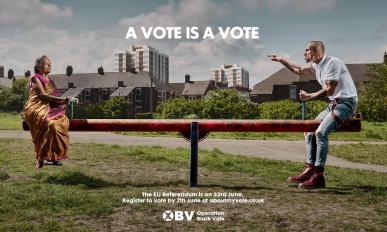
Operation Black Vote - OBV - A vote is a vote - EU Referendum - European Union

Of course Vote Leave are guilty of shameless fearmongering too, never more so than with this dreadful fearmongering ad about Turkey joining the EU:
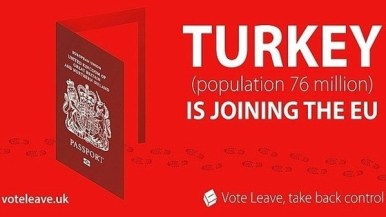
Vote Leave - Turkey Joining EU

But whether it is raising fears of knuckle-dragging, Brexit supporting skinheads or the armies of Turkish immigrants who will apparently all decamp to Britain en masse at the first opportunity, both are seen as highly effective tools by their respective campaigns, and both rely on communicating a primitive, fear-based message not with rich rhetoric but with a short, sharp visual, the better to hold our limited attention spans.

In many ways, it is a tragedy for the Brexit cause that this opportunity to extricate ourselves from an unwanted supranational government of Europe has come about when the internet has taken off and the average person’s idea of profound political engagement is liking and sharing the latest snide Huffington Post article with their friends on Facebook. When the debate over whether or not Britain should join Europe raged in the late 1960s and early 70s, the art of making serious (if not quite great) speeches was still just about alive – Hugh Gaitskell’s famous address to the Labour Party conference warning against joining the EEC stands as one such example of memorable oratory, culminating in the famous “thousand years of history” quote:

We must be clear about this; it does mean, if this is the idea, the end of Britain as an independent European state. I make no apology for repeating it. It means the end of a thousand years of history. You may say: “Let it end.” But, my goodness, it is a decision that needs a little care and thought.

But when the history of Britain’s 2016 EU referendum comes to be written, what will we remember? Of all the particularly dramatic moments in the campaign to date, none of them have been speeches. Sure, sometimes the fact of a speech has been newsworthy, such as when an unexpected establishment figure has been wheeled out to say that Brexit will usher in the apocalypse, but the content – the oratory itself – has rarely raised hairs or stiffened spines.

In fact, proving Eleanor Roosevelt’s famous assertion that great minds discuss ideas, average minds discuss events and small minds discuss people, the media has determinedly reported almost exclusively on the latter two. Of course that is always the temptation for journalists, but our politicians have hardly given the media much to work with on the ideas front, even if they were minded to cover them.

This is a depressing state of affairs. This most important debate should be bringing out the best in our politicians and our media. We should be witnessing a straight-up fight between advocates of the democratic, independent nation state and those who ardently believe in the euro-federalist dream, adjudicated by a press corps  beholden to neither side and always willing to challenge baseless assertions rather than merely provide a “fair and balanced” platform for two partisan idiots to yell at each other for an equal amount of time.

In this debate, our elected leaders should be role models in setting the tone of the debate. Of course they are not, because our professional political class are very much part of the problem – the main reason why Brexit should only be the first step in a broader process of constitutional reform and democratic renewal in Britain.

But here we are, a country administered by followers rather than leaders, watched over by a childish and corrupted press who would rather giggle about the referendum’s personal dramas than fulfil their democratic function. And too little time before the referendum to hope that anything much will change.

All of which is bad for Brexiteers. After all, this is an age when scaremongering claims and assertions about the supposed cost of Brexit can be “quantified”, slapped on a smug little infographic and shared ten thousand times before breakfast, while the importance of self-determination an democracy – the ability of the people to influence the decisions which affect them and dismiss those with power – is almost impossible to boil down to a single eye-catching number, despite being the most precious benefit of all.

Without honest political leaders to establish a narrative and bigger picture – and without a robust media to report – it is effectively left to well-intentioned citizens to hold the grown-up debate amongst themselves, citizens who (for all their pluck) often struggle to cut through the noise of the vapid official campaign.

What’s most galling about all of this is the fact that there are many people alive today who have living memory of hearing great political rhetoric deployed in service of consequential issues – if not in Britain, at least in America:

The Only Thing We Have To Fear Is Fear Itself.

We Choose To Go To The Moon.

The Great Society.

I Have A Dream.

Ask Not What Your Country Can Do For You.

Robert Kennedy’s speech on the assassination of Martin Luther King.

Tear Down This Wall.

And even Britain has managed to offer worthy efforts, including:

We Shall Fight On The Beaches.

The Few.

The Winds Of Change.

The Lady’s Not For Turning.

The Grotesque Chaos Of A Labour Council.

What words uttered by our contemporary politicians during this EU referendum will be long remembered or quoted fifty years from now?

My prediction: not a damn one. But at least there will be a great treasure trove of vapid tweets and misleading infographics for historians to pick through as they wonder why Britain signed away her freedom.

 

European Union - United Kingdom - Britain - Flags

Top Image: Guardian

Support Semi-Partisan Politics with a one-time or recurring donation:

Agree with this article? Violently disagree? Scroll down to leave a comment.

Follow Semi-Partisan Politics on TwitterFacebook and Medium.

Thirty Years After Challenger, Who Now Inspires Us To Dare Mighty Things?

Whether we meet triumph or disaster in our national endeavours, our politicians – and their words – are no longer up to the job of inspiring us to move forward

“Far better it is to dare mighty things, to win glorious triumphs, even though checkered by failure, than to take rank with those poor spirits who neither enjoy much nor suffer much, because they live in the gray twilight that knows not victory nor defeat”

– Theodore Roosevelt, 1899

Thirty years ago today, the NASA space shuttle Challenger exploded in flight shortly after takeoff, killing the crew of seven.

Responding to the tragedy, which was witnessed by millions of people on live television – including many schoolchildren, for one of the astronauts was to be the first teacher in space – US president Ronald Reagan addressed the nation. He said:

We’ve grown used to wonders in this century. It’s hard to dazzle us. But for twenty-five years the United States space program has been doing just that. We’ve grown used to the idea of space, and, perhaps we forget that we’ve only just begun. We’re still pioneers. They, the members of the Challenger crew, were pioneers.

And I want to say something to the schoolchildren of America who were watching the live coverage of the shuttle’s take-off. I know it’s hard to understand, but sometimes painful things like this happen. It’s all part of the process of exploration and discovery. It’s all part of taking a chance and expanding man’s horizons. The future doesn’t belong to the fainthearted; it belongs to the brave. The Challenger crew was pulling us into the future, and we’ll continue to follow them.

[..] There’s a coincidence today. On this day three hundred and ninety years ago, the great explorer Sir Francis Drake died aboard ship off the coast of Panama. In his lifetime the great frontiers were the oceans, and a historian later said, “He lived by the sea, died on it, and was buried in it.” Well, today, we can say of the Challenger crew: Their dedication was, like Drake’s, complete.

The crew of the space shuttle Challenger honored us by the manner in which they lived their lives. We will never forget them, nor the last time we saw them, this morning, as they prepared for their journey and waved goodbye and “slipped the surly bonds of earth” to “touch the face of God.”

Two decades earlier, and another tragedy. On April 4 1968, Martin Luther King Jr. was been shot and killed by an assassin in Memphis, Tennessee.

On hearing the news, Robert Kennedy, then junior senator from New York, addressed a crowd of people in the open air in Indianapolis, saying:

Martin Luther King dedicated his life to love and to justice between fellow human beings. He died in the cause of that effort. In this difficult day, in this difficult time for the United States, it’s perhaps well to ask what kind of a nation we are and what direction we want to move in. For those of you who are black — considering the evidence evidently is that there were white people who were responsible — you can be filled with bitterness, and with hatred, and a desire for revenge.

We can move in that direction as a country, in greater polarization — black people amongst blacks, and white amongst whites, filled with hatred toward one another. Or we can make an effort, as Martin Luther King did, to understand, and to comprehend, and replace that violence, that stain of bloodshed that has spread across our land, with an effort to understand, compassion, and love.

My favorite poem, my – my favorite poet was Aeschylus. And he once wrote:

Even in our sleep, pain which cannot forget
falls drop by drop upon the heart,
until, in our own despair,
against our will,
comes wisdom
through the awful grace of God.

What we need in the United States is not division; what we need in the United States is not hatred; what we need in the United States is not violence and lawlessness, but is love, and wisdom, and compassion toward one another, and a feeling of justice toward those who still suffer within our country, whether they be white or whether they be black.

[..] And let’s dedicate ourselves to what the Greeks wrote so many years ago: to tame the savageness of man and make gentle the life of this world. Let us dedicate ourselves to that, and say a prayer for our country and for our people.

Now think about the last great British political speech you remember.

And don’t mention Hillary Benn huffing about Britain doing “our bit” to defeat ISIS in Syria, because competent and well delivered though it was, if that now passes for a great political speech for the ages then we are all ruined.

Need some more time to think?

Challenger Shuttle Memorial

There is no poetry in our politics any more. There is barely even decent prose, judging by the inauthentic passion of Ed Miliband or the randomised utterances of someone like Sarah Palin in America. In place of poetry – the kind of language which is only possible when we focus on ideas, goals or aspirations bigger than ourselves – we have dull, technocratic language about the performance of our precious public services, and overwrought emotional language either detailing how something makes us feel, or demonising the other side (the Evil Tories).

Imagine if David Cameron responded to some future aviation or exploration disaster by talking about slipping the surly bonds of Earth and touching the face of God. Just picture it. He would be laughed out of office – or at least mercilessly pilloried in the press – for speaking in what we would now consider to be such a pompous way. At best you might tease from him a few careless, cookie-cutter lines about the families of the victims being in our “thoughtsnprayers” (or just thoughts now, more commonly). But nothing big picture. Nothing that encourages us to look beyond ourselves for one second.

That’s because in our society today, there is nothing bigger than the Self. We are the gods of our own lives – or at least we often think so. And politicians, painfully aware of this fact, talk down to us as though we were children, always seeking to catch our eye with flashy pledges of “what’s in it for us” rather than what is necessarily good for the country, or for human liberty and progress.

Vote Labour and your NHS waiting times will go down. But don’t worry, we’ll get them to pay for it through higher taxes. Vote Conservative and your taxes will go down, and if that means fewer public services for them, so be it.

Now I’m certainly not suggesting that taxes and public spending are not important issues. But when even the Conservative Party can fight the 2015 general election on an offensively paternalistic manifesto promising “a plan for every stage of your life“, can we really deny that we have become a nation of consumers rather than citizens, more interested in who will deliver the most goodies for ourselves and the people we like than who will best steer the ship of state through challenging times?

That’s what we now expect from our prime ministers today – not a world leader, but a lowly Comptroller of Public Services. No call to arms in service of a great national goal. Nothing remotely inspirational at all. Just a checklist of things promised to us in return for our vote. I’m not assigning blame for this depressing chicken-or-egg state of affairs. But this is how our politics now works, more than ever. Less asking “what you can do for your country”, and much more emphasis on “what your country can do for you”.

Even the coming EU referendum – when the British people have a vanishingly rare opportunity to reconsider the very way that we are governed, the way we face the world and deal with the challenges and opportunities of globalisation – is being treated by the main campaign groups on either side as a parsimonious matter of saving or incurring relatively trivial sums of money, with rival (and equally ludicrous) numbers being batted back and forth by the rival camps.

Vote Leave asks us to imagine freedom from the EU in dismal terms of saving enough money to build a new NHS hospital every week, as though that trumps the democratic right of the British people to live in a sovereign country, while Britain Stronger in Europe attempt to bribe us with a gimmicky calculator purporting to show how much our shopping bill will go up unless we remain part of a European political union.

It’s all so tediously depressing and uninspiring. Is it any wonder then that political apathy is on the rise, and that those of us who remain engaged increasingly opt for virulently anti-establishment parties like UKIP or the SNP? Or that with the decline of moderate religion and our failure to confidently express and transmit British values through our culture, some disaffected young Muslims, rootless and yearning to feel part of something bigger, are stealing away to Syria to fight for ISIS?

I’m a political blogger, and for my sins I sit and listen to far too many political speeches by cabinet ministers, shadow ministers and other establishment types. And to begin with, I thought that I would judge a speech according to whether it felt in any way inspirational, transcendent or like a genuine attempt to rally people toward a goal beyond their own personal enrichment and the state-sanctioned smiting of the hated “other”. A speech which, regardless of its political leaning, might set the pulse racing a little with possibility.

Well, four years later and my pulse continues to flatline. I haven’t heard a genuinely good speech yet – as in one that you might actually remember six months later or recite a key passage from – at least not one hailing from the three main parties. If anybody believes that they have heard one, please send me a link or transcript and I will be forever in your debt.

Maybe I’m just romanticising the past. Maybe in thirty years’ time when Ed Miliband’s kid is running for the leadership of the Labour Party, we will all look back on Ed’s fifteenth personal relaunch speech or David Cameron’s 2015 general election stump speech and hail them as bold, visionary masterpieces. Maybe.

But I strongly suspect that in the year 2046, anybody wanting to listen to listen to a great British political speech – with the exception of those made by firebrands like Margaret Thatcher – will have to look back in time almost a century, and certainly past the haunted late years of the 2010s.


Downing Street - Podium - Lectern - Press Conference.jpg

Agree with this article? Violently disagree? Scroll down to leave a comment.

Follow Semi-Partisan Politics on TwitterFacebook and Medium.

For In The Final Analysis

John F. Kennedy, May 29, 1917 – November 22, 1963

“So, let us not be blind to our differences, but let us also direct attention to our common interests and to means by which those differences can be resolved. And if we cannot end now our differences, at least we can help make the world safe for diversity. For, in the final analysis, our most basic common link is that we all inhabit this planet. We all breathe the same air. We all cherish our children’s future. And we are all mortal.”

For those of us who have grown up never having heard a great contemporary political speech, here is the remarkable speech given by President John F Kennedy at American University on June 10, 1963.

Kennedy was assassinated on this day in 1963, fifty-two years ago.

Powerful words, but does Kennedy’s analysis still hold true in the Age of Jihad – when we are preoccupied with ISIS and Al Qaeda rather than the Soviet Union, and when our enemies eagerly embrace death and have no thought at all for their children, let alone their own earthly future?

Imagine David Cameron giving a speech like this about the threat posed by Islamist terrorism, or Britain’s future relationship with the European Union. Imagine David Cameron, George Osborne, Theresa May, Boris Johnson, Jeremy Corbyn, Chuka Umunna, Yvette Cooper, Tristram Hunt, Andy Burnham, Tim Farron or Nicola Sturgeon giving this speech. Try picturing it without laughing out loud.

The challenges today are different to those faced by Kennedy and our political leaders half a century ago. But rarely have our political leaders seemed so helpless, so inadequate to the tasks at hand. At best, our current prime minister might be described as a reasonably competent Comptroller of Public Services. And it is far from certain that he even aspires to be anything more.

They say that we get the politicians and leaders we deserve. If so, the time has come for us all to engage in some serious introspection.

JFK - John F Kennedy - American University Commencement Address

Scroll down to leave a comment.

Follow Semi-Partisan Politics on TwitterFacebook and Medium.

Stop Criticising Jeremy Corbyn’s Speeches And Focus On His Ideas

Jeremy Corbyn detractors have been criticising the Labour leader’s early speeches for not being conciliatory enough, and for rambling. They would do better to focus on his ideas

Remember that great speech Ed Miliband once gave?

The really inspiring one, that time where he not only lifted the spirits of committed Labour Party activists but also reached out to the whole country, convincing millions of British people that a bright and appealing future lay just around the corner, ours for the taking under a Labour government?

You know, that barnstormer of a speech, one of those rare moments when human rhetoric rises to meet a momentous occasion; when hard-nosed political journalists were momentarily awed, and even cynical television pundits choked up. Surely you must remember?

No? Neither can I. Because it never happened. And yet corners of the British press are currently in the process of excoriating Jeremy Corbyn for failing to wow them with a good enough speech, having won the Labour leadership contest only days ago.

Corbyn’s victory speech was high-handed, amateurish, rambling, unstructured and not conciliatory enough, according to the verdict of various pundits. Matthew D’Ancona was particularly unimpressed with the strategic aspect:

Continue reading