Britain’s Virtue Signallers Prepare To Vote Remain In A Blaze Of Self-Publicity

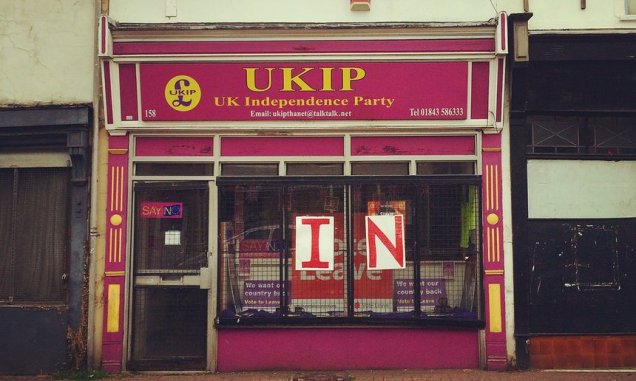
UKIP office Thanet - Laura Barton poster - EU Referendum

For many Remain supporters, it is not enough to vote to keep Britain in the EU. Some are driven to ostentatious acts of self-promotion, to make everyone else aware of just how progressive and tolerant they are

This blog has already discussed how voting Remain is de rigeur for Britain’s young, leftist virtue-signallers.

And here is a prime example: Guardian (of course) feature writer Laura Barton, consumed with that gnawing fear known to all young leftists that perhaps not enough people know just how progressive and tolerant they are, has concocted a lame little stunt to better promote herself within her like-minded social circle.

Barton proudly tells us:

I had been contemplating taking action for some while. Flyers? I wondered. A demonstration? For a time I thought I might post kippers through their letterbox, though my friends soon pointed out that this would be a waste of good fish.

I live, you see, not very far from the Ukip office in Thanet, an area of the country considered the party’s heartland, and where Nigel Farage stood but failed to get elected in the 2015 election. As a staunch supporter of the remain campaign, in the weeks leading up to the EU referendum the office’s proximity has proved a source of temptation.

Yesterday evening, a little lit up by the crescendo of the debate, I set to work: I procured two sheets of A3 paper, two red felt-tip pens, and set about colouring in a sign that read “IN”. And when it was done, I set my alarm for 6:30am and went to bed happy.

The Thanet Ukip offices lie behind an insalubrious looking shop-front, painted purple and yellow, with a “VOTE LEAVE” placard sitting prominently in the window and a metal grille protecting the glass. It has the air of a 1970s newsagent, where everything is faintly sticky and slightly out of date.

King Street was quiet at that hour – a couple of cars, a Loop bus, a truck rumbling at the lights as I sellotaped my sign to the grille. I crossed the street to photograph my handiwork and noticed a couple of women standing in a doorway, but they only looked at me quizzically and did not pass comment. I posted my photograph on social media, then headed home for breakfast.

Because what is the point of doing anything in this day and age if we do not immediately upload footage to social media in the hope that it goes viral?

As stunts go, this is hardly very impressive. Colouring in two sheets of paper with felt-tip pen and sellotaping them to the window of an opposing political party? That’s the kind of thing an eight year old child might win praise for. But then, perhaps paper and felt-tip pens were the only tools Laura Barton had to hand in the super progressive safe space where she shelters from all of those awful Ukippers in Thanet.

Barton then goes on to admit (my emphasis in bold):

As direct action goes, it was hardly as magnificent as this week’s raising of multiple Mexican flags on the border of Donald Trump’s golf course in Aberdeen, but I was pleased with it nonetheless. I felt I’d made my point firmly but politely: I’d coloured inside the lines, and I knew that the sign could easily be removed. There was no spray paint, no smashing up of things, no expletives.

Yet taking a visible stand seemed a vitally important thing to me – as I think it has to many of us in recent days. I’ve seen friends proudly tacking posters in their windows, attending marches, wearing stickers, and felt heartened by the swell of passion and involvement. And my friendship group and social media feed are naturally, satisfyingly full of remain rhetoric – with links to stirring op-eds and rants against Farage, Gove and Boris, with Cats Against Brexit, Wolfgang Tillmans’ posters, and pleas for love and compassion, for peace and harmony – and togetherness.

Love and compassion, peace and harmony all being proprietary virtues of remainers and EU supporters, of course. And naturally Laura Barton’s entire friendship circle is comprised of people with similarly childish, two-dimensional views, as she herself confesses. Heaven forfend that she might actually socially mix with one of the many UKIP voters in Thanet. Such people are to be pitied, grievously pitied, to be sure – nostalogic, economically left-behind losers that they are. But they are by no means to be befriended. One is judged by the company one keeps, after all.

To be sure, there are social media echo chambers on both sides of this debate. As a political blogger attuned to the debate I have witnessed them forming and expanding. But it is certainly the case that the greater impulse for conspicuous virtue-signalling is on the Remain side. An ardent Brexiteer will often fill their Twitter feed and Facebook wall with Vote Leave campaign messages and supportive news articles, just as an ardent Remainer would do the same with Britain Stronger in Europe materials. But the Remainer is much more likely to want to protest or act out in some other way in order to draw attention to themselves. They are not convinced with thinking that they are in the right – others must know about it, too.

We then get the tiniest glimmer of self-awareness:

But the politics of this place are so often at odds with my own world view. I see more leave posters than remain, I hear heated anti-Europe discussions as I walk through the town centre. And in some regards they have my sympathy. I’m aware of how much European legislation has affected the local fishing community, how that must breed frustration and exasperation; how it is easier to point to the damage done than look for the benefits EU membership has brought.

Still, in the last few days of this campaign, I felt it important to take some sort of action here – to raise a voice for the other side. It felt better than waiting, than doing nothing. Because this matters so colossally. Because this is a vote with repercussions that will last forever. Because the leave campaign has been so polluted by lies and misinformation, so run through with hate and with cowardice.

I always say that the most important things in life are to be kind and be brave. Sellotaping a homemade poster to the window of a Ukip office isn’t really either, but I hope it might at least encourage someone else to vote kindly and bravely.

We will leave aside Barton’s wailing about the behaviour of the official Leave campaign and utter silence about the Project Fear waged by her own Remain team.

Barton is at least aware that she lives in an area where many people do not share her views. She even states that she hears those views being loudly, forcefully and repeatedly expressed as she walks through town. But does it occur to her for even a minute that some of these people might be right – that their antipathy toward the European Union is not the result of having been brainwashed by Rupert Murdoch or Boris Johnson, but rather a considered position as to what is best for Britain? Of course not. These people suffer “frustration and exasperation”, but this is only because they do not realise how wonderful and beneficent the European Union really is. It’s okay though, Barton doesn’t blame them. How could they know any better? Most of them are working class. They don’t read the Guardian. They don’t really know what is going on, or what is best for them.

Doesn’t this just perfectly sum up the sneering, metro-left case for Remain? In truth, it is more a campaign against the thick, racist working classes and of virtuous self-promotion by the middle class clerisy than anything to do with the European Union. Most of those eagerly cheering for Britain to “stay in Europe” probably couldn’t tell you the first thing about how the EU operates, its history or its likely future trajectory. But they do know one crucial thing – vocally supporting the EU is the progressive, liberal, trendy thing to do.

Supporting the European Union sends all of the right signals – that one is cosmopolitan, internationalist, easy-going about immigration and multiculturalism. And those traits are an essential prerequisite for admittance into Laura Barton’s social circle, while rank ignorance or indifference about democracy do not matter in the slightest.

The good news: at the general election, the virtue-signallers were caught short. So cocooned were they in an ideological bubble of their own making that they failed to realise that the great mass of the country were not behind them. Now, Ed Miliband sits on the back benches and David Cameron is prime minister.

Fast-forward thirteen months and  here we are again. The Laura Bartons of this world are furiously sharing infographics and videos about how the European Union fosters peace, friendship, cooperation, puppies and kittens while never stopping to actually question or verify the premise of their argument. Meanwhile, the great mass of the country is ambivalent about the EU at best, and  will only grudgingly vote to Remain if David Cameron’s tawdry campaign of fear resonates strongly enough.

God willing, the British public will disappoint the virtue signallers tomorrow, just as they dashed their hopes of Prime Minister Ed Miliband at last year’s general election. And perhaps, if we are able to regain our democracy, Laura Barton (after a period of reflection) can take her felt tip pen and A3 paper and write a thank-you letter to all those nasty, working class Ukippers in Thanet whose wisdom and courage made it possible.

Besides, everybody knows that cats support Brexit and think that Remainers are stupid.
 

European Union - United Kingdom - Britain - Flags

Top Image: Guardian / Laura Barton

Agree with this article? Violently disagree? Scroll down to leave a comment.

Follow Semi-Partisan Politics on TwitterFacebook and Medium.

The Remain Campaign’s Last Stand

Stronger In - Kind Open Inclusive Tolerant Together - EU Referendum

The Remain campaign is so used to loudly claiming the moral high ground and dismissing Brexiteers as backward, nasty reactionaries that even their “positive” closing message is unintentionally insulting toward half the country

Well, that calmer, politer politics didn’t last very long, did it?

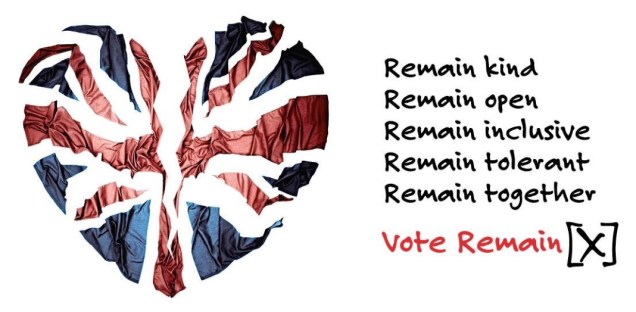
On the first day of real campaigning following the murder of Jo Cox MP, the Remain campaign has hit the airwaves with this new meme, now being widely shared on social media.

Displaying a heart shape in the colours of the Union Flag, Britain Stronger in Europe exhort us to:

Remain kind

Remain open

Remain inclusive

Remain tolerant

Remain together

All pleasing words, you might think. But what does it say about those Britons – nearly half the country, according to opinion polls – who think that Britain should leave the European Union. Are they unkind people? Are they closed-minded and closed-hearted? Do they all seek to exclude people? Are they all racist? Apparently the official Remain campaign thinks so.

The image is accompanied on social media by the following message:

This referendum is about the type of country we want to live in.

SHARE this if you believe Britain is at our best when we’re outward-looking, inclusive and we stand together.

Just hammering the point home.

From a purely strategic and tactical viewpoint one can understand why Britain Stronger in Europe went for this approach. After all, almost none of their argument for staying in the EU has been based on the positives of the European Union (beyond woolly platitudes about “cooperation” and “working together”, which a ten year old can work out does not require the intermediation of Brussels). Rather, their argument has been a relentlessly fear-based approach, threatening and even bullying voters to vote Remain on pain of supposed economic disaster compounded by George Osborne’s vindictive “punishment budget”.

But to get Remainers to the polling station on Thursday, the campaign needs to give them something positive to think about, too. Even if it later turns out to be a pile of nonsense, their supporters must be made to think that they are doing something noble in choosing to fearfully stick with the status quo. And in this day and age, even better if they can then broadcast this positive message to others in order to signal their own virtue.

This social media post accomplishes the Remain campaign’s objectives brilliantly. It doesn’t get bogged down in the details of why the European is so great (it isn’t) or necessary (it really isn’t), or even why leaving would be so calamitous (it wouldn’t be). On the contrary, the Union Jack coloured heart and childish font keep things very superficial. It declares to the world that the person liking or sharing the message is a Good, Enlightened and Virtuous Person, unlike those knuckle-dragging, murderous subhumans who dare to believe in Brexit.

Another similar meme is also being shared widely on Facebook, as a play on Nigel Farage’s tired old “I want my country back” theme:

I want my country back, too. The country which celebrated Mo Farah winning at the Olympics, the same one who is proud to call Tom Daly or Mark Foster part of the British Olympic team, the country who cheers for Tanni Grey-Thompson. That, that’s my country. The same country which took Malala Yousafzai to its heart. My country is better for the diverse country it is, from the food available in the supermarket to St Paul’s Carnival & drinking Kenyan coffee with a Jewish bagel to cure a hangover from French wine. My Britain is not filled with hate or extremism. My Britain is not perfect but it isn’t better alone. My Britain is open, inclusive, progressive and an inspiring place to live.

Because of course a post-Brexit Britain would rejoice in none of these things, all of which are only made possible thanks to our membership of the European Union. Quite why Britain’s departure from a supranational political union would mean that Britain would become a country which starts booing its own black athletes, burning down bagel shops or pouring French wine into the sea at Dover harbour is of course never explained. But the Remain campaign don’t need to explain it. This is their own form of “dog-whistle” campaigning. They just have to suggest these these links, and immediately everyone who is preconditioned to equate euroscepticism with xenophobia or racism immediately pricks up their ears and awaits orders.

This is insulting beyond words to half the country who currently favour Brexit, particularly considering the hurried vow everybody took in the wake of the Jo Cox murder to immediately (and rather implausibly) be nice to one another. But one must admire the way that the Remain campaign stuck to the letter (if not the spirit) of their pledge – they managed to grievously insult half the country without using a single negative word, instead simply suggesting that Brexiteers represent the opposite of all these positive values.

Though as one commenter put it on the Britain Stronger in Europe Facebook page:

This idea that only those voting for Remain uphold those values is disgusting. None of us have a monopoly on those things. Remain shouting the loudest about being decent – total and utter hypocrisy #Brexit

But this is literally all they have. The Remain campaign kept the focus relentlessly and myopically on the economic question, wheeling out all of the same experts who told us two decades ago that Britain would wither and perish outside the euro. And the message has not gained sufficient traction to leave Remain confident of victory. So all they have left is to demonise the other side.

They cannot speak too passionately and warmly about the European Union, because the organisation is distrusted or hated – quite rightly – by anybody who remotely cares about democracy or the continued importance of the nation state. They cannot openly commit Britain to the EU’s clearly stated end goal – a common European state – because it would alienate too many people.

So all that is left for Remain is to demonise the other side, either explicitly (as they did before the murder of Jo Cox) or implicitly (as they are doing now, by suggesting that Leave voters are the antithesis of the wonderful, warm qualities listed in the Facebook meme).

And in terms of winning the referendum, it may just work. The relentless fearmongering, the demonising of Brexiteers, the desire of many people to virtue-signal the fact that they hold “open” and “progressive” views and the usual tendency for people to gravitate back towards the perceived status quo at the closing stages of a referendum campaign may push Remain over the line. Possibly quite convincingly.

But it has made the job of stitching the nation back together again almost impossible. And each time sanctimonious, preachy little graphics concocted by Britain Stronger in Europe are created and shared, it makes the task that much harder. Because whatever misanthropes, racists and bigots may support Leave, the vast majority of Brexiteers are good, honest decent people. They are patriots who genuinely (and in this blog’s view, quite rightly) believe that they are doing the right thing. And you can’t spend three months loudly questioning half the country’s intelligence, tolerance and moral code and then expect everybody to hold hands like one big happy family.

Given the way that this referendum has been fought by pro-EU forces, a vote to Remain will therefore resolve absolutely nothing. And prissy, sanctimonious little declarations of virtue like Stronger In’s “Remain Together” campaign message are the reason why.


Postscript: Mark Wallace also takes exception to Stronger In’s latest advert, in a piece for Conservative Home:

The implication is clear – if you’re someone who is voting Leave, you are supposedly declaring yourself to be unkind, closed, not inclusive, intolerant and in favour of division.

Not only is that entirely in conflict with the weekend’s warm words about a more reasonable and less unpleasant tone in the final days of the referendum campaign, but it is an extraordinary attack on the millions upon millions of voters who are – rightly, in this site’s view – planning to Vote Leave.

It isn’t the first time we’ve heard such dismissive criticisms of those who dare to disagree. Only yesterday, the Prime Minister declared that there is not “a single credible voice” arguing we will gain by leaving the EU, implicitly suggesting several members of his own Cabinet lack credibility. But the content of this particular advert makes it the broadest insult to voters, Party members, MPs and Ministers so far, and the timing makes a mockery of recent promises to raise the tone.

If Stronger In’s management intend to stand by this scurrilous line, will their overseers, Cameron and Osborne, continue to do so as well?


European Union - United Kingdom - Britain - Flags

Agree with this article? Violently disagree? Scroll down to leave a comment.

Follow Semi-Partisan Politics on TwitterFacebook and Medium.

I Will Not Be Intimidated Into Silence By A Mob Capitalising On Tragedy. Sorry.

Ed Rooksby - Twitter Mob - Jo Cox

A quick word before normal business resumes

Anyone wanting to see the dark, ugly side of humanity had only to look at the comments coursing on Twitter last night, following the tragic and senseless murder of the Labour MP for the constituency of Batley and Spen, Jo Cox.

Apparently we are now a country of people who cannot wait six hours without seeking to twist a tragedy into our political advantage; a country where even as the body of the deceased is still warm, some despicable people find a way to make the tragedy about themselves, and to fashion it into a weapon with which to bludgeon their political opponents.

I’m not an idealist, I had a general sense of how things would play out as soon as the awful news was confirmed at the police press conference. But I thought that people might wait at least a day, out of respect, before seeking to capitalise on human tragedy and suffering. I’m not just talking about anonymous people on Twitter. Some of the nation’s leading political commentators piled in on the act – Polly Toynbee and Alex Massie (whom I previously respected) should be utterly ashamed of themselves. I’m sure there are others.

Seeking to use the senseless murder of an MP, of anyone, to smear half the country – young and old, rich and poor, from all social classes and professions, united only by their stance on the EU referendum question – as being somehow vicariously responsible for the act (or for the “mood” of the country, as more slippery columnists put it) is absolutely appalling. I’ve seen some acts of abject intellectual and moral cowardice and assorted low skulduggery during this campaign, but even I was shocked by just how low some people were prepared to go last night.

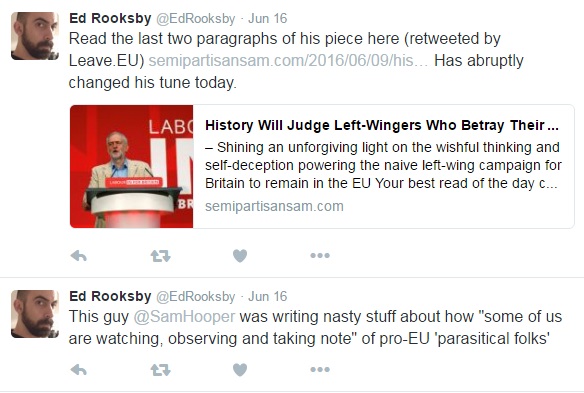
One of these snarling little Moral Policemen tried to come for me, too. A nasty little oik who had been following me for several weeks on Twitter decided to retweet one of my articles, quote from it very selectively and misleadingly to make it seem as though I had been encouraging violence. Anybody who knows me, or who reads this blog, knows this to be an impossibility. My Twitter accuser certainly knew the truth. But no matter – this “fortunate” murder had given him exactly the opportunity he wanted to slander Brexiteers and make us all collectively, vicariously guilty for the act of a madman.

And for about thirty seconds, this Twitter zealot achieved his goal – he aroused fear. Fear that the mob (and anyone who was on Twitter last night will testify as to the mob mentality present at the time) might pick up on this retweet and run with it. It could have happened. My accuser had over a thousand followers, enough to cause a ripple if seen by the right people. And he had just launched an article of mine, disingenuously and maliciously quoted, into the Twittersphere, where reputations can be ruined in 140 characters but no meaningful defence can be conjured within the same constraints.

I’m a part time blogger, with a day job. In my writing about free speech issues I have seen how peoples’ lives and reputations can be ruined by the mob, usually for no good reason at all – see Justine Sacco. And as I saw my accuser’s tweet sitting out there on the internet for all to see, I did wonder if the mob might come for me. And I thought about the potential consequences of being turned on by the mob. They didn’t – his tweet was lost in an ocean of other, more outrageous tweets, as it turned out. But for a good minute, it gave me pause and grounds for concern about my reputation, even my livelihood.

And this is exactly what certain debased elements of the media, commentariat and the general public wanted to happen. Not just to me, but to everyone who is guilty of the “crime” of believing that Britain would be better off outside the European Union, and who dares to say so in public. The mob wanted to point to the murder of Jo Cox and then at us, drawing a connection where patently none existed, and cow us into silence by accusing us of creating the “mood” which made the attack possible – despite nobody possessing the full facts of the case so soon after the attack.

This wasn’t just antisocial losers on Twitter. Their actions had the cover of “prestige” journalists with platforms in The Guardian and The Spectator. The intelligentsia – members of the supposedly civilised dinner party set – are complicit in trying to stoke up a mob and turn it on people who disagree with them about the forthcoming EU referendum.

Well, I’m sorry, but this blog will not be silenced. Nor will I be told by Twitter trolls or champagne socialists in the Guardian that I am in any way responsible for the toxic “mood” which has come to rest on this country. That mood is entirely the fault of the self-serving elites and their media cheerleaders, who have ignored or belittled those with differing opinions for so long that it has indeed provoked a rage – but a nonviolent one; not the rage which killed Jo Cox.

Nor will I be given moral lectures by people who, in the immediate hours following the tragedy, rushed to their keyboards to make political capital out of a young woman’s death. While Alex Massie and Polly Toynbee were rending their garments and wailing into Twitter about how awful we Brexiteers are, I had an evening of calm reflection and reading – after having lit candles for Jo Cox and her family, and for our country, at my local church. But sure, I’m the bad guy because I write passionately about the EU referendum and Brexit.

These snivelling, sanctimonious Moral Police will do anything to silence dissent. They will erect safe spaces or no platform people they dislike. They will make being “offensive” a criminal charge and imprison people. They will harass, bully and attempt to shame people on social media if they do not at all times say the “correct” thing or espouse the proper opinions. And now, when faced with the death of an MP, young woman and mother, they will wait not even a day before seeking to capitalise on the tragedy and use it to silence their dissenters.

This intimidation will not work on me, and I am determined that it will not work on this country. So bring on the slights, the attempted Twitter shamings and the rest of it, you faceless trolls and important members of the commentariat. Your despicable, tawdry tactics shall not succeed.


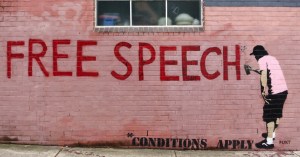
Free Speech - Conditions Apply - Graffiti

European Union - United Kingdom - Britain - Flags

Agree with this article? Violently disagree? Scroll down to leave a comment.

Follow Semi-Partisan Politics on TwitterFacebook and Medium.

This EU Referendum Is Of Existential Importance. So Why Is The Campaign Rhetoric So Unequal To The Occasion?

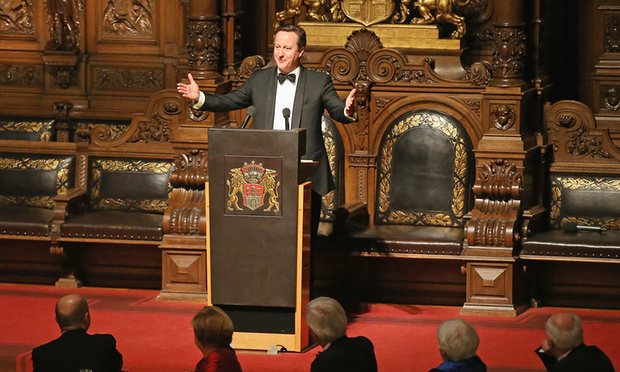
David Cameron - EU Referendum - European Union - Brexit - Speech - Rhetoric

The age of glib soundbites and dumbed-down, instantly shareable viral social media memes is perfectly suited to the Remain campaign’s strategy of sowing fear, uncertainty and doubt as widely as possible. But if we still lived in the age of great political speeches, the Brexiteers would be winning this EU referendum by a landslide

Because I’m an oddball, sometimes I like to spend time reading or listening to great political speeches from the past – particularly those from American politics.

Two of the more obvious such speeches – JFK’s “We Choose To Go To The Moon” and Theodore Roosevelt’s “Dare Mighty Things” – have been forcing themselves repeatedly to the forefront of my mind lately, though until tonight I was unsure why.

Then this evening I stumbled on this 2011 article by Peggy Noonan, Wall Street Journal columnist and former speechwriter for President Ronald Reagan. Though the article’s discussion of social media shows its age, it makes for an interesting read today:

One way to change minds about the current crisis is through information. We all know this, and we all know about the marvellous changes in technology that allow for the spreading of messages that are not necessarily popular with gatekeepers and establishments. But there’s something new happening in the realm of political communication that must be noted. Speeches are back. They have been rescued and restored as a political force by the Internet.

In the past quarter-century or so, the speech as a vehicle of sustained political argument was killed by television and radio. Rhetoric was reduced to the TV producer’s 10-second soundbite, the correspondent’s eight-second insert. The makers of speeches (even the ones capable of sustained argument) saw what was happening and promptly gave up. Why give your brain and soul to a serious, substantive statement when it will all be reduced to a snip of sound? They turned their speeches into soundbite after soundbite, applause line after applause line, and a great political tradition was traduced.

But the Internet is changing all that. It is restoring rhetoric as a force. When Gov. Mitch Daniels made his big speech – a serious, substantive one – two weeks ago, Drudge had the transcript and video up in a few hours. Gov. Chris Christie’s big speech was quickly on the net in its entirety. All the CPAC speeches were up. TED conference speeches are all over the net, as are people making speeches at town-hall meetings. I get links to full speeches every day in my inbox and you probably do too.

People in politics think it’s all Facebook and Twitter now, but it’s not. Not everything is fractured and in pieces, some things are becoming more whole. People hunger for serious, fleshed-out ideas about what is happening in our country. We all know it’s a pivotal time.

Look what happened a year ago to a Wisconsin businessman named Ron Johnson. He was thinking of running for the Senate against an incumbent, Democratic heavy-hitter Russ Feingold. He started making speeches talking about his conception of freedom. They were serious, sober, and not sound-bitey at all. A conservative radio host named Charlie Sykes got hold of a speech Mr. Johnson gave at a Lincoln Day dinner in Oshkosh. He liked it and read it aloud on his show for 20 minutes. A speech! The audience listened and loved it. A man called in and said, “Yes, yes, yes!” Another said, “I have to agree with everything that guy said.” Mr. Johnson decided to run because of that reaction, and in November he won. This week he said, “The reason I’m a U.S. senator is because Charlie Sykes did that.” But the reason Mr. Sykes did it is that Mr. Johnson made a serious speech.

A funny thing about politicians is that they’re all obsessed with “messaging” and “breaking through” and “getting people to listen.” They’re convinced that some special kind of cleverness is needed, that some magical communications formula exists and can be harnessed if only discovered. They should settle down, survey the technological field and get serious. They should give pertinent, truthful, sophisticated and sober-minded speeches. Everyone will listen. They’ll be all over the interwebs.

What a strange idea: the internet restoring rhetoric as an important part of our political debate. While this positive trend may have flared briefly in America for a time as Noonan indicates, we have certainly seen no comparable renaissance of political speechwriting here in Britain. Sure, Nigel Farage can deliver a withering put-down in the European Parliament and the SNP’s Mhairi Black can make sentimental lefties go all misty-eyed, but as a rule, for at least the past thirty years, political speeches in Britain have been pedestrian and utterly forgettable.

This is rather odd. Britain is currently engaged in an existential debate over whether we leave or remain in the European Union, the seriousness of this one issue dwarfing any mere general election, as the prime minister himself has opined. Surely the speeches made by our politicians should therefore reflect the gravity of the decision before us. But does our rhetoric meet the level and tone required of such a debate? Hardly.

As an ardent Brexiteer, one of the main problems I encounter when debating the issue with people – particularly online – is that abstract concepts such as democracy and self-determination are much harder to put into words or summarise with a glib but memorable phrase, while the fearmongering rhetoric of the Remain campaign naturally lends itself to viral sharing. It is much easier to (falsely and hysterically) declare that pensioners will be £32,000 worse off or that 100,000 marriages in London will fail because of Brexit than to explain the intangible importance of living in a properly free society – and almost inevitably the person attempting to argue the side of self-governance ends up sounding ponderous and vague in contrast with the swivel-eyed certainties uttered by Remainers.

And when eurosceptics try to dial up the rhetorical heat, too often it comes off badly. While UKIP-ish phrases like “we want our country back” are certainly memorable, they also have a distinctly nativist twang which alienates a good many people even as it fires up true believers. It is the same story with these key phrases, repeated over and over again by the official Vote Leave campaign, from their daily emails to the phrases of key surrogates:

We send £350 million a week to the EU – enough to build a new hospital every week

250,000 EU migrants a year come to the UK and five new countries are in the queue to join – including Albania, Serbia, and Turkey – it’s out of control and damages the NHS

It’s safer to take back control and spend our money on our priorities

This is apparently the best that the cream of Britain’s eurosceptic talent can do – an utterly unbelievable pledge about diverting 100% of our current EU contributions, including the rebate, to building new hospitals, and an unconnected pivot from the NHS to it being “safer” to spend money on our priorities. One can just about see what Vote Leave is trying to do, but it is an amateurish, almost childlike attempt at political messaging.

Meanwhile, here is the slicker effort from Britain Stronger in Europe:

Britain is stronger, safer and better off in Europe than we would be out on our own.

Join the campaign to remain in Europe – and let’s secure a stronger Britain that delivers opportunity now and for future generations

Never mind that it is based on a lie. A lie repeated identically and often enough can be incredibly effective, as it is with Vote Leave’s misrepresentation that leaving the political organisation known as the EU means leaving the continent of Europe. There is also more of a positive message here – where Vote Leave talk about Brexit being “safer”, suggesting danger and a defensive attitude, Stronger In talk about “deliver[ing] opportunity now and for future generations”, exuding positivity for today and for tomorrow as well.

Only when the message delivery window is longer than a quick email or a short social media meme does the Brexit side begin to redress the balance. Put aside their dubious and counterproductive tactics for a moment, but Vote Leave spokespeople like Michael Gove and Daniel Hannan (even Nigel Farage) can paint an extremely attractive picture of Britain outside the European Union in a speech, particularly when they aren’t butchering the idea of how to go about achieving their goal.

Even more pertinently, look at the Flexcit plan for leaving the European Union, which is increasingly being seized upon by key influencers who despair of Vote Leave’s amateurism and lack of a clear, risk-minimising Brexit plan. Flexcit itself is a 400 page document, while the summary pamphlet clocks in at a still substantial 40+ pages. At a recent TED-style talk in central London, Dr. Richard North (Flexcit’s primary author) took an hour to lay out the ideas and reasoning behind it. Though the Leave Alliance network of committed bloggers (full disclosure: I am one of them) do a sterling job of breaking down and simplifying the concepts so as to sell them more effectively to key influencers and the public, Flexcit will never be an easily-shared, one page meme on Facebook. Nor should it be. Serious and weighty issues require serious responses.

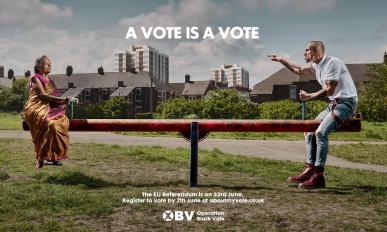
But increasingly it appears that the Leave camp will be punished at the ballot box for the fact that its core argument about democracy and self-determination cannot be boiled down to a single positive phrase or graphic in the same way as the establishment-backed Remain campaign can churn out endless content, together with slick but abhorrent messages from professional agencies:

Operation Black Vote - OBV - A vote is a vote - EU Referendum - European Union

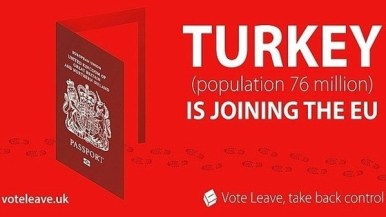
Of course Vote Leave are guilty of shameless fearmongering too, never more so than with this dreadful fearmongering ad about Turkey joining the EU:

Vote Leave - Turkey Joining EU

But whether it is raising fears of knuckle-dragging, Brexit supporting skinheads or the armies of Turkish immigrants who will apparently all decamp to Britain en masse at the first opportunity, both are seen as highly effective tools by their respective campaigns, and both rely on communicating a primitive, fear-based message not with rich rhetoric but with a short, sharp visual, the better to hold our limited attention spans.

In many ways, it is a tragedy for the Brexit cause that this opportunity to extricate ourselves from an unwanted supranational government of Europe has come about when the internet has taken off and the average person’s idea of profound political engagement is liking and sharing the latest snide Huffington Post article with their friends on Facebook. When the debate over whether or not Britain should join Europe raged in the late 1960s and early 70s, the art of making serious (if not quite great) speeches was still just about alive – Hugh Gaitskell’s famous address to the Labour Party conference warning against joining the EEC stands as one such example of memorable oratory, culminating in the famous “thousand years of history” quote:

We must be clear about this; it does mean, if this is the idea, the end of Britain as an independent European state. I make no apology for repeating it. It means the end of a thousand years of history. You may say: “Let it end.” But, my goodness, it is a decision that needs a little care and thought.

But when the history of Britain’s 2016 EU referendum comes to be written, what will we remember? Of all the particularly dramatic moments in the campaign to date, none of them have been speeches. Sure, sometimes the fact of a speech has been newsworthy, such as when an unexpected establishment figure has been wheeled out to say that Brexit will usher in the apocalypse, but the content – the oratory itself – has rarely raised hairs or stiffened spines.

In fact, proving Eleanor Roosevelt’s famous assertion that great minds discuss ideas, average minds discuss events and small minds discuss people, the media has determinedly reported almost exclusively on the latter two. Of course that is always the temptation for journalists, but our politicians have hardly given the media much to work with on the ideas front, even if they were minded to cover them.

This is a depressing state of affairs. This most important debate should be bringing out the best in our politicians and our media. We should be witnessing a straight-up fight between advocates of the democratic, independent nation state and those who ardently believe in the euro-federalist dream, adjudicated by a press corps  beholden to neither side and always willing to challenge baseless assertions rather than merely provide a “fair and balanced” platform for two partisan idiots to yell at each other for an equal amount of time.

In this debate, our elected leaders should be role models in setting the tone of the debate. Of course they are not, because our professional political class are very much part of the problem – the main reason why Brexit should only be the first step in a broader process of constitutional reform and democratic renewal in Britain.

But here we are, a country administered by followers rather than leaders, watched over by a childish and corrupted press who would rather giggle about the referendum’s personal dramas than fulfil their democratic function. And too little time before the referendum to hope that anything much will change.

All of which is bad for Brexiteers. After all, this is an age when scaremongering claims and assertions about the supposed cost of Brexit can be “quantified”, slapped on a smug little infographic and shared ten thousand times before breakfast, while the importance of self-determination an democracy – the ability of the people to influence the decisions which affect them and dismiss those with power – is almost impossible to boil down to a single eye-catching number, despite being the most precious benefit of all.

Without honest political leaders to establish a narrative and bigger picture – and without a robust media to report – it is effectively left to well-intentioned citizens to hold the grown-up debate amongst themselves, citizens who (for all their pluck) often struggle to cut through the noise of the vapid official campaign.

What’s most galling about all of this is the fact that there are many people alive today who have living memory of hearing great political rhetoric deployed in service of consequential issues – if not in Britain, at least in America:

The Only Thing We Have To Fear Is Fear Itself.

We Choose To Go To The Moon.

The Great Society.

I Have A Dream.

Ask Not What Your Country Can Do For You.

Robert Kennedy’s speech on the assassination of Martin Luther King.

Tear Down This Wall.

And even Britain has managed to offer worthy efforts, including:

We Shall Fight On The Beaches.

The Few.

The Winds Of Change.

The Lady’s Not For Turning.

The Grotesque Chaos Of A Labour Council.

What words uttered by our contemporary politicians during this EU referendum will be long remembered or quoted fifty years from now?

My prediction: not a damn one. But at least there will be a great treasure trove of vapid tweets and misleading infographics for historians to pick through as they wonder why Britain signed away her freedom.


European Union - United Kingdom - Britain - Flags

Top Image: Guardian

Support Semi-Partisan Politics with a one-time or recurring donation:

Agree with this article? Violently disagree? Scroll down to leave a comment.

Follow Semi-Partisan Politics on TwitterFacebook and Medium.

Introducing Camsurf Safespace – The Social Network For Safe Space Dwellers

Camsurf Safespace

Behold our victimhood culture’s latest creation: a new G-rated social media platform for those too delicate to use Facebook, Twitter, Snapchat, Instagram, WhatsApp, Tumblr, Chatroulette…

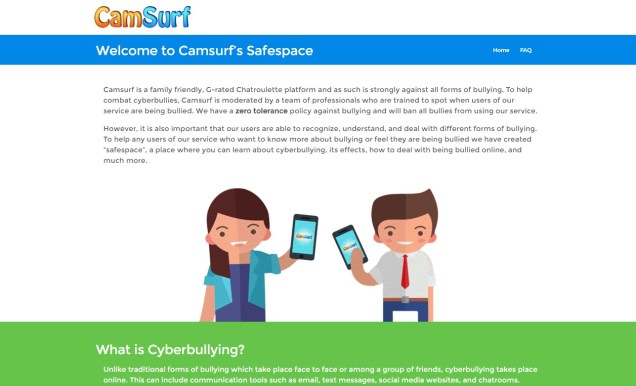
Well, here it is – the logical end result of a victimhood culture in the grip of an identity politics feeding frenzy. Camsurf present to you their new Safespace social network – a heavily monitored video chat site for people (including grown adults) for whom all of the existing online platforms are simply too unsafe to ever contemplate using.

Camsurf describes Safespace in these terms:

Camsurf is a family friendly, G-rated Chatroulette platform and as such is strongly against all forms of bullying. To help combat cyberbullies, Camsurf is moderated by a team of professionals who are trained to spot when users of our service are being bullied. We have a zero tolerance policy against bullying and will ban all bullies from using our service.

However, it is also important that our users are able to recognize, understand, and deal with different forms of bullying. To help any users of our service who want to know more about bullying or feel they are being bullied we have created “safespace”, a place where you can learn about cyberbullying, its effects, how to deal with being bullied online, and much more.

While the press release notes:

Camsurf is delighted to announce the launch of the world’s first ‘Safe Space’ social network, an innovation designed to put a stop to cyberbullying through education and active participation. The idea behind the campaign stems from the rise in bullying and harassment on the web, specifically on social networks such as Facebook, Snapchat and Twitter, a phenomenon which has grown rapidly in recent years to become more prevalent than bullying in the real world.

Users of Camsurf, and anyone else who feels overwhelmed by the rise in cyberbullying, can access the online arena and find a range of educational material and statistics, ask questions anonymously, and interact with other users in a safe and understanding environment. Participation in ‘Safe Space’ is solely focused on putting a stop to cyberbullying and all forms of online harassment. It is the first social network to openly place an emphasis on discussing and eliminating cyberbullying in a dedicated environment.

Camsurf Safespace is not merely a social network which takes a strong stance against cyberbullying. The whole ethos of the site sits in the shadow of cyberbullying – the “About” page says almost nothing about the technical or social features of the site, focusing exclusively on all of the measures in place to protect their oh-so-vulnerable users from ever being made to feel “uncomfortable” (a word that crops up frequently in the FAQs). And it freely uses the university campus-derived, identity politics terminology of safe space theory to promote itself.

But note the picture on the front page. These are not teens or tweens shown using the site, but fully grown adults – the woman is dressed in distinctly professional-looking attire, and the man is likewise dressed for work a shirt and tie. Safespace is not targeted specifically at schoolchildren (the group most likely to suffer from legitimate cyberbullying), but at people with jobs and mortgages and maybe even kids of their own – people who presumably shoulder all of the normal burdens of life, and yet believe themselves unable to participate in the same social networks as the rest of us for fear of being made to feel uncomfortable.

In fact, Safespace goes to great lengths to emphasise that adults are often the victims of “cyberbullying” too:

Q. Are teens the only people who get cyberbullied?

A. Not at all. Cyberbullying is a problem that affects both teens and adults. Although many adults would not like to admit it, cyberbullying is said to affect up to 40% of adults who use the internet. Cyberbullying transcends age or sex and anyone can be the victim of an online bully. In fact, many adults who are cyberbullied lash out by becoming bullies themselves. It is therefore extremely important to confront the problem by taking to someone rather than keeping it all locked up inside.

Yes, Safespace would have you believe that nearly every one in two adults are being persecuted online by nefarious cyberbullies right at this moment (of course, the term “bullying” has been defined downward to the extent that it includes any interaction which sees the victim come away with anything less than warm and fuzzy feelings of contentment).

And worse still, if these adult victims fail to take the correct protective actions and run to an authority figure (either a Safespace moderator or perhaps a trained counsellor) then they are at the risk of turning into a cyberbully too. Apparently being a cyberbully follows the same contagion principles as becoming a zombie.

Fortunately, Safespace has all manner of tools at its disposal to ensure that nothing remotely interesting or controversial ever takes place within its boundaries:

How Camsurf is Standing Up to Bullies

Our aim at Camsurf is to create a bully-free and family-friendly environment that is welcoming to all. As part of that mission we are taking a stand against cyberbullies by implementing various schemes to catch bullies and bar them from our service. We employ a team of moderators who monitor the chat platform for nudity, inappropriate behavior, and signs of bullying. All of our moderators undergo a course in understanding online bullying and how to spot the signs of someone who is being bullied. We are also implementing a series of informative articles and guides to help any victims of bullying and to educate our users to spot the signs of bullying. By taking these steps we will create the safest and friendliest Chatroulette platform online.

And they are very clear that when in doubt, users should err on the side of banality:

Q. Am I a cyberbully if I engage in an argument on Camsurf?

A. Not necessarily. It is important to distinguish the difference between talking to someone about a topic you disagree on and cyberbullying. On Camsurf you can meet thousands of strangers from around the world, all of whom have different opinions and views of the world. On some occasions you might find someone who disagrees with you about a certain topic. If you discuss this topic with them in a civilized manner where both of you can get your points across then it is not bullying. However, if you use insults and hurtful language while discussing issues then you may offend someone or hurt their feelings. This is the line between cyberbullying and talking about a topic you disagree on. The best way to avoid this is to stick to talking about topics you and the person you are chatting with are interested in. Remember, Camsurf is about having fun while meeting new people!

Cue lots of talk about the weather, and not quite so much about a certain American presidential candidate, then.

Note too the defining downwards of the concept of bullying, along the lines described by Jonathan Haidt and Nick Haslam in their recent excellent Guardian OpEd:

When research on bullying began in the 1970s, an act had to meet four criteria to count: it had to be an act of aggression directed by one or more children against another child; the act had to be intentional; it had to be part of a repeated pattern; and it had to occur in the context of a power imbalance. But over the following decades, the concept of bullying has expanded in two directions.

It has crept outward or “horizontally” to encompass new forms of bullying, such as among adults in the workplace or via social media. More problematic, though, is the creeping downward or “vertically”so that the bar has been lowered and more minor events now count as bullying. For example, the criteria of intentionality and repetition are often dropped. What matters most is the subjective perception of the victim. If a person believes that he or she has been made to suffer in any way, by a single action, the victim can call it bullying.

So this is what it has come to. Grown men and women forswearing online forums where they might potentially encounter a boisterous or rude opinion in favour of a “walled garden” where their every interaction is monitored by watchful moderators looking out for their “safety”. Everyday human interaction is now being presented as so fraught with peril that it is best not attempted at all without external supervision.

Fortunately, Safespace doesn’t have the feel of a platform that will be with us for very long, or challenge the major social networks for pre-eminence. But the mere fact of such a site’s launch is sufficiently alarming that we must take note.

Bear in mind that one of the key reasons why heavily moderated, anti free speech platforms are not challenging more aggressively for market share is because the big beasts – particularly Facebook – are choosing to respond to pressure to deal with cyberbullying in almost as draconian a way.

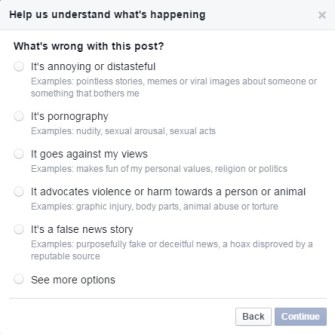
These are the options currently presented to users who want to report something on Facebook which they find to be offensive:

Facebook Report Post - Anti Free Speech

Note the third option – “It goes against my views” – which is now legitimate grounds to report someone else’s post as being offensive and deserving of removal from Facebook.

It can be tempting to make light of sites like Camsurf Safespace, regarding them as a sheltered playground for children, unrepresentative of the mainstream. But when the world’s pre-eminent social network treats its users in the exact same way, it is no laughing matter.

Cyberbullying is a real and concerning phenomenon where it occurs. But the idea of a fully grown, mentally capable adult being “bullied” is absurd, as are these incremental but damaging steps toward regulating and monitoring all of our online interactions to ensure that we are using the internet “safely”.


Safe Space Notice - 2

Agree with this article? Violently disagree? Scroll down to leave a comment.

Follow Semi-Partisan Politics on TwitterFacebook and Medium.