Now Even Peter Tatchell Is A “Racist”

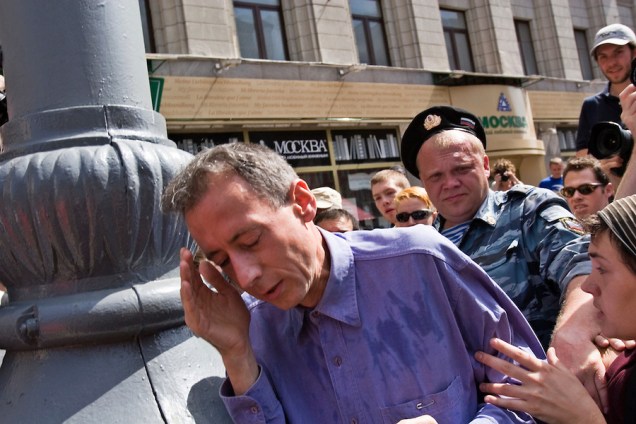
Moscow Gay Pride Parade Attacked

In the accusatory minds of the new PC Left, a lifetime spent fighting for LGBT and racial equality counts for nothing if one also supports the free speech rights of those who disagree

Ask anyone to write down their top twenty racists in Britain, and very few people would put Peter Tatchell anywhere on their list. After all, the man’s life has been dedicated to overcoming prejudice and fighting for racial, sexual and LGBT equality.

While others now wear their progressivism as a virtue-signalling badge of honour, something to be ostentatiously flaunted on social media, Tatchell has put his body in harms way to protest what he sees as real injustices taking place against persecuted minorities. And whether you agree with Tatchell on every single one of his causes or not, one can certainly admire the way that he has lived his public life by the credo “actions and words”.

Unless, that is, you happen to be a member of the activist student PC Left, part of that spoiled and coddled generation of today’s young people whose freedoms were won by the likes of Tatchell, and whose own meagre campaigns perch precariously on the far greater and more noble endeavours of those who came before them. They have now turned on Tatchell, accusing him – hilariously – of being both racist and “transphobic” in a blatant and supremely ungrateful move to destroy his reputation and credibility.

Tatchell himself responds in the Telegraph:

Free speech and enlightenment values are under attack in our universities. In the worthy name of defending the weak and marginalised, many student activists are now adopting the unworthy tactic of seeking to close down open debate. They want to censor people they disagree with. I am their latest victim.

This is not quite the Star Chamber, but it is the same intolerant mentality. Student leader Fran Cowling has denounced me as racist and transphobic, even though I’ve supported every anti-racist and pro-transgender campaign during my 49 years of human rights work.

Fran is the LGBT+ (lesbian, gay, bisexual, transgender) Officer of the National Union of Students (NUS). She refused to speak at an LGBT event at Canterbury Christ Church University tonight unless I was dropped from the line-up. This is a variation of the NUS “no-platform” policy; instead of blocking me from speaking, Fran is refusing to share a platform with me.

While the Guardian explains the context:

In the emails, sent to the organisers of a talk at Canterbury Christ Church University on Monday on the topic of “re-radicalising queers”, Cowling refuses an invitation to speak unless Tatchell, who has also been invited, does not attend. In the emails she cites Tatchell’s signing of an open letter in the Observer last year in support of free speech and against the growing trend of universities to “no-platform” people, such as Germaine Greer, for holding views with which they disagree.

Cowling claims the letter supports the incitement of violence against transgender people. She also made an allegation against him of racism or of using racist language. Tatchell told the Observer that the incident was yet another example of “a witch-hunting, accusatory atmosphere” symptomatic of a decline in “open debate on some university campuses”.

Because campaigning is no longer about securing freedoms and liberties for marginalised people. It is about not just holding the “correct” opinion on any given issue, but crucially also being seen to hold the correct opinion, and orchestrating various situations whereby one’s own bien pensant opinions can be shown off to greatest effect.

It is about making oneself look good by jumping on the slightest deviation from prevailing PC orthodoxy by someone else – often a friend and erstwhile ally – and seeking to destroy them with it, hysterically declaring it to be evidence of moral turpitude, even when the target is someone as respected in the field as Peter Tatchell.

Some on the PC Left, recognising that this particular smear by the NUS may stretch credibility too far, are trying to spin Tatchell’s naturally outraged reaction as yet more evidence of racism. In an eye-rollingly titled piece called “Problematic Proximities, Or why Critiques of Gay Imperialism Matter”, Sara Ahmed tries to argue:

I do want to question here how Mr Tatchell is responding to the critique.

[..] Critiques of racism are reduced and misheard as personal attacks, which is what blocks a hearing of the critique. In the end, the situation becomes re-coded as a question of individual reputation and good will: we lose the chance to attend to the politics of the original critique.

We need to reflect on what we are talking about when we are talking about racism. Racism in speech does not simply depend on the explicit articulation of ideas of racial superiority but often works given that such associations do not need to be made explicit. So for example politicians might use a qualifier ‘this is not a war against Islam’ and then use repeatedly terms like ‘Islamic terrorists’ which work to associate Islam with terror through the mere proximity of the words: the repetition of that proximity makes the association ‘essential’.

[..] It is my view that Mr Tatchell’s writings on Islam and multiculturalism repeat and reproduce many ‘problematic proximities’ between Islam and violence, and thus participate in the culture of Islamaphobia.

Ahmed is trying to advance a semi-cogent (though still wrong) argument here. She is effectively saying “Wait a minute! We may have called Peter Tatchell a racist, but it wasn’t a personal attack. Heavens, no. It was simply pointing out that some of the things that he says are problematic for us because we believe they help to reinforce negative stereotypes about religious minorities”.

This would at least have the makings of a cogent argument – that we all have good and bad within us, that we all have our own prejudices which we should seek to recognise and overcome, and that any of us might say something which might be construed as “racist”, but with no malice whatsoever.

But if this is what the NUS and Fran Cowling actually believe, why refuse to take the stage with Tatchell? If indeed their intention was not to launch a “personal attack”, why on earth refuse to admit all the good which Peter Tatchell has done for their causes, and why refuse to share a stage with him now?

The answer, of course, is that this was fully meant to be a personal attack. Vicious personal attacks conducted through social media and the press are the chief modus operandi for today’s youthful practitioners of Identity Politics, and if their self-advancement involves a.few instances of friendly fire – even the destruction of someone like Peter Tatchell – so be it.

Some people tell me that I am being too hard on the students involved; that they are well-intentioned young people simply trying to navigate difficult issues as best they can. Well I’m sorry, but I’m just not buying it. Obviously we are only talking about a minority of students here – the ones drawn to take an active role in student governance, social affairs and campus life. But these students are behaving in an utterly reprehensible way, completely without justification and to be opposed by lovers of liberty at all costs.

This is an attempted power grab, plain and simple. Just like it was at Mizzou, and Yale, and Oxford, and countless more universities every year. This is an attempted coup by an utterly coddled and spoiled generation of students who know almost nothing of hardship, deprivation or prejudice compared to their predecessors even just a few decades ago.

These tinpot student dictators arrive on campus at the age of eighteen to find most of the really hard battles already won for them – ironically, by genuinely brave radicals like Germaine Greer and Peter Tatchell. But these students must find some outlet for their youthful “idealism”, and so they latch on to the growing Politics of Identity, assimilating its intricacies and genuinely persuading themselves of its core message – that what matters is not the content of one’s character, but rather one’s arbitrary lived experience as a member of a defined and segregated subgroup.

And so rather than simply accepting that they have it rather good, even compared to their parents and grandparents, these student snowflakes go on the march. They find ever-smaller slights or “microaggressions” and protest them ever-more loudly and hysterically in an attempt to assert power over university administrations – many of which meekly submit without so much as putting up a fight.

Throw in the fact that their social hierarchy is based on a purist adherence to the Politics of Identity – with members gaining social currency for flaunting their own tolerant nature or identifying and persecuting anyone whose behaviour happens to violate one of the many invisible lines restricting our speech and behaviour – and you have a potent and deadly combination.

Viewed in this context, it is obvious that NUS LGBT officer Fran Cowling is attempting to gain a vast amount of social currency and standing from her peers by trying to take down Peter Tatchell, an A-lister in activist circles. By refusing to share a stage with him, Cowling is effectively declaring to the world that she is morally superior to Tatchell, he having failed the latest racism and transphobia tests. Thus, she can bank all of Tatchell’s personal accomplishments for herself, add the fact that unlike him she is not a “transphobe”, and Win the Game.

And that’s the rotten core of today’s student identity politics movement. A constant, bitchy, backbiting game of snakes and ladders, with one insufferable petty tyrant rising to the top of the Moral Virtue Pyramid only to be brought down by their jealous rivals, either for no reason at all, or for having unknowingly violated one of the many red lines that they themselves helped to draw across our political discourse.

I can’t say any better than Brendan O’Neill on this occasion, so I will give him the last word:

This Veruca Salt-style revolt against late 20th-century liberators, this sullen, thankless turn by radical young women, gay people and black people against those who devoted their lives to fighting for women, gay people and black people, reveals how poisonous the politics of identity has become.

Where late 20th-century warriors for civil rights basically argued for the right of people to be free and equal regardless of their gender, sexuality or race — that is, they wanted identity demoted — today’s identitarians prefer to obsess over people’s natural characteristics and sexual habits. They instinctively loathe King’s claim that character is more important than colour. They hate Greer’s insistence that women are as capable as men (and that a man can’t become a woman at the click of his fingers). They have disappeared so far up the fundament of identity politics that they bristle at any argument that smacks of universalism, which emphasises the sameness and the shared capacity for autonomy of all human beings.

They seem hellbent on reversing the social gains of the late 20th century, preferring to shove people back into the biological, racial boxes from which mankind spent so long trying to escape. It is they, not Tatchell, who are racialist (if not racist), and a threat to what most of us consider to be the decent civilisational value of treating people as people rather than as colours or genders.

Amen to that. And shame – yet more ignominious shame – on the NUS.
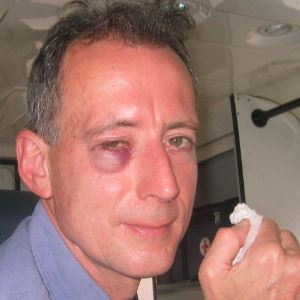
Peter Tatchell attacked

Agree with this article? Violently disagree? Scroll down to leave a comment.

Follow Semi-Partisan Politics on TwitterFacebook and Medium.

Why Does Britain No Longer Care Much About Refugees?

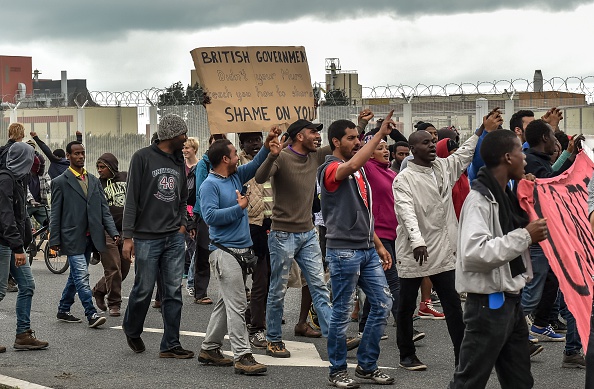
FRANCE-EUROPE-MIGRANTS-GANGS-BRITAIN-POLICE

Rather than reflexively blaming the hard-hearted British people for failing to welcome more refugees from Syria, our political elites should acknowledge their part in making a more generous humanitarian response a political impossibility

Dan Hodges has a reflective and rather wistful column in yesterday’s Telegraph, in which he says that people who pride themselves on their progressive values must accept that they have lost the argument, and that Britain will not make a more meaningful contribution in terms of accepting a number of Syrian asylum seekers more in line with many of our European neighbours.

Hodges writes:

There is no longer an argument to be had about whether or not significant numbers of refugees should be admitted to the UK. The pendulum of empathy – which swung briefly following thepublication of photos of little Alan Kurdi lying motionless on that Turkish beach – has swung back. The clashes at the Hungarian-Serbian border. The Paris attacks. Cologne. They are shaping public opinion now. And it will not be reshaped.

[..] There is no longer any point in expending energy on morally comforting tokenism. The argument about whether to accept 3,000 refugee children from Europe, or whether to accept them from camps within region, is as relevant to the crisis we – or more importantly, they – are facing as debating whether to accept 3,000 refugee children from Mars. According to the latest figures from the UNHCR, there are 4,597,436 registered Syrian refugees. 39 per cent of them are under the age of 11. A further 13 per cent are between the ages of 12 and 17. To continue to use the children of Syria in a proxy argument over our willingness to “do our bit” is not an exercise in compassion but an exercise in grotesque self-indulgence.

There is also no longer any point attempting to delude ourselves the solution to the Syrian refugee crisis can be found in Europe. Yes, we have the resources to provide sanctuary. But we do not have the political will to provide sanctuary. Actually, blaming the politicians on this one is a cop out. We do not have the public will to provide sanctuary.

Hodges is right that there is simply no longer any public will to take in poor, tired, huddled masses trying to escape from civil war and the particularly murderous theocracy of ISIS. And his notion of a “pendulum of empathy” is powerful and accurate way of describing what has happened to public opinion here.

But why is this the case? Why has the pendulum swung so hard away from generosity and toward selfishness? While Dan Hodges’ piece is eminently pragmatic in its acknowledgement of failure and suggestions for a feasible way forward, it fails to ask why we are where we are – why British hearts are so hardened to the idea of welcoming many thousands more refugees.

I would make a couple of suggestions:

1. The line between refugee and economic migrant has become almost impossibly blurred in our globalised age of jet travel and smartphones. People living in benighted parts of the world know better than ever just how good we have it in prosperous countries like Britain, and it is easier than ever before (though still perilous for some) for many to travel here – and ever more tempting compared to the life of hardship and drudgery facing them at home if they stay.

But where do you possibly draw the line between economic migrant and refugee? If being in a country engaged in civil war is sufficient qualification then all 22 million Syrian citizens would be entitled to refuge in Europe, and those of other countries too. But this would be quite unfeasible. Besides the impossibility of emptying a country of its every last non-combatant whenever hostilities break out, it ignores the vital agency that at lease some of these citizens must have in fighting for their own freedoms and liberties.

So if not all citizens, how do you choose among those who have risked their lives to reach safety, often with little or no paperwork or proof that they have a particular fear of persecution or harm to distinguish them from any other.

I simply don’t see a way that any such process can be anything other than arbitrary, endlessly bureaucratic and cruel. Add to this the fact that accepting people blindly on a first-come, first-served basis is untenable and creates serious potential national security issues, and the current paralysis is quite understandable, if no less frustrating.

2. Britain has accepted hundreds of thousands of new arrivals through legal immigration routes, particularly from some of the A10 countries which joined the European Union in 2004. And we did so while any talk about the potential impact that this relatively huge wave of immigration might have on community cohesion, housing or public services was instantly dismissed by scornful elites as xenophobic tub thumping at best, or outright racism at worse.

Prior to the rise of UKIP as a legitimate, non-extreme outlet for these concerns, nobody in the establishment was talking about this issue, and the ground was ceded to the likes of the extremist BNP. There was effectively a conspiracy of silence and intimidation against those who questioned the extent of immigration into Britain, with those in power doing nothing to respond meaningfully to public concerns partly because the political class were fortunate enough to belong to the group which disproportionately benefits from immigration and sees only its positive aspects, while other less fortunate people – often those without university degrees and less economic security – were far more likely to feel the negative consequences.

You don’t have to be an opponent of immigration to abhor the undemocratic way that these transformational changes were foisted on Britain by stealth, and without a thought of engaging with the people to consult their views. Indeed, this blog greatly favours immigration, but believes that the negative consequences are real, and can only be mitigated if the process of deciding immigration policy is open, transparent and democratic. But Britain’s immigration policy is none of these things, and one of the consequences of an aloof, disengaged and elitist policy is always going to be massive popular resentment and opposition to those same policies.

Therefore, if we are looking to cast blame or understand why Britain is behaving so apparently harshly in the face of this current humanitarian disaster, should we not first look to the historic cheerleaders of unlimited immigration – the pro EU fanatics, New Labour architects, those who held national power in the 2000s and the virtue-signalling middle class clerisy who flaunted their enlightened credentials by attacking anybody who expressed doubt about what was happening?

Now people will say that it is unfair to conflate immigration and asylum, as the two are quite separate things. And they would be correct – they are separate, and it is unfair. But both economic migration and taking in asylum seekers involve adding to the population and increasing the burden on services and infrastructure which cannot greatly expand to match demand in the short to medium term. And when you sorely abuse the public’s willingness to accommodate one influx of people, they are naturally far more guarded and hostile when it comes to the next, different influx.

If Britain did not have a completely open door to all regional immigration – unheard of in any major country outside Europe – could we have managed the influx of people wanting to work and settle here in a more planned and measured way, and with a modicum of democratic consent from the people? Arguably, yes.

And if Britain had not seen 1.4 million economic migrants settle here from EU accession countries within just the last fifteen years, would there be more willingness now to accept many more refugees in desperate need? Again, arguably, yes.

At least Dan Hodges and the progressive Left would now have had a much clearer grievance if Britain then still failed to admit a larger number of refugees. They would be able to accuse the government and the country of barely concealed racism, and of acting selfishly when nothing had been asked of them before, and do so with real justification.

But we do not live in that alternate reality. We live in the real world, where Dan Hodges and the europhiles got everything they wanted year after year, with Britain’s borders fully open and anyone who complained swiftly painted as a xenophobic Little Englander and banished from respectable society.

And so in 2016, unfortunately it is the desperate refugees – rather than the virtue-signalling progressive Left – who are now paying the price of this arrogant folly.


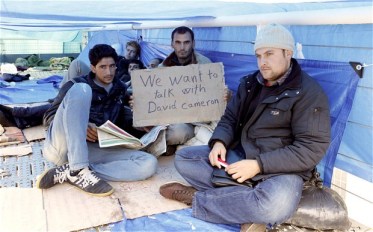
Refugees - Calais

Agree with this article? Violently disagree? Scroll down to leave a comment.

Follow Semi-Partisan Politics on TwitterFacebook and Medium.

The Daily Smackdown: Darcus Howe’s Authoritarian Attack on Oliver Letwin


Nobody can call themselves a civil liberties campaigner while suggesting that unpleasant speech should be criminalised

It was only a matter of time before the frenzied condemnation, Tory-bashing and virtue-signalling which met the publication of a controversial Thatcher-era memo from Oliver Letwin and Hartley Booth turned into suggestions that law enforcement should get involved.

Step forward “civil liberties” campaigner Darcus Howe, who – seemingly forgetting what civil liberties are – decided to weigh in against Letwin.

The Guardian reports:

Civil liberties campaigner Darcus Howe has condemned remarks about black communities made in the 1980s by the prime minister’s policy chief after the Tottenham and Handsworth riots, describing the comments as “bordering on criminality”.

Oliver Letwin was forced to issue a statement apologising for any offence caused when a confidential memo from 1985 was released by the National Archives in which he blamed unrest on “bad moral attitudes”.

In a confidential joint paper, Letwin, who is now MP for West Dorset, and inner cities adviser (and later a Conservative MP) Hartley Booth, tell the then-prime minister, Margaret Thatcher, that “lower-class unemployed white people had lived for years in appalling slums without a breakdown of public order on anything like the present scale”.

The men warn Thatcher that setting up a £10m communities programme to tackle inner-city problems would do little more than “subsidise Rastafarian arts and crafts workshops” and that any help would only end up in the “disco and drug trade”.

“If a black man had said something quite like that he’d have been called into Scotland Yard and and he might be charged with incitement to riot. It is bordering on criminality,” said Howe, who was a prominent figure in black rights campaigns in the period the document was written.

Let’s be clear: Oliver Letwin’s words, and the sentiment behind them, were reprehensible. And yes, they were far from an isolated case, just as elements within the Metropolitan Police were once institutionally, unabashedly racist.

For all the necessary good that the Conservative government did to turn Britain around in the 1980s, we should not deny that some decidedly unsavoury elements – as typified by the arrogant, cloistered high Toryism displayed by the youthful Letwin – also rose to power on Margaret thatcher’s coattails. And yes, this included some high-handedly ignorant and unreconstructed ideas about race, as the Oliver Letwin memo reveals. On that much, there should be no argument.

But to draw such fresh outrage from a decades-old incident as some are now doing – or to make impetuous calls for Letwin to resign or even face criminal charges, as Darcus Howe is openly hinting – would achieve nothing, and change nothing about the past.

Oliver Letwin may be guilty of having held some unpleasant and ignorant views on race back in the 1980s, but there is no suggestion that he has at any time practiced discrimination on the basis of race, committed acts of violence or even said anything which might be considered a “hate crime”, even by Britain’s low standards of evidential proof.

Besides which, what is the statute of limitations on having once expressed some nasty – but at the time commonly held – political or social ideas when serving in public office? Are people to be permanently disbarred from public life for ever having said or thought the “wrong” thing? And are we so pathetically naive that we expect those politicians who pass our stringent tests to be anything other than those who are smart enough not to get caught, or to commit their deepest and darkest thoughts to paper in the first place?

The Left have a dangerous tendency to weaponise race and social issues, focusing so much on dealing out instant political death to anyone who treads on one of their verbal land mines that they fail to actually deliver the “social justice” they so ostentatiously seek.

And the hysteria surrounding Oliver Letwin’s 30 year old memo is just another example of seizing any opportunity to bash the “Tory scum” (how much more lenient would people be had, say, John McDonnell uttered a similar sentiment back in the early 1980s?) while failing to do any serious policy making of their own. After all, how much easier is it to cry “racism!” than it is to stand before the electorate with your own newly minted policies designed to deliver true equality of opportunity for all Britons?

But worst of all is the predictable irony of a so-called civil liberties campaigner making dark threats about criminalising speech. Any civil liberties campaigner worth their salt knows that the battle for free speech is won or lost at the margins – that the battle will be fought not over pleasant small talk about the weather, but over rude or intemperate speech which may be very offensive to some very vocal people.

Oliver Letwin expressed some truly unpleasant thoughts in his recently unearthed memo, and Darcus Howe is free to criticise him for it as much as he pleases. But if Darcus Howe or anyone else want to include threatening musings about “criminality” or being hauled in by Scotland Yard in their howls of outrage, they should take off the white hat of virtue first – and stop pretending to care about civil liberties.


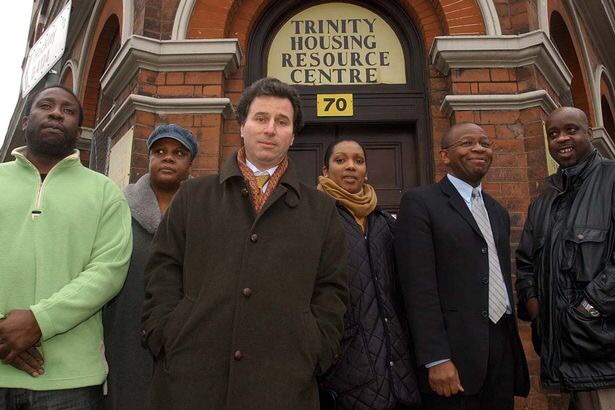
2438120a

Agree with this article? Violently disagree? Scroll down to leave a comment.

Follow Semi-Partisan Politics on TwitterFacebook and Medium.

The Daily Toast: Alex Massie Calls Out Britain’s Growing Illiberal Streak

Ban Donald Trump Petition

The pathetic petition to ban Donald Trump from entering Britain – for the high crime of being an idiot – reveals a festering illiberal sickness at the heart of our nation

Are we really that country? Are we really that petty, authoritarian, second rate destination that bans foreigners whom we accuse of endangering the “health and morals of the nation”?

Yes. Increasingly, regrettably, yes we are. Donald Trump will escape the travel ban which many on the virtue-signalling Left are desperate to impose by virtue of who he is, the fact that he has no plans to come here anyway, and the diplomatic impossibility of thus spurning a US presidential candidate, even an unlikely one. But others before him have not escaped Britain’s growing intolerance of intolerance.

Comedians such as Dieudonné M’bala M’bala have been banned from visiting Britain to perform their racist comedy routines. Bloggers like Pamela Geller have been banned from entering the UK because their pungent and unpleasant political views have been deemed to be “not conducive to the public good”.

So we are already that country, no matter whether or not Theresa May decides to put Donald Trump’s name on her little list. We are already that country which has lost so much faith in our British, Western and democratic values that we now see unpleasant or inflammatory speech as something which will harm our already-fragile society.

The wretched story even made it to Prime Minister’s Questions. The fevered ramblings of that reality TV star turned presidential candidate were actually raised by an MP in the House of Commons, and George Osborne (standing in for David Cameron) was asked to intervene to protect us from the Big Bad Man. Serious journalists debated whether or not a ban was appropriate, when they could have been writing about something, anything else.

There’s certainly nothing like a swaggering, ignorant Republican presidential candidate to bring out the angry, authoritarian cheerleader in Dan Hodges:

What we have just witnessed is not just another attention-seeking rant from a Republican hopeful who is trying to secure definition in a crowded primary field. What Trump has done is effectively call for a race war.

[..] One of the most popular TV shows in the US at the moment is an alternative history drama called The Man In The High Castle. It is set in a world in which the Allies lost the second world war, and America lives under a fascist dictatorship.

Donald Trump wants to be the man in the high castle. Ban him. Ban him now.

But this is far from an uncommon reaction. The Independent earnestly argued exactly the same point – that Donald Trump’s views were not simply factually incorrect and misguided views to be challenged and debated, but potentially “harmful” words of such power that their speaker must be forcibly kept at bay and prevented from corrupting the impressionable minds of the British public.

Fortunately, there are dissenters. This blog weighed in when the Donald Trump story first broke, making the case that the illiberal instincts of the outraged Left are just as harmful as the nonsense spouted by Trump.

And now Alex Massie has an excellent piece in CapX, taking square aim at the “fatheaded nincompoops” more interested in signalling their virtue and parading their ignorance of the free society than defeating the actual ideas espoused by Trump.

Massie writes, sarcastically:

If we ban something, you see, that something will disappear. Even better, by banning ugly speech we will be able to demonstrate our moral superiority. And, when push comes to shove, that’s what matters most. Smugness warms the soul like nothing else this winter and every place must be a “safe space”.

And so it is. Imprisoned by the dogmatic belief that all cultures and values are inherently equal, none superior to any other, all that some parts of the Left can now do is squeal with protest when anyone does anything to hurt someone else’s feelings.

Massie continues, making reference to the parallel “controversy” surrounding champion boxer Tyson Fury whose nomination for Sports Personality of the Year is causing hysteria because of his unreconstructed views on gender roles and sexuality:

Repeat after me: there is no right not to be offended. But if we must be outraged let us be more outraged by those who seek to stymy and prohibit speech than by those whose speech the censors would have us suppress.

I deplore Donald Trump and have little admiration for the cut of Tyson Fury’s jib but, damn it, I’ll defend their right to be objectionable – and even repellent – if the alternative is siding with those who instinctively react to disagreeable opinions by seeking to suppress them. These people pose a vastly greater threat to liberalism and public decency than the people they deplore themselves.

These arguments over Trump and Fury might seem trivial but they are minor manifestations of a much larger issue. Remember January? Remember “Charlie Hebdo”? Remember all the pious declarations of sympathy and support and solidarity? Remember how politicians discovered that free speech might actually be something worth defending? Remember “Je suis Charlie”?

[..] Trump and Fury do not, in themselves, matter very much. But the reaction to their speech does matter. It is always depressing to discover that there are vastly fewer liberals in this country than you might wish there to be. But that discovery should no longer surprise us.

One can hope that the growing number of signatories to the Ban Donald Trump petition are drawn entirely from the ranks of virtue-signalling left-wing keyboard warriors, and are thus entirely unrepresentative of the British people as a whole.

One can tenuously hope that some of those who say that they want to ban Donald Trump are simply registering their strong disagreement with his latest inflammatory comments, and that they don’t really mean it when they call for a person to be banned from entering this country on account of their political views

One can even hope that the angry petitioners are outnumbered by a greater silent majority of Britons who don’t see Britain’s current, shameful track record of banning controversial people from entering our country as a marvellous precedent which should be extended to Donald Trump, simply because he’s an exceedingly offensive ass.

One can hope.

But I’m not sure any more. Perhaps it’s entirely a function of following the daily news cycle too closely and attaching too much weight to the petty storms and crusades of social media. Perhaps Britain isn’t really becoming a more sanctimoniously self-satisfied and intolerant place, populated by beady-eyed, brittle-egoed adult babies whose first reaction to encountering dissenting or unpleasant opinions is to screech indignantly for the authorities to have them banned.

Perhaps.

But it’s hard to feel much hope after reading much of the Donald Trump coverage in Britain over the past couple of days.

Donald Trump Hat - Make America Great Again

From next week, I’ll be in Texas and Ireland to celebrate Christmas and the New Year respectively. Blog updates will continue, but at a reduced frequency until normal service resumes in January.

Many thanks to everyone for reading, sharing, commenting, debating and contributing.

Agree with this article? Violently disagree? Scroll down to leave a comment.

Follow Semi-Partisan Politics on TwitterFacebook and Medium.

The Left’s Donald Trump Syndrome Is Worse Than The Man Himself

Donald Trump - Muslims - Islamophobia

Donald Trump’s derisive comments about London and his proposal to ban all Muslims from entering the United States are idiotic and hugely illiberal. But the self-righteous backlash from parts of the Left is just as bad

American politicians – especially wannabe presidential candidates – insult London at their peril.

Mitt Romney found that out the hard way back in 2012, after his off-the-cuff comments about the London Olympic Games preparations earned the ire of the British public and a personal rebuke from David Cameron.

But current Republican presidential candidate (and, depressingly, frontrunner) Donald Trump managed to make Mitt Romney’s gaffe-prone diplomacy look like a veritable charm offensive with a two-pronged effort to capture the news cycle which saw Trump first suggest that the US implement a complete ban on Muslims entering the country, and then insult America’s closest ally by suggesting that whole swathes of London are so full of Islamist extremists that the police do not enter them for fear of their lives.

From the New York Times:

Donald J. Trump called on Monday for the United States to bar all Muslims from entering the country until the nation’s leaders can “figure out what is going on” after the terrorist attacks in San Bernardino, Calif., an extraordinary escalation of rhetoric aimed at voters’ fears about members of the Islamic faith.

A prohibition of Muslims – an unprecedented proposal by a leading American presidential candidate, and an idea more typically associated with hate groups – reflects a progression of mistrust that is rooted in ideology as much as politics.

Mr. Trump, who in September declared “I love the Muslims,” turned sharply against them after the Paris terrorist attacks, calling for a database to track Muslims in America and repeating discredited rumors that thousands of Muslims celebrated in New Jersey on 9/11. His poll numbers rose largely as a result, until a setback in Iowa on Monday morning. Hours later Mr. Trump called for the ban, fitting his pattern of making stunning comments when his lead in the Republican presidential field appears in jeopardy.

And the Guardian:

In a bid to justify his controversial comments that Muslims should be barred from entering the US, Trump had said parts of London and Paris were so “radicalised” – seemingly a reference to Islamist extremism being rife – that police officers were scared.

“Paris is no longer the safe city it was. They have sections in Paris that are radicalised, where the police refuse to go there. They’re petrified. The police refuse to go in there,” he told MSNBC, refusing to name specific neighbourhoods in the city.

He added: “We have places in London and other places that are so radicalised that the police are afraid for their own lives. We have to be very smart and very vigilant.”

It really isn’t necessary to counter either Donald Trump’s back-of-a-napkin immigration policy, his supremely un-American idea for a religious test in order to enter the United States or his uninformed comments about the city which some years ago overtook New York and Paris as the world capital for finance and tourism respectively. We’ll take it as a given that every thinking person can recognise these comments as the unfiltered bilge that they are.

Of far more concern are the growing hordes of MPs, commentators and members of the public calling for Donald Trump to be banned from ever entering the UK on the grounds of “hate speech”.

The inevitable online petition is already circulating and picking up names, reports the Huffington Post:

An online petition calls on U.K. Home Secretary Theresa May to bar the Republican presidential frontrunner from entering the country for allegedly violating the nation’s hate-speech laws. 

If it receives 100,000 signatures, the petition could be taken up for debate in the House of Commons, according to The Independent. 

The petition launched by Scottish resident and longtime Trump critic Suzanne Kelly blasts Trump for “unrepentant hate speech and unacceptable behavior” that “foments racial, religious and nationalistic intolerance which should not be welcome in the U.K.”

While Sunder Katwala sets out the illiberal case over at British Future:

It is important that the UK Government makes very clear that this extreme view is rejected and repudiated in the strongest possible terms.

The UK Home Office has set out clear guidelines which have led to the exclusion of preachers of hate from the UK if their presence here would not be conducive to the public good. Theresa May has excluded extreme Islamists on these grounds, and also kept out those who have fanned extreme anti-Muslim prejudice, such as the bloggers Pamela Geller and Robert Spencer. Trump’s statements are more extreme than theirs.

Unless and until Trump were to retract these highly prejudiced comments, there is a good case for making clear that he would be refused entry to the UK by the Home Secretary.

No. It is only “important” that the UK government does anything at all about this wretched circus act if you take the view that it is the proper role of government to be a watchful, overprotective parent who oversees everything that we do, say or hear, supposedly for our own good.

It’s only “important” if you take such a dim view of the intelligence of the British people that you believe – like a Victorian prude – that the health and morals of the nation are somehow at stake, and that general public might be inspired to commit racist or Islamophobic deeds either at the mere sound of Trump’s words or at the sight of his ridiculous hairdo.

Such a view is as nonsensical as it is insulting. Why on earth should the UK government care what a reality TV star turned presidential candidate says, and why can’t the British people be trusted to hear what he has to say and judge the merits (or the idiocy) for themselves? Besides, either Trump’s candidacy remains a complete joke, in which case illiberal UK government censorship would be a massive overreaction, or he is a viable contender – in which case the UK needs to remain neutral while our closest ally chooses their next leader.

Donald Trump didn’t cover himself in any glory with his latest comments on Islam and London. But who expected anything more of him? For all his natural gift as a TV personality, Trump is a blowhard, anti-intellectual populist of the worst sort – a man who is fundamentally incurious but convinced that he has the right answer for everything (usually involving “winning” a trade war with China).

And to be sure, Trump’s latest remarks disqualify him as a serious candidate for the presidency, if the ten previous outrage-baiting comments had not already done so. In many ways, this is Trump’s “choosing Sarah Palin” moment – the action which finally doomed his candidacy, much like John McCain’s desperate and opportunistic pick for a vice presidential candidate back in 2008.

But the Left supposedly hold themselves to a higher standard. And yet in response to Trump’s inflammatory words we have seen such a parade of ostentatious outrage and cheap virtue-signalling that one could almost be forgiven for forgetting that the Left are in no small part responsible for the rise of Trump in the first place, as Douglas Murray devastatingly explains in The Spectator:

When the political left refuses to identify where Islamic terrorism comes from, what drives it or what it can even be called, it leaves the ground wholly open for anyone else to do or say anything they want.  Far from being blunt tools or broad brushstrokes, referring to ‘Islamic extremism’ or ‘Islamism’ makes an obvious and conscious effort to put down a delineating line between non-extreme Muslims and the extremists from their faith.  Yet many Muslim organisations, among others, reject this.

[..] But what people seem slow to realise is that suppressing legitimate concerns and decent discussion inevitably leads to people addressing the same things indecently.  We can thank the American left for the creation of Donald Trump and we can thank them for his comments last night.  For years the left made the cost of entering this discussion too high, so too few people were left willing to discuss the finer points of immigration, asylum or counter-terrorism policy and eventually the only release valve for peoples’ legitimate concerns is someone saying – wrongly in my view – ‘keep them all out.’

Yes, of course Donald Trump’s comments are reprehensible. But the answer is not to parade our outrage on social media, as though engaging in a competition to be more publicly offended by Trump’s words is a meaningful substitute for real activism. And nor is the answer to ban Donald Trump from coming to these shores, thus denying Boris Johnson and thousands of eager Londoners the opportunity to prove him wrong about our city – and Trump himself from receiving this much needed education.

Outrage on Twitter is nothing more than empty virtue-signalling, whilst indignant calls for Trump to be banned from entering the UK are every bit as illiberal as Trump’s own proposal to set a religious test for entry into the United States.

Donald Trump’s opponents believe that they are better than the business mogul, reality TV star and presidential candidate. If so – if they are all simply better, more enlightened people, a belief they make little effort to hide – they have a funny way of showing it.

Donald Trump - Make America Great Again

Agree with this article? Violently disagree? Scroll down to leave a comment.

Follow Semi-Partisan Politics on TwitterFacebook and Medium.