Britain’s Surveillance State Expands, Unnoticed

Yesterday, David Cameron told the House of Commons Select Committee on National Security Strategy that he accepted that he and his government had thus far failed to make the case for the extraordinarily invasive government surveillance practices which have been secretly going on beyond the view of the public and our elected MPs, and that he and his ministers needed to do a better job selling the benefits of an intrusive, omniscient government to the British public.
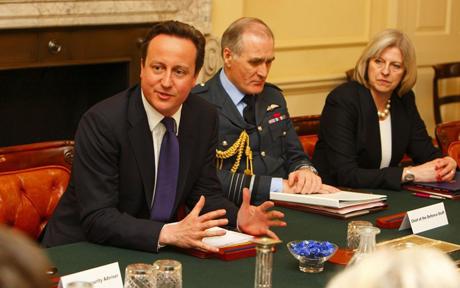
So busy protecting us, he forgot to tell us precisely what he was doing in our name.
So busy protecting us that he forgot to mention precisely what he was doing in the name of our security.

The Guardian reported at the time:

Discussing the communications legislation, Cameron said: “Over time we are going to have to modernise the legislative framework and practice when it comes to dealing with communications data. It is a politically contentious topic. I am not sure we are going to make progress on it in the coming months in terms of legislation, but there may be things short of legislation that we could do.

“I do think politicians, police chiefs, the intelligence services have got a role in explaining what this is all about. Snowden inevitably raises questions about ‘who has access to my data and why’.

“But I am absolutely convinced that proper rules for communication data collection are essential. I do not think we have got across to people yet the absolute basis of this.

“In most of the serious crimes, such as child abduction, comms data – who called who when and where was the phone at the time, not the content of the call – the comms data is absolutely vital.”

It may well be the case that the majority of the most serious crimes are indeed solved by the analysis of telephony metadata by law enforcement agencies. But David Cameron is making an entirely separate argument here. No one is proposing that the police and other law enforcement agencies should be denied access to telephone and other digital records (which are already maintained by the telecoms companies for the purposes of billing) when investigating these crimes, because in these scenarios there will almost always be a suspect in custody or at large who has created reasonable suspicion and is then the target of the search.

What GCHQ and the NSA have been doing, on the other hand, is nothing to do with this standard law enforcement practice of searching the possessions and digital footprints of an active suspect. Rather, they have been collecting reams of metadata (and more) on people who are under no suspicion of doing anything at all, in secret and without permission, to dip in and out of at their leisure. By equating these two entirely different practices, Cameron is trying to make it sound as though people who value and speak out in defence of civil liberties are somehow extremists or absolutists who want to deny basic crimefighting tools to the police. This is clearly not so.

The false equivalence is made fully apparent in this next quote from Cameron:

He continued: “I love watching crime drama on the television, as I should probably stop telling people. There is hardly a crime drama that is not solved without using the data of a mobile communications device. If we don’t modernise the practice and the law over time we will have the communications data to solve these horrible crimes on a shrinking proportion of the total use of the devices.

The Prime Minister is basically saying that because telecoms companies and devices themselves only hold the most recent usage data, it is only through exercising powers of unlimited and total surveillance that the government can maintain a complete picture of a person’s communications, for use should they ever happen to become a suspect in a crime.

Note also that we are no longer even talking about terrorism, but just “horrible crimes”, among which the Prime Minister includes child abduction and a mysterious category of offence called “comms data”. It was bad enough when a government minister could mumble something inane involving the word “terrorism” to justify gaining complete access to a person’s communications and digital life, but through a couple of seemingly-innocuous turns of phrase it seems that David Cameron now wants to broaden the use of pre-emptive digital searches to stop any and all illegal activity. And since the government has no idea who may or may not be harbouring whims of child abduction or committing a ghastly act of “comms data”, the logical inference is that he believes that the security services are perfectly entitled to collect and monitor all of our telecommunications metadata now and forevermore, on the offchance that we do decide to commit one of these crimes.

Park your outrage for a moment, because the most incredible thing of all is not that all of this has apparently been occurring with regularity – that is, collection and use of the telephony metadata of British citizens, not just for counterterrorism and national security purposes but, in Cameron’s own words, also ostensibly to prevent child abduction and any number of other nominated crimes – but that in examining the actions and conduct of his government and himself, the only thing he can find to beat himself up about is the fact that he did not do a sufficiently vigorous job selling this flagrant intrusion of government into personal privacy to the British public.

Where is the oversight? Where is the outrage?

On Booty Calls and Morning Croissants, Ctd. 2

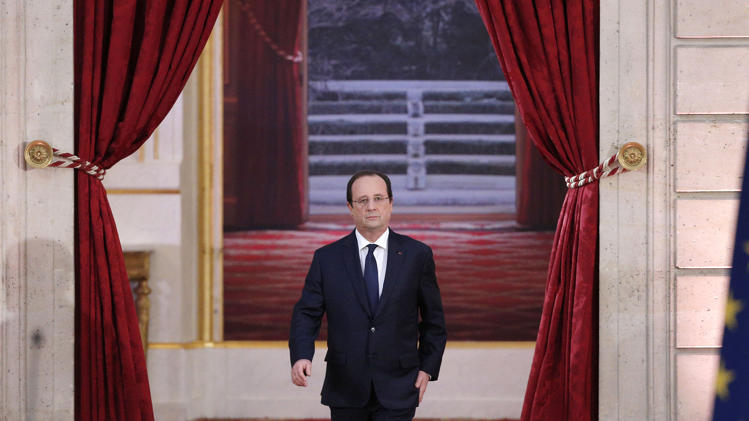
Former French president Nicolas Sarkozy is now weighing in on the ongoing scandal of the presidential booty calls and morning croissants, claiming that President Hollande has made himself and the French presidency “ridiculous”.

The Telegraph reports the following quote attributed to Sarkozy by French investigative journal Le Canard:

“While everyone has the right to a private life, when one is a public figure and president, one must be careful to avoid being ridiculous,” he is quoted as scoffing.

“Well, that photo of Hollande coming out of his mistress’ place with a motorbike helmet makes Hollande look totally ridiculous. He is the ridiculous president.”

The Daily Mail gives an even less flattering report of Sarkozy’s views:

Former French president Nicolas Sarkozy views his successor Francois Hollande as a ‘ridiculous little fat man who dyes his hair’, it emerged today.

The vicious attack is reported by l’Express, the highly respected Paris news magazine whose editor is a close friend of Mr Sarkozy’s third wife, Carla Bruni.

As I see it, the bottom line is this – in three weeks, the French president has to fly to Washington, D.C. to represent his country abroad and maintain bilateral ties with a close ally. And all anyone will care about is whether Hollande might be found late at night zipping around capitol hill on the back of a scooter, looking for ladies. Even if there are non-scandal-related questions at the joint press conference, the only soundbites that will be reported will relate to the scandal back home in France. Hollande is supposed to make his country look good abroad, strengthen bilateral ties and promote France’s interests. Barring a miracle and a swift resolution to this tawdry affair, he won’t be doing that for some time to come.

The scandal is also now causing disquiet and unrest at home, as Buzzfeed reports that a man was arrested for dumping several tonnes of horse manure in front of the Palais Bourbon in protest at Hollande and the French political class in general:

Image from buzzfeed.com

And so this isn’t just an issue of invasion of privacy, or an educational tale highlighting the different attitudes toward privacy between the French and Anglo-American cultures. This is about basic competence, and the ability of a senior politician and statesman to effectively do their job. Actions taken in ones private life can impact this ability to effectively perform the job, and while the utmost respect and tact should rightly be shown to the president as he works through any problems in his personal life (as many have already argued), the most searching and uncompromising oversight should be applied to his performance in the job.

Francois Hollande has, through his own actions, rendered himself incompetent and, to some degree, incapacitated – politically, at least. This incapacity may be temporary or it may be irreversible, but either way it is self-inflicted and profound. It is down to the French people to determine how long they are willing to tolerate a leader for their failings, not in terms of their personal life but in terms of their ability to do the job.

On Booty Calls and Morning Croissants, Ctd.

The scandal continues, and embattled French President Francois Hollande’s annual new year’s press conference did absolutely nothing to bring any closure to the saga of the early morning croissant deliveries. Hollande did not even deign to acknowledge the disrepute that he is bringing on his nation during the text of his prepared remarks, and when asked about it during open questions he shot the line of questioning down.

So, the economy...
So, the economy…

The Guardian summarises the day’s happenings as well as anyone:

Asked in an exceedingly roundabout way whether Trierweiler was still the first lady, Hollande made clear his view that matters pertaining to his private life should be resolved in private, and said he would be taking no further questions on the subject (although he did promise to sort out his situation before his visit to Washington), and that was pretty much that.

There were one or two mild-mannered attempts to come at the question sideways, by asking about changes to France’s strict privacy laws, for example, and a brave bid by the Associated Press to come at it head on (“Does the president’s image matter?”). All received the same curt treatment.

The nature of the press conference revealed a couple of things to me – firstly, the huge deference shown by the local French press to their political leaders in any matters relating to personal behaviour and actions deemed to belong in the never-well-defined “private sphere”. Several commentators have already picked up on the fact that David Cameron or Barack Obama, embroiled in a similar scandal, could never have walked away from a set-piece press conference so unscathed. But what also shocked me was the unwillingness or inability of the foreign press, less beholden to the French political establishment for future favours and a good ongoing working relationship, to press home the lines of questioning. They had little to lose, but almost without exception they failed to follow up after Hollande declared the subject off-limits.

Still, if the French are content with their current arrangement whereby their politicians are free to engage in any manner of behaviour provided that it does not effect their performance in the day job, I suppose that this must be accepted, and the curiosity/outrage felt by many of us foreigners set aside. It is still my gut feeling that the supposed outrage of the French people at the invasion of Hollande’s privacy is partly a view expressed on their behalf by the elites who harbour skeletons of their own, but the polls suggesting that French attitudes toward Hollande remain unchanged are fairly conclusive.

I am glad to see that various media sources have finally started asking the question that I raised on this blog the same day that the story broke – namely, the implications for President Hollande’s security (and, by extension, the national security of the French republic) given the fact that he was taking off from the presidential palace incognito on the back of a scooter, unattended by any bodyguards during the night. As I said at the time:

Skulking around the capital city in the dark with limited protection, exposing oneself (and the  secure, uninterupted governance of one’s nation) to any risk of kidnapping, physical harm, blackmailing or worse in the pursuit of a booty call, is probably not behaviour that voters would wish to see in a serving head of state. Transgressions which take place before taking office, honestly explained, atoned for and forgiven by the electorate, are one thing. Actively committing further such acts whilst in office is another matter entirely.

Three days later and the Telegraph picks up on this same concern, which if we are to have no expectations for how a head of state conducts him or herself in their private life is the only real area left for criticism.

Le Monde reported Monday that Mr Hollande had visited the apartment on the Rue du Cirque with two trusted police officers in tow and with another team providing extra security, about ten times since last autumn.

But Mr Valiela said security was so lax that the president’s bodyguards failed to spot the paparazzi who had been spying on the apartment and taking pictures of the president arriving and leaving on two occasions just before and after the start of the new year.

The security detail also apparently failed to inquire about who the flat belonged to.

Yikes. This is pretty much the worst case scenario that I had considered – the lean security team being unaware of paparazzi in the vicinity of the president, let alone any more serious threats. My point, I suppose, is that in accepting the office of president and the powers and responsibilities vested in that office, a person has a responsibility to refrain from endangering the continued exercise of those powers. I’m not suggesting for a second that the French president should follow the lead of the United States and travel around in the excessive pomp of an Obama motorcade, not for a second. But being the leader of your country and sneaking off virtually unprotected to consummate a secret relationship seems to be an either/or proposition. The two just don’t sit very well together, even leaving questions of dignity and decorum entirely aside.

The next chapter in the pointedly unquenched rumour mill is that Hollande’s alleged mistress may be pregnant, thus continuing another time-honoured French presidential tradition. The French president may come to regret his failure to tackle the stories swirling about his personal life head-on when he had the world’s full attention.

American Businessman and Leading Blogger Shown On Chinese State Television in Mao-Like Confession

Jonathan Turley writes an excellent expose and analysis of the terrible forced confession and public shaming of Charles Xue, an American businessman and influential blogger. These public shaming rituals are so difficult to watch, not only because of the tremendous pity one feels for the person involved, but because it makes ones blood boil to think of the abuse of state power taking place. Tea Partiers and others who see tyranny and despotism behind every move that President Obama makes would do well to look at this case and remind themselves what true tyranny and absence of the rule of law looks like. If our occasional polemics on blogs, radio and television were directed against the Chinese leadership rather than the American or British political class, many of us would also be sitting in a prison cell. Though it may not help Xue at all, we can at least take some small measure of comfort from the fact that China’s rising middle class, with their ever greater accustomisation to a high standard of living and their increasing exposure to other cultures, will not tolerate the government’s paranoid meddling in their lives indefinitely.

jonathanturley's avatarJONATHAN TURLEY

Charles Xue appears to confess 'involvement in prostitution'130px-Mao_Zedong_portraitChina appears to be returning to the Cultural Revolution with public confessions of dissidents as a warning to all those who would challenge the ruling party. Chinese viewers were exposed to a truly sad and transparent confession of American businessman and leading Chinese blogger, Charles Xue. The Chinese recognize the Internet as the greatest threat to the totalitarian regime. Xue was therefore rolled out to degrade himself before the Chinese people — begging forgiveness for forgetting his place in objecting to such things as contaminated water. He admits to feeling like the “emperor of the Internet” and apologizes for spreading rumors against the ruling party leaders.

View original post 259 more words

On American Exceptionalism

A word of advice for all of the American pundits and commentators who puffed up their chests in wounded outrage when the president of Russia dared to suggest in a New York Times op-ed that it was dangerous for a country or a people to consider themselves exceptional: look at the image below.

Not very encouraging.

There are really only two possible ways to explain the fact that the US cover of Time Magazine diverged from all of the global editions on this occasion. The first is that the publishers of Time believe their American readership to be so shallow, insular or dumb that a story about important geopolitical developments would deter them from reading the magazine, and that featuring a story about college sports would be less intimidating and off-putting. And the second possibility is that the Bad Man, Vladimir Putin, said some nasty things about America a few days ago and hurt our feelings, so now we have to pretend that he doesn’t exist so that we can get back to our happy place as quickly as possible.

Neither scenario is really screaming “exceptional” at me.

This isn’t a post to denigrate America – clearly, any regular reader of this blog will soon sense my deep admiration of the United States and the belief that it remains, in some very important ways, exceptional in the world. And neither do I think it necessary to list (again) the many flaws of Russia, as they are manifold and frequently in the news, as a counterweight to what I have written here. Most people, given the choice of where to live, would choose the United States over Russia; it doesn’t need to be shouted from the mountaintops.

But I will say this to those “patriotic” Americans who feel slighted when every visiting foreign head of state doesn’t issue a statement declaring America to be superior to their own country, and who get upset when President Obama doesn’t take time out to lecture other nations about how the United States is the role model to be emulated in all matters (because we all know that would be such a successful diplomatic stance):

You sound like a spoiled, coddled toddler, always needing reassurance that you are special and perfect. Frankly, it must be quite embarrassing for your less insecure compatriots to be associated with you. Instead of stomping around the world, hammering out angry op-eds about how the USA is A-OK and super, super exceptional, how about you go out and actually do something exceptional to contribute to that exceptionalism? And if you can’t do that, how about just sitting at home and enjoying the exceptionalism in silence without bothering anyone else? Actions speak louder than words.

Ronald Reagan used the term “a shining city on a hill” to describe his aspiration for America, a really quite moving and wonderful phrase. It evokes a beacon of light, guiding people to America’s example through her very existence and perseverance; her deeds and not just her words.

By contrast, today’s neo-conservatives and others who wrap themselves in the cloak of exaggerated “patriotism” resemble not so much a shining light in the distance, leading others to prosperity, but rather a shrill, incessant car alarm, parked outside the house of every foreign nation, its loud, unceasing warble continually scolding them for not living up to America’s own ideals.

I will let comedian Lewis Black have the last word on this subject:


Are we clear, neo-cons? Good.