A Crisis Of Identity: When Global Elites Forget How To Be Patriotic

global-elite

The global, liberal elite are increasingly transcending any lingering commitment to patriotism and national identity, setting them on a collision course with the small-c conservative majority

Michael Lind has an unmissable essay in the National Review this week, entitled “The Open-Borders ‘Liberaltarianism’ of the New Urban Elite“, which manages to explain so much about the rise of Donald Trump and the growing inability of political elites in America and Britain to speak to whole swathes of the country they supposedly control.

The crux of Lind’s argument seems to be that the educated, liberal (to use American parlance) inhabitants of the large cities have increasingly taken on what were always fringe libertarian ideas about open borders and the irrelevance or undesirability of the nation state, leading them to pursue policies and espouse values which alienate the more suburban and rural population.

Key quote:

To date, the public conversation on both sides of the Atlantic has been dominated almost entirely by the elite inhabitants of Densitaria, interrupted only by occasional populist revolts such as the Trump phenomenon or the Brexit vote. In a relatively short period of time, a new elite ideology has emerged that contrasts the dynamic, multicultural, libertarian city-state with the allegedly anachronistic and immoral nation-state. This ascendant worldview unites the open-borders economics and cosmopolitan, utilitarian morality of old-fashioned libertarianism with an idealization of the largest cities and their denizens.

In the 1970s and 1980s, libertarians made all of the major arguments heard from globalists since the 1990s: Favoring citizens over foreign nationals is the equivalent of racism; national borders impeding the free flow of labor and goods are both immoral and inefficient; the goal of trade and immigration policy should not be the relative security or relative wealth of particular countries, but the absolute economic well-being of all human beings.

Until the 1990s, this was an eccentric minority perspective in the U.S. and other democracies, encountered only in small-circulation libertarian journals or in the work of the occasional unworldly academic theorist of cosmopolitan ethics. But in the 2000s, as affluent whites from the professional class and their Latino, immigrant, and black allies displaced working-class whites as the base of the Democratic party, the traditional labor-liberal opposition to low-wage immigration and offshoring of industry was replaced by a new open-borders progressivism distinguishable from traditional libertarianism only by its unworkable combination of support for unrestricted immigration with a generous national welfare state.

This certainly accounts for one of the main reasons behind the Labour Party’s civil war in Britain – from the Blair era onward, Labour has been entirely captured by the open-borders progressives and increasingly turned its back on its former working class voter base. Even under the current Labour leadership election, both candidates hold open borders convictions to their core, even if only Owen Smith is stupid enough to rant about overturning the EU referendum result in public.

It also accounts for the increasing public rage (among non-progressives) about immigration in America, where the Democrats are proud and unrepentant in their support for illegal immigration while the Republicans have talked a tough talk for decades yet done nothing, precisely because the Republican political elites benefit from the current immigration status quo as much as anyone. Enter Donald Trump to an arena where nobody else is even seriously talking about the impact of mass immigration on wages and cultural cohesion, and one cannot be surprised when his crude, simplistic solutions gain political traction.

More:

The combination of open-borders “liberaltarianism” and trendy urbanist hype might lead one to wonder whether leagues of dynamic city-states should replace moribund modern nation-states. Benjamin Barber has published a book titled If Mayors Ruled the World: Dysfunctional Nations, Rising Cities. Barber is one of the founders of the Global Parliament of Mayors, which, according to his website, can help “fill the void left by nation states who [sic] are increasingly dysfunctional.” The economist Paul Romer has proposed boosting Third World development by means of semi-autonomous “charter cities,” which to his critics look remarkably like Western colonial enclaves.

Not even Barber and Romer propose actual urban independence. While cities may teach one another best practices, there is not the slightest chance that leading American cities will secede from the United States, link up with other city-states around the world, and form a new, global version of the Hanseatic League or the Delian League.

We saw the same loose talk after the EU referendum vote, with many Londoners (most of whom have no conception of what the EU really is or how it works) furious at having part of their cosmopolitan identity ripped away from them (as they see it) suggesting that London should somehow secede from the rest of the “backward” United Kingdom and become its own independent city state.

Of course this would never actually happen, but it shows just how disconnected the metropolitan elites are becoming from the country as a whole, and the sheer contempt with which they regard other regions which dared to express their patriotism and belief in self-determination by voting for Brexit. It is also misplaced arrogance of the worst sort – the lights would go out and people would begin to starve in London within days were it not for the arterial links of people and goods from the supposedly terrible and backward rural and suburban regions.

And it is this continual feeling of disrespect, I think, which does so much to drive populist insurgencies like the rise of Donald Trump, and (if I am honest) even those populist causes that I actually agree with, like Brexit. People in the industrial and commuter heartlands, as well as rural folk, are getting increasingly sick of being told that they are too backward, too intolerant, too racist, that their own priorities and concerns do not matter and that they should be led in all regards by an urban elite who don’t even seem terribly attached to the country that gives them life and liberty, and who find the slightest display of national pride or patriotism almost painfully embarrassing.

I’m fortunate. I got into a good university and managed to embark on a career which has seen me work in numerous countries across three continents. But if this had not been the case – if, like many of my peers, an international business career was either never on the cards or simply not what I wanted to do – then I would probably be quite put out by people whose interest and commitment to any one country seems transitory at best telling me what I should think about immigration, global governance and democracy.

Now living in remain-voting West Hampstead, I am surrounded by the kind of people who are aghast at the Brexit vote and who consider it a calamity brought down upon the heads by the kind of ignorant, unwashed oiks whom they would never normally speak to unless they were fixing their car or serving them a burger. I can see how it must grate with Middle England, because it grates with me.

Lind goes on to touch on this point:

What appears to be a debate among globalists and nationalists, then, is really a debate about the structure of the 21st-century nation-state. There are real dangers associated with the coalescing elite ideology of post-national globalism or, to be precise, national-elite pseudo-globalism.

One danger is groupthink resulting from the attempt by the new globalists to equate even enlightened and civic nationalism with racism. When the economist Larry Summers, nobody’s idea of a pitchfork-waving populist, tentatively called for “responsible nationalism,” he was criticized by The Economist, whose open-borders libertarianism, once eccentric, has become near-orthodoxy among the trans-Atlantic elite.

And closes with this stark warning:

The most significant threat is the possibility that the abandonment of national patriotism by many elite citizens of the nation-state for make-believe cosmopolitanism will weaken national unity, to the benefit of sub-national racism, ethnocentrism, and regionalism. The loyalties that succeed national solidarity are likely to be narrower, not broader. If history is any guide, the victims of tribalism and illiberal populism are likely to include would-be citizens of the world who despise the nation-states that make possible not only their wealth but also their security.

Absolutely. This blog has been banging on for years about the continued importance of the nation state as the final guarantor of most of our most precious rights and freedoms. But the nation state is also, in the democratic age, a relatively harmless way of allowing people to feel and express a sense of belonging and community pride without tipping over into other, much darker expressions of identity.

Those weepy europhiles mourning Britain’s imminent departure from the EU because they consider themselves “European citizens” might want to pause and think through the consequences of further undermining the nation state, which is the primary aim of their beloved project. Because enlightened, one-world government is a few centuries away yet, and whatever crops up to replace the nation state that they so eagerly undermine will likely be unpleasant, even violent.

And while it may not be purely libertarian, this blog would much rather live in a world of moderate, familiar nationalist rivalry than descend into the known horrors of ethnic or religious sectarianism. We already see the early fruits of this blinkered commitment to “multiculturalism” in self-segregated and un-policed communities here in Britain among certain immigrant populations. We don’t need to extend those delights to the entire population.

What is the solution? Michael Lind does not offer one, and this blog does not see an easy fix either. But when global elites (Davos Man and the like) and the next tier down (those with international lives and careers) have more in common with each other than with those of other socio-economic groups and communities in their own countries, it is a recipe for political alienation and the eventual fracturing of our civic life.

To avoid disaster and a true crisis of democracy, our ruling elites in the political and commercial sphere must somehow learn to be patriotic again – for if the nation state has no champions it will go on being relentlessly undermined on all fronts. But right now there is little evidence that they are remotely interested in bridging the growing chasm between their own interests and those of the people they supposedly “serve”.

This leaves the field wide open for the likes of Donald Trump and UKIP 3.0 to make inroads with voters left cold by the other options available to them. And the time may soon come when the political elites sorely regret ceding this territory.

 

globalism-versus-culture

Bottom Image: Stefan Molyneux, Globalism versus Culture

Support Semi-Partisan Politics with a one-time or recurring donation:

Agree with this article? Violently disagree? Scroll down to leave a comment.

Follow Semi-Partisan Politics on TwitterFacebook and Medium.

Pathologising Donald Trump Supporters Will Not Diminish His Appeal

The voices in this New York Times video of Donald Trump supporters may be “unfiltered”, but they were chosen very carefully indeed to reinforce every negative liberal stereotype about people who have the temerity to support Donald Trump

It is hard to understand exactly the New York Times thinks it is trying to accomplish with videos like this one, published today, scornfully “studying” Donald Trump supporters with a keen anthropologist’s eye, while tarring his many moderate supporters by associating them all with the most intemperate, rude and racist characters that their camera can find.

The Times helpfully explains to its readers that “at Donald Trump’s rallies, some supporters express themselves with slurs and violent language”, before linking them to a video in which the absolute worst dregs of the Trump campaign are paraded before the Times’ liberal audience like it were some kind of Victorian circus freak show.

And sure enough, after the obligatory trigger warning from the Times, the video’s subjects make themselves look extremely stupid, as well as racist and misogynistic in places. But this in itself is hardly surprising – it is obvious that racists and other undesirables will be disproportionately (though not exclusively) drawn to a populist politician like Trump, but this does not mean that a majority of Trump supporters share these vile sentiments.

In fact, one wonders why the liberal media which goes to excessive pains to avoid linking all Muslims with the actions of Islamist terrorists, and which frets about broadcasting the names and biographies of mass shooting perpetrators suddenly loses all squeamishness when it comes to linking all Donald Trump supporters with the specimens shown in their video. Why does the Times titillate its readers by showing the worst side of the Donald Trump campaign rather than making a hard-hitting and informative piece  debating the issues with some of the many Trump supporters who turn up to his rallies minus white robes and burning crosses?

If anything, this video reveals the bias of the New York Times, and the desperate liberal (in the American sense of the word) need to paint anything contradictory to their own worldview as being seeded in intolerance, bigotry and hate. This bias is never clearer when the Times’ video attempts to portray Trump supporters as anti-immigration, period. At one point in the video, an editor’s caption reads “vitriolic language is often aimed at immigrants”.

If the filmmakers wanted to produce a respectable, balanced piece rather than juicy footage for their Trump freak show, they might have engaged those supporters in conversation. But had they done so, it would have quickly become apparent that the Trump supporters oppose illegal immigration, not all immigration. These days, of course, the decadent New York Times is completely incapable of distinguishing between the two. All immigrants are saintly figures holding hands beneath a rainbow to the Times, a newspaper which long ago ceased any mention of illegality and started talking about “undocumented” migrants instead (whoops, where did their documents go, one wonders). And so the camera rolls, the supporters chant “build the wall!” and New York Times readers are bolstered in their prejudice that anybody who opposes illegal immigration is a big fat racist who actually opposes all immigration.

And so it goes on, for issue after issue. Legitimate questions and concerns about Hillary Clinton’s conduct and record are ignored while footage of a Trump supporter shouting “Hillary is a whore!” feeds the narrative that Trump supporters are entirely unreasoning and uncouth creatures. Serious questions about how the American political establishment speaks about and responds to Islamist terror attacks are swatted aside so that we can focus on the redneck wearing a “Fuck Islam” shirt. Forget nuance. Forget the decent people who go to Trump rallies as a fun family day out. Just focus on the morons and reinforce the message: the people who support Donald Trump are as unacceptable as the candidate himself.

Watching the New York Times (and much of the establishment media) report on Donald Trump supporters is like watching a David Attenborough wildlife documentary in which the grizzled naturalist attempts to explain to us the feeding and mating rituals of some lower primate species – recognisably similar to us in some ways, but far more primitive and with rituals and customs which we civilised people cannot possibly understand without their expert interpretation.

Watch the video. I challenge you to watch it and come away feeling anything other than that this is an unbearably condescending hit piece on Trump supporters, a nauseating attempt by a Clinton-backing newspaper to “play to the gallery” with a compilation of all the worst Trump supporters imaginable rather than an attempt at serious journalistic enquiry.

I’ve said it before (in the context of the Brexit debate and, repeatedly, the US presidential election) and I’ll say it again: pathologising one’s political opponents and assuming (or at least publicly declaring) that they are motivated by hatred and malevolence is the sure path to defeat, and is no way to unite a fraying country. And prissy little video explainers like this one by the New York Times only serve to further divide Americans, giving liberals more reason to be smug and Trump supporters more reason to feel besieged.

Imagine that you are a wealthy, Times-reading East Coaster. Does this video make you question any of the beliefs which currently make you want to vote for Hillary Clinton? Does the video make you question whether the Trump supporters have even the kernel of a legitimate point about immigration, or trade, or national security? Or does the video boldly reinforce all of your existing prejudices about Trump supporters, reassure you that you are quite right to fear and despise them, and encourage you to keep shouting your own message louder and louder rather seeking dialogue with people the New York Times clearly portrays as being impenetrable to reason?

This is coastal elitist mockery of flyover country writ large. It is unbearably sanctimonious, and does nothing to further understanding and dialogue between Americans of different political and cultural backgrounds. It serves to further validate the accurate perception among Trump supporters that they are looked down on and belittled by the rest of the country. And, if another external economic, security or political shock turns this election into a dead heat between Hillary Clinton and Donald Trump, the high-handedly arrogant way in which the establishment media treats the insurgents could push Donald Trump over the line on Tuesday 8 November.

This blog has no time whatsoever for Donald Trump. But I have endless time for his supporters, the majority of whom are decent people – to think otherwise would be to write off a massive proportion of the country based on their political views. And while I firmly believe that Trump’s simplistic solutions, policy ignorance and prickly ego would do immense harm if set loose in the Oval Office, right now I am more offended by the New York Times’ portrayal of all Trump supporters as though they are somehow less than human, less intelligent, with less self control and possessed of unique and grievous character defects which are supposedly entirely missing from their more enlightened, liberal compatriots.

One expects this kind of two-dimensional, good vs evil, sanctimonious ra-ra nonsense from the Huffington Post or other leftist agitprop sites. But the New York Times supposedly aspires to something higher, something more closely resembling journalism.

Everything about this video fails that test.


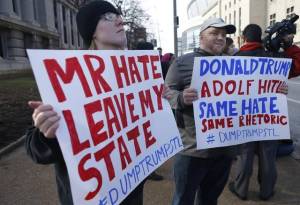
Donald Trump Protesters - St Louis

Support Semi-Partisan Politics with a one-time or recurring donation:

Agree with this article? Violently disagree? Scroll down to leave a comment.

Follow Semi-Partisan Politics on TwitterFacebook and Medium.

Republicans Are In No Position To Mock The Democratic Party Primary Debates

In his Morning Briefing email today, the National Review’s Jim Geraghty disparaged last night’s latest Democratic Party primary debate between Hillary Clinton and Bernie Sanders with these words:

‘Yeah, There Was Another Democratic Debate.’ (Stifles Yawn)

Thursday night’s Democratic debate in Brooklyn basically amounted to Bernie Sanders’s repeating all of his familiar attacks against Hillary and her insisting they’re baseless; and her charging that he doesn’t know what he’s talking about, at which point he would counter-charge, “THE GREED AND THE RECKLESSNESS AND ILLEGAL BEHAVIOR OF WALL STREET BROUGHT THIS COUNTRY INTO THE WORST ECONOMIC DOWNTURN” — sorry for the all caps, it’s the only way to accurately capture the volume of Sanders’ high dudgeon voice — “SINCE THE GREAT RECESSSION OF THE THIRTIES, WHEN MILLIONS OF PEOPLE LOST THEIR JOBS AND THEIR HOMES AND THEIR LIFE SAVINGS, YOU’VE GOT A BUNCH OF FRAUDULENT OPERATORS AND THEY’VE GOT TO BE BROKEN UP!”

Below are a couple of highlights, to the extent there were any:

Clinton, last night, defending her judgment: “President Obama trusted my judgment enough to ask me to be secretary of State for the United States.”

Yeah, that line may work really well in a Democratic primary, but you can apply the same “hey, if Obama picked me, I must know what I’m doing” argument to former HHS secretary Kathleen Sebelius, VA secretary Eric Shinseki, short-lived Secretary of Defense Chuck Hagel, all of those wealthy donor ambassadors who knew nothing about the countries where they would represent the U.S . . .

Hillary Clinton: “It may be inconvenient, but it’s always important to get the facts straight. I stood up against the behaviors of the banks when I was a senator.

I called them out on their mortgage behavior. I also was very willing to speak out against some of the special privileges they had under the tax code.”

Bernie Sanders: “Secretary Clinton called them out. Oh my goodness, they must have been really crushed by this. And was that before or after you received huge sums of money by giving speaking engagements? So they must have been very, very upset by what you did.”

I’m sorry, does a political debate no longer count as interesting or exciting unless a deranged mob of populist Republicans are flinging feces at each other or comparing the size of their junk?

Are Sanders and Clinton repeating themselves a lot? Yes – as someone who is deluged by campaign emails and briefings from both sides, that much cannot be denied. But at least the things that they are saying actually matter. They relate to foreign policy, trade policy, crime and punishment, campaign finance and the influence of Wall Street.

The argument in the GOP primary has devolved into little more than pledges to revoke ObamaCare faster than the other (“I’ll abolish ObamaCare by executive order at the beginning of my inaugural address!”) and competing visions for exactly how high the wall should be between the United States and Mexico.

Debates on both sides probably shed a lot more heat than light, but anyone who has watched a few of these things in the 2016 cycle would have to admit that more of substance has been learned on the Democratic side than the Republican side this time round – with the same going for 2012 too, when the Republicans treated us to Michelle Bachmann and Herman Cain.

There is a group – and I can’t say how large it is, but I know it exists from my time living in America – of liberty-minded conservatives out there who are thoroughly disgusted with the Democrats’ record in office and the general direction of the country, but who will stay home or hold their nose and vote for Hillary Clinton before they see Donald Trump or even Ted Cruz in the White House.

(And to those Trump supporters who protest, I would simply say that fighting back at the establishment and sticking it to the man does not have to mean vocally supporting torture and eroding the constitution. In fact, as Britain’s Nigel Farage discovered, it is actually better when the establishment come at you equally hard for holding mostly reasonable position, as their desperation to kill the challenge to their power is then exposed for what it is).

Though I am not yet a US citizen, if I had voted in the 2008 election I would have voted without hesitation for Barack Obama over the John McCain / Sarah Palin freak show. Many others did the same. So forget trying to attract massive new demographic groups to the side of the Republican Party – maybe the GOP should focus more on simply not alienating those people who will reliably vote for any serious-minded conservative, but who are constantly chased away from the party by the carnival of idiots who keep making it to the primary debates.

You can sneer that it is cultural snobbishness at work (and a bit of it is – though not the majority), but it goes deeper than that. And the good news is that the Republican Party will soon have another chance to reinvent itself for a new era as they spend another presidential term in dreary opposition. Hopefully they will not repeat the mistake of 2008, and actually have serious discussion this time about who they want in the party and who they want out, and whether they want to appeal to the better angels or the darkest fears and prejudices of those who are invited to remain.

That process can begin soon. But in the meantime, let’s not get cocky about the Democratic Party primary process, which has seen left-wing politicians with substantially different worldviews tearing chunks out of each other on policy and substance – which is precisely what should happen.

That is the debate that the GOP should have been having this election cycle were they still a functioning party, and were they not now being forced to pay in a lump for every cynical act of alarmism, obstructionism and posturing they have taken since the inauguration of Barack Obama.


Donald Trump - Make America Great Again

Agree with this article? Violently disagree? Scroll down to leave a comment.

Follow Semi-Partisan Politics on TwitterFacebook and Medium.

William Hague’s Bizarre Critique Of Donald Trump

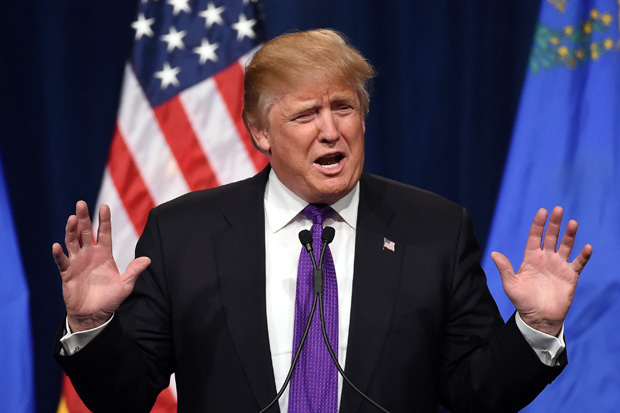
Donald Trump Hosts Nevada Caucus Night Watch Party In Las Vegas

William Hague is just the latest media personality to use Donald Trump’s presidential candidacy as an opportunity for virtue-signalling, rhetorical target practice

William Hague is getting rusty.

The former Conservative Party leader has already shredded his reputation among real conservatives through his shameful support of David Cameron and the Remain campaign. And now, added to that, his latest column on the US presidential election is written with all of the insight of someone who has been paying no attention to the American political scene for years, and is basing their hastily-written column on all of the most tired generalisations from a British television news report.

Whatever happened to the sparklingly witty and intellectually nimble political personality who could keep the House of Commons spellbound (or laughing uncontrollably) with his skills as a raconteur? Perhaps that side of William Hague is curled up in the foetal position, rocking backwards and forwards in shame and incredulity at what the europhile side is up to.

Hague begins with this remarkable statement about the main factors which should disqualify Donald Trump from becoming president of the United States:

Two characteristics make Trump fundamentally unfit to be president: his attitude to women and the way he treats rivals. The first of these, including crude and offensive remarks about female interviewers and candidates, shows deeply patronising instincts.

This isn’t just foul manners. It really matters because the way to liberate the greatest quantity of untapped talent in the 21st century is to achieve the full social, political and economic empowerment of women. Having a leader of the world’s most powerful country who shows no recognition of that cannot be a good idea.

His insulting response to rivals is another disastrous weakness in a potential global leader. The belittling of political opponents – “Lying Ted”, “Little Marco” and so on – shows no grasp of the fact that any president must work with them in Congress the minute he or she is elected. Even worse, Trump’s bullying attitude to other countries – telling Mexico it will have to pay for a wall along its border – would be utterly counterproductive and diminish the power of the USA by destroying its moral authority and crucial ability to persuade others to act.

Of all the things that Hague could have picked as Donald Trump’s disqualifying features, he chooses to virtue-signal and cite Trump’s view of women – as though Trump’s public attitude to women is any worse than, say, JFK’s attitude and behaviour were in private. Of all the things about Trump that Hague can think of, his frequent obnoxiousness is deemed the most serious.

Nothing to do with Trump having no functional knowledge of trade or foreign policy. That’s fine, according to Hague – President Trump can pick all of that stuff up on the fly. But God forbid that the next occupant of the Oval Office says off-colour, crass things about people (despite claiming to have “the best words”).

Hague even goes on to specifically mention some of Trump’s more outlandish statements on foreign and defence policy, so it is not as though he is unaware of them:

When Trump says that South Korea and Japan should have their own nuclear weapons, rather than rely on America, and that the US should stop funding Nato, what he is advocating is the collapse of the entire security architecture of the western world. But the people voting for him and such policies are telling us that they are fed up with paying for the defence of other countries who do very little to look after themselves.

[..] Trump’s other main policy with an impact on all of us is trade protectionism: he wants to impose swingeing tariffs on imports from China and Mexico, and withdraw from new trade agreements. This would be another disastrous act. It would result in widespread retaliation against American products, higher prices for consumers, and lower growth for the world. For Britain, the ninth largest exporter in the world, such policies would be very bad news indeed.

But apparently itching to provoke a trade war and undermining the security structure which has protected the West since the Cold War – with no clear plan for its replacement – is less of a disqualifying factor than Trump’s ongoing feud with Fox News anchor Megyn Kelly.

Hague’s broader point – that by supporting Donald Trump, his voters are sending an important message about longstanding, unresolved problems with the American economy – is a fair observation, though it is one which has been made by many other commentators (including this blog) for some time now and so hardly counts as original.

The awkward truth, of course, is that one of the primary drivers of the rise of populists like Donald Trump is the way that mainstream politicians have comported themselves, behaved in power and failed to govern on the platforms on which they ran for office. It is unsurprising that William Hague makes no mention of his, because he is a prime example of the kind of politician who pushes voters toward populists.

William Hague built a career and a reputation out of eurosceptic posturing. Yes, those who paid attention a little more closely could discern that Hague’s euroscepticism was not of the same nature or intensity of that of, say, Iain Duncan Smith. But Hague was nonetheless happy to hoover up eurosceptic support by making the right noises against Brussels and in favour of British sovereignty – right up until his stunning betrayal of the Brexit movement.

Similarly, the establishment Republicans now shunned and held in derision by Trump supporters also have a record of campaigning and posing one way, but acting in quite another. GOP voters have been let down in turn by cynical politicians cosying up to evangelical Christians and promising them the world, but then failing to prevent the enormous recent social changes in America. They have also been let down by the GOP’s brand of faux fiscal conservatism, which preaches the necessity of belt-tightening and cuts but often succeeds only in cutting taxes for higher-earners and exploding budget deficits.

Meanwhile, the Rick Santorum-esque wing of the Republican Party have either pretended that every American is a job-creating millionaire in waiting or talked about solidarity with the American worker while watching the American middle class getting squeezed and then decimated by the forces of globalisation without enacting a single proposal to help them make the adjustment to the new economy.

William Hague is right when he says “my experience of 30 years of elections is that when you think voters might have gone mad, they are actually trying to tell you something”. Unfortunately, what Trump voters are saying is that they are heartily sick of being lied to and peddled shiny promises of a New America which never come true.

Hague can focus on Trump’s abrasive and sometimes obnoxious personality all he wants, but it will not assauge his guilty conscience nor change the fact that his decision to support the Remain campaign in Britain’s EU referendum means that he himself has become just another flip-flopping politician of the type which feeds, not dampens, populist insurgencies like that of Donald Trump.


William Hague - Parliament

Top Image: The Spectator

Agree with this article? Violently disagree? Scroll down to leave a comment.

Follow Semi-Partisan Politics on TwitterFacebook and Medium.

The Republican Party’s Cynical, Anti-Obama Hysteria Created The Monster That Is Donald Trump

If you trawl for votes by quietly suggesting to people that their country has been taken over by a socialist, foreign-born, America-hating Muslim, don’t be surprised when they gravitate towards a politician who plays more effectively to those fears

The Republican Party has a lot to answer for when it comes to the rise of Donald Trump.

As a British conservative who has lived in America, knows the country (and not just the coasts) well and is married to a Texan, I have a sense of perspective lacking in many American conservatives. I come from a country with a far more left-wing political climate, in which edifices of the post-war consensus – the welfare state, the NHS – are idolised and often exempted from nearly all meaningful criticism.

I grew up in a culture which is a lot more suspicious of conspicuous success and achievement, more collectivist (though less so than continental Europe) and generally more expectant that government will play a hectoring, overbearing role in our lives. And therefore, when I see Republicans rending their garments wailing and rending their garments about the intolerable left-wingery of Barack Obama, I know exactly how whiny and entitled they are being.

The Republican Party reacted to the election of Barack Obama as though his presidency was going to usher in the end of the Republic. They acted as though a suite of rather workaday centre-left policies were part of a sinister conspiracy to turn America into a socialist country. Needless to say, they barely uttered a peep when their own side was busy ratcheting up the size of the state under the “compassionate conservative” Big Government presidency of George W. Bush, in which massive Medicare expansions – heck, even entire wars – were placed on the national credit card, and fiscal conservatism was put through the shredder. No, it was Obama who represented an un-American step too far, according to this false narrative.

And of course it was all nonsense. As Barack Obama’s second term reaches its end, the size and scope of the federal government is still stubbornly large, but America has by no means transitioned into a Soviet-style planned economy. Even the hated (in right-wing circles) ObamaCare has only tinkered around the margins, funnelling a few million uninsured into some form of health coverage, inconveniently disrupting the existing coverage of a number of other people but otherwise doing nothing to change the private insurance, private provision model of American healthcare. The Second Amendment has not been substantially undermined, let alone repealed. Defence spending may be misaligned but still eclipses the rest of the world, and the US military has not been decimated. In terms of domestic policy, in other words, the world has not ended.

Has America become a libertarian paradise under President Obama? Of course not. But that’s because a Democrat won the White House and focused (as much as he could, given a spineless Democratic congressional caucus and entrenched Republican opposition) on the kind of centre-left priorities you would expect from a Democrat. And crucially, neither has America become a socialist dystopia in that time.

That’s not to say that the Republicans did not often have a point, or that they were perpetually in the wrong – in many cases, their opposition to Obama’s agenda was justified. But at all times this opposition was carried out in a shrill, alarmist and hyperbolic manner – much as British left-wingers are currently mirroring the American Tea Party with their “pass the smelling salts” horror at the thoroughly unexciting, centrist government of David Cameron.

And when you go trawling for low information votes by feeding on prejudice and stoking up concerns about the personal motivations, the loyalty and even the American-ness of the president in a childishly obstructionist scorched earth strategy, you can’t really feign surprise when the sentiments you unleash give rise to a populist demagogue like Donald Trump. And people should call you out for doing so if you even try, as many Republicans are now doing as part of their cynical #NeverTrump movement.

Bill Maher – whose politics I often disagree with, but whose criticism of the Right is usually depressingly accurate – was on to something when he said on a recent episode of Real Time with Bill Maher that Republicans had “made a Faustian bargain with the racist devil years ago”, and are now paying the price.

During the panel discussion on his show, Maher said:

So let’s get right to it – the Republican Party, having an existential crisis. They are very upset that half their voters wanna give nuclear weapons to a guy who gets into Twitter feuds with D-list celebrities, and we understand that. I almost feel bad for them, except I really don’t, because they brought it on themselves. They made a Faustian bargain with the racist devil many years ago, and now those chickens are coming home to roost.

Let me read what Paul Ryan said this week. He said “if a person wants to be the nominee of the Republican Party they must reject any group or cause that is built on bigotry. This party does not prey on people’s prejudices”. LOL.

To which I would say to him: what about voter ID laws? What about once defending the guy who gets shot – the black guy, unarmed – instead of the cop? Y’know, I mean who are they kidding? This is the party they are, and Trump is just the latest.

And then the killer line:

They always say that it’s a big tent. To me it’s more like a house – think of it more like a house. And they let the racists have a room in that house. They didn’t go in that room with all the memorabilia, but they made a very comfortable room in there. And now they took over the house, and the regular Republicans are afraid to go to the kitchen at night to get a snack.

Ouch.

To be clear, while this blog does not support Donald Trump’s candidacy, neither does it subscribe to the idea that Trump or the majority of his supporters are racist. Certainly criticising illegal immigration in America is not racist, despite the cynical attempts by many Democrats and those on the left to suggest otherwise. Building a wall is not the solution, but the idea of properly enforcing the perfectly reasonable existing laws about illegal (the leftists love to leave out the word “illegal”) immigration is entirely defensible. Similarly, Trump’s nationalist, protectionist policies may well also be very counterproductive were they ever implemented, but this does not make them – or him – evil.

(One thing that does put Trump beyond the pale, in the view of this blog, is his lack of commitment to the constitution or to US treaty obligations, including those relating to torture. The First Amendment is not a plaything to be wielded like a weapon and undermined to snuff out criticism of a thin-skinned president, as Trump has suggested doing, and torture and reprisal killings were and are abhorrent and un-American).

As with many of Trump’s left-wing critics, Bill Maher is wrong to make this all about race. But he is quite correct in pointing out that in their desperation to win back the White House, the GOP tolerated all manner of crazy squatters and couch-surfers sleeping under their party’s roof. And while they did not explicitly add these people to the deeds of the house, they certainly left the front door wide open and stood on the street corner beckoning the crazies inside with a wink and a smile.

It is therefore exquisitely hard for me to feel sorry for the modern Republican Party as they are devoured by the very monster they kept as a pet and fed – particularly as I hail from a country which is planted a couple of steps firmly to the left in terms of the political centre ground, and have first-hand experience of the kind of “socialism” that the GOP cynically pretended was about to be unleashed on America.

I don’t want to see Donald Trump become the Republican Party nominee – though I feel much sympathy with many of his supporters – but if it does happen, as now seems increasingly likely, I cannot say that it was undeserved.


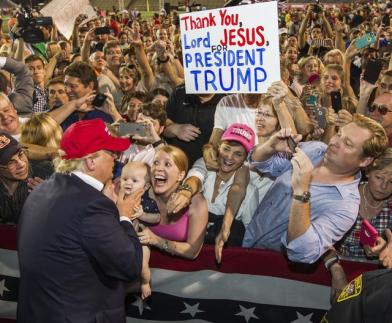
Thank You Lord Jesus for President Trump

Agree with this article? Violently disagree? Scroll down to leave a comment.

Follow Semi-Partisan Politics on TwitterFacebook and Medium.