UKIP Conference 2015: Confronting Missed Expectations, Looking Ahead

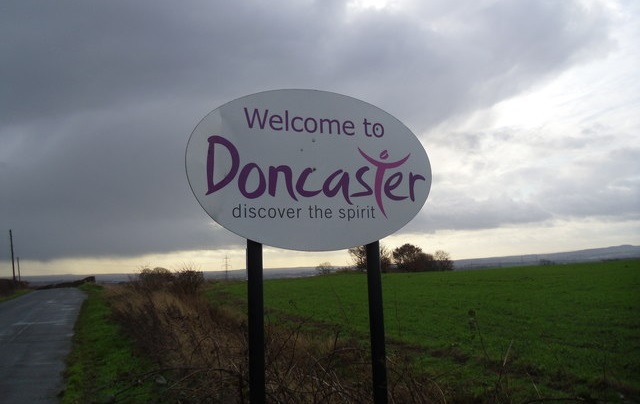
Welcome To Doncaster - Road Sign

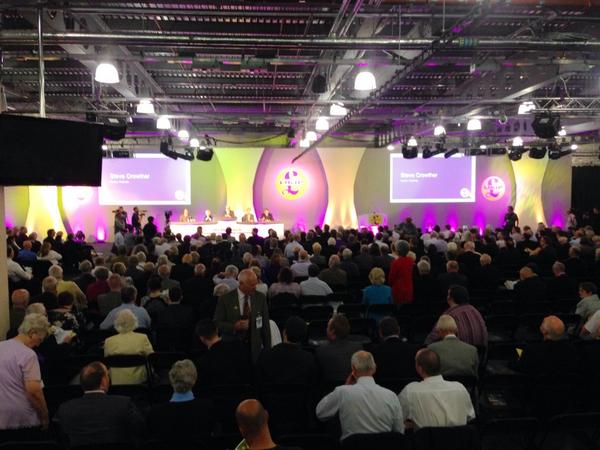
Much less hype around the start of this year’s UKIP party conference in Doncaster.

It’s only to be expected – this time last year, UKIP went into their party conference buoyed by a historic victory in the European elections, as well as the recent defection of respected MP Douglas Carswell from the Tories. In 2014, UKIP had all to play for going into next year’s general election. In 2015 – after many of those high hopes were dashed by the cruelties of the first-past-the-post electoral system – there is a danger that UKIP may one day look back on that conference as the high water mark of their achievement as a political party.

In a sign of how much the political landscape has changed since then, in 2014 Nigel Farage brought the UKIP party conference to Doncaster in order to “park their tanks on the lawn” of then Labour leader, Ed Miliband. Twelve months later and Ed Miliband represents his Doncaster constituency from the backbenches, having spectacularly lost the general election and resigned from the leadership, opening the door for the Jeremy Corbyn earthquake. But as Nigel Farage admitted on an interview with BBC Yorkshire News just now, sometimes things happen in politics that nobody can predict or control – and under the circumstances, Farage insisted that he remains proud of UKIP’s four million votes.

Nonetheless, the sense of hype and occasion around this year’s conference feels considerably less than last year. Aside from this blog’s preview of UKIP Conference 2015, there has been little advance coverage, with most media focusing on the imminent carnival that will be Labour’s first party conference under the leadership of Jeremy Corbyn.

Continue reading

UKIP National Conference 2015: What To Expect

UKIP Doncaster 1

Last year’s party conference saw UKIP fresh from victory in the 2014 European elections, and boosted by the shock defection of former Conservative MP Mark Reckless. Twelve months and one agonisingly unfair general election result later, what surprises can UKIP offer this time around?

Twelve months ago, the current British political landscape would have been completely unrecognisable, the stuff of fantasy.

The Labour Party had not yet imploded in a shower of more-compassionate-than-thou moralising. The SNP’s Westminster surge was beyond even the Scottish nationalists’ wildest expectations following the “No” vote in the Scottish independence referendum. In fact, there was only one political party which could claim to have any real momentum and be making tangible progress of any kind.

That party was UKIP. Twelve months ago, when Nigel Farage teased the UKIP 2014 conference delegates by telling them that a Tory MP would be speaking to them in his place – that MP being Mark Reckless, who then defected to UKIP live on stage to enormous cheers – there was a very real possibility that the second defection of a serving Member of Parliament from the Conservatives to UKIP might unleash the floodgates. At that time, it was entirely possible that UKIP could have ended the summer with a small handful of motivated, eurosceptic ex-Tory MPs, and a real Westminster presence.

Continue reading

Britain’s Strong Tradition Of Liberty Trumps Enforced European Unity

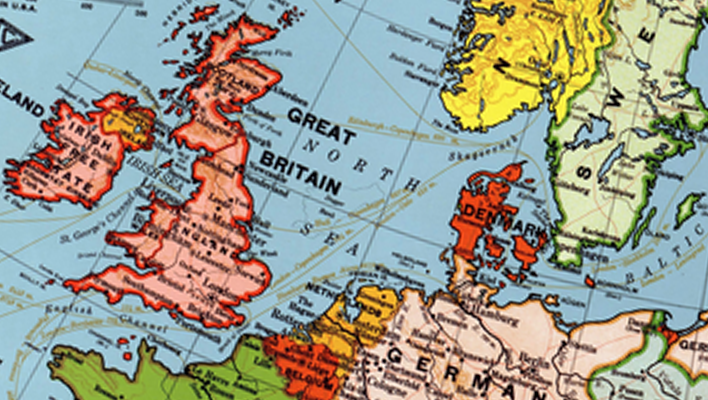
Britain Europe History 3

More good sense emanating from Reimagining Europe, the Church of England’s contribution to the EU referendum debate, this time courtesy of Adrian Hilton of the Archbishop Cranmer blog:

No-one seems to have much memory any more of the centuries of incremental British liberty, stability and fraternity which preceded these past few decades of European equality, bureaucracy and oligarchy. The pebbles of 1973 and 1975 grind down the cornerstones of 1215, 1534, 1628, 1679, 1689, 1701, 1706, 1829, 1928… I could go on, but few of these dates resonate any longer against the incremental attrition of ‘ever closer union’ couched beneath ‘unity in diversity’, in which cultural difference and historic detachment must be subsumed to an overarching judicial-political construct by which our national freedoms and individual unfreedoms are now defined.

Very true. And Hilton’s conclusion is also spot on:

Now we are to decide our European destiny again by referendum, but this time we must be told the truth: we either leave to pursue a future that is contiguous with our past, or we stay to be absorbed into a United States of Europe, which is already being rolled out as “economic governance” – just ask the peoples of Greece, Ireland, Spain, Italy and Portugal. The “democratic deficit” cannot be fixed: the whole project was designed at its inception to bypass the capricious and unenlightened will of the people. Democracy is an inconvenience: the epistocracy knows best.

We were lied to. Sorry to be so blunt, but that’s the history. If my parents and grandparents had been told back in 1975 that their voting to remain in the EEC would eventually mean that a market trader would be arrested for selling a pound of bananas, or a young student could be carted off to a Greek jail and deprived on his ancient rights of Habeas Corpus and trial by jury, they’d have voted to leave. And that’s what I’ll be doing, whatever honest, sincere or cast-iron guarantees they decide to give.

Continue reading

The Only Thing Worse Than Prime Minister Jeremy Corbyn Would Be A Military Coup Removing Him

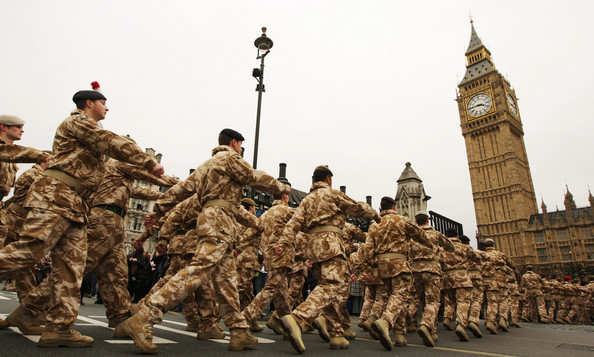
Troops Westminster Parliament

The Armed Forces deserve our strong support in the face of ongoing budget cuts and the depletion of their capabilities, but we must never tolerate the interference of arrogant generals in our democracy

Jeremy Corbyn’s socialist policies, well-intentioned though some of them are, would bring Britain to ruin so quickly that the damage would quickly become irreparable. But does that give military leaders the right to openly muse about destabilising a hypothetical Corbyn government, or launching their own Very British Coup?

Apparently so, according to comments made to the Sunday Times by a senior serving Army general, and widely reported in the press:

The senior serving general, speaking anonymously to the Sunday Times, said Mr Corbyn’s victory has been greeted with ‘wholesale dismay’ in the army.

He added: ‘There would be mass resignations at all levels and you would face the very real prospect of an event which would effectively be a mutiny.

‘Feelings are running very high within the armed forces. You would see a major break in convention with senior generals directly and publicly challenging Corbyn over vital important policy decisions such as Trident, pulling out of Nato and any plans to emasculate and shrink the size of the armed forces.

‘The Army just wouldn’t stand for it. The general staff would not allow a prime minister to jeopardise the security of this country and I think people would use whatever means possible, fair or foul to prevent that. You can’t put a maverick in charge of a country’s security.’

Continue reading

The Moral Case For Conservatism

Conservatism - Moral Case 3

In the Age of Corbyn, conservatives must be unafraid to promote and defend their ideas in clear moral terms

Who dares to make the moral case for conservatism?

The parties of the political Left shamelessly portray themselves as virtuous warriors in the titanic struggle between altruistic socialism and selfish conservatism, and are adept at debating political issues using the language of morality and “social justice”. It comes naturally, never sounding forced or contrived – websites like the Huffington Post, Left Foot Forward and LabourList are full of earnest articles penned by young writers who take for granted that theirs is the only legitimate moral perspective on the world.

Not so conservatives. We conservatives have tended to shy away from the moral discussion, afraid to set out our strongly-held beliefs in moral terms and preferring to focus on dry and often negative arguments about the risks posed by the Left. But by debating the issues on the Left’s terms and focusing on pragmatism above all else, we have largely ceded the moral high ground to the Left.

This did not matter so much when Ed Miliband, a thoroughly uninspiring centrist, was in charge of the Labour Party. But in the new age of Jeremy Corbyn – when the Labour Party is on the brink of re-adopting genuinely left-wing policies – it is disturbing that Corbyn’s ideas are given the weight of moral imperative while right-wing rebuttals too often sound technocratic and uninspiring.

Continue reading