Labour Reveal Their Priorities

Miss me yet?


It was heavily trailed, but now we know for sure – Labour, who have been feeling the heat as a result of their total lack of credibility on the economy and the fact that the Tories are finally starting to benefit from the fruits of economic recovery, have been forced into revealing some of their plans for the future. And what plans they are. They can best be summarised as “let’s return to how things were in the final days of Gordon Brown’s premiership”.

Whether this makes you want to get out or chequebook and make a huge contribution to the Labour Party or scream and and fall down on the floor in absolute incredulity depends entirely on your political leaning.

The Telegraph reports on Ed Ball’s major policy speech:

[Shadow Chancellor Ed Balls] said it was wrong for the Coalition government to have decided to cut the 50p top rate of tax to 45p from April last year.

“When the deficit is still high, when tough times are now set to last well into the next parliament, when for ordinary families their real incomes are falling and taxes have risen, it cannot be right for David Cameron and George Osborne to have chosen to give the richest people in the country a huge tax cut,” Mr Balls said.

“That’s why for the next parliament the next Labour government will reverse this government’s top rate tax cut, so we can finish the job of getting the deficit down and do it fairly.

“For the next Parliament, we will restore the 50p top rate of tax for those earning over £150,000 – reversing this unfair tax cut for the richest one per cent of people in the country and cutting the deficit in a fairer way.”

Ed Balls calls cutting the top rate of income tax from 50 to 45% a “huge tax cut”. Let us leave aside for a moment the ludicrous presumption on Balls’ part that taking a full half of the incremental pound that someone earns in income tax alone (never mind National Insurance, indirect taxes and VAT) could ever be proposed in a sentence together with the word “fair” and be taken seriously. I am more interested in what Ed Balls and the Labour Party had to say when Gordon Brown decided to raise the top rate of income tax from 40% to 50%. I’m pretty sure that they didn’t call it a “huge tax increase”. In fact, I know that they didn’t sell it to the country that way. So if increasing the top rate of income tax by ten pence in the pound is not a huge increase, how can a partial rollback of five pence be considered a huge tax cut? The answer, of course, is that it cannot.

So a friend of mine had this great idea on tax...
So a friend of mine had this great idea on tax…


In what was doubtless intended as a ringing statement designed to assure us of Labour’s new-found commitment to sensible economic management, Balls also committed to eliminating the budget deficit by the end of the next Parliament, in 2020:

Mr Balls announced what Labour said would be a binding commitment to balance the books, deliver a surplus on the current budget and get the national debt falling in the next Parliament.

Quite why we would want to exchange a government that tried and failed to manage this feat in the lifetime of the current Parliament for one that never displayed an interest in doing so until now but which suddenly claims to be able to achieve it in the next Parliament if only they are given the keys to power is never fully explained.

Neither does Balls acknowledge the fact that even when the budget deficit is eliminated, the national debt will remain intact and ominously large – he makes no proposals about running a future surplus to begin paying down this debt and lowering the nation’s interest payments. Neither, of course, does George Osborne devote much of his time to that niggling fact – but if Ed Balls really wants to seize the mantle of economic trustworthiness from Osborne he needs to aim higher and show that he has a better grasp of the longer term picture than his counterpart.

The reaction to Balls’ speech from the business community – who Labour like to malign, but are actually the ones who create the jobs and pay corporation tax and National Insurance contributions – was predictably scornful. Words and phrases such as “absurd”, “disaster”, “unmitigated disaster”, “putting our economic security at risk”, “unhelpful” and “political posturing” were often deployed.

By contrast, the Unite trade union saw Balls’ announcement as a fantastic development, and urged Labour to ever more destructive heights of foolishness and irresponsibility:

However, the Unite trade union, Labour’s biggest donor, welcomed the policy but warned it was only “a beginning”.

A Unite spokesman said: “The commitment to restore the 50p top rate of tax is a sign that a future Labour government understands the need for a fairer taxation system in this country.

“This is a beginning; we would urge Labour to also tackle the disgraceful abuse of the system by the evaders and avoiders too.

You know what would make tax avoidance really difficult, unnecessary and socially unacceptable? A flat tax. But somehow I don’t see Unite advocating for that any time in the near future. Because, though they do not like to admit it in public, high taxes are not a regrettable but necessary evil to people like Ed Balls and his cheerleaders on the left. For Ed Balls, higher taxes are a desirable end in themselves, a last line of defence to ensnare anyone who defies the odds and manages to break through Labour’s dragnet legacy of mediocre standardised education, burdensome regulations and big government and succeed in spite of themselves.

With regard to Labour’s brave new economic stance, the British electorate will cast the only verdict that matters in May of 2015. But I think David Cameron and George Osborne will be sleeping a little more easily in their beds from now on, warm in the knowledge that Ed Balls has set Labour on a firm course back to 2010.

On Gun Control In Britain

UKguns


It’s difficult at the moment to know precisely how seriously to take Nigel Farage’s public pronouncements. In a matter of days he has managed to offend a great number of people by suggesting that once you adjust for maternity leave, women working in finance have at least a level playing field with (if not an easier time overall than) men; he appeared to prevaricate when confronted with another loony UKIP local councillor, this one publicly attributing the UK’s recent bad weather to the coalition government’s legalisation of gay marriage; and he publicly disowned the 2010 UKIP manifesto, which he personally helped to launch.

All of this is rather unfortunate, because in many ways Nigel Farage remains one of the most principled and straightforward politicians in Britain today. Aside from some heavy-handed and paternalistic conservative attitudes to social issues such as gay marriage and an excessive obsession with immigration restrictions, the policies currently espoused by UKIP are ones which would appeal to many a libertarian-minded voter grown disenchanted with the Tories under David Cameron – myself included. Therefore, I hope and trust that the PR wobbles of this week will soon be behind him.

But more importantly, I hope that the current furore does not drown out a more important debate that Farage has initiated – whether or not to relax Britain’s stringent gun control laws and relax the blanket ban on handguns. Farage is of the opinion that to do so is right in accordance with conservative principle, with individual liberty and with common sense.

The Guardian reports:

Asked about gun controls, Farage said: “I think proper gun licensing is something we’ve done in this country responsibly and well for a long time, and I think the kneejerk legislation that Blair brought in that meant that the British Olympic pistol team have to go to France to even practise was just crackers.

“If you criminalise handguns then only the criminals carry the guns. It’s really interesting that since Blair brought that piece of law in, gun crime doubled in the next five years in this country.”

“I think that we need a proper gun licensing system, which to a large extent I think we already have, and I think the ban on handguns is ludicrous.”

The initial arguments brought to bear against Farage are not terribly convincing:

Ian Mearns, Labour MP for Gateshead, said the comments were an example of “how extremely dangerous Ukip are”.

“Families facing a cost-of-living crisis will find it bizarre that one of Nigel Farage’s priorities would be to relax Britain’s tough gun controls,” he added.

So we are told that the policy is “dangerous”, and then fed the old line that the British public believe that politicians can and should only ever focus on one issue at the time, and that the economy must crowd out everything else. When someone leads off with the “why aren’t we focusing on something else?” argument, they generally don’t have much else in the way of persuasive arguments.

As a libertarian-minded voter, given a blank slate and in an ideal world I would like to see the blanket bans on handguns in the UK repealed. While recognising that Britain is very different culturally to America on this issue, where the Second Amendment enshrines the right to bear arms very clearly, I believe that our country (at least the people, if not our government) do also place great value on the freedom to defend oneself with any force necessary if required. The strength of public feeling in the Tony Martin case rather proves my point, no matter how much gun control advocates might desire to wish it away.

Where we differ more substantially is the fact that in America, the Constitution makes clear that the right of the people to bear arms shall not be infringed not only for reasons of protection and self-defence against personal violence, but also against oppression by the government. In Britain, where our rights are granted to us by the government and it is our lot to bow and scrape and be thankful for what we are given by way of freedoms, this is clearly not the case. The government is not ours; rather, it belongs to Her Majesty. This may seem like a quibbling detail, but when looking at issues of civil rights and liberties it is an important one.

As a general principle, I don’t think it should be the government’s business to ban or to allow small arms, or to do many other things. I would be quite happy if the government could content itself with competently undertaking its core functions of defending the nation, protecting property rights, providing law and order and providing a framework for other institutions to deliver much of what currently falls under the welfare state. I have sufficient belief in the goodness of human nature to think that, if properly guided and harnessed, this might be achievable.

However, I also recognise that this is not the seventeenth century, and I am not a stockinged, bewigged colonist in the New World. We do not live in a time of attempting bold new methods of self governance – or bold new methods of doing anything at all, and there is little desire among the public to become the kind of country where such experimentation takes place. And this is where conservative pragmatism comes into play. On the topic of gun control specifically in the UK, I cannot support Nigel Farage’s belief that gun control laws should be repealed.

Guns are not plentiful in the UK as they are in the United States. Making it legal for average members of the public to own firearms again would initially empower those people, but there would be a gradual and inexorable drift of firearms from law-abiding citizens to active criminals. Like almost anything, if you are criminally minded and you want to lay your hands on a gun, you can do it if you invest time making the right connections. But it is difficult to do unless you already have those links with the criminal world, and so guns are not purchased in the UK on a whim, or by ordinary folk for use in a moment of high passion – the supply is small and in the hands of professional criminals, and therefore it simply takes too long for someone not in the know to make the purchase. Why expand the supply and start to make it exponentially easier?

In the United States, the case is very different. Guns are a dime a dozen, and any blanket ban on firearms in America, as well as being grossly unconstitutional, would leave law-abiding citizens defenceless in a country where almost every criminal has ready access to a gun. In short, banning guns in the United States would put the population at risk while the population of the United Kingdom would be more endangered by the legalisation of firearms.

I freely admit that a bulk of conservatism and libertarian opinion may differ with me on this issue. Indeed, The Commentator last year revealed something of the depth of feeling on the repeal-gun-control side:

The choices include term limits for Prime Ministers, a flat tax, a law to encourage the ‘greening’ of public spaces and the repealing of Britain’s hand gun ban. Following the Dunblane massacre in 1996, in which 16 schoolchildren were killed, Parliament passed The Firearms Act of 1997, which essentially banned handguns for the atrocity.

But Britons seem unconvinced by the law. The proposer, known as “Colliemum” asked, “…why should only criminals be ‘allowed’ to possess guns and shoot unarmed, defenceless citizens and police officers?”

While the poll continues, so far over 80 percent of the 11,000+ respondents have told the Telegraph that they want to see the handgun ban repealed.

Unscientific, yes. But also highly emphatic.

I have called often and loudly for a constitutional convention for the United Kingdom, to decide once and for all the powers we are willing to give to the government and those which we insist on keeping for ourselves, as well as to fairly and equally devolve powers to the four home nations under a federal system. Part of the output of such a convention would inevitably be a decision on whether we are happy to continue being granted our rights or having them taken away by the whim of each successive Parliament, or if we want to enshrine certain inalienable rights in a more permanent and unyielding document.

But until my call is heard and a Constitution is written and adopted, there is no document to which we British can point to say that government shall not deprive us of the right to own guns. Neither is there precedent, or a persuasive common sense argument. Ceteris parabus, just as there is no sound or legal way in which American citizens can be deprived of their right to bear arms, so there is no reason rooted in law why the British should have theirs returned.

As the American civil war drew to an end, James Russell Lowell wrote:

Among the lessons taught by the French Revolution there is none sadder or more striking than this, that you may make everything else out of the passions of men except a political system that will work, and that there is nothing so pitilessly and unconsciously cruel as sincerity formulated into dogma.

Sincerity formulated into dogma. We see this a lot today, both in Britain and America. In the United States it is manifested most obviously in the Tea Party and the demands of its more fanatical members to immediately roll back the functions of government regardless of the potential suffering of those who have come – and in many cases been encouraged – to depend on it. Pitiless yes, and often cruel too. And in Britain we see this dogmatic approach, I am sad to say, in Nigel Farage’s call to repeal the gun control laws.

When my libertarianism meets the fact of modern Britain, the conservative in me must side with the real world as I find it, and for that I do not apologise.

Nepotism Alert – Stephen Kinnock

Lord Stephen of House Kinnock. Winter is coming.


Watch out, there’s a new man in town. He is going to shake things up. He’s going to get things done. He’s a policy heavyweight and an inspirational leader-in-waiting. He’s going to rise up through the Westminster power structure and eventually become the Labour leader that Ed Miliband can only dream of being. He is Stephen Kinnock.

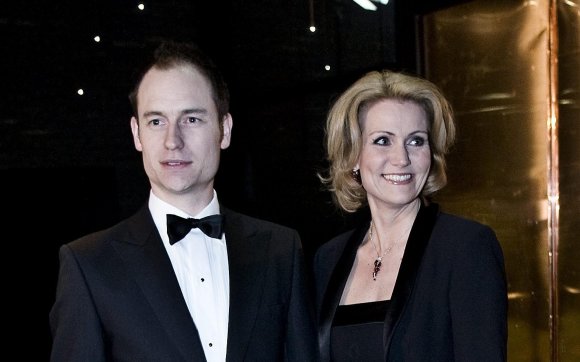
The face has the wistful, simple and vacant look reminiscent of Prince Edward on a bad day, albeit with even less charisma. Presumably he is charming enough in person, as he is happily married to Helle Thorning-Schmidt, the Prime Minister of Denmark. Kinnock Jr. currently lives in London while she and his children reside (naturally) in Copenhagen.

But now Stephen Kinnock, Son of Neil, First of his Name, is throwing his hat into the ring to be the Labour candidate for the Welsh constituency of Aberavon at the next general election.

The Guardian observes that this is by no means the first nonentity with a famous surname to try to make politics a family business in recent years:

Will Straw, son of Jack, will contest Rossendale & Darwen for Labour in next year’s general election. David Prescott, son of John, stood unsuccessfully for selection in the Greenwich and Woolwich constituency in November. There has been speculation that Tony Blair’s eldest son, Euan, might seek a parliamentary seat after he gave up a career in banking to work for a small Coventry charity.

The four young men, were they successful in their ambitions, would be the next wave of political offspring to carry on the family tradition. Hilary Benn, son of Tony, Ben Gummer, son of John, and Nick Hurd, son of Douglas, are all MPs. Anas Sarwar was elected Labour MP for Glasgow Central after his father, Mohammad, stood down from the seat in 2010. Francis Maude, Bernard Jenkin, Andrew Mitchell and several others at Westminster all succeeded a parent to the role. There are plenty of recent historical examples too, from Douglas Hogg, the former Tory agriculture minister, to Estelle Morris, education secretary under Tony Blair, both of whom came from dynasties of MPs.

Just what Parliament needs – another untalented, uninspiring wet rag of a candidate with next to no real life experience (aside from the inevitable internships and think tank jobs that having a politician’s surname makes getting easy) to lower the average IQ of the Commons even further. Stephen Kinnock’s credentials and life experience? Being a research assistant at the European Parliament, a succession of jobs at the British Council, a job for the World Economic Forum and his present role at a consultancy that “helps global businesses go beyond the green basics and reinvent the way they grow”. Make of that last one what you will.

Parliament and politicians are thoroughly despised at this country at the moment. I know they are because I helped to campaign for one in the 2010 general election and many members of the public told me exactly what they thought of the lot of them. The expenses scandal is still fresh in the minds of many, and public fury will surely erupt again when MPs accept their proposed inflation-busting pay raise in the near future. With political engagement at an all time low, is now really the time to be throwing more prime examples of nepotism from the political elites in our faces?

Of course, these shenanigans are not restricted to the Labour Party – though they certainly take the biscuit for nominating Emily Benn to be a candidate back in 2007, when she was still only seventeen years old. There was a time when the runt of the family litter would be encouraged to join the clergy while the oldest son inherited the family estate. I certainly do not propose a return to those days, but surely we can come up with a better career path for the rootless and questionably-talented progeny of famous politicians than our current scheme of packing them back to Westminster before the green benches occupied by their parents have had a chance to grow cold?

And if we must continue to indulge in nepotism in British political life, can we at least try to make it a little more glamorous? In America, they make up for their lack of a royal family by bestowing on their political dynasties a real aura of magic and sparkle, wealth, privilege and scandalous intrigue worthy of a daytime soap opera. The Kennedys, the Bushes, the Clintons – their style of nepotism is no more morally acceptable, but it is a hell of a lot more fun to watch. No television producer is in a hurry to start making Keeping Up With The Kinnocks.

This is the son of a man who fell into the sea while posing for a photo shoot:


Somewhere, lurking well out of sight, are talented potential citizen politicians whose civic instincts we should be tapping to devote five or ten years of their life to serve a term or two in Parliament for the good of the nation.

Stephen Kinnock can sit this one out. The World Economic Forum surely misses his talents.

Defending Gibraltar

It is irking see the Conservatives so publicly and comprehensively outmanoeuvred by Labour recently on a variety of issues, most recently related to education and welfare. To witness the same thing now happen in the sphere of foreign policy is yet another worrying sign that the Conservative-led coalition government is coasting at this point, perhaps made complacent by the recent uptick in economic indicators, and taking their eye off the ball.

The Telegraph reports that Gareth Thomas, the Labour shadow minister for Europe, has raised concerns that Britain is not doing enough to forcefully push back against recent Spanish misbehaviour with regard to Gibraltar:

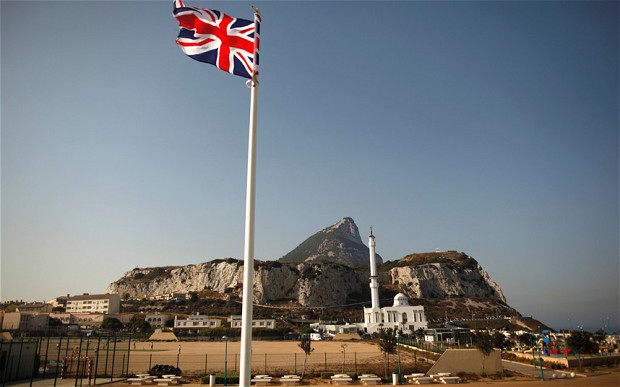
Gibraltar is a territory “under siege” and Spain should be made to account for its actions in relation to The Rock, the shadow minister for Europe has said.

Gareth Thomas, the Labour MP for Harrow West, said that residents of Gibraltar were concerned that Britain was not doing enough to defend them from Spanish harassment. The past 12 months have seen the highest ever number of incursions by Spanish ships into Gibraltar’s waters, with the almost double the incidents from 2012.

“I was struck by the sense that the Gibraltarians have of being under siege,” said Mr Thomas, who visited Gibraltar in November. “Spanish ships are coming into their waters on a regular basis.”

We have seen this before. The leaders of countries that are in the doldrums, facing economic malaise and restive populations (hi, Argentina), suddenly dredging up ancient grievances against Britain. Grievances that were once dead and buried during happier economic times. If you are going to make the case that the absence of the Falkland Islands or Gibraltar is like a gaping hole in your respective nation, I would have slightly more sympathy if we didn’t hear your plaintive appeals only during times of economic recession.

I refer you to the Treaty of Utrecht.

This continual harassment of a British overseas territory is unacceptable, and one cannot help but feel that the diplomatic protest by the UK in response has been far too small. Relying on a corrupt body such as the European Commission to mediate the dispute by visiting Gibraltar was clearly never going to be the answer, and why William Hague thought that this option would be sufficient to resolve the situation is mystifying. Diplomatic pressure is clearly failing in this case, and more stringent unilateral action may be required to bring the Spanish back into line. Bullying behaviour tends only to respond to a show of strength, a clear assertion that the bullying will no longer be tolerated.

Of more concern to me, though, is the fact that William Hague, the Foreign Secretary, has failed to make it sufficiently clear that Britain will not tolerate these childish antics. I had not expected someone so competent and capable to drop the ball or fail to forcefully defend the interests of the UK to the extent that he clearly has. Showing forebearance to Spain on the issue of Gibraltar, particularly given the childish means by which the Spanish government chooses to pursue its non-cause, is no longer cute or charming or patient. It’s weak.

Michael Gove on education, Iain Duncan Smith on welfare and now William Hague on foreign policy, all caught napping and hit from the right by their Labour counterparts. I don’t know whether a weekend retreat is in order at one end of the spectrum, or a wide-ranging cabinet reshuffle at the other, but David Cameron urgently needs to get his cabinet to come out of cruise control.

Seumas Milne Bashes America

seumasmilne

Seumas Milne rides to battle against the United States

It must be a slow news day, because Seumas Milne has taken to his Guardian column to denounce the presence of US military bases on British soil. You might think that resuscitating a dusty old left-wing fall-back piece like this might at least warrant some new angle on the story, or at least be based on some recent newsworthy transgression by the American military that we host here. You might think so, but you would be disappointed. Milne apparently just got out of bed feeling vaguely smug and anti-American, and decided to repeat the same predictable talking points, namely:

1. They came to help fight Nazi Germany in 1942 and the war ended a long time ago, so what can they possibly still be doing here?

2. America has dragged us into unnecessary and failed wars (Iraq was clearly a calamitous mistake, but why this warrants booting 10,000 US servicemen from our shores is never explained by Milne, unless it is supposed to simply be an act of vengeance) but we can absolve ourselves of these sins by closing down their bases here.

3. The British security elite are desperate to maintain a lopsided special relationship with the US, and only tolerate their bases on our soil as the price of achieving this goal.

4. Being so chummy with the Americans makes us less safe. Rather than being proud of our alliance with a country that symbolises democracy and individual freedom (however self-tarnished this image is becoming as a result of the unconstitutional activities of their national security complex), we should actively disown them to curry favour with fundamentalist theocracies who foment terrorism.

The column is not worth quoting at length, but here is an excerpt:

But whose interests are actually served by such a role? No doubt arms contractors are delighted, but it’s hard to argue that it benefits the British people – let alone those on the receiving end of the US and British military. Politicians and securocrats claim it gives them influence over US policy, but they struggle to produce the evidence on the rare occasions they’re asked to explain how. “The foreign policy elite still have a strong idea,” as the Chatham House analyst James de Waal puts it, that intervention based on “values” is an “innate part of what the UK is all about”. In fact, what successive governments have done is mortgaged Britain’s security and independence to a foreign power – and placed its armed forces, territory and weaponry at the disposal of a system of global domination and privilege, now clearly past its peak.

Milne wonders what the Americans would think if we had a military base on their home soil. Aside from the fact that British officers and military personnel routinely serve alongside their American counterparts both at home and in the field, I think that the Americans would be only too happy to see British military spending increased to such a level where we could afford more overseasbases (though whether this itself would be desirable is another matter). The reason for the lack of RAF bases in North Dakota is not that the British are the victims of some one-sided game in which the US gets to play and we have to sit on the sidelines, but everything to do with the fact that we choose to deprioritise defence in sacrifice for other goals, and all the other things that our caring government does for us. And look how that’s working out.

But this is where Milne really reveals his argument for what it is:

Britain’s fake patriots who bleat about the power of the European Commission are more than happy to subordinate the country’s foreign policy to the Pentagon and allow its forces permanent bases on British soil.

Firstly, our foreign policy clearly is not subordinate to the whims of the Pentagon, as the British parliamentary vote against taking military action in Syria made abundantly clear. Try as he might to build a convincing narrative of the British being led by the nose, two conflicts (Afghanistan and Iraq) over thirteen years are not enough to establish the damaging precedent that he wants to portray.

And secondly, I strenuously object to being labelled a fake patriot by Milne, but so bankrupt is his argument that insults are likely the only weapon left in his arsenal. Fake in relation to what, Milne’s more enlightened, cerebral left-wing patriotism? What Milne carefully chooses not to see is the fact that British government policy and the day-to-day experience of British life are influenced far more by the goings-on in the corrupt, undemocratic European Commission than they are by the garrisons of American military personnel on our soil – troops, incidentally, who are there to underwrite our common security objectives. If anything, it is an indictment of the European Union that Milne slavishly and unquestioningly adores that they punch more weight in this country by undemocratic diktat than do the “hostile American occupiers” against whom he childishly rages.

I’m sure that Milne thinks himself terribly persuasive in his closing paragraph:

But the withdrawal of British troops from Germany and this year’s planned renewal of the US-British defence agreement offer a chance to have a real debate on the US military relationship – and demand some transparency and accountability in the process. There is no case for maintaining foreign military bases to defend the country against a non-existent enemy. They should be closed. Instead of a craven “partnership” with a still powerful, but declining empire, Britain could start to have an independent relationship with the rest of the world.

But why should these two things be mutually exclusive? In Milne’s crazed imagination, the fact that we enjoy such a close alliance with a great country like America is shutting us off from good relations with other countries, or, as he puts it, having an “independent relationship with the rest of the world. This would probably come as a great surprise to the British ambassadors representing our country in foreign capitals across the globe, and to everyone working at the Foreign & Commonwealth Office in London toward the same ends. Exactly what relationship with the rest of the world does Milne think we are missing out on by failing to snub and humiliate our closest ally in the way that he proposes? Which are the countries in whose bad graces we currently dwell, who will suddenly warm to us if we send the Americans packing? North Korea? Venezuela? Iran?

I propose to Seumas Milne that he is trying to make an argument in reverse. He is clearly upset about British-American military cooperation and about our alliance in general. He would doubtless prefer to see us much closer to Europe, and have us actively working to further undermine American hegemony. But the American military bases and other visible manifestations of our close alliance are not a cause but an effect. In the case of Britain and America, an alliance such as ours is what you inevitably see when two countries, one larger and one smaller, have so much in common in terms of culture, economic ties and global interests. If Milne wants the US bases to close, he is making the wrong argument. Rather than bleating about Iraq and Afghanistan, he needs to begin convincing us that we are a different country than the one we think we are.

I don’t fancy his chances.