TV Debate – Making Eid And Diwali British Public Holidays

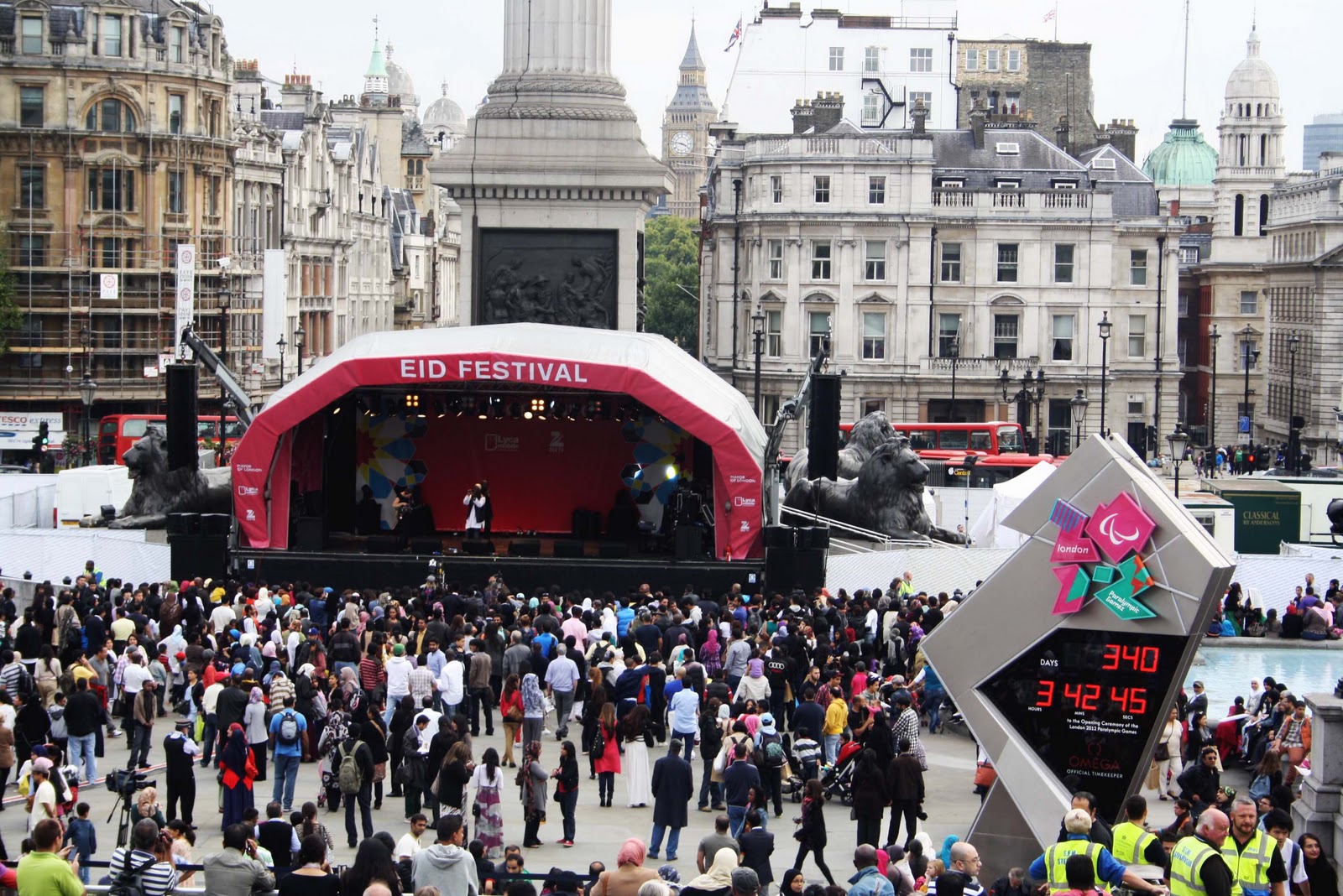
Eid celebration london


Last week I vociferously disagreed with Bob Blackman MP’s efforts in Parliament to make the religious observance days of Eid and Diwali public holidays throughout the whole of Britain.

This was in no way out of animosity to Britain’s Muslim or Hindu communities; Semi-Partisan Sam acknowledges and appreciates the good that all of Britain’s religions and denominations (as well of people of no faith) contribute to the rich tapestry of our country.

But carving out a new exception, or concession, to minority religions in Britain would be a backward step just as small signs of progress are being made in rolling back the pervasive and anachronistic influence of our own established national church.

Furthermore, if we are to add a new public holiday to our calendar, Semi-Partisan Sam strongly believes that it should be one that unites, rather than divides, the whole of our United Kingdom. At a time when Britain is seemingly fracturing into a loose, uncomfortable coalition of competing interest groups and distinct sub-communities, and when many people struggle even to articulate any sense of British values, any new public holiday should celebrate the history and achievements of our entire nation – the one to which we all belong, Christian, Muslim, Hindu or otherwise – rather than flatter or appease any one particular group marked out for sponsorship by the government.

I will be on London Live TV’s Headline London show today, from 1230-1330 UK Time, participating in a panel discussion in which we will debate this topic.

You can watch on Sky 117, Virgin 159 or Freeview 8 from 1230 onwards.

As The World Burns, Britain’s Political System Remains Broken And Neglected


If it suddenly feels as though there are more loud-mouthed juveniles wandering about during the daytime, it is because both the nation’s schools and the House of Commons have wrapped up their business and gone home for the summer holiday. But while no one should begrudge our young people or their harried teachers a much-deserved break, Westminster’s politicians are returning to their constituencies with few solid accomplishments to their credit, and with the very effectiveness of Parliament itself now in question.

While the world is captivated by the latest slaughter in Israel and Gaza, and scrambles to respond to Russia’s aggressive expansionism and the downing of flight MH17, a number of far less dramatic but equally intractable problems continue to chip away at British democracy and our political institutions. Normally, these “dull” issues only see the light of day at election time – at which point everyone stops to wring their hands about how terrible it is that so few people bothered to vote, or (heresy of heresies) that they voted for UKIP – but a pair of articles in the Spectator and at Conservative Home  sound an early warning that we would all do well to heed before we get distracted by the 2015 general election campaign.

The Spectator piece, by James Forsyth, starts by bemoaning the fact that so many of the ex-ministers recently departed from David Cameron’s Cabinet following the reshuffle have also elected to stand down as MPs at the 2015 general election. But it grows into a broader, important discussion about the kind of MPs that we should want debating legislation and holding the executive to account in the Commons:

Most of those leaving are not doing so because they are past retirement age. Sir George Young might be 73, but William Hague, Andrew Lansley and David Willetts are only in their fifties and Greg Barker is a mere 48. When they go, they will take expertise and experience that the Commons desperately needs to do its job properly. Former ministers play a particular role in the Commons’ ability to scrutinise what the government is doing.

Although the details of each ministerial case are different, Forsyth correctly taps into an increasing sense among many current and aspiring MPs that the only goal worth shooting for is a top-level Cabinet position, and that any other trajectory (a brief tenure as a junior minister or a few terms on the backbenches) is an unacceptable outcome for their political career.

Forsyth then makes an important point about an over-emphasis on youth which seems to attract the ‘wrong’ kind of young people into Westminster politics (such as Labour candidate Emily Benn):

This emphasis on youth precludes people having had a long career outside of politics. One doesn’t have to agree with the former minister who says that ‘we have the worst of all worlds — people who aspire only to be managers but can’t manage’ to think that it is unfortunate that the ambitious feel they have to stand for office before they have had time to reach the top of another profession.

This complaint ties in very strongly with this blog’s own concern at the lack of real ‘citizen politicians’, people whose sense of civic duty compels them to take a mid- or late-career break to sit in the House of Commons representing their constituents for just one or two terms of office. Of course there are always a handful of one-hit wonders, but most one-term departures are a result of losing re-election, scandal, failing to achieve work/life balance or bitterness that plans for rapid promotion and the acquisition of power and prestige did not come to fruition.

Indeed, an MP voluntarily leaving Parliament for a reason other than these typical motivations is almost guaranteed to be newsworthy, as it was when Conservative MP Dan Byles, of the 2010 intake, announced his decision not to seek re-election. And instances of British political candidates pledging upfront to serve only a single term or a set number of terms are almost non-existent.

Forsyth’s twin solutions are quite radical – he proposes increasing constituency sizes to dramatically cut the number of MPs to around the 400 mark, which would make it harder for them to be coerced into wasting time going to battle  for individual constituents and their personal problems, something which better falls under the remit of local government. (It should, however, be noted that US congressional districts are as much as ten times larger than UK constituencies, and American representatives are still expected to fulfil this role).

But ultimately, Forsyth believes it may be necessary to split the executive from the legislature and impose a separation of powers in Britain once and for all. This really is quite visionary stuff, and would form part of the comprehensive UK-wide constitutional reform that Semi-Partisan Sam has long advocated. If the legislature and the executive were separate, the quality and effectiveness of the House of Commons would be less polluted by the presence of young whippersnappers who regarded their seats and duties to their constituents as a mere springboard to higher office. The opposition to such a split would be immense and the details would need to be worked out – would all government positions be purged from the Commons, necessitating a separate election for Prime Minister, for example – but it is a fascinating idea worthy of serious discussion.

Meanwhile, Mark Wallace at Conservative Home has the House of Lords in his sights, arguing that the size of the upper chamber (rapidly nearing 1000 peers) is too large, too inefficient and so stuffed with “cronies and failed politicians” that the ability of the chamber’s subject matter experts to properly scrutinise legislation is severely limited.

With a very unflattering comparison to the 3000-member Chinese National People’s Congress, Wallace explains that such a large body can only be a recipe for confusion:

The swelling ranks are an outcome of the Lords’ confused role. On the one hand, the Upper House is meant to scrutinise legislation as a home of expertise; on the other, it is a tool for morale and political management in the Commons – convenient vacancies are created on the green benches by bumping MPs up, patronage (or the hope of receiving it) is extended to maintain party discipline, and partisan appointments are made in the hope of improving the chances for Government legislation …

The Mail‘s description of many appointees as “cronies and failed politicians” is too often correct – we are meant to get experts, but a lot of the time we get party apparatchiks, trade union officials and the great and good from Whitehall and the media. For every great debate, like that on assisted dying, there are a dozen in which the prevailing ideological trends of our left wing establishment are recited as fact.

It’s hard to argue with that assessment. Semi-Partisan Sam was in the public gallery at the House of Lords on Wednesday, and was shocked by the perfunctory laziness with which Oral Questions was rushed through, the sloppy way in which the self-regulating peers kept (or rather didn’t keep) order, and the sheer amount of timewasting that takes place as the House resolves itself into a committee, out of a committee or divides for a vote (mechanics that are rarely seen by the British people as the House of Lords proceedings tend to be shown only in highlight reels by the BBC). Quite why many of the peers filling the benches for Oral Questions were there at all was a mystery, given their disinterested faces and sleepy postures – until one remembers the £300 daily allowance.

Reform of this sleepy and dysfunctional institution will not be easy – the most recent plans, hammered out in the coalition negotiations in 2010, were abandoned when Conservatives reneged on their agreement to support the changes. But at a time when any mention of House of Lords reform is met with sighs and knowing warnings that it can’t be done, Wallace’s proposal for an easy quick win on the issue should garner support from everyone:

We do agree on a starting point, though: the numbers must be reduced to make the House functional. David Steel’s proposals to require members to commit to being active, working Peers or face expulsion and to introduce an age limit both have merit and would go some way towards fixing the problem.

Yes, it would. We still see the problem of peers “clocking in” to Parliament to be eligible for their daily allowance, while otherwise doing nothing to contribute to the workings of the institution or the democratic process. Accepting an ennoblement should be contingent on making a commitment to turn up for work and do the job. The current situation – where there are life terms, no upper age limits, no requirement to actually do any work and no simple procedure for removing lazy or criminal peers – is a virtual incentive for poor performance and represents the antithesis to a well functioning upper chamber.

None of these very unsexy constitutional issues are likely to set the world on fire, not when so many pressing international human tragedies are doing such a fine job of keeping it aflame in the worst possible way. But we in Britain have a nasty habit of ignoring pressing questions about how we want to govern ourselves and make decisions, allowing them to smoulder untended in the background until events cause them to suddenly burst to life in a wildfire of public outrage.

Think back to 2010, and the pompous outrage that met the formation of a Conservative-led coalition government that “nobody voted for”. It’s certainly true that there was no box on the ballot paper marked “Cameron & Clegg Double Act”, and so in that strict sense the plaintiffs are correct. But we all went into that 2010 general election knowing (or deliberately choosing to remain ignorant of) the way that our voting system worked, and that a hung parliament was a possibility. If the people do not have the proactivity or the attention span to think about these possibilities and make their preferences known beforehand, there are no grounds for complaint when Sir Gus O’Donnell and other senior civil service mandarins facilitate a resolution of their own behind closed doors.

In the same way, we all know (or deliberately choose to remain ignorant about) the variable calibre of politicians that are currently attracted to Westminster, and the hazy unwritten rules and conventions which govern Parliament’s workings. But as well as being cognisant of the problem, we are also now armed with a few radical suggestions for digging ourselves out of our democratic deficit.

With a small window before the 2015 general election campaign to get these issues debated and make them part of the policy discussion before the parties publish their manifestos, advocates of constitutional reform should see this moment as a rare opportunity.
Nepotism Alert – Emily Benn

emily benn tony benn


“People might ask how I can know anything about ‘the real world’ given who my family are and the fact I am the granddaughter of Tony Benn” – Emily Benn


First it was Stephen of House Kinnock. Then came Will of House Straw. Euan of mighty House Blair waits in the wings. And now it is official – Emily Benn, fifth generation of her line, has been selected as Labour’s parliamentary candidate for Croydon South.

At one time, this depressing nepotistic spectacle was mostly a Tory party phenomenon – the Conservatives still boast a grandson of Sir Winston Churchill, Nicholas Soames, among their MPs. But as the ideological gap between the main parties has narrowed and the background of one party’s parliamentary intake has gradually become indistinguishable from another’s, we can only expect cases like this to become more frequent.

Is it necessarily bad to have someone from a political family, a woman in her early twenties, in Parliament? Of course not. Since the interests and priorities of young people are often scarcely acknowledged by Britain’s political leaders, more young faces in the halls of Westminster can only be a good thing. In particular, at a time when huge areas of government spending have been strictly constrained, virtually nothing has been asked of Britain’s pensioners or soon-to-be retirees, so great is the power of the grey vote. More young voters and a few twentysomething MPs are not the whole solution by any means, but it couldn’t hurt.

But is this really best that today’s Labour Party can do, in the age of Miliband? When every other speech from the Labour shadow cabinet (generic ranting against austerity aside) bemoans the lack of opportunities available to disadvantaged young people and the vital importance of listening to them, how will electing a privileged young woman from a dynastic family, almost completely divorced from real life, help to redress the balance?

Emily Benn, of course, is falling over herself to emphasise her humbler side and the extent to which she shares in the same trials and tribulations as the rest of us. In a piece in the Telegraph entitled “What I can offer British politics”, she insists:

“I get up and go to work every day (in the private sector). I have the same friends as everyone else and use the same buses, tubes and trains to get around town. I procrastinate on Facebook, just like the rest of our digitally savvy society, and struggle to find a house I can afford. And right now I am using the very same NHS hospitals as you would, while I accompany my mother to appointments in her cancer battle.”

But while it is true that this routine does indeed mirror the lives of many Britons, it would bring absolutely nothing new to the socioeconomic makeup of the House of Commons. Emily Benn’s career path has essentially been that of any other young(ish) Labour MP: university graduate (Oxbridge was helpful), premium graduate job (working for UBS investment bank, in Benn’s case), dabbling in lower level local politics to show a willingness to “help out”, followed by the nimble leap to national political party life. The only thing that differentiates Emily Benn from the other women in the Labour parliamentary party is the speed at which she achieved the holy grail of being selected by a constituency association – a victory which, if she were to be honest, is entirely attributable to her surname.

Contrast the embryonic career of Tony Benn’s granddaughter with the likes of Owen Jones, the young and telegenic left-wing campaigner, author and talking head. While one can disagree with his politics (this blog certainly does), it is hard to deny Jones’ very tangible accomplishments: a bestselling book that made people stop and think and which influenced the national political conversation, another book on the way, and a respectable track record of grassroots activism to back it up. Jones is often encouraged, even begged by some supporters, to stand at the next general election – though to his credit, he demures and remains non-committal. And few would doubt that Owen Jones would make an energetic, engaged, articulate and highly effective MP were he ever to run.

When has Emily Benn made people stop and think anew about a longstanding social problem? How many people turn out at events to hear her speak passionately on an issue close to her heart? How many newspaper articles does she have to her name, how many books has she published, how many times has Emily Benn’s media profile or debating ability led to invitations to appear on Question Time? In short, aside from her brief tenure as a local councillor, what has she done (aside from graduating university and getting a job like the rest of us) that in any way suggests an ability and promise so great that they earned her the right to carry the Labour Party banner into the 2015 general election?

When The People’s Assembly skulked through London in protest against austerity, this blog contended that a national movement which chooses Russell Brand rather than the likes of Owen Jones as its figurehead should not be surprised when it is generaly dismissed as irrelevant and unserious. The same criticism must now be levelled at the Labour Party, and the way in which local Labour associations are selecting their parliamentary candidates. If Labour insists on choosing famous names, and favouring style over substance, why should voters give them the time of day?

Ultimately, Emily Benn must ask herself this question – are her potential abilities as a future Member of Parliament so great and so unique that her contribution to British political life will outweigh the harm that she is doing by perpetuating yet another exclusionary British political dynasty?

But we cannot expect Ms. Benn to reach the difficult, truthful conclusion on her own. Therefore, it falls to the constituents of Croydon South to ensure that genuine promise beats hereditary entitlement in May 2015.

British Conservatives Must Show The Courage Of Their Convictions

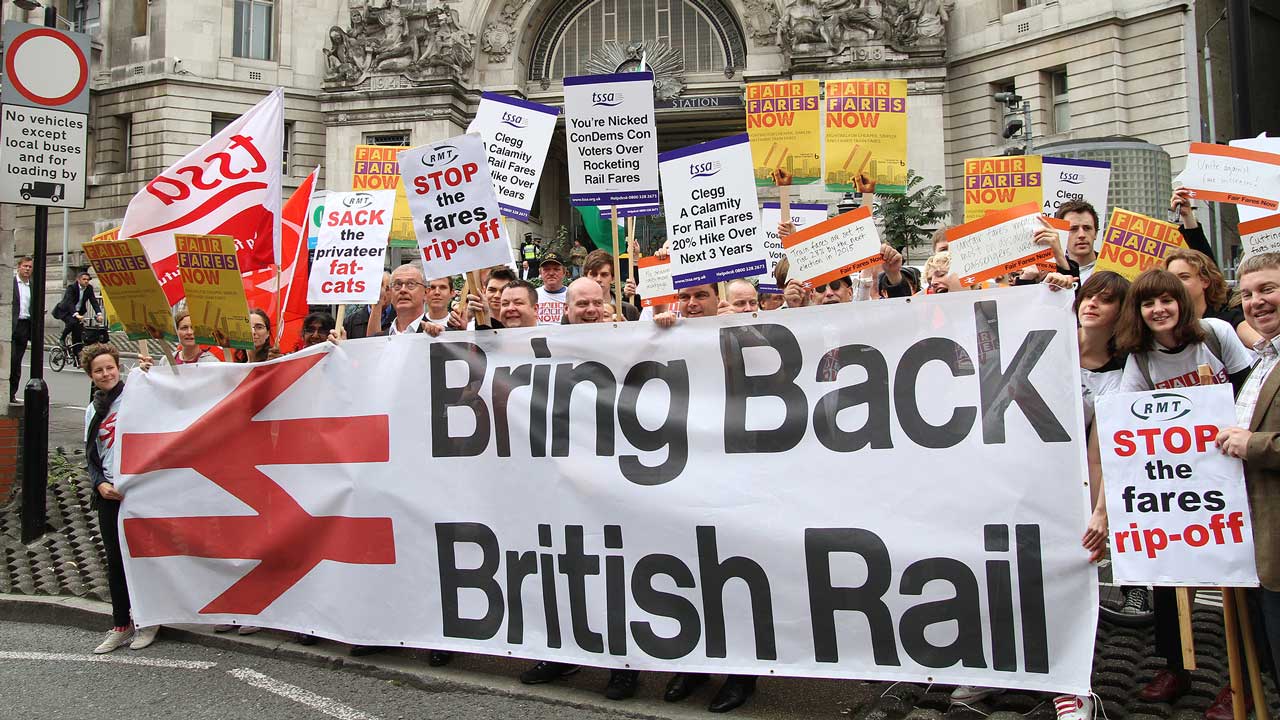
Bring Back British Rail


David Cameron’s cabinet reshuffle dominated the news over the past week – at least, until it was totally overshadowed by world events in Gaza and Ukraine. But the punditry and speculation about who is up and who is down, who succeeded in clawing their way into Cameron’s inner circle and who was excommunicated to the fringes, generally lacked a certain something. Call it relevance.

Beware of anyone offering a neatly packaged, coherent analysis of David Cameron’s cabinet reshuffle so early in its aftermath. There’s a lot of ready made narratives out there – Ken Clarke’s departure heralding the death of the big beasts, the timely promotion of women to the cabinet, the opportunistic promotion of women to the cabinet, the misogynist promotion of women to the cabinet, the triumph of social conservatives, the social conservative purge and the elevation of arch-eurosceptics, to name just a few. The only thing uniting these narratives is that they are quite contradictory, and that they are already out of date.

If you insist on looking for a consistent theme in the Cabinet reshuffle in place of the dull reality (a series of largely independent political calculations by a cautious government), it is not the glaring fact that this was a political reshuffle – paging Captain Obvious – but that it was such a defensive political reshuffle in the run-up to the general election.

With less than a year left of the current coalition government, there was really no point in having a reshuffle at all, from a policy perspective. Little real governing will be done with the coalition partners both manoeuvring to define themselves against each other and take credit for past accomplishments, meaning the only real work left to be done is the cementing and locking down of reforms that have already been made. For all intents and purposes, we are now entering a lame duck session of Parliament.

Given this fact, the most sensible thing for David Cameron to have done – both to achieve the goals of cementing existing government policies and publicly standing behind them – would have been to not have a Cabinet reshuffle at all. But resoluteness and steadfastness was not on David Cameron’s list of priorities. In far too many cases, the personnel changes suggested an apology for successful conservative policy and right-wing thinking in general.

The plain truth is that the conservative agenda – enacted properly and with consideration – works. Privatisation works, welfare reform works (as Fraser Nelson forcefully argued last week), conservative education reform works. Though we should rightly acknowledge and mitigate the negative side effects of weaning people off government aid – and be blunt that these are often counted in terms of human suffering – conservatives should stand unapologetically behind their record, and the ideology which underpins it.

But just when the Conservative Party should be standing up for its beliefs and accomplishments, the coalition government seems more eager to run away from them, to excuse them in the context of “tough decisions to pull the country out of recession”, or to reveal their fear by preventing the proper scrutiny of opposing ideas.

Take the Commons vote to allow the Office for Budgetary Responsibility to audit and pass judgement on Labour Party budget proposals. A confident Tory party that stood behind its accusations of thoughtless left-wing spendthriftery would welcome the harsh spotlight of a non-partisan body like the OBR being shone on official Opposition proposals, but instead the Conservatives made it known (with dubious reasoning) that they were against the proposal.

(It should be noted that in the United States, the equivalent Congressional Budget Office scrutinises draft legislation submitted by both Republicans and Democrats, which further helps to cement its reputation as a non-partisan body).

Look also at the question of railway renationalisation. Pushing an even greater proportion of the British economy into the dead hands of the state is generally a terrible idea, but reflexive Tory opposition to what Ed Miliband and Labour are proposing is counterproductive. Firstly, it glosses over some of the legitimate flaws in the way that the rail privatisation was carried out, and the way in which the privatised railway system is structured. Ignoring legitimate criticism is never the path to good future governance. But secondly, it suggests a lack of confidence in the Tories’ own ideology. If the private sector is so darn efficient and dynamic, what worry should private firms have if the bloated, inefficient state tries to bid for their train franchises, when surely they would lose every single time?

And in the most high profile case of conservative reshuffle apologetics, Michael Gove – one of the few Conservative ministers to successfully enact genuinely bold conservative reforms – was moved away from the Department of Education and demoted to the position of Chief Whip (those arguing that it was not a demotion should compare the salaries of the two roles).

Alarmingly, much of the reaction to Gove’s departure suggested that he was moved on not because his reforms had failed, but because he hadn’t flattered people with enough platitudes while successfully enacting them. The truth about Mr Gove can be discerned by parsing the reaction of Russell Hobby, general secretary of the National Association of Head Teachers. The Telegraph reports Hobby’s view:

“Michael Gove had a radical and sincere vision for transforming education but he often failed to bring the profession with him.

“His diagnosis was frequently astute but his prescriptions were hard to swallow. It is now time to rebuild trust and confidence between government and teachers so that improvements can endure.”

Translated, this means that Gove’s ideas and reforms were quite sound, but he rubbed too many powerful special interests up the wrong way in the course of implementing them. With his removal by Cameron, good policymaking was subordinated to public sector union ego-stroking.

The unions clearly felt that Michael Gove did not respect them – time and time again, in interview after interview with cheerful teachers, this was the constant refrain. After the dust settles, perhaps people will start asking when the pride of the teachers unions and the egos of individual teachers became more important than implementing the best possible education policy for Britain’s children.

At the recent Margaret Thatcher Conference on Liberty, organised by the Centre for Policy Studies think tank, former Australian prime minister John Howard made an important observation. Reflecting on his three successive election victories, Howard said: “The worst way to try to win office is to pretend you’re not too different from your opponents.”

If David Cameron and the Conservative Party are to succeed in their audacious goal of winning an outright majority in the 2015 general election, the path to victory does not lie in pretending to be Ed Miliband’s mollycoddling Labour Party with a small added dose of fiscal realism. If people want a fiscally irresponsible government pledging obsequious servitude to the public sector unions and buying into their pretence of representing the public interest, they will vote for the real thing, not a pale imitation. The Conservative Party must stand behind their limited successful reforms, and promise to double down if they are re-elected to government in 2015.

With the general election less than ten months away, this is no time for small government conservatives to falter.

The Very Model Of A Modern Citizen Politician?

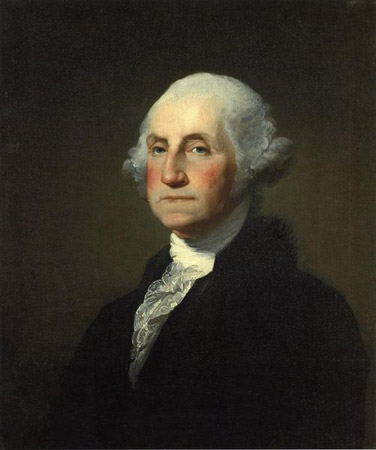
George Washington


Dan Byles, the Conservative MP notable for holding the party’s most marginal seat (North Warwickshire, majority of 54 votes) has announced his intention to stand down at the 2015 general election.

In a statement published on his website, the MP notes:

Before becoming an MP I served in the Army for nine years, deploying on operational tours in Bosnia and Kosovo. By the time of the 2015 General Election, serving my country will have been the primary focus of my professional life for some 14 years. For myself and for my family, whose support and understanding have been unerring throughout, I believe it is now time to move on to new challenges. I will therefore not be standing for re-election in 2015.

While it is sad to see Parliament lose a member of such evident patriotic devotion as Mr. Byles, more than anything else, the news comes as a tremendous surprise because it is so rare to see someone give up power and office so gracefully in modern British politics. Unless they are so unfortunate as to lose their seat in an election, MPs usually cling to their Westminster offices like barnacles to a ship’s hull.

Having undertaken whatever questionable manoeuverings were necessary to be selected as a candidate and then elected to Parliament in the first place, many MPs choose to stay in the politics game for the rest of their careers. And just as the baby boomers delaying retirement creates a lack of entry-level openings at the junior end of the job market, so the legion of sixty and seventy-year-old MPs refusing to step off the gravy train prevents any significant injection of young blood into the senior levels of British politics.

Of course, not all legislators can (or should) breeze into Parliament for a single term as a mere sabbatical from their real-life careers. Parliamentary business (particularly the important, mostly unseen work done in committees) depends on there being knowledgeable, experienced veterans able to see through the nonsense and bring their vast wisdom to bear on proceedings. Just as it would be damaging to have a Parliament exclusively full of big beasts and old-timers, so a Parliament of young and ambitious whippersnappers with their eye on a Cabinet position (or higher) would also be harmful.

But Dan Byles represents a type of politician that is far too rare in Britain – someone willing to serve his constituents in our national legislature with seemingly no further ambition to climb the greasy pole or to engage in Westminster’s devious games.

Sure, there are other young politicians who stay in Parliament for only a short term – as the BBC rightly notes, Byles represents the 23rd Conservative MP to stand down 2015, a significant number of whom also come from the 2010 intake. But this is not the dawn of the citizen politician that it appears to be – the ranks of the departed include those such as Louise Mensch, who arrived with expectations of power and rapid promotion, chafed at the club-like nature of Westminster and the unglamorous life of a backbencher, and departed early after focusing too much on what their government could do for them, as opposed to what they could do for their government.

Think also of the one-time rising stars of the New Labour governments such as James Purnell, who leveraged his brief ministerial career and failed attempt to destabilise Gordon Brown to secure himself a plum job at the publicly-owned BBC (after a spell as chairman of a think tank and public sector advisor to a global consultancy firm).

While there is very little to praise in a long life lived out on the backbench easy street, or a brief incandescent Parliamentary career aborted when the office holder realised there was no room for further personal advancement, there is a lot to praise in someone devoting a limited period of their life – either relatively early in their career like Dan Byles, or later in life at the apex of their career – to serve their constituents and countrymen.

George Washington, the first President of the United States, retired from the presidency in 1797 to tend to his farm and his business interests. True, there was not the same temptation to found self-aggrandising global initiatives, join the ranks of the lobbying industry or make the transition into television punditry back in the late eighteenth century – but even if there were, one suspects that George Washington would have had none of it. After a lifetime of service to his newly born country, he was happy to dissolve back into civilian life. How glib, shallow and egotistical do so many of our contemporary leaders and politicians appear when compared to this Washingtonian ideal of the citizen politician?

It may be the smallest of beginnings, but let the national service and brief Parliamentary career of Dan Byles be a reminder to others – particularly those who hold the most sway over candidate selection, both in the constituencies and in Westminster – that while there is no one model political career, that of the citizen politician is one to aspire to, and one to respect.