When Is The Islamic State Not The Islamic State?

Islamic State - ISIS - Islam - Daesh

Rather than tackle an intractable issue and mortal enemy, our superficial politicians are quibbling over the language we use in describing it

When is the Islamic State in Syria – ISIS – not the Islamic State in Syria?

Apparently the answer to this question is: since a couple of days ago, when the hive mind of lazy politician groupthink decided that we must bend and warp journalistic practice – and the English language itself – in order to make it clearer that the majority of us do not condone the activities of that brutal, backward-looking group of primitive fundamentalists.

My attention has been elsewhere lately – freshly returned from a relaxing and eventful trip to Greece but otherwise more focused on domestic than foreign affairs. So it was surprising to find my attention drawn back by the furious row between the government and the BBC over exactly how the public service broadcaster should refer to the nascent medieval kingdom seeking to establish itself in the middle east.

The Spectator is – quite rightly – having none of it:

‘Isis’ is an acronym of Islamic State in Syria. ‘Isil’ – an acronym of Islamic State in the Levant. Isil is the better translation of the group’s Arabic name al-Dawla al-Islamiya fil-Iraq wa al-Sham – where ‘Sham’ represents greater Syria or ‘the Levant’ as we would say in English.

As for ‘Daesh’, it has the small propaganda advantage of reminding Arabic speakers of Daes (‘one who crushes something underfoot’) and Dahes (‘one who sows discord’). But beyond that childish word association it is no help at all, for ‘Daesh’ is just the Arabic abbreviation of al-Dawla al-Islamiya fil-Iraq wa al-Sham – or the Islamic State in Iraq and the Levant.

All the euphemisms politicians demand we must use to avoid calling Islamic State ‘Islamic State’ therefore call Islamic State ‘Islamic State’. How can they not, for that is its name? And it is no more up to outsiders to change a group’s name than it is up to you to change the names of your acquaintances. Assuming the politicians know what they are doing, they must believe that many voters will not know what ‘Isil’ and ‘Isis’ stand for, or only Arabic speakers will understand the meaning of ‘Daesh’. In other words, they are relying on ignorance and hoping to foster ignorance too.

Never mind the obvious undesirability of government telling the state-owned broadcaster what to report and how to report it – thus proving the central argument against government ownership of the media. Of far more concern is the fact that politicians – specifically our current generation of uncharismatic, uninspiring, superficial leaders – seem to believe that expending time and energy arguing about what to call the Islamic State is more important than doing anything about ISIS in the real world.

Continue reading

EU Bullies Have Overplayed Their Hand In Greek Standoff

Lego Acropolis - Greece - EU - Euro Crisis - 1


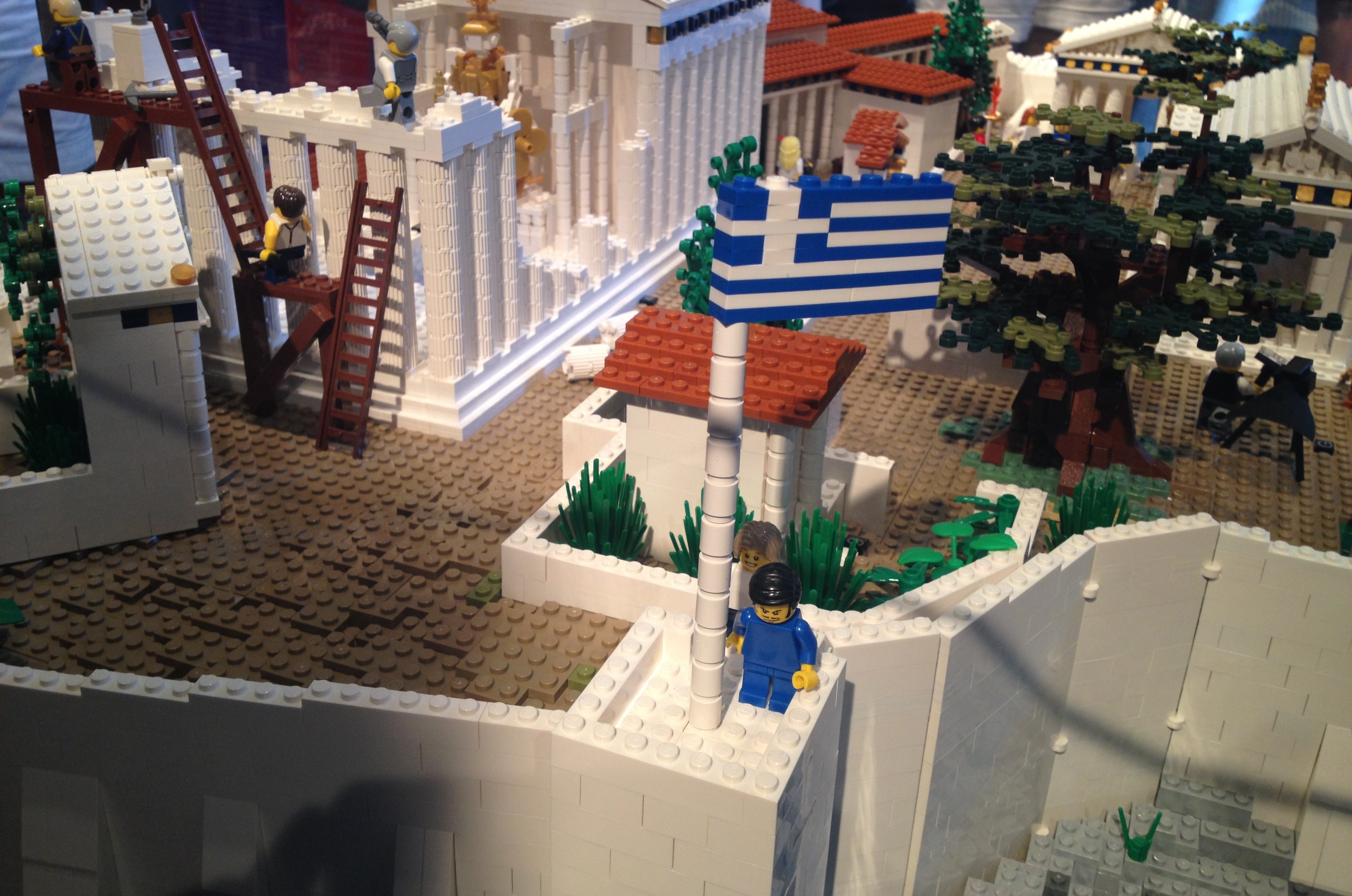
The Greek Euro crisis is not a game; it is a deadly serious question of who really holds the power in the EU and the eurozone – the people or the institutions. Unfortunately, EU bureaucrats and European heads of state have chosen to close ranks and continue their reckless game of chicken with desperate, depression-weary Greece, making a total mockery of European ‘solidarity’.


Anyone hoping that Greece’s dramatic decision to put the EU’s death-by-rolling-bailout terms to a popular referendum might bring the country’s intransigent creditors to their senses will have been sorely disappointed today. Once the initial shock that a sovereign country dared to stand up to to the EU wore off, it soon became apparent that the EU’s leaders were determined to call Greece’s bluff and double down on their uncompromising position.

We should not be surprised. The very idea of a solitary European democracy acting muscularly in its own self interest is clearly horrifying to the EU elite, who have been so busy constructing their unwanted political and economic union that they are no longer capable of even comprehending dissenting opinions.

Of course, the chancelleries of Europe did the bare minimum in order to make a public show of being conciliatory to Greece – emphasising their supposed fraternal concern for the country and desire to help the Greek economy return to growth. But their actions said differently, and spoke volumes about their real priorities.

The Guardian puts it quite plainly:

Continue reading

Greece In Revolt: The Battle Of Popular Democracy vs European Technocracy

Bookshop - Greece - EU - Euro Crisis - Germany


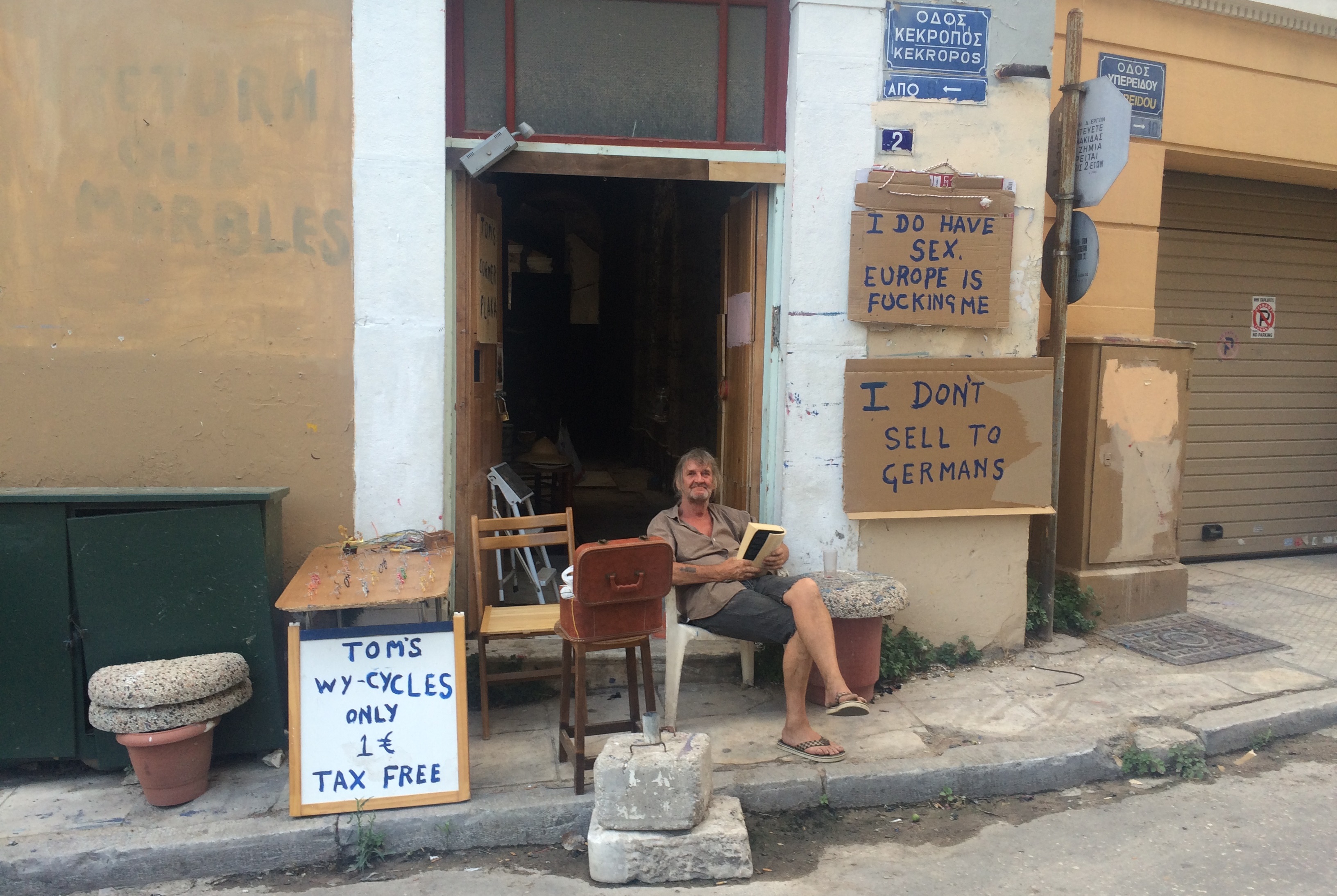
Following a week of vacation, I left Athens for London just hours after Greek Prime Minister Alexis Tsipras made his dramatic address to the nation, stating his intention to put the latest EU bailout offer to a referendum. While the popular islands and tourist areas of central Athens showed few outward signs of the unfolding drama, queues were already forming at ATMs in poorer and more residential areas. The following are my thoughts on the Greek crisis and the behaviour of the international institutions which increasingly supplant national democracy.


No wonder the power brokers of Europe are dazed, confused and spitting with rage. Cyprus meekly fell into line when their turn came. Ireland whimpered and did what it was told. But Greece is displaying a puzzling degree of stubbornness and outright disrespect by failing to behave like a weak supplicant nation with no negotiating power, infuriating the finance ministers and leaders of the other eurozone countries in the process. It’s almost as though, in their arrogance, the Greek government actually believes that its primary duty is to the people of Greece rather than the multinational institutions which now seek to go through the country’s budget and the government’s manifesto with a red veto pen.

Heaven knows that Greece is not without blame in this crisis. A Byzantine system of differing VAT rates, ludicrously early retirement ages, inefficient state-owned industries and unchecked cartels and corruption have all played their part in running up the Greek deficit and ensuring that the last few years of bailout assistance have failed to produce results or return the economy to growth.

But for as long as our world is built on the principle of the sovereign nation state, free people in a free country have the inviolable right to make their own bad choices and then take what measures they see fit to correct these errors through the democratic process. Unfortunately, when nation states are increasingly stripped of their power and influence – having vested them in political institutions like the European Union and monetary unions like the Euro – this is no longer possible. Suddenly, millions of people in far-flung places have a vested interest in decisions taken in one small country, and the democratic will of any one member state is only one consideration among many others competing for consideration.

Continue reading

Meet Britain’s Compassionate, Homicidal Welfare System

Benefits Street - Welfare Trap - Britain


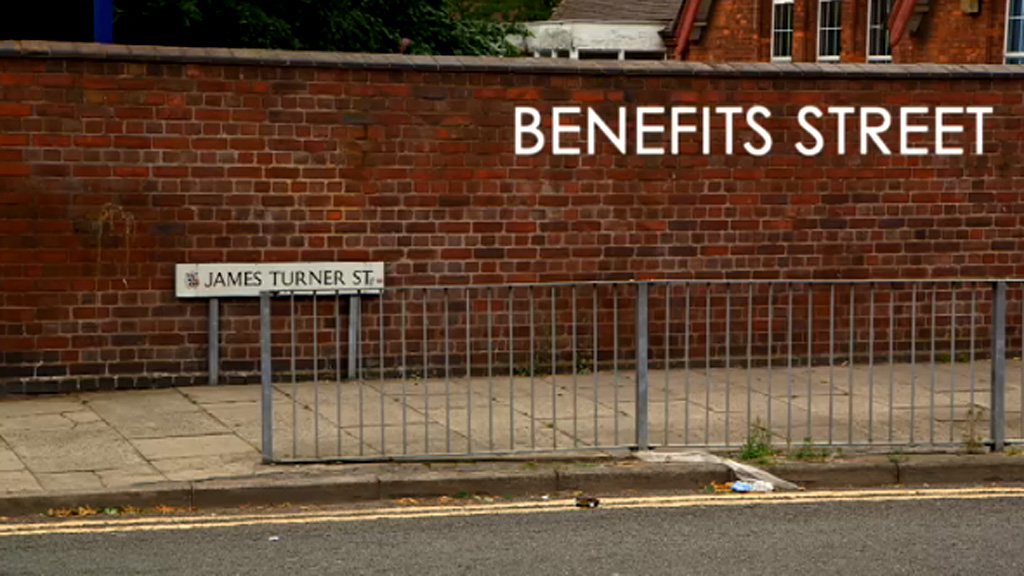
If you are even moderately well-off and suddenly fall on hard times, Britain’s universal welfare system isn’t like landing in a safety net – it’s more like smacking into a concrete floor from a fifty-foot drop.


People generally talk about the British welfare state as some kind of benign presence, maybe in need of a tweak here or there but basically something of which we can be justifiably proud – Britain’s post-war gift to humanity.

This story makes us feel good, so naturally most of us swallow it unquestioningly, nodding along when the NHS is worshipped in a theatrical Mass during the London Olympic Games opening ceremony, or when Just Another Identikit Politician drones on about the importance of “triple-locking” pensioner benefits.

Sadly, it’s all nonsense. The universal welfare state and its organising principle of non-contributory benefits has proven to be one of the greatest self-inflicted evils we have ever wrought in this country, a vast conveyor belt of human misery leading to an incessant grinding machine in which the lives and dreams of countless thousands of our fellow citizens are destroyed each year, while nearly everyone turns and looks the other way.

Usually it’s good when government does not discriminate. Justice, for example, should certainly be blind, as the old saying goes. But when it comes to social security, we choose to regard our welfare system as a “safety net”. Yet any fisherman knows that different nets are needed for different environments, and likewise a one-size-fits-all safety net for citizens experiencing unemployment or hard times simply won’t catch everybody. Some will slip through entirely and crash to the ground, while others will become ensnared and trapped forever. In other words, when it comes to welfare we should actually want the government to actively discriminate.

Continue reading

Why Jeremy Corbyn’s Labour Leadership Candidacy Matters

Jeremy Corbyn - Labour Leadership - Dan Hodges - Tories4JeremyCorbyn - 1

You don’t have to agree with Jeremy Corbyn to welcome his presence in the Labour leadership contest

It is a pity that the inclusion of Jeremy Corbyn in the Labour leadership race is pretty much only being discussed in the context of the growing #Tories4Corbyn movement.

CapX explains the phenomena:

Putting Corbyn on the ballot paper does have one unintended consequence, which is amusing the Conservatives greatly. Suddenly, there is great interest from senior Tories in helping Labour to elect Corbyn, because they think, rightly, that it would equal oblivion for Labour and a generation of Tory rule.

There is a practical way Tory voters can help, the Conservatives have realised. For just £3 anyone can sign up as a Labour supporter and a get a vote in the party’s leadership contest. On Twitter, Ruth Davidson, the Scottish Tory leader, has already described getting the chance to help make the completely unelectable Jeremy Corbyn Labour leader as a notable bargain.

This Tories4JeremyCorbyn movement could take off. How long before someone establishes a website and Twitter account explaining how Tory voters can win it for Jeremy?

This is all well and good, but it is also a distraction, the type of fun Westminster parlour games that the political class like to play to entertain themselves, leaving the vast majority of Britons either oblivious or turned off. Meddling in the other side’s leadership election might elicit smirks and chuckles in the Westminster Arms, but it hardly does anything to improve the reputation of a political class seen as totally cut off from the people.

Continue reading