Highly worth reading and watching, reporting about Edward Snowden’s recent interview for German television, courtesy of Jonathan Turley’s blog. This interview has received little coverage in the UK or US media.
Last Sunday, former NSA contractor and whistleblower Edward Snowden was interviewed for the German television network ARD. The interview was big news in Germany and much of the world in both print and broadcast media. However, the interview appears to have been blocked intentionally by US government authorities. In fact, the media in the US appears to have gone to ‘radio silence’ about it. It has been posted on YouTube several times, but is taken down almost immediately. The video site Vimeo has it embedded, but as I write this, Vimeo is under a DDoS attack. LiveLeak also has it, and that video is embedded in this report by Jay Syrmopoulos for Ben Swann’s news page.
Mr. Snowden spoke candidly in a thirty-minute English language interview with the reporter from ARD.
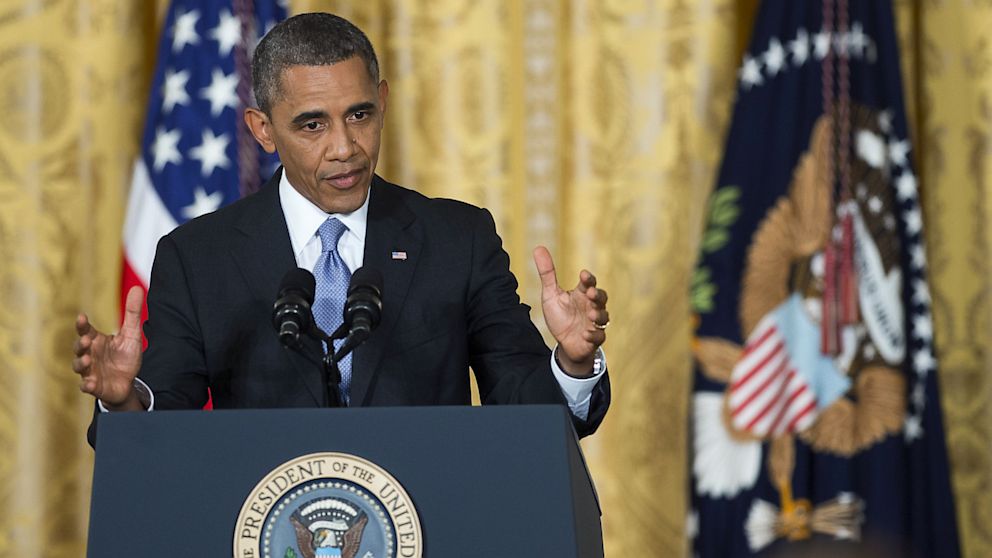
Evidently given prior notice of the dissatisfaction that was certain to fall on his head should he fail to announce any substantive changes to the bulk telephony data collection programme that flourished under his administration, President Obama triangulated and managed to set out a plan that included the illusion of substantive changes. It may prove enough to fool the trusting and the credulous, but there are precious few of those sorts of people left to be fobbed off.
President Obama, declaring that advances in technology had made it harder “to both defend our nation and uphold our civil liberties,” announced carefully calculated changes to surveillance policies on Friday, saying he would restrict the ability of intelligence agencies to gain access to telephone data, and would ultimately move that data out of the hands of the government.
But Mr. Obama left in place significant elements of the broad surveillance net assembled by the National Security Agency, and left the implementation of many of his changes up to Congress and the intelligence agencies themselves.
The one announcement not earlier anticipated by the New York Times was the fact that the president may be slightly more amenable to the idea of telecommunications companies or as-yet unspecified third parties holding the unconstitutionally-gotten telephony metadata, rather than the NSA itself. The Times reports:
On the question of which entity will hold the storehouse of phone metadata, the president said Mr. Holder would make recommendations in 60 days. Privacy advocates have called for telecommunications providers to keep the data, though many of the companies are resisting it.
And resist they should. Due to the sensitive and highly politically charged nature of the data being held, why would a private firm wish to open itself to potential liability from lawsuits by hosting the data? Furthermore, unsavoury and unconstitutional though it may be for the government to be collating this data, it is probably more secure in the hands of the paranoid and capable people at the NSA than it would be in some corporate data centre.
But all of this is beside the point – it is not the question of where the data is hosted that upsets civil libertarians. If someone robbed banks for a living, the main concern of the public would not be where the robber is hiding the stolen cash before laundering it, it would be the fact that he is robbing banks in the first place. Similarly, the point of contention here is not whether the US government or private telecommunications companies holds vast troves of data about the telephone calls made by US and foreign citizens – it is the fact that the government seeks to monitor and check this information without a warrant to do so in the first place.
It is hard to listen to anything that Obama says on the issue of national security and privacy without remembering that he wouldn’t be saying anything at all had his clandestine spying apparatus not been revealed to the world by Edward Snowden, and that the debate that he now seeks to claim credit for starting would, if he had his way, be held only between competing interests in government, well out of the view or input of the public.
The crux of this tactic is that US political leaders pretend to validate and even channel public anger by acknowledging that there are “serious questions that have been raised”. They vow changes to fix the system and ensure these problems never happen again. And they then set out, with their actions, to do exactly the opposite: to make the system prettier and more politically palatable with empty, cosmetic “reforms” so as to placate public anger while leaving the system fundamentally unchanged, even more immune than before to serious challenge.
And how cosmetic these proposed “reforms” really are. Caught in the act of carrying out unconstitutional searches and intrusions into the private communications of US citizens, the president’s response is not to admit any fault, but to utter meaningless platitudes about the importance of “America’s values” while changing nothing of any substance at all:
And now we have the spectacle of President Obama reciting paeans to the values of individual privacy and the pressing need for NSA safeguards. “Individual freedom is the wellspring of human progress,” he gushed with an impressively straight face. “One thing I’m certain of, this debate will make us stronger,” he pronounced, while still seeking to imprison for decades the whistleblower who enabled that debate. The bottom line, he said, is this: “I believe we need a new approach.”
I have just finished reading the excellent essay by George Orwell, “Politics and the English Language”. As well as helping me to realise just how pretentious and cumbersome my own writing can sometimes be on this blog (for which I can only apologise and pledge to try harder), it furnished me with this gem, this eternal truth:
If you simplify your English, you are freed from the worst follies of orthodoxy. You cannot speak any of the necessary dialects, and when you make a stupid remark its stupidity will be obvious, even to yourself. Political language – and with variations this is true of all political parties, from Conservatives to Anarchists – is designed to make lies sound truthful and murder respectable, and to give an appearance of solidity to pure wind.
And this one:
In our time, political speech and writing are largely the defence of the indefensible … Thus political language has to consist largely of euphamism, question-begging and sheer cloudy vagueness. Defenceless villages are bombarded from the air, the inhabitants driven out into the countryside, the cattle machine-gunned, the huts set on fire with incendiary bullets: this is called pacification. Millions of peasants are robbed of their farms and sent trudging along the roads with no more than they can carry: this is called transfer of population or rectification of frontiers … Such phraseology is needed if one wants to name things without calling up mental pictures of them.
President Obama, justifying the intrustive actions of the NSA and seeking to cast his proposed cosmetic reforms in a favourable light, and himself as a champion of individual liberty, said this:
“In an extraordinarily difficult job — one in which actions are second-guessed, success is unreported, and failure can be catastrophic — the men and women of the intelligence community, including the NSA, consistently follow protocols designed to protect the privacy of ordinary people,” he declared. “What sustains those who work at NSA and our other intelligence agencies through all these pressures is the knowledge that their professionalism and dedication play a central role in the defense of our nation.”
And yet, in our rush to respond to very real and novel threats, the risks of government overreach – the possibility that we lose some of our core liberties in pursuit of security – became more pronounced. We saw, in the immediate aftermath of 9/11, our government engaged in enhanced interrogation techniques that contradicted our values. As a Senator, I was critical of several practices, such as warrantless wiretaps. And all too often new authorities were instituted without adequate public debate.
Through a combination of action by the courts, increased congressional oversight, and adjustments by the previous Administration, some of the worst excesses that emerged after 9/11 were curbed by the time I took office. But a variety of factors have continued to complicate America’s efforts to both defend our nation and uphold our civil liberties.
The “worst excesses” to which Obama refers? Torture. Extraordinary rendition. Illegal search and invasion of privacy. But “techniques that contradicted our values” sounds so much better, so much more clinical and so much less descriptive of what happened.
It appears from early reports that President Obama intends to punt on the only recommendations made by his surveillance review group that contained any real meat or hope of unpicking the harms done to the fourth amendment.
Mr. Obama plans to increase limits on access to bulk telephone data, call for privacy safeguards for foreigners and propose the creation of a public advocate to represent privacy concerns at a secret intelligence court. But he will not endorse leaving bulk data in the custody of telecommunications firms, nor will he require court permission for all so-called national security letters seeking business records.
In short, the president is determined to continue bulk collection of communications data undeterred, but is willing to play around with the details of who stores the data (the government, the telecoms companies or some kind of shadowy third party consortium), and in a grand gesture to civil libertarians he is willing to promise to actively monitor the communications of acquaintances of acquaintances of a potential suspect, rather than the current acquaintances of acquaintances of acquaintances. This gesture slightly reduces the chance of Kevin Bacon’s communications being flagged as in some way being linked by the NSA to every terrorist in the world, but is otherwise entirely meaningless.
Amen.
Foot-dragging, empty gestures and a continued lack of transparency or accountability from anyone involved. So far, so predictable, perhaps.
But what I find slightly more concerning is the way in which the judiciary (at the behest of Chief Justice John Roberts) is seeking to weigh in on what ultimately is a matter of policy, as the New York Times notes:
The developments came as the nation’s judiciary waded into the highly charged debate. In a letter made public on Tuesday, a judge designated by Chief Justice John G. Roberts Jr. to express the views of the judicial branch warned that some changes under consideration would have a negative “operational impact” on a secret foreign intelligence court.
Judge John D. Bates, a former chief judge of the Foreign Intelligence Surveillance Court, urged Mr. Obama and Congress not to alter the way the court is appointed or to create an independent public advocate to argue against the Justice Department in secret proceedings. Any such advocate, he wrote, should instead be appointed only when the court decided one was needed.
Of course, there need not necessarily be anything sinister about this intervention – apparently made on the grounds that it would eat up too much of the court’s time and create excessive workload if they were required to approve all FBI requests for stored bulk records – but it does seem rather odd to me, at face value, that the judiciary is more eager to weigh in on policy proposals when there is a threat to the smooth running of their working day than they are when there is a plausible argument to be made that the government is acting beyond its constitutional authority. The Times also picks up on this:
It is highly unusual for judges to weigh in on public policy debates involving the other two branches of government, but Judge Bates, the director of the Administrative Office of the United States Court, said that Chief Justice Roberts had designated him to “act as a liaison” and that he had consulted other judges.
But again, this is early reporting with the full details of Obama’s upcoming speech and the work behind it not yet made public.
One begins to wonder why President Obama sets up these review boards or commissions, other than as a cosmetic exercise to give the appearance of open-mindedness and willingness to change course. The Bowles-Simpson debt commission forged a tough but real consensus on reforms to American taxation and spending, and was high-handedly dismissed by the administration, and now it appears that the same is about to happen when another of President Obama’s talking shops is due to report back.
Just enough to annoy the Patriot Act manics and those in the national security complex, and far too little to placate civil libertarians rightly concerned about government overreach that we would never have even been made aware of were it not for the actions of Edward Snowden.
The Obama administration’s lack of anything approaching humility or transparency, even after having been caught in the act, is depressing indeed.
Some very disturbing new findings about the extent to which the US government uses the vast power of its surveillance apparatus to tackle suspected domestic crime. Of course, up until this point we had been reassured that the draconian collection of telecommunications metadata and the full-on tapping of telephone calls and online communications was used only to help prosecute the “War On Terror”. This has now been revealed to be a total sham.
Rachel Maddow breaks down the extent of this surreptitious, lawless activity on her show:
Reuters has uncovered previously unreported details about a separate program, run by the U.S. Drug Enforcement Administration, that extends well beyond intelligence gathering. Its use, legal experts say, raises fundamental questions about whether the government is concealing information used to investigate and help build criminal cases against American citizens.
The DEA program is run by a secretive unit called the Special Operations Division, or SOD. Here is how NSA efforts exposed by Snowden differ from the activities of the SOD:
Purpose of the programs
NSA: To use electronic surveillance to help the Federal Bureau of Investigation catch terrorists, the U.S. military fight wars, and the Central Intelligence Agency collect intelligence about foreign governments.
SOD: To help the DEA and other law enforcement agents launch criminal investigations of drug dealers, money launderers and other common criminals, including Americans. The unit also handles global narco-terrorism cases.
So to be perfectly clear – the United States government has explicitly decided to allow this vast spying program to be turned inwards to aid local law enforcement in their daily mundane activities. According to the (already flimsy) assurances that we were given when Edward Snowden blew the whistle on the NSA’s secret programmes, the spying apparatus was to be used only to seek out and intercept communications between non-US citizens that represented a terrorism threat. But it turns out that this is not the case. If an intelligence analyst happens to eavesdrop on your telephone call and finds out that you want to (hypothetically) buy some pot from your friendly local drug dealer, that information might then be surreptitiously passed on to the DEA, who could then come and raid your home. Based on intelligence which they have no right to be privy to.
But worst of all is this bombshell:
Disclosure to the accused
NSA: Collection of domestic data by the NSA and FBI for espionage and terrorism cases is regulated by the Foreign Intelligence Surveillance Act. If prosecutors intend to use FISA or other classified evidence in court, they issue a public notice, and a judge determines whether the defense is entitled to review the evidence. In a court filing last week, prosecutors said they will now notify defendants whenever the NSA phone-records database is used during an investigation.
SOD: A document reviewed by Reuters shows that federal drug agents are trained to “recreate” the investigative trail to conceal the SOD’s involvement. Defense attorneys, former prosecutors and judges say the practice prevents defendants from even knowing about evidence that might be exculpatory. They say it circumvents court procedures for weighing whether sensitive, classified or FISA evidence must be disclosed to a defendant.
Local and federal law enforcement officers are actually being trained – instructed – to cover up the fact that the evidence they use to come and arrest you was unlawfully shared by the folks at the NSA. Apparently the clinical, non-threatening term for this is “recreating the investigative trail”. So rather than going to court and admitting that your evidence against the accused came from an NSA tip-off based on illegal spying by the government, agents are encouraged to falsify the account of their investigations and potentially perjure themselves by stating on the record that it was their own brilliant deductive and crime-solving abilities which led to the arrest.
It is hard to adequately describe how foul, deceitful and criminal this behaviour really is.
There was no excuse for allowing the NSA to violate the fourth amendment protection against unreasonable or unwarranted searches when it pertained to potential terrorism. There is certainly no excuse for widening this harassment in aid of civilian law enforcement.
Semi-Partisan Sam says no. This oppressive “national security” apparatus must be rolled back, and those responsible for willfully violating the Constitution must face the legal consequences of their actions.
I have so much to say about the shocking NSA unconstitutional spying scandal blown wide open by whistleblower Edward Snowden and journalist Glenn Greenwald that I barely know where to begin.
So I shall begin with a tangent – the repercussions of the case over in Britain, where scandal has erupted because it turns out that Britain’s intelligence-gathering departments have had access to the US PRISM system for a number of years, and have made use of it on occasions to eavesdrop on the conversations of British citizens.
This should be causing people to light flaming torches and take to the streets, but as it stands today in docile modern day Britain, Prime Minister David Cameron is just being made to squirm a bit. The Huffington Post reports:
The foreign secretary, who is due to make a statement on the allegations in the Commons later, has said the law-abiding British public had “nothing to fear” from the work of GCHQ.
However MPs are likely to press Hague on whether the intelligence service has always abided by the legal framework.
Sir Malcolm Rifkind, the chairman of the ISC, told BBC Radio 4’s Today programme that GCHQ would have needed to ask ministers before requesting information on British citizens’ internet activity from the United States.
How comforting. But worst of all were the comments from David Cameron himself, who thought that these flimsy, meaningless words would serve somehow to placate us:
David Cameron has said British intelligence agencies operate “within a legal framework”, as MPs prepare to grill William Hague on GCHQ’s involvement with the American Prism internet surveillance system.
“I think it is right that we have well-organised, well-funded intelligence services to help keep us safe,” the prime minister said on Monday morning.
“But let me be absolutely clear. They are intelligence services that operate within the law, within a law that we have laid down, and they are also subject to proper scrutiny by the intelligence and security committee (ISC) in the House of Commons.”
What the hell does this garbage even mean?
British intelligence agencies are operating within a legal framework. Okay, what legal framework?
He thinks that it’s right to have an intelligence service? Who on earth was saying that it wasn’t?
But the final line is the worst, where he says that the intelligence services are operating within “a law that we have laid down”. Oh, well that’s fine then, let’s all go home.
Does David Cameron at any point mention the particular law under which the intelligence services are operating? Or when this law that “we” laid down was written, voted on and approved? Of course he doesn’t! And I, for one, would rather like to know.
Do you see the difference between having a written constitution and not having one? Do you?
Even if (as in the United States), the President and his administration choose to brazenly flout it, the written constitution at least gives a frame of reference when it comes to determining whether an action is acceptable or unacceptable. Contrast this with Britain, where the most basic laws of the land can (and often are) changed on a whim by the elected dictatorship of a majority government. In Britain, if we are told that a government action that we disagree with is “lawful”, there is no end of Acts and Amendments and revisions and EU law and whatever else to sort through in order to work out whether or not it is so.
The result, of course, is that the British don’t even try. We might kick up a bit of a fuss if someone catches David Cameron devouring live puppies in the alley behind Downing Street one warm summer night, but once his spokesman assures us that he was acting “within the law, within a law that we have laid down”, we would all meekly nod, and let him get back to his puppy-butchering.
This is unacceptable. William Hague and David Cameron need to make crystal clear not only the laws currently on the statute books which allow for spying on the communications of a British citizen (with or without a warrant), but also the specific criteria that the intelligence services use, or at least the threshold of evidence that must be met, when selecting an individual for such a breach of their privacy.
Not that it much matters. David Cameron has lost my vote today.

 Last Sunday, former NSA contractor and whistleblower Edward Snowden was interviewed for the German television network ARD. The interview was big news in Germany and much of the world in both print and broadcast media. However, the interview appears to have been blocked intentionally by US government authorities. In fact, the media in the US appears to have gone to ‘radio silence’ about it. It has been posted on YouTube several times, but is taken down almost immediately. The video site Vimeo has it embedded, but as I write this, Vimeo is under a DDoS attack. LiveLeak also has it, and that video is embedded in this report by Jay Syrmopoulos for Ben Swann’s news page.


 Semi-Partisan Politics