General Election 2015: The Morning After The Night Before

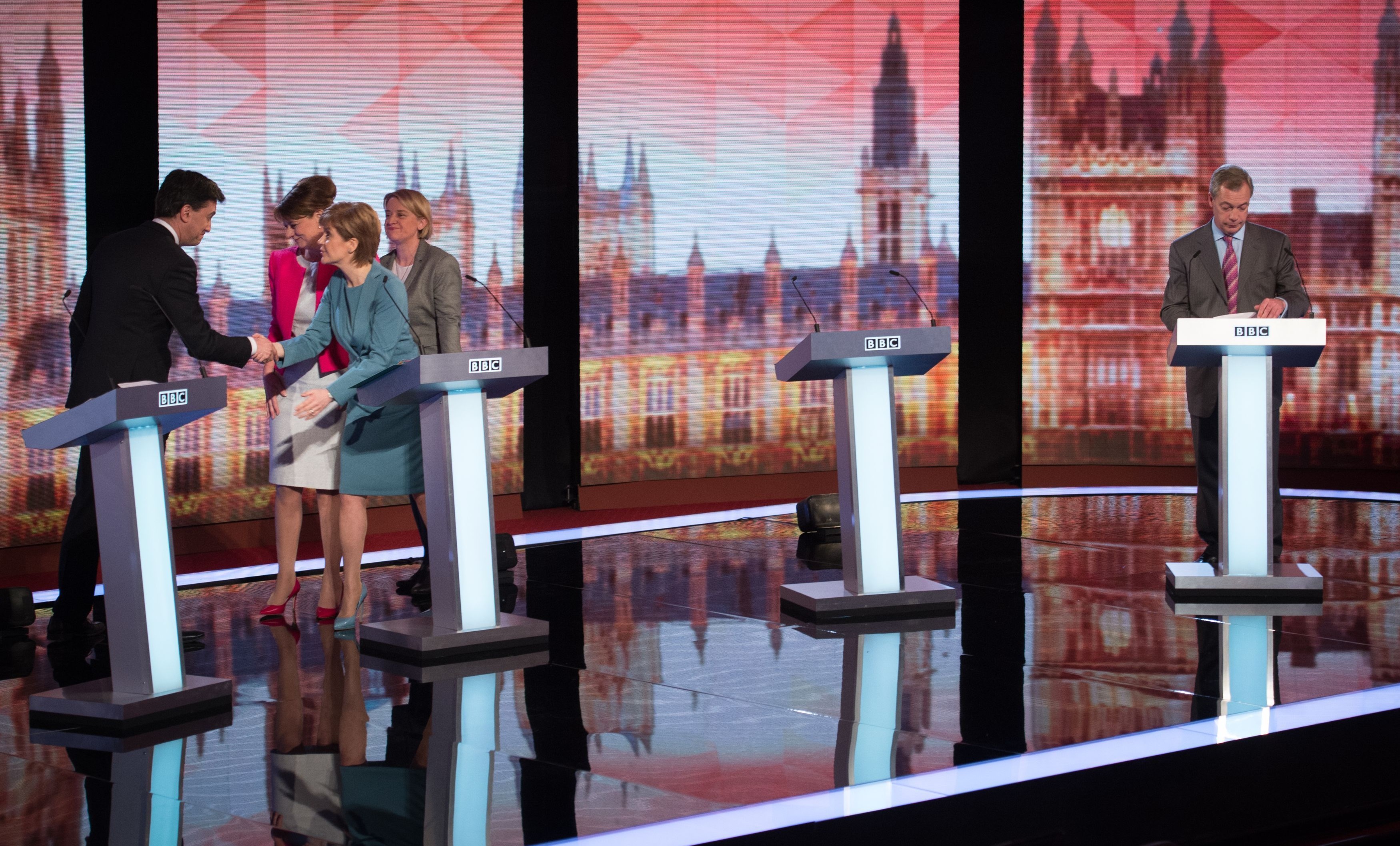
David Cameron - Conservative Party - General Election 2015 - Tories Win

On the eve of the 2015 general election, this blog complained:

David Cameron, the Prime Minister I supported for much of these past five years – and for whose party I voted in 2010 – spent the last day of the election campaign not making a powerful case for real conservative stewardship of the country, but by indulging in petty scaremongering about a Labour victory and pre-emptive expectation setting around the “legitimacy” of rival claims to power in the certain event of a hung parliament.

Well, inspiring or not, the Prime Minister’s strategy worked magnificently. David Cameron may have failed to inspire the British people with a burning, urgent vision for conservative government, but at least he managed (through endless repetition) to remind us that the economy is growing again under the Tories, and that a Labour-SNP coalition could put it all at risk.

And now, where only hours ago we expected the political parties to be commencing the first of many fraught rounds of coalition negotiations, instead we see David Cameron being driven to Buckingham Palace to meet the Queen, while the other parties (save the astonishing SNP) quickly and mercilessly dispatch their failed leaders.

First and foremost, this election result is a resounding defeat for Labour, and the confused non-values it stood for during the 2015 campaign. Having both repudiated the centrism of New Labour and failed to return the party to its ideological roots, putting himself in the ludicrous position of being against the Tories but not for a tangible vision of his own, Ed Miliband has brought Labour to complete and utter electoral ruin.

Ed Miliband went to his political Armageddon today flatly refusing to accept that Labour had made any mistakes during their last thirteen year spell in government, at least as far as the economy and public spending were concerned. The electorate took one look at this outright denial of reality and determined that the Son of Brown could not be trusted to take stewardship of the finances again.

But almost nobody expected the Labour Party to perform this badly against the Conservatives – poll after poll showed the Tories and Labour in a virtual dead heat. So when the exit poll results were announced at ten o’clock last night, people scarcely believed them. Paddy Ashdown confidently remarked that he would eat his hat if the Liberal Democrats were reduced to ten MPs. They currently have just eight. UKIP supporters (including yours truly) were convinced that UKIP would win more than two seats, picking up at least Thanet South or Thurrock. But only Douglas Carswell now remains, cutting a lonely figure.

Continue reading

After Brexit We Can Strengthen The Bonds Of The Anglosphere

Anglosphere - Brexit - European Union - EU - United Kingdom - Britain - England


By Ben Kelly, blogger and editor of The Sceptic Isle.

The recent plea from Nile Gardiner of the influential US think-tank The Heritage Foundation was a pleasing reminder that there are still some voices in the US who see the merits of an independent United Kingdom. It is unfortunate that official US policy is to compel Britain to remain within the union as part of its desire to see a united Europe modelled on its own image.

Such homogeneity is easier to interact with diplomatically and also easier to manipulate and handle in matters of foreign affairs, such has been the case in US support for a politically loaded association agreement between the EU and Ukraine.

The US administration has little time for the concerns of British EU-sceptics, such as conserving the independence of our legal system and our foreign, economic and security policy, and restoring the sovereignty of parliament. This is a shame because a Britain integrated into the EU and unable to act independently will be a limited ally and a far weaker friend to the United States.

American conservatives especially should see the merits in an independent UK. They have in the past called for greater economic ties, they should also champion the conservation of our culture of liberty, law, government and economic freedom; the sturdy foundations their own great country is built upon. These are our common traits and they are being eroded and threatened by EU integration.

In 1952, then-U.S. Secretary of State Dean Acheson said that “Britain has lost an empire but has failed to find a role.” Its role should have been one befitting the mother of the Anglo-sphere. A role as a global champion of the liberty, democracy and rule of law nurtured on this island and spread across the globe.

Continue reading

Chuka Umunna Plays The Race Card

Chuka Umunna - UKIP- Nigel Farage - Immigration - Race Card - General Election 2015


There are few more toxic accusations in British public life than that of racism.

To be accused of racism by anyone with a high profile and a media platform is the modern day equivalent of being tarred and feathered – the allegations stick indelibly in the public memory, impossible to scrub away, while everything you do subsequently will be viewed suspiciously through that ugly, distorting prism – “he may have only said X, but we all know he really means Y, because he’s a racist”.

Consequently, decent and honourable people should be damn sure of their facts before throwing the word “racist” around – it summons visceral recollections and images of real-life prejudice, discrimination, attacks and lynchings, murders and even genocides; the Jim Crow laws in America and the spectre of Enoch Powell in Britain.

Unfortunately, Labour’s Shadow Business Secretary, Chuka Umunna, has once again demonstrated that he is neither honourable nor decent, using an interview with the Independent on Sunday as a free opportunity to throw some more mud at UKIP ahead of polling day next week:

Nigel Farage and Ukip “hate modern Britain” and have a “problem with race”, Chuka Umunna says in an interview withThe Independent on Sunday.

The shadow business secretary, whose father was born in Nigeria, responded to the Ukip leader’s description of two of Ukip’s spokesmen as “fully black” and “half black” by saying there is a “virus of racism” that runs through Mr Farage’s party. Mr Umunna added that, by contrast, a Labour government would celebrate British multiculturalism and refuse to bow to “anti-immigration sentiment”, which, he said, had been whipped up by Ukip.

Mr Umunna was speaking during a visit to the Croydon Central constituency, where Labour’s candidate Sarah Jones is hoping to overturn a Conservative majority of 2,879 currently held by Gavin Barwell. He mounted a staunch defence of the benefits of immigration to the UK, although refused to condemn the Labour Party mug that trumpeted “Controls on Immigration”.

Put simply, Chuka Umunna’s latest “smoking gun” evidence of endemic UKIP racism and prejudice consists of the fact that Nigel Farage used the terms “fully black” and “half black” when speaking about people shown in the UKIP manifesto.

Continue reading

Election 2015: Why Won’t David Cameron Talk More About Europe?

David Cameron - Conservative Party- Brexit - Britain and Europe - General Election 2015


We need to talk about Europe.

With Labour and the Tories deadlocked in the polls and Britain on course for a hung parliament, The Spectator asks an interesting question: in an effort to break the deadlock, why won’t David Cameron and the Conservative Party start “banging on about Europe”?

From The Speccie’s leading article:

It is hardly as if the issue of an in-out referendum has been neutralised. David Cameron, in committing himself to such a poll, seemed to be in a strong position over Ed Miliband, who has declined all pressure to follow suit. Cameron can justifiably say to anti-Europeans that a vote for him is the only way to ensure that the country has a chance to reject EU membership. For EU supporters, he is offering the chance to settle the matter of Britain’s membership for a generation to come. And for sceptics in the middle who want to be part of the EU, but a reformed one, he is promising renegotiation of Britain’s terms.

Ed Miliband’s position, by contrast, is simply one of denying the people a say on an issue which divides the country — on the basis that voters cannot be trusted with such questions. It is entirely believable, should Labour come to some sort of pact with the SNP after the election, that we will end up having two referendums on the subject of Scottish independence, with the EU question remaining unresolved. Even the pro-EU Greens want an in-out referendum on the — for them, unusually solid — grounds that the issue of Britain’s membership will be an issue until it is seen to have renewed democratic legitimacy.

The Spectator concludes:

David Cameron ought to be turning European turmoil to his electoral advantage. With Ukip at around 13 per cent, he would win a strong Conservative majority if only he could persuade a quarter of Ukip’s potential voters over to his side. Contrary to talk about the left being in advance, the conservative parties (the Tories plus Ukip) between them are registering a substantially bigger slice of the vote than in 2010.

But this is where the Spectator’s analysis falls down – the misplaced assumption that if only David Cameron talks more naturally about his personal beliefs and the Conservative Party’s official policy on the European Union, hordes of recently defected UKIP voters would return to the Tory fold.

People don’t generally support UKIP just because they want Britain to go through the democratic exercise of holding a referendum on our membership of the EU, letting the chips fall where they may. They support UKIP because of all Britain’s non-extremist political parties, Nigel Farage’s gang is the only one that unequivocally disagrees with remaining in the European Union under more or less any circumstances. Gaining popular consent may be great, but the goal is Brexit – and UKIP are the only party who are committed to that end.

From this perspective, David Cameron’s pitch to the electorate is little better than Ed Miliband’s – both say that they want to get the “best deal” for Britain in Europe (whatever that may be), but when push comes to shove, neither of them believe the EU to be a fundamentally flawed, undemocratic or threatening to British interests. If they did, we wouldn’t be talking about a referendum, Britain would secede tomorrow.

Why would UKIP’s growing ranks of supporters vote Conservative when they know that they will get a Prime Minister and government that may honour their promise to hold a referendum, but then in all likelihood campaign for Britain to remain part of the EU after the largely cosmetic “renegotiations” are complete? More to the point, why would a rational voter vote for wishy-washy feigned euroscepticism when there is another party (UKIP) and another leader (Nigel Farage) who still trusts the British people to have their say, but is actively committed to campaigning for Brexit?

UKIP supporters have generally made up their minds that the EU – with its growth-sapping regulation, control-freakish infringement on national sovereignty and persistent undermining of the nation state through common security and borders policies – is a bad thing. They may understand that the rest of the country needs a little more time to educate itself and arrive at the same conclusion, but they do not expect the party they vote for on 7 May to have to go through the same tortuous process. Ukippers want out, as soon as possible, because they believe that this would be best for the country – the clue comes in large letters on the front page of their manifesto, titled “Believe in Britain”.

So to answer the Spectator’s original question, there is a very good reason why David Cameron has not spent – and will not spend – more time in this election campaign “banging on about Europe”. True eurosceptics, especially the ones who have made the leap to UKIP, know that David Cameron’s offering of a referendum is a move intended only to placate his party’s right wing, not a promise borne of a personal desire to free Britain from the EU. Therefore, every day that David Cameron spends talking about Europe is another day he alienates the Europhiles and the politically indifferent, while winning back only a small fraction of the UKIP vote.

You can observe the deafening silence from the Conservative Party on Europe and admire David Cameron’s political radar and message discipline, or you can despair that the Prime Minister simply doesn’t see Britain’s emancipation from the European Union machine as a cause worth fighting and risking political office for. But either way, it’s no accident that the EU is the non-issue of the 2015 general election campaign.
BBC Election Debate: A Smug Festival Of Left Wing Groupthink, Plus UKIP

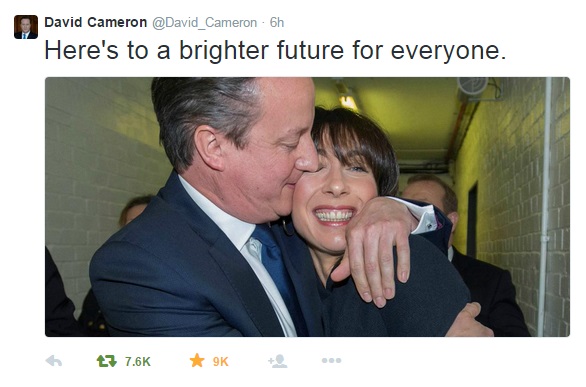
BBC Challengers Debate - Leaders Debate - General Election 2015 - Nigel Farage Stands Alone


“Work with us to keep the Tories out of government!”

“If we work together, we can lock Cameron out of Number 10.”

“We have a chance to kick David Cameron out of Downing Street. Don’t turn your back on it, people will never forgive you…”

Rabble, rabble, rabble.

To watch the leaders of Labour, Plaid Cymru, the SNP and the Green Party plead with the audience – and each other – at last night’s BBC Election “Challengers” Debate, you would think that Britain faced the awful prospect of some fascist or totalitarian party seizing power on 8 May this year, thus requiring all decent people to put aside their differences and band together in solidarity against a visceral, urgent threat to our way of life.

But the hideous spectre conjured by Ed Miliband, Leanne Wood, Nicola Sturgeon and Natalie Bennett is not a latter-day Adolf Hitler or Joseph Stalin – or even a contemporary African tin-pot dictator. No, we are asked to believe that the mortal threat to Britain and her people comes  in the pale, patrician form of David Cameron – who has already held the top job for five years without successfully summoning the apocalypse – perhaps propped up by the equally unthreatening Nigel Farage (Nigel being just the type of fearsome name that strikes terror into the heart of even the bravest soul).

The British left is used to preaching to the choir and percolating in its own intellectual laziness, having long ago purged from the bubble anyone who doesn’t reflexively Hate the Tories and abhor right-wing ideas. But today we witnessed Britain’s four left wing party leaders construct and imprison themselves in a bubble of their own making, right on the stage at Westminster Central Hall.

From the BBC’s account of the debate:

Continue reading