Everyone Is Still Fudging The Truth On Immigration

Britain Immigration EU


The Telegraph’s Morning Briefing email, produced by Stephen Bush, always provides a good summary  of the day’s political highlights, but today one story in particular stands out. Riffing on the old complaint “They come here, they take our jobs”, Bush cites several articles citing a UCL study which point out that EU migrants actually made a net contribution to the British economy when tax contributions and welfare claims are compared, joking “Coming over here, adding £20bn to our GDP…”

Predictably, the newspapers immediately fall into their partisan groupings to spin the news. From the Morning Briefing summary:

“£120bn cost of Labour’s policy on immigration” is our splash. “UK gains £20bn from EU migrants” sayeth the Guardian. “EU migrants add £2obn to the economy in a decade” cheers the Indy.  A study running by two leading migration experts at UCL has thrown further light on the costs and benefits of migration. Migrants from within the EU contribute £20 billion to the British economy, with immigrants from the original 15 EU countries contributing 64% more to the Exchequer than they took out in services and migrants from eastern Europe added 12% more than they took out.

It would be hard to concoct a sample of headlines and statistics that did more to obfuscate and confuse an important political issue, even if you tried. And that’s no criticism of Morning Briefing – it has faithfully published a representative sample of the UK print media’s coverage of an important political issue.

Continue reading

The Tipping Point

UKIP Opinium Poll 31 Percent


“To win new recruits, motivate their activists and sustain the interest of politicians and the media, UKIP need to overcome the wasted vote syndrome and appear as a credible choice at general elections” – Robert Ford and Matthew Goodwin, Revolt on the Right: Explaining Support for the Radical Right in Britain


UKIP’s victory in the Clacton by-election, giving the party their first MP, was bad for the political establishment.

The ComRes poll giving UKIP’s Mark Reckless a 13-point lead ahead of the Rochester by-election was awful.

But these local by-elections, history-making as they are, can only do so much damage – they give the main political parties, particularly the Tories, a black eye, and not much more. Even if UKIP go on to win the by-election in Rochester and Strood as now seems likely, Mark Reckless and Douglas Carswell will still only form a caucus of two at Westminster, hardly enough to start flexing their parliamentary muscles or influencing legislation.

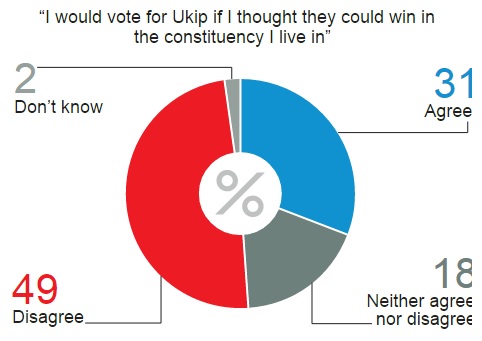
However, a poll just released by Opinium and The Observer reveals something that could shake the establishment to its foundations: 31% of voters would now support Nigel Farage’s party if they believed UKIP had a credible chance of winning in their local constituency. Nearly a third of the electorate are ready to wash their hands of big three political parties entirely, and vote for a new, untested alternative. Not just in the local or European elections, where UKIP are already establishing a track record of success, but in the United Kingdom’s general election next year.

Continue reading

Panic

Mark Reckless UKIP Rochester


Of course UKIP were going to do well in Clacton, the establishment consoled themselves after Douglas Carswell eviscerated the Tories in his thumping by-election victory.

After all, they said, Carswell’s seaside constituency is chock full of exactly the type of unlettered, economically left-behind losers who would be hoodwinked by Nigel Farage’s politics of grievance and fear. But just wait until Rochester and Strood, when the less personable Mark Reckless has to face his more enlightened constituents at the ballot box after jumping ship to UKIP. The Tories’ formidable campaigning operation will kick into gear, the UKIP advance will be halted and normal political order will be restored.

So went conventional wisdom, and the general thrust of most mainstream analysis in the aftermath of the Clacton result. But no longer. A poll by ComRes, released last night, gave UKIP a commanding 13 point lead in the Rochester and Strood constituency, with UKIP on 43%, Conservatives on 30%, Labour on 21% with the Greens and Liberal Democrats fighting for scraps with 3% each.

It’s now officially time to panic. And each faction of the British political establishment is quietly losing the plot in their own uniquely predictable way.

Continue reading

The Establishment Are Still No Closer To Understanding UKIP Voters


What does a political party have to do to get some respect in Westminster?

On Monday, UKIP’s first Member of Parliament took his seat in the House of Commons.

The party of gadflies, cranks, loonies, fruitcakes, closet racists and loons had just equalled the Green Party in finally securing representation in the Commons, with every chance of doubling the Greens’ achievement if Mark Reckless wins his by-election in Rochester and Strood, and joins Douglas Carswell MP  in the UKIP caucus.

But two Conservative defections and worrying polling data indicating Labour’s vulnerability to the UKIP insurgency still have not resulted in any real change in tone or policy from either of the main political parties – though, in their most generous concession so far, some of their more nervous MPs now talk about the need to talk UKIP’s language while still doing what they’ve always done.

Continue reading

Defection of Mark Reckless to UKIP Serves Notice To The Establishment

mark reckless nigel farage ukip defection 3


A little less conversation, a little more action.

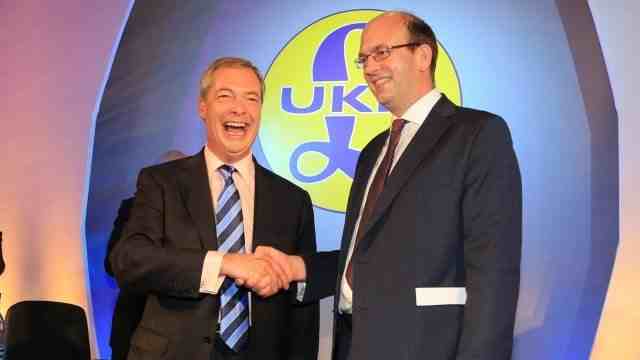
With the pumped-up remix of the classic song ringing in their ears, UKIP delegates to the party’s 2014 conference in Doncaster stood and cheered and welcomed their latest high profile parliamentary defector: now ex-Conservative MP Mark Reckless.

Say what you want about UKIP’s policies, internal contradictions and some of their wackier personalities, but this does not look like a party of economically left-behind losers or over-the-hill retirees caught up in nostalgia for times past.

As Mark Reckless himself noted, to thunderous applause: “The only nostalgia I see is that of the European bureaucrats as they cling to their fading 1950s vision.”

And in a political landscape where talk is cheap and real progress is rare, all of the action and momentum right now is with UKIP.

Continue reading