Finally, Rejecting The Mediocre In Education Policy

On the right track.


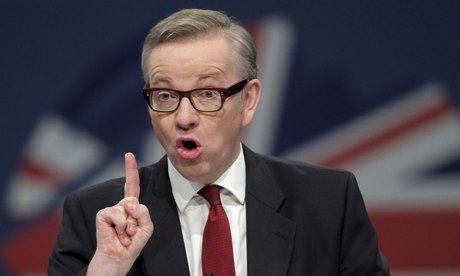
It is quotes such as this, from Education Secretary Michael Gove, which remind me why I pounded the pavements in support of my local Conservative parliamentary candidate back in the 2010 general election:

“My ambition for our education system is simple – when you visit a school in England standards are so high all round that you should not be able to tell whether it’s in the state sector or a fee paying independent.

“We know England’s private schools are the best independent schools in the world. Why shouldn’t state schools be the best state schools in the world?

“I want to see state schools where the vast majority of pupils have the grades and skills to apply for university, if they want to, where a pupil being accepted to Oxbridge is not a cause for celebration, but a matter of course.

“Where it is the norm for state pupils to enjoy brilliant extra-curricular activities like sports, orchestras, cadets, choir, drama, debating, the Duke of Edinburgh scheme, and more.”

There have been many disappointments from the Conservative-led government since they came to power and ejected Gordon Brown from office. Only last week in Prime Minister’s Questions, David Cameron could not bring himself to say that taxes should ideally be cut for all citizens across all income levels – instead trying to outflank Ed Miliband and appease his supporters by claiming that the rich and successful were paying more under the Conservatives despite the abolition of the 50% top rate of income tax. But while David Cameron and Theresa May equivocate on civil liberties, and while George Osborne neither delights nor grossly offends at the Treasury, Michael Gove continues to quietly get the job done over at Education.

The Telegraph reports on Gove’s upcoming keynote speech at the London Academy of Excellence:

State schools will test children using private school exams for the first time under plans to make them the “best in the world”, the education secretary will say in a speech on Monday.

Michael Gove will say that schools must set their standards “so high” that they are indistinguishable from the best fee-paying schools like Eton and Harrow.

He will say he wants to end the perception that state education is “bog standard” by emulating independent schools with tougher tests, longer school days, more extra-curricular activities and better discipline.

There are some indisputably good ideas in the meat of the speech – ideas such as setting state school children some of the same exams used to measure ability in private schools, and using international tests to better benchmark performance against schools in other countries. It is similarly hard to argue against the renewed emphasis on extracurricular activities and discipline.

Of course, reciting a shopping list of common sense ideas doesn’t mean that the British educational system will improve overnight, or even that dramatic improvements will come about in the very short term. Neither does it acknowledge the reality that all of these changes will be of zero benefit if parents remain disengaged from their children’s education, either unable or unwilling to nurture and help them, or if poverty and the varied symptoms of socioeconomic disadvantage continue to suppress the educational attainment of poorer children. And too often, the Labour Party have more to say on mitigating these real problems than do the Conservatives.

But there is no reason why we should not hold these high aspirations for our public schools, and use this aspirational language as Michael Gove does. Indeed, there is something refreshing about it, and this is what makes Gove so appealing to many people of a libertarian-Conservative persuasion. Gone is the talk about sharing burdens, paying “fair shares”, postcode lotteries and equality of outcome, and in its place we have talk of benchmarking, experimentation, variation and unbounded possibility. It is quite hard to not get excited, even in the absence of any of the finer detail as to how we get there.

The Telegraph’s editorial mirrors this optimism and sense of a refreshing change:

This is why his agenda for state schools so terrifies the Left. It represents a much-awaited rejection of bog-standard equality in favour of the excellence that typifies the independent ethos.

We shall observe with interest the reaction from the rest of the news media as it comes in. And as always, the devil will be in the details. But with precious little by way of new policy announcements or radical ideas as the coalition government trudges toward lame duck status and general election 2015, at least one government minister is still doing his job.

Labour’s Credibility on Education

Mea culpa, mea culpa, mea maxima culpa.


When someone in a position of power or influence makes a series of errors so calamitous, profound and grievous that they do real and lasting damage, and fails to ever acknowledge those mistakes or to make any kind of apology, one tends to disregard what they have to say on that particular topic in future. Think neo-conservatives on starting wars in the Middle East, the Labour Party on the economy and Dick Cheney on absolutely anything.

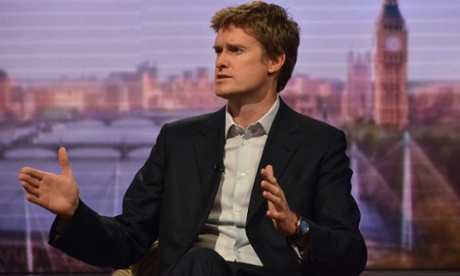
But when someone owns their past mistakes and appears to have learned from them and grown as a result, it is quite different. And so it is with the Labour Party and their approach to education policy while in opposition. Sure, they haven’t undergone a Road to Damascus conversion and mended their ways entirely – the suspicion that their preoccupation with equality of outcome lurks behind everything remains quite strong – but nonetheless I want to give credit where credit is due. And today, credit belongs to Tristram Hunt, Labour’s shadow Education Secretary.

This kudos comes on two fronts. Firstly, the Daily Mail reports that Hunt is repudiating some of Labour’s past educational priorities and actions whilst in government, in terms of pushing as many children as possible to just cross the “no longer an idiot” threshold for the benefit of statistics and league tables, but then failing to challenge them any further:

Labour created a culture of low expectations for state school pupils, Tristram Hunt, the shadow education secretary has admitted.

He said it was a ‘great crime’ that the last government had failed to pushed children more than simply aim for them to achieve a C grade at GCSE level.

He also admitted that exams had been dumbed down in recent years, saying ‘yes, there are elements of grade inflation’.

This is actually quite a significant admission from someone in the shadow cabinet, and the refreshing bravery deserves recognition. The enshrining of the “good” GCSE result as being a grade falling within the A* to C range has certainly created a perverse incentive to push as many laggardly students up into the bottom threshold whilst neglecting the needs of those who had the potential to achieve much more.

This willingness to look as past initiatives and admit mistakes in the field of education policy now makes Labour much more credible on this topic, and they have immediately stolen a march with their new proposal to license teachers in a bid to drive up professional standards. The Guardian reports:

In a sign of how Labour hopes to outflank education secretary Michael Gove on teaching standards, Hunt is to revive a plan the last government abandoned on the eve of the 2010 general election.

Teachers would have to show they are meeting the high standards and would be required to undergo training to update their skills.

Under Hunt’s plans, teachers would have their lessons assessed by other teachers in a system overseen by a new Royal College of Teaching.

As a society we often pay lip service to the importance of education and good teachers, but when it comes to standing behind that commitment, too often we have been found lacking. We claim to admire good teachers and value them, but do not compensate the best of them anywhere near adequately, and do not expect them to adhere to the professional codes of behaviour (as encapsulated by ongoing training and recertification) that are common in many other prestigious lines of work.

Indeed, Tristram Hunt goes on to make this very point:

Hunt insisted that his plans would raise the standing of the teaching profession. He said: “This is about growing the profession. This is about believing that teachers have this enormous importance. Just like lawyers and doctors, they should have the same professional standing which means relicensing themselves, which means continual professional development, which means being the best possible they can be.”

The fact that these proposals are coming from Labour and not the Tories also confers a immediate advantage in terms of winning backing from the teachers unions, which would be essential to their smooth rollout if ever the proposals became law.

And crucially, from a purely political perspective its puts the Conservatives in the awkward position of having to either reject a potentially very sensible proposal to improve educational standards, or to adopt it and face cries of plagiarism. Rather despairingly, one has to wonder why Michael Gove’s Department of Education didn’t manage to think up a policy proposal such as this on their own.

Outmanoeuvered.
Outmanoeuvred.


If Labour ever showed the wherewithal to perform a similar trick on the subject of economic stewardship – admitting their past fault for growing the state to unsustainable levels and proportions of national output, thus making the pain of the recession so much worse for those people more reliant on the government, and acknowledging that some rebalancing is not only necessary but desirable – then the Tories might really be in trouble.

But I imagine there is a greater chance of it snowing in hell than there is of Ed Balls following Tristram Hunt’s lead any time soon.

Free Speech And Hypocrisy


Cristina Odone’s latest piece for The Telegraph really takes the biscuit. Today she uses her platform to  distort the words of an actual principled libertarian and a thinking man, the Education Secretary Michael Gove, who recently made the fairly benign statement that we really shouldn’t be using the word “gay” as an insult anymore. Given, y’know, the fact that it is now the year 2013.

Naturally, Odone sees this as an attack on her and her values.

The original Telegraph article reporting Gove’s words, by Rosa Silverman, states:

“It’s utterly outrageous and medieval to think that to use the word gay as an insult is somehow acceptable,” he told Stonewall’s Education for All conference in London. “If it’s Chris Moyles or anyone, they should be called out.”

Mr Moyles, the DJ who previously hosted BBC Radio 1’s Breakfast Show, was accused of homophobia in 2006 after describing a phone ring tone as gay.

Mr Gove said: “If you’re growing up wrestling with your sexuality…the last thing you need to feel at school is any sense that the difficulties with which you’re wrestling or the path on which you wish to embark are in any way a legitimate subject for humour, ostracising or prejudice.”

He said he belonged to a generation that felt attitudes towards homosexuality “that still persist in part or many parts of our country” should be actively challenged to make society fairer.

So far, so uncontroversial. Or so you might think.

Odone, extrapolating wildly from Gove’s words and playing the victim card with as much drama as she could muster (which is a lot), took this to mean that the word “gay” should be banned, and that anyone who disagreed with homosexuality is guilty of hate crime, thought crime, or is in some other way a bigoted monster who should henceforth be shunned by society.

From where does she derive these fevered imaginations? Nobody knows. Certainly not from Michael Gove himself. To my recollection, Gove never endorsed the idea of imprisonment for people who make “gay” jokes, or advocated re-education camps for those who disapprove of homosexuality. He just said that, since we no longer live in the 19th century, while people are free to remain set in their ways and to say bad things about gay people, others have the right to call them out on it and register their disapproval.

But Cristina Odone has to transform this into a persecution story where she and others like her are somehow being suppressed. So let us tackle Odone’s ludicrous straw-man plea for tolerance of bigotry line by line. From the top:

Michael Gove, the impressive Secretary of State for Education, has just decreed that the term “gay” cannot be used as an insult. It’s “outrageous and medieval” to do so.

No, he didn’t. That is an outright falsehood. Michael Gove said that the word “gay” should not – as opposed to can not – be used as an insult, for the obvious reason that it is hurtful to people who are gay. At no point, however, did he propose infringing on anyone’s right to free speech if they wish to do be obnoxious and do so, however.

And Odone should know this, given Michael Gove’s spirited defence of free speech at the recent Leveson enquiry into the practices and standards of the media. But she continues:

I wonder what he’d have done at the fabulous wedding we attended, last Saturday. A young guest in morning suit used his iPhone to snap a friend in similar attire. He peered at the result: “Oooooooh you look sooooooo gay!” The word, clearly, was interchangeable with “naff” and “chav”: but henceforth, if Mr Gove gets his way, would it land the boy on a sinister register of “hate speakers” – disqualifying him as an applicant for just about any job?

Again, the modus operandi of those fighting the rearguard campaign against gay rights: Take a quote from someone you disagree with. Add ten pounds of outrage, a pinch of wounded pride and a splash of resentment. And hey presto, you are social crusader Cristina Odone. Where and how did you make the jump from Michael Gove’s words to people who use the word “gay” in a juvenile and irresponsible way being presented with criminal charges and convicted?

Oh, I know it happens in today’s dystopian Britain, for all sorts of reasons. The police knocking on your door if you put up a poster saying anything slightly controversial, or arresting people for saying things that might “hurt the feelings of others”. But surely it would be better to campaign for a PROPER right to free speech in Britain across the board, and against the politically correct thought police who censor us for expressing all manner of opinions, rather than focusing specifically on the gay topic? Not if you are the hypocrite Cristina Odone.

Only the day before, as he faced UK immigration officials, Mr Tony Miano had been afraid of precisely that: was his name on a secret register, and would he be stopped from leaving the country? The American street preacher had been arrested outside Centre Court shopping centre in Wimbledon on July 1. He had been reading from St Paul’s letter to the Thessalonians, which condemns homosexuality. A passer-by called the police. Three officers arrived and arrested Mr Miano, a retired deputy sheriff from California, for disorderly conduct.

The irony of being marched to the Wimbledon nick after having spent 20 years as a law enforcer was not lost on Mr Miano. He told me over the phone: “The booking process held no surprises.” He had his DNA and fingerprints taken (and was relieved of his wedding ring) and was then locked up in a small cell for seven hours.

In the police station, he was granted his request for a Bible and for a lawyer from Christian Concern, a group that fights cases involving religious freedom. Then the police asked if he’d ever feed a homosexual, or do them a favour.

“I said yes, of course: the Bible taught that I should love my neighbour as myself,” Mr Miano told me. “The policeman asked if I believed homosexuality was a sin and I realised that I was not only being interrogated about what had happened but about what I believed.”

This is unacceptable, but is indicative of a wider problem in Britain – the fact that the police can come and arrest you for saying things that might be hurtful to the feelings of others. No longer do you have to incite violence or utter libelous comments – today, ruffling feathers is enough to put you inside a police cell. If Cristina Odone really cared about this, she would campaign against restrictions on free speech across the whole spectrum – and yet she is peculiarly hung up on the topic of speech about gay people.

Mr Miano could have pointed out that, while preaching at the shopping centre, he had condemned pornography and slushy novels, too; but it was clear to him that the police were only interested in one “thought crime”, just as Mr Gove seems only interested in one kind of insult. You can believe that homeopathy cures ailments but not that homosexuality is a sin.

You can call someone a bigot, but not say something’s “gay”.

If anyone is being hypocritical here, it is Odone, not Gove. If Cristina Odone had watched Gove’s testimony at the Leveson hearings, or paid any attention to him at all, she would know that he is a stalwart defender of free speech across the board. But she didn’t take the time to do her research. A national columnist for the Daily Telegraph couldn’t be bothered to check her facts, but just sat down at her laptop in high dudgeon and penned a polemic about how Gove wants to put her in prison.

Homophobia deserves to be condemned. But muzzling freedom of speech is the wrong way about it. When the Government decided last January to drop Section 5 of the Public Order Act, which criminalised “insulting language”, the move was hailed rightly as a victory for free speech. But if Mr Gove now says that he supports free expression only if it doesn’t offend gays, he undermines the gains made in ditching Section 5.

Michael Gove did no such thing. Odone should ho back and read his comments again if she is in any doubt. Michael Gove said in his Leveson testimony that “free speech, by definition, will offend some of the people some of the time”, and took a lot of flak from the egotistical Leveson for doing so. There is no muzzling of free speech going on. If you honestly cannot discern the difference between encouraging children not to use the word “gay” as a playground insult (but not banning them from doing so), and making disagreement with homosexuality a thought-crime then you really need to have your brain re-wired.

He also sets an alarming precedent. Tolerance will come with caveats, freedom with clauses. Today, Mr Gove and his Government prioritise the gay lobby; tomorrow, it could be the fat lobby to persuade the authorities that discrimination against their members damages pudgy youngsters growing up in a climate of hostility. We’ll inhabit a world where people cannot say “fatty” or “fatso” for fear of ending up on a secret register or in the Wimbledon nick.

There is no precedent, because nothing is being banned. If you want to be the dumbass who thinks that it is cool to insult people by calling them “gay”, then good for you, keep doing it and see how far it gets you in life. Gove was simply saying that it is not a nice thing to do. Where is the FEMA re-education camp that Odone seems to fear so much? If you want to insult people for being fat, or ginger, or gay, or black, then you can keep doing it (within the already over-draconian limits set by the previous government). Gove proposes no enhancements to our already restrictive laws, and in fact he would love nothing more than to roll them back. He just wants people to be nice to each other. Not under threat of criminal penalty. Just because that is how adults should behave.

In the end, Mr Miano was released without charge. He asked if he could keep the Gideon Bible that he’d received in prison. When it turned out to be the only copy, he asked if he could provide a few more. The following day, he dropped off 10 copies of the Good Book at Wimbledon police station.

That’s tolerance for you.

Well done, Cristina Odone, what an ending to your excellent piece of writing. You win The Argument. I am very glad that Mr. Miano was so magnanimous following his ordeal at the hands of the heavy-handed British police state. I am ashamed of my country that such a thing would happen to him, simply for proclaiming his beliefs on the street. But why do you not broaden your argument? Why take a plea for adults to teach their children not to use the word “gay” as an insult, expand it in your mind to include people who respectfully and politely disagree with homosexuality, and then falsely sound the alarm bells that both sets of people are now considered thought criminals?

I suppose my concluding point is this: If Cristina Odone genuinely believes in free speech and civil liberties then she should join with people like Michael Gove, who are passionate defenders of the very rights to freedom of expression that she claims to love, regardless of the subject or people at hand. But when she attacks Michael Gove, and falsely accuses him of attempting to clamp down on free speech when he did no such thing – he simply wanted people to teach children that using the word “gay” as an insult could be hurtful, because it can be – she reveals her true priorities.

And aren’t those priorities rather insidious and ugly? Cristina Odone doesn’t care a fig about free speech per se – but she is willing to forge an alliance between people who morally disapprove of homosexuality and people who use the word “gay” as a childish slur in order to advance her regressive, socially conservative agenda.

What a true, principled moral crusader she is.

George Osborne’s Last Straw vs My Back

George Osborne is receiving a lot of stick for his last-minute decision to postpone the planned 3p/litre increase in fuel tax left intact in his most recent, politically disastrous budget. Most recently he has been accused of cowardice for sending an unprepared junior minister – Economic Secretary Chloe Smith – to defend the government’s short notice U-turn on the BBC’s flagship ‘Newsnight’ programme.

Reports The Telegraph:

Chloe Smith last night strugged to answer questions about the decision to postpone the 3p rise in petrol duty.

After she refused to say when she found out about it or how it will be funded, the Economic Secretary was accused of being “incompetent” by Jeremy Paxman, the BBC’s Newsnight interviewer.

Mr Paxman also asked her whether she ever woke up and thought: “My God, what am I going to be told today?”

I think that we can now safely add political incompetence to the list of charges being levelled against Mr. Osborne in the wake of this all-too-avoidable mess up.

This is supposed to be a Conservative-led, tax-cutting government. It was bad enough that the 3p/litre increase in fuel duty was allowed to remain in George Osborne’s most recent budget in the first place, but the fact that it’s postponement was only announced yesterday, and that senior ministers had no prior notice whatsoever is an almost unforgivable act of political stupidity, for which David Cameron was predictably savaged during Prime Minister’s Questions today.

But more concerning to me even than the incompetent way that this – and almost every single other political decision of any significance recently – has been handled by the government is the fact that the Conservatives are boasting about their policy U-turn and rather petulantly demanding praise for their actions.

Take this typical tweet from Robert Halfon MP:

“In Welsh questions said to Minister that stoppage of August fuel tax rise means £16 million injected into Welsh economy”

I despair, I really do. I thought that it was only in the dystopian, nightmarish land that was Gordon Brown’s Britain that cancelling a planned tax increase could be said in any way to be injecting cash into the economy. How is making the decision to not do something monumentally stupid and increase a key tax that would punish many already-squeezed households in any way an injection of cash into the economy? At best it could very charitably be called a preservation of the status quo, or the maintenance of steady-state, though given the economic uncertainty created by arbitrary and last-minute changes of key fiscal policy such as this, even that assessment is doubtful.

This is almost as bad as the risible time when a desperate Gordon Brown and Peter Mandelson tried to claim that the Conservatives’ election manifesto promise to cancel the planned increase in employers’ National Insurance tax contributions would “take millions of pounds out of the economy”, as though the state were the ‘real economy’ and not the other way around.

I’m done with all this, I really am. I actively campaigned for the Conservative Party at the last general election in 2010. I delivered leaflets, probably annoyed my friends on Facebook and Twitter with my political posts, and talked to countless people on the high street. And for my efforts, and those of all the many people who did far more than me to try to end Labour’s grip on power in this country, all we get is a government with a broken political radar, one which betrays core conservative principles and apparently one which pouts and expects praise and candy for doing precisely the things that it should be doing without any outside pressure from their political base, such as not raising taxes on squeezed households during a recession.

Michael Gove for PM, as soon as possible. Anyone else with me?

Why The Left Is Wrong On Education

I read with interest an op-ed piece in The Guardian by former Education Secretary under the previous Labour government, Estelle Morris, in which she argues that the very idea of profit-making schools threatens the “moral purpose” of education. I thought that it rather neatly summed up one of the major flaws in British left-wing thinking, and the reason why they are wrong on educational policy in particular.

To be fair, in her letter Morris states clearly that she is open to a greater mix of providers in the education space, and that this can bring benefits at times:

The role of the private sector has already been contentious. It’s certainly easy to make the case that it has not been a universal success – some school meals services and messy PFI contracts, for example – but the new “mix” ought to be welcomed. There is a wider and more diverse range of service providers, many bringing new ideas as well as experience, as schools increasingly control their own budgets.

This is to be welcomed, as there are those on the left who seem to reflexively oppose anything but centralised, standardised provision of public education, a stance from which Morris is at pains to distance herself.

Unfortunately, there the open-mindedness comes to an end. Harking back to a time before Thatcher, Morris recalls:

Thirty years ago, “not for profit” would have been assumed to be at the core of a key public service like education – part of its reason for being.

Here, right here, is the problem. Morris speaks as though this worldview was noble and that it died out thirty years ago, but to my mind it is an ignoble thing, one that it is alive and well in the hearts and minds of many left-leaning and Labour supporters in Britain today – the belief that part of education’s very reason for being is to not turn a profit, to deliberately shun the gaudy world of capitalism and the idea of generating a return on investment. This is actually quite a shocking sentiment to hold – the idea that the needs of the customer (the schoolchildren) must compete with any other motive or “reason for being” when educational policy is considered, and that among these valid and competing interests is the need to provide public services on a not-for-profit basis, regardless of the impact on quality. But of course, there are many such competing interests when one subscribes to this worldview – those of the teachers unions as well as left-wing ideology in general.

I should add a disclaimer at this point, that I am writing specifically about education policy in Britain, and that my views on these topics as they relate to the United States are different and will be covered separately in future.

We then reach the core of Morris’ argument:

At times of falling school budgets any surplus cash should be reinvested in schools rather than into people’s bank accounts; this is irrefutable but it is not the core of the argument. Profit can drive improvement. But the financial bottom line will never provide the motivation to deliver what we want and need from schools.

Firstly, I would like to know from Estelle Morris why the financial bottom line cannot deliver this motivation – surely the correct behaviour and outcomes from providers can be incentivised if the correct performance metrics and standards are used and applied?

But more generally, I would like to tackle this point with a hypothetical question. Suppose that there are two separate school systems at work in Britain, one state owned and not-for-profit and the other a regulated but private sector-delivered system, both receiving the same amount of funds per student from the government. The private system achieves significantly higher results in terms of test scores and long-term employability than the public system, and diverts a proportion of its budget surplus to dividend payments for shareholders. The public system achieves lower results and reinvests any budget surplus back into the system. In this scenario, should the private system be effectively neutered and shut down by being forced to reinvest its entire surplus back into operations rather than making payments to shareholders, even if this means that all students in the country then have to join the lower-performing public system? Leave aside for now questions as to whether or not privately delivered education would achieve better results, I’m just interested in the principle here. Yes or no?

Morris concludes:

There is a moral purpose that underpins education and, although by itself it is not enough, it must be the driving force. Without it, it’s too easy to accept that it’s not worth trying, yet again, to help a child to master a skill, or to rationalise that the social class divide is something we’ll just have to live with. Understanding this moral purpose for education is not the preserve of those in the public sector; others bring the same passion and determination and share in the same joy success brings, but all this feels strikingly at odds with the drive for profit. Value for money, certainly; careful management of resources, essential; but there can only be one set of shareholders – and that is the children.

I see in this argument a lot of hazy worries and doubts about whether profit-making companies can grasp and nurture what Morris calls the “moral purpose for education”, but no acknowledgement of the doubts – proven doubts, incidentally – that those of us on the right have about the public sector’s ability to deliver the value for money and good resource management that she also admits are essential. For-profit providers have not been given the chance to prove whether they can deliver public education to a good standard, because they are not presently allowed to do so. The public sector, however, has proved time and again that they cannot deliver quality educational outcomes that represent value for money or careful management of resources. And yet Morris proposes that we spurn the promise of the private sector and give the public sector carte blanche to continue just as they have for years, free from any competition or external impetus to improve.

The more that one hears arguments such as this from the British left, the harder it is to avoid the conclusion that for them, the ultimate prize, or the “reason for being”, is not to offer the best standard of education that can be provided to British children, but rather one of two very different, rather grubbier goals: either to ensure that every child receives precisely the same standard of education, even if this means embracing the lowest common denominator rather than striving for the best and risking unequal outcomes, or else having the ideological satisfaction of knowing that all public services are provided centrally by the state, whatever the cost in terms of wasteful spending or squandered potential.

A higher moral purpose indeed.