The Telegraph’s Morning Briefing email, produced by Stephen Bush, always provides a good summary of the day’s political highlights, but today one story in particular stands out. Riffing on the old complaint “They come here, they take our jobs”, Bush cites several articles citing a UCL study which point out that EU migrants actually made a net contribution to the British economy when tax contributions and welfare claims are compared, joking “Coming over here, adding £20bn to our GDP…”
Predictably, the newspapers immediately fall into their partisan groupings to spin the news. From the Morning Briefing summary:
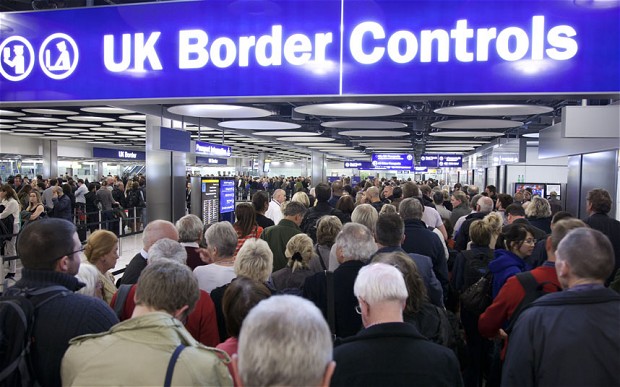
“£120bn cost of Labour’s policy on immigration” is our splash. “UK gains £20bn from EU migrants” sayeth the Guardian. “EU migrants add £2obn to the economy in a decade” cheers the Indy. A study running by two leading migration experts at UCL has thrown further light on the costs and benefits of migration. Migrants from within the EU contribute £20 billion to the British economy, with immigrants from the original 15 EU countries contributing 64% more to the Exchequer than they took out in services and migrants from eastern Europe added 12% more than they took out.
It would be hard to concoct a sample of headlines and statistics that did more to obfuscate and confuse an important political issue, even if you tried. And that’s no criticism of Morning Briefing – it has faithfully published a representative sample of the UK print media’s coverage of an important political issue.
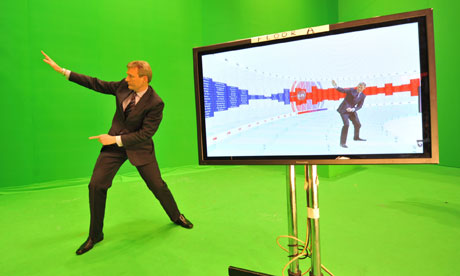
I walked through a doorway, found myself standing in the ITV National News studio, and for a moment I was shocked to realise that I didn’t recognise the space at all.
Not because of the floor-to-ceiling green screen backdrop and the absence of the computer-generated background – the final version, familiar to viewers, was displayed on a monitor to the side – but because I hadn’t deliberately or consciously watched the ITV News in more than a decade. The news desk, the set, the logo – nothing seemed familiar or evoked the old ITV I remembered from the late 1990s.
I’m a voracious reader and consumer of domestic and international news. In fact, I’m currently embarking on a side career in political journalism. And yet I had somehow become untuned from one of Britain’s main news outlets. Should that be cause for concern?
The reason I was deep inside ITN’s London newsroom at all is thanks to an invitation to attend the Creative Diversity Network open day, one of many similar events being held around the country where major broadcasters (Sky, BBC, CNN, ITN and others) open their doors to give people from ethnic and socially diverse backgrounds the taste of a career in TV journalism. My invitation came through Poached Creative, the social enterprise with whom I trained earlier this year.
It is now more than two and a half years since I started this blog, primarily to spare weary Facebook friends from being continually subjected to my forceful and not always fully-cooked opinions on every new political story coming out of London and Washington, D.C.
Hopefully regular readers will have noticed a marked improvement in the quality of the output since those early posts, and especially since the spring of 2014 when I was fortunate enough to complete my journalism training with The Big Issue and Poached Creative.
New posts are less frequent, but longer-form and (hopefully) more thoughtful. Gone are the picture posts and “Best Thing Of The Day” type updates, which were never very good and which other sites do far better – though the classical music posts may soon make a comeback. And best of all, there is now some exciting and unique primary journalism in the mix as well as the traditional reaction and commentary on developing political news stories.
One story in particular – my coverage of the People’s Assembly March Against Austerity back in June – received widespread attention and acclaim from senior journalists and establishment figures across the political spectrum. Not everyone agreed with the conclusions I drew from covering the overlooked London anti-austerity demonstration, but there was a general consensus that my coverage raised some important questions.
With this improvement in the blog’s output have come new opportunities to make the case for maximal personal freedom and limited, effective government to a wider audience. I am now a regular contributor to London Live TV’s Headline London lunchtime news programme, where they seem to like my no-nonsense, generally libertarian outlook on local and national politics. Further opportunities to provide semi-partisan analysis on television and various political websites are also in development.
But with new opportunities come new challenges. Making a career change into journalism and updating this blog on anything like a regular basis – in between doing a day job – is long, difficult work. Carrying out the kind of primary journalism which can drive or contribute to the news cycle is even more demanding in terms of time and money.
I have concluded at present that the time spent writing and honing pitches to the likes of The Guardian newspaper for freelance work is not worth the investment and frequent 2AM bedtimes – it significantly detracts from blogging time with no guarantee that the story will be picked up (I am currently 0-5 for such article pitches, at a cost of countless wasted hours of effort).
Therefore, I have taken the decision to turn directly to my readers to help fund this blog’s next initiatives.
This blog has covered the rise of UKIP extensively, well before more mainstream outlets began taking a real interest and registering their panic at the thought of UKIP MPs sitting in Parliament following the 2015 general election. But unlike much of the mainstream media, this blog has sought to understand the legitimate motivations of UKIP supporters rather than dismissing them as bitter, prejudiced and economically left-behind simpletons. And though this blog does not share the anti-immigration hysteria of some UKIP activists and supporters, it does find common cause with UKIP’s message of returning power back to a democratically accountable level in Westminster, and acting decisively in the UK’s national interest.
I hope that my coverage of the UKIP conference will not only be illuminating, but will provide an antidote to the inevitable distortions, mischaracterisation and hysteria that most newspapers have demonstrated to be the extent of their interest in covering the rise of Britain’s new third party.
But to achieve these ambitions and more, additional resources are required.
Regular readers who enjoy reading Semi-Partisan Sam, and who believe that journalism should offer more than a binary choice between the partisan filters of the cozy Westminster elite on one hand and dumbed-down Buzzfeed-style listicles on the other, are invited to make a donation (of whatever amount you choose) to help fund my ongoing work, including – but not limited to – coverage of the upcoming UKIP party conference.
Your donation will help to defray some of the considerable costs of travel, accommodation, internet and subscription services whilst on-site, and a necessary investment in new audiovisual technology (a DSLR camera and microphone of the type on which I trained with the Big Issue) so that all those interviews and pictures come to life in glorious HD rather than the shaky iPhone footage which has had to suffice thus far.
Additionally, at a time when newspapers are closing down and journalism of all forms is under huge pressure to participate in a race to the bottom in search of clicks and web traffic above quality reporting and analysis, your donation will make a small but important stand for quality, truly independent new journalism.
You can make a donation conveniently and safely via PayPal, here:
But more than anything else, if you ever read something here that makes you stop and think, shake your fist in furious disagreement or helps you to see an issue in a new light, please take a moment to pass it on by sharing it with your networks on social media, and contributing your own thoughts via the Comments function. The sharing buttons can be found at the bottom of each article, while the “Leave a Comment” button appears on the left side of the screen below the tags.
In just 30 months, Semi-Partisan Sam has gone from being an overflow space for political rants too long for Facebook and of wildly uneven quality, to a budding journalistic enterprise with (hopefully) real potential for the future. Thank you all for reading, clicking, sharing and commenting.
And a special thanks to those of you who are able to financially contribute to the next chapter of this blog’s growth.
The BBC – our national treasure or money and creativity-sapping black hole (depending on your viewpoint) has been given due notice by Sajid Javid, the new Culture Secretary, that every aspect of its future funding and existence is under review.
The Huffington Post reports:
All aspects of how the BBC is run and paid for will be reviewed when its charter comes up for renewal, the Culture Secretary has said. Sajid Javid said “everything” would be looked at, including licence fees and governance structures, when negotiations get under way … Tory Party chairman Grant Shapps warned the corporation last year it could lose its exclusive right to the £3.6 billion raised by the licence fee if it failed to tackle what he believes is a culture of secrecy, waste and unbalanced reporting in the organisation.
For those who believe that on balance the BBC is currently doing more harm than good, this is welcome news. Indeed, this kind of root-and-branch re-evaluation of public services is precisely what many people who voted Conservative in 2010 expected but have not seen thus far under the coalition government.
Re-evaluation and reform is sorely needed. The BBC has recently struggled to defend itself against allegations of incompetence and institutional corruption following the Jimmy Savile sexual abuse scandal, excessive remuneration of top talent and high level executives, and catastrophically poor editing of it’s flagship nightly news programme. And only last week the corporation defiantly kept the editor of the BBC News Channel in her post despite the fact that she posted highly partisan and derogatory comments about a political party on her Twitter account, in flagrant violation of BBC rules.
This blog is not alone in noting the gradual fall in the quality of the BBC’s political output in particular. The Telegraph’s Dan Hodges rightly lambasted the corporation’s recent election results coverage for being both lightweight and unresponsive to complex, dynamic situations. Hodges notes that despite token efforts by the legacy broadcasters to acknowledge the existence of social media, the BBC’s election results programme (for the recent local council and European elections) was way off the mark in its analysis, seizing upon the first narrative that emerged and stubbornly sticking with it throughout the evening even as Twitter started to better reflect the more nuanced results which later emerged.
It is worth quoting Hodges at length, because he makes a vital point:
I’m usually quite sceptical about the whole “social media is taking over the world” meme. But on Sunday night it became very obvious. Twitter and the other social media outlets are making the big election night programs utterly redundant.
It wasn’t apparent when they were the only outlet for results and analysis. But last week both main broadcasters were horribly exposed. What was amazing was the way it was clear neither Sky nor the BBC were taking the slightest bit of notice of their own output. They were engaged in a logistical exercise – “Let’s make sure we don’t miss the returning officer from Torquay” – rather than an analytical one.
What I also couldn’t understand was who they thought their audience was. The same headline mantra was chanted – “Ukip earthquake, Ukip earthquake” – over and over again, but no serious effort was made to deconstruct it. Surely the only people watching local election results at one in the morning are political geeks like me. And what we’re looking for is serious analysis.
Watching the difference between the discussion in the election studios and the discussion on Twitter was like the difference between watching Gary Lineker and Alan Shearer on Match of the Day and Gary Neville and Jamie Carragher on Monday Night Football. The former talk blandly about great attacking or terrible defending. The latter explain in granular detail precisely why it’s great attacking or terrible defending.
Sadly, that just about sums up the BBC’s approach to political programming today. There is a heavy focus on the personality-based politics (epitomised by the need to muckrake, sensationalise and have a “gotcha” moment in every interview) and the logistics of electioneering, but a rapidly fading focus on the comparative assessment and scrutiny of opposing policies. These days, the BBC’s political coverage is all about The Game – who’s up and who’s down at any given moment. Who’s wrong and who’s right barely gets a look-in any more.
What’s worse, the increasingly lightweight personalities – journalists and contributors – deployed by the BBC to cover the political beats are often incapable of the latter, more serious type of reporting, able only to offer superficial ‘analysis’ of the ups and downs of parties and personalities as measured by the twenty-four hour news cycle. Over time, the BBC divested itself of much of the expensive, skilled talent needed for good quality political coverage, either reshuffling them, demoting them or letting them go – and with them, their vital knowledge.
Before the BBC apologists leap to their feat in protest, no it does not have to be this way. High quality, penetrating analysis is not thwarted by the need to remain impartial (an imperative that the BBC fails to achieve anyway), but the BBC is in danger of succumbing to the worst current instincts of political coverage on American network television – giving each ‘side’ of an argument equal weight and validity out of desperation to appear non-partisan, even when the truth is quite clear-cut and largely occupied by one particular party.
The liberal comic Bill Maher perfectly skewers this unnecessary impulse, increasingly seen in BBC political broadcasting, as it pertains to the non-existent flat-Earth debate:
In other respects, though, Americans enjoy far better political coverage than their British cousins. America benefits from the existence of C-SPAN, a private but nonprofit cable network set up by the US cable television industry, who pooled their resources to establish a one-stop shop that they could all draw on for in-depth political coverage.
The BBC’s own effort, BBC Parliament, does not compare favourably with C-SPAN. BBC Parliament occupies one channel, while C-SPAN has three. C-SPAN provides much more extensive and flexible coverage of both houses of Congress, while BBC Parliament is bound by the ludicrous and archaic rules governing the televising of Parliament. C-SPAN offers a much wider range of other programming such as book talks, public debates and call-in shows, while BBC Parliament has to fit its own meagre offerings of this type in the periods when Parliament is not sitting. C-SPAN’s online presence vastly outstrips that of BBC Parliament in terms of depth of analysis and availability of archive footage.
But most importantly of all, C-SPAN has a reputation for balanced programming and is well-regarded by both liberals and conservatives. British conservatives, by contrast, have long since given up trying to get a fair shake from the BBC – though this article makes a persuasive case for the BBC’s innate small-C conservatism.
It is impossible to properly compare the entire outputs of two news networks in this short space, but a lot can be learned by watching the following excerpts of political output from the BBC and C-SPAN respectively.
First the C-SPAN show, a typical and broadly representative example of their output; in this case a call-in show featuring the national security journalist Glenn Greenwald as special guest:
And here is a C-SPAN StudentCam short film, also on the topic of national security. Such segments form a regular part of C-SPAN programming, filling the time slots between regular programming and encouraging young people to take an active interest in civic issues:
Contrast these with the BBC’s recent efforts, this exerpt taken from the flagship Daily Politics show:
The difference in focus, tone and overall quality could not be more striking. Even the student effort on C-SPAN outmatched the quality and seriousness of the BBC’s political output – and again, these examples are fairly representative of each network’s normal output, not chosen to unduly embarrass the BBC.
The obvious question that must be asked is this: Why the grave disparity in service, given the deep pockets and institutional clout of the BBC compared to its upstart American counterpart?
(In the interest of fairness, it must be mentioned that much of the BBC’s radio coverage is of significantly higher quality, particularly Radio 4’s Today in Parliament).
It’s not that there are necessarily more smart people with a burning interest in politics and public policy in America than there are in Britain. But because the BBC’s omnipresent dumbed-down approach crowds out all other offerings in the marketplace, politically interested citizens are much better catered to in the United States than they are in Britain, where the Daily Politics-style cartoonification of politics insults those with real knowledge and interest.
The truth is that the quality gap between C-SPAN and BBC Parliament has not always existed – it was brought about fairly recently by people who should be ashamed of their decisions, and whose CVs should carry indelible black marks as a consequence.
Before the Daily Politics came along and ruined everything, the BBC’s flagship political programming consisted of shows such as On The Record, Despatch Box and Westminster Live. Much like C-SPAN’s offerings in the United States, the budgets were small and the production values cheap; but this had the beneficial effect of making it all about the programming – the quality expertise and the analysis shared with the viewer.
This all changed when former BBC Director General Greg Dyke commissioned a review of the BBC’s political output, leading to a wholesale relaunch and rebranding. By 2003, out had gone the old shows with their dull but informative content, and in came the quirky, zany future where everything is a joke, everything is accompanied by a jaunty animation and theme tune, and everything is lightly mocked from the couch by host Andrew Neil and his unglamorous assistants.
Viewers can discern everything they need to know about the Daily Politics from the opening title sequence, without sticking around to suffer the show itself:
Portraying the British political system as some kind of sputtering, wheezing steam engine perpetually on the verge of breakdown may sometimes be uncomfortably close to the truth, but the BBC’s flagship daily political programme should not lead with this suggestion. Disillusionment with politics is high enough as it is without making jocular reference to all the reasons why in the opening credits.
To be clear, this is not to say that the politician themselves should be necessarily be treated with respect, reverence or deference, particularly when their actions have merited the opposite – but there should be a baseline of respect for the political process itself that now seems entirely absent from the BBC’s output. And all for what? What grand prize is the BBC seeking that is worth so much debasement?
The BBC is chasing a pipe dream if they believe their new dumbed down approach will result in more people tuning in and engaging with politics. Tacky, irreverent output better suited to satirical comedy shows will not draw in viewers who currently favour watching repeat episodes of Top Gear on Dave – it only serves to patronise and alienate those viewers who are interested in political coverage anyway, without the added allure of bright colours and jaunty theme tunes.
This isn’t helping.
The point is not that the BBC should be disbanded entirely, or that the license fee should necessarily be scrapped (although it certainly should), or any one other prescription. The point of shaming the BBC with the woeful quality gap in its political programming is to point out that there are other delivery models out there in the world that work and which could produce good results back here in Britain, if only we would allow ourselves to consider them without feeling that we are somehow “cheating” on Auntie.
Those who become overly sentimental about the BBC in its current form suffer from the same forgiving and idealistic delusion as people who create Twitter hashtags or found political parties to “save the NHS”. Just as some NHS activists prize the survival and continuity of that organisation over the outcomes it was created to deliver (the best possible healthcare for British citizens), so BBC defenders cling to nostalgia rather than acknowledge the fact that the beeb can learn a lot from other broadcasters, at home and abroad.
There are many ways in which the BBC must prove its continued legitimacy other than in the field of news and political reporting. Why, for example, does a state-owned broadcaster need to operate eight national television channels, sixteen national radio stations and forty local stations when there is a thriving commercial sector? But the BBC also gets many things right when it comes to news coverage – no one else in the world can match its depth and breadth, while British audiences tend to trust it above commercial rivals at times of crisis or when major incidents are unfolding.
The BBC’s political coverage, however, goes from bad to worse; and if left unaddressed for much longer it not only runs the risk of negatively colouring Sajid Javid’s upcoming review, but it will start to undermine British democracy itself.
As a first step in the right direction, the BBC News Channel’s editor, Jasmine Lawrence, needs to be reassigned to another role where her toxic anti-UKIP beliefs are in no danger of bringing the corporation’s impartiality into further question. But above all, the BBC needs to stop dumbing down in the one key area where dumbing down offers no benefits at all in terms of audience engagement or viewing figures.
The BBC’s Royal Charter – a delightfully worded document whose preamble would not be out of place in a Shakespeare play – defines the corporation’s public services (in part) as follows:
(a) sustaining citizenship and civil society; (b) promoting education and learning;
Unless our national broadcaster is happy to continue fostering a state of cultural apartheid, where radio listeners receive tolerably decent political news output while television viewers are talked down to and belittled at every turn, the BBC must acknowledge that it is currently failing to meet these public service requirements.
And as it goes for anyone finding themselves on the wrong path in life, the first step toward the BBC’s redemption will be admitting that they have a problem.
One special word has been trending heavily in the British media over the past week, but you are unlikely to have seen it spelled out in print or on screen. Like the character Lord Voldemort from the Harry Potter series, prevailing opinion and political correctness (albeit of the most well-intentioned kind) decree that it shall not be uttered, but only alluded to or heavily disguised for fear of the harm that it may do in its raw form.
Lord Voldemort burst back into the British news this time when popular television host, columnist and author Jeremy Clarkson (of Top Gear fame) had to plead for his job after being caught uttering the word while reciting a rhyme. Such was the frenzied speculation over whether Clarkson had indeed said the word that the Daily Mirror, in possession of the video clip, hired forensic audio experts to analyse the soundtrack in an attempt to decipher the contentious mumbled phrase. In the event, Clarkson apologised as he has never apologised before (rightly so), and lives to offend another day.
But as usually happens when making policy based on political correctness and overwhelming fear of public opprobrium rather than sound reason, the application tends to be panicked, sporadic and contradictory. So it was that after the A-list Jeremy Clarkson was let off the hook with a ‘final warning’ from the BBC and allowed to keep his position despite actually saying the word out loud with his own mouth, the decidedly C-list David Lowe, a provincial radio DJ, was peremptorily asked by the Corporation to resign for unwittingly playing a song containing the same word.
(BBC policy apparently decrees that as you move up the fame hierarchy you can earn the right to skate closer to explicitly saying the word in public without being fired. If the BBC’s top ten stars banded together and offered up their annual vacation allowance and overtime, presumably they could sing the word in the style of a four-part Bach fugue at the start of the Nine O’Clock News.)
What is more concerning than a BBC television star’s casual utterance of the word or the network’s inconsistent treatment of those who fall foul of the complex web of unwritten rules that govern its use, though, is the craven way that the media, almost without exception, voluntarily choose to censor themselves when reporting these stories. Somewhere along the way it was decided that not only is it wrong to say the word in anger (quite rightly – no decent person should), neither is it okay to write or speak the word in the course of a dispassionate news broadcast. And so news consumers are patronised with that childish and awkward compromise, the N-word.
Make no mistake: the word-that-shall-not-be-named is a hateful thing. It brings forth horrible echoes of enslavement, beatings, lynchings and repression, the worst that humanity can do to its own kind. And within some people’s living memory it evokes painful recollections of segregation, discrimination, bullying, voter disenfranchisement and domestic terrorism. But driving the word out of the public discourse completely cannot undo any of these wrongs – the main effect is only to spare us from having to face up to the brutal connotations that come along with it. We may claim to disguise the word for fear of causing offence, but it is just as much an evasion to spare ourselves from feeling discomfort.
Everybody has different words that offend them, different things that they hear that they get offended by… To me, the thing that offends me the most, is every time that I hear “the N-word.” Not “nigger” by the way. I mean “the N-word.” Literally, whenever a white lady on CNN with nice hair says, “The N-word,” that’s just white people getting away with saying “nigger,” that’s all that is. They found a way to say “nigger.” “N-word!” It’s bullshit ’cause when you say “the N-word” you put the word “nigger” in the listener’s head. That’s what saying a word is. You say “the N-word” and I go “Oh, she means ‘nigger’.” You’re making me say it in my head! Why don’t you fuckin’ say it instead and take responsibility, with the shitty words you wanna say.
CK is right inasmuch as that journalists are not really letting themselves off the hook by referring to the ‘N-word’ rather than its expanded form. Since journalists are effectively planting the word in peoples heads when they refer to the ‘N Word’ in a story, all that refusing to spell or speak the word out in full does is imbue that specific arrangement of letters with some nonexistent, mythical power that must be feared and respected.
The media’s unwritten policy would be slightly more understandable if it applied equally to other racially derogatory terms, but this is not the case. When three football supporters were charged with racial aggravation for chanting the word “yid” at two football matches, the BBC reported on the story and included the word “yid” in the headline. And several years ago BBC Four broadcast a documentary entitled “Kike Like Me”, in which the film maker “goes on a personal journey to find out what it means to be Jewish in the modern world”. But no matter how clinical or non-aggressive the context may be, the word occupies an exalted place among the racial slurs requiring it alone to be diluted before publication.
Yes, the word ‘nigger’ is about as deeply unpleasant a word as can be said. Used as a derogatory term, it has an abiding power to hurt – your blogger speaks from occasional painful experience on the receiving end. But because the word is so hateful, let those in the business of reporting the news show the word’s use in anger to be the outrageous and insensitive thing that it is – by repeating it, straight-faced and in all of it’s ugliness, not by sugar-coating it in the form of a child’s euphemism.
If, in the year 2014, someone in a position of prominence still decides to use the word ‘nigger’ in a derogatory or throwaway manner, we shouldn’t report it euphemistically as though we were embarrassed children tattling about a schoolyard transgression or other act of naughtiness to a teacher – “he said the F-word, she said the C-word!” – we should report it with the honest and brutal simplicity that the facts dictate.
This isn’t school. We are all grown-ups here. So let’s reflect that in our journalism, and put the N-word to bed.








 Semi-Partisan Politics