In Praise of David Laws

David Laws


Yesterday I recently read some of the most refreshing words on economic policy to have been uttered by a British politician in recent months, and they came not from a Conservative but from a Liberal Democrat MP.

In an interview with the Sunday Telegraph, David Laws, briefly Chief Secretary to the Treasury but now a lowly backbencher, made the case for reduced tax rates, deeper (but more wisely targeted) cuts in public spending and reform of the public sector:

… Mr Laws said the share of the economy accounted for by the state was “out of kilter” with the amount of tax the public were willing to pay.

Only spending on health, education and pensions should not fall as a share of GDP, the MP said.

The former chief secretary to the Treasury’s views will alarm many Lib Dems who have opposed the Coalition’s spending cuts. However,

Mr Laws argues that cutting state spending would be in keeping with the founding fathers of the Liberal Party.

“Even after the existing fiscal consolidations, state spending will account for some 40 per cent of GDP, a figure that would have shocked not only Adam Smith, William Gladstone, and John Stuart Mill, but also John Maynard Keynes and David Lloyd George,” he says.

“The implication of the state spending 40 per cent of national income is that there is likely to be too much resource misallocation and too much waste and inefficiency.”

Too much resource misallocation and too much waste and inefficiency. Yes!

I have found it irritating beyond measure to see minister after government minister talk about the need to reduce the ridiculous proportion of national output accounted for by government spending as a sad necessity resulting from the economic recession rather than as something desirable as an end in itself. When critics accuse the Conservative-led coalition government of using the recession as a trojan horse to impose ideologically-inspired reductions in the size of the state, I actually wish that they had the impetus to do just that – but this accusation greatly overestimates the political savvy and core convictions of the current Conservative Party leadership and instead, government spending continues to increase in real terms, and no big-name Tories are speaking out in favour of a leaner public sector.

David Laws (together with other likeminded libertarian-leaning types such as Michael Gove MP) is one of the few politicians to actually come out and make the case that the British public sector has grown far too large and bloated, and that reducing its size is both necessary and worthy, not just because of the present economic difficulties but because it is the right thing to do.

But why do we only hear this call for a  from a backbench Liberal Democrat MP and not from a frontbencher in the Conservative party, who should hold these views just as dearly? Why isn’t David Cameron acting as head cheerleader for shrinking government and making the case that important services can still be provided – often to a higher standard – when the government does not have ownership of them? Where is George Osborne, and where are the urgently-needed supply-side reforms so glaringly missing from his last Budget?

In short, why did I campaign for and help the Conservative Party fight the last general election, when it has fallen to a Liberal Democrat to make the case for a small, lean state and for economic liberty?

What Exactly Is Your Fair Share?

Tax Fair Share Flat Tax


As every British taxpayer knows, this week the coalition Conservative/Liberal Democrat government will announce its budget for the coming fiscal year. And as usual, there is much speculation about what bold, eye-catching new initiatives will be announced, which favoured groups will receive the best and most insulting handouts (10p per week increase for those on the state pension, anyone?) and which of our cherished vices such as smoking or drinking will be slapped with the biggest tax increases to raise money to pay for it all.

But probably the biggest pre-budget story at the moment concerns the speculation that the government is poised to repeal the last Labour government’s spiteful, punitive, ugly and counterproductive 50% top marginal rate of income tax which they imposed just before being booted from office, either eliminating it entirely in a stroke or reducing it to 45% as the first step of a phased elimination.

Cue much indignation, huffing and puffing from the British left, who talk all the time of the importance of “the wealthy” or “the rich” paying “their fair share”.

Their fair share. What exactly does this phrase mean? It is grotesquely overused in British political and fiscal discussions at the moment, by both left and right. It is used by the left as an attack – “taking benefits and tax credits from hard working people while never asking the rich to pay their fair share!”-  and by the right as a defence – “ensuring that we are all in this together, and that those who can afford the most pay their fair share”.

So what is fairness when it comes to tax policy?

You could argue that since we all live in the same country and benefit from the same infrastructure, public services and national defence, the total bill for government spending should be divided equally between all people of a working age in this country. We can all avail ourselves of the public schools, the National Health Service and the roads in this country, so we should all pay the same toward their continued existence. So what if you’re on minimum wage and your tax bill for the year is greater than your income? Well, everyone has to pay their fair share, so better get a second, third and fourth job if you want to pay your tax bill and still eat. Otherwise it’s not fair to everyone else.

You could argue that some people use certain public services a lot more than others, and that aside from the national umbrella of national defence it is not fair to make any two people pay the same amount if they use different services, and that the best thing to do is to abolish the majority of taxes and move toward a pay-per-use scheme. So what if you’re on minimum wage and you don’t have the money you need to see the doctor? Too bad, you’ll have to make your own arthritis medicine yourself out of pressed flowers and tree bark.

You could accept that those who have been financially successful and/or fortunate should shoulder a greater burden of government spending in real terms, but that to ask them to pay a larger proportion of their incomes just because they are rich is offensive and unfair, and in this case you would support a flat tax system, where everybody pays the same rate. Everyone then gets access to the public services that they need, and everyone pays the same percentage of his or her income to support those services. Perfectly fair, no?

Alternatively, you could accept the premise that those with greater incomes should pay a higher proportion of that income in tax, in addition to paying more purely in real terms. And that’s pretty much the system we have in place here and pretty much everywhere else in the western world, a stepped, progressive tax system. If you earn little to no money you pay little to no tax either in real terms or as a percentage, and as your income grows, so does your tax liability. A lot of people think that this is fair.

My point is that each of these solutions can be described on one way or another as being “fair”. The word doesn’t really mean anything on its own, it is only given meaning through the context in which it is used, which is entirely based on your political beliefs. But in British political discourse it is always used to mean, in some general fuzzy way, that “other”, “richer” people more prosperous than us than us should pay more to cover all the bills. It is used lazily to impart a pious aura of nobility to demands for what are already significant transfers of wealth from the rich to the poor in this country at best, or counterproductive and demotivational daylight robbery at worst.

Under the present tax code in Britain, if you earn more than £150,00o in income in a given year, each additional pound you earn above that level to infinity is taxed at 50%. The income you earned between about £40,000 and £149,999 was taxed at 40%. And this doesn’t include the other huge tax-in-all-but-name, National Insurance, which means that many people earning much over £70,000 pay marginal tax rates greater than half of each additional pound that they earn. A yearly salary of £70,000 may sound like – and be – a lot of money, but if you are a family on a single income with several children, living in the South East, you’re not exactly the Monopoly Man. What’s fair about asking for more than half of that person’s hard-earned pay rise in additional tax contributions?

In order to win Liberal Democrat approval to cut the top rate of income tax down from the punishingly high 50% level, the Conservatives will doubtless have to make a number of concessions. Some of these may yet be sensible, such as moves to shift the burden of tax away from earned income (i.e. more ‘productive’ money) and more toward unearned income and wealth. This would help to ensure that income is reinvested in the economy, though whether it is the role of government to meddle in this way is not entirely clear. Some of the other concessions will doubtless take the form of yet more envious, baseless pokes at the rich. It is probably worth the government’s while taking most of these jabs in good humour in order to ensure the repeal of one of the highest marginal tax rates in the western world, a huge dampener on British competitiveness.

But whether the top rate drops down to 45% or back to 40% where it has been since Margaret Thatcher’s day, prepare for a lot of noise from the left and a lot of opportunistic point-scoring from the Labour Party. Be assured that these talking points have already been written and are waiting to be deployed as soon as George Osborne stands up at the despatch box in the House of Commons to read his statement. We will hear that he cares only about looking after his rich friends and is not concentrating on doing anything for the poor (because, of course, the government can only ever have one priority at a time, the rich OR the poor, and a policy that ostensibly benefits the rich could never also benefit the economy as a whole, and therefore everyone who works in it – and no, I’m not talking about “trickle-down economics”). We will see every rhetorical trick under the sun being deployed to convince the population that now is the wrong time to be focusing on “the wealthy few” when “the hard-working majority” are suffering. So expect all of this, and more. But regardless of the merit of these individual arguments, they all miss the point by a country mile.

Are there a myriad of loopholes in the current tax code that need to be closed? Absolutely.

Do further efforts need to be made to clamp down on tax fraud, and make tax avoidance more difficult? Sure.

Do we need to look again at tax rules for non-domiciled individuals, in terms of their income and property taxes? Almost certainly.

So let’s press for the government to include such measures in the upcoming budget.

But please, let us separate these issues – and the plight of the multi-millionaires and billionaires and bankers and premier league footballers that we hear about in the newspapers – from the doctor or accountant who maybe earns £200,000 a year and who now doesn’t want to take on that extra patient or new client because she is worn out, working hard trying to get ahead and to pay her “fair share” to an insatiable country.

How British Conservatives Miss Their American Mark

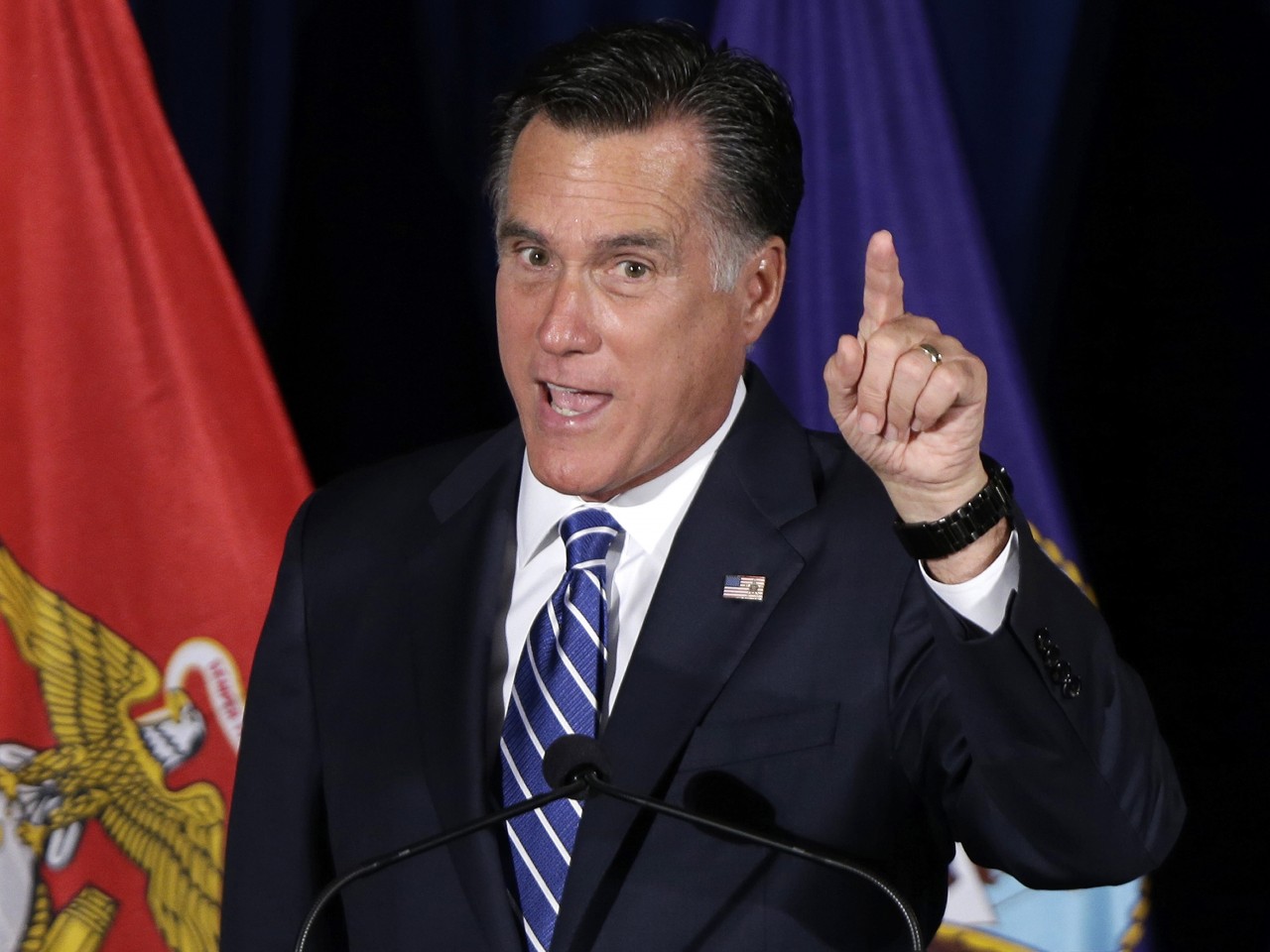
Fraser Nelson takes to his Daily Telegraph column today to extol the virtues of Mitt Romney, in a puff piece entitled “David Cameron need take no lessons from Barack Obama, but he might listen to Mitt Romney”. But by fundamentally misunderstanding today’s Republican Party, he fails to make a convincing case.

You might expect Nelson to perhaps talk about some of the reasons why David Cameron should pay heed to Mitt Romney rather than President Obama on his upcoming trip to the United States. But all we really get is this solitary paragraph:

“In the Republican primary contest, meanwhile, the candidates have been very precise about debt. American conservatism is now defined by plans to tackle it, and the candidates compete on which taxes they’d cut to kick-start the economy, increase employment and balance the books. Romney’s 59-point plan for growth is easily the most moderate, yet is still more radical and holistic than anything produced in Britain. He has ruled out tax rises, and pledged to cut state spending by 5 per cent on day one. Cameron, by contrast, is aiming for a 3.3 per cent cut over five years.”

Would that this were true.

mittromneyrolemodel

American conservatism, defined by plans to tackle the debt? If there is one thing – and there are a lot at the moment – which distinguishes British and American conservatives, it is the fact that British conservatives (perhaps with the exception of the ultra-hardcore Eurosceptic fringe) live predominantly in the real world, while American conservatives have decamped en masse to cloud-cuckoo land, where huge swathes of the federal budget can be eliminated at a stroke without causing any undue suffering to those who have been coaxed and encouraged over the years to depend on various government programmes, and with no political repercussions.

Romney’s plan may well be more radical and holistic than anything produced in Britain, but that doesn’t really matter because nothing remotely resembling it is ever going to be implemented. The British Tories, on the other hand, are willing to risk alienating public opinion and their petulant Liberal Democrat coalition partners to actually implement a programme of needed budget cuts. So who should get the praise, the man who gives tough speeches about slashing trillions from the federal budget with no earthly chance of ever actually doing it, or the man who treads more carefully and holds together a precarious coalition to deliver more modest budget cuts that are actually attainable?

That’s not to say that the British conservatives are in the right with regard to the slower pace at which they have chosen to tackle budget deficits and spur economic growth while in government. Many people, myself included, are frustrated at the glacial pace at which much needed supply-side reforms are being implemented in the UK (often thwarted by EU regulations and/or the Liberal Democrats). A little more ambitious, far-reaching zeal would not be a bad thing at all, though how possible this is as long as the Liberal Democrats are partners in government remains in doubt. And so at first glance, once can understand why some British political pundits look at the fiery rhetoric emanating from the Republican primaries on the economy and find the British conservatives lacking. But to look closer, and to remember the different respective points that Britain and America occupy on the left-right political spectrum, is to realise firstly that the British conservatives have very little political scope to move further to the right, and secondly that the policy positions that the Conservative Party occupies do not differ greatly from the Democratic party in many cases.

And this is the crux of the matter. Even as the Republican Party in America continues to lurch further and further to the right and stake out ever more extreme positions on all manner of issues, the British Tories and their supporters in the British press as yet are unable to sever the psychological link which tells them that they should cheer the Republicans and boo the Democrats. This mindset may have worked in the past, when there was a greater degree of comity and moderation in American politics and the two parties were not so greatly divided, but it does not work today.

It seems to be of entirely no matter to the Republican cheerleaders in the British press that the majority of Democratic party policies are equivalent to or to the right of many current Tory principles (even the long-cherished and now-abandoned public health insurance option is significantly to the right of having a single-payer National Health Service), or that many members of the new Republican tea party congressional intake would (if they actually possessed a working knowledge of the world beyond their own borders) look at Britain with disdain, regarding us as some type of socialist dystopia.

Sadly, the time has come for the British Tories and their allies to acknowledge that they no longer have a serious, thinking partner on the other side of the Atlantic. This is probably just a temporary blip, as all such overcorrections to the right or the left tend to be countered by a return to more moderate positions (as will either happen in 2012 when Obama beats Romney/Santorum, or in 2016 when Obama’s heir runs against a chastened GOP desperate to win back the votes of the women and minorities that it is currently shedding so carelessly). But for the time being, British conservatives have nothing to gain by cosying up to the Republican Party of John Boehner, Eric Cantor, Mitch McConnell, Sarah Palin, Rush Limbaugh, Newt Gingrich, Mitt Romney and Rick Santorum.

The Conservative Party’s American role models may have embraced tea as their emblem, but their economic policy prescriptions are not based in reality, and are going a long way toward making the Republicans look callous, backward and foolish. There is no need for the Tories to damage their still-fragile brand by standing next to them, wearing a T-shirt that proclaims “I’m with Stupid”.

On Being A Conservative, Seriously

Looking back, I have just noticed that the first three substantive posts that I have made to this blog might tend to cast me in the light of being somewhat left-wing. This would come as a great surprise to my family and friends in the UK, who probably either groan and roll their eyes whenever I post one of my conservative diatribes on Facebook, or else have already quietly unsubscribed from my newsfeed.

As I attempt to achieve a balance on this blog between US and UK current affairs, hopefully my true political leanings will start to emerge more clearly. When I write about social issues in the United States I am likely to appear far more of a Democrat than I would when I start writing about economic issues. Similarly, when I write about economic issues in the United Kingdom I am likely at times to sound quite far to the right even of the Conservative party, and especially of the present Conservative/LibDem coalition government. This is due to the difference in terms of the leftmost and rightmost boundaries of mainstream political thinking in our two countries.

I wanted to make this small disclaimer before I am categorised as a left-wing activist based on my early posts!