
Dispatch From Washington

img_6215

Nothing much to report here

I’m writing this from the desk in my study, where right now just four blocks away in the White House a president whose daily conduct raises legitimate questions about his fitness to govern is raging in helpless impotence. Why? Because some faux-patriot within his dumpster fire of an administration decided to hint to the New York Times about just how bad things have become – supposedly out of civic duty – yet lacked the courage to give the accusation real weight by putting his name to the anonymous OpEd. All this is just today’s drama; no doubt tomorrow there will be some new unprecedented scandal to bump this story down the news agenda.

These are interesting times to be living in Washington, D.C. I must admit that I have not yet gotten over the novelty of watching the bottom of the Washington monument appear in the background of a live TV broadcast, then looking out the window of my study and seeing the top of the same structure mere minutes away. In British terms, our new home is within close earshot of Big Ben and the Palace of Westminster. This means a constant stream of noisy motorcades carrying second-tier officials down the next road, and regular glimpses of Marine One as it ferries President Trump back and forth as he escapes the city to play golf.

It is strange to be living in the modern equivalent of Ancient Rome at the height of its power (or perhaps shortly into its terminal decline), the seat of government of what is effectively the most powerful empire in the world. Many of the buildings here are built in conscious acknowledgement of the torch that was passed from Ancient Greece to Rome, and so on through Britain to the New World. I find myself walking amid the classical architecture in this planned city and wondering what future historians or tourists will say as they pick over the ruins or buried past of this metropolis, many centuries in the future.

Highlights have to include the Lincoln Memorial. Abraham Lincoln has been a particular interest and inspiration of mine since I was a teenager, and since then I have devoured enough books on the 16th American president to comfortably fill a bookshelf. Standing inside that immense marble memorial and reading the inscription above Lincoln’s statue – “In this temple as in the hearts of the people for whom he saved the union, the memory of Abraham Lincoln is enshrined forever” – is a moving experience. Even when full of screaming children and selfie-happy tourists, there is a sense of power and dignity in that place. While there, it is also hard not to dwell on just how far we have fallen from that ideal in recent years.

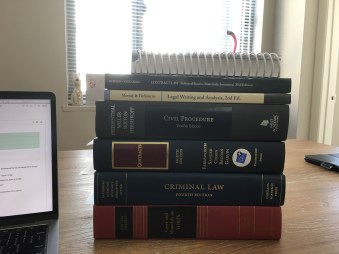
Law school has started well. You must forgive me for the lack of blog posts over the last month; road-tripping half way across the country from Texas, establishing a new home in DC and going through law school induction took up all of my spare time, and even now I have thirty pages of Criminal Law reading which I should be tending to this evening. However, for my own mental health and diversion if nothing else, the blog will continue, albeit maybe somewhat more sporadically than before.

Being back on a university campus as someone with a record of speaking out forcefully against the excesses of identity politics has been interesting – I can confirm that all of the warnings I have been giving over the past few years were prescient and on point. There have been no stand-out incidents yet which lead me to believe that my institution is faring worse than any other, but it only takes one supposedly “controversial” speaker invite or student society activity to create havoc and endless protests, so we shall see how things develop. Halloween will likely be a good indicator, given recent controversies elsewhere and the growing conviction that “cultural appropriation” is a harmful, negative phenomenon. Today was the law student organization fair, and reflecting my semipartisan nature I added my email to the law school chapters of both the ACLU and the Federalist Society. I agree with neither organization entirely, but look forward to some interesting debates.

Adjusting to student life has been challenging, but frequently fun. Though I am a graduate student I am still on the generic university email list, so have been receiving helpful daily missives about how to do my laundry and accomplish other tasks now commonly known as “adulting”. On the flip side, there is nothing like living in close proximity to a bunch of eighteen-year-old undergraduates to make you feel your age, and there has been more than one occasion when I look from all these young whippersnappers with their lives ahead of them to myself and wonder momentarily what it is that I am doing, making this mid-life career course correction. Fortunately these moments never last long – I came here with a purpose, albeit a somewhat inchoate one, and many of my classmates have impressive and inspiring backgrounds.

Intellectually I feel like I am holding my own thus far, though the annoying habit of American law schools whereby the first real feedback only arrives in the form of all-or-nothing final exams in December means that I won’t really know precisely where I stand for awhile. Mostly it is just a relief to have made a start, after having done so much preparation and read so many conflicting pieces of advice about how to succeed at law school. There is a satisfaction when the reasoning behind some obscure rule or legal concept finally clicks into place – it is good to be learning again. Growing, hopefully.

We have some pretty eminent academics who teach here, people whom I knew and respected before the thought of going to law school even occurred to me. One Supreme Court justice teaches a constitutional law seminar here, and another is coming to speak next week. Mostly I am awed by a sense of vast new possibility – the law is not really one career, it is a gateway to a myriad of different sub-vocations, almost as different from one another as it is possible to be. And while I can pre-emptively rule out certain options – it is pretty safe to say that I will not be becoming a small-town lawyer or one of those personal injury kings with their face on a billboard above the freeway – the possibilities remain varied.

Anyhow, this will likely be the longest thing that I write for some time outside of law school. Necessity dictates that I will at last have to do what I have often threatened to do on this blog but never quite succeeded at, namely trying to adopt a “little and often” approach to commenting and reacting on stories of interest. At this point you all know what I think about the big issues anyway, and I can always link back to those longer-form pieces when necessary. Time constraints now mean that if I want to say anything at all – and keep the blog ticking over – I had better find a way to condense my opinions into a paragraph or two. It will be good practice; Lord knows that much of what I have written the past six years would have benefitted enormously from an editor’s red pen anyway, if not the shredder.

Finally, while it may be somewhat cheeky to mention this when I haven’t published anything new for a month, I am now technically an impoverished student once again and without a regular income, so any donations to the instant ramen noodle fund are most gratefully received.
 

img_6228

Support Semi-Partisan Politics with a one-time or recurring donation:

Agree with this article? Violently disagree? Scroll down to leave a comment.

Follow Semi-Partisan Politics on TwitterFacebook and Medium.

Update From The Road

Angkor Wat - Cambodia - Sam Hooper

And now for something completely different

Those who watch my Twitter timeline particularly closely or otherwise follow me outside of this blog may know that I am heading to graduate school in the United States to study law this September.

Just as my initial career in management consultancy was wonderful and taught me much but ultimately was not where I wanted to make my life’s contribution, so producing this blog for the past six years has (hopefully) stretched me as a writer and thinker but ultimately proved frustrating due to the rather incestuous UK political media’s absolute refusal to acknowledge or promote the blogosphere, or nurture the kind of positive symbiotic relationship between old and new media which still characterises American political discussion at its best (even now, this blog is cited far more in US outlets like the National Review than most UK publications).

Fear not, this blog and the political writing will continue. But having read and written so much about policy and political values in recent years, I’ve reached the point where I actually want to see some of my ideas implemented – or at least to advocate for those ideas from a position where there is a fighting chance of making a tangible difference. Deeds, not words.

As I recently wrote in the personal essay component of my various law school applications:

I am proud of my part-time work as political writer and campaigner, particularly my advocacy for Britain’s secession from the European Union during the 2016 referendum, but writing and commentating from the sidelines is often frustrating. I now realise that without a legal education of my own, there will always be a constraint on my ability to fully participate and influence many of the technocratic and constitutional debates about which I care deeply.

Through my writing activities, I see that the future is being shaped by intersecting developments in trade and international law, intellectual property, privacy, civil liberties, national security and constitutional law. I know from my current activism that my future work will require a rigorous knowledge of several of these fields, and that the law, if not quite the battleground on which these issues will be fought, is certainly the language in which they will be contested. I want to have a voice in those conversations, and it is for this reason that I now seek a legal education.

My wife and I have now left London as our permanent home, and having shipped off all of our personal belongings are currently en route to the United States by way of an 11-week trip through southeast Asia. We began in Hong Kong, moved on to Chiang Mai and Bangkok, Thailand, spent an enlightening few days in Siem Reap, Cambodia and are now back in Thailand doing various beachy things before travelling to Singapore, Bali, Australia and New Zealand, arriving in Los Angeles some time in June and then road-tripping back to my wife’s native Texas.

I am currently in the process of hearing back from various law schools and while I am blessed to have already received some very appealing offers of admission we still find ourselves in the strange and rather stressful position of not yet knowing where we will be living and working come September – it could yet be on either coast of this vast country, or somewhere in between. I am also having to frantically switch my brain from work mode to study mode after a decade-long hiatus, and hoping that Study Brain successfully reboots after its extended hibernation.

All this by way of saying sorry for the lack of recent new blog pieces. We front-loaded the trip with most of our time-intensive activities (as of yesterday, for instance, I am now a PADI certified open water scuba diver) so writing time has been largely nonexistent for the past three weeks, but we are now moving into a more relaxed phase of the trip which should afford me some time to blog from various coffee shops and beaches. It’s a tough life.

The benefit of half unplugging from the daily news cycle and not feeling the need to react to every twist and turn of the Brexit negotiation, the establishment backlash against democracy or the metastasization of corrosive identity politics through our culture is the opportunity to gain clarity and perspective which is easy to miss when one is in the fray of daily political debate.

I am currently re-reading Charles Murray’s excellent 2012 book “Coming Apart: The State of White America” in the context of our present reality, which itself is perfectly captured in Amy Chua’s new book “Political Tribes: Group Instinct and the Fate of Nations”. Murray’s warning about the growing societal schism (in terms of both geography and values) goes a long way to explaining how the ruling classes – the “new upper class” in Murray’s language, the “coastal elites” in Chua’s, but both equally applicable to Britain as America – have come to hold very different values and priorities to the broad centre of the countries they lead, to the extent that there has been a near-total breakdown of mutual trust and empathy.

It has long been a theme of my writing that the fault for this schism lies first and foremost with the ruling elite – the well-educated, well-connected and well-employed – for having been content to run society exclusively in their own favour for so long, and for the stunning lack of consultation or restraint with which they pushed ahead with their policy goals. One can potentially agree with every single one of the coastal elite or pro-EU centre-left’s values and still deplore the way in which those who make policy and influence the culture have become so ignorant of the lives of their fellow citizens, and the open disdain shown by many elites for those who hold different values and aspirations. For democracy to long survive, those with power, wealth and influence have a particular responsibility to be magnanimous and empathetic to their political opponents, but instead we are currently witnessing an establishment backlash which ranges from the hysterical to the furious, by way of the conspiratorial.

I have more detailed thoughts on all of this which properly belong in a future blog post, which will hopefully also include some ideas for how these bewildered and furious elites might actually begin to regain the pulse of their own countries – if they are willing to do so. For now, however, I wanted to give this quick status update and apologise for the recent lack of blog posts. More updates (and new material) to follow soon.


Law school - books and gavel

Support Semi-Partisan Politics with a one-time or recurring donation:

Agree with this article? Violently disagree? Scroll down to leave a comment.

Follow Semi-Partisan Politics on TwitterFacebook and Medium.

Regina v. The Mormons

The institutional might of the Church of Jesus Christ of Latter-day Saints is about to come face-to-face with the impartial hand of British Justice. No, scratch that.

The worldwide leader of the Mormon church has been ordered to answer allegations of fraud at Westminster Magistrates’ Court, on pain of arrest if he fails to comply. No, still not quite there.

A malleable judge has been persuaded to use a rarely-used legal procedure in an attempt by a dissatisfied former member to hold a religious organisation to the same standard of proof that one might expect a car manufacturer to be able to guarantee the reliability of its product, in an ego-stroking show trial guaranteed to waste the time and money of everyone involved. There, that’s closer to the mark.

Salt Lake Mormon Temple vs Westminster Magistrates' Court
Salt Lake Mormon Temple vs Westminster Magistrates’ Court

The Telegraph reports on the details of this case, which seems to hinge on the idea that because the Mormon church asks members to tithe a proportion of their income to the church, and because the Mormons cannot offer the same definitive proof of their teachings as I can prove the existence of a physical object such as the computer on which I am typing (Semi-Partisan Sam is not written on golden plates, sadly), their representations amount to a fraud:

A British magistrate has issued an extraordinary summons to the worldwide leader of the Mormon church alleging that its teachings about mankind amount to fraud.

Thomas S. Monson, President of the Church of Jesus Christ of Latter-day Saints has been ordered to appear at Westminster Magistrates’ Court in London next month to defend the church’s doctrines including beliefs about Adam and Eve and Native Americans.

A formal summons signed by District Judge Elizabeth Roscoe warns Mr Monson, who is recognised by Mormons as God’s prophet on Earth, that a warrant for his arrest could be issued if he fails to make the journey from Salt Lake City, Utah, for a hearing on March 14.

In one of the most unusual documents ever issued by a British court, it lists seven teachings of the church, including that Native Americans are descended from a family of ancient Israelites as possible evidence of fraud.

Where to begin?

Firstly, perhaps, with the observation that perhaps the time has come to discontinue this little-used legal procedure that apparently enables anyone nursing a strong grudge or resentment to haul his or her enemy in front of a magistrate for the purposes of making a public statement of disapproval. The British justice system should not be a plaything for individuals to use to settle personal scores – evidence of criminal behaviour, which is what fraud ultimately is, should be reported to the police and go through the proper channels. The Crown Prosecution Service often manages to make a hash of even those cases that have gone through the first round of scrutiny by law enforcement agencies; what chance do they then have of successfully prosecuting a person or organisation whose guilt is not even taken seriously by the police?

Secondly, the exercise amounts to a waste of public funds. Thomas Monson, President of the church, has already dismissed outright the notion of turning up at Westminster Magistrates’ Court to answer the charges. It just ain’t going to happen. The court to could attempt to satisfy itself by trying Mr. Monson in absentia, perhaps with a laminated mugshot propped in his empty seat, but that will be all the satisfaction that they are likely to receive.

Thirdly, can we really abide a justice system that could potentially make the leader of a fairly significant, relatively harmless (if somewhat quirky) religious faith persona non grata in our country, on pain of arrest by the police, if they fail to drop everything that they are doing and hasten to London to take part in a fatuous show trial?

Finally, and most importantly of all, think on the precedent that this case would set if it were to proceed any further (which it almost certainly will not). Yes, the Mormons believe some quirky things – the translation of the Book of Mormon from gold plates by Joseph Smith, an eyebrow-raising explanation of the origins of the Native American people, and the assertion that the Garden of Eden was located in what is now Jackson County, Missouri, to give away just some of the spoilers. But really, all that separates the claims of the Mormon church from those of other major religions such as mainstream Christianity is the factor of time – the Mormons most recent revelations occurred in the nineteenth century as opposed to the first.

If the Mormon church is to be found guilty of fraud for every instance in which it has received a donation or tithe payment on the basis of their religious teachings, then the Catholic Church and the Church of England should start liquidating assets in preparation for one hell of a large class action lawsuit from their followers. The idea is risible.

And imagine the policework, the investigation that would be required to argue the case in court. The fees racked up on both sides to procure the services of archaeologists, historians, theologians and intellectuals to support their respective arguments would be astronomical. Richard Dawkins would become one of the richest men in Britain.

In seriousness, though, perhaps there are shades of grey in terms of the general principle at stake – the question of whether cults should be in any way criminally liable for duping and conning money out of naive followers. I don’t propose to set that line here, nor do I claim any qualification to do so. But I can comfortably say that the Mormon church is not on the wrong side of that line.

Ultimately, it comes down to this: I don’t want District Judge Elizabeth Roscoe going through my Bible line-by-line and telling me whether or not I have a claim against the Catholic Church. I am a person of faith, but I am uncomfortable enough that religion is so intertwined with the legislature and executive of this country, without also having to fend off probing attacks from the judiciary.

If you were raised a Mormon, or if you were persuaded to convert by one of their charming missionaries, then you almost certainly entered into the religion with a sound mind and a free will. If you later come to stop believing in the mysteries of that faith and decide to leave, that is also your choice. But there’s a clear No Refunds policy at the cash register, and you should not be bothering the courts arguing that you are entitled to one.

So let’s have no more talk of fraud.


On International Video Copyright Restrictions

Rant Of The Day.

So apparently some crazy stuff went down at the VMAs last night. Something about Miley Cyrus gyrating inappropriately, Justin Timberlake reuniting with the Backstreet Boys (or is it ‘NSync?) and all manner of Hollywood elite naughtiness that promised to both amuse and titillate the audience.

I know this because various websites that I read to pass the time – Buzzfeed, Slate, et al. – have been writing and posting articles about the VMA shenanigans throughout the day. The format of said articles (and this doesn’t just apply to the VMAs, but about more or less anything that happens in America) generally follows this pattern:

1. EYE-CATCHING HEADLINE

2. FERVENT ASSURANCE THAT I REALLY WANT TO READ THIS STORY

3. BREATHLESS PARAGRAPH FILLING ME IN ON THE SCANDALOUS DETAILS

4. EMBEDDED VIDEO OF SAID SCANDALOUS HAPPENING IN ALL ITS SALACIOUS GLORY

5. THE “WASN’T THAT SH*T CRAZY?” PERORATION

Only I happen to live in the United Kingdom. Which means that the whole process falls apart when I reach Step 4. Instead of seeing the embedded video (from YouTube, or MTV, or Comedy Central or whoever the hell else), I get this:

4. SORRY, THIS VIDEO IS NOT VIEWABLE FROM YOUR CRAPPY THIRD WORLD COUNTRY. SUCK IT.

Thanks, Slate.com for linking to a video that only 4.45% of the world's population can watch
Thanks, Slate.com for linking to a video that only 4.45% of the world’s population can watch

But – and here’s the kicker – not before they make me sit through the obligatory 30-second commercial for J-Lo’s latest crappy perfume or whatever other shoddily-conceived and made wares that they want me to purchase. As a result, for viewers that God has chosen to curse by not conveniently placing them within the contiguous 48 states of the USA, Step 5 then becomes this:

5. WASN’T THAT GREAT THING THAT YOU DON’T GET TO SEE REALLY AWESOME?

I wouldn’t know, would I? I wouldn’t bloody know.

Comedy Central at least tries to be amusing about the fact that their bloodsucking intellectual property lawyers want to extinguish any last drop of enjoyment that I might possibly derive from their shows:

Even Colbert is in on the heinous conspiracy

But somehow this lame attempt at humour just makes it all the worse.

And no, it isn’t one of the “detriments of living under a monarchy”. It is one of the detriments of living in a modern digital age still governed by dinosaurs and fossils from a previous era who seriously think that today’s web-savvy, enlightened global consumer will put up with their bullshit and tolerate a smug, scornful, condescendingly second-class service.

And the fact that many such content providers, such as Comedy Central above, offer to redirect you to “your local country website” – which is, without exception, massively inferior to the US version in every way, from design to content – merely rubs additional salt into the wound.

THIS IS WHY INTERNET PIRACY HAPPENS. THIS. RIGHT HERE.

Do the suits seriously think that I am going to shrug my shoulders and hop on a plane to the US of A so that I can watch their two-minute-long, mildly entertaining video clip, or else sorrowfully abstain from ever viewing it?

No. In my rage, I will turn to Google and hammer out a stream-of-consciousness search request into my long-suffering keyboard, and fifty websites of dubious legality will instantly offer to show me the same goddamn video clip, without asking me to move continents, kill my firstborn son or jump through a fiery hoop.

The bottom line is that I get to watch the thing that I wanted to see. Semi-Partisan Sam wins. Always. In fact, the only people who lose out are the blood-sucking corporations who tried to throw pathetic, unenforceable legal obstacles in my path, and – sadly – the content creators, who would have materially benefited had I been able to watch on the official site, maybe sit through a couple more ads, and even make a purchase from the online store once in a blue moon.

But I don’t expect much from the likes of ViaCom-NBC-Universal-CBS-Fox-MediaTron-Gargamel-Corp.

It would be nice, however, if the news and entertainment websites that I frequent – respectable websites and publications that should know that much of their readership originates from outside the continental USA and does not appreciate being titillated with the promise of content that they cannot watch – smartened their act up and linked to sources that do not enforce petty, control-freakish regional access restrictions (or at least pressured content providers to stop their errant ways for the good of humanity).

Henceforth, I will be naming and shaming any site that falls short of this entirely reasonable standard of behaviour on this blog.

Fair warning.

Too Big To Jail

A brief segment from the Rachel Maddow show on MSNBC, in which Maddow interviews Glenn Greenwald and asks him when it became acceptable in our society to accept that the political and financial elites are often considered “too big to jail”, or even to stand trial, despite being guilty of egregious crimes, while people without power are often imprisoned for the smallest, most inconsequential infractions.


Well worth five minutes of your time.