Are Labour At War With Poverty Or With Success?


Well, now we have it conclusively. It has nothing to do with making the rich in our society pay their “fair share”, no matter how loosely you define (or indeed blatantly misuse) the word “fair”. Nothing to do with ensuring that essential public services are funded, either. No, Ed Ball’s announcement of the Labour Party’s intention to reinstate their punitive 50% top marginal rate of income tax has everything to do with punishing people for daring to still be rich, for having the temerity to succeed.

Daniel Hannan MEP, writing in the Telegraph, ponders the cognitive dissonance behind a proposal to raise taxes without realistic hope of increasing revenues, and wonders if Labour are right to stake their electoral hopes on the British people being motivated primarily by envy and a desire for vengeance:

Labour doesn’t actually think the 50p tax rate will make Britain more prosperous. We know this because, for all but the last few weeks of its 13 years in office, it kept the top rate at 40p. Yet it now brazenly calls a 45p rate “writing a cheque to millionaires”. On one level, this is too silly for words: even if  everyone earning £150,000 were a millionaire, on no conceivable definition does demanding less money from someone constitute “writing a cheque”. But Ed Balls has presumably calculated, as Iain Martin adroitly observes, that there are enough votes in envy to cobble together a majority under the uneven constituency boundaries.

In another column he also reflects on the results of a YouGov poll showing that an overwhelming majority of Labour supporters believe that a 50p tax band should be brought back even if it was conclusively demonstrated that doing so raised no additional revenues. The telling visual is here:

YouGovTaxpoll


Hannan goes on in this second piece to explain the motivations that may cause people to vote as they did in the poll, and has the humility to accept that he (and others on the opposing side of the argument, myself included) probably suffer from similar confirmation biases and reverse rationalisation on this and other matters.

But the inescapable fact is that the motivation for supporting a revenue-neutral or revenue-negative tax increase comes largely down to envy, and that ugly part in the minds of some in the Labour Party (fully accepting that the Conservative Party has other ugly parts of its own) that would rather everyone in the country be worse off and more equal than better off and more unequal:

Envy is an ugly and debilitating condition, but it seems to have an evolutionary-biological basis. The dosage varies enormously from individual to individual, but even toddlers often display a sense that, if they can’t have something, no one else should either. If they had the vocabulary, they would doubtless, like the 69 per cent of Labour supporters, explain that emotion “on moral grounds”. Few toddlers, and few Labour voters, openly admit to being actuated by vindictiveness.

Most policy positions are an expression of some ingrained tendency. For example, we have an instinct to care for the vulnerable, and also an instinct to value reciprocity, and our welfare system results from an interplay between the two. Similarly, the current row about deporting foreign criminals has less to do with their numbers or the nature of their crimes than with our instinct – again, a human universal – about hospitality and its abuse. We shouldn’t be surprised when people who suffer from envy elevate it into a political precept and call it “fairness”.

The concept of fairness has been much abused by politicians (generally those on the left of the political spectrum), particularly since the start of the Great Recession. The worthy desire of Labour politicians to ease the crippling, painful effects of poverty on those less fortunate in our society is not in question, but it is disconcerting when they cling to the idea that punitively high, revenue-neutral tax increases will do anything at all to help the poor other than to cheer them up with the knowledge that wealthy people are also feeling the pinch.

And while we are quibbling about wording, Ed Balls needs to be taken to task in the media for characterising George Osborne’s decision to reverse half of Gordon Brown’s 50p tax hike to a slightly more palatable 45% top rate as a “massive tax cut”. If a five-point reduction in tax rates constitutes a massive tax cut, surely the ten-point increase in income tax instituted in the dying days of the Labour government of which he was a part could only be described, using the same dramatic language, as a gargantuan, devastating, apocalyptic tax increase? And yet, come general election season 2015, it is certain that we will not see Ed Miliband or Ed Balls’ faces smiling down at us from billboards promising “massive tax increases”.

But let us return once more to the YouGov poll results. No other mainstream British political party – not even the Liberal Democrats or the supposedly crazy UKIP – has a majority of their supporters who believe in raising taxes for the rich just to teach them the lesson that hard work does not and should not pay. That distinction is reserved for the Labour Party, a party whose leadership and supporters are now – quite cheerfully, openly and stridently – acting in a dangerously irrational way.

Irrational, that is, if we take them at their word that they have the best interests of all the British people at heart.

The Labour Party Wants To Criminalise Stupidity

Hot off the press, we have the Labour Party’s next proposal to make Britain a happier, fairer, more green and pleasant land. Operating under the twin delusions that fastidiously tweaking laws will affect the behaviour of people who hold the law in zero regard in the first place and that there is no bad thing in the world that cannot be quickly put right through national legislation, Labour have decided that their path back to power lies in demonising adults who smoke in cars when minors are present, and vowing to include a pledge to Save The Children in their general election 2015 manifesto unless the coalition government takes action first.

Really, officer? I had no idea!

The Guardian reports:

The shadow health secretary, Andy Burnham, said Britain should follow the example set by Australia, Canada and a number of American states.

He told Sky News, “When it comes to improving the health of children, we are duty bound to consider any measure that might make a difference.

“Adults are free to make their own choices but that often does not apply to children and that’s why society has an obligation to protect them from preventable harm.

“Evidence from other countries shows that stopping smoking in the confined space of a car carrying children can prevent damage to their health and has strong public support.”

I have no doubt that there may often be strong public support for not smoking in cars carrying children as Andy Burnham says, but he cleverly does not say whether or not there is equally strong support for actually legislating on the matter. Besides, if you are going to ban something it is generally best to have the means of monitoring compliance and enforcing the ban, significant details which are not mentioned in the amendment. Will a new branch of the British Transport Police be established to watch out for the tell-tale glow of a lit cigarette end in the presence of a child? And is the threat of a £60 penalty really going to change public behaviour?

If someone is so foolish as to smoke their child like a side of bacon in the car on the morning school run, the sad reality is that the unfortunate child is likely to come a cropper at the hands of their inept parents one way or another regardless of any heroic feats enacted on their behalf by a future Labour government. The dangers of second hand smoke have acquired such apocryphal universality that they are known by people who outwardly seem to know very little about anything – people who know nothing about nutrition, for example, can crack a “this counts as one of my five-a-day” joke when helping themselves to a strawberry jam doughnut or (in my case) a roll of Rowntree’s Fruit Gums.

People who subject their children to second hand smoke in the claustrophobic confines of a car know exactly what they are doing, and if they aren’t actively encouraging their children to poke metal objects into the electrical outlets at home then they almost certainly come close to that level of dereliction of parental duty in other areas as well.

Andy Burnham and Luciana Berger are clearly intent on proving themselves the “true guardians” of child safety, unlike the callous, horrible old Tory government. But there is only so much that members of Parliament, the police and the judiciary can do in their taxing role as parents-of-last-resort to a nation that is happy to keep breeding but less sure of how best to deal with the results and that awkward business of raising children.

Some acts are so evil, heinous or injurious to the public good that criminalising them is right and proper, and one of the correct functions of the legislature is to make sure that criminal law keeps up with these activities. And some other things are just plain stupid, and common sense tells any person in their right mind that to do those things would be ridiculous. Hermetically sealing your child in a vehicle and exposing them to tar and nicotine is just such a thing. The social disapprobation and public shunning of people who make their children passively smoke in cars is more of a deterrent than a £60 fine.

But while I have dwelled on the detail, Andrew Brown, writing in The Telegraph, gives the bigger picture reason why banning smoking in cars is not as noble or clever as its proponents make out:

There is a vital principle at stake: do we really want to live in a country where the state interferes to this degree in the minutiae of people’s daily lives and in private spaces like cars? The claim about protecting children is really just a Trojan horse to disarm opposition, as passive smoking was. Once people were persuaded that there was a risk of “passive smoking” (even though the risk is minimal or non-existent) then it was far easier to justify the smoking ban. If a law banning smoking in cars were to be passed, and the principle of “protecting third parties” conceded, where would it end? There would be no logical reason why the government couldn’t prohibit smoking in people’s houses where children are present. The public may tell pollsters that they support this kind of law, because it might sound plausible, but politicians have a responsibility to hold back the creeping tentacles of the meddling nanny state, not think up new ways to persecute private citizens.

Precisely. And if we really do need a Labour government to tell us that it might not be wise to give our children lung cancer and threaten us with slap-on-the-wrist penalties for doing so, then they have already achieved the kind of docile, unthinking, collectively dim and dependent society for which they sometimes – as they have done again today – so clearly and loudly agitate.

Labour’s Best Frenemy

edballsedmiliband
Maybe a 65% top marginal rate of income tax would make us even more popular.


Dan Hodges may have resigned his Labour Party membership last year in protest of the parliamentary party’s opportunistic stance on intervention in Syria, but he still strongly identifies with Labour values – indeed, his Telegraph biography states that he “writes about Labour with tribal loyalty and without reservation”. One would expect no less from the son of my firebreathing local MP, Glenda Jackson. Which makes his scorn for the current Labour leadership and pessimism for their prospects in the 2015 general election all the more compelling.

Of course, one might say that it is perfectly natural for someone who has publicly fallen out with the party hierarchy to publicly root for their demise, and that it is unseemly to trumpet the latest poll results showing Labour’s lead over the Conservative Party almost completely extinguished. But Dan Hodges comes packing precedents, facts and statistics.

First come the simple, time-tested truths:

The party that is seen as being best placed to run the economic affairs of the nation normally wins the election. And at the moment that party is seen to be the Conservative Party. In fact, that party has been seen to be the Conservative Party ever since Labour was ejected from office in 2010. Through rain, through shine, through double-dip (erroneously reported double-dip if you prefer), and through recovery, the Tories have enjoyed a comfortable lead on the economy. The perception that David Cameron and George Osborne are the guys to run the nation’s finances is baked in.

Another issue is leadership. The man who people see as the best suited to be prime minister is usually the one they select as their prime minister. In this case that man is Cameron. From the day Miliband was elected Labour party leader, people have looked at him, and then they’ve looked at Cameron, and they’ve said “David Cameron is the one best suited to running the country”. There has never been a single day when they’ve said “Actually, I think that Ed Miliband is best suited to running the country”. Again, the Tory advantage on leadership is baked in.

Strikes one and two. On economic stewardship, for better or worse, the question is quite settled. George Osborne, for all the many things he has done wrong and key conservative principles on which he has compromised (partly through necessity of coalition and partly through want of a backbone), has still managed to deliver the strongest rate of economic growth since 2007. Meanwhile, Shadow Chancellor Ed Balls’ continued shrieking about economic flatlining and living standards (always a lagging indicator) are increasingly coming to sound churlish and divorced from reality.

Hodges also considers the trove of other indicators that are trending in favour of the government at present:

If you think abut it, it’s fairly logical. “So, Bill, I see the economy is growing faster than any of our EU rivals, unemployment is falling, crime is falling, that wave of east European migration didn’t materialise after all, business optimism has returned, wages are rising again, inflation is still low, interest rates are still low, and this lot seem the ones best placed to help the family finances. What are you going to do in the election on Thursday?” “You have to ask? I’m going to kick the bums out.”

The crux of the matter, according to Hodges, is that in order for Labour to win, the British electorate would have to simultaneously break almost all of their recent behavioural precedents and behave in a most unpredictable way, namely:

An opposition party could retain its midterm vote share. A party in power could be ejected after just one term. Even though the economy is improving and unemployment is falling and crime is falling and business optimism is increasing and interest rates are historically low and inflation is historically low and wages are rising in real terms, people could say “It’s time for a change.”

Well, when you put it like that…

It did not have to be this way. As any reader of this blog will know, I am no supporter of the Labour Party, and given the fact that the Conservative-led coalition government is at least making timid steps to roll back the size of the state and tackle government spending, I have no great desire to see things change in this regard. But I also saw a path that Labour could have taken to put themselves in a better position going into the 2015 general election, a path that they conspicuously chose not to take.

This route to potential victory involved making an initial very public mea culpa accepting responsibility for their previous economic mismanagement and unsustainable growth of government (and so drawing a line under it) and a pledge to take deficit reduction at least as seriously as the Tories, followed by a pivot to actually address some of the British public’s legitimate concerns on welfare, on Europe and on government spending. From his recent columns, it is evident that Dan Hodges also saw this potential door back into power, just as it was firmly being pushed shut by Ed Miliband and Ed Balls.

The Labour Party leadership and allied local party activists who have drunk merrily from the Ed Miliband Kool-Aid since 2010 probably do not like to hear any of this, from someone they no doubt consider a turncoat. But I have a strong premonition that, should the 2015 general election not go Labour’s way, it is the words of Dan Hodges that people will summarise and plagiarise when writing their post-mortems of the Ed Miliband era.

Maybe Dan Hodges isn’t Labour’s worst enemy in their own midst; in fact, he is quite possibly their very best friend at the moment. If only they could see that.

Labour Reveal Their Priorities

Miss me yet?


It was heavily trailed, but now we know for sure – Labour, who have been feeling the heat as a result of their total lack of credibility on the economy and the fact that the Tories are finally starting to benefit from the fruits of economic recovery, have been forced into revealing some of their plans for the future. And what plans they are. They can best be summarised as “let’s return to how things were in the final days of Gordon Brown’s premiership”.

Whether this makes you want to get out or chequebook and make a huge contribution to the Labour Party or scream and and fall down on the floor in absolute incredulity depends entirely on your political leaning.

The Telegraph reports on Ed Ball’s major policy speech:

[Shadow Chancellor Ed Balls] said it was wrong for the Coalition government to have decided to cut the 50p top rate of tax to 45p from April last year.

“When the deficit is still high, when tough times are now set to last well into the next parliament, when for ordinary families their real incomes are falling and taxes have risen, it cannot be right for David Cameron and George Osborne to have chosen to give the richest people in the country a huge tax cut,” Mr Balls said.

“That’s why for the next parliament the next Labour government will reverse this government’s top rate tax cut, so we can finish the job of getting the deficit down and do it fairly.

“For the next Parliament, we will restore the 50p top rate of tax for those earning over £150,000 – reversing this unfair tax cut for the richest one per cent of people in the country and cutting the deficit in a fairer way.”

Ed Balls calls cutting the top rate of income tax from 50 to 45% a “huge tax cut”. Let us leave aside for a moment the ludicrous presumption on Balls’ part that taking a full half of the incremental pound that someone earns in income tax alone (never mind National Insurance, indirect taxes and VAT) could ever be proposed in a sentence together with the word “fair” and be taken seriously. I am more interested in what Ed Balls and the Labour Party had to say when Gordon Brown decided to raise the top rate of income tax from 40% to 50%. I’m pretty sure that they didn’t call it a “huge tax increase”. In fact, I know that they didn’t sell it to the country that way. So if increasing the top rate of income tax by ten pence in the pound is not a huge increase, how can a partial rollback of five pence be considered a huge tax cut? The answer, of course, is that it cannot.

So a friend of mine had this great idea on tax...
So a friend of mine had this great idea on tax…


In what was doubtless intended as a ringing statement designed to assure us of Labour’s new-found commitment to sensible economic management, Balls also committed to eliminating the budget deficit by the end of the next Parliament, in 2020:

Mr Balls announced what Labour said would be a binding commitment to balance the books, deliver a surplus on the current budget and get the national debt falling in the next Parliament.

Quite why we would want to exchange a government that tried and failed to manage this feat in the lifetime of the current Parliament for one that never displayed an interest in doing so until now but which suddenly claims to be able to achieve it in the next Parliament if only they are given the keys to power is never fully explained.

Neither does Balls acknowledge the fact that even when the budget deficit is eliminated, the national debt will remain intact and ominously large – he makes no proposals about running a future surplus to begin paying down this debt and lowering the nation’s interest payments. Neither, of course, does George Osborne devote much of his time to that niggling fact – but if Ed Balls really wants to seize the mantle of economic trustworthiness from Osborne he needs to aim higher and show that he has a better grasp of the longer term picture than his counterpart.

The reaction to Balls’ speech from the business community – who Labour like to malign, but are actually the ones who create the jobs and pay corporation tax and National Insurance contributions – was predictably scornful. Words and phrases such as “absurd”, “disaster”, “unmitigated disaster”, “putting our economic security at risk”, “unhelpful” and “political posturing” were often deployed.

By contrast, the Unite trade union saw Balls’ announcement as a fantastic development, and urged Labour to ever more destructive heights of foolishness and irresponsibility:

However, the Unite trade union, Labour’s biggest donor, welcomed the policy but warned it was only “a beginning”.

A Unite spokesman said: “The commitment to restore the 50p top rate of tax is a sign that a future Labour government understands the need for a fairer taxation system in this country.

“This is a beginning; we would urge Labour to also tackle the disgraceful abuse of the system by the evaders and avoiders too.

You know what would make tax avoidance really difficult, unnecessary and socially unacceptable? A flat tax. But somehow I don’t see Unite advocating for that any time in the near future. Because, though they do not like to admit it in public, high taxes are not a regrettable but necessary evil to people like Ed Balls and his cheerleaders on the left. For Ed Balls, higher taxes are a desirable end in themselves, a last line of defence to ensnare anyone who defies the odds and manages to break through Labour’s dragnet legacy of mediocre standardised education, burdensome regulations and big government and succeed in spite of themselves.

With regard to Labour’s brave new economic stance, the British electorate will cast the only verdict that matters in May of 2015. But I think David Cameron and George Osborne will be sleeping a little more easily in their beds from now on, warm in the knowledge that Ed Balls has set Labour on a firm course back to 2010.

Nepotism Alert – Stephen Kinnock

Lord Stephen of House Kinnock. Winter is coming.


Watch out, there’s a new man in town. He is going to shake things up. He’s going to get things done. He’s a policy heavyweight and an inspirational leader-in-waiting. He’s going to rise up through the Westminster power structure and eventually become the Labour leader that Ed Miliband can only dream of being. He is Stephen Kinnock.

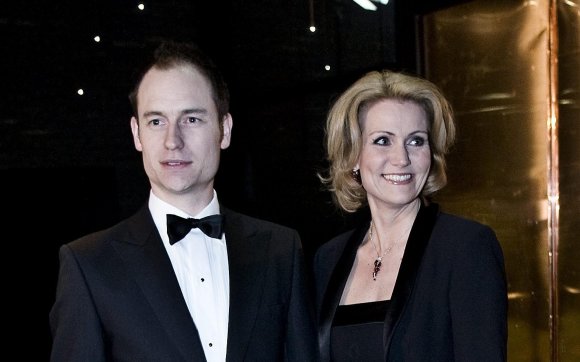
The face has the wistful, simple and vacant look reminiscent of Prince Edward on a bad day, albeit with even less charisma. Presumably he is charming enough in person, as he is happily married to Helle Thorning-Schmidt, the Prime Minister of Denmark. Kinnock Jr. currently lives in London while she and his children reside (naturally) in Copenhagen.

But now Stephen Kinnock, Son of Neil, First of his Name, is throwing his hat into the ring to be the Labour candidate for the Welsh constituency of Aberavon at the next general election.

The Guardian observes that this is by no means the first nonentity with a famous surname to try to make politics a family business in recent years:

Will Straw, son of Jack, will contest Rossendale & Darwen for Labour in next year’s general election. David Prescott, son of John, stood unsuccessfully for selection in the Greenwich and Woolwich constituency in November. There has been speculation that Tony Blair’s eldest son, Euan, might seek a parliamentary seat after he gave up a career in banking to work for a small Coventry charity.

The four young men, were they successful in their ambitions, would be the next wave of political offspring to carry on the family tradition. Hilary Benn, son of Tony, Ben Gummer, son of John, and Nick Hurd, son of Douglas, are all MPs. Anas Sarwar was elected Labour MP for Glasgow Central after his father, Mohammad, stood down from the seat in 2010. Francis Maude, Bernard Jenkin, Andrew Mitchell and several others at Westminster all succeeded a parent to the role. There are plenty of recent historical examples too, from Douglas Hogg, the former Tory agriculture minister, to Estelle Morris, education secretary under Tony Blair, both of whom came from dynasties of MPs.

Just what Parliament needs – another untalented, uninspiring wet rag of a candidate with next to no real life experience (aside from the inevitable internships and think tank jobs that having a politician’s surname makes getting easy) to lower the average IQ of the Commons even further. Stephen Kinnock’s credentials and life experience? Being a research assistant at the European Parliament, a succession of jobs at the British Council, a job for the World Economic Forum and his present role at a consultancy that “helps global businesses go beyond the green basics and reinvent the way they grow”. Make of that last one what you will.

Parliament and politicians are thoroughly despised at this country at the moment. I know they are because I helped to campaign for one in the 2010 general election and many members of the public told me exactly what they thought of the lot of them. The expenses scandal is still fresh in the minds of many, and public fury will surely erupt again when MPs accept their proposed inflation-busting pay raise in the near future. With political engagement at an all time low, is now really the time to be throwing more prime examples of nepotism from the political elites in our faces?

Of course, these shenanigans are not restricted to the Labour Party – though they certainly take the biscuit for nominating Emily Benn to be a candidate back in 2007, when she was still only seventeen years old. There was a time when the runt of the family litter would be encouraged to join the clergy while the oldest son inherited the family estate. I certainly do not propose a return to those days, but surely we can come up with a better career path for the rootless and questionably-talented progeny of famous politicians than our current scheme of packing them back to Westminster before the green benches occupied by their parents have had a chance to grow cold?

And if we must continue to indulge in nepotism in British political life, can we at least try to make it a little more glamorous? In America, they make up for their lack of a royal family by bestowing on their political dynasties a real aura of magic and sparkle, wealth, privilege and scandalous intrigue worthy of a daytime soap opera. The Kennedys, the Bushes, the Clintons – their style of nepotism is no more morally acceptable, but it is a hell of a lot more fun to watch. No television producer is in a hurry to start making Keeping Up With The Kinnocks.

This is the son of a man who fell into the sea while posing for a photo shoot:


Somewhere, lurking well out of sight, are talented potential citizen politicians whose civic instincts we should be tapping to devote five or ten years of their life to serve a term or two in Parliament for the good of the nation.

Stephen Kinnock can sit this one out. The World Economic Forum surely misses his talents.