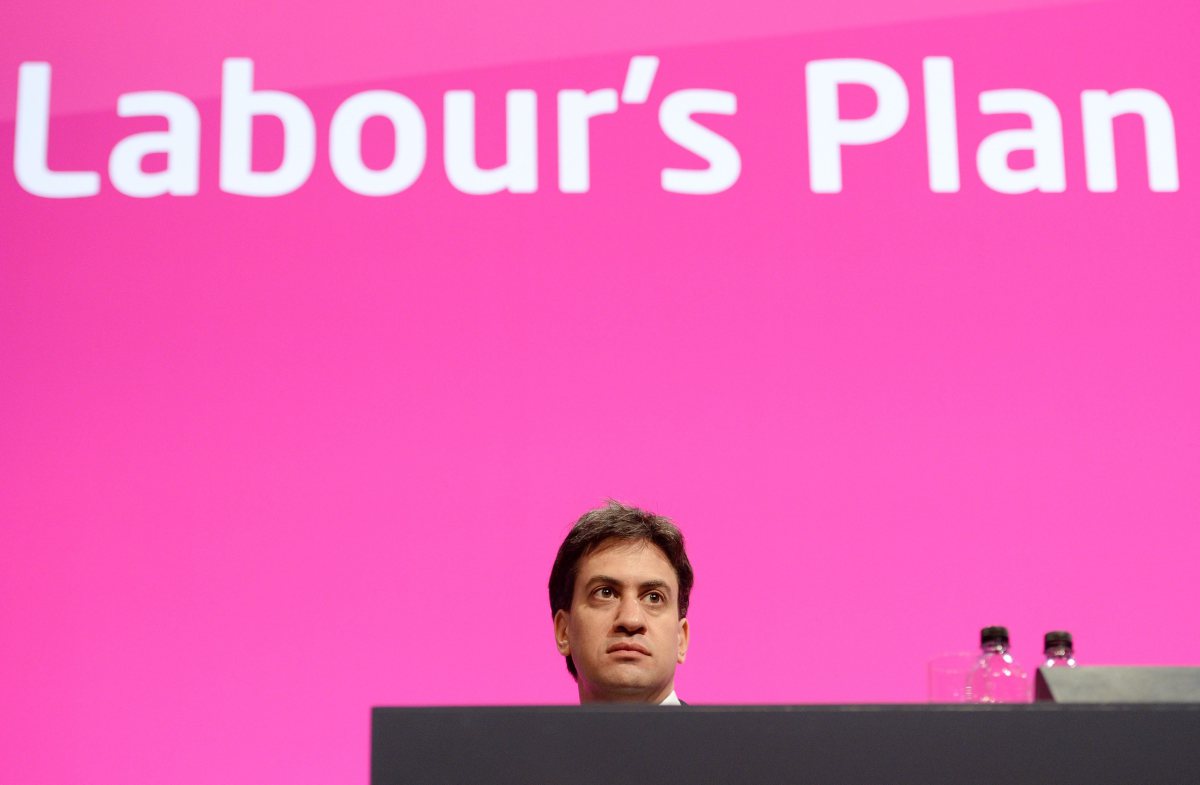
Labour Party Fails To Find Its Soul In Manchester


The 2014 Labour Party conference may be a rapidly receding memory, brushed aside in the news cycle by UKIP’s conference and Parliament’s vote to authorise military action in Iraq (again) – but it will take months for the stench of misplaced smugness, moral superiority and directionless, crusading fervour left in Labour’s wake to fully dissipate from the Manchester Central Convention Complex.

The bland, ambitious, vaguely telegenic personalities were the same.

The toe-curlingly bad speeches were the same.

The policy announcements (where they existed) were the same.

The delegates milled around, congratulating themselves for being the only ones in Britain who care about the poor, the weak and the vulnerable. So much the same.

They called themselves “brother” and “sister”, and talked about “solidarity” as though they were still engaged in some kind of real, urgent, principled struggle.

But it was all an act.

Today’s Labour Party, increasingly under the New Labour era of Tony Blair and Gordon Brown – and now reaching its dismal nadir under Ed Miliband – is nothing but an orchestrated pretence, an amateur dramatic society production of Labour’s Glory Days, with Ed Miliband playing the part of Clement Attlee and introducing Andy Burnham, in his first dramatic role, as Nye Bevan.

Continue reading

With Constitutional Reform, Labour Puts Politics Before Country

ed miliband devolution


The idea that Welsh, Scottish and Northern Irish MPs should no longer be able to vote on matters affecting only England when devolution prevents any English reciprocity is the only reasonable, logical viewpoint for a British citizen to hold – particularly in the aftermath of the Scottish independence referendum.

One might expect that a political party so self-avowedly obsessed with promoting “fairness” would recognise this universal truth, and work swiftly to ensure that the new reality comes to pass.

But Ed Miliband’s Labour Party has many priorities, and advancing this most fundamental form of constitutional fairness is very far down the list. Indeed, it is almost universally viewed as a threat.

The status quo keeps alive the possibility of a future Labour government in Westminster, while ensuring that a Conservative UK government is prevented as much as possible from interfering with any left-wing policies that take shape in the devolved assemblies.

Continue reading

When Will Labour Be Honest About Private Schools?

eton college


Another day, another “revelation” that Britain is a deeply elitist, socially segregated country thanks to the harmful influence of private schools and their irritating habit of setting their students up to succeed with a good education and useful network of influential contacts.

The Guardian reports on the findings of the Social Mobility and Child Poverty Commission. And on the face of it, the statistics are compelling:

Only 7% of members of the public attended a private school. But 71% of senior judges, 62% of senior officers in the armed forces, 55% of permanent secretaries in Whitehall, 53% of senior diplomats, 50% of members of the House of Lords and 45% of public body chairs did so.

So too did 44% of people on the Sunday Times Rich List, 43% of newspaper columnists, 36% of cabinet ministers, 33% of MPs, 26% of BBC executives and 22% of shadow cabinet ministers.

Oxbridge graduates also have a stranglehold on top jobs. They comprise less than 1% of the public as a whole, but 75% of senior judges, 59% of cabinet ministers, 57% of permanent secretaries, 50% of diplomats, 47% of newspaper columnists, 44% of public body chairs, 38% of members of the House of Lords, 33% of BBC executives, 33% of shadow cabinet ministers, 24% of MPs and 12% of those on the Sunday Times Rich List.

These figures certainly prove something, but not necessarily what the outraged commentators on the left think they prove. What these statistics show is a strong justification for the entirely rational choices of people with sufficient means to opt out of the state education system and go private. If you are at all normal and want the best for your child, why would you not place them in the hands of the system that is so much more likely to deliver the best social and educational outcomes?

Cue the inevitable wails of outreach from the usual suspects. First up, Owen Jones:

Why does the unfairness highlighted by the report matter? As it points out, elitism leaves “leading institutions less informed, less representative and, ultimately, less credible than they should be”, meaning they focus “on issues that are of salience only to a minority but not the majority in society”. If there are so few journalists and politicians who have experienced, say, low wages or a struggle for affordable home, then the media and political elite will be less likely to deal with these issues adequately. Instead, they will reflect the prejudices, assumptions and experiences of the uber-privileged.

No serious person would argue that this is not a problem – though many choose to quietly ignore the point out of self interest. It is certainly true that in journalism as with many other professions, a lack of people from diverse backgrounds materially harms the organisations doing the hiring. But an astute business or institution should already be aware of this fact, and have recruitment policies in place to ensure that they identify and attract talented people from non-traditional backgrounds. Jones and others never make a convincing case as to why the labour market cannot do this on its own, without the help of state coercion.

But as always, it is an active state to which the left instinctively turn. Jones’ take:

Certainly Britain is in desperate need of radical measures to ensure all can realise their aspirations, including the banning of unpaid internships, the scrapping of charitable status for private schools, investment in early-years education, and dealing with issues such as overcrowded homes that stifle educational attainment. But surely Britain’s chronically unequal distribution of wealth and power has to be tackled too.

Then, depressingly, the shadow education secretary Tristram Hunt chimes in:

Tristram Hunt, the shadow education secretary, said the report showed the coalition was failing on social mobility. “Under the Tories, the attainment gap between disadvantaged children and the rest is increasing, millions of hardworking people are seeing their living standards go backwards and child poverty is set to increase,” he said.

And finally the Guardian’s editorial on the subject, which sums up the landscape well enough but whose only proposed solutions are vastly inadequate to their supposed goal of ensuring that state-educated people are proportionally represented in the top professions:

The fundamental reason why so few top families can grab so many top jobs is precisely because they are able to provide the education, the environment and the networks that will eventually make their children’s job applications stand out from the pile. It is a very human, and in some ways commendable, thing for people to seek to give their kids a hand-up. No Whitehall initiative is going to counteract this urge, which is in any case shared across families from all classes. It does damage only because bankrolling unpaid work experience placements and master’s degrees, which would be ruinous for households across much of the scale, is so easy for those at the top.

Governments can – and should – extend minimum-wage laws to cover more internships, encourage universities to pay special attention to top grades earned in tough circumstances and support new routes into politics and the professions, to replace those that have closed with the withering of the unions, the local press and the culture of the apprentice. They can, and should, take care not to fragment state education in ways which – Swedish experience suggests – can leave schools prone to class segregation. But they should not delude themselves that any of it will create the meritocracy of the rhetoric unless they also do something about a wealth gap that easily warps into an opportunity gulf.

All of these people are very good at pointing out inequality where it exists, and saying that it is an outrage. Where they fall short is coming up with suitable, intellectually honest ideas for tackling it.

Having identified that attending private school gives an advantage to those students over state educated children, Labour’s proposed correctives are all variants on the same woolly and inadequate remedy. Revoke the charitable status of private schools. Subject such schools to harsher inspections or more stringent teacher hiring criteria. Enshrine reverse discrimination against private school students into law, and actively encourage businesses to look past paper accomplishments at the wider picture of an applicant (which many of the world’s best firms do already, out of self interest).

But why will the darlings of the British left, always first to proclaim their outrage at the unsurprising news that an expensive education is a worthwhile investment, not be honest about their ideal outcome? If private schools are causing so much damage and inequality in our society, why not ban them altogether? Why be content with continually talking them down and making it marginally more difficult for them to operate?

Why, instead of continually carping at the success achieved by private schools (and indeed any school that struggles free from centralised control), will prominent left-wing politicians not openly promise to “destroy every fucking grammar school in England. And Wales and Northern Ireland”, as one-time Labour education secretary Anthony Crosland muttered in private, and expand the threat to every fee-charging school as well?

If Labour is to maintain even the vestige of continued acceptance of the free market, they must hold that the final decision on hiring school and university leavers must rest with the business concerned, not with some faceless “equality and merit panel”. And this means that hiring managers must be free to compare the attributes of publicly and privately educated applicants and pick the candidates who they believe will do the best job.

A future Labour government then has only two realistic choices if they want to push down the stubbornly high percentage of professional jobs occupied by privately educated people, rather than just complaining about it – they can work to actively sabotage private schools through government policy until their educational outcomes fall back in line with their state school counterparts and the economic incentive no longer exists for most parents to choose them, or they can take the totalitarian path and simply order all of Britain’s private schools closed immediately.

In a million years, Ed Miliband’s Labour Party will never argue for the latter policy (though they might well attempt a little bit of the former on the sly) because, unsurprisingly, the modern Labour Party is every bit as stuffed to the brim with privately educated scions of privilege as is the Conservative Party. Labour do not want to see the back of Britain’s private schools because not only do Labour MPs, party apparatchiks and their families benefit handsomely from using them, a truly egalitarian education system where every child is held down to the same level of uniform mediocrity would rob Labour of it’s apparent core purpose – arbitrarily picking winners and subordinating the rights of the individual to some undemocratic, ghastly master plan that they constantly revise.

Today’s report by the Social Mobility and Child Poverty Commission does little more than reveal the obvious – that paying for a private education results in benefits commensurate to their cost. Ed Miliband and the Labour Party can either accept this as a fact of life and look at ways of expanding access for talented but disadvantaged children into that better system, or they can advocate eliminating the inequity altogether and propose shutting down the private education industry.

What we should not tolerate any more from the Labour Party is their tired habit of using social inequalities to build political capital while proposing no policy solutions commensurate with their scale.
Nepotism Alert – Emily Benn

emily benn tony benn


“People might ask how I can know anything about ‘the real world’ given who my family are and the fact I am the granddaughter of Tony Benn” – Emily Benn


First it was Stephen of House Kinnock. Then came Will of House Straw. Euan of mighty House Blair waits in the wings. And now it is official – Emily Benn, fifth generation of her line, has been selected as Labour’s parliamentary candidate for Croydon South.

At one time, this depressing nepotistic spectacle was mostly a Tory party phenomenon – the Conservatives still boast a grandson of Sir Winston Churchill, Nicholas Soames, among their MPs. But as the ideological gap between the main parties has narrowed and the background of one party’s parliamentary intake has gradually become indistinguishable from another’s, we can only expect cases like this to become more frequent.

Is it necessarily bad to have someone from a political family, a woman in her early twenties, in Parliament? Of course not. Since the interests and priorities of young people are often scarcely acknowledged by Britain’s political leaders, more young faces in the halls of Westminster can only be a good thing. In particular, at a time when huge areas of government spending have been strictly constrained, virtually nothing has been asked of Britain’s pensioners or soon-to-be retirees, so great is the power of the grey vote. More young voters and a few twentysomething MPs are not the whole solution by any means, but it couldn’t hurt.

But is this really best that today’s Labour Party can do, in the age of Miliband? When every other speech from the Labour shadow cabinet (generic ranting against austerity aside) bemoans the lack of opportunities available to disadvantaged young people and the vital importance of listening to them, how will electing a privileged young woman from a dynastic family, almost completely divorced from real life, help to redress the balance?

Emily Benn, of course, is falling over herself to emphasise her humbler side and the extent to which she shares in the same trials and tribulations as the rest of us. In a piece in the Telegraph entitled “What I can offer British politics”, she insists:

“I get up and go to work every day (in the private sector). I have the same friends as everyone else and use the same buses, tubes and trains to get around town. I procrastinate on Facebook, just like the rest of our digitally savvy society, and struggle to find a house I can afford. And right now I am using the very same NHS hospitals as you would, while I accompany my mother to appointments in her cancer battle.”

But while it is true that this routine does indeed mirror the lives of many Britons, it would bring absolutely nothing new to the socioeconomic makeup of the House of Commons. Emily Benn’s career path has essentially been that of any other young(ish) Labour MP: university graduate (Oxbridge was helpful), premium graduate job (working for UBS investment bank, in Benn’s case), dabbling in lower level local politics to show a willingness to “help out”, followed by the nimble leap to national political party life. The only thing that differentiates Emily Benn from the other women in the Labour parliamentary party is the speed at which she achieved the holy grail of being selected by a constituency association – a victory which, if she were to be honest, is entirely attributable to her surname.

Contrast the embryonic career of Tony Benn’s granddaughter with the likes of Owen Jones, the young and telegenic left-wing campaigner, author and talking head. While one can disagree with his politics (this blog certainly does), it is hard to deny Jones’ very tangible accomplishments: a bestselling book that made people stop and think and which influenced the national political conversation, another book on the way, and a respectable track record of grassroots activism to back it up. Jones is often encouraged, even begged by some supporters, to stand at the next general election – though to his credit, he demures and remains non-committal. And few would doubt that Owen Jones would make an energetic, engaged, articulate and highly effective MP were he ever to run.

When has Emily Benn made people stop and think anew about a longstanding social problem? How many people turn out at events to hear her speak passionately on an issue close to her heart? How many newspaper articles does she have to her name, how many books has she published, how many times has Emily Benn’s media profile or debating ability led to invitations to appear on Question Time? In short, aside from her brief tenure as a local councillor, what has she done (aside from graduating university and getting a job like the rest of us) that in any way suggests an ability and promise so great that they earned her the right to carry the Labour Party banner into the 2015 general election?

When The People’s Assembly skulked through London in protest against austerity, this blog contended that a national movement which chooses Russell Brand rather than the likes of Owen Jones as its figurehead should not be surprised when it is generaly dismissed as irrelevant and unserious. The same criticism must now be levelled at the Labour Party, and the way in which local Labour associations are selecting their parliamentary candidates. If Labour insists on choosing famous names, and favouring style over substance, why should voters give them the time of day?

Ultimately, Emily Benn must ask herself this question – are her potential abilities as a future Member of Parliament so great and so unique that her contribution to British political life will outweigh the harm that she is doing by perpetuating yet another exclusionary British political dynasty?

But we cannot expect Ms. Benn to reach the difficult, truthful conclusion on her own. Therefore, it falls to the constituents of Croydon South to ensure that genuine promise beats hereditary entitlement in May 2015.

Bankers, Toffs and Tory Scum

SPS strike protest 2b


“Chav-bashing draws on a long, ignoble tradition of class hatred” – Owen Jones, Chavs: The Demonization Of The Working Class


Less than three weeks ago, fifty thousand people marched through central London almost entirely unnoticed. They came to protest the coalition government’s so-called “austerity” policies and to “demand the alternative”, but their message was lost in a fog of confusion about the undefined alternative they wanted to bring about. Was it the rose-tinted stroll back to the 1970s advocated by Owen Jones, or the peaceful, effortless and joyful revolution promised by Russell Brand? We still don’t know, because they still can’t decide.

Today, Britain observed what was hailed as the largest coordinated industrial action since the general strike of 1926 – but apart from some inconvenienced parents who had to endure the closure of their children’s schools, nobody seemed to notice that anything much was different. And what little serious press attention the strikes garnered was focused mainly on Ed Miliband’s untenable balancing act of supporting the strikers but deploring the strike, and the eyebrow-raising fact that the National Union of Teachers was legally permitted to use a 2012 vote by a fraction of its membership to hold a strike in 2014.

There is a lot of frustration on the British activist Left that they are not being listened to or taken seriously – by the public, the media, the Labour Party, anyone at all. But at some point soon, those people hawking conspiracy theories about a right-wing media cover-up or the dead hand of Ed Balls will have to turn the accusing gaze back in on themselves.

The Left has been shrieking about austerity for four years now, but have utterly failed to convince the electorate that they have a workable alternative. Indeed no alternative has been suggested – save for pumping pre-2010 (or even higher) levels of taxpayer money into the same unreformed government programmes, which is as patronising a suggestion as it is lazy. Worse still, the Left’s level of empathy or willingness to understand the viewpoints of others who do not agree with the “Down With Austerity” mantra is almost non-existent.

Big government apologists on the Left forever accuse the Conservative Party, UKIP and others on the right of stoking fears and indulging in emotional manipulation. Cases of grotesque welfare fraud are cherry-picked and non-representative, they insist, while questioning Britain’s immigration policy and relationship with the European Union is narrow minded at best, but more often a sign of shocking, premeditated race-baiting. But the left use these same techniques freely and often, and they do so in a way that hampers their ability to think of bold new policies to connect with middle Britain.

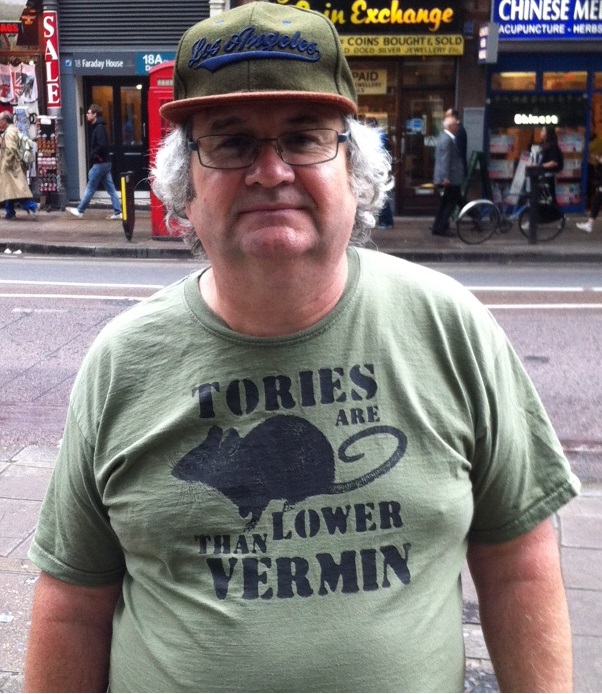
The bankers. David Cameron’s cabinet of millionaires. Billionaire non-doms. Tory scum. According to many on the Left, this motley crew of villains are not only deliberately rigging the system in their favour (arguably true), they actively delight in hurting the poor at every turn. Michael Gove is an arrogant bully and persecutor of teachers, Iain Duncan Smith is a virtual psychopath in his hounding of the destitute and David Cameron is the evil mastermind at the top, answerable only to Rupert Murdoch. It’s the age-old divide: those on the right think that Left-wingers are well-meaning but misguided, while those on the Left seem to sincerely believe that their right-wing opposites are actually evil.

The anti-Tory slogans and bitter invective have always had their place in Britain’s left-wing grass roots, but when this stubborn inability to empathise with or think like the other side starts to infect people who are supposedly the Labour movement’s greatest minds and political leaders, they have a real problem. The British Left, from Ed Miliband’s shadow cabinet on downwards, can’t seem to get past the mistaken notion – perhaps sincerely believed after so many years of constant, mindless repetition – that those on the right really do hate the poor and long to trample them underfoot.

But the anti-austerity protesters, the public sector strikers and their sympathisers on the Left are fighting a bitter battle against a straw man, a distorted vision of the real spectrum of right-wing thinking. While the British right generates ideas and (albeit limited by coalition) implements them in government, the Left rail against a cartoon foe of their own imagining, and almost completely fail to engage with the substance. Voters are able to discern this disconnect – the British left’s gradual conscious uncoupling from reality – which is one of the reasons why the Labour Party is making so little traction in what should be very fair political weather.

Attacking the usual left wing bogeymen – the bankers, toffs and Tory scum – is not an exciting, compelling pitch for an alternative to our present course. It’s the equivalent of a child’s temper tantrum. And whatever truth there is in the insults does not make up for the yawning chasm that exists where viable alternative left-wing policies should be.

In fact, such is the degree of hysteria and inability to comprehend the attitudes of others on the British Left, it is becoming comparable to the worst excesses of the Tea Party in America, where die-hard “patriots” can see no other motive for Barack Obama’s actions than the deliberate, treasonous undermining of the United States by a foreign-born, illegitimate president.

The hardcore US tea partiers have their hallucination of a Kenyan-born, Marxist stooge sent to make America collapse from within, while the British activist Left have their two-dimensional cartoon of the Bullingdon-bred, Eton-educated aristocrat who wants nothing less than the total dismantling of the social safety net and the subjugation of the poor in permanent poverty to be a source of cheap, expendable labour for his friends and benefactors in big business.

In America, the Republican Party tried to ride the Tea Party tiger, but ended up being eaten. The GOP is now completely beholden to its extremist base, and as a result is entirely unable to propose meaningful, workable legislation on anything from deficit reduction to healthcare to immigration reform. In Britain, the Labour Party is perilously close to suffering the same fate – willingly believing its own hyperbole about the callous Tories, and trying to convince itself (and us, the voters) that everything will be okay if only we start pumping more money into existing government programmes and taxing “the bankers” to pay for it all.

This is a depressing state of affairs on both sides of the Atlantic. To self-identify as a Republican in America today is increasingly akin to admitting that you are a reactionary, bigoted nincompoop, either beholden to corporate special interests or too stupid to realise that you are being manipulated by them. And unless something changes very soon, to self identify as a Labour supporter in Britain will proclaim to the world that you are a success-fearing simpleton who would rather see everyone dragged down to the same level of mediocrity than permit spectacular achievement at the expense of government-enforced equality of outcome.

The infinite monkey theorem states that a chimp sat in front of a typewriter will, given infinite time, at some point be bound to unthinkingly hit upon the long and complex sequence of keys that reproduces the complete works of William Shakespeare. By the same logic, if the British Left continue to hold strikes and mass rallies against austerity, probability dictates that eventually they will quite accidentally come up with a politically viable alternative to the coalition government’s spending plans. But unlike the monkeys, they and the Labour Party do not have infinite time.

The 2015 general election is less than ten months away.