The Guardian’s Endorsement Of Yvette Cooper Is A Failure Of Political Courage

Yvette Cooper - Labour Leadership - The Guardian Endorsement - Jeremy Corbyn

The Guardian has spent the past five years excoriating the Tories for their supposed persecution of the poor and the sick. And yet when it comes to the Labour leadership, they have endorsed a nonentity of a candidate on the basis that she is best placed to win back votes from a party it considers to be evil.

It is telling that most of the Guardian’s decidedly lukewarm endorsement of Yvette Cooper was devoted to discussing Jeremy Corbyn.

The fact that Corbyn looms so large in the campaigns of the other candidates says a lot about the state of the Labour leadership race, but it says even more about the Guardian-reading Left, and the gulf between their Tory-hating rhetoric and their desperate lack of imagination in coming up with an alternative policy agenda.

Here’s where the Guardian’s endorsement of Cooper really falls apart:

Labour is not a debating society; it was founded to represent the interests of working people at the pinnacle of power. This engagement in politics, this new excitement, must be channelled towards government. The brute lesson of May is that Labour cannot get there without first winning back significant numbers of Tory voters. Mr Corbyn will not do that. Those searching for an election winner must look elsewhere.

Yes, Labour will need to win over a number of Tory voters if they ever want to taste power again. But there are two ways to win the vote of someone who currently supports another political party.

First, you can move your political party so close to theirs in ideological and policy terms that it becomes possible to coax voters across by promising to be just a little bit more competent, or a touch more compassionate. This is what most of the Labour leadership candidates, including Yvette Cooper, are currently doing – largely accepting the centrist Tory narrative on a range of issues, but promising to implement the same agenda with a caring smile.

Continue reading

Labour Has Lost The Ability To Persuade Its Own Members, Let Alone The Voters

Tony Blair - Labour Leadership - Jeremy Corbyn - Annihilation

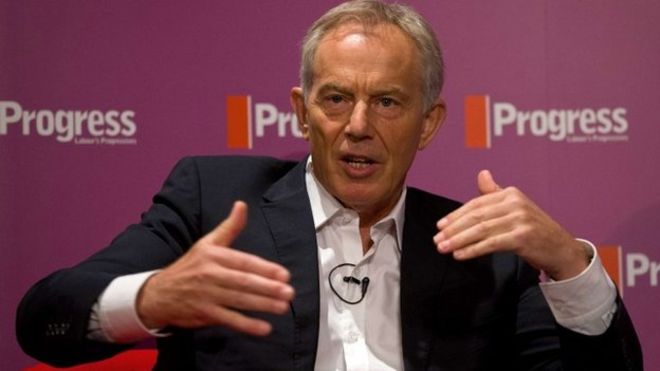
Tony Blair attacked Jeremy Corbyn not thinking it would help, but in order to claim valuable “I told you so” points after a failed Corbyn leadership (which he would doubtless help to engineer). Why can’t the other candidates or their supporters make a positive, coherent case for their own campaigns?

Why has the Labour leadership contest descended into such a farce, with the bulk of party activists seemingly intent on going in one direction (Corbynland), and the angry rump of the Parliamentary Labour Party intent on thwarting their will by any means necessary?

Why has this become a contest characterised chiefly by the inability of nearly everyone – save Jeremy Corbyn – to connect with and persuade others that their candidate’s vision for the future of the Labour Party is the right one?

In truth, we should not be surprised. Because the Labour Party are conducting their leadership contest in exactly the same way that they fought – and lost – the general election in May. First, activists picked their team. And then they embarked on a deafening blitz of grandiose moralising and cheap virtue-signalling on behalf of their favoured candidate, barely pausing for breath and never stopping to hear to what the other teams are saying – other than to search for damaging soundbites, of course.

Apparently the Labour Party has forgotten how to campaign, in the age of social media. Where once there might have been an attempt to reach out to the supporters of rival candidates, to convince and persuade them that they should switch their support, instead there is a lot of shouting, a lot of sharing of internet memes, and not much else.

Unfortunately, the Labour Party’s big beasts are setting a terrible example to the broader membership by behaving in exactly the same way. Witness Tony Blair’s latest full-frontal attack on Jeremy Corbyn in the pages of the Guardian:

Continue reading

Where Is The Conservative Party’s Jeremy Corbyn?


Where is the Conservative Party’s Jeremy Corbyn? I don’t mean an ornery old relic from the 1970s with dubious facial hair – the Tories have plenty of those. But where is the charismatic Tory personality who – like Corbyn does for his supporters – makes their fellow conservatives walk a little taller?

Owen Jones is happy at the moment. Cheerfully, blissfully happy. Almost too happy for someone who only months ago felt trapped in a Thatcherite, “neo-liberal” dystopia ruled over by the faceless, unaccountable grey men of the Establishment. But what a difference a few months and a resounding election defeat makes. What a difference Jeremy Corbyn’s presence on the ballot makes.

Read or listen to Owen Jones now and the excitement is palpable. This is not Cleggmania revisited, where the former LibDem leader briefly surged in the 2010 general election campaign by simple virtue of sounding like a human being (in contrast to the wooden Gordon Brown and the plastic David Cameron).

Nick Clegg’s brief spell of popularity was based on style, on appearing like a decent bloke. But Jeremy Corbyn’s surge in the Labour leadership election is the product of style and content – of sounding authentic, but also refusing to draw from the same deck of centrist policies automatically adopted by nearly everyone else.

No wonder a generation of young people who came of age during the tyranny of Consensus Politics, when holding strong political beliefs and refusing to apologise for them mark a politician out as a heretic unfit for high office, are finally sitting up and taking notice.

Continue reading

Are You A Populist Simpleton?

Populism - British Politics


Ukippers and Jeremy Corbyn supporters have often been steadfast in their political views for years, and as a result have languished in the political wilderness while those willing to bend, flatter and shapeshift their way toward sanitised focus group approval have been richly rewarded with power and success


Are you a populist simpleton?

I am, according to the Telegraph’s Janet Daley, because I am guilty of expecting more from politics than two shades of the same old drab consensus.

It’s a shame – I thought I had an ally in Daley, who is absolutely right in identifying the dull managerialism that now defines British politics, where dull technocrats reign supreme and general elections are fought over which party leader would make the best Comptroller of Public Services.

From Daley’s Telegraph piece, in which she attempts to compare the rise of Jeremy Corbyn with Donald Trump’s temporary ascendancy in the Republican Party’s presidential primary race:

There is no doubt that the politics of Western governing has become consensual and centrist. It is now a cliché – but no less important for that – to say that the arguments on which democratic choice revolve are puny and marginal. Parties and their leaders are reduced to debating the detail: a bit more of that, a bit less of this. No basic principles are at stake because they are all pretty much settled. The slogans are quite deliberately boring: recession is to be tackled with a “long-term economic plan”. It doesn’t quite have the ring of “Workers of the world unite! You have nothing to lose but your chains.” It often seems as if party strategists are having to thrash around desperately for some semblance of a compelling vision to distinguish themselves from their opponents.

Daley’s analysis of the problem is spot on, echoing what this blog has been saying for over a year. And yet Daley seems to hold in contempt those of us who have also identified the problem, but seek to redress it by supporting politicians who do not conform to the centrist mould.

Continue reading

Is Jeremy Corbyn The Cure For British Conservatism’s Centrist Virus?

Samuel Hooper Labour Party signup - Labour Leadership - Jeremy Corbyn - 2


First published at Conservatives for Liberty

Today, I took the plunge. I got out my debit card, opened my laptop, held my nose as I navigated to the Labour Party website – and then paid £3 to become an official Labour supporter, solely in order to advance the leadership candidacy of the MP for Islington North, Jeremy Corbyn.

No, I haven’t taken leave of my senses, and no, I haven’t had a miraculous conversion and become a Born Again Socialist – far from it. My earnest desire remains the same: to see British politics move in a far more libertarian, pro-individual freedom direction.

But I have come to the reluctant conclusion that the Conservative Party currently has no intention of governing in the pursuit of smaller government and a strong nation state, and that therefore the best way of advancing the cause I believe in is to act externally to force the Conservative Party to sharply change direction.

I stumped up my £3 not out of any desire to “consign Labour to electoral oblivion“, like the Telegraph’s Toby Young, or to cause low-level mischief of any kind at all. I vehemently disagree with most Labour Party policy, but the vast majority of members are good people and I bear them and their party no particular ill will. I have always wanted to see conservatism win, not see socialism lose.

I became a short-term Labour supporter today because I am putting my money where my mouth is, and seeking to reward success, steadfastness and political courage. And when it comes to steadfastness at least, Jeremy Corbyn has more of this quality in his little finger than the Conservative Party leadership possess in their entire bodies.

Continue reading