Republicans Are In No Position To Mock The Democratic Party Primary Debates

In his Morning Briefing email today, the National Review’s Jim Geraghty disparaged last night’s latest Democratic Party primary debate between Hillary Clinton and Bernie Sanders with these words:

‘Yeah, There Was Another Democratic Debate.’ (Stifles Yawn)

Thursday night’s Democratic debate in Brooklyn basically amounted to Bernie Sanders’s repeating all of his familiar attacks against Hillary and her insisting they’re baseless; and her charging that he doesn’t know what he’s talking about, at which point he would counter-charge, “THE GREED AND THE RECKLESSNESS AND ILLEGAL BEHAVIOR OF WALL STREET BROUGHT THIS COUNTRY INTO THE WORST ECONOMIC DOWNTURN” — sorry for the all caps, it’s the only way to accurately capture the volume of Sanders’ high dudgeon voice — “SINCE THE GREAT RECESSSION OF THE THIRTIES, WHEN MILLIONS OF PEOPLE LOST THEIR JOBS AND THEIR HOMES AND THEIR LIFE SAVINGS, YOU’VE GOT A BUNCH OF FRAUDULENT OPERATORS AND THEY’VE GOT TO BE BROKEN UP!”

Below are a couple of highlights, to the extent there were any:

Clinton, last night, defending her judgment: “President Obama trusted my judgment enough to ask me to be secretary of State for the United States.”

Yeah, that line may work really well in a Democratic primary, but you can apply the same “hey, if Obama picked me, I must know what I’m doing” argument to former HHS secretary Kathleen Sebelius, VA secretary Eric Shinseki, short-lived Secretary of Defense Chuck Hagel, all of those wealthy donor ambassadors who knew nothing about the countries where they would represent the U.S . . .

Hillary Clinton: “It may be inconvenient, but it’s always important to get the facts straight. I stood up against the behaviors of the banks when I was a senator.

I called them out on their mortgage behavior. I also was very willing to speak out against some of the special privileges they had under the tax code.”

Bernie Sanders: “Secretary Clinton called them out. Oh my goodness, they must have been really crushed by this. And was that before or after you received huge sums of money by giving speaking engagements? So they must have been very, very upset by what you did.”

I’m sorry, does a political debate no longer count as interesting or exciting unless a deranged mob of populist Republicans are flinging feces at each other or comparing the size of their junk?

Are Sanders and Clinton repeating themselves a lot? Yes – as someone who is deluged by campaign emails and briefings from both sides, that much cannot be denied. But at least the things that they are saying actually matter. They relate to foreign policy, trade policy, crime and punishment, campaign finance and the influence of Wall Street.

The argument in the GOP primary has devolved into little more than pledges to revoke ObamaCare faster than the other (“I’ll abolish ObamaCare by executive order at the beginning of my inaugural address!”) and competing visions for exactly how high the wall should be between the United States and Mexico.

Debates on both sides probably shed a lot more heat than light, but anyone who has watched a few of these things in the 2016 cycle would have to admit that more of substance has been learned on the Democratic side than the Republican side this time round – with the same going for 2012 too, when the Republicans treated us to Michelle Bachmann and Herman Cain.

There is a group – and I can’t say how large it is, but I know it exists from my time living in America – of liberty-minded conservatives out there who are thoroughly disgusted with the Democrats’ record in office and the general direction of the country, but who will stay home or hold their nose and vote for Hillary Clinton before they see Donald Trump or even Ted Cruz in the White House.

(And to those Trump supporters who protest, I would simply say that fighting back at the establishment and sticking it to the man does not have to mean vocally supporting torture and eroding the constitution. In fact, as Britain’s Nigel Farage discovered, it is actually better when the establishment come at you equally hard for holding mostly reasonable position, as their desperation to kill the challenge to their power is then exposed for what it is).

Though I am not yet a US citizen, if I had voted in the 2008 election I would have voted without hesitation for Barack Obama over the John McCain / Sarah Palin freak show. Many others did the same. So forget trying to attract massive new demographic groups to the side of the Republican Party – maybe the GOP should focus more on simply not alienating those people who will reliably vote for any serious-minded conservative, but who are constantly chased away from the party by the carnival of idiots who keep making it to the primary debates.

You can sneer that it is cultural snobbishness at work (and a bit of it is – though not the majority), but it goes deeper than that. And the good news is that the Republican Party will soon have another chance to reinvent itself for a new era as they spend another presidential term in dreary opposition. Hopefully they will not repeat the mistake of 2008, and actually have serious discussion this time about who they want in the party and who they want out, and whether they want to appeal to the better angels or the darkest fears and prejudices of those who are invited to remain.

That process can begin soon. But in the meantime, let’s not get cocky about the Democratic Party primary process, which has seen left-wing politicians with substantially different worldviews tearing chunks out of each other on policy and substance – which is precisely what should happen.

That is the debate that the GOP should have been having this election cycle were they still a functioning party, and were they not now being forced to pay in a lump for every cynical act of alarmism, obstructionism and posturing they have taken since the inauguration of Barack Obama.


Donald Trump - Make America Great Again

Agree with this article? Violently disagree? Scroll down to leave a comment.

Follow Semi-Partisan Politics on TwitterFacebook and Medium.

Tales From The Safe Space, Part 13 – Identity Politics In The Dem Debate

Bernie Sanders - Hillary Clinton - Democratic Party Primary - Sexism - Identity Politics

When will Bernie Sanders learn? If Hillary Clinton interrupts him while he is speaking, his job is to shut up and listen to whatever she has to say with gratitude

Identity Politics crept in to the latest Democratic primary debate on Sunday night in a particularly harrowing episode for all American women.

From Janell Ross’s account in the Chicago Tribune:

On Sunday night, Bernie Sanders was in the middle of explaining his rationale for having reservations about the 2008 auto bailout — too much of the aid went to Wall Street — when former Hillary Clinton interrupted. Clinton got out a few words before Sanders, hand raised and moving in the (surprisingly tight) space between the two candidates and interjected.

“Excuse me, I’m talking,” he said.

If you are still waiting for the scandalous part, you just missed it. That was it. Hillary Clinton interrupted Bernie Sanders while he was talking, and Sanders tried to continue his point by saying “excuse me, I’m talking”.

But something which to normal people might look like the bread and butter of political television debating is instead being whipped up into a narrative of Bernie Sanders’ deep-rooted, festering misogyny and his barely concealed contempt for Hillary Clinton on account of her gender.

Ross continues:

Clinton is the first woman with a serious shot at the Democratic presidential nomination, and therefore the first woman to spend this much time on debate stages with competition. And this is the age of Twitter, where what feel like the independently formed opinions and reactions of ordinary voters are super easy to access. And indeed, there were many reporters who wrote about this moment by quoting and pulling in other reporters’ totally serious tweets.

It all seems a bit light on substance and heavy on reaction — and reactions to reactions. And no one can climb inside Sanders’ mind and say with utter clarity what was swirling inside it. We do know that Clinton was the more experienced presidential debater on that stage. She also, by now, knows about Sanders’, shall we say, tendency to respond to Clinton with curmudgeonly chastisements and finger wags. He has said and done a few things in previous debates that people have described as chauvinistic. By that logic, Clinton may have interrupted Sanders on purpose in hopes that something like the “excuse me” moment would happen.

One could speculate a great deal about that. But then there is this: Why, at this late date and this many debates into the 2016 presidential election cycle, has Sanders made demonstrably little to no effort to alter the way he interacts with the woman he at least strongly suspected would be running against him from the day he declared his campaign? He has almost certainly had the same advice and information that every male candidate gets about the need to be constantly mindful about coming across like a chauvinist or a bully when on a debate stage facing a female competition.

“A bit light on substance” is an understatement for the ages. There was a time not so long ago where if either of the two candidates were to be admonished for anything, it would have been the candidate who interrupted, not the one who firmly but politely continued to make their point. But of course that was before the corrosive Politics of Identity began to eat away at our culture and our political discourse. And now, what each candidate thinks, says and does is far less important than who they are and into which identity categories they fall.

Now, Bernie Sanders and Hillary Clinton both happen to be white, so that already puts them near the top of the Hierarchy of Oppression, vicariously responsible for all of the ills and misfortunes suffered by those beneath them. But Clinton has a slight advantage in that she also happens to identify as a female. And because the patriarchy (no further explanation needed), Sanders squeaks above Clinton to the top of the Oppression Pyramid, which means that our sympathies and bias must rest with her, whether she happens to be right or not on any given issue.

Only by viewing the exchange through this distorting lens of Identity Politics can one watch the exchange and come away with the impression that Hillary Clinton has been oppressed by a “chauvinistic” Bernie Sanders. Yet this is indeed what some people believe, and because they perceived Sanders to be behaving in a sexist way, under the Law of Identity Politics it is the responsibility of Sanders to modify his behaviour to correct that perception, even though it is a demonstrably false one.

In other words, as Janell Ross reminds us, something can be sexist simply because another person – even someone totally unconnected with the event – perceives it as being so:

Does Sanders have the capacity to recognize the way these moments look or think deeply about the degree to which sexism propels his debate-stage performances? Whether that chauvinism is real or imagined or even toyed with by his opponent for political gain, why can’t Sanders find a better way to manage these moments? And is some combination of all of the above something that a 21st-century presidential candidate has simply got to consider and manage effectively?

Does the inability or unwillingness to examine his body language, tone and actions for hints or indicators of sexism — if not real but perceived by some women — tell us all what we really need to know?

Yes! Doesn’t Bernie Sanders’ failure to modify his entire manner of speaking and body language in order to address perceptions of a sexism which doesn’t even exist tell us all that we need to know about just what a horrible person he is?

Though this seems (and is) utterly ridiculous, it is neither new nor unexpected. Modern hate speech laws and the actions of Western governments to suppress or discourage the exercise of free speech are based on the same principle – that it is the perceptions of the offended party which matter most of all, and which must be flattered and mollified at all costs.

But who is really demeaning and belittling women here? Is it Bernie Sanders, who clearly views Clinton as a formidable opponent (she is the presumptive Democratic Party presidential nominee, after all) and debates her with gusto, or is it the virtue-signalling feminist “allies” who go riding to her defence after a debate because they believe that women cannot withstand being contradicted with firm but polite words and one of Bernie Sanders’ ubiquitous (and non gender-specific) dismissive hand gestures?

Of course it is the people now crying “sexism!” who are themselves guilty of behaving in a truly sexist way, by treating a rich, powerful, well-connected 21st century American woman (Clinton) as somehow less capable than a somewhat less rich, less powerful, less well-connected man (Sanders), and consequently in need of their finger-wagging intercession on her behalf. But so powerful is the weapon that they wield – labelling their targets as sexist, chauvinist or even misogynist – that it is often easier to acquiesce rather than stand up to the Identity Politics power play.

Therefore, if he is to survive the Democratic Party primary season without having his reputation and good name completely torn to shreds, Bernie Sanders would do well to learn one valuable lesson: the next time that Hillary Clinton interrupts him, his role as a white cis man is to stand there meekly and just let her talk out the rest of the debate.

It’s the socially just way to behave.


Bernie Sanders - Hillary Clinton - Democratic Party Primary - Sexism - Identity Politics - 2

Agree with this article? Violently disagree? Scroll down to leave a comment.

Follow Semi-Partisan Politics on TwitterFacebook and Medium.

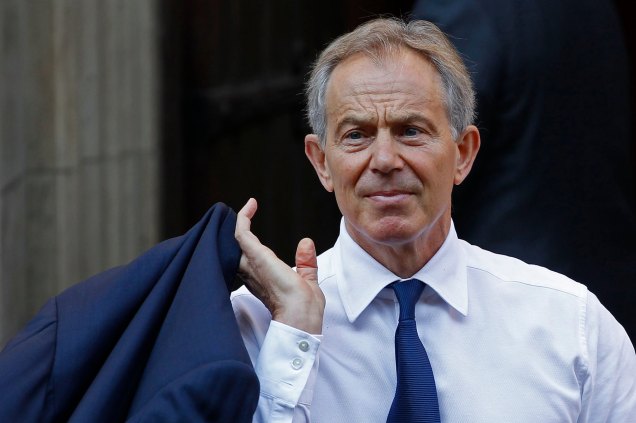
Tony Blair And The Shell-Shocked Centrists: The Fears Of A Fading Elite

Tony Blair - New Labour - Centrism

Pity Tony Blair. Unloved and discredited in his own country, he still fails to understand the role he played in the anti-centrist backlash on both sides of the Atlantic

A panicked, uncomprehending Tony Blair is struggling to understand the appeal of left-wing insurgents such as Bernie Sanders and Jeremy Corbyn, LabourList reports:

Tony Blair has said he finds it difficult to understand the surge to prominence of Jeremy Corbyn and Bernie Sanders amid doubts over both men’s capacity to win general elections.

The former prime minister said the two veteran left-wingers faced a “question of electability” but admitted that stagnating living standards for people on lower- and middle-incomes had generated anger at elites in Britain and the US.

Blair also warned political parties they would be powerless to help people unless they “selected someone who is electable”.

[..] Blair, who was speaking to The Guardian and The Financial Times, said candidates who could “rattle the cage” were emerging, in a reference to Corbyn, who came from the left fringe to easily beat the party establishment to claim the Labour leadership, and to Sanders, who hopes to emulate him by winning the Democrat nomination ahead of Blair’s friend Hillary Clinton.

“It’s very similar to the pitch of Jeremy Corbyn,” Blair said. “Free tuition fees: well, that’s great, but someone’s going to have pay for it. An end to war, but there are wars.”

Where to begin?

Let’s start with Tony Blair’s “pass the smelling salts!” terror at the supposedly unhinged and crazy far-left politics of Bernie Sanders. That’s the same Bernie Sanders who would be chased out of Britain with flaming torches and pitchforks for being too right-wing, were he the UK prime minister, thanks to his support of private sector-delivered healthcare and the right to bear arms.

The interesting thing – and Todd Gillespie at Spiked has also picked up on this – is that with his support for civil liberties and the rights of the individual over the big guy (corporation or government), Bernie Sanders is in some ways a better conservative standard-bearer than most of the people currently squabbling for the US presidency – and certainly far more so than our own Coke Zero Conservative prime minister, David Cameron.

In many ways, when Tony Blair comes charging into the US presidential contest in support of Hillary Clinton and against Bernie Sanders, he is not making the principled case for a pragmatic, centre-left policy platform capable of winning elections, as he so smugly claims. After all, the American Right is also tearing itself apart at the moment, and there is nothing to say that Sanders could not defeat one of the more inexperienced or unpalatable GOP candidates still standing.

No, what Tony Blair is doing here is siding with the political elite – of which he is very much a part – and the tired old orthodoxies which people have grown so heartily sick of that they are now desperately casting around for alternatives in people like Donald Trump and Bernie Sanders. A former Labour prime minister who remembered anything at all about his party’s roots might not be quite so quick to publicly embrace a US presidential candidate awash in Wall Street donations and influence.

But Blair genuinely can’t see the problem with consistently, publicly and unapologetically siding with globalisation’s winners and richest beneficiaries while either ignoring or actively harming those who are left behind. And he cannot understand why this fawning deference to money and power is creating a populist backlash which has changed the course of his party.

Which brings us on to Jeremy Corbyn. LabourList’s report of Tony Blair’s comments continues:

He suggested the sudden rise of Corbyn and Sanders, each after years spent toiling in relative obscurity on the left of their parties, reflected a loss of faith in the centre-ground of politics as well as the changing technology of political communications.

“I think there is a combination of factors behind these movements which are happening both sides of the Atlantic. Part of it is the flatlining of lower and middle income people, the flatlining in living standards for those people, which is very frustrating. It’s partly an anger for sure at the elites, a desire to choose people who are going to rattle the cage.

“And it’s partly also about social media, which is itself a revolutionary phenomenon which can generate an enormous wave of enthusiasm at speed. When I first started in politics, these things took so long to build up momentum; your decision points were well before that moment was achieved. But it’s also a loss of faith in that strong, centrist progressive position and we’ve got to recover that…

“One of the strangest things about politics at the moment – and I really mean it when I say I’m not sure I fully understand politics right now, which is an odd thing to say, having spent my life in it – is when you put the question of electability as a factor in your decision to nominate a leader, it’s how small the numbers are that this is the decisive factor. That sounds curious to me.”

Blair is absolutely right that there has been a loss of faith in centrist politics. But centrist politics is not an innocent victim. Centrist politics has delivered a cross-party political consensus which was defiantly pro-European in face of public euroscepticism, which doggedly refused to talk about immigration even as a centre-left New Labour government spurned transitional controls and allowed hundreds of thousands more economic migrants a year into Britain without ever consulting the people, which sought to label anyone who questioned this policy as racist, and which trotted out the same tired old tropes about Our Beloved NHS and precious public services while doing almost nothing new or radical to reshape them for the twenty-first century.

Many people in Britain yearn for more genuinely left-wing solutions to be offered by a political party. Many would like the railways renationalised, and the energy companies too. This blog believes that such moves would be hugely regressive and statist, and very quickly result in poorer service and less choice for consumers. But those who believe in nationalisation deserve a voice in the political debate – a voice which Labour studiously excluded for many years. If Tony Blair seriously believed that high-handedly shutting people out of his party would store up no resentment for the future and possibly one day result in a backlash, then he is quite delusional.

Blair acts as though the rise of Jeremy Corbyn is merely a function of social media, and angry far-leftists hijacking the conversation. But it goes far deeper than that. The rise of Corbyn on the British Left, Sanders on the American Left and Trump on the Right are not an inchoate expression of public rage, but rather an indicator that a fully rational public has finally realised that the political consensus of the main political parties is not delivering what they need – be it middle class job security or success on the world stage.

The growth and prosperity delivered by the centrist political consensus in Britain has not been experienced uniformly by all citizens. That much is understandable – different policies will impact different socio-economic groups differently. What is unacceptable, though, is the fact that the centrists from both main parties never made a concerted effort to tweak those policies to help people who were left behind. They simply advocated more of the same.

More European Union. More government spending on the bloated, unreformed welfare state. More uncritical praise for the NHS. And more of the depressing view of Britain as nothing more than a nation of schools, hospitals and public services rather than a great nation built on our commercial, private sector initiative, and with boundless untapped potential.

Choose to treat the people like mindless, avaricious consumers rather than thinking, engaged citizens with a stake in their world, and you had better make damn sure that you deliver sufficient prosperity to keep everyone happy and distracted. This is how the centrists have treated us for years – essentially saying “you leave the global governance and great ideological questions to us, and in exchange we will deliver you a cheap supply of flat-screen TVs and other consumer goods”.

But when not everybody can afford the flat-screen TV or the iPhone or to scramble on to the property ladder, they start to look around them and notice things. Awkward things. Things like the fact that they no longer have the final say in issues affecting them, because sovereignty has been outsourced to the European Union. Or things like the character of their towns and cities – even their whole country – visibly changing because of levels of immigration about which they were never consulted. Or things like a broken welfare state which ensnares some people in lifelong dependency while allowing others to fall straight through the safety net to their deaths.

Brendan O’Neill picks up on this point – the fact that it is those who have not benefited economically from centrist consensus politics who are most likely to recognise that all is not well with our democracy – in his excellent piece in the Spectator:

The Third Wayists are quaking in their boots. The middle-class, middle-of-the-road technocrats who have dominated politics for the best part of three decades are freaking out. These people who bristle at anything ideological, are disdainful of heated debate, and have bizarrely turned the word ‘moderate’ into a compliment feel under siege. And no wonder they do, for on both sides of the Atlantic their very worst nightmare — a revenge of the plebs — is becoming flesh.

You can see this sometimes clumsy but nonetheless forceful reassertion of pleb power in everything from Trumpmania to the staggering back to life of Euroscepticism — or what snooty moderates call ‘Europhobia’, because every point of view that runs counter to their own must be a mental illness, right?

[..] In both Middle America and Middle England, among both rednecks and chavs, voters who have had more than they can stomach of being patronised, nudged, nagged and basically treated as diseased bodies to be corrected rather than lively minds to be engaged are now putting their hope into a different kind of politics. And the entitled Third Way brigade, schooled to rule, believing themselves possessed of a technocratic expertise that trumps the little people’s vulgar political convictions, are not happy. Not one bit.

And with regard to euroscepticism specifically:

We’ll see more of this in the coming months, more defamation of those who dare to say: ‘I don’t like Brussels.’ But Euroscepticism represents, not some swirling, xenophobic disgust with Europeans, as it has been pathologised by the pleb-fearing PC lobby, but a people’s feeling of exhaustion with the ossified oligarchy of the Brussels machine. It speaks to a desire among ordinary people to take back some control over their lives and destinies. And as The Economist pointed out, this Eurosceptic urge is strongest among the less well-educated — that is, the plebs, those tired of being treated as welfare, nudging and paternalism fodder by the new political elites.

So bring it on, this revenge of the plebs. Let’s cheer their rude, intemperate injection of ideology into the flat, lifeless sphere politics has become over the past 20 years. And let’s enjoy the squirming of an aloof political class and commentariat who mistakenly thought they had put the pesky masses and their troublesome views out to pasture.

If Tony Blair does not understand the anger and disillusionment directed not just at him but toward consensus politics in general – and there is no reason to doubt that his bewilderment is genuine – then one has to ask: what happened to the political nous of the man who won three consecutive general elections for Labour?

Why, when he has one foot firmly planted on each side of a massive new fault line emerging in our politics – not between Left and Right but between consensus politics’ winners and losers – is Tony Blair unable to understand his own starring role in precipitating the earthquake?


Bernie Sanders - Refutes Bernie Bros

Agree with this article? Violently disagree? Scroll down to leave a comment.

Follow Semi-Partisan Politics on TwitterFacebook and Medium.

Don’t Blame Anti-Establishment Politicians For Vile Online Abuse

Internet Troll - Cyber Online Abuse

Taking offence in the behaviour of a politician’s online supporters says a lot more about your view of that particular politician than the uniquely “hateful” nature of their fans

What do Jeremy Corbyn, Nicola Sturgeon, Bernie Sanders, Donald Trump and Nigel Farage all have in common?

Nothing to do with their political views, obviously – you would be hard pressed to imagine four more different politicians, both in terms of style and substance. But they do share something more fundamental in common: the fact that their supporters are uniquely derided as being angry and intemperate, even sexist or racist trolls, especially when compared to the supporters of their more established rivals.

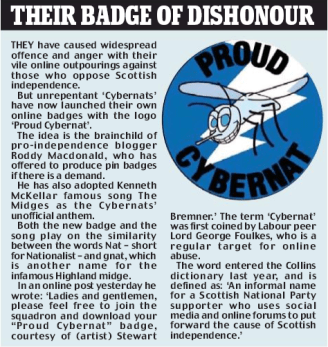
How many times have you heard a wounded, thin-skinned Westminster media type complain in hurt tones that they have received “vile online abuse” from crusading Ukippers or SNP-supporting Cybernats? And this is nearly always followed by the accusatory observation that the journalist or media star in question has never been so insulted or abused by supporters of the other mainstream parties or candidates.

You have likely seen or read this lament numerous times in one form or another. Typically, they will conclude – either explicitly or by inference – that there must be something uniquely awful and unacceptable about that particular party or candidate’s views, something which either attracts a disproportionate number of crazy people, or else makes otherwise good people behave in reprehensible ways.

Here’s the Telegraph’s James Kirkup raising an eyebrow after receiving a less than loving and nurturing response from online UKIP supporters, in a piece rather preciously titled “Why are UKIP supporters so rude and horrible?”:

A brief glance through the comments sections of the Telegraph website will show this is not an isolated incident; hostile and personal remarks are a common feature of online discussion about Ukip-related stories and columns. My email inbox tells a similar story.

I’m not alone here. There is nothing unique or special about me, no individual quality that attracts such strong feelings. All of my colleagues who cover Ukip and Mr Farage regularly receive such vitriol, and several of them get it in much larger volumes than me.

[..] I’m increasingly convinced that Ukippers are one of the political groups whose members are disproportionately likely to go in for online bile. (Scottish Nationalists are another; I haven’t had the pleasure of their electronic company for a while, but in a previous job I got to know the “cybernats” fairly well.)

Kirkup’s piece is actually fairly generous – he goes on to praise Ukippers for their passion and commitment, although it comes across in a rather condescending way.

But there is no such generosity in this farewell to the Labour Party from Barbara Ellen, who took her leave after finding herself unable to cope with the fact that her preferred centrist wing of the party finds itself temporarily out of favour for the first time in decades.

Smarting from the “howling gales” of disagreement she encountered, Ellen raged:

Still the Corbynista circus refuses to leave town, with one troubling result being that the term “moderate” is starting to look tarnished and devalued – deemed too centrist, restrained, temperate, cautious. Never mind that this describes most of Britain – or that this culture of moderate-baiting is hounding people like myself (lifelong Labour voters) out of the party. Like many in the great disenchanted Labour diaspora of 2015, I don’t feel remotely “Tory lite”, but nor do I feel that there is a place for me in this brutal and monochrome, but also silly and over-simplistic, “with us or against us” regime.

And maybe there’s a faint hope that by leaving, by voting with your feet, you’ll finally quietly reasonably (moderately!) make your voice heard. It’s a sad scary moment when “moderate” starts feeling like a insult. I’d have thought that moderates were the bricks and cement of any political party – without them, the extremes become unmoored, sucked into howling gales of their own making. The leftier-than-thou can taunt the departing “boring”, “gutless”, “Tory lite” moderates all they like. In the end, we were necessary and we’ll be missed.

The media’s hysteria about boisterous and sometimes deeply unpleasant online political discourse reached its peak with their coverage of the Jeremy Corbyn campaign, with endless finger-wagging remarks about how the actions of a few anonymous knuckle-dragging trolls supposedly make a mockery of Corbyn’s “New Politics”.

Here’s the Spectator’s Sebastian Payne rending his garments in anguish at the fact that some unhinged Corbyn fans happen to say some very unpleasant things online:

It was meant to be about open debate and discussion, consensus through dialogue. But so far, Jeremy Corbyn’s leadership of the Labour party and the arrival of the so-called New Politics has resulted in division and a lot of abuse and bad feeling. In light of last night’s vote on Syria airstrikes, Twitter and Facebook have been exploding with extraordinary levels of comments and abuse that no one, MPs or otherwise, should be subjected to.

For example, hard-left groups such as Lefty Unity, have been using Twitter to stir up agitation against the MPs they disagree with.

The article goes on to cite a tweet listing the names of Labour MPs who voted for military action in Syria, and calling for party members to deselect them. Remarkably, Payne presents this as some terrible affront to civilised behaviour rather than precisely what should happen in a democracy: MPs making decisions in public, and the public judging MPs based on those decisions. The horror!

Unfortunately, our default reaction is increasingly not just to sit back and mock the individual trolls (justified), but to then also make the lazy assumption that the internet trolls somehow speak for the wider movement or supporter base (much less justified). Everyone enjoys seeing an ignorant verbal abuser put back in their box, but we are being intellectually lazy if we then go on to believe that people like the anonymous idiot silenced by JK Rowling are representative of general UKIP or SNP opinion.
Cybernat - Online Abuse - Trolling

Exactly the same phenomenon can now be seen in the United States, where supporters and media cheerleaders of Democratic establishment favourite Hillary Clinton are lightning-quick to accuse their opponents of sexism, and to refer disparagingly to supporters of socialist rival Bernie Sanders – alas, a white male – as the “Bernie Bros”.

Glenn Greenwald does a superb job of debunking the myth that Bernie Sanders supporters are uniquely sexist or misogynistic among political supporters over at The Intercept, writing:

Hillary Clinton is the establishment candidate. Therefore, she has far more supporters with loud, influential media platforms than her insurgent, socialist challenger. Therefore, the people with the loudest media platforms experience lots of anger and abuse from Sanders supporters and none from Clinton supporters; why would devoted media cheerleaders of the Clinton campaign experience abuse from Clinton supporters? They wouldn’t, and they don’t. Therefore, venerating their self-centered experience as some generalized trend, they announce that Sanders supporters are uniquely abusive: because that’s what they, as die-hard Clinton media supporters, personally experience. This “Bernie Bro” narrative says a great deal about which candidate is supported by the most established journalists and says nothing unique about the character of the Sanders campaign or his supporters.

And the same blindingly obvious truth hits closer to home with the media’s reaction to – and coverage of – Jeremy Corbyn’s campaign for the Labour leadership:

This exact media theme was constantly used against Corbyn: that his supporters were uniquely abusive, vitriolic, and misogynistic. That’s because the British media almost unanimously hated Corbyn and monomaniacally devoted themselves to his defeat: So of course they never experienced abuse from supporters of his opponents but only from supporters of Corbyn. And from that personal experience, they also claimed that Corbyn supporters were uniquely misbehaved, and then turned it into such a media narrative that the Corbyn campaign finally was forced to ask for better behavior from his supporters.

Time and again we see establishment candidates and their fans in the media reaching for the smelling salts and clamouring to tell us how insulted and distressed they are, simply because something they said or wrote happened to tap into the coarsing vein of popular anger against a political establishment which grows remoter and more self-serving by the day. But we should recognise this for what it is – a cheap attempt to shut down the debate by rendering certain political ideas unthinkable or unsayable.

It is very much in the interests of centrists within Labour and the Conservative Party that people should fear policies with a genuine ideological twist to them, be they from the Right or the Left. When their entire pitch to the electorate consists of fatuous promises to be the most competent managers of our public services, as thought Britain were nothing more than a rainy island of hospitals and job centres, anything which attempts to inject some inspiration, ambition or bold thinking into our political debate is to be greatly feared, and thwarted at all costs.

Hence the continual efforts to portray Jeremy Corbyn’s left-wingery, something which would have been considered perfectly normal in 1986, as beyond the pale of acceptable thought in 2016.

Hence the sneering, virtue-signalling attacks on Ukippers, who have been shamefully portrayed by the media as a bunch of grunting, uneducated, economically “left behind” losers who wrap themselves in the Union flag because they are somehow more scared of change than a “normal” person.

Hence the apocalyptic predictions of those opposing Scottish independence, warning that Scotland would become some kind of tartan-clad North Korea if they went their own way.

Now, this blog believes that Jeremy Corbyn’s left wing policies are utterly wrong for Britain, that UKIP does have a certain unsavoury element within it, and that Scottish independence and the breakup of the United Kingdom would be a tragedy. But I don’t for a moment assume that the virtue of these ideas can be judged in any way by the behaviour of their most crude and sociopathic advocates. And nor do I attempt to suppress the expression of those ideas by linking overheated rhetoric on social media to any one particular idea, candidate or party.

All of which makes you wonder: If the establishment are so self-evidently right, if the centrist parties and politicians do indeed have a monopoly on Good and Pragmatic Ideas, and if anybody who proposes the slightest departure from the status quo is a juvenile dreamer or a tub-thumping populist, why not let the arguments speak for themselves?

If the establishment have the facts so overwhelmingly on their side, why do they not limit themselves to patiently explaining why Bernie Sanders, Jeremy Corbyn, Donald Trump and Nigel Farage are wrong on the issues? And at a time when political engagement is falling and faith in democracy ebbing, are the Corbyn critics and Farage haters really saying that they would rather people were disengaged than back a radical candidate?

This blog would argue that there is a certain nobility in all of the populist insurgencies currently roiling the political landscape in Britain and America. Whether one agrees with them or not (and there is often much to vehemently disagree with), they are at least attempting to drag us out of a stale and timid political consensus which has delivered prosperity for many but also failed too many of our fellow citizens.

Or as this blog remarked last year:

It is very easy to sit smugly on the sidelines, throwing the occasional rock and taunting those who risk hostility, ridicule and contempt as they struggle to find a way to make our politics relevant to the people. Anyone can be a stone-thrower. But it’s another thing entirely to roll up your sleeves, join the fray, pick a side or – if none of the available options appeal – propose new political solutions of your own.

Ukippers and Jeremy Corbyn supporters have often been steadfast in their political views for years, and as a result have languished in the political wilderness while those willing to bend, flatter and shapeshift their way toward focus group approval have been richly rewarded with power and success.

The “Bernie Bro” phenomenon in the United States and the centrist Labour hysterics about the antics of a few offensive people are nothing but a choreographed backlash from the establishment, whipped up by people who are happy to hijack issues like feminism and use them for their own short-term political advantage, or do anything else to disguise the yawning chasm where sincerely held convictions and beliefs should reside.

So, when you see a bunch of prominent, well-connected people feigning horror at the way in which people with whom they disagree are comporting themselves on the internet, your first thought should not be to dismiss the idea or candidate whom the obnoxious trolls support, but rather to question the real motives of the people weeping and rending their garments because they have been spoken to rudely on social media.

It may turn out that the trolls are still wrong, as well as being obnoxious and offensive. But many times, it will likely transpire that the people making the most fuss about the way that a particular candidate or party’s supporters are behaving also happen to have the most to lose in the event that those ideas gain a wider following. And their sudden desire for comity and a more respectful public discourse is cynical at best.

So what do Jeremy Corbyn, Nicola Sturgeon, Bernie Sanders, Donald Trump and Nigel Farage all have in common?

They are all flawed.

They are all willing to say things which make them wildly unpopular with large swathes of people.

Without their boldness and tenacity, few of us would still be discussing their top issues and obsessions – be it genuine socialist politics, Scottish independence, immigration or the coming EU referendum – and our politics would be left to the stale old two-party duopoly.

And none of these politicians, whatever their flaws, deserve to be judged by the online behaviour of their most angry, antisocial supporters.

Bernie Sanders - Refutes Bernie Bros

Top image: “#GamerGate is the future of troll politics”, Techcrunch.com

Agree with this article? Violently disagree? Scroll down to leave a comment.

Follow Semi-Partisan Politics on TwitterFacebook and Medium.

On Flirting With Social Conservatives

How many people does it take to give traction to a political story?

Two. Rand Paul, and the editor of Politico.

Not again.
Not again.

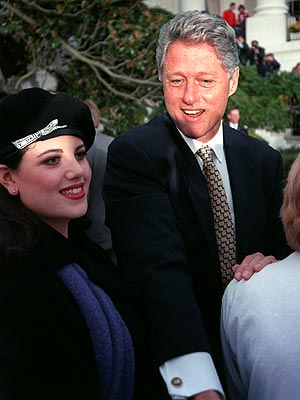
Rand Paul has been popping up here, there and everywhere in the US media recently, reminding us of all the sins from Bill Clinton’s two presidential terms and suggesting that Clinton’s actions from the late 1990s somehow represent a current-day Democratic Party war on women in 2014.

The whole thing is a fairly transparent effort by Rand Paul, a principled and capable first term senator, to increase his popularity with the wary social conservatives from the base of his party and (as a convenient bonus) to tarnish Hillary Clinton’s image a little in the event that she decides to run for president in 2017. I said as much as far back as 27 January:

Senator Paul is absolutely right to call out Bill Clinton’s behaviour for what it was – an abuse of his presidential power and symptomatic of a predatory attitude toward women. What makes this different from what the Republican Party has been doing, however, is the fact that the Lewinsky affair was a private indiscretion, and the harm done to women took place in the course of interpersonal relationships between those people directly involved. The Republican Party, on the other hand, has sought to push for legislative outcomes – around contraception, abortion and equal pay to name a few – that would impact all women in the United States. Private action vs. public legislative action. False equivalence.

Others said the same, and this should have been case closed. But Politico, knowing a click-generating story when they see one, happily takes the bait with a full-length feature by Liza Mundy in their magazine:

Like it or not, we’re having a national flashback to the 1990s—replete with images of thong underwear near the Oval Office, semen-stained blue dresses and all manner of sordid details we thought we’d outgrown. These nostalgic tidbits come to us courtesy of Kentucky Senator Rand Paul, the possible 2016 presidential contender who, anticipating a matchup against Hillary Clinton, has lately been determined to remind America what happened the last time the Clintons occupied the White House. In a series of recent interviews, Paul has resurrected the Monica Lewinsky scandal, which first surfaced in sensational fashion in 1998, when the president was accused of having an affair, of sorts, with the 20-year-old White House intern.

Paul, to his credit, hasn’t dawdled on the lurid details—rather he’s framed the discussion as a matter largely of workplace behavior, challenging Democrats’ self-image as the party friendly to women. “If they want to be credible in saying they defend women’s rights in the workplace,” Paul said in an interview last week, Democrats should “disown” Bill Clinton, whom Paul considers “a predator, a sexual predator, basically.”

Like it or not? We could all have avoided the flashback if Politico had chosen not to play along by devoting a whole feature to achieving Rand Paul’s ends, but then Politico are not known for taking the high road.

Given the fact that the reanimation of the Lewinsky scandal is just part of a grand plan by Rand Paul to curry favour with the socially conservative base of the Republican Party, surely he could have picked a better issue to make his own personal cause? After all half of the congressional party has been guilty of similar indiscretions at one time or another – the only thing separating their actions from Clinton’s being their proximity from the Oval Office at the time they were committed. If Rand Paul hopes to make himself look good by contrast, it will be fellow GOPers against whom the contrast is drawn just as much as it is Bill Clinton. And those guilty Republicans – the likes of Newt Gingrich, for example – may not take kindly to a Rand Paul campaign whose main platform is a repudiation of the very actions that made them notorious.

But on closer examination, it appears that Rand Paul has few other options given his need to improve his standing with social conservatives without alienating his support from the younger, more libertarian wing of the party. The Atlantic sums it up well:

Given that one of his key selling points in the GOP primary will be his (relative) support among younger Americans, Paul can’t exactly crusade against gay marriage or the legalization of pot. Bashing Bill Clinton provides a politically safer way to champion moralism. It certainly helped George W. Bush, who in 2000 won Christian right votes, despite playing down social issues, because he played up his personal, anti-Clintonian religious and moral code. Paul seems to be attempting something similar, telling Maureen Dowd, “In my small town, we would disassociate, we would in some ways socially shun, somebody that had an inappropriate affair with someone’s daughter or with a babysitter or something like that.”

This is right on the money. Rand Paul is generally principled in his libertarianism and has few outlets with which he can appeal to socially conservative voters, many of whom grant an exception for big government when it comes to forcing people to conform to their moral code. There is no point in Rand Paul launching a crusade against gay marriage – it would sound false coming from his lips, and besides, that ground is doggedly occupied by Rick Santorum and (less plausibly) Newt Gingrich, Rudy Giuliani et al. The same can be said for the issue of marijuana legalisation, where a U-turn would do harm to his younger base.

The one area where Rand Paul can really show his moral “uprightness” – since his libertarianism does not allow him to force his beliefs on others through law – is by recalling tawdry behaviour from a past Democratic president.

If this is done carefully, Paul may reap rewards. By emphasising Bill Clinton’s predatory attitude toward women, he also effectively criticises many of his Republican peers and rivals without having to go on the record as having explicitly done so.

The danger, as I have previously pointed out, will come about if Rand Paul persists in trying to create a narrative of a Democratic “war on women” comparable to that waged by the bulk of the Republican Party. The electorate is more than capable of distinguishing the difference between the private actions of an individual (Bill Clinton’s affairs and womanising behaviour) and the concerted legislative efforts of an entire political party to attack the rights of half the population.

There are certain former and likely future Republican presidential candidates  – think Cain, Bachmann, Palin, Perry and Santorum – who can run and maintain their popular support on a platform of deliberate, even joyful ignorance, and not suffer as a result. Rand Paul is not a member of this group. His popularity rests more on principles and reason, and on people who admire these things in a politician. Continuing his efforts to equate a presidential sexual indiscretion from the 1990s with the general policy platform of his party will begin to test their patience.

By all means, talk about the persecution of Christians abroad and the moral shortcomings of the forty-second president of the United States if you want to. They are real, legitimate issues and there are real, indisputable facts to back them up, even if some of them do date back to 1998. But to go any further in an attempt to court social conservatives – a volatile and unpredictable part of the Republican party – is dangerous for a libertarian.

There is only so much common ground that a libertarian can find with a social conservative. And if the libertarian knows what is good for him, he stops trying once he has found and exploited it.