On Young Voters And The GOP

Republicans - GOP - Young Voters

At least some people in the Republican Party seem to have woken up to the demographic timebomb ticking away under their feet, and have started to lament, if not yet analyse, the fact that the vast majority of young people in America today would sooner give up their loud music and Pac-Man video games (or whatever it is that young people do for fun these days) than vote for a GOP candidate in a presidential election.

There is an article worth reading on this topic by Jeff Jacoby in today’s Boston Globe, entitled “As Dems rack up debt, youth should flock to GOP”.

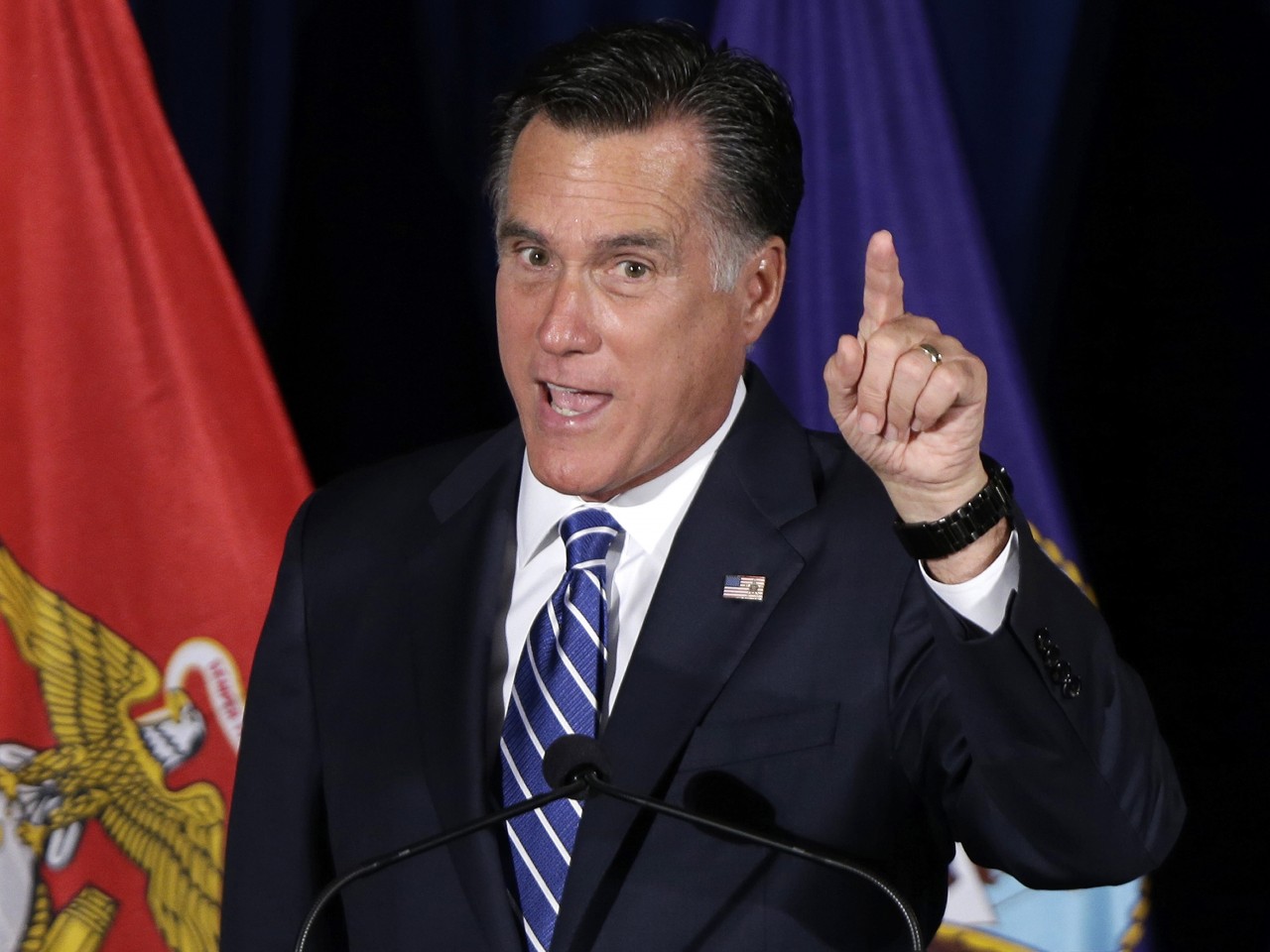
Mitt Romney is apparently the latest Republican to develop a sense of outrage that no one outside of the grey haired brigade would be seen dead voting for him:

‘I don’t mean to be flip with this,’’ said Mitt Romney during a Q&A with students at the University of Chicago last week. “But I don’t see how a young American can vote for a Democrat.’’ He cheerfully apologized to anyone who might find such a comment “offensive,’’ but went on to explain why he was in earnest.

The Democratic Party “is focused on providing more and more benefits to my generation, mounting trillion-dollar annual deficits my generation will never pay for,’’ Romney said. While Democrats are perpetrating “the greatest inter-generational transfer of wealth in the history of humankind,’’ Republicans are “consumed with the idea of getting federal spending down and creating economic growth and opportunity so we can balance our budget and stop putting these debts on you.’’

At which point the needle on my “Are You For Real?” machine jolted as far toward the “You Must Be Kidding” end of the spectrum as it could go before the whole machine exploded in a shower of sparks.

The author himself does a good job of pouring cold water on any Republican claims to the mantle of fiscal restraint:

But that debt wasn’t piled up without plenty of Republican help. During George W. Bush’s presidency, annual federal spending skyrocketed from $1.8 trillion to $3.4 trillion, and $4.9 trillion was added to the national debt. Bush left the White House, in fact, as the biggest spender since LBJ . Granted, the profligacy of Barack Obama has outstripped even Bush’s bacchanal: CBS reports that Obama has added more to the national debt in just three years and two months than Bush did in his entire eight years. Still, younger voters can hardly be blamed if they haven’t noticed that Republicans are “consumed with the idea of getting federal spending down.’’

Therefore I do not intend to say anything more about the glaring, shameless hypocrisy of the Republicans – the party that gifted America two unfunded wars, large tax breaks not balanced by spending cuts and the joke that is Medicare Part D – laying any claim whatsoever to competency in handling the nation’s finances. Except that I will say that much of the “profligacy of Barack Obama” mentioned by the author was the result of a fiscal stimulus implemented (despite its imperfections) at a time when the US economy was in freefall, and without which the tepid recovery currently being experienced would likely be nothing but a sweet dream.

Mitt Romney and those others in the Republican Party who scratch their heads wondering why young people don’t like them miss the point entirely when they sulk that young people should embrace their economic policies. Though their fiscal policies may perhaps benefit young people in certain ways (and even this is arguable), there is no evidence based on past behaviour that they will actually have the political courage to implement them if voted into office. Old people (the beneficiaries of the “wealth transfers” that Romney claims to lament) actually vote in large numbers. Younger people don’t. The policy priorities of our political candidates duly reflect this fact.

Besides, it is not the GOP’s economic policies that are the main problem. The problem is the fact that in a bad economy, the opposition party is spending more time talking about abortion, contraception, mass deportations of illegal immigrants, repealing ObamaCare, questioning the president’s eligibility to hold office, and reinstating “Don’t Ask, Don’t Tell” and a host of other socially regressive policy positions which are anathema to a majority of young people today than they are about how to reduce unemployment and help a population ill-equipped to perform the more highly-skilled, non-manufacturing jobs of tomorrow.

Rick Santorum in particular often complains that the media focuses on his socially conservative policy positions and not his economic plan, but he can hardly expect young voters to thrust him into office on the back of his inspired ideas on the economy (spoiler – they are not that great) when they are more worried that he will cut off their unemployment insurance, or close down the Planned Parenthood centre where they go for medical care, or start a war with Iran.

It is no coincidence that the one Republican presidential candidate who actually walks the fiscal conservatism walk and who doesn’t continually bleat on about social issues and the culture wars – Ron Paul – vastly outperforms his rivals with young voters, in primary after primary.

Newsflash to Mitt Romney, Rick Santorum and Newt Gingrich:

Even if you had a cogent economic policy (which, by the way, none of you do) you will never appeal to young people by just tweaking your fiscal message a little bit. You had a choice when you started your presidential campaigns, and in your desperation to secure the party base you chose to fearmonger and rant about “taking back America”, and fret about turning into a socialist state, and speak about the importance of individal freedom in one breath while promising to impose your religious values on the whole country in the next.

Many young people would like an alternative to President Barack Obama, but you offer them nothing by way of a contrasting, conservative vision for the country that they could ever find acceptable. You offer them nothing. You offer racial minorities nothing. You offer women nothing. You offer the working poor and the unemployed nothing. And all of these constituencies will dutifully line up to vote for Barack Obama, and you will lose the presidential election on November 6th.

It could be otherwise, if only you offered the American people a genuine acceptable choice when they cast their votes.

The Republican Party, Or The Mikado

Okay, so some good news out of St. Louis. Ron Paul, the only Republican presidential candidate still in the race whose political ideology, record in office and personality that I can reasonably tolerate, is apparently doing well in the Missouri caucuses. So says the St Louis Post-Dispatch:

http://www.stltoday.com/news/local/metro/ron-paul-supporters-dominate-gop-caucus-in-st-louis/article_4c7977d4-75e0-11e1-858e-001a4bcf6878.html

Hooray.

Except, why is Missouri having a caucus, didn’t they just have a primary last month? Why, yes, they did, but it was a non-binding primary because some awesome person or people in the legislature screwed up and left a law requiring the state to hold a primary on a date that was earlier than the Republican National Committee would sanction. So they went ahead and held the primary in accordance with their state law, but it was essentially a “beauty contest” because the results counted for nothing. These caucuses, happening now, are the ones that count.

As The St. Louis Post-Dispatch helpfully explains:

“The slate backing Paul cast 158 votes in the non-binding caucus Saturday. The purpose was to choose representatives to a round of Congressional district meetings in April and June that will repeat the process to send 52 delegates from Missouri to the August convention in Tampa, Fla.”

Is that clear everyone? What do you mean, no?

So. The primaries that happened last month in Missouri counted for nothing. But that’s okay, because the caucuses that are happening now will choose the representatives that then go on to another round of meetings in April and June, the output of that meeting being the selection of 52 delegates to travel from Missouri to Florida where they can then all bicker together about who will have the honour of being electorally destroyed by Barack Obama in November.

Ladies and gentlemen, I give you the greatest democratic system on the face of the earth, etc.

Seriously, this is the stuff of which Gilbert & Sullivan operettas were made in terms of farcical plots, topsy-turvydom and bureaucratic nonsensical officialdom.

Firstly, having a long series of primaries and caucuses is dumb, because by the time the race gets to the big states that actually, y’know, contribute the most to the union (we can quibble about how we define “contribute the most” but we all know it’s true – lose Alabama, for instance, and the USA will pick itself up and limp on, ‘real America’ or not; lose California or New York or Texas and there’s a mortal wound right there) the race is pretty much already decided. Sure, it’s great to make the big rich hot-shots trek around a million diners and pancake houses pressing the flesh every morning and participating in good ol’ fashioned retail politics. But why should ethanol-swilling rural Iowans and their special interests have more of a say in choosing the nominee than those residents of the industrial midwest, or the two heavily populated coasts? It makes no sense, and the way in which those overlooked states which rightly try to increase their influence by bringing forward their primaries have been bullied, slapped down or penalised by the establishment is, if anything, the real affront to democracy taking place in America at the moment.

Secondly. if you are going to have a series of primaries and caucuses, can we at least get together to apply roughly the same rules to them all, so that you don’t need to fire up IBM’s Deep Blue supercomputer to work out the impact of each primary election night on the fortunes of the respective candidates? I know, I know, state’s rights and so on and so forth. That’s fine. Every state is allowed to do what they want and organise their primaries the way they best see fit. But when the existing method makes you all look like a disorganised bunch of ass clowns, maybe it’s time to actually get together and come up with a more uniform system. Now when might be a good opportunity to do that? If only there was some upcoming pre-arranged big gathering of the nation’s top Republicans, in a big convention city like, say, Tampa, Florida, that would perhaps be ideal. But we can only wish.

Thirdly. As long as America persists with the ridiculous system they have in place at the moment (and the Democrats aren’t much better on their side, but of course Obama’s renomination is not being contested so we hear nothing about the “superdelegate” shenanigans this time around), I will continue to unapologetically act as cheerleader for Ron Paul’s scrappy efforts to increase his delegate haul by using his army of devoted supporters to out-organise the front-runners and win the apparently-crucial but almost-unreported actual meetings that assign the delegates for real.

After all, if the rules are stupid or flexible enough that winning a majority of votes in a state’s primary or caucus doesn’t guarantee you something approaching a commensurate proportion of delegates to the convention, three cheers for the guy with the smarts to actually play the system.

On Grover Norquist And Ideological Headlocks

From The Boston Globe, an interesting long-form profile of Grover Norquist, the founder of Americans for Tax Reform  and promoter of the famous (or infamous) “Taxpayer Protection Pledge”:

http://articles.boston.com/2012-03-18/magazine/31199550_1_pig-farm-rocky-ledge-speech

The article is well worth reading, if for no other reason than the fact that we should all better understand the man who works quietly in the background in Washington and across the country to squash any efforts to raise additional government revenues, and who effectively owns the political souls of the vast majority of the congressional Republican Party. At the present time, an astonishing 238 members of the House of Representatives and 41 Senators are signatories to “the pledge”, including 97.5 percent of the entire Republican congressional delegation.

Few other special interest groups – even lobbying powerhouses such as the National Rifle Association – can boast such levels of fealty from elected representatives.

The only problem is that Americans for Tax Reform is obsessed with treating only one of the two symptoms of America’s fiscal malaise, and couldn’t care less about the underlying illness (the structural deficit). Seeking to cap the revenues that government can collect is all very well and good, but there is nothing bold or patriotic about doing that while doing nothing, or in some cases, actively thwarting efforts to make a serious effort at reducing expenditures, such as those outlined in the Bowles-Simpson committee proposal.

The following passage from the article lays bare, once again, the automatic, unapologetic contradictions at the heart of today’s GOP:

Jon Golnik, a Republican pledge-signer who was unsuccessful in his 2010 bid to unseat Democratic congresswoman Niki Tsongas, tells the crowd he’s running again and rails at the out-of-control spending of the Obama administration. He rattles off a host of statistics about the implications of the national debt that are so sobering they might give even a Keynesian pause.

When Golnik begins taking questions from the audience, the first comes from a North Shore man named Edward Purtz, who asks with furrowed brow: “We’ve seen the Navy cut to levels it hasn’t been since the 1800s. How do you stand on these defense cuts?”

Without missing a beat, Golnik replies, “I oppose them.”

I would point out that, as frequently said by Ron Paul, it is entirely possible to actually increase spending on national defence while cutting overall military spending by extracting America from costly foreign entanglements. I could further point out that comparing the number of ships in the US Navy in 1800 and 2012, noting a fall and interpreting this as a decline in relative naval power is about as stupid as it is possible to be, given the fact that any modern frigate or destroyer could make short work of the entire 19th century fleets of every naval power and not suffer a scratch, but again this is rather beside the point here.

Today we have a Republican Party caught in an ideological headlock by the likes of Grover Norquist and fired-up tea partiers, all of whom talk incessantly about cutting and balancing the federal budget, but all of whom reflexively oppose cutting their own pet projects, or those large parts of the non-discretionary budget that account for the vast majority of spending.

The interviewer in one passage asks Norquist that, given the fact that government spending as increased in real terms every year since the 1960s, has his personal crusade not been a complete failure?

Following our lengthy discussion about runaway spending under Bush, Norquist stresses that ATR’s “ultimate goal is to reduce the size and scope and cost of government as a percentage of the economy, so we want to spend less and not raise taxes.”

“So,” I ask, “that has been a complete failure, right?”

“No,” Norquist replies and begins to speak extra slowly. “The line in the sand on taxes has been very successful.”

And there we have it, folks. Defending the line in the sand – no new taxes, ever – is what matters, the only thing that matters at the moment to those on the tea party-hijacked right. They won’t look for additional revenues anywhere, under any circumstances. They talk loudly about slashing the budget but single out their pet projects for exemption and fail to seriously engage on the topic of cutting spending in the key areas which drive the federal budget deficit. And still they call themselves the party of fiscal responsibility.

How British Conservatives Miss Their American Mark

Fraser Nelson takes to his Daily Telegraph column today to extol the virtues of Mitt Romney, in a puff piece entitled “David Cameron need take no lessons from Barack Obama, but he might listen to Mitt Romney”. But by fundamentally misunderstanding today’s Republican Party, he fails to make a convincing case.

You might expect Nelson to perhaps talk about some of the reasons why David Cameron should pay heed to Mitt Romney rather than President Obama on his upcoming trip to the United States. But all we really get is this solitary paragraph:

“In the Republican primary contest, meanwhile, the candidates have been very precise about debt. American conservatism is now defined by plans to tackle it, and the candidates compete on which taxes they’d cut to kick-start the economy, increase employment and balance the books. Romney’s 59-point plan for growth is easily the most moderate, yet is still more radical and holistic than anything produced in Britain. He has ruled out tax rises, and pledged to cut state spending by 5 per cent on day one. Cameron, by contrast, is aiming for a 3.3 per cent cut over five years.”

Would that this were true.

mittromneyrolemodel

American conservatism, defined by plans to tackle the debt? If there is one thing – and there are a lot at the moment – which distinguishes British and American conservatives, it is the fact that British conservatives (perhaps with the exception of the ultra-hardcore Eurosceptic fringe) live predominantly in the real world, while American conservatives have decamped en masse to cloud-cuckoo land, where huge swathes of the federal budget can be eliminated at a stroke without causing any undue suffering to those who have been coaxed and encouraged over the years to depend on various government programmes, and with no political repercussions.

Romney’s plan may well be more radical and holistic than anything produced in Britain, but that doesn’t really matter because nothing remotely resembling it is ever going to be implemented. The British Tories, on the other hand, are willing to risk alienating public opinion and their petulant Liberal Democrat coalition partners to actually implement a programme of needed budget cuts. So who should get the praise, the man who gives tough speeches about slashing trillions from the federal budget with no earthly chance of ever actually doing it, or the man who treads more carefully and holds together a precarious coalition to deliver more modest budget cuts that are actually attainable?

That’s not to say that the British conservatives are in the right with regard to the slower pace at which they have chosen to tackle budget deficits and spur economic growth while in government. Many people, myself included, are frustrated at the glacial pace at which much needed supply-side reforms are being implemented in the UK (often thwarted by EU regulations and/or the Liberal Democrats). A little more ambitious, far-reaching zeal would not be a bad thing at all, though how possible this is as long as the Liberal Democrats are partners in government remains in doubt. And so at first glance, once can understand why some British political pundits look at the fiery rhetoric emanating from the Republican primaries on the economy and find the British conservatives lacking. But to look closer, and to remember the different respective points that Britain and America occupy on the left-right political spectrum, is to realise firstly that the British conservatives have very little political scope to move further to the right, and secondly that the policy positions that the Conservative Party occupies do not differ greatly from the Democratic party in many cases.

And this is the crux of the matter. Even as the Republican Party in America continues to lurch further and further to the right and stake out ever more extreme positions on all manner of issues, the British Tories and their supporters in the British press as yet are unable to sever the psychological link which tells them that they should cheer the Republicans and boo the Democrats. This mindset may have worked in the past, when there was a greater degree of comity and moderation in American politics and the two parties were not so greatly divided, but it does not work today.

It seems to be of entirely no matter to the Republican cheerleaders in the British press that the majority of Democratic party policies are equivalent to or to the right of many current Tory principles (even the long-cherished and now-abandoned public health insurance option is significantly to the right of having a single-payer National Health Service), or that many members of the new Republican tea party congressional intake would (if they actually possessed a working knowledge of the world beyond their own borders) look at Britain with disdain, regarding us as some type of socialist dystopia.

Sadly, the time has come for the British Tories and their allies to acknowledge that they no longer have a serious, thinking partner on the other side of the Atlantic. This is probably just a temporary blip, as all such overcorrections to the right or the left tend to be countered by a return to more moderate positions (as will either happen in 2012 when Obama beats Romney/Santorum, or in 2016 when Obama’s heir runs against a chastened GOP desperate to win back the votes of the women and minorities that it is currently shedding so carelessly). But for the time being, British conservatives have nothing to gain by cosying up to the Republican Party of John Boehner, Eric Cantor, Mitch McConnell, Sarah Palin, Rush Limbaugh, Newt Gingrich, Mitt Romney and Rick Santorum.

The Conservative Party’s American role models may have embraced tea as their emblem, but their economic policy prescriptions are not based in reality, and are going a long way toward making the Republicans look callous, backward and foolish. There is no need for the Tories to damage their still-fragile brand by standing next to them, wearing a T-shirt that proclaims “I’m with Stupid”.

Meet Mitt Romney, Normal Bloke

Well, colour me surprised!

Willard “Mitt” Romney, when a sufficient distance away from a television camera and campaign appearance, is a normal-looking (though still clearly super wealthy) guy!

Check out this post on Buzzfeed, showing a montage of Mitt Romney shots taken by his daughter-in-law for her blog:

http://www.buzzfeed.com/mckaycoppins/25-photos-of-mitt-romney-looking-normal

Waiting for a free table at Applebee's, just like you.

Now, I’m not saying that Mitt Romney’s entire campaign team should be fired. I’m just saying that they should be politely invited to enter the barrel of a giant cannon and then smoothly launched at high velocity from their recumbent positions on a swift journey to an alternative, watery location, many miles from dry land.

The talking heads always tell us that image is everything. So why have none of these images surfaced until now? Why, when anyone utters the name “Romney”, do we picture without fail the stiff, patrician, ill-at-ease baby boomer that we all know and love, standing stiffly in a pair of dark blue jeans that he would clearly never wear off the campaign trail, a vote-winning automaton programmed to say (approximately) the right thing and squeak by with the narrowest of margins?

I’m not saying that I could single-handedly do a better job than everyone on the Romney 2012 campaign payroll. Actually, yes, yes I am. I am saying that I could single-handedly do a better job than everyone on the Romney 2012 campaign’s current payroll. And so could my wife’s cat.