Let’s Fly

Apparently the Conservative-led government can no longer be relied upon to do anything that doesn’t make me want to bang my head repeatedly against a brick wall in open-mouthed astonishment at their zesty blend of rank incompetence and lack of principle, so it was particularly refreshing today to read this piece in The Telegraph, reporting that the Taxpayers’ Alliance is renewing their call for an abolishment of air passenger duty (the ludicrously huge tax on passenger air travel in the UK).

The Telegraph reports:

The pressure group – which was formed in 2004 and supports lower taxes for UK residents – has given its backing to the Fair Tax on Flying campaign, which is urging the Government to reduce or abolish APD.

“Britain’s punitive taxes on flights, now the highest in the world, are an incredible burden on families taking a well-earned break,” said Emma Boon, campaign director at the Taxpayers’ Alliance. “Jobs are also at stake as tourists and business travellers choose a destination to visit or invest where they won’t get ripped off. APD should really be abolished, but the very least politicians can do is cut this tax to a fairer level.”

Absolutely. Air Passenger Duty is just another typically, depressingly British example of the government picking an arbitrary thing to fixate upon, and gradually cranking up the tax in each successive Budget to help fund whatever addle-headed, moronic scheme happens to be flavour of the month at that particular time. It penalises business travellers, leisure travellers, people trying to visit far-flung family, people in long distance relationships and  anyone else whose only crime is their need to transit through one of Britain’s dilapidated airports.

The article goes on to explain:

APD is paid by all travellers departing from a UK airport. Following the most recent rise in the tax, an eight per cent hike made in April, a family of four travelling to Europe must pay £52 in APD, while those flying farther afield are hit even harder. The cost of APD for a family of four flying to the United States or Egypt, for example, is £260; for those travelling to the Caribbean or South Africa, it is £324; and a family visiting Argentina or Australia must pay £368.

Those figures are doubled for those flying in premium-economy, business- or first-class cabins.

That level of taxation is simply not funny, in fact it is intolerably ridiculous, and ought not to be allowed to remain under a Conservative government. Staggeringly, in 2005 this tax was only £5 per person for a European flight and £20 for a longer distance flight. A 360% rise in any tax over just seven years is quite ridiculous, and this one is proving to be a real dampener on the economy at a time when we need to be keeping business and family costs down the most. It’s typical of this rudderless, unprincipled government that yet further rises are also planned this year.

I strongly encourage everyone to sign the petition to scrap Air Passenger Duty at this website.

George Osborne’s Last Straw vs My Back

George Osborne is receiving a lot of stick for his last-minute decision to postpone the planned 3p/litre increase in fuel tax left intact in his most recent, politically disastrous budget. Most recently he has been accused of cowardice for sending an unprepared junior minister – Economic Secretary Chloe Smith – to defend the government’s short notice U-turn on the BBC’s flagship ‘Newsnight’ programme.

Reports The Telegraph:

Chloe Smith last night strugged to answer questions about the decision to postpone the 3p rise in petrol duty.

After she refused to say when she found out about it or how it will be funded, the Economic Secretary was accused of being “incompetent” by Jeremy Paxman, the BBC’s Newsnight interviewer.

Mr Paxman also asked her whether she ever woke up and thought: “My God, what am I going to be told today?”

I think that we can now safely add political incompetence to the list of charges being levelled against Mr. Osborne in the wake of this all-too-avoidable mess up.

This is supposed to be a Conservative-led, tax-cutting government. It was bad enough that the 3p/litre increase in fuel duty was allowed to remain in George Osborne’s most recent budget in the first place, but the fact that it’s postponement was only announced yesterday, and that senior ministers had no prior notice whatsoever is an almost unforgivable act of political stupidity, for which David Cameron was predictably savaged during Prime Minister’s Questions today.

But more concerning to me even than the incompetent way that this – and almost every single other political decision of any significance recently – has been handled by the government is the fact that the Conservatives are boasting about their policy U-turn and rather petulantly demanding praise for their actions.

Take this typical tweet from Robert Halfon MP:

“In Welsh questions said to Minister that stoppage of August fuel tax rise means £16 million injected into Welsh economy”

I despair, I really do. I thought that it was only in the dystopian, nightmarish land that was Gordon Brown’s Britain that cancelling a planned tax increase could be said in any way to be injecting cash into the economy. How is making the decision to not do something monumentally stupid and increase a key tax that would punish many already-squeezed households in any way an injection of cash into the economy? At best it could very charitably be called a preservation of the status quo, or the maintenance of steady-state, though given the economic uncertainty created by arbitrary and last-minute changes of key fiscal policy such as this, even that assessment is doubtful.

This is almost as bad as the risible time when a desperate Gordon Brown and Peter Mandelson tried to claim that the Conservatives’ election manifesto promise to cancel the planned increase in employers’ National Insurance tax contributions would “take millions of pounds out of the economy”, as though the state were the ‘real economy’ and not the other way around.

I’m done with all this, I really am. I actively campaigned for the Conservative Party at the last general election in 2010. I delivered leaflets, probably annoyed my friends on Facebook and Twitter with my political posts, and talked to countless people on the high street. And for my efforts, and those of all the many people who did far more than me to try to end Labour’s grip on power in this country, all we get is a government with a broken political radar, one which betrays core conservative principles and apparently one which pouts and expects praise and candy for doing precisely the things that it should be doing without any outside pressure from their political base, such as not raising taxes on squeezed households during a recession.

Michael Gove for PM, as soon as possible. Anyone else with me?

In Praise of David Laws

David Laws


Yesterday I recently read some of the most refreshing words on economic policy to have been uttered by a British politician in recent months, and they came not from a Conservative but from a Liberal Democrat MP.

In an interview with the Sunday Telegraph, David Laws, briefly Chief Secretary to the Treasury but now a lowly backbencher, made the case for reduced tax rates, deeper (but more wisely targeted) cuts in public spending and reform of the public sector:

… Mr Laws said the share of the economy accounted for by the state was “out of kilter” with the amount of tax the public were willing to pay.

Only spending on health, education and pensions should not fall as a share of GDP, the MP said.

The former chief secretary to the Treasury’s views will alarm many Lib Dems who have opposed the Coalition’s spending cuts. However,

Mr Laws argues that cutting state spending would be in keeping with the founding fathers of the Liberal Party.

“Even after the existing fiscal consolidations, state spending will account for some 40 per cent of GDP, a figure that would have shocked not only Adam Smith, William Gladstone, and John Stuart Mill, but also John Maynard Keynes and David Lloyd George,” he says.

“The implication of the state spending 40 per cent of national income is that there is likely to be too much resource misallocation and too much waste and inefficiency.”

Too much resource misallocation and too much waste and inefficiency. Yes!

I have found it irritating beyond measure to see minister after government minister talk about the need to reduce the ridiculous proportion of national output accounted for by government spending as a sad necessity resulting from the economic recession rather than as something desirable as an end in itself. When critics accuse the Conservative-led coalition government of using the recession as a trojan horse to impose ideologically-inspired reductions in the size of the state, I actually wish that they had the impetus to do just that – but this accusation greatly overestimates the political savvy and core convictions of the current Conservative Party leadership and instead, government spending continues to increase in real terms, and no big-name Tories are speaking out in favour of a leaner public sector.

David Laws (together with other likeminded libertarian-leaning types such as Michael Gove MP) is one of the few politicians to actually come out and make the case that the British public sector has grown far too large and bloated, and that reducing its size is both necessary and worthy, not just because of the present economic difficulties but because it is the right thing to do.

But why do we only hear this call for a  from a backbench Liberal Democrat MP and not from a frontbencher in the Conservative party, who should hold these views just as dearly? Why isn’t David Cameron acting as head cheerleader for shrinking government and making the case that important services can still be provided – often to a higher standard – when the government does not have ownership of them? Where is George Osborne, and where are the urgently-needed supply-side reforms so glaringly missing from his last Budget?

In short, why did I campaign for and help the Conservative Party fight the last general election, when it has fallen to a Liberal Democrat to make the case for a small, lean state and for economic liberty?

On Young Voters And The GOP

Republicans - GOP - Young Voters

At least some people in the Republican Party seem to have woken up to the demographic timebomb ticking away under their feet, and have started to lament, if not yet analyse, the fact that the vast majority of young people in America today would sooner give up their loud music and Pac-Man video games (or whatever it is that young people do for fun these days) than vote for a GOP candidate in a presidential election.

There is an article worth reading on this topic by Jeff Jacoby in today’s Boston Globe, entitled “As Dems rack up debt, youth should flock to GOP”.

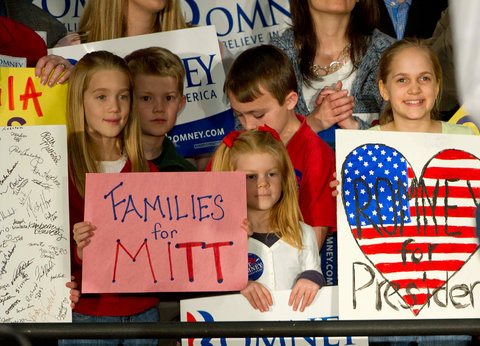
Mitt Romney is apparently the latest Republican to develop a sense of outrage that no one outside of the grey haired brigade would be seen dead voting for him:

‘I don’t mean to be flip with this,’’ said Mitt Romney during a Q&A with students at the University of Chicago last week. “But I don’t see how a young American can vote for a Democrat.’’ He cheerfully apologized to anyone who might find such a comment “offensive,’’ but went on to explain why he was in earnest.

The Democratic Party “is focused on providing more and more benefits to my generation, mounting trillion-dollar annual deficits my generation will never pay for,’’ Romney said. While Democrats are perpetrating “the greatest inter-generational transfer of wealth in the history of humankind,’’ Republicans are “consumed with the idea of getting federal spending down and creating economic growth and opportunity so we can balance our budget and stop putting these debts on you.’’

At which point the needle on my “Are You For Real?” machine jolted as far toward the “You Must Be Kidding” end of the spectrum as it could go before the whole machine exploded in a shower of sparks.

The author himself does a good job of pouring cold water on any Republican claims to the mantle of fiscal restraint:

But that debt wasn’t piled up without plenty of Republican help. During George W. Bush’s presidency, annual federal spending skyrocketed from $1.8 trillion to $3.4 trillion, and $4.9 trillion was added to the national debt. Bush left the White House, in fact, as the biggest spender since LBJ . Granted, the profligacy of Barack Obama has outstripped even Bush’s bacchanal: CBS reports that Obama has added more to the national debt in just three years and two months than Bush did in his entire eight years. Still, younger voters can hardly be blamed if they haven’t noticed that Republicans are “consumed with the idea of getting federal spending down.’’

Therefore I do not intend to say anything more about the glaring, shameless hypocrisy of the Republicans – the party that gifted America two unfunded wars, large tax breaks not balanced by spending cuts and the joke that is Medicare Part D – laying any claim whatsoever to competency in handling the nation’s finances. Except that I will say that much of the “profligacy of Barack Obama” mentioned by the author was the result of a fiscal stimulus implemented (despite its imperfections) at a time when the US economy was in freefall, and without which the tepid recovery currently being experienced would likely be nothing but a sweet dream.

Mitt Romney and those others in the Republican Party who scratch their heads wondering why young people don’t like them miss the point entirely when they sulk that young people should embrace their economic policies. Though their fiscal policies may perhaps benefit young people in certain ways (and even this is arguable), there is no evidence based on past behaviour that they will actually have the political courage to implement them if voted into office. Old people (the beneficiaries of the “wealth transfers” that Romney claims to lament) actually vote in large numbers. Younger people don’t. The policy priorities of our political candidates duly reflect this fact.

Besides, it is not the GOP’s economic policies that are the main problem. The problem is the fact that in a bad economy, the opposition party is spending more time talking about abortion, contraception, mass deportations of illegal immigrants, repealing ObamaCare, questioning the president’s eligibility to hold office, and reinstating “Don’t Ask, Don’t Tell” and a host of other socially regressive policy positions which are anathema to a majority of young people today than they are about how to reduce unemployment and help a population ill-equipped to perform the more highly-skilled, non-manufacturing jobs of tomorrow.

Rick Santorum in particular often complains that the media focuses on his socially conservative policy positions and not his economic plan, but he can hardly expect young voters to thrust him into office on the back of his inspired ideas on the economy (spoiler – they are not that great) when they are more worried that he will cut off their unemployment insurance, or close down the Planned Parenthood centre where they go for medical care, or start a war with Iran.

It is no coincidence that the one Republican presidential candidate who actually walks the fiscal conservatism walk and who doesn’t continually bleat on about social issues and the culture wars – Ron Paul – vastly outperforms his rivals with young voters, in primary after primary.

Newsflash to Mitt Romney, Rick Santorum and Newt Gingrich:

Even if you had a cogent economic policy (which, by the way, none of you do) you will never appeal to young people by just tweaking your fiscal message a little bit. You had a choice when you started your presidential campaigns, and in your desperation to secure the party base you chose to fearmonger and rant about “taking back America”, and fret about turning into a socialist state, and speak about the importance of individal freedom in one breath while promising to impose your religious values on the whole country in the next.

Many young people would like an alternative to President Barack Obama, but you offer them nothing by way of a contrasting, conservative vision for the country that they could ever find acceptable. You offer them nothing. You offer racial minorities nothing. You offer women nothing. You offer the working poor and the unemployed nothing. And all of these constituencies will dutifully line up to vote for Barack Obama, and you will lose the presidential election on November 6th.

It could be otherwise, if only you offered the American people a genuine acceptable choice when they cast their votes.

What Exactly Is Your Fair Share?

Tax Fair Share Flat Tax


As every British taxpayer knows, this week the coalition Conservative/Liberal Democrat government will announce its budget for the coming fiscal year. And as usual, there is much speculation about what bold, eye-catching new initiatives will be announced, which favoured groups will receive the best and most insulting handouts (10p per week increase for those on the state pension, anyone?) and which of our cherished vices such as smoking or drinking will be slapped with the biggest tax increases to raise money to pay for it all.

But probably the biggest pre-budget story at the moment concerns the speculation that the government is poised to repeal the last Labour government’s spiteful, punitive, ugly and counterproductive 50% top marginal rate of income tax which they imposed just before being booted from office, either eliminating it entirely in a stroke or reducing it to 45% as the first step of a phased elimination.

Cue much indignation, huffing and puffing from the British left, who talk all the time of the importance of “the wealthy” or “the rich” paying “their fair share”.

Their fair share. What exactly does this phrase mean? It is grotesquely overused in British political and fiscal discussions at the moment, by both left and right. It is used by the left as an attack – “taking benefits and tax credits from hard working people while never asking the rich to pay their fair share!”-  and by the right as a defence – “ensuring that we are all in this together, and that those who can afford the most pay their fair share”.

So what is fairness when it comes to tax policy?

You could argue that since we all live in the same country and benefit from the same infrastructure, public services and national defence, the total bill for government spending should be divided equally between all people of a working age in this country. We can all avail ourselves of the public schools, the National Health Service and the roads in this country, so we should all pay the same toward their continued existence. So what if you’re on minimum wage and your tax bill for the year is greater than your income? Well, everyone has to pay their fair share, so better get a second, third and fourth job if you want to pay your tax bill and still eat. Otherwise it’s not fair to everyone else.

You could argue that some people use certain public services a lot more than others, and that aside from the national umbrella of national defence it is not fair to make any two people pay the same amount if they use different services, and that the best thing to do is to abolish the majority of taxes and move toward a pay-per-use scheme. So what if you’re on minimum wage and you don’t have the money you need to see the doctor? Too bad, you’ll have to make your own arthritis medicine yourself out of pressed flowers and tree bark.

You could accept that those who have been financially successful and/or fortunate should shoulder a greater burden of government spending in real terms, but that to ask them to pay a larger proportion of their incomes just because they are rich is offensive and unfair, and in this case you would support a flat tax system, where everybody pays the same rate. Everyone then gets access to the public services that they need, and everyone pays the same percentage of his or her income to support those services. Perfectly fair, no?

Alternatively, you could accept the premise that those with greater incomes should pay a higher proportion of that income in tax, in addition to paying more purely in real terms. And that’s pretty much the system we have in place here and pretty much everywhere else in the western world, a stepped, progressive tax system. If you earn little to no money you pay little to no tax either in real terms or as a percentage, and as your income grows, so does your tax liability. A lot of people think that this is fair.

My point is that each of these solutions can be described on one way or another as being “fair”. The word doesn’t really mean anything on its own, it is only given meaning through the context in which it is used, which is entirely based on your political beliefs. But in British political discourse it is always used to mean, in some general fuzzy way, that “other”, “richer” people more prosperous than us than us should pay more to cover all the bills. It is used lazily to impart a pious aura of nobility to demands for what are already significant transfers of wealth from the rich to the poor in this country at best, or counterproductive and demotivational daylight robbery at worst.

Under the present tax code in Britain, if you earn more than £150,00o in income in a given year, each additional pound you earn above that level to infinity is taxed at 50%. The income you earned between about £40,000 and £149,999 was taxed at 40%. And this doesn’t include the other huge tax-in-all-but-name, National Insurance, which means that many people earning much over £70,000 pay marginal tax rates greater than half of each additional pound that they earn. A yearly salary of £70,000 may sound like – and be – a lot of money, but if you are a family on a single income with several children, living in the South East, you’re not exactly the Monopoly Man. What’s fair about asking for more than half of that person’s hard-earned pay rise in additional tax contributions?

In order to win Liberal Democrat approval to cut the top rate of income tax down from the punishingly high 50% level, the Conservatives will doubtless have to make a number of concessions. Some of these may yet be sensible, such as moves to shift the burden of tax away from earned income (i.e. more ‘productive’ money) and more toward unearned income and wealth. This would help to ensure that income is reinvested in the economy, though whether it is the role of government to meddle in this way is not entirely clear. Some of the other concessions will doubtless take the form of yet more envious, baseless pokes at the rich. It is probably worth the government’s while taking most of these jabs in good humour in order to ensure the repeal of one of the highest marginal tax rates in the western world, a huge dampener on British competitiveness.

But whether the top rate drops down to 45% or back to 40% where it has been since Margaret Thatcher’s day, prepare for a lot of noise from the left and a lot of opportunistic point-scoring from the Labour Party. Be assured that these talking points have already been written and are waiting to be deployed as soon as George Osborne stands up at the despatch box in the House of Commons to read his statement. We will hear that he cares only about looking after his rich friends and is not concentrating on doing anything for the poor (because, of course, the government can only ever have one priority at a time, the rich OR the poor, and a policy that ostensibly benefits the rich could never also benefit the economy as a whole, and therefore everyone who works in it – and no, I’m not talking about “trickle-down economics”). We will see every rhetorical trick under the sun being deployed to convince the population that now is the wrong time to be focusing on “the wealthy few” when “the hard-working majority” are suffering. So expect all of this, and more. But regardless of the merit of these individual arguments, they all miss the point by a country mile.

Are there a myriad of loopholes in the current tax code that need to be closed? Absolutely.

Do further efforts need to be made to clamp down on tax fraud, and make tax avoidance more difficult? Sure.

Do we need to look again at tax rules for non-domiciled individuals, in terms of their income and property taxes? Almost certainly.

So let’s press for the government to include such measures in the upcoming budget.

But please, let us separate these issues – and the plight of the multi-millionaires and billionaires and bankers and premier league footballers that we hear about in the newspapers – from the doctor or accountant who maybe earns £200,000 a year and who now doesn’t want to take on that extra patient or new client because she is worn out, working hard trying to get ahead and to pay her “fair share” to an insatiable country.