On Expectations

Two very interesting pieces from the New York Times on the expectations we place on our young people, on those who educate and nurture them, and on our governments. The statistics and minutiae relate to the United States, but the underlying themes and sentiments are, I think, equally relevant to the United Kingdom.

The first is by Thomas Friedman, who lays bare two oft-neglected reasons why educational outcomes in the United States are falling behind those of other countries – the fact that American children are much less willing than they were even in recent decades to put in the work to achieve at high levels, and the fact that their parents demand too little (or demand the wrong things) of the schools to which they are sent. Friedman quotes Education Secretary Arne Duncan’s recent speech to the National Assessment Governing Board’s Education Summit for Parent Leaders:

In 2009, President Obama met with President Lee of South Korea and asked him about his biggest challenge in education. President Lee answered without hesitation: parents in South Korea were ‘too demanding.’ Even his poorest parents demanded a world-class education for their children, and he was having to spend millions of dollars each year to teach English to students in first grade, because his parents won’t let him wait until second grade. … I [wish] our biggest challenge here in the U.S. was too many parents demanding excellent schools.

Imagine that. It would be wonderful to face a problem such as that faced by South Korea here in Britain. A nation full of parents – of all socioeconomic groups – so anxious for their children to succeed, to learn foreign languages, to get ahead from day one, that not only do they actively help their children to succeed academically, but also punish politicians who are perceived to stand in the way of that progress. In Britain, it seems that almost the opposite has taken place – government has rushed with great eagerness to throw money at the education system, with spending doubling in a relatively short period of time, while parents sit back and expect the entire job to be done for them. And those parents who do take a particularly active interest are looked down on by the rest and labelled “pushy parents”, while supposedly serious think tanks propose charging the richer and more astute parents to send their children to the same state schools that other children attend for free.

Friedman asks the following question, one which he hopes President Obama will take up in his upcoming State of the Union address:

Are we falling behind as a country in education not just because we fail to recruit the smartest college students to become teachers or reform-resistant teachers’ unions, but because of our culture today: too many parents and too many kids just don’t take education seriously enough and don’t want to put in the work needed today to really excel?

Ultimately, it is not all about government. It isn’t all about paying our taxes and sitting back and expecting the rest to fall into place automatically. It is difficult in Britain, because the tax burden is so heavy and the state so large that it is almost right to expect miraculous things from the government in all areas. But as a nation I believe we urgently need to dis-enthrall ourselves from the idea that government spending and government policy are the only lever available to improve educational outcomes.

He may have many powers, but he can't make your kids smarter.
He may have many powers, but he can’t make your kids smarter.

A revolution in personal responsibility and self-motivation would go such a long way. But who will have the courage to lead such a revolution, when the Conservative-led government, supposedly the champions of individual liberty and personal responsibility, is more inclined to protect parents from the potential consequences of their lazy parenting by erecting a pornography filter on the internet than to risk offending them by suggesting that they are derelict in allowing television and the internet to raise their children unsupervised?

————————————-

The second article is depressing in quite another way, and concerns parents who suspect that their child might be gifted. Seth Stephens-Davidowitz writes that an analysis of Google searches reveals that parents in the United States are much more likely to suspect their sons of being intellectually gifted than their daughters, and are more likely to worry about the weight of their daughters than their sons. In other words, even if children were to be magically shielded from the weight of expectations and stereotypes in society at large, some of the most pervasive and damaging ones – that girls should be pretty and slim, and boys intelligent – originate from much closer to home.

To wit:

Start with intelligence. It’s hardly surprising that parents of young children are often excited at the thought that their child may be gifted. In fact, of all Google searches starting “Is my 2-year-old,” the most common next word is “gifted.” But this question is not asked equally about young boys and young girls. Parents are two and a half times more likely to ask “Is my son gifted?” than “Is my daughter gifted?” Parents show a similar bias when using other phrases related to intelligence that they may shy away from saying aloud, like, “Is my son a genius?”

And this:

What concerns do parents disproportionately have for their daughters? Primarily, anything related to appearance. Consider questions about a child’s weight. Parents Google “Is my daughter overweight?” roughly twice as frequently as they Google “Is my son overweight?” Just as with giftedness, this gender bias is not grounded in reality. About 30 percent of girls are overweight, while 33 percent of boys are. Even though scales measure more overweight boys than girls, parents see — or worry about — overweight girls much more often than overweight boys.

Parents are about twice as likely to ask how to get their daughters to lose weight as they are to ask how to get their sons to do the same. Google search data also tell us that mothers and fathers are more likely to wonder whether their daughter is “beautiful” or “ugly.”

If she's gifted then that's a bonus, but the real question is whether or not she is overweight.
If she’s gifted then that’s a bonus, but the real question is whether or not she is overweight.

Apparently these biases transcend socioeconomic group and political affiliation, and so the results cannot be neatly explained away along these lines.

While I probably should not be surprised at these findings, they still make for fairly sobering reading. Stephens-Davidowitz wonders whether there might be a measurable change in the statistics once a woman is elected president and that the eyes of the holdouts might then finally be opened to the intellectual equality of women, but I fear that just as the Obama presidency failed to usher in the post-racial American era, so the first woman president will struggle to overcome the inertia of this weight of expectation.

Two pieces on expectations. The expectations we hold for ourselves, our children and our government. Some food for thought as the weekend draws to a close.

Making The Rich Pay Twice

We recently saw the Labour Party make some potentially sensible proposals on education – moving to enhance the status of teachers by simultaneously licensing them and requiring them to undertake continual professional accreditation, and making it easier to fire consistently underperforming teachers and helping them transition out of the profession.

Contrast this good news of the Labour Party embracing a carrot-and-stick performance-based approach to educational reform, with this dismal, tired suggestion from Social Market Foundation. The Guardian reports the details of their latest proposal:

One proposal would see popular state schools being means tested, with the most affluent parents being charged for their children to attend top schools.

Families earning more than £80,000 a year should contribute financially, with those with an annual income above £200,000 having to pay the full price of their children’s education at the best state schools. Fees should be the same for the wealthy as those charged at independent day schools.

This “parent premium” for households earning more than £200,000 a year would generate surplus funds, a quarter of which would be retained by the school, with the rest redistributed among other state schools.

We can lump this nonsensical idea together with all of the other vengeful “clobber the rich” schemes broached by those on the left to create a fairly accurate picture of their ideal Britain. In their Ideal Britain, anyone earning much over £150,000 a year would be subject to a 50% marginal tax rate on their income. And when they reached £200,000 a year, a household wanting to send their children to a “popular state school” would have to pay a school fee in line with the fees charged by private day schools, because why the hell not?

Meaningless graphic for a nonsensical policy.

Implementing this policy would likely cause a fair bit of bemusement and anger among the evil rich fat cats being targeted, as they rightly assume that the hefty taxes that they pay entitle them to equal access to the state services that they help to fund. If, when a household has paid well over half of their income to the government once income tax, national insurance, other direct taxes and VAT are taken into account, I don’t think it is very unreasonable to assume that they have contributed enough and maybe give them a break. But not according to the Social Market Foundation. Having gone through the fiscal wringer once already, SMF sees them ripe for further punitive action, charging them for access to the good state schools that they are already paying to fund.

What next? Means testing access to NHS services? Charging for chemotherapy or kidney transplants? Where does this end?

In fact, the SMF proposal would create the bizarre and perverse financial incentive for parents to send their child to a “less good” or less popular state school so as to avoid spending up to £30,000 a year in fees. Their children might suffer as a result, but perhaps those who advocate for ideas such as this would see that as a good thing. By dragging down the progeny of the rich and successful, we create the more equal, mediocre society that they long for.

This is regressive social engineering of the worst kind, dragging down the successful and clobbering them for more money, funds which would be used for the nebulous purpose of “helping the less fortunate”. As always, the methods of taking from the rich and successful are very enthusiastically and clearly articulated, but the process by which those seized funds would be translated directly into helping the less fortunate is much more vague.

The long and short of it is this. I may greatly disagree with the current heavy tax burden, and the huge, creaking behemoth state that it funds, but I also recognise that it is the concept of everyone paying in and everyone being eligible to partake of the results that helps to create social cohesion and makes us a country rather than a bunch of economic agents who happen to live on the same island. Charging richer parents to send their children to schools that they have already paid taxes to provide – indeed, closing off access to any public services from the wealthy people who provide the lions share of the funding for them – only serves to further entrench the us vs. them atmosphere already roiling our country, but this time would give the rich some ammunition to justifiably argue their corner.

Spending on education increased from £40.6 billion in 1999 to £88.6 billion in 2014, and is estimated to rise further to £90.9 billion in 2016. If British educational standards are indeed stagnating or worsening, chronic underinvestment does not make a convincing scapegoat. Making rich people pay market rates to avail themselves of the public services that they have already funded through their taxes would no doubt fulfill many of the darker, more insidious desires of some on the left. But one thing that it would certainly not do is fix our educational problems.

Labour’s Credibility on Education

Mea culpa, mea culpa, mea maxima culpa.


When someone in a position of power or influence makes a series of errors so calamitous, profound and grievous that they do real and lasting damage, and fails to ever acknowledge those mistakes or to make any kind of apology, one tends to disregard what they have to say on that particular topic in future. Think neo-conservatives on starting wars in the Middle East, the Labour Party on the economy and Dick Cheney on absolutely anything.

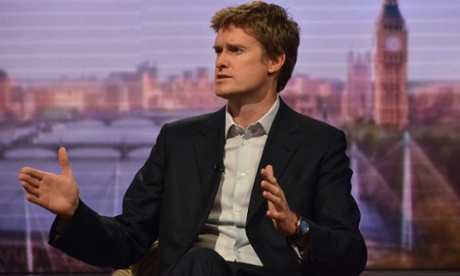
But when someone owns their past mistakes and appears to have learned from them and grown as a result, it is quite different. And so it is with the Labour Party and their approach to education policy while in opposition. Sure, they haven’t undergone a Road to Damascus conversion and mended their ways entirely – the suspicion that their preoccupation with equality of outcome lurks behind everything remains quite strong – but nonetheless I want to give credit where credit is due. And today, credit belongs to Tristram Hunt, Labour’s shadow Education Secretary.

This kudos comes on two fronts. Firstly, the Daily Mail reports that Hunt is repudiating some of Labour’s past educational priorities and actions whilst in government, in terms of pushing as many children as possible to just cross the “no longer an idiot” threshold for the benefit of statistics and league tables, but then failing to challenge them any further:

Labour created a culture of low expectations for state school pupils, Tristram Hunt, the shadow education secretary has admitted.

He said it was a ‘great crime’ that the last government had failed to pushed children more than simply aim for them to achieve a C grade at GCSE level.

He also admitted that exams had been dumbed down in recent years, saying ‘yes, there are elements of grade inflation’.

This is actually quite a significant admission from someone in the shadow cabinet, and the refreshing bravery deserves recognition. The enshrining of the “good” GCSE result as being a grade falling within the A* to C range has certainly created a perverse incentive to push as many laggardly students up into the bottom threshold whilst neglecting the needs of those who had the potential to achieve much more.

This willingness to look as past initiatives and admit mistakes in the field of education policy now makes Labour much more credible on this topic, and they have immediately stolen a march with their new proposal to license teachers in a bid to drive up professional standards. The Guardian reports:

In a sign of how Labour hopes to outflank education secretary Michael Gove on teaching standards, Hunt is to revive a plan the last government abandoned on the eve of the 2010 general election.

Teachers would have to show they are meeting the high standards and would be required to undergo training to update their skills.

Under Hunt’s plans, teachers would have their lessons assessed by other teachers in a system overseen by a new Royal College of Teaching.

As a society we often pay lip service to the importance of education and good teachers, but when it comes to standing behind that commitment, too often we have been found lacking. We claim to admire good teachers and value them, but do not compensate the best of them anywhere near adequately, and do not expect them to adhere to the professional codes of behaviour (as encapsulated by ongoing training and recertification) that are common in many other prestigious lines of work.

Indeed, Tristram Hunt goes on to make this very point:

Hunt insisted that his plans would raise the standing of the teaching profession. He said: “This is about growing the profession. This is about believing that teachers have this enormous importance. Just like lawyers and doctors, they should have the same professional standing which means relicensing themselves, which means continual professional development, which means being the best possible they can be.”

The fact that these proposals are coming from Labour and not the Tories also confers a immediate advantage in terms of winning backing from the teachers unions, which would be essential to their smooth rollout if ever the proposals became law.

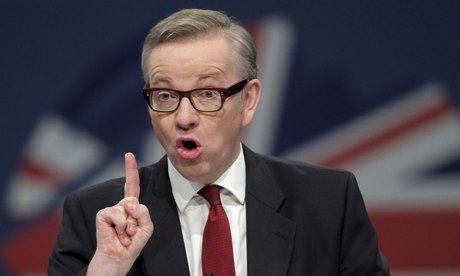
And crucially, from a purely political perspective its puts the Conservatives in the awkward position of having to either reject a potentially very sensible proposal to improve educational standards, or to adopt it and face cries of plagiarism. Rather despairingly, one has to wonder why Michael Gove’s Department of Education didn’t manage to think up a policy proposal such as this on their own.

Outmanoeuvered.
Outmanoeuvred.


If Labour ever showed the wherewithal to perform a similar trick on the subject of economic stewardship – admitting their past fault for growing the state to unsustainable levels and proportions of national output, thus making the pain of the recession so much worse for those people more reliant on the government, and acknowledging that some rebalancing is not only necessary but desirable – then the Tories might really be in trouble.

But I imagine there is a greater chance of it snowing in hell than there is of Ed Balls following Tristram Hunt’s lead any time soon.

In Defence Of Prince William

Yes, it's slow news season
Yes, it’s slow news season


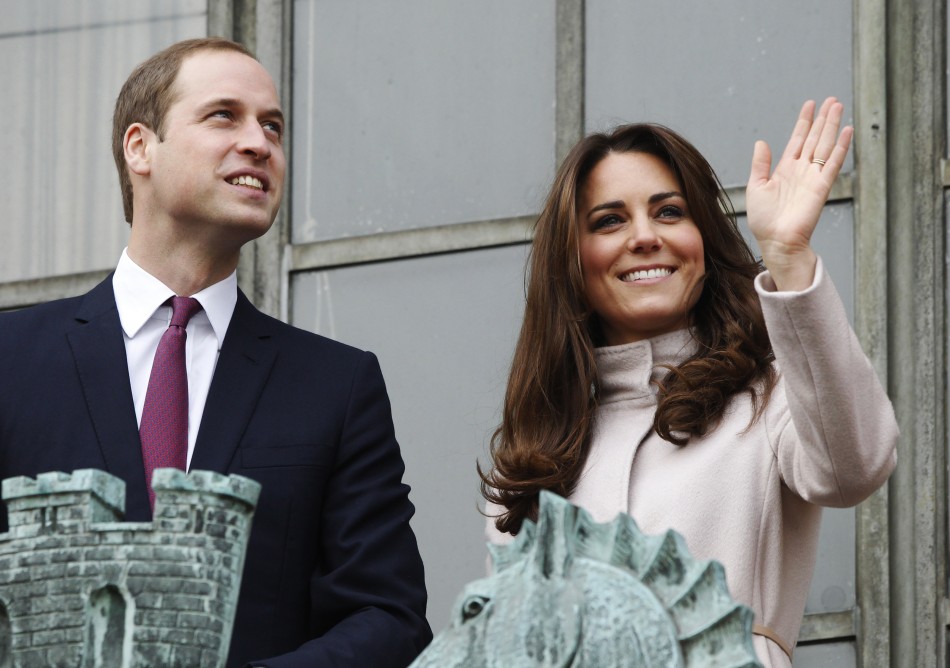
Having devoted considerable time to bemoaning his father’s various foibles and misdeeds on the pages of this blog, it feels somewhat unusual to be charging to the defence of Prince William today, but I do so because a lot of the faux outrage about the Duke of Cambridge’s admission to Cambridge University for what is essentially a privately-funded executive education course is entirely misinformed, off-the-mark and deserves rebuttal.

Perhaps I should not jump on someone who is still in university herself, but Melissa Berrill, writing in The Guardian (and therefore already doing much better than me), seems to have best epitomised the non-story nature of the whole affair in her polemical piece entitled “William’s on his way – and Cambridge should be ashamed”.

The basic thrust of her argument is that all of the work she has done convincing people that Cambridge University is socially inclusive and not the walled-off preserve of the posh, entitled blue-bloods has been undone in a heartbeat, and all because William is coming to study. The horror!

I’d tell them that I’d been to the local state school, and explain that it isn’t like the old days at Cambridge any more. You can’t get in just because you’re rich, or because your dad knows the right people. The admissions system isn’t perfect, but nowadays they work extremely hard to make sure they admit students based on merit, not class or family connections.

It was a spiel that came easily to me, because I’d done it many times before; on countless open days and access visits around the country throughout my degree. It didn’t always convince people – some had an impression burned too deeply to change. But sometimes it did; sometimes it made a difference.

She then proceeds to throw her toys out of the pram:

I could, for example, have spent it [her time] smashing up restaurants in full evening dress. Or snorting champagne up my nostril through a straw. Or posting Facebook pictures of me lying on a bed of gold coins wearing a top hat. For all the difference it will now make, I may as well have spent it doing all these things – because my argument is now worthless.

This would be a great point, a devastatingly effective rebuke to Cambridge University and a nice little dig at the Bullingdon Club too – if only there were any element of truth and reason to it. But there is not, and Berrill torpedoes her own argument in the very next paragraph:

It doesn’t matter that he’s actually been admitted to a 10-week “professional” course whose admissions process doesn’t directly compare to the mainstream Cambridge one – not a single news outlet has bothered to make that distinction and, to the world at large, “William’s going to Cambridge” is the only message that will be taken away.

Now, I flunked out of Cambridge University half way through my Economics degree so maybe I’m not best placed to talk, but as someone who has successfully completed her undergraduate studies at that fine institution, should Berrill (and the many journalists and columnists who have uttered similar words of disapprobation) not be concerned precisely with the truth of the matter rather than the way that it may be erroneously perceived by others? Isn’t the pursuit of truth and knowledge kind of what the whole university and higher education thing is all about? Is Melissa Berrill really saying that because something quite innocent might look bad, we should avoid doing it? And has she herself not aided and abetted  the “news outlets” and the “world at large” in their misunderstanding by joining in this outrage at a totally false straw man argument (that Prince William has somehow snuck in and snatched the coveted university place of some plucky, honest-to-God, working class, AAA-achieving eighteen year old for his own, lazy ends)?

Berrill rages:

Admitting Prince William is an insult to every student, whatever their background, who got into Cambridge by getting the required A-level or degree results. It’s an insult to every student whose A-levels and degree are the same or better than his, and who didn’t get a free pass to Cambridge in spite of them.

Admitting Prince William to this custom-made executive education course is not a particular insult to anyone, and to argue that it is insulting to students in the main academic programme is akin to saying that me watching an Olympic football game at London 2012 was a slap in the face to the Olympic athletes who worked so hard to earn the right to represent their respective countries in the Games. Not so. Just like me at the Olympics, William will be going there to spectate, to soak in the atmosphere, and – crucially – will pay his own way. Just as I did not walk out of Wembley Stadium with a gold medal around my neck, so William will not be walking out with a coveted Cambridge University degree.

This not-so-subtle nuance seems to have evaded the highly educated Oxbridge mind of Melissa Berrill.

If there is to be any outrage, why not get worked up about the fact that it appears that the University’s Cambridge Programme for Sustainable Leadership has custom-made the course for the benefit of one person? Why not check whether or not there is any precedent for offering this type of course to a small group of private individuals, and ensure that the fee payable to the University by William will be the market rate that anybody else would be expected to pay? Why not – if you really want to push the boat out – have a debate about whether executive education is a good thing at all, about the merits of allowing rich and fat executives from FTSE 100 companies to pay lots of money to spend a few weeks on campus getting drunk and hooking up, and walking away with a certificate bearing the name of a famous academic institution?

Why have we not seen these lines of enquiry and debate play out in the newspapers instead of the William-gate or Cambridge-gate style narrative that we have been fed instead? Perhaps because to do so would require some real, actual research and journalism, as opposed to a simple good vs. bad, black/white debate designed to polarise and sell papers.

If we are going to object to something, let’s keep the arguments tight and to the point, not vague and fatuous. Those protesting Prince William’s enrollment at Cambridge have failed this test.

Edumacation, Edumacation, Edumacation

Higher education, solved.


The Guardian trails a new Labour proposal for “debt-free degrees” for up to 50,000 students per year, an idea which may well end up in the Labour party’s 2015 general election manifesto. The Guardian’s political editor, cheerleading the idea, claims that this scheme will “tailor university education more closely to the needs of business and young people”. Of course, it doesn’t take long for the enquiring mind to begin picking holes in the concept.

From the top:

Under the scheme, people in employment will be able to study for a degree relevant to their existing and future work, with the costs being paid jointly by government and their employers. The degrees would carry no fees and the in-work students would receive a wage or training allowance from their employer during their period of study.

There is a world of difference between a short course designed to brush up an employee’s computing skills, or even a slightly longer and more involved course in a field such as project management, and the rigorous demands of a university degree. Whilst an employer may see the immediate short-medium term benefit in paying for their staff to undertake the former on company time, it would be a generous boss indeed who would take the dual hit of lost working time and course fees to fund a whole degree.

The costings for the proposal are worked out with the astonishing level of detail and realism that we have all come to expect from Labour under Ed Miliband’s leadership:

Denham, who will outline the plans in a lecture to the Royal Society of Arts on 16 January, says the government’s financial contribution will be found by redirecting money currently spent on writing off unpayable student debt from fees and maintenance loans, and on student grants.

I have read this sentence through several times, and if it makes any more sense to a reader than it does to me, I would love to have the translation in plain English. You don’t “spend money” writing off debts from unrepayable student loans. And if John Denham, the policy’s champion, is suggesting that the £3bn shortfall between expected and actual repayments on student loans over the course of the next parliament can be easily resolved by tracking down students who have moved abroad and shaking them down for money, or by waving a magic wand and making graduates suddenly earn income above the £21,000 threshold so as to become eligible to make repayments, then I will take this as just another sad sign that Her Majesty’s Loyal Opposition has no grip on economic reality or the way that public finances work. Whenever we are told that the money for some policy “will be found by redirecting money currently spent on…”, I take it as seriously as I would if Denham told me that he would fund his policy through “efficiency savings”.

There is then, of course, the question of the nature and value of these new degrees, were they to be taught in the classroom. If, as the Guardian claims, they are to be closely “tailor[ed] … more closely to the needs of business”, the degrees are likely to be highly specialised, with much less transferability to other fields of work than more generalist degrees. Indeed, any sensible employer acting in their own interests would be almost certain to demand this – if you are going to pay for someone to get a degree, it is in your interests as an employer to make sure that that degree will be of maximum use to the employee whilst they are working for you, and as little use to them as possible when they come to take that degree and use it elsewhere – so as to act as a deterrent to leaving.

But seeing only the positives, Denham imagines that business will embrace the idea of paying for their employees’ qualifications:

Denham says the proposals will prove attractive to many businesses as they will save money on recruitment and retention, having trained handpicked staff. They will also save on in-house training costs. Employers and students will also be able to shape the courses to ensure they are relevant.

But apparently under the precursor to this policy, employers were expected to contribute £3000 towards tuition costs, and would also be expected to pay a wage or training allowance to their employees as they studied “intensively over two years” or longer. I find it hard to imagine that any savings on recruitment, retention or in-house training will be sufficient to make incurring these expenses an attractive option.

The Guardian further joins the Labour Party in proclaiming that the new policy proposal is in direct response to demand from industry and the private sector, as the article continues:

The ideas are likely to be welcomed by business groups. Last July the CBI said both universities and businesses needed to be more imaginative in the way they provided high-quality education that was relevant to the country’s economic needs, and affordable for young people.

The accompanying link in the Guardian article in support of this assertion does not work, which is probably no accident. Although the CBI and others are right to acknowledge that the standard A-levels and three-year degree route is not sufficient to meet the recruitment needs of the British economy in 2014, this is a long way from a plaintive call for the kind of policy that John Denham wants to enact, and it is sneaky in the extreme for the Guardian to shoehorn in this unrelated quote from the CBI’s policy director:

Katja Hall, CBI policy director, said: “The UK needs to vastly increase the stock of workers with higher-level skills to drive long-term growth and stop us falling behind our competitors. We need to tackle the perception that the A-levels and three-year degree model is the only route to a good career.

Acknowledgement of this simple fact by the CBI is a good and obvious thing. Of course rewarding and well-paid careers can be achieved through many routes, and alternatives to the standard path should always be sought and encouraged where they could be of greater benefit to people. But to take this broad and nonspecific statement made by the CBI last year and try to bend it in support of a specific (and particularly ill-thought out Labour policy) is manipulative and disingenuous.

It does not bring me great joy to pick apart a policy supposedly intended to address a real problem – a significant and growing skills gap between the demands of industry and the abilities of those entering the workforce. But this proposal appears completely unworkable to me. In order to get business to embrace it in any large number, it seems to me that the the conditions would have to be so onerous – in terms of the narrowness of  the degree (more akin to a vocational qualification) and the period of time to which the employee is beholden to work for the employer following graduation – that no student in their right mind would sign up. And if Labour do get into government in 2015 and enact the policy in a way that is remotely appealing to potential students, the cost to the employer would be such that very few firms (aside from those wishing to curry special favour with the government in order to achieve other ends) would be likely to subscribe.

If anyone finds my thinking to be flawed, or can argue that this Labour proposal is anything other than an empty, unworkable vessel designed to launch the phrase “debt-free degree” into the public consciousness ahead of the next election, I would be very keen to hear from you.

Use the comments section, as usual.