The T–Word

David Cameron - George Osborne - EU Referendum - Brexit - European Union - Democracy

We are fast running out of measured words to describe the character and behaviour of the prime minister and his chancellor during this EU referendum campaign

There is one word which thinking Brexiteers will do almost anything to avoid using to describe an opponent, however much they may want to: the T-word. While sanctimonious, virtue-signalling EU apologists are often quite happy to sneer at eurosceptics and make baseless charges of xenophobia and racism (accusations which can do grave real-world reputational damage in the modern world), Brexiteers are generally much more reticent to to deploy their own nuclear word.

Why? Because it sounds hysterical. To use the word in seriousness or in anger suggests that we have lost our minds, that we are deliberately exaggerating, that we and our arguments should not be taken seriously. And so we suppress it. We sit on the T-word, lips clamped shut even as Remainers paint an offensively false picture of Britain as a weak an ineffectual nation, and even go as far as suggesting that other European nations would be right to “punish” us for daring to reject their vision of a common European state.

But it is becoming increasingly difficult to avoid levelling the T-word at some – though by no means all – people on the Remain side. In fact, some people, through their abhorrent and irresponsible behaviour, seem to be going out of their way to live up to the word, to goad us into saying it. And sadly, senior members of the current government – including David Cameron and George Osborne – can now be included in that number.

As the Remain camp continues to slide in the polls, we have already seen David Cameron pledge – for no good reason at all – to take Britain out of the single market as well as the European Union in the event of a Leave vote, promising to implement the most irresponsible form of Brexit as a pure act of spite rather than through any democratic imperative (the referendum asks whether we want to leave or remain in the EU, not the EEA). And he followed that up with a shameful attempt to scare Britain’s pensioners.

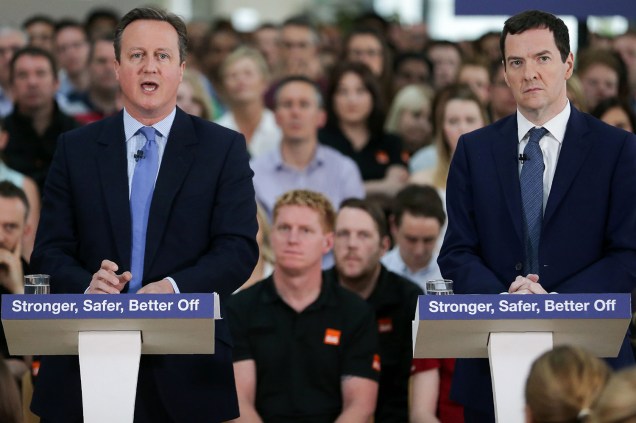
But that is nothing compared to George Osborne’s indefensible decision to attempt to scare the British people into voting Remain by releasing a mocked-up “emergency budget”, detailing a catalogue of arbitrary and vindictive actions a future Conservative government would implausibly take to punish the British people for defying his will and voting to Leave the EU.

The BBC reports:

In the latest of a series of government warnings about the consequences of a vote to leave, Mr Osborne shared a stage with his Labour predecessor, Lord Darling, setting out £30bn of “illustrative” tax rises and spending cuts, including a 2p rise in the basic rate of income tax and a 3p rise in the higher rate.

They also said spending on the police, transport and local government could take a 5% cut and ring-fenced NHS budget could be “slashed”, along with education, defence and policing.

[..] Mr Cameron said “nobody wants to have an emergency Budget, nobody wants to have cuts in public services, nobody wants to have tax increases,” but he said the economic “crisis” that would follow a vote to leave could not be ignored.

“We can avoid all of this by voting Remain next week,” he told MPs.

This is blackmail, pure and simple. This is the prime minister of the United Kingdom threatening to inflict arbitrary and deliberate damage on the country in retaliation if we vote against him in the EU referendum.

Ambrose Evans-Pritchard is apoplectic:

George Osborne is disqualified from serving as Chancellor of the Exchequer for a single week longer.

Whatever his past contributions, his threat to push through draconian fiscal tightening in an emergency Brexit budget is economic madness, if not criminal incompetence.

Such action would leverage and compound the financial shock of Brexit, and would risk pushing the country into a depression. It violates the known tenets of macro-economics, whether you are Keynesian or not.

Alistair Darling, the former Labour Chancellor, has connived in this Gothic drama. He professes to be “much more worried now” than he was even during the white heat of the Lehman crisis and the collapse of the Western banking system in 2008.

So he should be. The emergency Budget that he endorses might well bring about disaster.  The policy response is the mirror image of what he himself did – wisely – during his own brief tenure through the Great Recession.

We all understand why George Osborne is toying with such pro-cyclical vandalism – or pretending to – for he is acting purely as as partisan for the Remain campaign. He has fatally mixed his roles. No head of the Treasury can behave in this fashion.

Absolutely. And the figures on which George Osborne has cooked up his Armageddon Budget are of course based on the most extreme and unlikely  Brexit scenarios, the Treasury having dropped the practical and popular interim EFTA/EEA option from its analysis because this Brexit method fails to bring about the kind of telegenic economic disaster the Remain campaign need for their propaganda.

But even if it were not in response to an incredibly unlikely and pessimistic set of economic assumptions, Osborne’s emergency budget would still be hugely irresponsible, as Evans-Pritchard points out:

This is a fiscal contraction of 1.7pc of GDP. It would hammer the economy just as it was reeling from the immediate trauma of a Brexit vote and the probable contagion effects across eurozone periphery, already visible in widening bond spreads.

It would come amid political chaos, before it was clear what the UK negotiating strategy is, or what the EU might do. It would be the worst possible moment to tighten.

The Treasury has already warned that the short-term shock of Brexit would slash output by 3.6pc, or 6pc with 820,000 job losses in its ‘severe’ scenario. The Chancellor now states he will reinforce this with austerity a l’outrance.

It is a formula for a self-feeding downward spiral, all too like the scorched-earth policies imposed on southern Europe during the debt crisis.

A funny time for George Osborne to finally discover fiscal conservatism, one might observe.

While many conservatives have rightly chafed at Osborne’s inability to get to grips with public spending, none but the flintiest ideologue would celebrate a significant, deliberate fiscal contraction at a time of political uncertainty and sensitivity. Osborne’s critics are right to castigate him for his profligacy with the International Development budget and unwillingness to tackle the real drivers of government spending (yes, including pensions), but fulfilling every single demand on the fiscal conservatives’ wish list in one spiteful go – and at the wrong moment – would be deliberate vandalism, pure and simple. And it shows that George Osborne is thinking politically at a time when Britain’s chancellor of the exchequer most needs to act like a statesman.

It is also astonishing that a chancellor who has been perfectly happy to falsely claim to be “paying down Britain’s debts” while actually still running a persistent budget deficit and adding greatly to the national debt should now propose to deal with any economic shock resulting from Brexit exclusively through fiscal tightening and not with increased short term borrowing. Again, this is only more evidence that Osborne has absolutely no core convictions or political philosophy of his own, save furthering his own power and thwarting his political enemies. Certainly the idea that the chancellor has somehow discovered strict fiscal conservatism now out of genuine principle is absolutely laughable.

But of course, this “emergency budget” is a political ruse, not a work of policy. For starters, in the event of a Leave vote, both the prime minister and his sorry chancellor of the exchequer will be sent packing from Downing Street back to their home constituencies almost immediately, to the sorrow of absolutely nobody. The Conservative Party will not tolerate their presence a moment longer. But more to the point, even George Osborne doesn’t believe his own apocalyptic predictions.

As Ambrose Evans-Pritchard points out:

There are quite enough dangers in Brexit already without adding more. What the Chancellor should do is the exact opposite: prepare an emergency stimulus of 1.7pc of GDP if need be,  targeted at critical infrastructure and strategic investment that pays for itself over time.

The money should be borrowed. As of today the Treasury can raise funds for five years at 0.66pc, for ten years at 1.12pc, and for thirty years at 1.94pc. These are lowest yields in our history, and they have been falling steeply over the last three weeks.  There is no sign yet that Brexit will trigger a ‘Gilts strike’ or a run on the British debt markets.

Mr Osborne could have taken advantage of these give-away rates to build up a war chest for any post-Brexit turmoil. He has not done so. Over the last three months the Government has raised just £36bn of its estimated needs of £131bn for this financial year. Either he is negligent, or he does not believe his own doom scenario.

[..] It takes a nuclear bomb or the Bubonic Plague to bankrupt a developed country that borrows in its own currency, has its own central bank, and has deep layers of wealth. Mr Osborne has not yet conjured either.

(Where I depart from Ambrose’s excellent response to George Osborne is his call for a national unity government drawn from all the parties in the event of a Leave vote, to guide us through the “turmoil”. To my mind, this could only make things worse, diluting the strategic direction of government by weighing it down with the statist, centralising baggage of the Green Party and SNP – though I concede that a unity government would help to dispel John McDonnell’s “Tory Brexit” line.)

So here we have a chancellor of the exchequer citing economic scenarios he does not believe (as evidenced by his lack of preparation for them) to produce a vengeful and counterproductive fictional budget in an attempt to frighten and bully the British people into abandoning their desire for democracy and self-government outside of the EU.

Brendan O’Neill’s response is best, condemning the Left’s complicity in this Cameron and Osborne-led campaign of intimidation:

Today in Kent, the establishment united, across party lines, to tell us that they will have no choice but to financially punish us if we vote to leave the EU. There will be severe budget cuts if you people vote for a Brexit, says Osborne. In short: we’ll hurt you, we’ll make your lives harder, we’ll inflict economic pain on you if you make the wrong political decision. How the left can line up behind this elite crusade that has now descended into blackmailing the poor and the plebs to support the EU “or else” is beyond me. The left has been dead for a long time, but its backing of the EU is the stake in its heart — after this it won’t even be able to pull off its zombie act.

So, back to that awkward T-word.

The Oxford English Dictionary defines it as “the crime of betraying one’s country”, or “the action of betraying someone or something”. If you were, say, the prime minister of the United Kingdom, that “someone or something” might reasonably include the British national interest and the wishes of the people to be represented and served honestly and honourably by their government.

David Cameron and George Osborne wish Britain to remain part of an ever-more tightly integrating, expressly political union whose ultimate intention is to merge the countries of Europe into a common state.

David Cameron promised to extensively renegotiate the terms of our membership of the European Union but came back with less than nothing – a reaffirmation of the status quo, contracted not with the EU but with current heads of government, whose successors are in no way beholden to honour what little was promised to Britain.

David Cameron, George Osborne and their allies in the Remain campaign have used every trick in the book to threaten, deceive and coerce the British people into voting to stay in the EU. They have abused the bully pulpit of government, ignored Electoral Commission recommendations, produced and distributed taxpayer-funded propaganda, peddled in subliminal messaging techniques to influence people to vote Remain, misrepresented what the European Union really is and misrepresented their opponents.

And they did all this while supposedly serving their country – Cameron and Osborne as prime minister and chancellor respectively, and many of their Remain allies as fellow MPs, all of whom also swore the parliamentary oath.

I have put off using the T-word on this blog, thus far – mostly because while I am but a mere blogger, I do still want to be taken seriously and have my ideas and opinions listened to rather than rejected as the rantings of a blind partisan.

I will again put off using the T-word today, even though there is no longer any doubt in my mind that the word is justified when used to describe specific people and elements of their conduct during this EU referendum campaign.

But the reckless behaviour of the prime minister and his chancellor of the exchequer now contravenes their fundamental duty to the people, not to mention the basic standards of human decency; even the most ardent Remain supporter will surely look back with shame on what is being done to tilt this referendum in their favour.

On this present trajectory, it may not be long before whole swathes of the British public (justifiably) begin openly using the T-word as an accusation levelled at the two most powerful political figures in Britain, as well as many of those who might plausibly replace them.

And if we reach that acute point, we will face an unprecedented crisis in this country.

 

European Union - United Kingdom - Britain - Flags

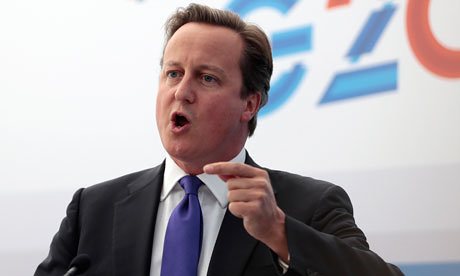
Top Image: The Sun

Support Semi-Partisan Politics with a one-time or recurring donation:

Agree with this article? Violently disagree? Scroll down to leave a comment.

Follow Semi-Partisan Politics on TwitterFacebook and Medium.

David Cameron: Portrait Of A Deceitful Charlatan With No Redeeming Qualities

Apparently there is panic in Number 10 Downing Street and among the slavishly pro-EU establishment. Good. They have waged a contemptible, negative and deceitful campaign, and whether or not it prevails on June 23 the hearts, minds and consciences of all those involved richly deserve to be troubled

Having done everything but fill in all of the ballot papers himself to ensure a “Remain” vote on 23 June, at this point in the unevenly fought EU referendum campaign we might expect to see a bit of magnanimity or statesmanship from the prime minister as he coasts toward the closing stages.

But the polls have tightened unexpectedly as the British public rightly begin to suspect that the near-unanimous hysterical screeching from the establishment in favour of Remain sounds more like naked self-interest and wretched pessimism about Britain than a realistic warning about what might happen in the event of Brexit. And this has caused David Cameron – a notably weak strategist only capable of thinking one step ahead, unlike his gifted general election campaign manager – to panic, and start behaving in a most un-prime ministerial manner.

Three interventions in particular mark out the descent of David Cameron from oleaginous, confident salesman to the nation’s Bully in Chief – the impromptu rooftop press conference at which Cameron openly accused ministers in his own government of knowingly peddling falsehoods, the statement that Cameron would take Britain out of the single market in the event of a “Leave” vote despite leaving the EEA not being on the ballot paper, and his shameful attempts to bully and coerce Britain’s pensioners, effectively holding a gun to their heads and commanding them to vote Remain or see their pensions fall.

The Spectator’s Isabel Hardman says of Cameron’s panicked rooftop press conference:

David Cameron doesn’t do that many press conferences at all, despite promising in Opposition that he would hold a monthly one, and so when he summons hacks to the roof of a hotel at short notice, you know that there is a Crisis that the Prime Minister is taking Very Seriously indeed.

Cameron then proceeded to list six ‘complete untruths to the British people’ that the Leave campaign was guilty of producing. These were that the UK is liable to bail out eurozone countries, that our rebate is at risk, that we have given up our ability to veto EU treaties, that we have no ability to stop EU spending from going up, that we are powerless to stop Britain being forced into an EU army and that we would save £8bn if we left the EU.

Were these untruths really so heinous that he was forced to hold a press conference at short notice? Or was it, as one of the journalists sitting on the roof with the Prime Minister suggested, that the Leave campaign currently had the momentum and the debate was all about immigration, which damages Remain? Cameron replied:

‘Look, I was watching the news last night and it just came over to me so clearly that there is such a contrast between the weight of independent expert opinion that wishes our country well but is giving us an unvarnished view of the decision we could be taking, there’s a massive contrast between that – respected, independent experts warning us about lost jobs, about instability, about a smaller economy, about the effect on our country. The contrast between that and a series of assertions from the Leave campaign that just simply aren’t right…’

So the Crisis was that the Prime Minister had been watching the news last night.

Some archly dry humour there from Isabel Hardman. When The Spectator openly mocks a Conservative prime minister in this way, you know things are bad.

Cameron’s specific counterpoints are immaterial here – they were aimed at the ravings of the official Vote Leave campaign, which does not speak for all Brexiteers. But what is telling is the fact that David Cameron – a man who promised that he “ruled nothing out” in his renegotiation with the EU while actively colluding with business leaders to plan the eventual Remain campaign, and who then presented the empty gift bag given to him by Brussels as a deal which had fundamentally “reformed Europe” – is willing to go on live television and accuse his Brexit-supporting ministers of being liars.

More insidious than this, though, was the way that David Cameron pledged on the Andrew Marr show last weekend that in the event of a Leave vote he would seek to take Britain out of the single market, despite this being just one (incredibly sub-optimal) mode of Brexit, and the referendum question saying nothing at all about the single market or EEA.

Dr. Richard North of the eureferendum.com blog remarks on:

[..] an extraordinary interview on the Marr Show yesterday which had David Cameron pledging to take the UK out of the Single Market in the event of a Brexit vote. This was despite Andrew Marr suggested that we could stay in, with Cameron refusing to entertain the idea, “because the ‘leave’ campaign had specifically rejected that option”.

The segment of the interview started with Andrew Marr reminding the Prime Minister that he had promised to “carry out the wishes of the British people” if we vote to leave. The trouble is, Marr then said, is that “the wishes of the British people” is a rather indistinct thing – it’s a blunt “yes” or “no”.

Cameron responded by saying that if we vote to leave the Government would carry out the instructions of the British people. That, Marr averred, would put the Prime Minister in “a very strange position”. He’d be doing things like introducing an Australian-style points system that he didn’t believe in. As for, the Single Market, though, Marr said, “there is room for a Prime Minister to negotiate that”.

It was here that the role of Vote Leave came to the fore. “I think one of the most important moments in this campaign”, Cameron said, “was when the ‘out’ campaign said they wanted to leave the Single Market”. He continued: “They didn’t have to make that choice. They’ve made that choice. And what the British public will be voting for … would be to leave the EU and leave the Single Market”.

What the Prime Minister is doing, therefore, is using Vote Leave as a proxy for the entire British public. However, this is a small group of individuals with singular views, put in place by an unelected Electoral Commission to carry out the role of lead campaigner. This can’t in any way be taken to represent the will of even those who favour Brexit – much less the entire British population.

Dr. North is absolutely right to emphasise firmly that Vote Leave do not represent the ideas and wishes of all Brexiteers. They were not elected to represent us, and their most prominent figurehead (Boris Johnson) had not even decided which side he was going to support until a couple of months ago.

Just because the same idiots who stubbornly persist in peddling their “£350 million a week for the NHS” falsehood in the face of endless rebuttals and fact checks have airily decided that Britain should not Brexit to an interim state preserving single market access in no way precludes that option. As Richard North reminds us, the ballot paper asks whether we want to leave or remain in the European Union – nothing more and nothing less. We should know, we spent long enough haggling over the wording at the time.

All the evidence suggests that if Britain leaves the EU without securing an “off the shelf” deal to ensure continuity of access to the single market (while fully extricating us from political union, which is what the referendum is all about) there will be at least some negative short term economic consequences, as no new trade deals can possibly be negotiated in the two-year window provisioned in Article 50 of the Lisbon Treaty. By contrast, Brexiting to an interim EFTA/EEA arrangement (the so-called Norway Option) would maintain our full access to the single market in the short to medium term while we work on a better bespoke solution for Britain.

The attractiveness of the interim EFTA/EEA route is self-evident: Britain would immediately be free of ever-closer political union and democracy would be restored, while maintaining single market access (for which we would pay) would return our relationship with the EU to the state that people believed they were voting for in the 1975 referendum. Therefore, it is unsurprising that Remainers are desperate to slander and dismiss the option as unworkable – it represents dynamite which would obliterate their entire case for continuing to suffer the EU.

But while David Cameron’s eagerness to problematise the Norway Option is understandable politically, for the prime minister to flat-out state that he would not pursue this option and instead take Britain out of the single market (despite no mandate to do so from the electorate) is bordering on threatening self-harm. Any Brexit model not involving keeping interim access to the single market would inevitably come with higher risks and potential economic costs than adopting the Norway Option. By ruling it out, David Cameron is essentially threatening the electorate, saying that if we vote Leave he will pursue the most disruptive and costly form of Brexit within his power, purely as an act of spiteful vengeance.

Just stop and think about that for a moment. David Cameron has effectively told voters that if we vote to leave the European Union, he will sneer “your wish is my command” and then set about doing so in the most reckless and ill-considered manner possible, just to teach us a lesson. The prime minister of this country has just threatened  our own national interests on live television. Is that something which we should just blink and accept, writing it off as “fair play” in a hard fought referendum? I profoundly disagree. I think that it is contemptible behaviour, the kind of action which immediately disqualifies the perpetrator from holding further public office.

And if this still wasn’t enough, David Cameron then went from threatening the British people in general to attempting to scare Britain’s older voters in particular, with despicable threats that Brexit would automatically and inevitably lead to pension cuts.

Tim Stanley, rightly outraged, calls this what it is – blackmail:

Project Fear has turned into Project Frightened. Remain are losing ground in opinion polls and running scared. So what do they do? Go positive? Make a better, brighter case for the EU? No. They double-down and turn to blackmail.

That’s the only word that suits David Cameron’s threat that Brexit might lead to pensions being cut, made today in this newspaper. His logic is that Brexit will create a gap in the finances that will have to be filled somehow. The triple lock on pensions, guaranteeing rising incomes, would probably have to picked. Even if it were a moral necessity to help the aged, it would suddenly become unaffordable.

This is rubbish for two reasons. First, it’s based on the Government’s assumption that Brexit will lead to a collapse in trade that will wipe billions off GDP. The Treasury forecasts that this is based on are alarmist and absurd – they suggest a retraction worse than the Great Depression. Businessmen who actually deal with Europe every day, such as Sir James Dyson, report that they don’t see such a risk and are confident that Britain will continue to grow.

Second, Cameron suggests that the Government would have no choice but to cut pensions – as though the invisible hand of the free market would be clasped around its throat. Nonsense. It would face spending choices and, Cameron is telling us, it would choose to cut pensions. Much as the Government has chosen in the last few years to cut the highest rate of income tax on the rich or chosen to cut benefits for the poor. If Brexit did trigger a recession, the Government would once again have to do what it’s supposed to do and make budget decisions based upon its political preferences. I humbly suggest it chases the tax evaders and closes some loopholes before it bleeds pensioners dry.

And Stanley’s devastating conclusion:

The bottom line is this: the Prime Minister has moved from warning the British people to threatening them. And picking on the elderly – some of whom are legitimately worried about the future – is one of the lowest things you can do in politics.

At this point in the EU referendum campaign we are used to seeing the European Union portrayed by its cheerleaders and apologists as a controlling, abusive spouse that would rough us up without hesitation if we try to leave its cloying embrace. But now, the prime minister himself is behaving like an abusive spouse, essentially pushing Britain’s pensioners up against the wall with his hand on their throat, pointing to the kitchen knife on the counter and saying “I don’t want to do this, but you’ll leave me no choice if you cross me”.

What utterly despicable and unmanly behaviour from our prime minister. What debased, fearmongering garbage this man is capable of spewing in order to get his way in the EU referendum. David Cameron’s legacy as prime minister has long been in question, having governed for five years as part of an unmemorable centrist coalition and latterly as a party which blind observers might guess to be the work of Blue Labour, if not Blair’s New Labour. But now that legacy has crystallised – Cameron is the prime minister who betrayed conservatism and bullied his own people, preferring to serve the interests of the EU than those of his country.

David Cameron doesn’t have a conservative bone in his body. He doesn’t have an ideological bone of any kind, and from his craven behaviour in this referendum campaign it is quite clear that he lacks a backbone, too. And like a common school bully, he is willing to throw the full weight of his office and government around, breaking conventions and standards of common decency left, right and centre as he seeks to gain every inch of advantage.

Whether it is conducting a blatantly fraudulent “renegotiation” and presenting the status quo as shiny new baubles he secured from Brussels, calling the referendum implausibly early against the advice of the Electoral Commission, spending taxpayer money on a one-sided propaganda leaflet, sending out voting advice guides which subliminally encouraged people to vote Remain, winning over prominent Remain supporters with government jobs and official honours, cravenly failing to take part in a single proper televised debate, misrepresenting his opponents, attacking conscientious objectors to his slavish europhilia within the Conservative Party and isolating and targeting every possible voter group with customised attempts at scaremongering – now including this unsubtle warning to pensioners that he will spitefully lash out at them if they vote to Leave – in every way imaginable, David Cameron has debased himself and his office.

That’s why the prime minister’s days are numbered. At present he takes false courage from the fact that his normally sworn enemies in the Labour Party and on the generic Left are holding their fire in their shared desperation to keep Britain in the EU. But on June 24, Cameron will quickly realise that a good half of his own Conservative Party, together with everyone else in the country, will be straining at the leash to eject him from office, strip him of the bully pulpit he has so abused, and send him marching barefoot back to Witney in sackcloth and ashes.

And such is the amount of political capital and personal goodwill Cameron has squandered, barely a single person will come to his defence when the inevitable party leadership coup takes place. In the minds of many people – now including this blog – whether his successor is just as bad (i.e. Boris Johnson) is almost immaterial. The pleasure of seeing such an arrogant and dishonest man as David Cameron driven from power in disgrace, his reputation rightly in ruins, will be its own reward.

There is a legitimate and intellectually coherent case for Britain remaining in the European Union, but David Cameron has not made it. In fact, when it comes to the rarely heard (in this country) principled euro federalist case, its proponents all seem to have been abducted and held far away from any television studio so that they don’t open their mouths and drive thousands more people into the Brexit column.

Whether the prime minister is among their number is not known. It is possible that the man is catastrophically misguided and actually believes some of the nonsense he has spewed about securing a “better deal” for Britain, and that Britain could somehow prosper as a country inevitably on the margins of an ever more tightly integrating eurozone. Perhaps.

But either way he has not been honest with the British people. Worse than that, though, he treats the people with open contempt. Some politicians lie because they fear the people, but not so with Cameron. David Cameron lies because he despises the people, holds their intelligence in low regard, and is more than willing to alternately deceive, belittle and threaten the people in the service of his establishment masters and instincts.

This is a prime minister who, when given the choice between vociferously defending the national interest of his country against the EU elite or siding  with that same elite and bullying his own people into submission to their will, gladly chooses the latter course of action every single time.

There are few words strong enough to adequately describe the prime minister’s odious character and behaviour as revealed over the course of this EU referendum campaign – certainly none which I am willing to publish on this blog.

Which is why I am ending this piece here, in utter disgust at the conniving, arrogant, untrustworthy and weak approximation of a man presently in charge of our country – before I say something that I might later come to regret.


David Cameron Patriotism

European Union - United Kingdom - Britain - Flags

Agree with this article? Violently disagree? Scroll down to leave a comment.

Follow Semi-Partisan Politics on TwitterFacebook and Medium.

Okay, Let’s Talk About Patriotism

David Cameron - David Miliband - British Museum - EU Referendum - Brexit - European Union - Patriotism

David Cameron thinks that Britain owes its limited greatness to the coiffured prancing of One Direction. This is a man who doesn’t know how to begin thinking like a patriot because he doesn’t appreciate the first thing about what makes Britain truly great

David Cameron spent much of his 20-minute grilling in last night’s damp squib of a television “debate” with Nigel Farage waffling on in the vaguest possible terms about patriotism.

Specifically, the prime minister wheeled out almost the identical meaningless phrases that he always uses when he finds himself scrambling to recover his footing – like when he failed to win an outright parliamentary majority in 2010, and when faced with worrying poll numbers in the 2014 Scottish independence referendum.

He then advanced the rather surprising argument that the way in which we might best show our patriotism and love of country is to vote for its continued subsummation into that giant self-help group for countries who have lost their mojo known as the European Union.

The Daily Mail summarises Cameron’s basic pitch:

The Prime Minister acknowledged that sometimes the EU “can drive me mad, it is a bureaucracy, it is frustrating” but “walking away, quitting, would reduce our national influence, would reduce our economy, would reduce our say in the world and as a result would damage our country”.

He told the audience: “You hear a lot of talk about patriotism in this referendum. As far as I’m concerned I love this country with a passion, I think we are an amazing country and I say if you love your country then you don’t damage its economy, you don’t restrict opportunities for young people, you don’t actually isolate your country and reduce its influence in the world.”

Warning that Brexit could lead to Scotland separating from the UK he said: “You don’t strengthen your country by leading to its break-up. So I’m deeply patriotic, but I think this is a case for a bigger, greater Britain inside a European Union.”

Urging voters to think of the next generation he said: “I hope that when people go to vote on June 23 they think about their children and grandchildren, they think about the jobs and the opportunities they want for them, the sort of country we want to build together and they vote to say ‘we don’t want the little England of Nigel Farage’, we want to be Great Britain and we are great if we stay in these organisations and fight for the values we believe in.”

He added: “Leaving is quitting and I don’t think Britain, I don’t think we are quitters, I think we are fighters. We fight in these organisations for what we think is right.”

This blog’s response to being labelled a “quitter” for wanting to leave the European Union is here.

Meanwhile, Tony Edwards of The Brexit Door blog picks up on the cognitive dissonance which must necessarily be involved in thinking that fearfully remaining in a stultifying regional political union rather than engaging with the world in the same way as every other advanced country on the planet outside of Europe is somehow the “patriotic” thing to do.

Edwards writes:

The Prime Minister is losing the debate on the EU – and so yesterday (7th June) he missed the funeral of Cecil Parkinson to attend a hurriedly arranged press conference in the run up to his appearance with Nigel Farage on ITV.

It’s not the first time we have heard this rather fatuous appeal to patriotism, this form of words first appeared late last week, but it is the polling that has driven this level of rather empty rhetoric. If you leave the EU, he says, you are a “Quitter” who doesn’t “love the UK”.

This was always the inevitable end for this campaign, this descent into pure nonsense. The trigger for the press conference was no doubt a mixture of things – the polling across the weekend, the Newsnight programme on Monday, and the recent articles in the Telegraph by both Allister Heath and Ambrose Evans Pritchard which have been very optimistic on the EEA/EFTA route out of the EU. This has been allied with the reporting of the BBC that civil servants are already planning for Brexit via this route, something that the Prime Minister has often denied, but we have heard talk of since the beginning of the year.

While there is an honourable and intellectually coherent case made for staying in the European Union and deepening our commitment to join the EU in its ultimate journey toward common statehood, this is not a debate which is ever heard in Britain. Most of our politicians, recognising that publicly suggesting that Britain join France and Germany on their long-established path to common statehood would go down like a bucket of cold sick, are unsurprisingly reticent to talk about the EU in these terms.

And so in Britain those who wish us to Remain in the EU argue from a purely fear-based economic perspective, which makes the sudden attempt to portray this as the “patriotic” choice sound especially contrived false, as Tony points out:

On the pro EU side, there is an honourable argument to be made for travel towards a single European state. On the mainland, this is a debate that actually breaks into the open. Many on the continent wish for an EU that is totally federal, and challenges the USA as the world’s leading business superpower. Some wish it to have a similar military strength, and others wish to see the elevation of large block political entities as a step towards a ‘Star Trek’ ideal of a single world government. All of these are laudable aims, but they have never been expressed in the UK debate by those who wish to remain in the EU. The argument here is always about trade, economics and migration – the short term issues.

And Tony’s brilliant conclusion:

Democracy has hardly had a word uttered about it in this debate. The EU is the beginning of the end of the rather short democratic experiment in Western Europe. For most of us, full suffrage is just less than a century old – the first truly democratic election general election in the UK was in 1929, an election which returned Ramsey MacDonald to power as the first Labour PM of a functioning Labour government. By 1961, our politicians were already looking to remove the power of the people by exporting it to the newly formed EEC, fully aware that its design was for a technocratic Europe rather than a democratic one.

So the experiment in the UK lasted no more than 32 years before politicians tried to unravel it. That is something that bears serious thought. Do we prise democracy above all else, or do we simply want a life in which the big questions are not asked of us as a people, so we are left untroubled by them?

That is the real issue at stake in this referendum, and judging by many of the responses I have seen, especially from younger people, there is a lack of willingness to engage with the deeper issues, something mirrored by the political class which plays only to the gallery.

Precisely so. The deeper question facing us is do we even want to be informed and engaged citizens any more? Are we willing to educate ourselves as to the issues, participate in our democracy and bear our share of responsibility for the resulting triumphs, disasters and (more usually) bland stalemates? Or are we happier being passive consumers of goods and public services, occasionally bleating our outrage when we don’t get what we want but otherwise content for others to do the dull work of running the country (or continent) while we devote ourselves to watching re-runs of Britain’s Animals Got Strictly Come Bake-Off On Ice?

Citizens or consumers? That is the deeper choice facing us in this EU referendum debate. Are we willing to put in the work which comes with being the former in exchange for the reward of greater control over our lives, or are we willing to wave away the responsibility in the hope that doing so keeps mortgage rates and the price of Chinese flat-screen TVs that little bit lower?

So how would a patriot act? I think it is now clear which side represents the strivers and which side the quitters. In any case, one can normally take a good cue from the words and deeds of those currently in power, and David Cameron sets a shining example for us all.

The lesson for would-be patriots, therefore, is this: speak and behave in the polar opposite manner to David “don’t be a quitter” Cameron and you won’t go far wrong.


David Cameron – a prime minister whose esteem and ambition for his own country is so pathetically small that when given an open-goal to sell Britain’s evident greatness to the world he fell back on delivering a weak impression of Hugh Grant in the film “Love Actually”:


David Cameron Patriotism

European Union - United Kingdom - Britain - Flags

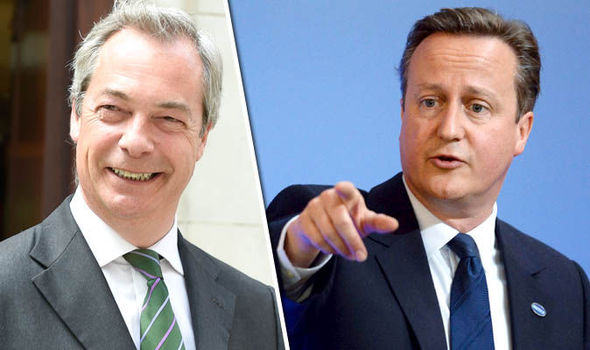
Top Image: Telegraph

Bottom Image: Guardian

Agree with this article? Violently disagree? Scroll down to leave a comment.

Follow Semi-Partisan Politics on TwitterFacebook and Medium.

If Wanting To Leave The EU Makes Me A Quitter, I’ll Wear The Label With Pride

https://www.youtube.com/watch?v=OAn6C-Oqqn8

Sometimes it is good to quit things. Like heroin, or the European Union…

The latest drivel to ooze from the Britain Stronger in Europe campaign is a recent clip of the prime minister, filmed at last week’s Sky News Q&A, doing his creepy “I’m so passionate” thing and suggesting that those of us who want Britain to leave the European Union to retake our rightful global role are “quitters”.

(Of course, back on planet reality there is no greater demonstration of being a quitter than for people to cling to their membership of that ragged self-help group for countries who have lost their self confidence known as the EU.)

But David Cameron insists that “Britain is a leader, not a leaver” – the logical extension of which is that we must doggedly persist with every single decision we ever make as a country, never acknowledging our errors and never stepping back from the precipice of decline, because to admit that past choices are no longer working for us (or never worked for us at all) would be to appear weak and indecisive.

What we should be doing instead, of course, is taking that “leading role in Europe” that David Cameron and his new best buddies on the political Left continually tell us is our rather dubious birthright.

And we shall show our leadership by cowering inside an anachronistic, decaying, dysfunctional and parochial regional political union dreamed up in the early 20th century and hopelessly inadequate to the challenges and opportunities of globalisation in the 21st.

It makes perfect sense, if you start from a position of rabidly and unthinkingly wanting Britain to stay in the European Union at all costs, and then carefully cherry-pick your facts and news sources in order to receive a constant stream of confirmation bias-inducing Utopian propaganda.

Stronger In, everyone!!!!!111!!!one1!


European Union - United Kingdom - Britain - Flags

Agree with this article? Violently disagree? Scroll down to leave a comment.

Follow Semi-Partisan Politics on TwitterFacebook and Medium.

EU Referendum Live-Blog: Cameron v Farage, But Not Really

David Cameron - Nigel Farage - Debate - ITV - EU Referendum - Brexit - Remain

Semi-Partisan Politics: EU Referendum Live Blog – Cameron vs Farage (but not really)

#ITVEUref

21:57

And that’s it. Cameron off the hook, with no major hits landed on him.

Combative and effective as usual from Nigel Farage, but nothing new to suggest a recalibration to reach the essential 50%+1 on Referendum Day. Once again Farage will have pleased his supporters and disgusted his detractors.

What an utterly pointless “debate”, and what a useless format. I sincerely doubt that anybody in the country learned a single new thing from watching that “showdown”. Generally weak audience questions served little purpose other than to tee up the usual soundbites we are tired of hearing from Vote Leave and Stronger In.

Weak moderation too – Julie Etchingham seemed to be imposing rules and time limits which existed solely in her head, and which often ended up cutting through some of the more eloquent and discursive points on each side.

All in all, this was yet another example of the media’s shameful, shallow coverage of the EU referendum – and the glibness and alarming lack of depth of those who lead us.

21:56

Polished, passionate and utterly vacuous.

21:54

David Cameron, directly asked by an audience member whether he is “finished” regardless of the result of the EU referendum, waffles and talks about anything and everything else.

But it is very hard to see Cameron continuing. This is a supposedly conservative prime minister who gladly, joyfully shares a platform with Labour and Green Party politicians campaigning for an outcome which most party members detest. There is no love for Cameron, who will go down in history as a second-rate version of Ted Heath.

21:53

More scepticism about David Cameron’s assertion that Brexit means “quitting”:

21:49

Good point by audience member. Hardly anyone can name their MEP. Because the European Parliament is a chamber representing a demos which does not exist. There is no European demos. Hardly anybody feels European first and foremost, above their national or regional identity. And yet the EU seeks to acquire all of the trappings and powers of statehood. Shouldn’t that be setting off alarm bells?

21:48

Contra Cameron, “quitting” is staying in the EU and giving up on the ability of the fifth largest economy and second (by some rankings) military power to influence world events.

21:47

True democracy is about whether you can fire the people in charge if they start to do a bad job or if the people want a change.

The British people can’t fire the people who run the EU. There is no democracy.

21:44

No, Cameron. We will not be like a country with our faced pressed against the glass while the EU makes key decisions on trade. On the contrary, by leaving the EU we will regain our voice, our seat and our vote at the true global top tables which set key regulations and standards – organisations like UNECE, the IMO, ILO, Codex Alimentarius and many others.

These are the true originators of much regulation today, and for as long as we are in the EU with the Commission acting as middleman, we have a limited voice and a diluted influence in shaping these regulations – even ones which could obliterate entire British industries at the stroke of a pen.

Here’s why the EU is no longer the “top table” for trade – and why David Cameron was just deceiving the audience.

21:41

Ooh, it’s NHS time. Everybody genuflect to our National Religion.

If you are basing your decision on whether Britain should leave or remain in the European union solely or primarily on the NHS, then you are doing it wrong.

21:40

I’m glad someone brought up Little England. Because it is the Remainers – with their declinist, pessimistic view of Britain – who have low horizons. Those who want Britain to be an independent country, fully participating in the true global top tables for trade (hint: not the EU) are the ones with bold, global aspirations.

21:38

Yes, David Cameron is doing his creepy “passion” thing again, in place of actually standing for things and leading:

https://twitter.com/elashton/status/740280699270365184

21:35

Audience member takes David Cameron to task for his fraudulent renegotiation. Everything Cameron is saying now is false – the “agreement” he reached was negotiated with EU leaders acting in their capacity as heads of state and government. Many of them will soon no longer be in power. The EU is in no way obligated to honour the pitiful commitments in that agreement.

21:32

Immediately David Cameron pivots to talking about the single market, not the EU.

But leaving the single market is not on the ballot paper – we can (and almost certainly would, in the event of a Leave vote) leave the political institution of the EU while maintaining access to the single market – the so called interim EFTA/EEA or Norway Option. Adopting this plan immediately negates every single pessimistic, fearmongering argument put forward by the Remain campaign, which is why they are so desperate to slander or dismiss it.

21:31

David Cameron’s turn.

Good first question from the audience. 6 months ago Cameron was saying that Britain could thrive outside the EU, yet now he says it would mean economic Armageddon.

Was the prime minister lying then, or is he lying now?

21:27

Well, that was Farage. A typically assured performance. Ukippers will be happy. Liberal leavers like this blog and members of The Leave Alliance less so, for obvious reasons – Farage doubled down on all of the illiberal and protectionist arguments while doing nothing to reach those not already convinced that Brexit is the way to go.

In terms of moving the needle of public opinion, Nigel Farage certainly hasn’t done himself any harm. But it has made it harder for those of us arguing for a more progressive case for Brexit to do our work.

21:25

Moderator of this referendum is worse than useless so far. Staying silent when she should guide the debate, cutting across when actual interesting points are being made.

21:24

Audience member rightly notes that there are many separate means of cooperation between EU countries independent of the EU. Brexit doesn’t mean severing ourselves from the continent of Europe or from schemes like Europol. By freeing ourselves from the EU’s political union we restore our democracy and are able to choose the areas and nature of our cooperation.

21:23

Waving a passport around is not going to get us from 40-45% of the vote to the 50%+1 the Leave side needs to win the referendum. People who get misty eyed about blue passports are already going to turn out and vote to leave. We need to reach undecideds with a comprehensive, safe offering, showing them that it is possible to leave the EU while minimising economic risks.

21:21

I’m not the only one to note the markedly poor quality of questions coming from the audience so far. Roland Smith (author of the Liberal Case for Leave) sees it too:

21:19

Farage is a natural performer. One can only wonder what an asset he could have been to the Leave campaign had he only updated his 1990s-era euroscepticism and embraced a more progressive (or small-L liberal) case for Brexit.

21:16

Audience member with an utterly fatuous question about the Leave campaign supposedly whipping up anti-black fervour. As a mixed race person (not that it should matter), this is complete hogwash. Disagree with UKIP all you want (and I disagree with them on plenty), but disagree with their stance on immigration all you want, but fatuous, blanket assertions that their immigration stance is racist or “legitimises racism” is flat out false. And in fact it is this effort to slander euroscepticism and worries about immigration with the charge of racism that creates further resentment.

21:15

Oh, Justin Welby accuses Nigel Farage of legitimising racism, eh? The Archbishop of Canterbury might do better to look at the gaping hole in the public discourse where a rational, intellectual and moral Christian case for the European Union should be.

Shockingly, it doesn’t exist.

21:13

The good thing about Nigel Farage is that he doesn’t feel the need to flatter audience members, agree with them and accept their assumptions and premises. I think that some people do admire that, even if they disagree with him. Contrast it with David Cameron’s doubtless oleaginous performance once he takes the stage.

21:10

Every moment Nigel Farage spends talking about tariffs is time he could be spending reassuring wavering Brits that we can leave the EU’s political union while maintaining our access to the single market.

21:09

Tremulous audience member worried about Britain being “punished” if we vote to leave the EU. This takes us back nicely to the Remain side’s cognitive dissonance about whether the EU is a friendly club of countries who get together to knit and braid each other’s hair, or an abusive relationship where we will be beaten up if we try to leave. The Remain camp really do need to make up their minds…

21:08

Oh dear – the first appearance of “they need us more than we need them”. Farage is rightly being taken to task by an audience member for this point.

Far too much talking over one another going on already – Farage, audience members, the moderator.

21:06

Fair point from Farage – there is a marked difference between people in current positions of power in government and NGOs who tend to side with Remain, and those now out of power, who are more likely to back Leave. Something about the freedom of being able to speak one’s true mind seems to make people more likely to support Britain’s independence from the EU. Funny, that…

21:03

Okay, here’s Nigel Farage. The man who arguably did more than anyone else to secure this referendum, but failed to produce a plan for actually leaving the EU.

21:00

Well, here it is. The debate that is not a debate, because David Cameron doesn’t dare actually engage anyone in debate these days.

I’m far from certain that this event will be worth live-blogging, but it will be practice for the Semi-Partisan Politics live-blog of the referendum count and results on 23/24 June.


More about The Leave Alliance here.

More about Flexcit here.

The EU Referendum blog here.


European Union - United Kingdom - Britain - Flags

Top Image: ITV

Agree with this article? Violently disagree? Scroll down to leave a comment.

Follow Semi-Partisan Politics on TwitterFacebook and Medium.