Labour Centrists Bend The Knee To Jeremy Corbyn, Once Again

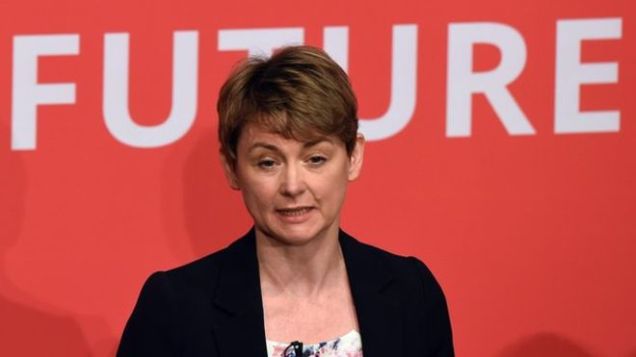
Yvette Cooper

No courage, no backbone, no vision of their own

Telegraph sketchwriter Michael Deacon reports on the rapturous reception given to Jeremy Corbyn by the Parliamentary Labour Party when he entered the Commons yesterday:

Labour MPs cheered Jeremy Corbyn.

Genuinely. They really did. And when I say Labour MPs, I don’t just mean John McDonnell, Diane Abbott and the other members of his little band of loyalists. I mean all of them. As Mr Corbyn entered the Commons for the first time since the election, his MPs rose as one and awarded their leader a delirious standing ovation. Yes, the same MPs – well, apart from the 47 new ones – who not so long ago sat in scowling silence while Mr Corbyn floundered at PMQs, and voted by four to one that he must stand down.

On and on they clapped and whooped. Beaming from ear to ear, like a Wimbledon champion greeting his adoring public, Mr Corbyn waved, shook hands, did the thumbs-up, and basked in the acclaim. On the opposite side of the House, Tory MPs – including Theresa May – stared glumly.

What a sight it was. If this is how Labour celebrate losing an election, imagine what they’d do if they actually won.

Well, well, well.

It’s almost as though I wrote something warning about the spineless Labour centrists and their yawning lack of principle a year ago, after Jeremy Corbyn saw off their pathetic, ineptly executed leadership challenge. Oh wait, I did. Twice.

And just as they did when Corbyn vanquished the hapless Owen Smith, now the Labour centrists are prostrating themselves at their leader’s feet because his big government manifesto managed to bribe sufficient voters to win Labour a handful of additional seats, if not the general election. They are jostling for position, eager to worm their way back into the the Shadow Cabinet – which many of them previously deserted or refused to join, in an effort to destabilise Corbyn – because they taste the tantalising prospect of toppling Theresa May’s government, forcing another election and creeping across the finish line as part of some “progressive alliance”.

Yvette Cooper, Chuka Umunna, Owen Smith – all of the usual suspects quickly dropped their plans to revolt against Jeremy Corbyn after what they anticipated to be an electoral wipeout, and instead took to the airwaves to praise their leader and lay the groundwork for what they clearly hope is a return to power and prominence.

Jeremy Corbyn’s hard left worldview will destroy the Labour Party, we were once told. But more than that, his policies are wrong! So said the sanctimonious Labour centrists, despite failing to clearly articulate their own centrist vision for Britain or clearly explain which parts of the Thatcherite revolution they want to keep, which ones they want to reject and which ones they simply want to pretend to oppose in order to project the right image to their base. And now they come crawling back, ready and eager to serve, all previous ideological and moral objections to Corbyn having been conveniently compartmentalised and forgotten.

The Labour centrists have no courage and no backbone. This is Jeremy Corbyn’s party now, not theirs. Labour’s 40% vote share was driven by Corbyn, not by any of the B-lister centrists who can barely inspire their own family members to the polls. If the centrists meant what they said when they wept at Jeremy Corbyn’s election as leader, resigned from his Shadow Cabinet in a huff or explicitly repudiated his leadership on the campaign doorstep, they would break away and found a new party of the centre-left. But they won’t. The prospect of power – even hard left power which not so long ago they found utterly objectionable – is simply too alluring.

This blog will make time to hear a multiplicity of political perspectives, but I have no time for people who cannot manage basic ideological consistency. And I have no time for oleaginous political swamp creatures who stab their leader in the back one day only to lay garlands of flowers at his feet the next.

Such degeneracy can be rivalled only by the rootless Conservative Party, who seem to have concluded – God help us – that the best way to bounce back from Theresa May’s disastrous election campaign is to race the Labour Party in a sprint to the political Left.


UPDATE – 14 June

Lobbyist and former Labour MP Tom Harris concurs with my assessment, and lays into the Labour centrists – particularly the so-called “big beasts”:

They were the epitome of principled opposition to a philosophy that, although alien to Labour Party traditions, was, for the time being, in control of it. They would not overtly oppose Corbyn (out of respect for his mandate, naturally), but neither would they be complicit.

Until now. Because it turns out – and who could possibly have predicted this? – that their “opposition” was not founded on principle at all. At least, not the principle we all thought.

Jeremy Corbyn stood in silence to honour IRA terrorists. He said that the homophobic, misogynist, anti-Semitic terrorists of Hamas, when they weren’t chucking trade unionists off the top of tall buildings in Gaza, were “dedicated towards… bringing about peace and social justice.”

He called for Nato to be disbanded. But it turns out that the “big beasts” had no problem with any of this, oh no – shame on you for thinking that!

Their only concern – and, to be fair, it was one that was shared by many of us – was that Corbyn just wouldn’t have an electoral appeal that would be great enough to warrant their participation on his front bench.

These are important people, after all, whose time is more precious than everyone else’s – they can’t be expected to spend their days asking parliamentary questions and leading opposition debates unless there’s the serious prospect of ministerial office at the end of it.

And now there is. After last week, there is the every chance that Jeremy Corbyn will be Prime Minister of this country, conceivably by the end of the year.

Before that earth-shattering exit poll was published at 10.00 pm last Thursday, at least a couple of those “big beasts” had already sought the support of their colleagues in anticipation of a return to the front bench, not as Shadow something or other, but as Leader of the Opposition. Labour’s 40 per cent of the vote changed all that.

Now, those of us with less political abilities and intellect than the “big beasts” might take a cautious step backwards at this point. In our naïveté we might fear that extremists who prove themselves popular are even more dangerous than extremists who are unpopular. But we would be wrong to think so.

With the sudden realisation that, contrary to expectation and logic, there are no votes to be lost in anti-Semitism or in friendship towards terrorists, the “big beasts” have made it clear that they are willing, after all, to get with the programme.

Some sore losers might harbour the hope that Corbyn will tell them to sod off and that he’s doing just fine without them, thank you very much.

But whether they return to their (as they see it) rightful place at the heart of Labour’s front bench, or whether they continue to sulk (with principle, of course) on the back benches, the term “big beast” will always be preceded by the descriptive “so called”, and will always be used with inverted commas, in order to indicate irony.

Principle has no place in British politics anymore, at least as far as the political/media elite are concerned. Pragmatism is king. And if your route back to power and influence means executing a deft 180-degree turn on supposedly inviolable principles, so be it. This is the rotten core of the Labour Party’s centrist wing.


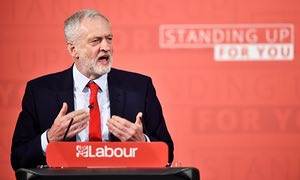
Jeremy Corbyn speech

Support Semi-Partisan Politics with a one-time or recurring donation:

Agree with this article? Violently disagree? Scroll down to leave a comment.

Follow Semi-Partisan Politics on TwitterFacebook and Medium.

General Election 2017: Conservatives Cannot Give Up On The Youth Vote

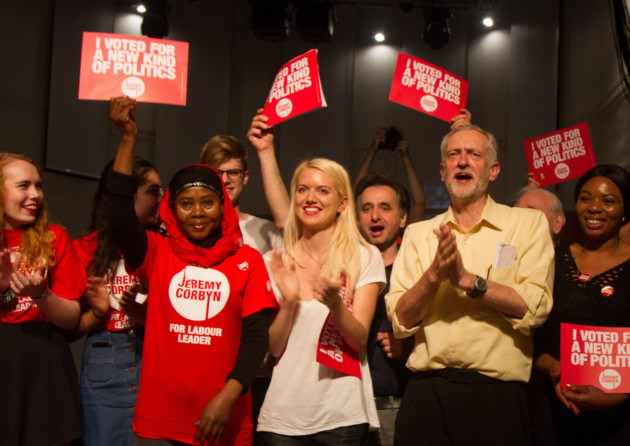
Jeremy Corbyn - Youth vote

British conservatives can no longer afford to cede the youth vote to the parties of the Left without putting up a fight for their hearts and minds

One thing seems absolutely crystal clear to me: the Conservative Party can no longer allow itself to glibly write off almost the entire youth vote and cede youth politics to the various parties of the left.

In some ways, Jeremy Corbyn seems like a most implausible politician to court the youth vote – an old, grey haired career politician with absolutely zero interest in doing anything fashionable, sartorially or politically. But my god, he is an authentic conviction politician. And if your average voter hates overgroomed, telegenic bland politico-bots then young people clearly hate them even more. Canned soundbites don’t work on social media-savvy young people, if they work on anyone. And yet the Conservatives went into battle – largely thanks to the “genius” Lynton Crosby – with an arsenal made up almost exclusively of glib, canned soundbites in place of anything remotely authentic.

Not that authenticity alone is enough. Right wing politics are clearly hugely toxic to many young people, who would sooner die than consider voting Conservative, let alone admitting any conservative leanings to their social circle. The Tories are too closely associated with grey, uninspiring “austerity”, even though austerity is largely a myth. The Tory brand, fair or unfair, is still toxic to many people. And the parties of the left have perfectly tapped into the consumerist politics of Me Me Me by promising to firehose endless sums of money into the gaping, insatiable mouth of Britain’s public services.

It seems painfully apparent to me that we need a prominent, national vessel for the development and promotion conservative policies (and personalities) separate from the Conservative Party, which simply can no longer be trusted to make the case for its own worldview. I wrote ages ago, back in 2015, that we need a British CPAC – a well funded and media savvy conservative campaign group which exists outside the dusty, dysfunctional Tories.

CPAC is the Conservative Political Action Conference in the United States, and while it has had its share of controversies it serves an important role in nurturing small-C conservative talent, seeding new ideas and generally providing an opportunity for advancement and self-promotion outside the structures of the Republican Party. It also plays a role in youth outreach, as do other organisations like Ron Paul’s Young Americans for Liberty.

The seeds of such a movement already exist – there is the excellent Conservatives for Liberty group, for which I am proud to have written numerous times. But for all the good work they do, they remain associated directly with the Tory brand and are too easily sidelined when a rabid anti-Thatcherite like Theresa May seizes control of the party and tries to drag it to the statist centre-left. Meanwhile, other think tanks which sometimes do good work (and sometimes not so good) – the Adam Smith Institute, the IEA, the Centre for Policy Studies – are very much of the political elite and by the political elite. They have neither the makings of a mass movement, nor the inclination to become one – and quite rightly, for this is not their speciality.

Worse still, the Conservative Party’s own efforts to build a youth wing tend to attract the kind of tweed-wearing teens and twenty-somethings who only further the perception of the party as being for posh, wealthy and generally insufferable types. Conservative Future, their most recent attempt, seemed to operate like a kind of pyramid scheme with promises of future candidacies dangled in front of naive young activists, and was rife with a bullying culture which led to the group’s closure.

No. For reasons of branding and basic administrative competence, any future small-C conservative movement hoping to gain traction with young people must be distinct from the Conservative Party, free of that residual toxicity and free to criticise the Tory party in government and in opposition when it proposes policies which either betray core values or threaten the interests of young people. A British CPAC and Young Brits for Liberty-style organisation could nurture talent of its own, outside the corrupting, nepotistic influence of the Conservative Party hierarchy, and would greatly increase their collective clout by helping or withholding support from future Tory election campaigns and individual candidacies based on policy, not party loyalty.

It is only through outside groups like this that the image of conservatism stands a chance of being rehabilitated among young people. It is only through a British version of CPAC or YAF that young conservative or agnostic students at university stand a chance against being steamrollered by the fashionable left-wing identity politics which are almost de rigeur for social acceptance and advancement.

Look at the people who might be considered contenders to take over from Theresa May when she is rightly consigned to the dustbin of conservative political history. Do you see the youth vote ever breaking in significant numbers for Philip Hammond or Michael Fallon? David Davis or Michael Gove? Maybe Boris Johnson might win a few, but he is widely hated by starry-eyed young Europhiles for supposedly “taking away their future”.

No, the future Conservative leader who stands even a chance of fighting the parties of the left for the youth vote must come up from outside the existing party structure, if they are to emerge at all. They must articulate a message of conservatism as being pro-freedom, pro-opportunity, pro-dynamism. Some compromises must be made, with the party finally addressing issues which screw the younger generation and force them into the waiting arms of the Labour Party – a serious housebuilding programme (not council houses, but houses for private sale and rent) for example. The end of universal benefits being lavished upon rich, self-entitled pensioners who don’t need them.

The Tories need a leader who can make self-sufficiency and freedom seem cool rather than callous, admirable rather than shameful, particularly to younger voters. I don’t see anybody on the Conservative front bench who stands a chance of doing that. Maybe James Cleverly or Kwasi Kwarteng from the backbenches, if they were to step up and gain some ministerial experience? Priti Patel?

Regardless, one thing is clear: the Tories can no longer be relied upon to keep the torch of conservatism lit by themselves. Theresa May half extinguished it with her statist left-wing manifesto, half stolen from the Labour Party, and her inept campaigning and toxicity among young people provided the final coup-de-grace.

We need a strong external repository for conservative principle, capable of engaging with young people who have been continually taught that leftist progressivism = forward-thinking “compassion” while liberty, independence and self-sufficiency from government are evidence of greed and moral failure.

Theresa May’s Conservative Party shamefully surrendered the youth vote without so much as trying to win them over. The broader British conservative movement must learn from this dismal failure and ensure that it is never repeated.


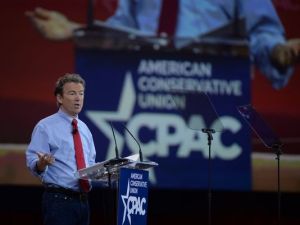
Rand Paul - CPAC

Support Semi-Partisan Politics with a one-time or recurring donation:

Agree with this article? Violently disagree? Scroll down to leave a comment.

Follow Semi-Partisan Politics on TwitterFacebook and Medium.


General Election Leaders’ Debate 2017: We Get The Politicians We Deserve

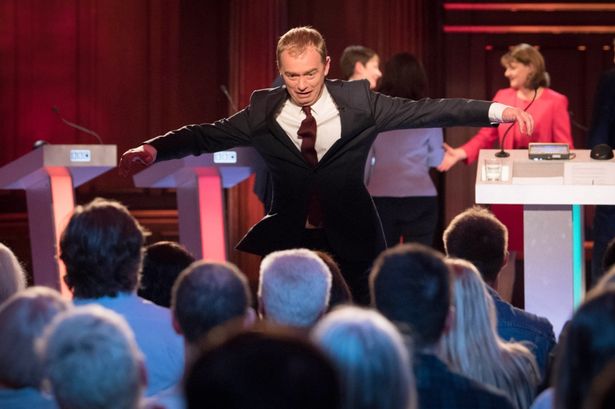
BBC Election leaders debate 2017 - Tim Farron jumping from stage

Think that all of these TV political debates are starting to look and sound the same? You’re not wrong. But that’s because we keep demanding (and rewarding) the same destructive behaviour by politicians

Does this sound familiar? It is a distilled version of what we all heard at the televised BBC general election debate in Cambridge this past Wednesday, and at nearly every TV election debate that has ever taken place in this country since we imported a dumbed-down version of American presidential debates back in 2010:

Vote for me, I’ll keep you safe from terror. Just gonna need your Facebook password, please. No, vote for me, I’ll keep the economy strong because we all know the only point of a strong economy is to raise more tax to spend on the NHS. Liar! You want to destroy Our Precious NHS! You want people to die in the streets when they get sick, just like they do in America. No, we are now the true party of the NHS! Anything for Our NHS, oh god, anything and everything, my very life for Our Blessed NHS.

Oi! Look over here, free university tuition! Yeah, it’s subsidised by the taxes of other people who never went to university and whose earning power has not been boosted through having a degree, but still. Fairness! Young people are the future! No, no, no, it’s all about the environment. That evil party wants to build an experimental nuclear fusion plant in your grandmother’s basement, and frack for oil in the middle of Lake Windermere. But we will bulldoze nasty, Brexit-supporting Stoke-on-Trent and replace it with a massive solar panel field. Much better.

No, look over here! We will bring back British Rail; remember how great British Rail was? Who needs Pret when you’ve got a trusty British Rail egg and cress sandwich? Nice and warm, of course, just like the good old days. Let’s have car-commuting taxpayers in Gainsborough subsidise the travel of London-based city commuters, because fairness. British Rail? Scoff. I’ll see your British Rail and raise you British Leyland! Woohoo – nationalisation, baby! For the Common Good.

All immigrants are a godsend, to the last man. If it weren’t for immigrants, your inflamed appendix would have been dug out by a native-born, chain-smoking school dropout with a can of special brew in his spare hand, and don’t you forget it. No, of course we should have a sensible, measured conversation about immigration. It’s just that I’ll stand here and shriek into the TV cameras that you’re an evil, divisive racist if you disagree with me. But please, go ahead. No no, we should listen patiently to people’s concerns and then carefully explain to them why they are wrong. People love that.

Oh, you? No dear, you don’t have to do anything. We, the politicians, are here to promise you stuff, to pander to your every passing whim. If I’m prime minister, I will make it my overriding personal concern to fix the broken chairs at your GP surgery waiting room – I’ll come round and do it myself, I’ve got some tools in the shed – and make sure that New British Rail adds free wifi to your single-carriage metro train between Stoke and Crewe. Seriously, no worries. I’ll call the boss at 6AM every day until it happens. NATO summit? Geopolitics? Statecraft? Boring! Why be a statesman when I can be a glorified town councillor for 65 million insatiable people? I’m on the case for you, and your every last petty concern. I’ll read foreign policy briefings when I’m on the can, that stuff doesn’t matter.

Heavens no, of course we don’t need to properly empower local politicians to make decisions in the local interest, raising and spending taxes independently of Westminster. For I am running to be Comptroller of British Public Services, and my sole job, my only care in the world is to make your passage through life as easy and painless as possible. You and 65 million of your fellow citizens. The buck stops with me, because public services are everything. After all, Britain didn’t do anything of value or renown on the world stage until we starting implementing the Beveridge Report. Not a damn thing. And now we’ve jacked up the size of the state so much and you have to deal with it so bloody frequently that we’d darn well better make sure you come skipping away happy from every last interaction – too many bad experiences for you are political suicide for us.

All hail the NHS!

All hail the NHS!

All hail the NHS!

The problem is not that television debates cannot be substantive – they can. While US presidential elections in recent years have devolved into tense shouting matches with cringeworthy one-liners and a partisan audience clapping and whooping along like trained seals, this was not always the case. Go back even a few election cycles and you’ll find issues discussed in depth and sometimes even thoughtfully, even if they still adhered to the ludicrous “one minute response and 30 second counter-response” format.

No, the problem is with us. As I wrote in more depth immediately after the BBC’s general election party leaders’ debate in Cambridge, we have been trained and willingly led to a place where we expect our politicians to do nothing but flatter and bribe us all day long. We sit in the television studio audiences at Question Time or other venues, sullenly waiting to hear how politicians will come up with new ways to ease our passage through life, divesting ourselves of more and more responsibility with every passing day.

(It also doesn’t help when you have four irrelevant party leaders clogging up the stage who command no more than a handful of MPs between them and whose tiresome leftist bloviating and virtue-signalling hugely detracts from what should be a no-holds-barred slugfest between the two people with a plausible chance of running the country.)

A friend reminded me on Facebook that immediately after the BBC election debate, they aired an ad featuring a montage of British voters staring into the camera and barking out phrases such as “But what will the parties do for me?”, “What’s in it for me?” and “How will these policies affect me?” – the clear inference being that by watching the BBC’s election coverage we can learn all about how policy will personally benefit us, Number One, me me me. Because that’s all that matters. No need for voters to think in a broader, more strategic way about what’s good for the country or society. No, just keep demanding more and more goodies for ourselves.

But then a wise commenter made the following observation on Twitter:

Interesting but the ‘public’ is not infantilised, people talk about political, social & ideology at length & intelligently…

… arguably it’s the media that does the infantilising. People are patronised by the broadcasters.

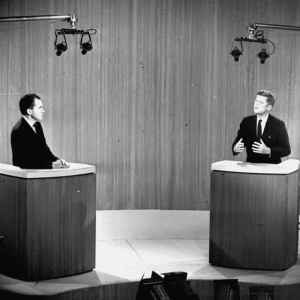
True, to an extent – possibly even a large extent. Go back to the Kennedy – Nixon debates, for example, and you’ll find a serious, measured discussion of issues. Seriously, watch them. Even as recently as two election cycles ago you might expect a proper in-depth discussion of foreign policy, war and peace, national security, America’s place in the world, economic policy, domestic and social policy. The standard has of course greatly declined of late – as anybody who watched Donald Trump and Hillary Clinton fling faeces at each other for 2 hours on three separate evenings last year can attest.

And it is hard to point to anything other than the fracturing of the media landscape – something which should have been a promising development but which has led instead to shrill partisan outlets of all stripes catering to their niche audience’s basest fears and prejudices. And that goes for “prestige” outlets like the Washington Post and New York Times, with their soft and persistent bias, as much as it does with those outlets that peddle in outrageous, obviously fake news.

Interestingly, the media market in Britain is not yet as fractured. The BBC (particularly the news website) and the major newspapers (whose websites have worked tirelessly to suppress the independent blogosphere) still have considerable reach. There are no strongly partisan news channels, and political sites have much smaller reach. But like America, Britain’s politics has been upended by the internet and social media. And just as we now expect our Facebook, Twitter or Instragram feeds to serve up a constant diet of things that we like and with which we already agree, so we now seem to demand the same of our politicians. Nothing challenging, nothing which shocks us out of our preconceived ideas and prejudices, nothing which threatens to change or undermine our worldview.

The soundbite-ification of the television news also certainly doesn’t help, and is the principle reason why there has not been a good or memorable political speech by a major British politician (at least outside the House of Commons) in the living memory of anybody my age. When speeches are written so that the campaign’s key message is included in every other line, to ensure it gets picked up in a 30-second TV news piece, they essentially become meaningless word clouds of platitudes and focus-grouped phrases. Strong and stable, anyone? It is very difficult to inspire, to lift people’s thoughts above their own petty daily concerns to higher and more noble subjects when you have to keep saying “coalition of chaos” twice in each paragraph.

But again, who is to blame? Yes, it’s the fault of the media and the politicians who accept the terms of engagement and play along with the whole artificial construct. But it is also our fault. We watch the news bulletins. We buy the newspapers and take out the web subscriptions. We reward the godawful work that so many establishment Westminster journalists do, day in and day out.

Expecting the herd to change on their own is a recipe for disappointment. We need one brave politician, or perhaps a few, to just stop playing along with the rules. To stand up and give speeches where audiences and journalists actually have to listen to the whole thing before they understand the purpose or can write their Op-Eds. Labour leader Jeremy Corbyn probably comes closest at present. As anathema as his politics are to this blog, Corbyn is capable of giving a speech – such as the one to the Durham Miners’ Gala earlier this year – which is actually formed in complete sentences and paragraphs, not one-liners and soundbites. The fact that Jeremy Corbyn is a conviction politician with a coherent worldview goes a long way to making this possible, and also explains why Theresa May so often sounds like a malfunctioning android.

Of course, another politician to break the mold is Donald Trump – but not in a good way. His long, rambling and unpredictable speeches were also free of canned lines and soundbites (or at least pre-planned ones) but he kept the television news networks transfixed, giving him hours of unearned airtime simply because you never knew what he might say next or what incendiary thing he might do. But Trump also won the presidency by promising things which he could likely never deliver, and many of which are actually deeply un-American, such as security over opportunity, protection from every conceivable harm and turning back to an easier past time rather than boldly facing the future.

So clearly what we need to do is genetically engineer a hybrid of Jeremy Corbyn and Donald Trump, and indoctrinate them with some good solid small-government impulses before letting them loose on Westminster. We need somebody with Jeremy Corbyn’s consistent worldview and fixed principles, though each of those principles should be reversed almost 180 degrees. And we need somebody with Donald Trump’s watchability and pseudo-charisma, but only after extracting the egotism, ignorance and vengefulness. And when these two forces collide, like matter and anti-matter, it will create more power and political energy than we can possibly imagine.

Okay, maybe not. But something needs to give – or somebody needs to step up; somebody who is not a cautious careerist who intends only to get to the top of the Westminster pole by being as blandly inoffensive as possible and by playing along with the media’s prescribed game. Someone needs to take a chance and dare to hope that the British people might actually respond well to somebody who talks up to them rather than down to them, who levels with them about difficult issues and necessary sacrifices, and who can present an attractive and believable vision of a future Britain worth striving to attain.

The alternative is that we will continue being bribed, flattered and lied to by a cohort of vacuous and craven politicians who never even think of calling us to any form of real citizenship or higher common purpose because their own political and moral horizons have been so limited by the infantilising system under which we labour. A system which encourages the people to shout petulantly for treats like angry toddlers with a gun, and exhorts our would-be leaders to frantically dance for us in response.

There may just be a small window of opportunity before the dust settles from the election results on 9 June. Future Thatcher, if you are out there, it’s time to emerge…


john-f-kennedy-richard-nixon-first-televised-american-presidential-debate

Support Semi-Partisan Politics with a one-time or recurring donation:

Agree with this article? Violently disagree? Scroll down to leave a comment.

Follow Semi-Partisan Politics on TwitterFacebook and Medium.

General Election 2017: The Unbearable Light-weightedness Of British Politics

rainbow unicorn

We can’t go on like this

I’m just going to come out and say it: given the appallingly weak options available, Jeremy Corbyn probably deserves to be the next prime minister of the United Kingdom.

Don’t get me wrong: if his hard-left socialist policies and aspirations were fully enacted, Corbyn would also likely be the last prime minister of the United Kingdom, but that’s another matter.

After all, is not the point of democracy, of elections, to give the people their right to choose political leadership and representation which they want to see take their communities and their country forward? And if so, who during this miserable general election campaign has done more to convince the British public that they are a person of principle and conviction, willing to tell uncomfortable truths as they see them while standing up to entrenched special interests – Theresa May or Jeremy Corbyn?

Let’s compare.

Who produced an election manifesto which represented some of the best traditions (and sincerely held political views) of their party? That would be Jeremy Corbyn. Who huddled together with two unelected aides to produce in secret a manifesto which declared war on her own voters, repudiated Thatcherism, threw the libertarian wing under the bus and pandered to the worst instincts of everybody who thinks that the state should be like a third parent to them? That would be the “conservative” prime minister, Theresa May.

Jeremy Corbyn’s Labour manifesto, in all its leftist, spendthrift glory: costed. Theresa May’s Coke Zero Conservative manifesto – “coke zero” because like the drink, it has the same branding as the real thing but none of the ideological, calorific ooomph which makes it taste good and perk you up – not so much.

Who has made gaffe after gaffe and exacted numerous self-inflicted political wounds, missteps and humiliating U-turns on her party and campaign? That would be Theresa May, whose claim to unruffled, grown-up leadership looks more and more tarnished by the day. Who seems to have finally stopped his penchant for weekly PR disasters and learned not to intervene when his enemy is making a mistake? That would be the old rube, Jeremy Corbyn, despite the fact that he faces a highly antagonistic press.

Who has behaved like an adult and at least accepted the necessity of a Brexit deal with the European Union (however weak a negotiator he would otherwise likely be) as a precursor for economic stability? That would be Corbyn. Meanwhile, who still publicly entertains the confidence-sapping notion of no deal and a disastrous crash out of the EU? That would be strong ‘n stable Theresa.

And who found the courage to go on national television and articulate their party’s values and vision for Britain in tonight’s BBC election debate? Jeremy Corbyn. Who was frightened and cowered away in Downing Street, risibly sending a surrogate minister to fight her battles? That would be the ever-formidable Theresa May.

Whatever one thinks of Jeremy Corbyn, there is mounting evidence that Theresa May simply does not have what it takes to be a successful British prime minister in the 21st century. Perhaps being a diligent, hardworking, non-telegenic, secretive authoritarian with a tiny circle of close-knit advisers helped Theresa May when she was Home Secretary. Lord knows it allowed her to become prime minister despite the party and the country barely having any idea of her core values or guiding philosophy. But as prime minister in the television and internet age, May’s natural reticence doesn’t play well.

You can say that this is a small and petty criticism, and in some ways it is. And perhaps personality should matter less, but we must deal with the world as it is rather than as we would like it to be. When Theresa May skulks in the back row of G7 summit family photos while Donald Trump gladhands with the boy wonder French president Emmanuel Macron and “leader of the free world” Angela Merkel, one gets the strong impression that she similarly fails to win hearts and minds in the all-important closed door sessions.

For all their arrogance and vapidity, the American political elite positively purr over Emmanuel Macron, bulwark against Evil Brexit and saviour of the “liberal world order”. I would wager that far fewer could even name Theresa May. And this advances British interests with our closest and most important ally how, precisely? Donald Trump is one man, quite possibly soon to be an ex-president if the slow-motion coup against him ultimately succeeds. Meanwhile the vast apparatus of American government remains a juggernaut fully committed to the internationalist status quo, and Theresa May is doing nothing to persuade them that any of their preconceptions about the evilness of Brexit and the EU’s self-evident splendour are wrong. A better, more natural communicator would have a fighting chance.

Two provisos: First, Jeremy Corbyn would do no better in this regard, and quite possibly far worse, given that his worldview is based in no small part on anti-Americanism. But Theresa May only looks vaguely acceptable in this regard because Jeremy Corbyn would be so appalling. That’s not a ringing endorsement or a solid qualification for remaining prime minister.

And second, it is hardly as though the Conservative front benches are brimming over with talent one thinks of as solid alternative prime ministers – Boris Johnson is rightly known in America and around the world as a fool who uses a bumbling persona and a smattering of Latin phrases to mask an insatiable vanity and hunger for the spotlight. Who else to choose? Philip Hammond? Well, at least Theresa May makes him look fiscally responsible by comparison, but he’s no media performer. Amber Rudd? She’s a loyal soldier and did a highly commendable job stepping into Theresa May’s shoes for tonight’s debate, particularly so soon after the death of her elderly father earlier this week, but a potential leader? Who else, then? Seriously, I’m asking? Who?

If you had to design the perfect Tory party leader and prime ministerial candidate for this moment in time specifically, what would they look like? Well, everybody probably has their own preferences, but here would be my take on what would work best both politically in Britain and as a person capable of commanding interest and admiration on the world stage:

Ex armed forces (of either gender), mid to senior rank, with an illustrious overseas deployment history. Someone who exudes unapologetic patriotism yet never lapses into cheap jingoism, and whose commitment to defence, national security and veterans affairs is beyond question.

Followed up by a successful later career, possibly in the third sector or the arts but better still in the private sector, having founded a stonking great big corporation that also gives back to the community by employing ex-offenders or partnering with charities to do meaningful work in society.

A solid and consistent record (at least dating to the start of the EU referendum campaign) on Brexit, able to tell a compelling story about how Brexit – properly done – can be good for our democracy and at least neutral on the economic front.

A person who believes that until somebody comes up with a viable alternative to (or augmentation of) the democratic nation state, this institution remains the best method yet devised of ordering human affairs, and that consequently we should not needlessly undermine and vandalise it by vesting power in antidemocratic supranational organisations or pretending that we can sidle our way into a post-patriotic world by stealth rather than with the consent of the people.

Somebody who will not bargain away our civil liberties chasing the chimera of absolute security from terrorists and madmen – particularly while refusing to face down radical Islamism as an ideology to be confronted and defeated – but who will also stand up to expansionist, nonsensical definitions of human rights and an identity politics / political correctness agenda that values hurt feelings more than freedom of expression.

Somebody with the articulateness, gravitas, sincerity and quickness of thought capable of doing the near impossible in 2017: single-handedly turning the tide away from the vapid, broken politics of me, me, me. Somebody willing to ask – as John F. Kennedy once did – not what our country can do for us, but what we can do for our country. Somebody who dares to call us to a higher purpose than merely living in a country with “good public services”, deifying “Our NHS” and having the goddamn trains run on time.

Somebody who chooses for us to go to the moon (or rather its current day equivalent in terms of spectacular human achievement) “and do the other things, not because they are easy, but because they are hard, because that goal will serve to organize and measure the best of our energies and skills”. Kennedy again.

Somebody who realise that unless we as a society nurture and maintain some kind of higher common purpose with one another – and we’ve largely done away with organised religion in Britain, while the Left’s commitment to unlimited multiculturalism has made even the suggestion of unifying around non-negotiable core values prima facie evidence of seething intolerance or racism – we are doomed to fracture into separate warring special interest groups and victimhood lobbies jockeying for position. A country so lacking in confidence in its own values that it refuses to proclaim them, let alone insist upon them. A country in name only, led by a conservative in name only.

So where is such a potential transformative, neo-Thatcherite Tory leader? Where is such a potential leader of any political party in Britain? Good luck finding them. Look at the typical calibre of people who now become MPs. Sure, you get some who are diligent constituency MPs or single issue campaigners, but this only highlights the flaw of a system of government which draws the executive from the legislature. Look at the new or new-ish MPs of any party with serious ministerial ambitions and you’ll generally find nothing but focus group-approved platitudes and a yawning chasm where ideology or principle ought to reside. Look at the seven characters who lined up behind podiums to debate the issues on primetime TV.

No such party leader (or surrogate) standing on stage at tonight’s BBC televised election debate in Cambridge lived up to even one of these tests. The seven parties of the Left – Labour, Liberal Democrat, Green, Scottish National, Plaid Cymru, UKIP and now Theresa May’s rootless Tories – only know how to campaign by promising people stuff. Lots of stuff, any stuff. More more more. Better, bigger, shinier public services. A welfare state blindly doling out the same universal benefits in disbursements which are laughably small for the wealthy (who don’t need them but are hooked on them because that’s how universal benefits do their dirty work) yet which too often allow the genuinely sick and disabled to barely subsist. Promise after promise. No call to citizenship, to personal responsibility. Just endless promises of safety, security and more stuff, all for free.

Vote for me, I’ll keep you safe from terror. Just gonna need your Facebook password, please. No, vote for me, I’ll keep the economy strong because we all know the only point of a strong economy is to raise more tax to spend on the NHS. Liar! You want to destroy Our Precious NHS! You want people to die in the streets when they get sick, just like they do in America. No, we are now the true party of the NHS! Anything for Our NHS, oh god, anything and everything, my very life for Our Blessed NHS.

Oi! Look over here, free university tuition! Yeah, it’s subsidised by the taxes of other people who never went to university and whose earning power has not been boosted through having a degree, but still. Fairness! Young people are the future! No, no, no, it’s all about the environment. That evil party wants to build an experimental nuclear fusion plant in your grandmother’s basement. But we will bulldoze nasty, Brexit-supporting Stoke-on-Trent and replace it with a massive solar panel field. Much better.

No, look over here! We will bring back British Rail; remember how great British Rail was? Who needs Pret when you’ve got a trusty British Rail egg and cress sandwich? Nice and warm, of course, just like the good old days. Let’s have car-commuting taxpayers in Gainsborough subsidise the travel of London-based city commuters, because fairness. British Rail? Scoff. I’ll see your British Rail and raise you British Leyland! Woohoo – nationalisation, baby! For the Common Good.

All immigrants are a godsend, to the last man. If it weren’t for immigrants, your inflamed appendix would have been dug out by a native-born, chain-smoking school dropout with a can of special brew in his spare hand, and don’t you forget it. No, of course we should have a sensible, measured conversation about immigration. It’s just that I’ll stand here and shriek into the TV cameras that you’re an evil, divisive racist if you disagree with me. But please, go ahead. No no, we should listen patiently to people’s concerns and then carefully explain to them why they are wrong. People love that.

Oh, you? No dear, you don’t have to do anything. We, the politicians, are here to promise you stuff, to pander to your every passing whim. If I’m prime minister, I will make it my overriding personal concern to fix the broken chairs at your GP surgery waiting room – I’ll come round and do it myself, I’ve got some tools in the shed – and make sure that New British Rail adds free wifi to your single-carriage metro train between Stoke and Crewe. Seriously, no worries. I’ll call the boss at 6AM every day until it happens. NATO summit? Geopolitics? Statecraft? Boring! Why be a statesman when I can be a glorified town councillor for 65 million insatiable people? I’m on the case for you, and your every last petty concern. I’ll read foreign policy briefings when I’m on the can, that stuff doesn’t matter.

Heavens no, of course we don’t need to properly empower local politicians to make decisions in the local interest, raising and spending taxes independently of Westminster. For I am running to be Comptroller of British Public Services, and my sole job, my only care in the world is to make your passage through life as easy and painless as possible. You and 65 million of your fellow citizens. The buck stops with me, because public services are everything. After all, Britain didn’t do anything of value or renown on the world stage until we starting implementing the Beveridge Report. Not a damn thing. And now we’ve jacked up the size of the state so much and you have to deal with it so bloody frequently that we’d darn well better make sure you come skipping away happy from every last interaction – too many bad experiences for you are political suicide for us.

All seven of them, yapping away on stage like this as the minutes ticked by and the left-wing Cambridge audience dutifully clapped along to each pledge of More Free Stuff like so many trained seals. But at least Jeremy Corbyn sounded like he meant it, like he was advocating all of these things because they flowed from a sincere and coherent – if utterly misguided – worldview. The rest were just preening, moralising virtue-signalling charlatans. With the exception of Amber Rudd, who did sterling work in the face of her leader’s cowardice, and whom I will not criticise given the circumstances of her appearance.

Now, all of that being said, the prospect (raised by new YouGov polling showing a tightening race) of Jeremy Corbyn overperforming expectations, gaining seats in parliament and entering 10 Downing Street as prime minister backed by a “pwogwessive alliance” of Britain’s childlike left-wing parties, is simply untenable. And so I will vote Conservative on June 8, because my constituency of Hampstead & Kilburn is a tight two-way marginal and the Labour incumbent MP, Tulip Siddiq, was a staunch Corbyn supporter and an unrepentant enemy of Brexit.

So yes, I’ll vote Tory this time. But Lord knows I’ll feel unclean and deeply depressed while doing so, with zero expectation that it will result in anything positive for the country and with considerably more admiration for the man I hope to see defeated than the woman I barely want to win.

Britain, we can do better than this. Probably not much better realistically, at least right now – because as a society we have fallen and been infantilised to such a worrying degree – but still we can do better than these paltry political party leaders. They’re all just so very…small.

Somebody, anybody else, please step up soon. Deep down, as a nation we want more than is being offered to us by Jeremy Corbyn, his provincial Mini Me’s and a confused Tory leader who thinks the path to victory involves dismantling – rather than building upon – the legacy of our greatest post-war prime minister.

Step forward, find the spirit of public service and call us to action, too. Ask us to set our sights beyond our own narrow interests, beyond our bank balances, our bin collections, our next step on the property ladder, the feelings of our intersectional identity groups, the fate of our free mobile roaming calls in Tuscany. Help give us a new purpose, a common purpose, a higher purpose.

Set us a challenge.

 

People skipping beneath a rainbow

Support Semi-Partisan Politics with a one-time or recurring donation:

Agree with this article? Violently disagree? Scroll down to leave a comment.

Follow Semi-Partisan Politics on TwitterFacebook and Medium.

2017 General Election Campaign: The Last Stand For Conviction Politics?

https://www.youtube.com/watch?v=1JsV51RSc-w

The only national party leader with clear political convictions and the courage to publicly defend them is rendered unelectable on the basis of those convictions, while cowardly and triangulating politicians with more superficially palatable opinions are poised to do well in the general election. How depressing.

Here’s the thing: While Jeremy Corbyn may be wrong about economic policy, foreign policy, national defence, the size and role of the state and a million and one other things, he is also the only major party leader (with the very occasional exception of Tim Farron) who can be fairly described as a man of conviction, somebody with a coherent worldview and the political courage to stand up and unapologetically argue for it.

Covering this general election will be hard for me, not just because (as usual) there is no party which reasonably represents this blog’s conservatarian stance but because the only party leader potentially worth admiring from a political courage perspective is the man that nobody in their right mind can reasonably vote for. If some nervous voters believe Brexit Britain is bad, that’s nothing compared to the kind of sudden confiscatory wealth raids, punishing tax rates and ramping up of the state we would see under Prime Minister Jeremy Corbyn.

The most plausible prime minister on 9 June – incumbent Theresa May – has gravitas and the outward appearance of baseline competence, yes. But she is ideologically rootless, her only real defining trait being a consistent hard lean towards authoritarianism. Beyond that, what does she stand for? Helping the JAMs, people who are just about managing? Surely every politician in government should strive to do that anyway. Theresa May was against Brexit before she became its most ardent champion, unable to take a bold stand on the most pressing question to face Britain in the post-war era until her hand was forced by the referendum result.

Then look at the other party leaders. Nicola Sturgeon is an expert at spinning her grievance-soaked tale of Scottish persecution and the need for supposedly childlike, simple Scots to be protected from the Evil Tor-ees, but while she campaigns in poetry (or rather crude limericks) the SNP governs in single-minded, authoritarian prose and is busy constructing a one-party statelet north of the border. At one point the Scottish Parliament failed to pass any legislation for over a year, so consumed were the SNP with manoeuvring for a second independence referendum. And when they did pass laws, they were frighteningly authoritarian schemes like the “named person” scheme which makes Sturgeon’s government an unwanted auxiliary parent to every newborn Scottish baby.

Under Paul Nuttall, UKIP – when they are not infighting and twisting in the wind – continue their lurch to the left, abandoning their original voter base of libertarian types in ever more fevered pursuit of hardcore immigration opponents and the disaffected Northern Labour vote. UKIP (or rather, Conservative fear of UKIP) played a significant role in forcing the referendum and achieving the outcome, but now the party has nothing left to say beyond defending the Leave campaign’s most indefensible promises and pledging to fight for the hardest of hard Brexits with nary a thought for how uncontrolled exit from the EU would impact our economy and diplomatic standing.

The Green Party remain an irrelevance outside their stronghold of Brighton, not helped by their visceral antipathy toward material human progress. And besides, the Green Party are…well, the Green Party.

And to be clear, Labour are in a mess, too. Not everybody subscribes to the Jeremy Corbyn agenda. But at least Jeremy Corbyn has a coherent worldview, as risible or abhorrent as some people may find it. What is the Labour centrist worldview? What are their inviolable beliefs and convictions? What gets Chuka Umunna, Yvette Cooper or Dan Jarvis out of bed every morning? Being a bit more left-wing than the centrist Tories while prattling on about “fairness” a lot more? Pretending to be heroic tribunes of the working classes but then ignoring their opinions on key issues like the EU and immigration?

One might have more sympathy for the Labour centrists, if A) they hadn’t bottled their cowardly post-referendum coup against Jeremy Corbyn, with all of the shrunken people who now pass for “big beasts” within the party electing to save their political hides while sending out the risible Owen Smith as their stalking horse, and B) they had a solid, work-in-progress alternative to Corbynism in their back pockets. No such alternative is being proposed.

And so we are in a position where the one candidate with a coherent worldview and the glimmer of a sense that the British people should be called to overcome a challenge rather than being soothed, placated and made safe, cannot be elected because his political ideas are broadly wrong. Meanwhile, a bunch of politicians whose views are slightly less wrong than Jeremy Corbyn’s will benefit from the 2017 general election thanks to their ability to conceal what they really think and bend, flatter and shapeshift their way into the public’s good graces.

Just compare the opening campaign speeches made by Jeremy Corbyn and Theresa May respectively.

Here’s Jeremy Corbyn, opening with a stridently anti-establishment message which could almost be described as Trump-like:

The dividing lines in this election could not be clearer from the outset. It is the Conservatives, the party of privilege and the richest, versus the Labour Party, the party that is standing up for working people to improve the lives of all.

It is the establishment versus the people  and it is our historic duty to make sure that the people prevail.  A duty for all of us here today, the duty of every Labour MP, a duty for our half a million members – including the 2,500 who have joined in the last 24 hours.

Much of the media and establishment are saying that this election is a foregone conclusion.

They think there are rules in politics, which if you don’t follow by doffing your cap to powerful people, accepting that things can’t really change, then you can’t win.

But of course, they do not want us to win. Because when we win it is the people, not the powerful, who win.

The nurse, the teacher, the small trader, the carer, the builder, the office worker, the student, the carer win. We all win.

It is the establishment that complains I don’t play the rules: by which they mean their rules. We can’t win, they say, because we don’t play their game.

We don’t fit in their cosy club. We ‘re not obsessed with the tittle-tattle of Westminster or Brussels. We don’t accept that it is natural for Britain to be governed by a ruling elite, the City and the tax-dodgers, and we don’t accept that the British people just have to take what they’re given, that they don’t deserve better.

And in a sense, the establishment and their followers in the media are quite right. I don’t play by their rules. And if a Labour Government is elected on 8 June, then we won’t play by their rules either.

They are yesterday’s rules, set by failed political and corporate elites we should be consigning to the past.

This is good because it is not a message which resonates only with Labour’s traditional voter tribes.

Especially now, following an EU referendum which literally pitched the establishment of this country and their sycophantic allies against the ranks of the people, voters may be receptive to this message of fighting against a political, economic, media and cultural establishment which arrogantly seeks to rule in its own interest. Even as a conservative libertarian type, this passage resonates with me.

And here is Corbyn waxing lyrical about the benefits of wealth distribution:

Britain is the sixth richest economy in the world. The people of Britain must share in that wealth.

If I were Southern Rail or Philip Green, I’d be worried about a Labour Government.

If I were Mike Ashley or the CEO of a tax avoiding multinational corporation, I’d want to see a Tory victory.

Why? Because those are the people who are monopolising the wealth that should be shared by each and every one of us in this country.  Everyone, and I mean everyone, has a contribution to make and a life to lead. Poverty and homelessness are a disaster for the individual and a loss to all of us.

It is wealth that should belong to the majority and not a tiny minority.

Labour is the party that will put the interests of the majority first, while the Tories only really care about those who already have so much.

That is why we will prove the establishment experts wrong and change the direction of this election. Because the British people know that they are the true wealth creators, held back by a system rigged for the wealth extractors.

He is dead wrong, obviously – coercive, large scale redistribution destroys wealth faster than it can parcel it out, dooming people to receive ever more equal slices of a rapidly miniaturising pie. But by God, Corbyn sounds convincing when he makes his case because he actually believes what he is saying, and because it fits into a coherent wider narrative which supports the entire Corbynite worldview.

Meanwhile, here is the prime minister launching the Conservative Party’s election campaign in Bolton:

And that’s what this election is about. Providing the strong and stable leadership this country needs to take Britain through Brexit and beyond. It’s about strengthening our hand in the negotiations that lie ahead. And it’s about sticking to our plan for a stronger Britain that will enable us to secure that more stable and secure future for this country and take the right long term decision for the future. It’s about strong and stable leadership in the national interest. And you only get that strong and stable leadership by voting for the Conservatives. Because that’s what Conservatives government provides. And just look at what we’ve done.

[..] when I took over as Prime Minister, the country needed clear vision and strong leadership to ensure that we got on with that job of delivering on Brexit for the British people and that’s exactly what we did. We delivered that strong and stable leadership, we delivered the certainty that strong and stable leadership can give. And that’s what leadership looks like. Now there’s a very clear choice at this election. It’s a choice between strong and stable leadership under the Conservatives, or weak and unstable coalition of chaos led by Jeremy Corbyn.

And that is very clear. Let’s look – the other parties are lining up to prop up Jeremy Corbyn. We’ve seen it with the Liberal Democrats, and we see it with Nicola Sturgeon’s Scottish nationalists. They’re very clear that they want to do everything they can to frustrate our Brexit negotiations. To undermine the job that we have to do, the task that lies ahead. Do everything to stop us from being able to take Britain forward. And it’s their tunnel vision focus on independence that actually provides uncertainty. They want to pull the strings, try to pull the strings of this election, prop up Jeremy Corbyn and provide more risk and uncertainty for the British people and that’s not in Britain’s interests.

So it’s only a vote for the Conservatives that can deliver, and every vote for the Conservatives is a vote for me and local Conservative candidates, and it’s a vote to ensure that we have that strong and stable leadership that we need to take us through Brexit and beyond. Every vote for me and the local Conservative candidates here and across Britain is a vote to deliver on that plan for a stronger Britain and a more secure future for us all. And if we have that certainty of five more years of strong and stable leadership then we can ensure that we’re delivering for people, for ordinary working people up and down the country, across the whole United Kingdom.

This isn’t a speech. It is a soundbite delivery mechanism, the flavourless rhetorical equivalent of a Ryvita cracker, designed to drill the phrase “strong and stable leadership” so deep into the minds of voters (the exact phrase is repeated twelve times) that we all walk zombie-like to the polling stations on 8 June, muttering the phrase to ourselves as we dribble down our chins.

As a political speech, it has no poetry because it was conceived by partisan political calculation rather than any deep conviction about what’s best for Britain. “Vote Tory to prevent the other parties from either influencing or thwarting Brexit” is Theresa May’s message – an implausible message in itself, considering that the prime minister only came to believe in the deep wisdom of Brexit after the British people had voted to Leave.

As a modern political speech (with the bar set accordingly low), Theresa May’s effort will probably be quite effective though. Getting up on a stage and ranting about strong and stable leadership is a very effective way of implying that the various jabbering parties of the Left will screw everything up given half the chance, either by naively giving everything up to Europe in the negotiations for no commensurate return, or by descending into infighting over whether to push for a softer Brexit or seek to thwart Brexit entirely.

The Tory position – advocating a hard Brexit and exit from the single market, to be replaced with a fictional comprehensive deal within two years – is moronic. But it does have the advantage of being easy to understand. Now imagine Corbyn, Sturgeon, Lucas and Farron all sat around the Cabinet table. Do they collectively push to stay in the EU or just for the closest relationship with the EU? Who knows? Ergo chaos, versus Theresa May’s “strong and stable” leadership.

But what of other issues than Brexit? Where is the ringing defence of Conservative principle? The speechwriter crams this material – such as it is – into the final paragraphs, very much as an afterthought:

But it’s also about getting the right deal for ordinary working people here at home, and that’s about building a strong Britain. Britain is the strongest country in Europe in terms of economic growth and national security.

It’s about building a stronger economy. It’s about creating well paid secure jobs. It’s about ensuring that there is opportunity for all. That we provide a good school place for every child. That there is affordable housing. That people can get on in their lives. It’s about ensuring that we create a more united nation. That we take action against the extremists who want to divide us, and that we stand up to the separatists who want to break up our country. So it’s providing that strong and stable leadership.

That certainty. That stability for the future ,and that’s going to be our message as go out in to our election campaign. And I’m looking forward to it. We’re going to fight a positive and optimistic campaign about the future of this country. I’m going to be getting out and about around the country. I’m going to be visiting communities in every part of the United Kingdom.  And I’m looking forward to taking our case out there to people. Because this is the case – that it is only with the Conservatives that you get the strong and stable leadership that this country needs to see us through Brexit and beyond.

That’s it. In other words: “blah blah authoritarianism blah, angrily insisting that the country be united while proposing zero tangible policies to actually rekindle shared British values and identity, blah. Cheap houses for everyone with no explanation of how or where they will be built, oh and I guess we’ll make schools great too, blahdy blah. Strong and stable leadership! Blah”.

What does Theresa May actually believe about anything? How does she intend to remake British society with her (hopefully) increased parliamentary majority? Who knows? I’m not remotely convinced that the prime minister knows herself.

What about tax reform, maybe simplifying the code, eliminating loopholes and lowering the burden on ordinary people?

What about constitutional reform, recognising that Brexit is the beginning and not the end, and pledging to devolve power to the home nations and regions, so that nobody can complain about the “Evil Tory” government in Westminster when their own local officials have greater power over taxes and services?

What about our national defence, committing to serious spending increases to reverse years of decline in our capabilities in order to increase our hard power?

What about an energy policy which frees Britain from dependence on rogue or ambivalent states while keeping costs low for consumers?

What about getting a move on with critical infrastructure projects like Heathrow Airport expansion, allowing other airports to expand too, and cutting the outrageously high Air Passenger Duty tax on flying, which increasingly makes Britain a pariah state for international business travellers?

What about – and I’m shooting for the moon on this one – an end run around the Labour Party, integrating health and social care, and doing it with a dispassionate fixation on healthcare outcomes rather than weepy tributes and pledges of loyalty to Our Blessed NHS?

Perhaps it will all become clear when the Conservative Party release their 2017 general election manifesto. But I wouldn’t count on it. I confidently expect to download that document and read a hundred more exclamations of “strong and stable leadership” while key policy questions are studiously ignored.

And yet all the smart money says that party whose leadership has a coherent worldview and the political courage to argue for it will lose seats in the general election, while the opportunists (Sturgeon, Farron), authoritarians (May, Sturgeon) and nonentities (Wood, Nuttall) do well, or at least escape cosmic justice for their ineptitude.

Assuming that the election goes as expected, rest assured that the next generation of political leaders will be watching and taking note.

Be opportunistic. Short-term tactical gain over long-term policy coherence. Soundbites over substance. Promise voters an easy, consequence-free life. Never tell the public difficult truths or call them to any kind of civic duty.

Message received.


Theresa May - General Election 2017 campaign launch speech Bolton - Strong and stable leadership - 2

Theresa May - General Election 2017 campaign launch speech Bolton - Strong and stable leadership

Support Semi-Partisan Politics with a one-time or recurring donation:

Agree with this article? Violently disagree? Scroll down to leave a comment.

Follow Semi-Partisan Politics on TwitterFacebook and Medium.