Election 2015 Uncertainty Makes Everyone A Fair Weather Constitutional Reformer

UK Britain Constitution General Election 2015


With just sixteen days to go until we cast our votes in the 2015 general election, politicians and commentators of all stripes are suddenly waking up to the realisation that the party they hate most – be it Labour, the Evil Tories, the nationalist parties or UKIP – may very easily end up in government despite failing to win anything close to a popular mandate, thanks to some unpredictable and largely unstoppable backroom deal following a hung parliament.

In response, every commentator in the land seems to be turning into a bad-weather constitutional reformer, bemoaning the impending political chaos now that it is nearly upon us, despite having taken almost no interest in these dull, un-sexy  constitutional issues when there were other, more fun things to write about.

Here is Philip Johnston’s contribution for The Telegraph:

If neither Mr Cameron nor Mr Miliband were able to put together a viable government, a second election would normally follow; but the Fixed-Term Parliaments Act 2011 complicates matters. It provides for a dissolution of Parliament only when there is a specific vote of no confidence in the government or if two thirds of all MPs vote for an election. This makes the prospect of another early general election less likely. In any case, the parties may have little appetite for one given the expense and the prospect of losing support in a fresh contest.

Without a dissolution we would have a legislature but no government, a bit like Belgium, where the prime minister resigned in April 2010 and no new parliamentary majority could be established for almost two years. The country was run by a former prime minister brought out of retirement and a caretaker administration. It didn’t do them much harm. A report by academics at the University of Leuven noted that the government continued to make “legitimate decisions” on urgent matters of public finance and national security while MPs squabbled. They concluded that “in mature democracies, a power vacuum is taken care of in a constructive, creative, and responsible way”. Do we have such virtues? We might be about to find out very soon.

One thing is clear: a minority Labour government, with fewer seats than the Tories, running the country while in thrall to a nationalist party that has only 2 or 3 per cent of the total UK vote, would test our constitutional structures to breaking point, and maybe beyond. More than that, it could test our creaking, centuries-old Union to destruction.

Isn’t it funny how Britain’s growing ranks of amateur constitutional scholars and reform zealots have only come crawling out of the woodwork now that they are faced with the prospect that the party they dislike might end up calling the shots while not being the largest party in terms of either vote share or seats?

Continue reading

250 Words To Save The Union

Lincoln First Inaugural Scottish Independence 2


If your country faced annihilation by a foreign army, would you take up arms in its defence? Many would, and many have throughout our history – this year we honour the memory of the six million British men who fought in the First World War, many making the ultimate sacrifice for King and country.

But if your country was days away from a seemingly more banal kind of destruction – at the ballot box, following a largely dull and petty referendum campaign – what would you say to save it?

The Spectator has issued this challenge to its readers, asking them to submit letters to a wavering Scottish voter, imploring them to choose to remain in the Union. Entrants have complete freedom to say what they like within this broad remit:

You can make only one point, or make a bunch of them. The letter can be funny or deadly serious, clinically rational or a cri de coeur. The aim is to show that people in certain parts of Britain do care, very much, about the other parts – and that the Britishness which binds us together is worth fighting for.

The timing could not be better: a shocking new poll has given the “Yes” to independence campaign the lead for the first time, with 51% of respondents in favour of ripping up the Act of Union, and 49% preferring to maintain the bonds that tie us together. The Better Together camp long predicted that the polls would tighten as the referendum neared, but this latest poll is an absolute calamity, almost guaranteed to sew the seeds for further infighting and recrimination among unionists.

Immediately I got to work. I would gladly participate, I would find that elusive combination of words that would make Scottish independence supporters come to their senses and see reason. Where countless celebrities, politicians and statesmen had failed, I would succeed.

Four drafts later and I have nothing.

As a political writer and blogger I should be full of excitement and opinions about the latest opinion poll, and spend my time analysing the implications and wondering how each side will respond now that their fortune have apparently flipped. The Spectator’s Isabel Hardman does a typically fine job of this:

The question is who will this poll galvanise the most? Will it horrify wavering voters and send the Better Together campaign into a final frenzy to win over those lingering undecideds? One thing we can be certain of is more detail on what further powers Scotland would get if it stayed within the UK. Or will it give the SNP a final furlong spurt of energy? As we’re dealing with an expected turnout of around 80 per cent with voters who have never pushed a slip of paper into a ballot box before coming out to vote, no-one knows the answer. And that’s what makes tonight’s poll particularly terrifying for unionists.

I suppose I should also take the lead from many senior unionist politicians and pundits, and be ready and willing to say anything, do anything and offer anything by way of bribery or cajolement to convince wavering Scots of the readily apparent benefits of our United Kingdom. But I cannot engage in this flattery, just as I cannot engage in tactical speculation and analysis on this subject any more. The threat is too great and the imminent pain too real to treat the prospect of the end of the United Kingdom as just another political football.

I have written at length about my belief that our great country should remain united, and that we should not seek to create ever-smaller subdivisions on our small, crowded islands (though I strongly favour a federal United Kingdom). I have talked about the constitutional issues that would arise, and the fact that bespoke pandering to Scottish nationalists at the expense of the English, Welsh and Northern Irish is further unbalancing our constitution. I’ve argued in support of continuity for what has been proven to work in preference to an unresearched leap into the dark.

But at this point I have nothing left to say, not even 250 words. Not even in the face of the depressing news that Gordon Brown is to become the figurehead for the “No” campaign, further cementing the desperate idea that left wing bribes are all that wavering Scots want to hear.

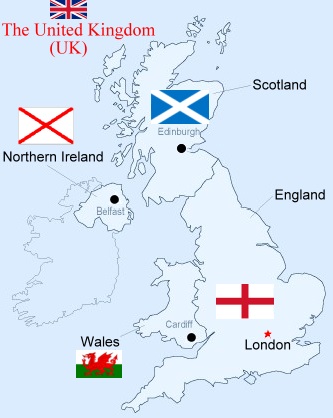
If the Scottish people search their collective hearts and decide to destroy the United Kingdom in a bid for complete self-governance with no remaining ties to England, Wales and Northern Ireland, they should go. The UK will not be worth saving, because we will have forgotten who we are. We can await our diminished future as the fifty-first (and second poorest) state of America, or our balkanisation into soulless geographical regions by the European Union.

I watched the two awful televised debates between Alex Salmond and Alistair Darling. I watched as the Better Together camp made the ludicrous, doomed decision to compete with the SNP in devotion to left-wing, big government principles. I watched as the Yes camp peddled their denialist fantasy in which an independent Scotland walks away from its share of the national debt, uses the pound while influencing UK monetary policy in it favour, accedes immediately to European Union membership and funds its socialist utopia with limitless oil revenues from the North Sea.

How does one engage in a debate when one side argues for what should not be and the other side clamours for something that cannot possibly be?

The Better Together side’s latest grand idea is talking up the prospect of David Cameron being defeated in the 2015 general election, and holding out the prospect of a more appealing, left-wing alternative in Ed Miliband. But must we really now start to base our national identity according to the same brittle rationale by which we choose our newspaper habits and prune our social media feeds, seeking to insulate ourselves from contrary opinions and perspectives, and identifying only with those people who agree with us politically?

This is the toxic, petty world inhabited by the likes of George Monbiot, who believes that a Scottish “No” vote would be an “astonishing act of self-harm”:

What would you say about a country that exchanged an economy based on enterprise and distribution for one based on speculation and rent? That chose obeisance to a government that spies on its own citizens, uses the planet as its dustbin, governs on behalf of a transnational elite that owes loyalty to no nation, cedes public services to corporations,forces terminally ill people to work and can’t be trusted with a box of fireworks, let alone a fleet of nuclear submarines? You would conclude that it had lost its senses.

There is no point attempting to reason with the likes of Monbiot, a man so determined to see evil in everything the United Kingdom stands for and so willing to buy the Scottish nationalist snake oil. But there may yet be time to prevail upon those Scots who are not so embittered by the mere thought of capitalism, private enterprise and a strong nation state as our best model for human governance.

At a time when people from the four home nations of the United Kingdom sometimes look at each other and see no common bond left, we would do well to remember the example of our former colonies in the New World. Each of the fifty United States of America boasts its own distinct culture, accomplishments and economic strengths. Each fancies itself the greatest state in the union. But when push comes to shove, almost everyone in that great land proudly considers themselves to be an American – even if, in the case of the Lone Star State, they may call themselves Texan first and foremost.

An American born and raised in Kansas may never set foot in the state of California, but they would be rendered incomplete if the land of pacific beaches, the Golden Gate Bridge and the great Redwood forests were to wrench itself away and start governing itself for the benefit of Californians alone. Those in the American heartland may be different from their coastal cousins in as many ways as you can imagine – taste in food, fashion, approach to religion, views on social issues and love of firearms – but they share the same historical bond, forged in war and peace, that Scots share with the English (and Welsh, and Northern Irish) whether they like it or not.

I have no words of my own left to flatter or bribe my wavering Scottish cousins into preserving something so precious and yet apparently so undervalued north of the border. I can’t participate in the ideological race to the left, nor do I think framing the debate as a competition to promise Scots the most left-wing gimmicks is in any way helpful or illuminating. I can only offer the words of another, a great man who rose to the occasion when his country seemed destined to tear apart at the seams.

At his inauguration in 1861 and on the eve of the American civil war, President Abraham Lincoln reasoned and pleaded with the restive Southern states, seven of which had already declared their secession from the Union, in this way:

That there are persons in one section or another who seek to destroy the Union at all events and are glad of any pretext to do it I will neither affirm nor deny; but if there be such, I need address no word to them. To those, however, who really love the Union may I not speak?

Before entering upon so grave a matter as the destruction of our national fabric, with all its benefits, its memories, and its hopes, would it not be wise to ascertain precisely why we do it? Will you hazard so desperate a step while there is any possibility that any portion of the ills you fly from have no real existence? Will you, while the certain ills you fly to are greater than all the real ones you fly from, will you risk the commission of so fearful a mistake?

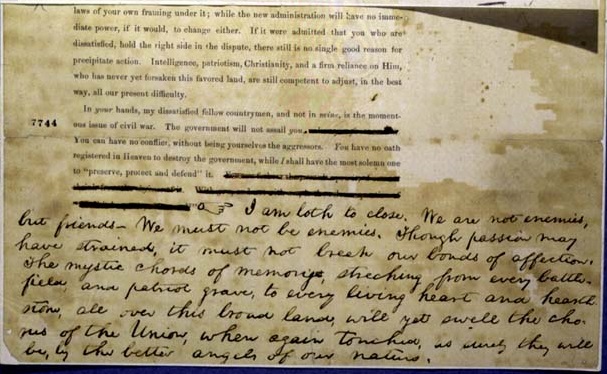
And as Lincoln said in closing to the rebellious American South, I can only repeat to the United Kingdom’s restless north:

I am loth to close. We are not enemies, but friends. We must not be enemies. Though passion may have strained, it must not break our bonds of affection. The mystic chords of memory, stretching from every battlefield, and patriot grave, to every living heart and hearthstone, all over this broad land, will yet swell the chorus of the Union, when again touched, as surely they will be, by the better angels of our nature.
Scotland England crossed flags pin

As The World Burns, Britain’s Political System Remains Broken And Neglected


If it suddenly feels as though there are more loud-mouthed juveniles wandering about during the daytime, it is because both the nation’s schools and the House of Commons have wrapped up their business and gone home for the summer holiday. But while no one should begrudge our young people or their harried teachers a much-deserved break, Westminster’s politicians are returning to their constituencies with few solid accomplishments to their credit, and with the very effectiveness of Parliament itself now in question.

While the world is captivated by the latest slaughter in Israel and Gaza, and scrambles to respond to Russia’s aggressive expansionism and the downing of flight MH17, a number of far less dramatic but equally intractable problems continue to chip away at British democracy and our political institutions. Normally, these “dull” issues only see the light of day at election time – at which point everyone stops to wring their hands about how terrible it is that so few people bothered to vote, or (heresy of heresies) that they voted for UKIP – but a pair of articles in the Spectator and at Conservative Home  sound an early warning that we would all do well to heed before we get distracted by the 2015 general election campaign.

The Spectator piece, by James Forsyth, starts by bemoaning the fact that so many of the ex-ministers recently departed from David Cameron’s Cabinet following the reshuffle have also elected to stand down as MPs at the 2015 general election. But it grows into a broader, important discussion about the kind of MPs that we should want debating legislation and holding the executive to account in the Commons:

Most of those leaving are not doing so because they are past retirement age. Sir George Young might be 73, but William Hague, Andrew Lansley and David Willetts are only in their fifties and Greg Barker is a mere 48. When they go, they will take expertise and experience that the Commons desperately needs to do its job properly. Former ministers play a particular role in the Commons’ ability to scrutinise what the government is doing.

Although the details of each ministerial case are different, Forsyth correctly taps into an increasing sense among many current and aspiring MPs that the only goal worth shooting for is a top-level Cabinet position, and that any other trajectory (a brief tenure as a junior minister or a few terms on the backbenches) is an unacceptable outcome for their political career.

Forsyth then makes an important point about an over-emphasis on youth which seems to attract the ‘wrong’ kind of young people into Westminster politics (such as Labour candidate Emily Benn):

This emphasis on youth precludes people having had a long career outside of politics. One doesn’t have to agree with the former minister who says that ‘we have the worst of all worlds — people who aspire only to be managers but can’t manage’ to think that it is unfortunate that the ambitious feel they have to stand for office before they have had time to reach the top of another profession.

This complaint ties in very strongly with this blog’s own concern at the lack of real ‘citizen politicians’, people whose sense of civic duty compels them to take a mid- or late-career break to sit in the House of Commons representing their constituents for just one or two terms of office. Of course there are always a handful of one-hit wonders, but most one-term departures are a result of losing re-election, scandal, failing to achieve work/life balance or bitterness that plans for rapid promotion and the acquisition of power and prestige did not come to fruition.

Indeed, an MP voluntarily leaving Parliament for a reason other than these typical motivations is almost guaranteed to be newsworthy, as it was when Conservative MP Dan Byles, of the 2010 intake, announced his decision not to seek re-election. And instances of British political candidates pledging upfront to serve only a single term or a set number of terms are almost non-existent.

Forsyth’s twin solutions are quite radical – he proposes increasing constituency sizes to dramatically cut the number of MPs to around the 400 mark, which would make it harder for them to be coerced into wasting time going to battle  for individual constituents and their personal problems, something which better falls under the remit of local government. (It should, however, be noted that US congressional districts are as much as ten times larger than UK constituencies, and American representatives are still expected to fulfil this role).

But ultimately, Forsyth believes it may be necessary to split the executive from the legislature and impose a separation of powers in Britain once and for all. This really is quite visionary stuff, and would form part of the comprehensive UK-wide constitutional reform that Semi-Partisan Sam has long advocated. If the legislature and the executive were separate, the quality and effectiveness of the House of Commons would be less polluted by the presence of young whippersnappers who regarded their seats and duties to their constituents as a mere springboard to higher office. The opposition to such a split would be immense and the details would need to be worked out – would all government positions be purged from the Commons, necessitating a separate election for Prime Minister, for example – but it is a fascinating idea worthy of serious discussion.

Meanwhile, Mark Wallace at Conservative Home has the House of Lords in his sights, arguing that the size of the upper chamber (rapidly nearing 1000 peers) is too large, too inefficient and so stuffed with “cronies and failed politicians” that the ability of the chamber’s subject matter experts to properly scrutinise legislation is severely limited.

With a very unflattering comparison to the 3000-member Chinese National People’s Congress, Wallace explains that such a large body can only be a recipe for confusion:

The swelling ranks are an outcome of the Lords’ confused role. On the one hand, the Upper House is meant to scrutinise legislation as a home of expertise; on the other, it is a tool for morale and political management in the Commons – convenient vacancies are created on the green benches by bumping MPs up, patronage (or the hope of receiving it) is extended to maintain party discipline, and partisan appointments are made in the hope of improving the chances for Government legislation …

The Mail‘s description of many appointees as “cronies and failed politicians” is too often correct – we are meant to get experts, but a lot of the time we get party apparatchiks, trade union officials and the great and good from Whitehall and the media. For every great debate, like that on assisted dying, there are a dozen in which the prevailing ideological trends of our left wing establishment are recited as fact.

It’s hard to argue with that assessment. Semi-Partisan Sam was in the public gallery at the House of Lords on Wednesday, and was shocked by the perfunctory laziness with which Oral Questions was rushed through, the sloppy way in which the self-regulating peers kept (or rather didn’t keep) order, and the sheer amount of timewasting that takes place as the House resolves itself into a committee, out of a committee or divides for a vote (mechanics that are rarely seen by the British people as the House of Lords proceedings tend to be shown only in highlight reels by the BBC). Quite why many of the peers filling the benches for Oral Questions were there at all was a mystery, given their disinterested faces and sleepy postures – until one remembers the £300 daily allowance.

Reform of this sleepy and dysfunctional institution will not be easy – the most recent plans, hammered out in the coalition negotiations in 2010, were abandoned when Conservatives reneged on their agreement to support the changes. But at a time when any mention of House of Lords reform is met with sighs and knowing warnings that it can’t be done, Wallace’s proposal for an easy quick win on the issue should garner support from everyone:

We do agree on a starting point, though: the numbers must be reduced to make the House functional. David Steel’s proposals to require members to commit to being active, working Peers or face expulsion and to introduce an age limit both have merit and would go some way towards fixing the problem.

Yes, it would. We still see the problem of peers “clocking in” to Parliament to be eligible for their daily allowance, while otherwise doing nothing to contribute to the workings of the institution or the democratic process. Accepting an ennoblement should be contingent on making a commitment to turn up for work and do the job. The current situation – where there are life terms, no upper age limits, no requirement to actually do any work and no simple procedure for removing lazy or criminal peers – is a virtual incentive for poor performance and represents the antithesis to a well functioning upper chamber.

None of these very unsexy constitutional issues are likely to set the world on fire, not when so many pressing international human tragedies are doing such a fine job of keeping it aflame in the worst possible way. But we in Britain have a nasty habit of ignoring pressing questions about how we want to govern ourselves and make decisions, allowing them to smoulder untended in the background until events cause them to suddenly burst to life in a wildfire of public outrage.

Think back to 2010, and the pompous outrage that met the formation of a Conservative-led coalition government that “nobody voted for”. It’s certainly true that there was no box on the ballot paper marked “Cameron & Clegg Double Act”, and so in that strict sense the plaintiffs are correct. But we all went into that 2010 general election knowing (or deliberately choosing to remain ignorant of) the way that our voting system worked, and that a hung parliament was a possibility. If the people do not have the proactivity or the attention span to think about these possibilities and make their preferences known beforehand, there are no grounds for complaint when Sir Gus O’Donnell and other senior civil service mandarins facilitate a resolution of their own behind closed doors.

In the same way, we all know (or deliberately choose to remain ignorant about) the variable calibre of politicians that are currently attracted to Westminster, and the hazy unwritten rules and conventions which govern Parliament’s workings. But as well as being cognisant of the problem, we are also now armed with a few radical suggestions for digging ourselves out of our democratic deficit.

With a small window before the 2015 general election campaign to get these issues debated and make them part of the policy discussion before the parties publish their manifestos, advocates of constitutional reform should see this moment as a rare opportunity.

The Very Model Of A Modern Citizen Politician?

George Washington


Dan Byles, the Conservative MP notable for holding the party’s most marginal seat (North Warwickshire, majority of 54 votes) has announced his intention to stand down at the 2015 general election.

In a statement published on his website, the MP notes:

Before becoming an MP I served in the Army for nine years, deploying on operational tours in Bosnia and Kosovo. By the time of the 2015 General Election, serving my country will have been the primary focus of my professional life for some 14 years. For myself and for my family, whose support and understanding have been unerring throughout, I believe it is now time to move on to new challenges. I will therefore not be standing for re-election in 2015.

While it is sad to see Parliament lose a member of such evident patriotic devotion as Mr. Byles, more than anything else, the news comes as a tremendous surprise because it is so rare to see someone give up power and office so gracefully in modern British politics. Unless they are so unfortunate as to lose their seat in an election, MPs usually cling to their Westminster offices like barnacles to a ship’s hull.

Having undertaken whatever questionable manoeuverings were necessary to be selected as a candidate and then elected to Parliament in the first place, many MPs choose to stay in the politics game for the rest of their careers. And just as the baby boomers delaying retirement creates a lack of entry-level openings at the junior end of the job market, so the legion of sixty and seventy-year-old MPs refusing to step off the gravy train prevents any significant injection of young blood into the senior levels of British politics.

Of course, not all legislators can (or should) breeze into Parliament for a single term as a mere sabbatical from their real-life careers. Parliamentary business (particularly the important, mostly unseen work done in committees) depends on there being knowledgeable, experienced veterans able to see through the nonsense and bring their vast wisdom to bear on proceedings. Just as it would be damaging to have a Parliament exclusively full of big beasts and old-timers, so a Parliament of young and ambitious whippersnappers with their eye on a Cabinet position (or higher) would also be harmful.

But Dan Byles represents a type of politician that is far too rare in Britain – someone willing to serve his constituents in our national legislature with seemingly no further ambition to climb the greasy pole or to engage in Westminster’s devious games.

Sure, there are other young politicians who stay in Parliament for only a short term – as the BBC rightly notes, Byles represents the 23rd Conservative MP to stand down 2015, a significant number of whom also come from the 2010 intake. But this is not the dawn of the citizen politician that it appears to be – the ranks of the departed include those such as Louise Mensch, who arrived with expectations of power and rapid promotion, chafed at the club-like nature of Westminster and the unglamorous life of a backbencher, and departed early after focusing too much on what their government could do for them, as opposed to what they could do for their government.

Think also of the one-time rising stars of the New Labour governments such as James Purnell, who leveraged his brief ministerial career and failed attempt to destabilise Gordon Brown to secure himself a plum job at the publicly-owned BBC (after a spell as chairman of a think tank and public sector advisor to a global consultancy firm).

While there is very little to praise in a long life lived out on the backbench easy street, or a brief incandescent Parliamentary career aborted when the office holder realised there was no room for further personal advancement, there is a lot to praise in someone devoting a limited period of their life – either relatively early in their career like Dan Byles, or later in life at the apex of their career – to serve their constituents and countrymen.

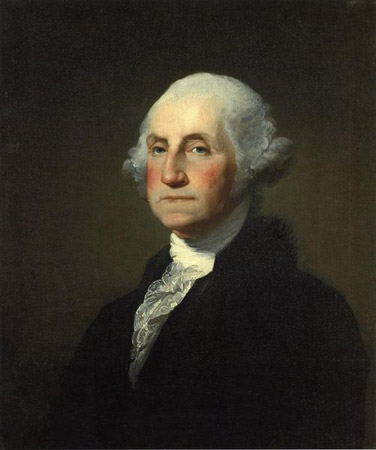
George Washington, the first President of the United States, retired from the presidency in 1797 to tend to his farm and his business interests. True, there was not the same temptation to found self-aggrandising global initiatives, join the ranks of the lobbying industry or make the transition into television punditry back in the late eighteenth century – but even if there were, one suspects that George Washington would have had none of it. After a lifetime of service to his newly born country, he was happy to dissolve back into civilian life. How glib, shallow and egotistical do so many of our contemporary leaders and politicians appear when compared to this Washingtonian ideal of the citizen politician?

It may be the smallest of beginnings, but let the national service and brief Parliamentary career of Dan Byles be a reminder to others – particularly those who hold the most sway over candidate selection, both in the constituencies and in Westminster – that while there is no one model political career, that of the citizen politician is one to aspire to, and one to respect.

We Need A Federal United Kingdom, Not Just More Powers To Scotland


I have felt like something of a voice in the wilderness at times on this blog, advocating for equal devolution of powers from Westminster to the four home nations of the United Kingdom, to the extent that have almost questioned my sanity that something so self-evidently sensible and obvious to me should be so opaque and avant-garde an idea to almost everyone writing a newspaper column or appearing as a TV news talking head.

And so I am seizing on the words of Allister Heath with all the enthusiasm at my disposal. Apparently I am not alone after all. Addressing the question of Scottish independence and the upcoming referendum, Heath writes:

But that doesn’t mean that the status quo is right either. The UK’s constitution has been an irrational and unsustainable shambles since the Scotland Act of 1998; this can only be resolved satisfactorily if the process that started with Scottish devolution is now taken to its logical conclusion.

Following what we must hope will be a resounding “no” vote, we need to adopt a new, fully federal model for the UK inspired by the US, Canadian, Swiss and other similar systems that share power properly between the centre and autonomous provinces or states. England needs to have its own parliament, Scotland, Wales and Northern Ireland must be given greater rights and responsibilities, and all component nations of the UK need to start living within their means, raising as much tax as they spend.

This is heartening for two reasons – firstly because it validates my own thinking, but with the persuasive articulacy of someone who writes weekly columns in a national newspaper. It is absolutely right to assert that the devolution process begun in 1998 put our country into a state of limbo, but I would go further and argue that the UK’s constitution has been a shambles for many decades and indeed centuries prior to that. This tends to be the case in older countries that have eschewed revolution or invasion in recent times, but while conservatism would tend to urge an “if it ain’t broke, don’t fix it” attitude, our constitutional underpinning and the way that our country functions is of such fundamental importance that I cast the “traditionally conservative” attitude aside in favour of the reforms advocated by Heath.

Secondly, Heath’s joining the argument for a federal solution is heartening because he addresses the financial aspect in a mature and sensible way. Making the four home nations responsible for their own taxation would allow for that all-too-rare thing, variety, to take root in the UK. The four countries could experiment with setting tax rates in line with local preferences to achieve local ends, and the redistributionist pipe dreams of some of the nationalist parties (SNP, I’m looking at you) once and for all. Heath expands on this thinking, conferring upon the home nations the financial autonomy enjoyed by the states of the US plus a little bit more:

Crucially, the UK’s four component-nations should not merely have the right to spend money but also the responsibility to raise it; they would have their own tax systems, running in parallel with a much reduced UK-wide HMRC. The four nations ought to be able to cut and hike taxes, and would be under great pressure to balance their budgets. They should have the right to issue their own debt, which would not have sovereign status and would not be guaranteed by the UK.

Absolutely right. Of course there will always be a place for HMRC, because certain tax policy (such as import/export duty) must remain common to all. But giving the home nations the right to set their own tax rates on the “big ones” like income tax and corporation tax is absolutely the right thing to do. This could even present the ideal opportunity to do away once and for all with the laughable notion that National Insurance is somehow separate from income tax – let the people see what their real effective tax rate is when NI is factored in to a single tax rate and see what they think of their overall tax burden then.

The UK has suffered from a dearth of political competition for too long. At times I have really struggled to differentiate between the views of the coalition government and the Labour opposition in terms of attitude to the proper size and scope of the state. Sure, the Conservatives may talk the small government talk, but in no way have they boldly walked the walk. Four powerful national assemblies under the auspices of the Westminster parliament would allow for some real diversity in our islands, diversity of ideas and yes, diversity of outcomes.

The end result of all of this would be political settlements more closely attuned to the moods of the local electorates, and therefore more democratic in the true sense of the word. Heath fast-forwards the clock and imagines the likely power dynamics in a newly-federal UK:

In a federal UK, England would probably be run by a pro-market Tory government (or, intriguingly, a Tory-Ukip coalition) with the UK as a whole controlled by Labour, at least in the short term. We could see radical tax cuts in England and elsewhere as leaders vie to grab business. Northern Ireland, in particular, is ripe for drastic supply-side reforms to rejuvenate its economy. This new dynamic would better reflect electoral preferences and would allow rival political ideologies to be tested simultaneously in different parts of the country.

In short, this call for a federal United Kingdom is the complete antithesis to Gordon Brown’s cack-handed intervention in the Scottish independence debate (which I dissected here), in which he proposed a raft of discriminatory (to the rest of the UK) special perks and privileges to be carved out for Scotland as a bribe to their electorate in advance of the referendum. That foolish proposal has all the hallmarks of Brown – short term political manoeuvering to achieve a tactical outcome at the great expense of a broader strategic goal (the strategic goal being the more efficient and democratic governance of the UK as a whole).

The side of democracy, transparency and common-sense needs more articulate advocates, and today we can add Allister Heath to the ranks. Where he picks up, may many more soon follow.