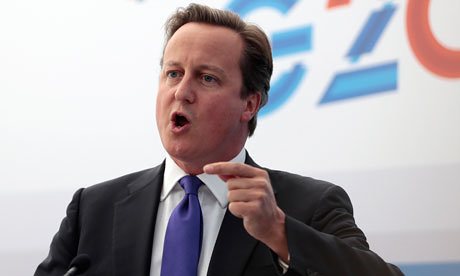
David Cameron: Portrait Of A Deceitful Charlatan With No Redeeming Qualities

Apparently there is panic in Number 10 Downing Street and among the slavishly pro-EU establishment. Good. They have waged a contemptible, negative and deceitful campaign, and whether or not it prevails on June 23 the hearts, minds and consciences of all those involved richly deserve to be troubled

Having done everything but fill in all of the ballot papers himself to ensure a “Remain” vote on 23 June, at this point in the unevenly fought EU referendum campaign we might expect to see a bit of magnanimity or statesmanship from the prime minister as he coasts toward the closing stages.

But the polls have tightened unexpectedly as the British public rightly begin to suspect that the near-unanimous hysterical screeching from the establishment in favour of Remain sounds more like naked self-interest and wretched pessimism about Britain than a realistic warning about what might happen in the event of Brexit. And this has caused David Cameron – a notably weak strategist only capable of thinking one step ahead, unlike his gifted general election campaign manager – to panic, and start behaving in a most un-prime ministerial manner.

Three interventions in particular mark out the descent of David Cameron from oleaginous, confident salesman to the nation’s Bully in Chief – the impromptu rooftop press conference at which Cameron openly accused ministers in his own government of knowingly peddling falsehoods, the statement that Cameron would take Britain out of the single market in the event of a “Leave” vote despite leaving the EEA not being on the ballot paper, and his shameful attempts to bully and coerce Britain’s pensioners, effectively holding a gun to their heads and commanding them to vote Remain or see their pensions fall.

The Spectator’s Isabel Hardman says of Cameron’s panicked rooftop press conference:

David Cameron doesn’t do that many press conferences at all, despite promising in Opposition that he would hold a monthly one, and so when he summons hacks to the roof of a hotel at short notice, you know that there is a Crisis that the Prime Minister is taking Very Seriously indeed.

Cameron then proceeded to list six ‘complete untruths to the British people’ that the Leave campaign was guilty of producing. These were that the UK is liable to bail out eurozone countries, that our rebate is at risk, that we have given up our ability to veto EU treaties, that we have no ability to stop EU spending from going up, that we are powerless to stop Britain being forced into an EU army and that we would save £8bn if we left the EU.

Were these untruths really so heinous that he was forced to hold a press conference at short notice? Or was it, as one of the journalists sitting on the roof with the Prime Minister suggested, that the Leave campaign currently had the momentum and the debate was all about immigration, which damages Remain? Cameron replied:

‘Look, I was watching the news last night and it just came over to me so clearly that there is such a contrast between the weight of independent expert opinion that wishes our country well but is giving us an unvarnished view of the decision we could be taking, there’s a massive contrast between that – respected, independent experts warning us about lost jobs, about instability, about a smaller economy, about the effect on our country. The contrast between that and a series of assertions from the Leave campaign that just simply aren’t right…’

So the Crisis was that the Prime Minister had been watching the news last night.

Some archly dry humour there from Isabel Hardman. When The Spectator openly mocks a Conservative prime minister in this way, you know things are bad.

Cameron’s specific counterpoints are immaterial here – they were aimed at the ravings of the official Vote Leave campaign, which does not speak for all Brexiteers. But what is telling is the fact that David Cameron – a man who promised that he “ruled nothing out” in his renegotiation with the EU while actively colluding with business leaders to plan the eventual Remain campaign, and who then presented the empty gift bag given to him by Brussels as a deal which had fundamentally “reformed Europe” – is willing to go on live television and accuse his Brexit-supporting ministers of being liars.

More insidious than this, though, was the way that David Cameron pledged on the Andrew Marr show last weekend that in the event of a Leave vote he would seek to take Britain out of the single market, despite this being just one (incredibly sub-optimal) mode of Brexit, and the referendum question saying nothing at all about the single market or EEA.

Dr. Richard North of the eureferendum.com blog remarks on:

[..] an extraordinary interview on the Marr Show yesterday which had David Cameron pledging to take the UK out of the Single Market in the event of a Brexit vote. This was despite Andrew Marr suggested that we could stay in, with Cameron refusing to entertain the idea, “because the ‘leave’ campaign had specifically rejected that option”.

The segment of the interview started with Andrew Marr reminding the Prime Minister that he had promised to “carry out the wishes of the British people” if we vote to leave. The trouble is, Marr then said, is that “the wishes of the British people” is a rather indistinct thing – it’s a blunt “yes” or “no”.

Cameron responded by saying that if we vote to leave the Government would carry out the instructions of the British people. That, Marr averred, would put the Prime Minister in “a very strange position”. He’d be doing things like introducing an Australian-style points system that he didn’t believe in. As for, the Single Market, though, Marr said, “there is room for a Prime Minister to negotiate that”.

It was here that the role of Vote Leave came to the fore. “I think one of the most important moments in this campaign”, Cameron said, “was when the ‘out’ campaign said they wanted to leave the Single Market”. He continued: “They didn’t have to make that choice. They’ve made that choice. And what the British public will be voting for … would be to leave the EU and leave the Single Market”.

What the Prime Minister is doing, therefore, is using Vote Leave as a proxy for the entire British public. However, this is a small group of individuals with singular views, put in place by an unelected Electoral Commission to carry out the role of lead campaigner. This can’t in any way be taken to represent the will of even those who favour Brexit – much less the entire British population.

Dr. North is absolutely right to emphasise firmly that Vote Leave do not represent the ideas and wishes of all Brexiteers. They were not elected to represent us, and their most prominent figurehead (Boris Johnson) had not even decided which side he was going to support until a couple of months ago.

Just because the same idiots who stubbornly persist in peddling their “£350 million a week for the NHS” falsehood in the face of endless rebuttals and fact checks have airily decided that Britain should not Brexit to an interim state preserving single market access in no way precludes that option. As Richard North reminds us, the ballot paper asks whether we want to leave or remain in the European Union – nothing more and nothing less. We should know, we spent long enough haggling over the wording at the time.

All the evidence suggests that if Britain leaves the EU without securing an “off the shelf” deal to ensure continuity of access to the single market (while fully extricating us from political union, which is what the referendum is all about) there will be at least some negative short term economic consequences, as no new trade deals can possibly be negotiated in the two-year window provisioned in Article 50 of the Lisbon Treaty. By contrast, Brexiting to an interim EFTA/EEA arrangement (the so-called Norway Option) would maintain our full access to the single market in the short to medium term while we work on a better bespoke solution for Britain.

The attractiveness of the interim EFTA/EEA route is self-evident: Britain would immediately be free of ever-closer political union and democracy would be restored, while maintaining single market access (for which we would pay) would return our relationship with the EU to the state that people believed they were voting for in the 1975 referendum. Therefore, it is unsurprising that Remainers are desperate to slander and dismiss the option as unworkable – it represents dynamite which would obliterate their entire case for continuing to suffer the EU.

But while David Cameron’s eagerness to problematise the Norway Option is understandable politically, for the prime minister to flat-out state that he would not pursue this option and instead take Britain out of the single market (despite no mandate to do so from the electorate) is bordering on threatening self-harm. Any Brexit model not involving keeping interim access to the single market would inevitably come with higher risks and potential economic costs than adopting the Norway Option. By ruling it out, David Cameron is essentially threatening the electorate, saying that if we vote Leave he will pursue the most disruptive and costly form of Brexit within his power, purely as an act of spiteful vengeance.

Just stop and think about that for a moment. David Cameron has effectively told voters that if we vote to leave the European Union, he will sneer “your wish is my command” and then set about doing so in the most reckless and ill-considered manner possible, just to teach us a lesson. The prime minister of this country has just threatened  our own national interests on live television. Is that something which we should just blink and accept, writing it off as “fair play” in a hard fought referendum? I profoundly disagree. I think that it is contemptible behaviour, the kind of action which immediately disqualifies the perpetrator from holding further public office.

And if this still wasn’t enough, David Cameron then went from threatening the British people in general to attempting to scare Britain’s older voters in particular, with despicable threats that Brexit would automatically and inevitably lead to pension cuts.

Tim Stanley, rightly outraged, calls this what it is – blackmail:

Project Fear has turned into Project Frightened. Remain are losing ground in opinion polls and running scared. So what do they do? Go positive? Make a better, brighter case for the EU? No. They double-down and turn to blackmail.

That’s the only word that suits David Cameron’s threat that Brexit might lead to pensions being cut, made today in this newspaper. His logic is that Brexit will create a gap in the finances that will have to be filled somehow. The triple lock on pensions, guaranteeing rising incomes, would probably have to picked. Even if it were a moral necessity to help the aged, it would suddenly become unaffordable.

This is rubbish for two reasons. First, it’s based on the Government’s assumption that Brexit will lead to a collapse in trade that will wipe billions off GDP. The Treasury forecasts that this is based on are alarmist and absurd – they suggest a retraction worse than the Great Depression. Businessmen who actually deal with Europe every day, such as Sir James Dyson, report that they don’t see such a risk and are confident that Britain will continue to grow.

Second, Cameron suggests that the Government would have no choice but to cut pensions – as though the invisible hand of the free market would be clasped around its throat. Nonsense. It would face spending choices and, Cameron is telling us, it would choose to cut pensions. Much as the Government has chosen in the last few years to cut the highest rate of income tax on the rich or chosen to cut benefits for the poor. If Brexit did trigger a recession, the Government would once again have to do what it’s supposed to do and make budget decisions based upon its political preferences. I humbly suggest it chases the tax evaders and closes some loopholes before it bleeds pensioners dry.

And Stanley’s devastating conclusion:

The bottom line is this: the Prime Minister has moved from warning the British people to threatening them. And picking on the elderly – some of whom are legitimately worried about the future – is one of the lowest things you can do in politics.

At this point in the EU referendum campaign we are used to seeing the European Union portrayed by its cheerleaders and apologists as a controlling, abusive spouse that would rough us up without hesitation if we try to leave its cloying embrace. But now, the prime minister himself is behaving like an abusive spouse, essentially pushing Britain’s pensioners up against the wall with his hand on their throat, pointing to the kitchen knife on the counter and saying “I don’t want to do this, but you’ll leave me no choice if you cross me”.

What utterly despicable and unmanly behaviour from our prime minister. What debased, fearmongering garbage this man is capable of spewing in order to get his way in the EU referendum. David Cameron’s legacy as prime minister has long been in question, having governed for five years as part of an unmemorable centrist coalition and latterly as a party which blind observers might guess to be the work of Blue Labour, if not Blair’s New Labour. But now that legacy has crystallised – Cameron is the prime minister who betrayed conservatism and bullied his own people, preferring to serve the interests of the EU than those of his country.

David Cameron doesn’t have a conservative bone in his body. He doesn’t have an ideological bone of any kind, and from his craven behaviour in this referendum campaign it is quite clear that he lacks a backbone, too. And like a common school bully, he is willing to throw the full weight of his office and government around, breaking conventions and standards of common decency left, right and centre as he seeks to gain every inch of advantage.

Whether it is conducting a blatantly fraudulent “renegotiation” and presenting the status quo as shiny new baubles he secured from Brussels, calling the referendum implausibly early against the advice of the Electoral Commission, spending taxpayer money on a one-sided propaganda leaflet, sending out voting advice guides which subliminally encouraged people to vote Remain, winning over prominent Remain supporters with government jobs and official honours, cravenly failing to take part in a single proper televised debate, misrepresenting his opponents, attacking conscientious objectors to his slavish europhilia within the Conservative Party and isolating and targeting every possible voter group with customised attempts at scaremongering – now including this unsubtle warning to pensioners that he will spitefully lash out at them if they vote to Leave – in every way imaginable, David Cameron has debased himself and his office.

That’s why the prime minister’s days are numbered. At present he takes false courage from the fact that his normally sworn enemies in the Labour Party and on the generic Left are holding their fire in their shared desperation to keep Britain in the EU. But on June 24, Cameron will quickly realise that a good half of his own Conservative Party, together with everyone else in the country, will be straining at the leash to eject him from office, strip him of the bully pulpit he has so abused, and send him marching barefoot back to Witney in sackcloth and ashes.

And such is the amount of political capital and personal goodwill Cameron has squandered, barely a single person will come to his defence when the inevitable party leadership coup takes place. In the minds of many people – now including this blog – whether his successor is just as bad (i.e. Boris Johnson) is almost immaterial. The pleasure of seeing such an arrogant and dishonest man as David Cameron driven from power in disgrace, his reputation rightly in ruins, will be its own reward.

There is a legitimate and intellectually coherent case for Britain remaining in the European Union, but David Cameron has not made it. In fact, when it comes to the rarely heard (in this country) principled euro federalist case, its proponents all seem to have been abducted and held far away from any television studio so that they don’t open their mouths and drive thousands more people into the Brexit column.

Whether the prime minister is among their number is not known. It is possible that the man is catastrophically misguided and actually believes some of the nonsense he has spewed about securing a “better deal” for Britain, and that Britain could somehow prosper as a country inevitably on the margins of an ever more tightly integrating eurozone. Perhaps.

But either way he has not been honest with the British people. Worse than that, though, he treats the people with open contempt. Some politicians lie because they fear the people, but not so with Cameron. David Cameron lies because he despises the people, holds their intelligence in low regard, and is more than willing to alternately deceive, belittle and threaten the people in the service of his establishment masters and instincts.

This is a prime minister who, when given the choice between vociferously defending the national interest of his country against the EU elite or siding  with that same elite and bullying his own people into submission to their will, gladly chooses the latter course of action every single time.

There are few words strong enough to adequately describe the prime minister’s odious character and behaviour as revealed over the course of this EU referendum campaign – certainly none which I am willing to publish on this blog.

Which is why I am ending this piece here, in utter disgust at the conniving, arrogant, untrustworthy and weak approximation of a man presently in charge of our country – before I say something that I might later come to regret.

 

David Cameron Patriotism

European Union - United Kingdom - Britain - Flags

Agree with this article? Violently disagree? Scroll down to leave a comment.

Follow Semi-Partisan Politics on TwitterFacebook and Medium.

What Conservative Government? – Part 6, EU Referendum Legacy: A Tory Party Hated By Left And Right Alike

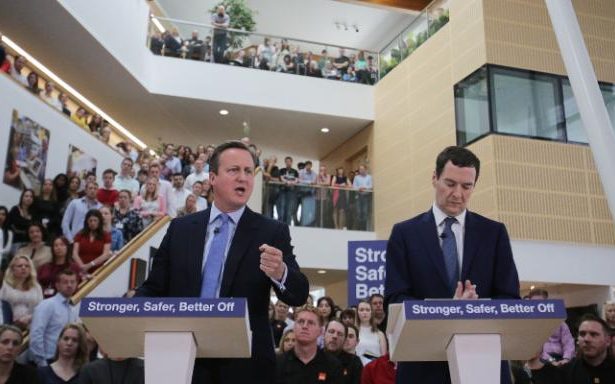
David Cameron - George Osborne - EU Referendum - Brexit - Remain - Stronger Safer Better Off

By waging such a disingenuous, fear-based campaign for Britain to remain in the European Union, David Cameron and George Osborne are sowing the seeds of their own political destruction

The excellent Archbishop Cranmer blog gives it to David Cameron and George Osborne with both barrels for the grubby, underhanded way in which they have gone about fighting the Remain case in this EU referendum campaign.

The devastating conclusion:

Frankly, both George Osborne and David Cameron have disgraced their offices of state in this referendum campaign, with their lies, hyperbole, disinformation and deceit. Whether or not the UK takes the first step toward leaving the EU on 23rd June; whether or not it becomes our Independence Day or is confirmed as the day we resigned to plod inexorably toward becoming an offshore regional council of a United States of Europe, David Cameron and George Osborne will go down in history as Tory charlatans, cheats and political frauds. They have successfully re-toxified the Conservative brand and made it impossible for many to support a party led by either. You cannot call a referendum on something as crucial as fundamental identity or the determination of national destiny, and then collude with corporates and conspire with other elites to feed the electorate a diet of blight, pestilence and woe. It’s enough to make a man never trust a Tory again.

Amen. And the curious thing is that both Cameron and Osborne seem utterly oblivious to the medium and long term damage they are wreaking on their party. Wanting their side to win the referendum is understandable – both men’s authority and political careers ride on the public voting remain. But the desperate and underhanded means to which they are going to win the referendum – the national propaganda leaflet, the Treasury statistics mysteriously missing an analysis of the Brexit to EFTA/EEA scenario – are storing up serious problems for the future.

In this blog’s opinion, both Cameron and Osborne are overrated as master political and strategic minds. Cameron actually failed to win the 2010 general election, and prevailed in 2015 only against a phenomenally weak Labour leader. Osborne, meanwhile, is much more of a tactician than a strategist, often quick to exploit opportunities to win a particular argument, but with little sense of the knock-on impact on other matters.

This is exactly what is happening now. Cameron and Osborne look at the polls, which generally show a steady lead for Remain, and mistakenly assume that this is the same as approval of themselves. But this is not so. Strip away the vast majority of Labour and non-aligned voters siding with Remain out of fear or ignorance, and over half of the Conservative Party may well oppose the prime minister. Had David Cameron conducted his campaign with a shred of decency or respect for the opposing side, this might not be a problem, and eurosceptic Conservatives might well have kissed and made up after being defeated on 23 June. But the sheer barrage of misleading statistics, analyses and inappropriate interventions from global figures organised by Cameron means that no rapprochement will be possible.

The bitter truth is that far from detoxifying the Conservative Party, David Cameron has retoxified it – to a supercharged degree. The prime minister may not be to blame for the Left’s hysterical reaction to any and every limited attempt at fiscal restraint by this government – with Labour shrieking that attempts to curb growth in public spending amount to a holocaust of the sick and disabled, the Left are to blame for much of the toxicity in our politics today. But Cameron is very much responsible for alienating vast swathes of his own side.

After the referendum is done, there will be a large number of small-c conservative voters who would sooner die than lift a finger to support a Conservative Party led by David Cameron or any of his cabinet allies from the Remain camp. This blog is among them. The Conservative Party is now as toxic among many conservatives as it is among the British Left. How then to fight a general election once the Labour Party finally gets itself organised?

This is David Cameron’s true legacy – a Tory Party hated by the Left despite being so boringly, forgettably centrist as to be indistinguishable from New Labour, and equally hated by many on the Right for having betrayed innumerable conservative principles through a policy of government by appeasement rather than the bold pursuit of conservative goals. Hated by the Left for having risked Britain’s place in the European Union by holding the referendum in the first place, and equally hated by the Right for having shamefully come down on the side of supranational, antidemocratic rule from Brussels.

Dave and George are probably not looking that far ahead right now – they are probably too busy lining up the next NGO head to go public about how apocalyptic Brexit would apparently be. But you could not pay me enough money to change places with either of them when it comes time for the first meeting of the Conservative Parliamentary Party after the referendum.

The anger and vitriol will be immense, and may well consume our arrogant prime minister and his chancellor soon after their moment of ill-begotten triumph.

And who will mourn their loss? If David Cameron and George Osborne are the best that the Conservative Party can offer, we may as well have a Labour government anyway.


European Union - United Kingdom - Britain - Flags

Top Image: Telegraph

Agree with this article? Violently disagree? Scroll down to leave a comment.

Follow Semi-Partisan Politics on TwitterFacebook and Medium.

‘Tory Brexit’ Hysteria: Leftist Remainers Double Down Against Democracy

John McDonnell Tory Brexit

“Maybe Brexit one day, but not under a Tory government” – the Left’s stunning disregard for democracy makes a mockery of Jeremy Corbyn’s New Politics

The refrain is already familiar to us: But if we leave the EU, the current Conservative government might do the kind of things that they pledge in their manifestos! The only way to stop the democratically elected Conservative government from actually governing conservatively is to stay in the European Union, where it doesn’t matter which party holds power in Westminster!

One assumes that the Remain campaign have done some focus group testing on this sentiment and found it to be effective, but to many people this will sound like a chilling and cavalier disregard for democracy rather than an expression of the supposed best traditions and instincts of the Left.

And yet leftist Remainers are doubling down on this line of attack, trying to paint Brexit not simply as a matter of whether or not to leave the European Union, but as a purely Tory initiative, no doubt part of the Evil Tory government’s heartless, genocidal campaign against the sick and disabled.

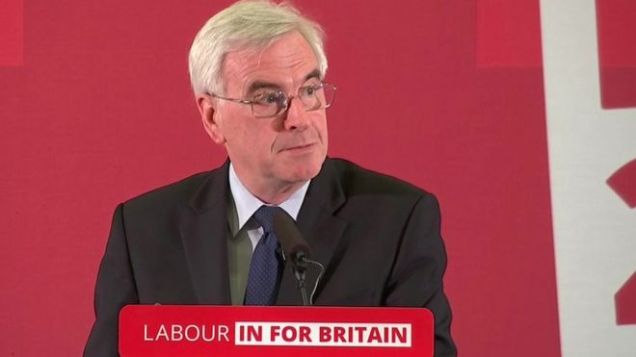
This attempt to sully the Brexiteers’ campaign to reclaim democracy as a purely partisan Conservative Party initiative is summed up in a new phrase being trialled by Labour’s John McDonnell: “Tory Brexit”.

Stephen Bush reports in the New Statesman:

John McDonnell has a new catchphrase: “Tory Brexit”.

It may sound uncomfortably close to the name of a new character in Star Wars but it’s what McDonnell and his team believe is the best route to turn Labour voters out for a Remain vote in the coming referendum.

Shadow ministers and Labour MPs are increasingly worried that Labour voters don’t know what the party’s stance on the referendum is – and even more troublingly, they don’t much care. That much of the media has covered the contest largely through the prism of the Conservative succession has only made matters worse. The government’s message about the dangers of Brexit, too, are calibrated towards the concerns of Tory voters: house prices, security, and the economy.

Tony Benn must be turning in his grave. For Benn was a Labour politician of principle and patriotism, one who realised that the gnawing short-term fear that the opposing party might get to implement some of their own policies when in government is not sufficient reason to neuter Westminster altogether by making it subordinate to supranational EU institutions.

By contrast, the leading lights in today’s Labour Party – including the Corbynites, who in many cases have been so sanctimonious about how the are the sole custodians of political principle, unlike those sellout New Labour types – couldn’t give a damn about democracy. They really couldn’t. And like John McDonnell, they openly boast about a Remain vote being key to thwarting the supposed actions of a democratically elected British government.

Bush continues:

It also has the added bonus of keeping open the idea that Brexit under a leftwing government mightn’t always be the worst thing in the world, which, depending on your perspective, either defangs the minority of Labour politicians who are pro-Brexit, or allows McDonnell and Jeremy Corbyn  to keep the party united while not closing the door on supporting a Leave vote at a later date. Either way, it’s canny politics.

Stephen Bush might call it canny politics. Anybody who really cares about democracy would call it appalling, craven political posturing bordering on constitutional vandalism – being willing to “switch sides” on an existential question like Britain’s future in the EU based purely on which party is currently enjoying a five year term in government.

It is also base scaremongering of the worst sort. In the event of a Brexit vote, the Conservative government which enters into secession negotiations with the EU will – regardless of who leads it – be comprised of many Remainers, if not a majority. And in order to get the terms of that renegotiation through Parliament, the deal must also attract a sufficient number of Remainers, including some in the Labour Party for the figures to add up. Immediately this means that all of the most apocalyptic Brexit scenarios being bandied about the media by disingenuous Remainers are out the window. And what remain will be a much more easily negotiated “off the shelf” interim solution which maintains political and economic stability – in other words, exit to EFTA in order to continue access to the EEA, also known as the Norway Option.

The trouble for Remainers is that this form of Brexit is incredibly benign. It ensures Britain’s continued unimpeded access to the Single Market, preserves freedom of movement (with a better “emergency brake” on immigration than is available to Britain as an EU member) and ensures maximum stability in every area, while removing us entirely from the antidemocratic, authoritarian political union of which most Britons want no part.

If this most likely form of Brexit was properly understood by the public (and Vote Leave shoulder the blame for failing to grasp the importance of adopting such a plan upfront), the Remainers’ case would be utterly blown apart. All of their apocalyptic doomsday scenarios would be invalidated, and they would be forced to fall back on their “real” arguments for wanting to remain in the EU – because they do not believe that Britain, the fifth largest economy and second most powerful nation on Earth, can prosper outside of a political union with our neighbours. Or because they genuinely feel more European than British, and are terrified of being torn away from what they have come to see as their true country.

But fighting a campaign purely based on hatred and pessimism about Britain and/or wanting everyone to be European citizens first and foremost would be toxic to many voters, and so is hardly a very solid path to 50%+1 of the vote in the EU referendum. Thus Remain have engaged in a constant campaign of fear, uncertainty and doubt (FUD) from the beginning, always assuming the most unlikely and traumatic of Brexit modes in their “analysis”, and now by trying to portray supporting Brexit as essentially voting for a turbo-charged Tory government.

These are the lies and evasions of a side which has lost the core argument on democracy and self-determination, which cannot state its real reasons for wanting to stay in the EU for fear of alienating the voters, and which has consequently decided to pummel the electorate into acquiescence by subjecting them to wall-to-wall scaremongering.

The “Tory Brexit” line may gain some traction, particularly among the credulous and those with a particularly flimsy grasp of how democracy is supposed to work. But those who claimed to represent the New Politics, the kinder and more honest way of conducting oneself in public life, will have their halos irrevocably tarnished by their participation in this grubby pro-EU campaign of fear, distortion and deceit.


European Union - United Kingdom - Britain - Flags

Top Image: BBC

Agree with this article? Violently disagree? Scroll down to leave a comment.

Follow Semi-Partisan Politics on TwitterFacebook and Medium.

It’s Local Election Day. Who Cares?

Zac Goldsmith or Sadiq Khan for London? Who cares?

“I think voting is great, but if I have to choose between a douche and a turd, I just don’t see the point” – Stan Marsh, South Park

Apparently Thursday 5th May – local election day across the UK – is being dubbed “Super Thursday“.

Except that unlike the Super Tuesdays of the American presidential primary calendar, there is nothing remotely exciting about these local elections, with the partial exception of the Scottish and Welsh assembly polls.

In London, we are bestowed with the awesome privilege of choosing between two leading candidates for mayor – Zac Goldsmith and Sadiq Khan – neither of whom have any meaningful executive experience and both of whom fail the first test of competence and political courage by failing to support the immediate expansion of Heathrow Airport. For this dismal failure alone I cannot bring myself to vote for either man.

Depressingly, the only remotely praiseworthy recent act of English localism – the introduction of Police and Crime Commissioners – has been badly administered and (with a few honourable exceptions) increasingly captured by the same mindless party line approach to voting seen elsewhere. And the scheme does not even apply to London – here, the mayor holds the powers of police commissioner, meaning there is no possibility of a New York style Giuliani-Bratton double-act to crack down on crime. Nobody in London specifically responsible for crime can be removed at the ballot box.

Granted, “Super” Thursday carries a little more weight if one is hugely invested in how aggregate tallies of local council seats reflect on the leadership of the main political parties. But with all the parties committed to campaigning for Britain to remain in the European Union (save UKIP, who often may as well be fighting for the Remain camp) again there is little incentive to specially reward or unduly punish one of the parties currently engaged in the process of selling out our democracy more than any other.

Besides, if you are choosing the person to represent your local ward or district because of something that David Cameron or Jeremy Corbyn said on TV or because everyone in your family/workplace/pub votes a certain way out of tribal loyalty, then you probably don’t understand how local politics is supposed to work. But then I cannot really fault those who do so, for in nearly all cases local authorities have so little real power in over-centralised Britain that it doesn’t much matter who controls the council anyway.

So, if you are a hardcore Sadiq Khan or Zac Goldsmith supporter (assuming that a human watercolour painting like Zac Goldsmith actually has any hardcore fans) – good luck today. May your man win, and may you dance in the street in celebration.

To those pundits waiting to pounce on the results as they come in, and speculate feverishly about whether significant council seat losses for Labour will bring forward the much-anticipated coup against Jeremy Corbyn – knock yourselves out.

To my bloggers-in-arms, fighting the good fight to make the thinking person’s case for Brexit and the restoration of our democracy – keep doing what you are doing. Working alongside you is an honour and a privilege.

…and may all your Super Thursdays be bright.


Zac Goldsmith - Sadiq Khan - London Mayoral Election

Bottom Image: The Guardian

Agree with this article? Violently disagree? Scroll down to leave a comment.

Follow Semi-Partisan Politics on TwitterFacebook and Medium.

The Junior Doctors’ Strike Is A Tawdry Pay Dispute, Not A Principled Defence Of The NHS

NHS Junior Doctors Contract Strike

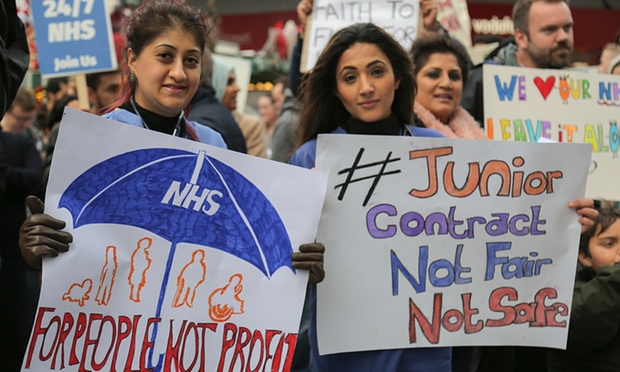
This strike is about money, not patient safety or the future of the NHS

James Forsyth speaks sense on the naivety and arrogance behind the ongoing junior doctors’ strike:

This walk out, the first all-out strike since the NHS’s creation, isn’t over some issue of high principle. It’s about money. The main sticking point in their negotiations with the government is that Saturday shouldn’t be treated as a normal working day.

The BMA’s suggestion at the weekend that it was prepared to call off the walk out if the government didn’t impose the new contract, but instead pilot it for a while, suggests that even the doctors themselves fear they’ll lose public sympathy by going ahead with this strike.

Yes. The fact that the final sticking point in negotiations is around money reveals all of the previous lofty, high-minded concerns about public safety and “tired doctors making mistakes” to be the cynical campaign rhetoric that it is.

Forsyth hammers home the point on pay:

Under the government’s offer, those junior doctors who are on duty one Saturday in four will receive a premium pay rate of 30 per cent. This means they are, on average, getting paid more for working on Saturdays than nurses, midwives and paramedics. The proposed deal is also more generous than what firefighters and police officers get for doing their job on a Saturday. This is hardly grounds for a walkout that will inevitably put lives at risk.

Junior doctors are right that they are paid less than doctors in some other countries. But this is, in large part, because the state has heavily subsidised their education. By the time a doctor has finished their foundation training, the state has already spent a quarter of a million pounds on them.

Until doctors are prepared to pick up more of this tab themselves, they shouldn’t complain that some of those working in other health systems are paid more than them. Indeed, it would be sensible of the state to actually require medical students to commit to working in the NHS for a certain number of years before funding their training—something that it doesn’t currently do. Junior doctors should also remember that if they stay in medicine and become consultants, they will find themselves in the top two percent of earners in this country.

This blog is no fan of the current Conservative government and no great proponent of the latest NHS reforms. But for the sake of decency, this strike needs to be broken. And then we need to have a long, hard national conversation about why an advanced democracy like Britain is facing a national strike of any kind in the year 2016.

Hint: if we did not still have a monolithic nationalised health service – the fifth largest employer on the planet serving the 22nd largest country by population – we could never be in the ludicrous position of suffering a strike of all the junior doctors in the land. Doctors would not all share the same employer, patients would not all rely on the same medical service and we would all be spared this drama.

Something to mull over as the accusations and counter-accusations fly.


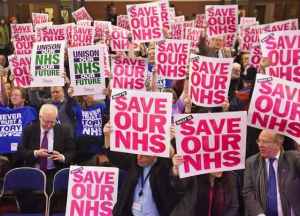
Save Our NHS

Agree with this article? Violently disagree? Scroll down to leave a comment.

Follow Semi-Partisan Politics on TwitterFacebook and Medium.