Mothergate: Andrea Leadsom Means Well, But Does Not Yet Have The Temperament To Be Prime Minister

Andrea Leadsom - Conservative Party - Tory Leadership

In choosing a new Tory leader and prime minister, promise and potential are not enough – experience and temperament matter too

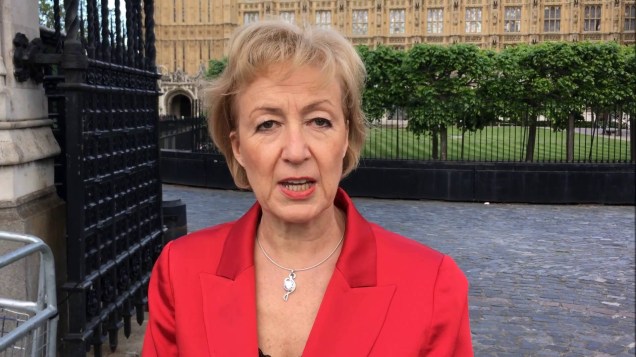
A new candidate profile in the Telegraph paints a sensitive – and very human – portrait of Conservative Party leadership candidate Andrea Leadsom.

In the wake of the rather ludicrous ‘mothergate’ drama, Allison Pearson interviewed Leadsom and reports:

When Andrea Leadsom came on the phone yesterday afternoon I could tell from her voice that she’d been crying. After what had happened, the last thing she wanted was to talk to another journalist, but she agreed, with great trepidation, to speak to me as we’d planned.

Following what she thought was a friendly, professional meeting with a Times reporter on Friday, she found herself accused in a banner headline of saying that, as a mother she had the “edge” over the childless Theresa May in the race to be prime minister.

[..] When I ask if she would like to apologise to Mrs May, she says: “I’ve already said to Theresa how very sorry I am for any hurt I have caused and how that article said completely the opposite of what I said and believe.”

She refuses to say how the message was conveyed to the Home Secretary, but she admits she has felt “under attack, under enormous pressure. It has been shattering.”

[..] It’s been a brutally hard week which makes you wonder why anyone would go into politics. On the phone, I asked Andrea Leadsom when she last cried. There is a pause. “Twenty minutes ago,” she admits with a wobble. But, don’t worry, it’s not a sob story. She doesn’t believe in those. Meanwhile, she’s off to make a roast chicken stretch for the children’s friends who just turned up unexpectedly. “Lots of roast potatoes.”

Putting on a brave face, making the best of things, and soldiering on, she is much like swathes of Tory voters up and down the land. Will they really ignore her, as all the pundits predict, when it comes to the ballot in September? Not everything has to end in tears.

One feels for Andrea Leadsom, who not only seems like a fundamentally decent human being and with her long previous career outside politics much closer to the ideal of the citizen politician than many of the grey, indistinguishable drones (including Labour leadership challenger Angela Eagle) who have been marinating in the Westminster cesspool for their entire careers.

But it is very concerning that Leadsom has allowed what is essentially a media storm, entirely unconnected with policy or the fate of the country, to affect her so gravely. What we are witnessing is the emotional response of someone who is not used to being vilified in the press and the court of public opinion, and who seems to be shaken to her core at having been misrepresented and criticised.

Such treatment is part of the job description for any British prime minister, particularly in our current polarised age when it is all but guaranteed that any conservative prime minister will immediately be treated like evil incarnate by the socialist half of the country regardless of what they say or do. Such mundane events as being misrepresented by a newspaper or trashed in the press because of a careless choice of phrase ought to be like water off a duck’s back to a seasoned politician. Clearly this is not so for Andrea Leadsom, who has not yet developed the emotional armour to withstand the heat of battle.

Of course, one can argue that this should not be the case; that we cannot simultaneously call for more “normal” people to enter politics and then hold them to the standards of nonchalance in the face of political treachery set by the hardened political class. But sometimes idealism must fall before realpolitik. Even if it is the case that the Westminster media and political class are unnecessarily fratricidal, a British prime minister must still be able to deal with immeasurably complex and fraught issues of domestic security and foreign policy.

This isn’t the Sunday League – with her audacious leadership bid, Andrea Leadsom is asking us to believe that she is capable of playing in the Premier League, an instant promotion spanning several important intermediate steps. A junior minister who has never attended cabinet has a very different sense of what constitutes high stakes than someone who has held one or more of the great offices of state. The latter is almost certain to have wrestled with fiendishly difficult political decisions, the repercussions of which may even be life or death. The ability to do so while maintaining composure and clear thinking is of the utmost importance in a prime minister.

Of course personal temperament is not the only thing that matters. A candidate’s policy beliefs (with attitude toward the coming Brexit negotiations being top of the list right now) also matter enormously, as does their track record. But I get the strong sense that in our justifiable desperation to avoid acknowledging that someone so illiberal and authoritarian as Theresa May is the best of a bad option for leading the country in this difficult time we are sweeping Andrea Leadsom’s naivety, inexperience and rookie temperament under the carpet.

This would not be a mature way to behave. The choice between Theresa May and Andrea Leadsom must be made on the basis of who they are today, the policies they advocate and what they have accomplished, and not based on who they may become or whatever else we try to project on to their respective candidacies.

Andrea Leadsom may show future promise – promise which this blog very much hopes to see nurtured and realised in the coming years – but promise alone is not enough.

The ultimate decision over which Conservative leadership candidate would make the best Tory leader and prime minister must be made based on the best evidence available as to a candidate’s ideology, policy platform, track record, personality and temperament.

And much as it pains this blog to admit it, that choice should be Theresa May.


Theresa May - Investigatory Powers Bill - Mass Surveillance

Agree with this article? Violently disagree? Scroll down to leave a comment.

Follow Semi-Partisan Politics on TwitterFacebook and Medium.

A Tory-Labour Centrist Alliance? The Self-Serving Establishment Will Stop At Nothing To Stay In Power

SDP Launch

The British people have made clear that they want their two main political parties to once again stand for recognisably different policies, values and objectives. But the response of calculating, stale and ideology-free centrist MPs seems to be to reorganise themselves in order to avoid dealing with a reality they would rather ignore

Politics is finally getting interesting again. After more than two decades of stale, centrist managerialism following the resignation of Margaret Thatcher, we are finally starting to see real ideological and intellectual dividing lines re-emerging in our political discourse.

After a long and dismal period where it barely mattered whether you voted for Team Red or Team Blue, so similar were their policies, we face the delicious prospect of which way people vote actually mattering once again. This is a good thing. Dry, stultifying conformity might just about be acceptable when things are in a good state, everyone is prosperous and happy, and a safe pair of hands is all that is required to keep the good times rolling.

But while many prosperous, metropolitan professional types (including nearly the entire British political class) may have been coasting through life thinking that everything was fine and dandy, in fact things were not fine for millions of their fellow citizens. And when the status quo is failing so many people, a consensual, moderate and determinedly un-radical form of politics is the very last thing which will bring about the required change.

This is why we should celebrate the short-term chaos which is roiling British politics. For too long we have been cursed by a Labour Party which cares more about making its middle class, urban supporters feel good about themselves than actually delivering tangible improvements in the lives of the working poor and the dispossessed or responding to their concerns about our democracy and our country. And since Thatcher’s departure, the ideologically rootless Tory Party – this blog describes the Cameron cohort as Coke Zero Conservatives, the same conservative taste you recognise but with none of the caffeinated, calorific oomph which makes it worth drinking – has adopted one socialist, redistributionist policy after another in a desperate, failed bid to shake off their so-called “Nasty Party” image.

In other words, within the space of twenty years the two major political parties have converged to such an extent that they were almost indistinguishable from one another – Ed Miliband’s Labour Party went into the 2015 general election flogging coffee mugs on their campaign website which promised to “control immigration”, while David Cameron’s Conservative Party manifesto was creepily subtitled “A plan for every stage of your life” – statist control freakery if ever there was.

The result of this, we all know, was the rise of the fringe parties – the incredible success of the Scottish National Party despite their utterly woeful record actually wielding power in Scotland, and the rise and rise of UKIP which set the wheels in motion for David Cameron’s bitterly regretted decision to offer the country a referendum on our continued EU membership.

Since the shock victory for Brexit in the EU referendum, things have only gotten worse for the forces of dull, greyscale centrism. David Cameron resigned in justified humiliation having waged a deceitful and bullying campaign in favour of remaining in the EU, in which he threatened his own citizens with punishment if they voted the “wrong” way, and yet still managed to lose. Meanwhile, the Labour Party, whose parliamentary caucus never accepted Jeremy Corbyn’s leadership and sought to undermine it from Day One, decided to make their last stand. Unfortunately, that last stand appears to be the utterly bland and uninspiring figure of Angela Eagle, whose coming leadership challenge will be utterly obliterated by Jeremy Corbyn, who remains very popular with the expanded Labour Party membership.

In other words, this has been a bad time for the establishment. Our poor superiors have endured setback after setback, with their preferred centrist candidates being routed as the public justifiably yearn for the return of authenticity and ideological coherence to their politics. And now they face a setback which cannot be endured – the prospect of seeing their country taken out of the European Union (that great escape from accountability for Europe’s governing elites) against their will.

But they are not going to take this lying down.

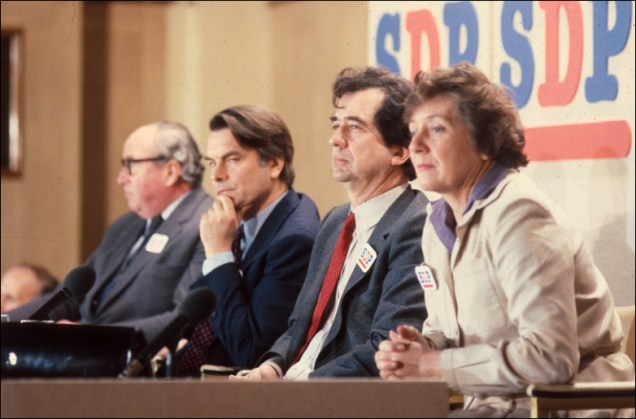
The Guardian reports on an utterly despicable new development – the fact that centrist Tory and Labour MPs, terrified at the prospect of the bland, consensual form of politics in which they thrive being brought to an end, are now proposing to unite in order to form a new centrist political party.

From the Guardian:

Tory and Labour MPs have held informal discussions about establishing a new political party in the event of Andrea Leadsom becoming prime minister and Jeremy Corbyn staying as Labour leader, a cabinet minister has disclosed.

Senior players in the parties have discussed founding a new centrist grouping in the mould of the Social Democratic party (SDP) should the two main parties polarise, according to the minister. Talks should be taken seriously, though they are still at an early stage, according to the source.

“There have been talks between Labour and Tory MPs about a new party,” the minister said. “A number of my colleagues would not feel comfortable in a party led by Andrea Leadsom.”

It is understood that MPs in both parties who campaigned to remain in the European Union believe there is an opportunity to build on the newly founded relationships between centrist MPs in both parties made before the EU referendum.

A Tory party source said Labour and Conservative MPs who campaigned in favour had become closer during the campaign and increasingly come to regard themselves as “a tribe”.

In other words, if the centrists do not get their way (as they have done uninterrupted since at least 1991) then they will take their toys and leave, founding an entirely new political party for their own glorification rather than doing the hard work of convincing existing party members that they are wrong.

This seems to be prompted largely by the fact that certain prima donna centrist MPs, used to enjoying the trappings of power and influence which come from senior positions in government or opposition, are unable to tolerate even a brief period in the wilderness while more unabashedly ideological leaders have their turn running the show, and so must orchestrate a way for their own failed and reviled centrist clan to continue pushing their self-serving, wishy-washy agenda.

In Labour’s case, this is just about understandable. Jeremy Corbyn is indeed vastly different to what we have been trained to think a Labour leader should be since the days of Michael Foot. The post-Clause IV, post-Blair accommodations with capitalism mean nothing to Jeremy Corbyn, and he is proud to admit as much. Under Corbyn’s watch, the Labour Party has indeed become markedly more left wing. Therefore, a convincing case could indeed be made that moderate, centrist Labour MPs have no place in the party of Jeremy Corbyn. But since Corbyn is supported by a thumping majority of Labour Party members, it would rightly be for the centrist MPs to toddle off and find a new home (and new supporters). Labour is Corbyn’s party now, not theirs.

The Conservatives, though, have far less of an excuse. It would be interesting to know whether the Tory SDP plotters come predominantly from the older guard or from the 2010 and 2015 intakes. Logic would suggest that many of the more recent Tory MPs, who entered parliament in the dismal Age of Cameron, are most ill at ease at the prospect of being led by a superficially more Thatcherite leadership candidate like Andrea Leadsom. But then Theresa May hardly fits the profile of progressive conservatism, with her flinty-eyed authoritarianism, disdain for civil liberties and championing of a large, overbearing nanny state to watch over us and regulate our speech and behaviour. None of these are endearing qualities in a future Tory leader and prime minister, so any Conservative MP happy to wear the blue rosette for Theresa May but happy to shack up with Labour in case of Andrea Leadsom clearly has a very broken and opportunistic political compass.

The Guardian article continues:

A senior Labour party source confirmed that at least one Conservative minister and one of the shadow cabinet ministers who resigned last week had been involved in discussions about such a reshaping of British politics.

“There is a feeling that there might have to be a new party at the centre of British politics,” he said. “It’s early days, but the conversations are at a pretty high level.”

The suggestion comes as the Liberal Democrat peer Shirley Williams demands a central role for all pro-EU parties at Westminster in shaping the UK’s relationship with the EU. She warns that, without a cross-party consensus on the final deal, the country could fall apart in bitter post-Brexit division and acrimony.

Trust Shirley Williams to be at the centre of this subversive attempt by the political class to reorganise themselves so as to thwart the will of the people. She may play the part of the kindly faced elderly lady very well, but is there any more noxious emblem of our centrist malaise than Baroness Williams? I can think of none.

We now witness the depressing fact that a group of Conservative and Labour MPs – we do not yet know how large this potential grouping may be – have a shared love for keeping Britain chained to the antidemocratic EU which transcends whatever minor differences they may have on policy. And those policy differences between Tory an Labour are undoubtedly very few in this centrist age. Therefore, in a last-ditch effort to avoid being dragged out of the EU kicking and screaming, these MPs are now willing to betray the constituents who elected them to parliament by defecting to join a “worst of all worlds” Party of the Damned, a cesspit of wishy-washy MPs who startle like shy fauns at the first sign of passionate ideological debate.

Even before the official result of the EU referendum was declared, there were noises being made by pro-EU Remainers in denial that some means should be found to overturn the public’s vote to leave the European Union on one spurious pretext or another. Most popular now is the idea that the referendum should be ignored or re-run because the public are gullible fools who were tricked by the slick lies and distortions of the official Vote Leave campaign (as though the Remain camp was not engaged in lies, threats and downright cheating of its own). And it now seems that this is to be used as cover, an excuse to legitimise the subversion of British democracy by a group of spoiled sore losers accustomed to always getting their way.

We must not allow these machinations to succeed. While Labour MPs – so diametrically at odds with a leader who commands overwhelming support among the party membership – should arguably do the decent thing and walk off into obscurity and irrelevance by attempting to form a new party of the centre-left, there is absolutely no excuse for Tory and Labour MPs joining together to create a hybrid centrist party – particularly when neither of the two remaining Conservative leadership candidates can be described as right-wing ideologues in the mould of Thatcher.

That such a dramatic step is even being considered shows the rot in our national and political life wrought by the EU. We are now lumbered with a largely useless political class, wobbly-lipped MPs who are terrified at the prospect of Britain governing herself and not having our government’s every decision vetted by the omniscient supranational European government in Brussels. These plotting MPs are behaving like children suddenly separated from their parents in a busy crowd – screaming, weeping, arms outstretched in anguish at having been ripped away from that which gives them comfort and succour, their alpha and omega. It is an unseemly, pathetic exhibition which they are putting on in their desperation to stop Brexit, stop the realignment of British politics along more ideological lines and return to the happy days when fast-track ministerial careers were their for the taking so long as they managed to be sufficiently bland, predictable and uncontroversial.

Hopefully before long we will learn the names of these Labour and Tory MPs who care so much about their future career prospects but so little for their own constituents that they would abandon the parties under which they were elected in order to create a new centrist holding party to achieve through political skulduggery what they were not able to achieve at the general election or the EU referendum.

And hopefully those MPs concerned will then quickly face the full wrath of their constituency parties and associations for having entertained such self-serving thoughts.

God willing, none of them will be in parliament by the time of the next general election, having been deselected and replaced by new MPs for whom socialism, conservatism, ideology and principle are not such dirty words.
 

SDP - Charles Kennedy

Brexit - EU - European Union Flag - Missing Star - Britain - UK

Agree with this article? Violently disagree? Scroll down to leave a comment.

Follow Semi-Partisan Politics on TwitterFacebook and Medium.

Leadsom vs May – Two Risky Options

Theresa May - Andrea Leadsom - Conservative Tory Party leadership

The very qualities which make Theresa May an awful Conservative leadership candidate on domestic policy mean that she is best equipped to handle our tough secession negotiations with the EU in Brussels. But the future leadership of the United Kingdom cannot be viewed solely through the lens of Brexit…

Dr. Richard North perfectly captures this blog’s dilemma in trying to choose between two highly sub-optimal candidates for Conservative Party leader and the next prime minister:

With a final contest between May and Leadsom, [if] Leadsom wins, we are faced with the great danger of having a woman as prime minister who has little understanding of what it takes to negotiate a successful withdrawal from the EU, and no capacity to develop that understanding.

On the other hand, if May is elected, we are faced with a danger just as great, in having a prime minister who brokers an exit plan which is so successful that we end up stuck with it, and in a position far worse than we are at present.

If this sounds perverse, it is. What we are seeing from the “remains” is a sudden enthusiasm for the Efta/EEA or “Norway option”, an option which, prior to the referendum, they had all been falling over themselves to demolish.

This, as readers here well know, we support as an interim option, acknowledging that it would be completely untenable for the United Kingdom in the longer term. We thus look for a different end game, which then takes us out of the EEA – with other Efta members – leaving the Agreement to collapse.

Unfortunately, the opposition is wise to the flaws of the EEA option and, from the Robert Schuman Foundation, the intellectual heart of the EU, we see proposals to modify the EEA to such an extent that it will soften some of the worst features of the EEA, and thus weaken the pressure to move on.

Dr. North goes on to describe the chicanery by which this might be accomplished – basically by making the EEA Council rather than the Council of the European Union the lead body in approving single market legislation, tackling the (already disingenuous) complaint that being in the EEA means accepting all of the rules while “having no say”.

While superficially appealing, this could lead to Britain being permanently parked in a significantly sub-optimal position on the edge of a still-integrating Core EU in which the eurozone would inevitably be dominant. It would certainly undermine one of the key benefits of Brexit to an interim EFTA/EEA access “departure lounge”, namely the restoration of Britain’s right of reservation which we could apply to new regulation which threatened to inflict significant or unacceptable harm on our key industries or vital national interests.

But while a Theresa May premiership increases the risk that Britain is sucked into a sub-optimal “associate member” status on the EU’s margins, Andrea Leadsom would do almost the exact opposite – invoke Article 50 almost immediately and then effectively let Jesus take the wheel, hoping that something satisfactory is miraculously negotiated within two years. Having recently started to appreciate the true complexity of the global trading and regulatory environment, largely thanks to my involvement with The Leave Alliance, it is immediately apparent that Leadsom’s cavalier approach to our EU secession negotiations is fundamentally unserious, no matter how genuine her euroscepticism.

Leaving aside issues of personality, experience and gravitas – for few could seriously deny that May would be the more formidable negotiator to fight Britain’s corner – it is hard to see how a Leadsom negotiation could succeed when the candidate seems sure of little besides her impulse to take Britain out of the EEA, making our trade subject to the EU’s common external tariff in the far from certain hope that doing so dramatically cuts immigration.

Therefore, from a purely Brexit-related perspective, Theresa May seems (counter-intuitively) to be the better choice if we want to maximise our chances of escaping from the EU’s always-tightening political union while disrupting trade as little as possible – even if this means that we have to remain permanently vigilant to ensure that May does not backslide from her commitment that Brexit means Brexit.

But of course this Tory leadership election is not only about Brexit – though our secession from the European Union is by far the most important issue on our national plate, and will be for some time. Still, other issues cannot be overlooked entirely. Foreign policy, civil liberties, economic freedom, education, healthcare and the role of government matter enormously too. And in many of these areas, Theresa May is extraordinarily deficient.

This is why I cannot simply swallow my distaste and endorse Theresa May outright. All of these other policy considerations must also be factored into the mix – which is what I shall attempt to do in my next blog post.


Brexit - EU - European Union Flag - Missing Star - Britain - UK

Top Image: BT

Agree with this article? Violently disagree? Scroll down to leave a comment.

Follow Semi-Partisan Politics on TwitterFacebook and Medium.

George Osborne Must Resign, Now

George Osborne - EU Referendum - Brexit - Resign

Worse than useless

Ben Kelly of The Sceptic Isle makes a devastating case for George Osborne’s immediate dismissal from the Treasury:

During the campaign Osborne forgot his responsibilities as Chancellor and showed himself willing to damage the economy by deliberately fomenting uncertainty and prophesising catastrophe. This has aggravated the economic fallout in the aftermath. He wasted £9million of taxpayer’s money on pro-EU leaflets and converted the Treasury into a partisan propaganda machine. He pressed public officials to publish dodgy dossiers predicting economic doom if we left the EU. This can only have increased the cynicism that the public feel towards politicians and damaged the reputation of the Treasury.

For the entire first weekend after the referendum, with the markets panicking, George Osborne apparently went into hiding. We needed him to offer reassurance and some indication that the Treasury was prepared. When Osborne finally appeared he made it “very clear” that the country would be poorer following the people’s decision to leave the EU. In an interview with Nick Robinson on the Today programme, he repeated his pre-referendum threat of a tax increases and spending cuts. Instead of offering reassurance he is making the situation worse and rather than revealing contingency plans he has petulantly insisted that “it was not the responsibility of those who wanted to remain in the EU to explain what plan we would follow if we voted to quit the EU.” This is the second most powerful man in our government abdicating responsibility.

With that, it became abundantly clear that he could no longer perform his role as Chancellor and was incapable of restoring economic confidence. With this man in charge project fear will be a self-fulfilling prophesy.

We now know that Wolfgang Schäuble issued his warning that we couldn’t participate in the Single Market if we left the EU at the behest of George Osborne. I have no doubt that in time we will find out that the Chancellor spent the months before the referendum making many calls and pulling in favours in order to boost his fear mongering campaign. Just think about that! A British Chancellor appealing for authoritative institutions and economists to warn that the British economy was weak and risked collapse outside the EU. Has there ever been a Chancellor so aggressive in his desire to run his own country down?

Remainers now point to our current economic turmoil as proof that they were right all along, but it was always inevitable that a political decision of this magnitude, with such huge potential for change, was going to cause economic uncertainty and short term pain. Now we need people in government to restore confidence and map out the future. The Chancellor who has been actively sabotaging our economy is the wrong man for the job. There should be no place for him in government.

Osborne took a huge gamble with a scorched Earth policy, he lost; and we are now suffering the consequences. Now he must go. It is too late to do the honourable thing now, but he can at least finally do the right thing and signal his intent to leave office when the next Conservative leader is elected.

I am very sympathetic to Kelly’s argument. It would be one thing if George Osborne had graciously accepted the result of the referendum and then immediately and publicly got to work ensuring that Britain’s sails were perfectly trimmed as we sailed into the short-term storm of post-Brexit hysteria. It would definitely have been positive if Osborne had pulled a secret Brexit plan from his back pocket and set the Treasury to implementing it.

But Osborne did none of these things. The submarine chancellor did as he always does – disappear for days on end while others take the flak, appearing before television cameras only when it absolutely cannot be avoided (such as at Treasury Questions in Parliament).

And while it was inevitable that there would be market turbulence following geopolitical news of the magnitude of Brexit, it is hard to deny that Osborne almost certainly exacerbated this fallout – the steepness of the fall in the pound, the stock market fluctuations, the delayed investment decisions by firms – by endlessly catastrophising Brexit in his failed bid to win the referendum for the Remain side. Of course this was a difficult line for a Remain-supporting chancellor to take, wanting to make his case but careful not to “talk down Britain” at any point. A true statesman would have successfully trodden this fine line. George Osborne stepped way over it.

But most damning of all is the way that Osborne helped to furtively arrange for senior foreign voices – politicians, NGO heads and others – to make their own interventions in our national EU referendum debate, actively putting words in their mouths. In many cases these words turned out to be unduly harsh and threatening words, representing the chancellor’s own bluster more than the sincere and considered opinion of the speaker concerned – which is why we are now seeing partial recantations from the likes of Wolfgang Schäuble.

As the EU referendum campaign drew to its hysterical, bad tempered climax, this blog openly wondered what T-word best describes a senior serving politician who deliberately seeks the help of foreign leaders, business moguls and NGO heads to bully and threaten his own people into making a certain decision.

I do not regret floating the T-word for a single second. As Chancellor of the Exchequer, George Osborne debased and demeaned himself and his high office. He came down hard on the wrong side of the most profound and existentially important question to face Britain since 1945, and made almost zero preparation for the eventuality of a “Leave” vote in the referendum. By his words and actions he sullied both the tone of the EU referendum campaign and contributed toward the subsequent instability.

As Ben Kelly says, the time for George Osborne to do the honourable thing has long since passed. But this failed chancellor – who proved himself unable to deal with Britain’s deficit and unable to plan strategically in the event of a Leave vote – must now do the right thing and quit the British political scene at the earliest responsible opportunity.


Brexit - EU - European Union Flag - Missing Star - Britain - UK

Top Image: Daily Record

Agree with this article? Violently disagree? Scroll down to leave a comment.

Follow Semi-Partisan Politics on TwitterFacebook and Medium.

Andrea Leadsom vs Theresa May – An Impossible Choice, On Which The Fate Of The Conservative Party Rests

Stepping Stones Report - Goals and Risks - Brexit - EU Referendum

At this difficult time we can take inspiration from our recent history and our last successful effort at national renewal

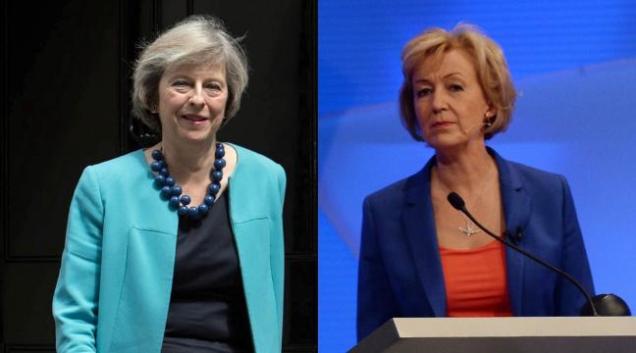
So it’s Theresa May versus Andrea Leadsom – the final two candidates in the Conservative Party leadership race whose names will now go forward to the wider Tory Party membership in September.

I’m delighted that the Conservatives will soon have given Britain her first two female prime ministers, I really am. When it comes to equality of opportunity the Tories deliver, while Labour bang on endlessly and fruitlessly about equality of outcome, peddle in tawdry identity politics and choose one white male after another to lead them onwards.

But does the successor to Ted Heath Mark II David Cameron really have to be one of these two women? When she entered 10 Downing Street, Margaret Thatcher already had the “Stepping Stones” report in her pocket and on her mind. By contrast, Andrea Leadsom brandishes an overhyped yet still rather thin CV, while Theresa May has your entire internet browsing history and the paranoia to use it against you.

And so, when deciding who to support in this battle to be the next British prime minister I find myself faced with an impossible choice – one may as well flip a coin.

This blog will inevitably write more about the Conservative Party leadership race in the coming days and weeks as I try to make a decision – right now I see pitifully few upsides to either candidacy, and great risk behind either option.

But for now I content myself with re-reading the seminal “Stepping Stones Report” authored by the late John Hoskyns, that masterful diagnosis of everything which ailed Britain in the late 1970s when the state socialist cure had almost succeeded in killing the British patient.

This report – and the solutions contained within it – quite literally saved this country when Margaret Thatcher, who had studied it, came to power in 1979. Without Stepping Stones, Britain would quite likely be a colder, more populous but equally poor and dysfunctional version of Greece. I say this to underline the amazing good which the Conservative Party can do when under the right leadership, and the thread by which such hopes often hang (Margaret Thatcher was considered a rank outsider when she first declared her candidacy for the Tory leadership in 1975).

At this time I am drawn to this passage in particular:

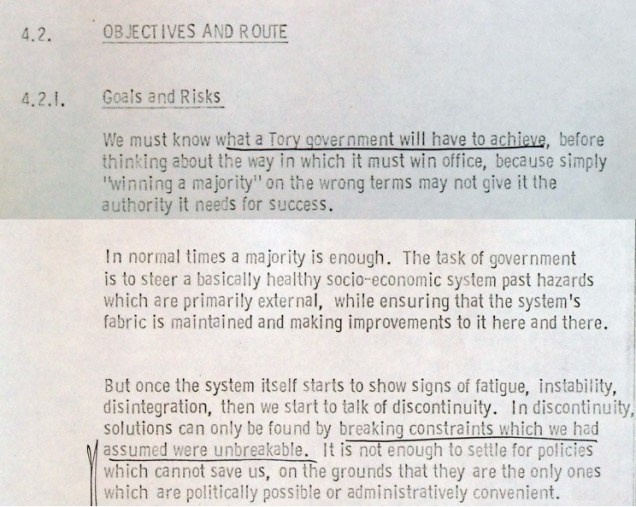
We must know what a Tory government will have to achieve, before thinking about the way in which it must win office, because simply “winning a majority” on the wrong terms may not give it the authority it needs for success.

In normal times a majority is enough. The task of government is to steer a basically healthy socio-economic system past hazards which are primarily external, while ensuring that the system’s fabric is maintained and making improvements to it here and there.

But once the system itself starts to show signs of fatigue, instability, disintegration, then we start to talk of discontinuity. In discontinuity, solutions can only be found by breaking constraints which we had assumed were unbreakable. It is not enough to settle for policies which cannot save us, on the grounds that they are the only ones which are politically possible or administratively convenient.

It is safe to say that the Conservative government of David Cameron and George Osborne has been in office but not really in power since being re-elected with a tiny outright majority in 2015. And aside from their creepy manifesto pledge about having “a plan for every stage of your life” it has been almost impossible to discern what the Tories actually stand for, besides staying in power.

Winning a majority has not been enough because the majority was won on the wrong terms – by a prime minister who often pitched himself to the left of Tony Blair in the tawdry hunt for centrist votes. And these are far from ordinary times. As this blog recently pointed out, quoting Lincoln, the dogmas of the quiet past are inadequate to the stormy present.

Theresa May is an accomplished technocrat, but also a fierce and implacable authoritarian. Even her more restrained actions – such as denying the former London mayor Boris Johnson the power to use his expensively purchased second hand German water cannon for crowd control – smack more of political chicanery rather than any shred of liberal principle.

On civil liberties, May is utterly monstrous. But more to the point, Theresa May came down on the wrong side of the most fundamental, existential question to face this country since the end of the Second World War.Worse, she supported the Remain campaign with a calculated half-heartedness, refusing to boldly commit and make the public case for her position. What kind of leadership is this?

Andrea Leadsom is no better. She has publicly and irresponsibly spoken about triggering Article 50 almost immediately, well before any initial scoping discussions have even had the opportunity to commence and well before the British government has had the proper chance to decide how best to implement Brexit, and seems intent on taking us out of the EEA as we secede from the European Union. Her haste is not evidence of super-virtuous commitment to democracy or an uncommon respect for the will of the people, but is the conclusion reached by what seems to be a rather glib and uncurious mind.

But whether you are less repulsed by the flinty-eyed authoritarianism of Theresa May or the oversimplifying, CV-padding antics of Andrea Leadsom, it seems reasonable to say that neither of the two remaining candidates have anything approaching a latter-day Stepping Stones report waiting in their pockets for immediate unveiling as soon as the Queen has invited one of them to become prime minister. And that is what we need most of all right now.

Theresa May’s authoritarian streak, contempt for civil liberties and belief in wielding the coercive power of the state is incredibly objectionable to this blog – yet as by far the more experienced candidate, May is best placed to negotiate good secession terms for Britain with the EU (assuming that she doesn’t double-cross us and effectively condemn Britian to “associate membership” on the margins).

Andrea Leadsom has precious little track record in government or politics in general, and has distinguished herself by saying some downright irresponsible things about Brexit. As a result, she could potentially overshadow the democratic dividend of Brexit through unnecessary self-inflicted economic wounds (e.g. by taking Britain out of the EEA). Yet she is superficially more Thatcher-like (I won’t say Thatcherite), and has the potential, however small, to grow into a far more radical Conservative leader than the soul-sappingly ideology-free Theresa May could ever be.

Choose May and you risk turning Britain into a dystopian police state while rewarding yet another ideology-free, politics-by-numbers technocrat, the kind of person whose unambitious, managerial approach to the great issues of the day turns millions of people off politics altogether.

Choose Leadsom and you risk a tumultuous and highly suboptimal form of Brexit while taking an enormous leap of faith that an untested neophyte will successfully get to grips with one of the steepest learning curves in the world, and that they will be advised well in the process.

Who can choose between these two flawed options with any degree of certainty?


Stepping Stones Report - Wiring Diagram

Brexit - EU - European Union Flag - Missing Star - Britain - UK

Top Image: ‘Stepping Stones’ Report

Agree with this article? Violently disagree? Scroll down to leave a comment.

Follow Semi-Partisan Politics on TwitterFacebook and Medium.