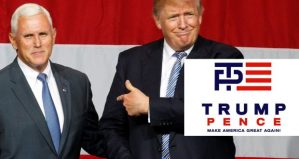
Shameless Conservatives Try To Blame The Rise Of Donald Trump On Barack Obama And The Democrats

Anti-Trump conservatives need to stop trying to blame Democrats for the rise of Donald Trump, and take a good look in the mirror instead

While it is admirable that many prominent American conservatives are refusing on principle to support Donald Trump, far fewer seem introspective or self-critical enough to consider their own role in fuelling the mania which brought a reality TV star to the cusp of the presidency.

Latest to hop aboard the “look what the Democrats made us do” bandwagon is a writer I like and respect very much, the National Review’s Jonah Goldberg. There is much to admire in Goldberg’s continued and principled criticism of Donald Trump, but he goes too far when he tries to shift blame for the rise of Trump away from where it belongs – the hysterical and alarmist nature of Republican opposition to President Obama – and create an alternative universe where the dastardly Obama “trolled” the helpless GOP and effectively forced the Republican base to become frothing-at-the-mouth crazy people uniquely receptive to Trump’s message.

Goldberg writes:

Consider President Obama. One of the central insights of both the Obama campaign and administration (the difference is subtle but real) is that Obama benefits when his critics overreact. In 2008, then-political adviser David Axelrod coined the phrase “no drama Obama” to describe not only his client’s personality but his messaging. By seeming unflappable in the face of criticism, Obama comes across as presidential. The more heated the criticism, the more presidential he seems.

The thing is, Obama often intentionally provokes the conservative base. As the Washington Post’s Paul Waldman put it in January 2015, Obama “seems to come up with a new idea every couple of weeks to drive [the GOP] up a wall.” That makes him a master at trolling.

[..] Obama played a similar game with his birth certificate and the whole birther craze. He could have released his birth certificate as early as 2008, when the Mephistophelean Clinton henchman Sid Blumenthal was whispering in reporters’ ears. But Obama didn’t for years — in part because he knew the conspiracy theory would galvanize his base. It not only confirmed everything liberals wanted to hear about the Right, it also provided Obama with an endless supply of one-liners. And for a long time that worked well for Obama; he got to mock birthers and play the dignified victim.

You can probably already see the problem. When you throw out so many buckets of chum, you have no idea what kinds of creatures you’ll attract.

Obama chummed the waters for so long, he pulled in a great white shark. A man often in error but never in doubt, with a thumbless grasp of facts and a total willingness to repeat conspiracy theories, rumors, and innuendo as the truth, Trump was almost the personification of the collective id of the angrier strata of the Republican base.

It takes quite some gall to accuse Barack Obama (of all people) of fuelling the birther movement, while keeping a straight face. No other presidents in history have been forced by relentless fringe political pressure to release their birth certificate in order to prove eligibility for office, and to suggest that Obama’s understandable reluctance to rise to the conspiracy theorist bait was motivated primarily by a desire to smear the Republican Party is like blaming a homeowner you just burgled for not warning you in advance that burglary is illegal and will get you in trouble with the law.

Is Barack Obama now responsible for the welfare and fortunes of the Republican Party? Does he have some hitherto-unknown obligation to save his political foes from their own worst excesses? The idea is laughable. Republicans loved having fringe birthers on their side when it helped them storm to victory in the 2010 midterm elections – it is disingenuous in the extreme for American conservatives to pretend that birtherism was something foisted upon them by Obama himself now that it has finally become a liability.

Besides, the real roots of Donald Trump’s rise – besides the pervasive weariness with political elites in general, a phenomenon witnessed on both sides of the Atlantic – lie in the behaviour of leading conservative politicians and media personalities, and the way in which they chose to portray Obama’s centre-leftism as a unique and unprecedented socialist assault on America.

As this blog recently noted:

It was the tri-cornered hat brigade whose admirable devotion to fiscal responsibility only materialised once Barack Obama took office, and then failed to force any meaningful change in Washington despite many of their number being elected to Congress in the 2010 midterms which, who have a case to answer. They were the Great White Hope whose inevitable failure formed the third strike against the political class.

It was not the Democratic Party which fanned the flames of birtherism (and then considered a nominee for president who was born in Canada) and refused to stand up to angry constituents demanding to see a birth certificate. That was all on the Republicans. Donald Trump led that effort, and nearly the entire GOP sat back with a tub of popcorn, thinking that the circus would benefit them politically. And so it did, until their attack dog finally broke the leash and turned on its handlers.

Has Barack Obama been a decidedly left-wing and in some (though by no means all) ways unimpressive president? Yes, he has. But is he a closet Communist, a secret Muslim planning to enforce hardline Islamism on America or a hopelessly incompetent buffoon? Absolutely not. He is a centre-left politician with undeniable skills, twice elected on a centre-left platform and governing according to a centre-left approach. But in their greed to quickly win back power without doing the hard work of making their own pitch to the voters more appealing, too many Republicans were willing to tolerate and sometimes actively participate in the anti-Obama hysteria for short term political gain.

[..] Yes, the Democrats peddle in identity politics and often come down on the wrong side when it comes to favouring political correctness over freedom of speech, religion and behaviour. But it was the Republicans who opted to whip up (and profit from) blind fury about the state of the country instead of articulating a serious, coherent alternative. And in the end they were beaten at their own game. Why vote for the politician who smirks or winks when someone else is making ignorant, bigoted remarks when now you can vote for the real deal?

And again, even earlier, here:

As Barack Obama’s second term reaches its end, the size and scope of the federal government is still stubbornly large, but America has by no means transitioned into a Soviet-style planned economy. Even the hated (in right-wing circles) ObamaCare has only tinkered around the margins, funnelling a few million uninsured into some form of health coverage, inconveniently disrupting the existing coverage of a number of other people but otherwise doing nothing to change the private insurance, private provision model of American healthcare. The Second Amendment has not been substantially undermined, let alone repealed. Defence spending may be misaligned but still eclipses the rest of the world, and the US military has not been decimated. In terms of domestic policy, in other words, the world has not ended.

Has America become a libertarian paradise under President Obama? Of course not. But that’s because a Democrat won the White House and focused (as much as he could, given a spineless Democratic congressional caucus and entrenched Republican opposition) on the kind of centre-left priorities you would expect from a Democrat. And crucially, neither has America become a socialist dystopia in that time.

That’s not to say that the Republicans did not often have a point, or that they were perpetually in the wrong – in many cases, their opposition to Obama’s agenda was justified. But at all times this opposition was carried out in a shrill, alarmist and hyperbolic manner – much as British left-wingers are currently mirroring the American Tea Party with their “pass the smelling salts” horror at the thoroughly unexciting, centrist government of David Cameron.

And when you go trawling for low information votes by feeding on prejudice and stoking up concerns about the personal motivations, the loyalty and even the American-ness of the president in a childishly obstructionist scorched earth strategy, you can’t really feign surprise when the sentiments you unleash give rise to a populist demagogue like Donald Trump.

Remember, this is a political party which urged Americans in all seriousness to vote for Sarah Palin as vice president back in 2008. Sarah Palin. The Republicans have been dabbling in crazy and courting the proudly ignorant vote for decades. Donald Trump is nothing but the GOP’s longstanding approach taken to its logical extreme.

And if decent conservatives want to ensure that they never again find themselves in a position of seeing their movement taken over by an ignorant, populist demagogue then they might want to stop blaming Democrats for their own self-inflicted misfortune and instead re-examine their behaviour both in government and opposition.

Was it wise, for example, to pretend to be super tough on immigration, yet ultimately do nothing to stem the flow of illegal immigrants or otherwise reform the system, simply because Republican donors had no interest in changing the status quo, with its plentiful cheap labour for corporations and affordable illegal domestic service for households?

Was it wise to continually shriek not just that Democrats wanted to impose stricter gun control but that they were actively seeking to abolish the Second Amendment? (The big push to completely outlaw guns trumpeted in GOP propaganda has been just weeks away for the past eight years now – is Obama waiting until his very last day in office to take America’s guns?)

Was it smart to prance around as the party of national security while consistently involving America in foreign conflagrations which increased anti-American sentiment, or to pose as the party of civil liberties while loudly cheerleading for the surveillance state?

Was it really such a genius move to talk endlessly about the benefits of tax cuts for ordinary Americans while focusing them overwhelmingly on the wealthy, or to cynically pretend that America’s lost manufacturing jobs could be easily brought back home in the age of globalisation and international supply chains?

At nearly every election going back to the Bill Clinton administration and probably earlier, the Republican Party has been writing rhetorical cheques that its politicians cannot or will not cash when they are either in office or a position of influential opposition, at a national or statewide level.

They promised to be on the side of ordinary wage and salary earners, yet together with the Democrats they did nothing to address the economic stagnation of the middle class.

They ran around screaming that ObamaCare (originally a conservative think tank idea, in large part) was socialism incarnate, an evil government takeover of healthcare rather than merely a messy and flawed patch to America’s abysmal healthcare system.

They took tons of cash in campaign contributions and small donations in order to fight the Culture Wars, enriching many pundits and activists in the process, and then rode to glorious defeat on nearly all fronts.

In other words, the Republican Party was acutely vulnerable to a Trumpian takeover because they have consistently been a party of failure. They sucked at doing the things they promised their base that they would do, and they did a whole load of other things in office or opposition which their base never wanted. And still they coasted by for years, knowing that they were their supporters’ least-worst option, until a brash new arrival appeared on the scene, a stranger to Washington politics, who promised – however glibly – that instead of mere talk he would deliver decisive action.

I think this is one of those times when I see things a little more clearly and with better perspective than American conservatives like Jonah Goldberg who have been in the trenches, fighting Barack Obama from Day 1 of his presidency. Aside from eighteen instructive months in Chicago, I spent the past eight years living in Britain, where the legacy and tradition of socialism is much stronger and more pervasive than it is in the United States.

In Britain we make the NHS, our nationalised healthcare system, into a ghastly national religion and worship it from dawn to dusk even as it kills people. We accept a much bigger welfare state than Americans would tolerate. Many of us actively demand a large, activist state to protect us from the consequences of our own decisions. Even our nominally conservative party supports many of these things.

And while I may not have the painful first-hand experience of socialism as someone from, say, Venezuela, I am surrounded by enough monuments to it for Republican wailings that Evil ObamaCare is going to destroy the “greatest healthcare system on the face of the earth” and institute socialist “death panels” to dispatch infirm Americans as the opportunistic, partisan rabble-rousing that it is. Those conservatives screeching about Obama’s plot to force “socialism” on America need to take a vacation in Venezuela, and then come back and moderate their language.

As proclaimed conservatives, the Republicans are supposedly the party of personal responsibility. Well, Donald Trump is 100% the responsibility of conservative politicians and pundits, and their scorched earth approach to opposing President Obama’s agenda. It was never the job of Barack Obama to protect the Republicans from their own worst excesses, though the GOP has done a remarkable job of “socialising” the consequences and spreading the cost of their greed and idiocy across the entire country in the risk of a potential Trump presidency.

Jonah Goldberg and other conservative thinkers peddling the “look what the Democrats made us do” defence are better than this. Donald Trump is the product of decades of establishment and conservative failure to address the needs, concerns and aspirations of millions of traditional Republican voters. And rather than blaming a Democratic president for failing to keep their own supporters in check, influential conservatives should hold themselves accountable for their part in this failure.

Hopefully the price of their failure will not be a Donald Trump presidency. But if Hillary Clinton does prevail in November, Republicans should be aware that opposing her in the same shrill and apocalyptic manner as they opposed Obama may see the donations come rolling in to conservative candidates and Super PACs, but it will leave them acutely vulnerable to takeover by someone far worse than even Donald Trump in 2020.

In other words, this would be a very good time for American conservatives to learn the right lessons from their own recent history.


Donald Trump Hat - Make America Great Again

Support Semi-Partisan Politics with a one-time or recurring donation:

Agree with this article? Violently disagree? Scroll down to leave a comment.

Follow Semi-Partisan Politics on TwitterFacebook and Medium.

With David Cameron’s Resignation From Parliament, British Conservatism Can Begin A New, Bolder Chapter

david-cameron-resigns-as-mp-for-witney-parliament-westminster

Finding himself prematurely out of power and seeing no value in life as a mere backbench MP, David Cameron brings the curtain down on a bland, centrist, disappointing and entirely forgettable political career

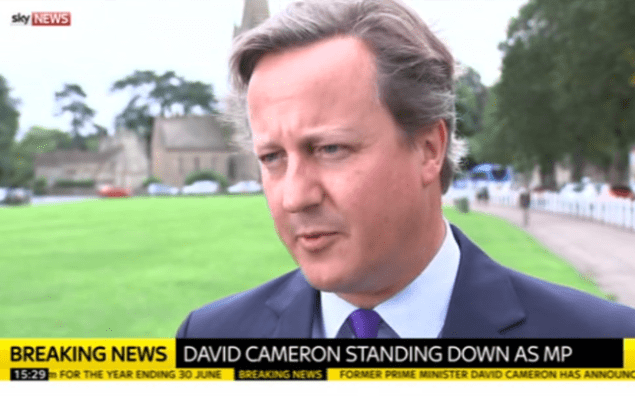
Having successfully completed Tony Blair’s fourth term of office and having a premature end called to his fifth, David Cameron today announced his decision to flounce out of parliament – despite having earlier promised to stay on as an MP after his fall from power.

He took his leave of us with these words:

With modern politics, with the circumstances of my resignation, it isn’t really possible to be a proper backbench MP as a former prime minister. I think everything you do will become a big distraction and a big diversion from what the Government needs to do for our country.

And I support Theresa May, I think she’s got off to a great start, I think she can be a strong prime minister for our country and I don’t want to be that distraction – I want Witney to have a new MP who can play a full part in parliamentary and political life without being a distraction.

[..] I hope I’ll continue to contribute in terms of public service and of course contribute to this country that I love so much.”

[..] I spoke to Theresa May and she was very understanding about this decision. I support her, I support what she’s doing, she’s got off to a cracking start. Obviously I’m going to have my own views about different issues – people would know that. And that’s really the point: as a former prime minister it is very difficult, I think, to sit as a backbencher and not be an enormous distraction and diversion from what the Government is doing. I don’t want to be that distraction; I want Witney to have an MP that can play a full role in parliamentary and political life in a way I think I would find very difficult if not impossible.”

Naturally this has led to speculation that David Cameron somehow disagrees with Theresa May’s loudly-trumpeted plans for new grammar schools and the return of potentially widespread academic selection to the education system.

I find this explanation…unconvincing. If the capsuled history of David Cameron’s premiership and leadership of the Conservative Party has taught us anything about Cameron the man, it is that he has absolutely no core political convictions which he is not more than willing to toss overboard for the sake of political expediency and his relentless desire to engage in centrist triangulation.

Fiscal conservatism? As long as he and George Osborne were able to find some statistical or rhetorical device to falsely claim that they were “paying down Britain’s debts”, Cameron was more than happy to continue spending hand over fist, driving Britain’s national debt ever-upward while exhibiting enormous timidity in reversing many of Gordon Brown’s most draconian tax increases.

Strong national defence? It took his successor, Theresa May, to drive through the parliamentary vote on the renewal of Trident, while under David Cameron’s watch Britain temporarily waived goodbye to our aircraft carrier capability (a true diminution in the eyes of the world) as well as the ability to effectively patrol our own coastline and airspace without the help of allies.

A smaller state? The much-vaunted “Big Society” was dead on arrival in 10 Downing Street back in the spring of 2010, and whatever rearranging of deckchairs the coalition government engaged in, nothing was done to tackle the biggest budget black holes – pensions and the NHS. Under David Cameron, the government preferred to virtue-signal their progressive credentials by spending borrowed money on international aid than get to grips with departmental spending.

So given this singularly unimpressive track record, the idea of David Cameron suddenly discovering an ideological backbone and beliefs strong enough to resign over is frankly ludicrous.

In fact, what really happened is quite obvious. Cast from power unexpectedly and with unexpected speed, Cameron lied when he said that he intended to stay on and complete his term as MP for Witney. To have said otherwise and admitted his intention to resign would have appeared churlish, and more than anything Cameron wanted to cultivate the image of himself as an easy-going happy warrior, ready to relinquish the trappings of office without regret and re-assume a more humble role as a backbencher.

This announcement came as quickly as it possibly could without making Cameron look completely dishonest and reprehensible. At least when Gordon Brown resigned as an MP he had managed four years as a backbencher – albeit four years in which he collected a hefty MP salary while being virtually invisible in Westminster. David Cameron’s brittle ego wouldn’t even permit him to last a year on the backbenches. His top flight political career having been brought to an unexpected end, Cameron saw no reason to stick around as a mere constituency MP.

To politicians like David Cameron, the role of constituency MP is merely a springboard to ministerial power. When the possibility of prize cabinet jobs or the keys to Number 10 Downing Street are no longer an option, wasting time on select committees or dealing with constituents’ issues appears a supreme waste of time – time which could be better spent cashing in on fame and carefully tended relationships while they are still relatively fresh and can bear the most fruit.

James Kirkup is similarly unimpressed with the manner of Cameron’s departure:

On June 27, David Cameron issued this statement: “I will continue with my duties as the MP for Witney. It is an enormous privilege to serve the people of West Oxfordshire.”

So enormous that he could only bear it for a few more weeks, apparently. He’s off, leaving the Commons and triggering a by-election in Witney: some lucky Tory will soon inherit one of the safest and prettiest seats in the country.

What does this tell us about Mr Cameron? Nothing terribly positive, to be honest. Let’s remember, he fought the EU referendum campaign promising not to quit if he lost, then quit when he lost — but only having clung to office as long as possible and having banned the Civil Service from doing any preparatory work for Brexit, thus making it harder for his successor to actually get on with the job.

In between breaking his promise not to resign as PM and breaking his promise not to resign as an MP, the only significant official work he undertook was drawing up an honours list handing an OBE to his wife’s stylist and a knighthood to his press officer.

Not exactly the most dignified departure from office, is it? And certainly not one that’s easy to reconcile with many, many statements from Mr Cameron about the sense of duty he owed to his nation, the selfless service he felt obliged to render.

And Kirkup’s unsparing conclusion:

And this is why flouncing out of Parliament in this way is so telling: it speaks to something fundamental about Mr Cameron’s character and his approach to politics: a lack of seriousness, the absence of real commitment.  Yes, he wanted the job and yes he put the hours in, to the cost of his family.

But he would never die in a ditch for his political beliefs, never shed blood and move mountains to hammer home his arguments. It was always enough to get by, to do just enough to get the top grade and do better than the rest.

Sadly, that describes Cameron perfectly – far more obsessed with optics than reality, and forever in search of the path of least resistance, even when that path ran direct through traditionally left-wing territory.

Ultimately, David Cameron was a weak and instantly forgettable prime minister because he was a centrist triangulator and a technocrat at heart. As prime minister he had no real interest in reforming Britain in his own image, imposing his own worldview or being a statesman. Rather, he was content to campaign and govern as a mere Comptroller of Public Services, the living, breathing symbol of the diminution of our national politics.

With his happy departure from Parliament (en route to a minor footnote in history) one hopes that the ground has shifted under British politics, and that the age of the technocrat might be coming to an end. His successor, Theresa May, while far from being this blog’s preferred choice, at least seems to have some strongly held political views of her own, while Jeremy Corbyn’s imminent re-election as Labour Party leader promises a 2020 general election offering genuine choice to the electorate.

All we need now is for George Osborne to follow his chum David Cameron into political retirement and we may finally be able to turn the page on this most boring and depressing chapter in Conservative history.


David Cameron - Coke Zero Conservative - I Cant Believe Its Not Miliband

Support Semi-Partisan Politics with a one-time or recurring donation:

Agree with this article? Violently disagree? Scroll down to leave a comment.

Follow Semi-Partisan Politics on TwitterFacebook and Medium.

American Conservatives, Fearing National Decline, Want A President With Swagger Again. What Could Go Wrong?

American conservatives only react so furiously when President Obama shows a little diplomatic humility and self-deprecation while abroad because it touches a raw nerve – they are consumed by worry about American decline, and project their anger onto minor, intangible issues like bowing protocol, Air Force One tarmac snubs and presidential behaviour which falls short of obnoxious boorishness on the world stage

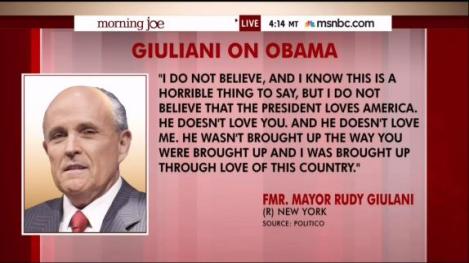
Many American conservatives have reacted with outrage to this video of President Obama addressing an audience during a recent trip to Laos, holding it up as yet more evidence that the president they so love to hate actually hates America himself.

Addressing a townhall-style meeting while in Laos, Obama is heard to say:

I believe that the United States is and can be a great force for good in the world. But because we are such a big country, we haven’t always had to know about other parts of the world. If you are in Laos, you need to know about Thailand and China and Cambodia because you’re a small country and they’re right next door, and you need to know who they are.

If you’re the United States sometimes you can feel lazy and think, you know, we’re so big we don’t have to really know anything about other people, and that’s part of what I’m trying to change, because this is actually the region that’s going to grow faster than any place else in the world. It has the youngest population and the economy is growing faster any place, and if we aren’t here interacting and learning from you and understanding the culture of the region, then we’ll be left behind, we’ll miss an opportunity, and I don’t want that to happen.

Cue lots of conservatives running around in a tizzy as though Obama had been propping up the bar at some Laotian tavern, regaling the regulars with an endless reel of hilarious anecdotes about how backward and stupid Americans are, while TV cameras recorded every shameful moment.

Here’s Ace of Spades, getting unnecessarily worked up:

It’s almost as if this pampered, do-nothing, unqualified malcontent actively hates America or something.

Someone out there there’s a Yourself in desperate need of a f*cking.

You gotta listen to this. It’s the International Version of his famous Bitter Clingers Song.

Look, this is silly. I know it is inexplicably popular in American conservative circles to rant and rage about how the Evil Muslim Marxist in the White House secretly – or not so secretly – hates America. And to be fair, President Obama hasn’t always done himself many favours in this regard, particularly with that unbearably condescending “bitter clingers” speech which genuinely made it seem that he holds a significant proportion of the country in something between pity and contempt.

But do these pro salt-of-the-earth conservatives think that the likes of Donald Trump or the Republican Party establishment “love America” so much that they are ever going to sit down and break bread with ordinary folk on a regular basis (apart from when seeking their vote)? Do they really think the man who eats his pizza with a knife and fork has any great love for the Common Man? Or that Newt Gingrich or Paul Ryan or Ben Carson spend their time away from Washington D.C. slumming it, eating at Waffle House and watching Nascar?

Besides, what point is Ace trying to make here – that when on foreign soil, the American president must always be belligerently boastful about the United States, even (or especially) to the point where it enrages his hosts? This is like that American exceptionalism argument all over again. It’s perfectly fine to consider America a truly exceptional nation – heck, I certainly do, and I’m not even a citizen yet – but in what possible way does it make good diplomatic sense to stomp around the world lecturing other nations about how inferior they are?

What do conservatives think that Obama should have said in Laos? That the United States of America, to the very last trailer park dweller, is full of the wisest and most sagacious citizens on the face of the earth? That every American, from the richest penthouse-dweller in New York to the poorest cabin owner in Appalachia, is a natural foreign policy expert? That the people of a nation where 54 per cent of citizens do not own a valid passport are nonetheless deeply knowledgeable about the world beyond their own borders?

Is there not some truth to the perfectly benign and logical statement that as a large and powerful country, there is much less incentive for average American citizens to concern themselves with world affairs until they threaten an imminent impact on the homeland? Might it not possibly be the case that the country whose top-rated cable news channel (Fox News) has a segment entitled “Around The World in 80 Seconds” – that’s seconds, not minutes, and typically seconds filled with lightweight fluff about bull-running festivals or cheese-rolling competitions – is more domestically focused than other, smaller and more interconnected countries?

Worrying that the president of the United States is not swaggering around boorishly enough on the world stage is actually evidence of a deeper malaise, a suggestion that those who criticise Obama so hysterically actually realise that America is in some ways a troubled country, and desperately want their leader to kick ass at every diplomatic summit as a way of papering over the cracks.

And that’s what this hissy fit from the American Right is really all about: the gnawing fear of American decline. In some ways this is a legitimate fear – no, America is not going anywhere just yet, despite the best efforts of enemies without and “reformers” within to undo all that is good about the United States. But we are certainly entering an indisputable period of relative American decline, as other countries develop and become wealthier, and new regional powers assert themselves. This is understandably concerning to many people, particularly those of the baby boomer who came of age at a time of unparalleled American power and prosperity, as well as those younger Americans who came of age (as I did) between the shadow of the Cold War receding and the incredible national shock that was 9/11.

It will be harder now for America to pursue her global interests unchallenged. American influence will be questioned and undermined by assertive regional powers and two-bit mischief-makers alike. America will have to become accustomed to harmless but superficially humiliating slights from jumped-up, distasteful regimes looking to impress their domestic audience by standing up to the United States, much as Britain had to endure a reduced standing on the world stage after the Second World War and loss of empire.

But America is not Britain, and her decline will be neither as swift nor as steep. America’s fundamentals remain broadly sound. The economy remains large and dynamic, while America’s military power and reach eclipses that of all other nations several times over. Financial and social problems, though pressing, are surmountable – or at least the damage can be contained for now. America will remain the sole superpower for the foreseeable future, and all those countries who American conservatives see posing a threat in their fevered dreams face internal and external challenges of their own.

And yet the gnawing fear persists, and leads otherwise sensible conservatives to say and demand very silly things in a desperate and unnecessary attempt to prove continued American national virility. But now is the time for smarter American diplomacy, not for the unsubtle sledgehammer approach. Of course America should take pride in the exceptionalism of her founding and history, but this should not translate into a boorish tendency to lecture other countries when leading by example can be far more effective.

That doesn’t mean the United States should stop calling out human rights abuses or democratic infringements in other countries – far from it. But conservatives should stop demanding that the US president, while standing at a lectern at a joint press conference next to a foreign head of state, opens his remarks by detailing all the many ways in which the United States is a far superior country. Is that really too much to ask?

After all, it is less than eight years since we last enjoyed the service of an American president brimming with natural swagger, and the foreign policy consequences were…mixed.

Do we really want to go down that road again?


why-does-obama-hate-america-rudy-giuliani

Support Semi-Partisan Politics with a one-time or recurring donation:

Agree with this article? Violently disagree? Scroll down to leave a comment.

Follow Semi-Partisan Politics on TwitterFacebook and Medium.

Neutrality Is Not An Option For Conservative Pundits Against Trump

Donald Trump - RNC - Republican National Convention - Cleveland - Nomination - 2

Failing to support Donald Trump as the Republican presidential nominee effectively means advocating a Hillary Clinton presidency as the least-worst option in 2016. And #NeverTrump conservative pundits should find the courage to do so.

The veteran US conservative blog Ace of Spades has nothing but derision for those conservative pundits, commentators and other associated “thought leaders” who denigrate Donald Trump at every opportunity while lacking the courage to state the obvious inference from their criticism – that they would rather see Hillary Clinton as president.

Ace thunders:

Hardest hit: The #NeverTrumper Pundit Class, who are depending on a blowout to maintain that their constant anti-Trump agitations cannot possibly affect the election.

Oddly enough, none of these people claim to have zero influence on the conservative population except when they agitate against Trump. I’ve asked several people to provide past resumes and book proposals to demonstrate they have previously claimed to have absolutely no readership or influence over other conservatives; none of them have come forward with such book proposals stating, “I vow to you that I have barely any readers at all and that my book, should you publish it, will make nary the faintest ripple in the national debate.”

It’s only now, during 2016 (specifically from May of 2016 to November 2016), that this obviously highly-self-regarding group of Thought Leaders is making this claim of having no importance and no following.

I imagine these claims will evaporate ’round the second week of November.

Then they’ll all be back in Highly Influential Thought Leaders of the Conservative Movement mode again.

Sorry, I consider these claims to be cowardly, dishonest, and utterly chickenshit. People who have been cashing checks for decades based on their very value as magnets for conservative eyes can’t suddenly claim that, at least for a six month period from May to November 2016, they haveno influence whatsoever and are doing nothing at all to advance Hillary Clinton’s election prospects.

It’s cowardice, pure and simple. If you consider Trump so terrible that you feel obligated to support Hillary, then at least have the guts to say that, instead of putting on this childishly dishonest and evasive act of claiming that words people care enough about to pay you cash money for suddenly have no impact on anyone, anywhere, ever.

This bullshit that obviously-influential people who get paid advances to write books on conservative politics don’t have influence is unworthy. If you want a defense, then say, “I’m doing what I always do: I’m arguing for what I believe to be for the best for America.” (And that just happens to be arguing for the One True Conservative in the race, Hillary Clinton.)

He’s not wrong. There is no characteristic more despicable in people who claim to be part of the political and media elite than political cowardice and the craven unwillingness to boldly state inconvenient truths. Nor is there a spectacle more corrosive to the public trust in journalism and politics in general than those plump, oily fence-sitters who hedge their bets at every opportunity while still demanding that the rest of us sit and hang on their every word.

This blog took the plunge back at the time of the Democratic National Convention in Philadelphia. Though the words “I’m with her” had to be choked out together with no small quantity of bile, I uttered them nonetheless and this blog nailed its colours to the mast. Now Trump fanatics and those who fantasise about a Trump administration “dream team” involving the likes of Rudy Giuliani, Mike Huckabee and Sarah Palin can damn me if they wish, and never set digital foot here again.

A Hillary Clinton presidency gives the Republican Party four more years to come up with a more palatable option than John McCain, Mitt Romney and Donald Trump. In those four years, precious little will happen to fill conservative hearts with glee. But it is also highly unlikely that anything cataclysmicly, unfixably awful will happen either. That, to this blog, seems like a much better deal than letting Donald Trump loose on the Oval Office and potentially having him tarnishing the conservative and Republican brands even more than he has been able to as a presidential candidate.

Many of Trump’s desperate apologists try to trip up the #NeverTrump brigade by pouring scorn on the idea that Hillary Clinton is more conservative than Trump (see Ace of Spades’ sarcastic description of Clinton as “the One True Conservative in the race”). This misses the point. Many of us see Hillary Clinton exactly for what she is – namely a very calculating centrist with no core political convictions whatsoever. She was never the swivel-eyed leftist that Newt Gingrich tried to suggest – witness her glacial movement on gay marriage, only cautiously signalling her support once she was sure that Joe Biden and Barack Obama had not done themselves any political damage.

So the question is not one of whether Hillary Clinton is “more” of a conservative than Trump (though Donald Trump certainly is no conservative). The question is one of temperament and basic competence to execute the job. And while Hillary Clinton may be dogged by many legitimate ethical questions, few doubt that she could handle the levers of government, if only to maintain America on its present course.

Donald Trump, by contrast, is a complete unknown quantity, and a hugely volatile one at that. When he goes off-script he is liable to say or do anything (insulting the most sympathetic of characters or getting into Twitter wars with D-list celebrities) which comes to mind, and when he is on-script (as at his recent summit with Mexican president Enrique Peña Nieto) he sounds like he has been lobotomised. I have about as much confidence that Donald Trump has read, understood and respects the US Constitution as I believe his claim that “nobody reads the bible more than me“.

The choice, then, is not between a leftist ideologue and an honest, hard-workin’ conservative whose only crime is to be a bit politically incorrect sometimes, as Trump’s loyal cheerleader Sean Hannity loves to put it. The choice is between an ideologically rootless centrist who will likely maintain the status quo because she and her family have too much vested in it to see it fail, or a madman.

There are some occasions when the plucky, anti-establishment, populist insurgency is wrong. Shocking, I know, coming from an ardent Brexiteer, but true nonetheless. The cherished goal of Brexit – reasserting nation state democracy and reclaiming power from distant, unaccountable, technocratic elites – is pure and noble, at its best. Trumpism is not. Even if many of the complaints of Donald Trump supporters are valid – and they certainly are, and have been ignored by mainstream politicians for too long – Trump’s solutions are not equal to the difficulties he identifies.

“The dogmas of the quiet past are inadequate to the stormy present”, Abraham Lincoln once remarked in an address to Congress. True – and nothing represents the dogmas of the past better than Hillary Clinton. But still it is better to sit in the harbour and make scant progress for four years than to unfurl the Trump sail and set a course right for the centre of the storm.


Donald Trump Hosts Nevada Caucus Night Watch Party In Las Vegas

Support Semi-Partisan Politics with a one-time or recurring donation:

Agree with this article? Violently disagree? Scroll down to leave a comment.

Follow Semi-Partisan Politics on TwitterFacebook and Medium.

The American Right’s Guilty Conscience

Jeb Bush - Twitter - Gun - America

The more self-aware parts of the American conservative movement are coming to realise their part in creating the monster that is Donald Trump. Good. But with Trump’s takeover of the Republican Party complete, the genie cannot be put back in the bottle.

Slowly but surely, realisation is dawning among parts of the American Right that they might, just might, be partly responsible for feeding the national anger and distrust of elites which has given us Donald Trump, Presidential Nominee Edition.

Politico Magazine has a great extended feature on well-known Wisconsin conservative talk radio host Charlie Sykes, in which the respected political figure essentially admits that Donald Trump’s takeover of the GOP was only possible thanks to the work of the relentless Republican Party media outrage generation machine.

From the article:

Charlie Sykes’ conscience is nagging him.

Since last year, the most influential political talk show host in Wisconsin has found out just how hard it is to be a #NeverTrump conservative on right-wing radio. Ever since Sykes began denouncing Donald Trump on the air—which he does just about every time he talks about the presidential election—he’s strained his relationships with the listeners of his daily radio show.

Sykes’ many arguments with listeners over Donald Trump’s serial outrages have exposed in much of his audience a vein of thinking—racist, anti-constitutional, maybe even fascistic—that has shaken Sykes. It has left him questioning whether he and his colleagues in the conservative media played a role in paving the way for Trump’s surprising and unprecedented rise.

Hats off to Sykes for actually challenging his listeners and exhorting them not to swallow uncritically any morsel of Clinton-related scandal from the fringe web while rejecting any attempt at objectivity or fact-checking. Many a lesser talk radio host or other media personality (cough, Sean Hannity) have seen which way the Donald Trump hurricane is blowing and meekly fallen in line with his campaign, never subjecting Trump to criticism even when it is richly deserved.

The feature continues, describing a caller to Sykes’ radio show who wanted to deport Muslim American citizens, in flagrant violation of the Constitution which conservatives claim to hold so dear:

“Were these people that we actually thought were our allies?” he asks.

Sykes remains confident that Trump will lose badly in November, and he is equally fearful that Trump will drag longtime Republicans, like Senator Ron Johnson of Wisconsin, down with him. This has Sykes thinking about the long-term future of the party and what might have precipitated its looming collapse. He wonders: Did “the faux outrage machine” of Breitbart.com and other right-wing outlets foment the noxious opinions that Trump has stoked so effectively on the trail?

“When I would deny that there was a significant racist component in some of the politics on our side, it was because the people I hung out with were certainly not,” Sykes says. “When suddenly, this rock is turned over, there is this—‘Oh shit, did I not see that?’

And then:

He wants to figure out why, in his opinion, things went so wrong for the conservative movement. One problem, he thinks, is his fellow talk-radio hosts.

“Talk radio made itself relevant by beating up on other Republicans, vilifying other Republicans,” he says. “It fed this faux outrage machine that raised expectations unrealistically”—for instance, asking why Congress didn’t repeal Obamacare, though Obama’s veto pen made it mathematically impossible. Later, he would tell Business Insider’s Oliver Darcy that talk radio’s attack on mainstream-media bias has backfired, because its listeners now dismiss legitimate media fact-checking as untrustworthy.

Sykes warns his listeners to step outside the “alternative reality bubble” of Breitbart.com and other right-wing websites. Part of his audience thinks he’s sold out, he complains, because he won’t parrot dubious claims they’ve read on such sites. “A lot of the conservative talk shows around the country embrace almost whatever comes over the transom,” he says.

Slow hand clap.

This blog has been waiting for some time now for the penny to drop, for thinking American conservatives to realise that the hysterical and unseemly way in which the Republican Party carried out its opposition to the Obama agenda might possibly have some unintended negative consequences.

Because it turns out that treating every single centre-leftish or centrist policy to emanate from the Obama White House as though it were an existential threat to the republic and relentlessly exploiting wedge social issues and persisting with the same failed policies which deliver great benefits to the wealthy, educated elites while leaving the struggling middle class high and dry works really well, right up until the moment where it suddenly stops working at all.

Here’s what that approach actually is good for:

  1. Making ordinary decent citizens with limited political engagement very afraid, often unnecessarily, and
  2. Getting them to donate vast amounts of money to assorted conservative / Tea Party political organisations which exist primarily to enrich those who are part of the Ponzi scheme, with very little of the money actually going on to reach conservative candidates or campaigns

The American right-wing outrage machine has been absolutely magnificent at making people angry and then monetising the hell out of that anger. But it has been lousy at speaking to the issues and problems which weigh on the minds of America’s squeezed middle.

Too often, conservative leaders have been happy to nod along while right wing noisemakers prophesied the abolition of the Second Amendment or the sudden imposition of “socialism”, because it worked. Because it reliably delivered scores of votes to Republican candidates on election day. Right up until the moment it stopped working because a new populist candidate emerged who promised action, not just talk, to defeat these inflated or imagined threats.

Donald Trump isn’t some bizarre and unprecedented phenomenon to afflict the Republican Party. These are the people who earnestly and with a straight face asked Americans to make Sarah Palin the Vice President back in 2008. Their flirtation with ignorance and craziness has a long and dismal history, and only now is bearing full fruit in the form of Trump.

It’s great that some of the more self-aware leaders of the American conservative movement are now quietly realising, with shame, the part which they either intentionally or unwittingly played in unleashing Donald Trump on America. For while Trump’s supporters certainly include more than their fair share of racists, xenophobes and other assorted imbeciles, the vast majority are good and decent people – primarily conservatives who have been consistently let down by a Republican Party which pretended to talk their language but which never governed in their interests.

Unfortunately Trumpism cannot be easily put back in the bottle now it has been released. First, it must be defeated in November, however unappealing the thought of giving the Washington establishment four more years in charge may be. And then the rebuilding of American conservatism must start – a difficult feat since so many of its most intelligent and respected figures have sullied themselves by bending the knee to Donald Trump (a fact which the Politico article discusses at length).

Great electoral rewards await the first party to grapple with the core question of how to reconcile the imperatives of globalisation with the need to equip citizens with the skills and services needed to prosper in a modern economy which can no longer promise a high standard of living for mass unskilled labour. Republicans have the harder job here – the conservative emphasis on self-sufficiency and a small state requires inventive solutions, whereas the Democrats can wave their hands and simply promise a new government program. It’s a difficult issue for conservatives, one which this blog is still struggling to work through.

This is the challenge now facing American conservatives. The culture wars are not insignificant, and there are battles to be fought – some of which this blog sympathises with (political correctness, free speech, religious freedom) and others less so. But no longer will it be enough for Republican politicians to stoke anger about these issues while failing to meaningfully tackle them, or to ignore the economic interests of the American working and lower middle class – doing so will only open the door to another Trump-style populist insurgency.

From this Politico Magazine article, it seems as though at least one prominent conservative talk radio host is starting to get it. Hopefully others will follow.

But the renewal of American conservatism cannot begin yet – first we must hit rock bottom.


Trump Pence 2016 - Make America Great Again

Support Semi-Partisan Politics with a one-time or recurring donation:

Agree with this article? Violently disagree? Scroll down to leave a comment.

Follow Semi-Partisan Politics on TwitterFacebook and Medium.