Treading Water On NSA Surveillance, Ctd.

Evidently given prior notice of the dissatisfaction that was certain to fall on his head should he fail to announce any substantive changes to the bulk telephony data collection programme that flourished under his administration, President Obama triangulated and managed  to set out a plan that included the illusion of substantive changes. It may prove enough to fool the trusting and the credulous, but there are precious few of those sorts of people left to be fobbed off.
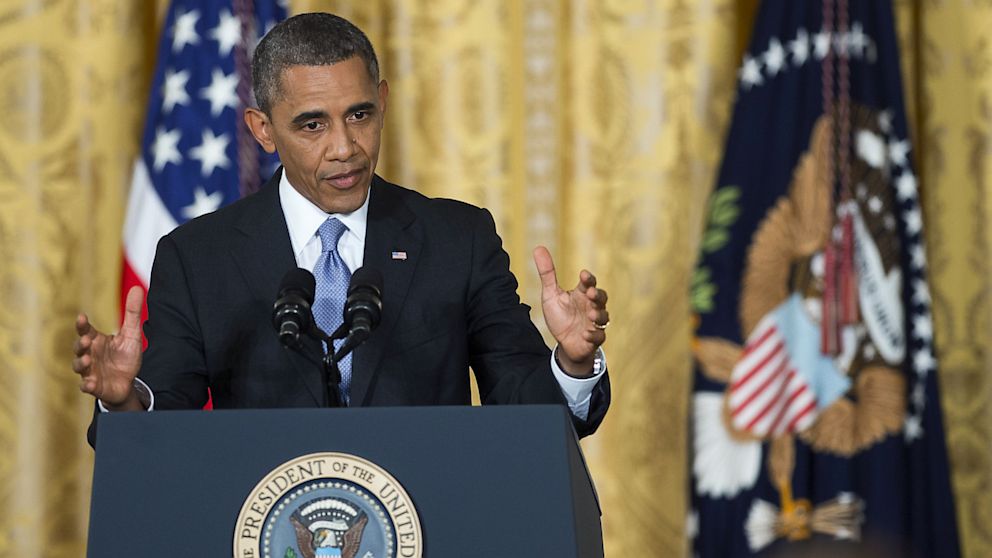
He listens. He gets it.

The New York Times gives a good overview:

President Obama, declaring that advances in technology had made it harder “to both defend our nation and uphold our civil liberties,” announced carefully calculated changes to surveillance policies on Friday, saying he would restrict the ability of intelligence agencies to gain access to telephone data, and would ultimately move that data out of the hands of the government.

But Mr. Obama left in place significant elements of the broad surveillance net assembled by the National Security Agency, and left the implementation of many of his changes up to Congress and the intelligence agencies themselves.

The one announcement not earlier anticipated by the New York Times was the fact that the president may be slightly more amenable to the idea of telecommunications companies or as-yet unspecified third parties holding the unconstitutionally-gotten telephony metadata, rather than the NSA itself. The Times reports:

On the question of which entity will hold the storehouse of phone metadata, the president said Mr. Holder would make recommendations in 60 days. Privacy advocates have called for telecommunications providers to keep the data, though many of the companies are resisting it.

And resist they should. Due to the sensitive and highly politically charged nature of the data being held, why would a private firm wish to open itself to potential liability from lawsuits by hosting the data? Furthermore, unsavoury and unconstitutional though it may be for the government to be collating this data, it is probably more secure in the hands of the paranoid and capable people at the NSA than it would be in some corporate data centre.

But all of this is beside the point – it is not the question of where the data is hosted that upsets civil libertarians. If someone robbed banks for a living, the main concern of the public would not be where the robber is hiding the stolen cash before laundering it, it would be the fact that he is robbing banks in the first place. Similarly, the point of contention here is not whether the US government or private telecommunications companies holds vast troves of data about the telephone calls made by US and foreign citizens – it is the fact that the government seeks to monitor and check this information without a warrant to do so in the first place.

It is hard to listen to anything that Obama says on the issue of national security and privacy without remembering that he wouldn’t be saying anything at all had his clandestine spying apparatus not been revealed to the world by Edward Snowden, and that the debate that he now seeks to claim credit for starting would, if he had his way, be held only between competing interests in government, well out of the view or input of the public.

Glenn Greenwald is of the same viewpoint, seeing right through the sham:

The crux of this tactic is that US political leaders pretend to validate and even channel public anger by acknowledging that there are “serious questions that have been raised”. They vow changes to fix the system and ensure these problems never happen again. And they then set out, with their actions, to do exactly the opposite: to make the system prettier and more politically palatable with empty, cosmetic “reforms” so as to placate public anger while leaving the system fundamentally unchanged, even more immune than before to serious challenge.

And how cosmetic these proposed “reforms” really are. Caught in the act of carrying out unconstitutional searches and intrusions into the private communications of US citizens, the president’s response is not to admit any fault, but to utter meaningless platitudes about the importance of “America’s values” while changing nothing of any substance at all:

And now we have the spectacle of President Obama reciting paeans to the values of individual privacy and the pressing need for NSA safeguards. “Individual freedom is the wellspring of human progress,” he gushed with an impressively straight face. “One thing I’m certain of, this debate will make us stronger,” he pronounced, while still seeking to imprison for decades the whistleblower who enabled that debate. The bottom line, he said, is this: “I believe we need a new approach.”

I have just finished reading the excellent essay by George Orwell, “Politics and the English Language”. As well as helping me to realise just how pretentious and cumbersome my own writing can sometimes be on this blog (for which I can only apologise and pledge to try harder), it furnished me with this gem, this eternal truth:

If you simplify your English, you are freed from the worst follies of orthodoxy. You cannot speak any of the necessary dialects, and when you make a stupid remark its stupidity will be obvious, even to yourself. Political language – and with variations this is true of all political parties, from Conservatives to Anarchists – is designed to make lies sound truthful and murder respectable, and to give an appearance of solidity to pure wind.

And this one:

In our time, political speech and writing are largely the defence of the indefensible … Thus political language has to consist largely of euphamism, question-begging and sheer cloudy vagueness. Defenceless villages are bombarded from the air, the inhabitants driven out into the countryside, the cattle machine-gunned, the huts set on fire with incendiary bullets: this is called pacification. Millions of peasants are robbed of their farms and sent trudging along the roads with no more than they can carry: this is called transfer of population or rectification of frontiers … Such phraseology is needed if one wants to name things without calling up mental pictures of them.

President Obama, justifying the intrustive actions of the NSA and seeking to cast his proposed cosmetic reforms in a favourable light, and himself as a champion of individual liberty, said this:

“In an extraordinarily difficult job — one in which actions are second-guessed, success is unreported, and failure can be catastrophic — the men and women of the intelligence community, including the NSA, consistently follow protocols designed to protect the privacy of ordinary people,” he declared. “What sustains those who work at NSA and our other intelligence agencies through all these pressures is the knowledge that their professionalism and dedication play a central role in the defense of our nation.”

And this:

And yet, in our rush to respond to very real and novel threats, the risks of government overreach – the possibility that we lose some of our core liberties in pursuit of security – became more pronounced. We saw, in the immediate aftermath of 9/11, our government engaged in enhanced interrogation techniques that contradicted our values. As a Senator, I was critical of several practices, such as warrantless wiretaps. And all too often new authorities were instituted without adequate public debate.

Through a combination of action by the courts, increased congressional oversight, and adjustments by the previous Administration, some of the worst excesses that emerged after 9/11 were curbed by the time I took office. But a variety of factors have continued to complicate America’s efforts to both defend our nation and uphold our civil liberties.

The “worst excesses” to which Obama refers? Torture. Extraordinary rendition. Illegal search and invasion of privacy. But “techniques that contradicted our values” sounds so much better, so much more clinical and so much less descriptive of what happened.

This isn’t good, is it?

Treading Water On NSA Surveillance

It appears from early reports that President Obama intends to punt on the only recommendations made by his surveillance review group that contained any real meat or hope of unpicking the harms done to the fourth amendment.

The New York Times reports:

Mr. Obama plans to increase limits on access to bulk telephone data, call for privacy safeguards for foreigners and propose the creation of a public advocate to represent privacy concerns at a secret intelligence court. But he will not endorse leaving bulk data in the custody of telecommunications firms, nor will he require court permission for all so-called national security letters seeking business records.

In short, the president is determined to continue bulk collection of communications data undeterred, but is willing to play around with the details of who stores the data (the government, the telecoms companies or some kind of shadowy third party consortium), and in a grand gesture to civil libertarians he is willing to promise to actively monitor the communications of acquaintances of acquaintances of a potential suspect, rather than the current acquaintances of acquaintances of acquaintances. This gesture slightly reduces the chance of Kevin Bacon’s communications being flagged as in some way being linked by the NSA to every terrorist in the world, but is otherwise entirely meaningless.

Amen.
Amen.

Foot-dragging, empty gestures and a continued lack of transparency or accountability from anyone involved. So far, so predictable, perhaps.

But what I find slightly more concerning is the way in which the judiciary (at the behest of Chief Justice John Roberts) is seeking to weigh in on what ultimately is a matter of policy, as the New York Times notes:

The developments came as the nation’s judiciary waded into the highly charged debate. In a letter made public on Tuesday, a judge designated by Chief Justice John G. Roberts Jr. to express the views of the judicial branch warned that some changes under consideration would have a negative “operational impact” on a secret foreign intelligence court.

Judge John D. Bates, a former chief judge of the Foreign Intelligence Surveillance Court, urged Mr. Obama and Congress not to alter the way the court is appointed or to create an independent public advocate to argue against the Justice Department in secret proceedings. Any such advocate, he wrote, should instead be appointed only when the court decided one was needed.

Of course, there need not necessarily be anything sinister about this intervention – apparently made on the grounds that it would eat up too much of the court’s time and create excessive workload if they were required to approve all FBI requests for stored bulk records – but it does seem rather odd to me, at face value, that the judiciary is more eager to weigh in on policy proposals when there is a threat to the smooth running of their working day than they are when there is a plausible argument to be made that the government is acting beyond its constitutional authority. The Times also picks up on this:

It is highly unusual for judges to weigh in on public policy debates involving the other two branches of government, but Judge Bates, the director of the Administrative Office of the United States Court, said that Chief Justice Roberts had designated him to “act as a liaison” and that he had consulted other judges.

But again, this is early reporting with the full details of Obama’s upcoming speech and the work behind it not yet made public.

One begins to wonder why President Obama sets up these review boards or commissions, other than as a cosmetic exercise to give the appearance of open-mindedness and willingness to change course. The Bowles-Simpson debt commission forged a tough but real consensus on reforms to American taxation and spending, and was high-handedly dismissed by the administration, and now it appears that the same is about to happen when another of President Obama’s talking shops is due to report back.

Just enough to annoy the Patriot Act manics and those in the national security complex, and far too little to placate civil libertarians rightly concerned about government overreach that we would never have even been made aware of were it not for the actions of Edward Snowden.

The Obama administration’s lack of anything approaching humility or transparency, even after having been caught in the act, is depressing indeed.

From The Annals of Bad Lawmaking

Sometimes they can’t help themselves. Politicians latch on to a word or a concept that is (often rightly) repugnant to almost everyone, and then, with great fanfare, roll out a new law supposedly desired to prevent said thing, or at least to impose tougher penalties on those people who do the Bad Thing.

He's had another idea.
He’s had another idea.

The Bad Thing in this case is training to be a terrorist (or undertaking “terrorism training” as the Guardian reports), the penalty for which is due to increase from a current maximum sentence of 14 years to a life sentence under the new proposals.

The Telegraph, who broke the story, note:

The maximum sentence for a range of terrorist offences, including weapons training, will be increased, under plans being drawn up by security officials.

Current laws allow such offenders to be jailed for 14 years. The new regime will allow judges to impose life terms.

Significantly, that would also mean extremists would be subject to additional monitoring when they are eventually released.

And as with most tinkerings to existing laws in Britain, this one is so riddled with generalisations, non sequiturs and loopholes that there is more daylight than content in the proposals. As we have also come to expect, we see the additional empowering of the police and security services to monitor and meddle in a person’s life for evermore, long after they have completed their punishment and served their time. Here are a few of the more obvious flaws, off the top of my head:

1. In the marginal case, how do you tell the difference between someone who has gone to another country and undertaken weapons training of some kind with no real intent to cause carnage back home in Britain or elsewhere, and one who has attended a bona fide “terrorism training camp”? The last time I checked, there was no formal accreditation of terrorist training institutions against which MI6 can cross-check, or formal evidence of graduation given to successful students. Certainly, we can all picture in our minds the images of masked men with guns and suicide vests running through obstacle courses, but the reality is probably somewhat less clear-cut. Who will be the final arbiter of these too-close-to-call decisions?

2. How will anyone accused of this crime ever receive a fair trial? If it is alleged by the prosecution that they have attended a terrorist training camp, it is highly likely that the evidence required to convict them will be of a secret nature, which if made public would jeopardise the foreign intelligence that Britain is collecting. Scenarios such as these tend to lead to secret trials without juries, where the life and liberty of the accused is decided by a solitary judge behind closed doors, with no public scrutiny.

3. Someone who has acquired skills which could – and only could – be used to harm the general population has yet to really commit any offence against British society or soil. Yes, the fact that a person has gone to a “dangerous” country and spent time in the company of other people holding “extremist” views may greatly increase the probability that they plan to turn knowledge into action (and so, perhaps, warrant greater monitoring of their actions by the security services), but until they actually make concrete plans to do so, arresting and imprisoning them for any length of time sits far too squarely in the category of punishing thought-crime for my liking.

4. It is entirely possible (as has been proven multiple times) to inflict massive damage and loss of life in a terrorist act without ever actually having left Britain to receive training elsewhere. It may seem remarkable that British laws and public policy are still being drafted in 2014 which do not account for the reality of the internet, but here we have just such a case. What is the real difference between a person downloading instructions to make and place a bomb from a source on the internet, and going to another country to receive that same tuition face-to-face? Why does the government seek to punish one more than the other? And how do we distinguish between someone who idly (or accidentally) downloads instructions for making a bomb with no malicious intent, and one who intends to put the knowledge to immediate use?

Why, indeed, does the government seek to do any of the things that these new measures will allow it to do?

Very little of it truly has to do with improving public safety. That is done (rightly or wrongly) mostly behind the scenes, in terms of adequately funding the security services and giving them sufficient remit to do their work. What this is about is not protecting the public, but rather being seen to be doing something. Chris Grayling, the Justice Secretary, is able to look busy and important, and taking firm action at just the time when many of what the Telegraph describes as “radicals jailed after the September 11, 2001, attacks” are approaching the end of their custodial sentences.

That is not to dismiss the real problem facing the government, which the Telegraph rightly lays out:

Security sources estimate that more than 100 British nationals have fought in Syria, backing rebel groups linked to al-Qaeda.

British nationals are also said to be involved in extremist activity in countries including Somalia and Yemen.

These are thorny problems with grave implications if they are not properly met. And in some cases, changes to the laws and sentencing guidelines may well be valid. But the current package being put forward by the government, as outlined so far in the press, appears to be fundamentally unserious. Why is the focus on criminalising the acquisition of the knowledge of terrorism rather than its practice, as manifested either by helping terrorist groups in other countries or conspiring to commit terrorism at home in Britain? These offences would not only be much easier to recognise and prove in court, but also take us away from the path toward thought-crime down which legislation such as that proposed inevitably leads us.

Last-minute lawmaking on the fly. Draconian new powers that are justified using unassailably valid examples, but which could equally be applied to much less clear-cut cases. Government desperate to be seen to be taking bold, decisive action rather than calmly contemplating the best course of action.

This is becoming very familiar.

Snowden vs The Elite

Ruth Marcus from the Washington Post and Glenn Greenwald from the Guardian went head-to-head on CNN this Monday, discussing the recent New York Times editorial calling for clemency for US whistleblower Edward Snowden. As the New York Times rightly concluded in their editorial:

When someone reveals that government officials have routinely and deliberately broken the law, that person should not face life in prison at the hands of the same government.

This was not the view of Ruth Marcus, who, showing much in common with the self-serving elitists and power fetishists who festoon Washington D.C., seems to swoon at government overreach and seeks to protect her own kind from any kind of scrutiny or consequences of their actions, whilst happily throwing the little guy or the outsider under the bus at the first opportunity:

Snowden … is seized with infuriating certitude about the righteousness of his cause. Not for Snowden any anxiety about the implications for national security of his theft of government secrets, any regrets about his violations of a duty of secrecy.

Quite how she knows that Snowden has no anxiety about these things is not entirely clear, but since she has never met Snowden I think it would be fair to surmise that she made this statement up. It would harm her cause, cheerleading for the Obama administration and the national security apparatus, if she acknowledged the fact that Snowden may have wrestled with his decision to divulge what he knew, that he had to weigh up the pros and cons of his actions.

It’s never good when experienced, professional commentators seek to drag George Orwell into their arguments, but Marcus indulges herself:

George Orwell himself would have told Snowden to chill — and the author of “Animal Farm” surely would have shown more recognition of the irony of Snowden’s sojourn in Vladimir Putin’s Russia. Does a man whose life is conducted so much online really believe that Putin’s spies are not cyber-peering over his shoulder?

I believe that the irony, such as it is, is that a man from a supposedly free society has more liberty hiding out in Putin’s oppressive Russia than he would in his own native land, for doing nothing more than exposing the secret and unlawful actions of his government. That fact doesn’t make a mockery of Snowden, but it does make the United States look rather bad.

But it is on her next point that Marcus really overreaches:

On behavior, if Snowden is such a believer in the Constitution, why didn’t he stick around to test the system the Constitution created and deal with the consequences of his actions?

And here is where it gets good, because when CNN host Jake Tapper asked Glenn Greenwald to comment on Marcus’ position, he gave it to her with both barrels:


Temporarily putting aside the correctness of Greenwald’s position, the real money quote, and the thing that really gets to the rub of the matter is this:

I think Ruth Marcus’ argument exemplifies everything that’s really horrible about the D.C. media … People in Washington continuously make excuses for those in power when they break the law.

Yes, we see this time and again, and Greenwald has himself addressed this topic at length in his excellent book “With Liberty and Justice for Some”.

But in terms of refuting Marcus’ fatuous and glib suggestion that if Snowden really valued the US. Constitution he should have been willing to surrender himself and submit himself to the American legal system in order to advance his cause and win his case in the court of public opinion, Greenwald correctly states:

“If he had stayed in the United States, as Daniel Elsberg (widely considered to be a hero by most Americans) argued in the Washington Post, he would have been barred from making the very argument that she just said he should have made. Under the Espionage Act, you’re not allowed to come into court and say “I was justified in disclosing this information”, there is no whistleblower exception in the Espionage Act which is why whistleblowers don’t get justice in the United States.”

May this once and forever do away with the misleading assertion by national security fanatics and civil liberty deniers that Edward Snowden ever had – and spurned – a realistic chance of making his case to the public whilst remaining in the United States, or that his flight to Russia is in any way ironic or detracting from the validity and strength of his arguments. This is not the case.

Mediaite also provides a good summary of the exchange here.

Bring The Police To Heel

Two stories in the media this afternoon, each quite different in nature but both pointing toward the same dark, disturbing and authoritarian shift that continues unabated in Britain today.

policedogs

The first is from The Telegraph, serving up video footage of a police sergeant in Gloucester threatening a photographer, admitting to swearing at him and threatening him with physical harm:

The officer is heard to say, “we’ll nick you now and I will make your day a living hell, ‘cos you’ll be in that cell all day. What I’ll probably do is I will ask for you to be remanded in custody and I will put you before the magistrate.”

He added: “You’re lucky that I didn’t knock you out. I swore at you, yeah. It got your attention, though, didn’t it?”

Because apparently taking pictures or video of the aftermath of a road accident is now illegal in our country, as is showing anything but the most fawning and servile deference and adulation to the most power-crazed and high-handed officers in the police force.

The second article is chilling on an altogether different level, and chronicles the process by which the UK’s anti-terrorist police decided that it would be in any way appropriate and proportional to haul a twelve year old boy out of his class at school to question him about an event that he had organised on Facebook to protest the planned closure of his local youth club:

Wishart said that after the school was contacted by anti-terrorist officers, he was taken out of his English class on Tuesday afternoon and interviewed by a Thames Valley officer at the school in the presence of his head of year. During the interview, Wishart says that the officer told him that if any public disorder took place at the event he would be held responsible and arrested.

Speaking to the Guardian, Nicky Wishart said: “In my lesson, [a school secretary] came and said my head of year wanted to talk to me. She was in her office with a police officer who wanted to talk to me about the protest. He said, ‘if a riot breaks out we will arrest people and if anything happens you will get arrested because you are the organiser’.

The event was organised in the Prime Minister’s home constituency of Witney in Oxfordshire, but in what possible dark, dystopian world is it okay for the police to make a mountain out of a truly tiny molehill and question the intentions of a young boy who was doing nothing but being an engaged and activist citizen? Our country would be vastly better off if there were more children like Nicky Wishart, who actually care about local issues enough to take a stand rather than festering away in front of the television for hours on end.

But it is the next quote attributed to the police that is truly terrifying:

“He said even if I didn’t turn up I would be arrested and he also said that if David Cameron was in, his armed officers will be there ‘so if anything out of line happens …’ and then he stopped.”

If anything out of line happens, the armed officers will do what, exactly? Shoot a twelve year old boy as some kind of sadistic punishment? What reason is there to mention the potential presence of armed officers, other than to imply that they might do the one thing that regular police officers do not?

The truly scary thing is that we don’t even have to worry about our politicians using their power and influence to get the security services to intimidate and threaten the population on their behalf – the security services seem perfectly willing to proactively do so of their own volition!

We must also ask why it was the anti-terrorist police (who apparently have no real serious threats to the nation on their agenda at the moment to be wasting time on routine public intimidation work, for which I suppose we can all breathe a sigh of relief), of all the many branches of our national law enforcement apparatus, who seemingly felt it necessary to bully a small child about his planned political protest. Has GCHQ intercepted terrorist chatter that Al Qaeda intends to infiltrate local community action groups in order to launch their next attack? Whatever next – fears of ricin or anthrax being baked into scones at a Women’s Institute cake sale, and elderly ladies being detained in their kitchens?

The police make the predictable but ludicrous claim that their intention was not to cause distress or to intimidate Wishart, but was simply part of their standard community outreach efforts:

“On Tuesday 7 December, our schools officer for west Oxfordshire attended the school in Eynsham and spoke to a 12-year-old boy in the company of the pupil’s head of year, about a planned protest. This was not with the intention of dissuading him from organising it, but to obtain information regarding the protest to ensure his and others’ safety. As with any demonstration, we always aim to facilitate a peaceful protest.”

Perhaps the police need to apply the “ordinary person” test and reconsider the likely effect of being yanked out of class and spoken to by police in the presence of a senior teacher with no parents or legal representatives present, on the psyche of a young boy. Is doing what they did more likely to “facilitate a peaceful protest” or to stamp out a potential protest before it ever sees the light of day?

David Cameron needs to send a very clear message to the nation in response to this outrage, as a matter of urgency. And through the locally elected police commissioners, he needs to publicly rebuke and call off the police attack dogs currently biting at the ankles of the British citizenry. Cameron and the commissioners must make clear that individual police officers will curry no favour with their superiors by overzealously applying extreme interpretations of public order laws, and that those higher in the law enforcement hierarchy will receive no special favour from their political masters by using their extensive powers to bully and silence any protest that could be politically embarrassing.

Semi-Partisan Sam is quite unequivocal on this matter. The apology from the police to the family concerned is all well and good, but it is quite insufficient. It is high time that the British police are brought to heel once and for all.