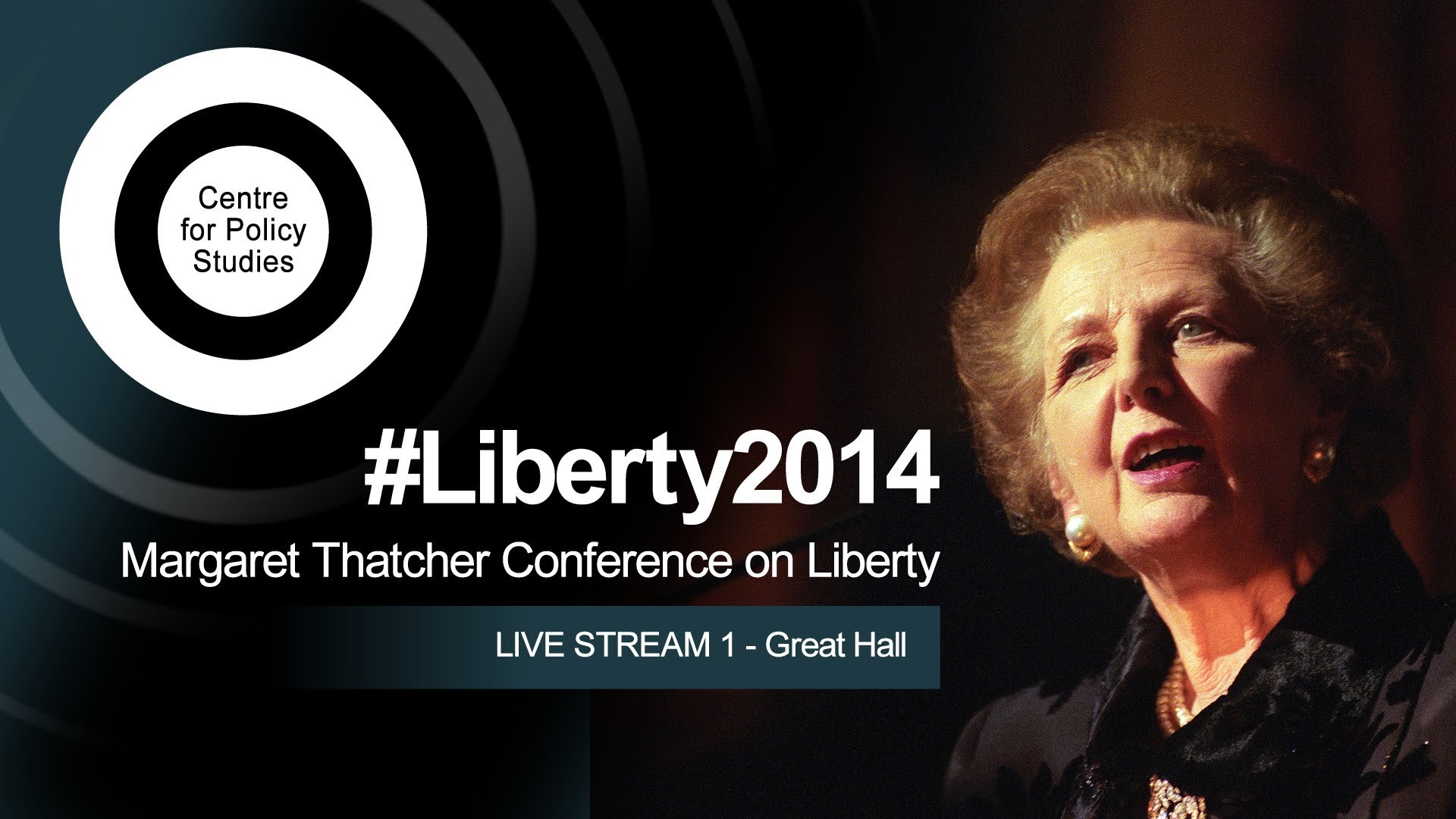
The 2014 Margaret Thatcher Conference on Liberty, organised by the Centre for Policy Studies, takes place on Wednesday 18 June in London. Semi-Partisan Sam will be live-tweeting the event during key sessions, and offering longer-form analysis after the event concludes.
The Centre for Policy Studies was founded 40 years ago in 1942 by Sir Keith Joseph and Margaret Thatcher, and it is no exaggeration to say that the think tank incubated many of the radical ideas that saved Britain from terminal decline when put into practice by the Thatcher Government.
In the year 2014, when the current Conservative Party is able to govern only in coalition, and spends more time fighting with the Labour Party over the same small patch of non-ideologist centrist turf than continuing Thatcher’s work, a new rejuvenation of British Conservatism is needed more than at any time since 1979.
Though the attendee list (full of conservative grandees from Britain and overseas, but many of them now out of power, discredited or both) does not exactly scream dynamism and innovation, anyone favouring small, efficient government and maximum personal liberty should pay attention and hope for positive outcomes and the beginnings of a new birth of freedom (to quote Abraham Lincoln).
The agenda is set to include the following discussions:
The EU and the Big Corporations: are they ganging up against liberty and its protector, the nation state?
The launch of CapX – an organisation tasked with repairing the image of capitalism and rescuing its reputation from damage caused by cronyism and corporate welfare.
Has the West gone soft? 25 years on from the fall of the Berlin Wall
The Road from Serfdom: Lord Saatchi
Big Government, Big Corporations: what chance for small business and innovation?
“After America, what?”
Has the other side won? Or can liberty and popular capitalism fightback?
New media and liberty
A CONVERSATION: What does it mean to be a Conservative?
Stay tuned to @SamHooper on Twitter for live-tweets from the event, and to this blog for discussion and analysis of the conference after the fact.

 Semi-Partisan Politics