Is Microsoft Voluntarily Censoring The Internet?

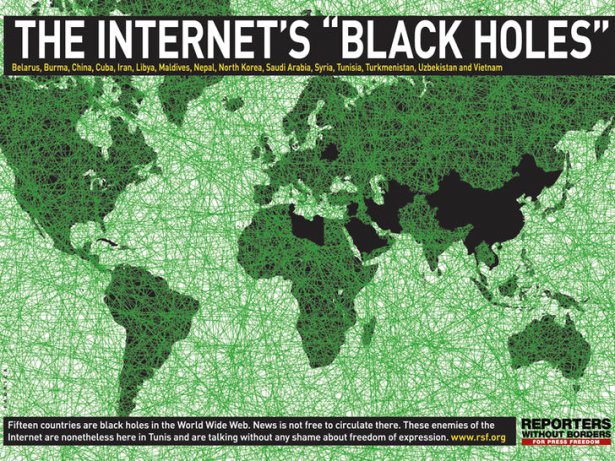
There was once a debate about whether large Western multinational corporations – particularly the newly rising high tech companies such as Google, Twitter and Facebook – should do business in countries such as China, where governments are openly hostile to the concept of free speech, a free media and unregulated access to information for their citizens.

That debate was settled some time ago, the winners being those who advocated expanding into China and then perhaps doing a little bit of agitating or talking up the virtues of freedom when time and decorum allowed. And though there has been precious little lobbying of the government in favour of free speech by those multinationals, the investment in China has, by and large, been a good thing.

Having long ago lost the argument that it is not their place to participate in Chinese government efforts to filter and censor the web when operating in China itself, everyone was bobbing along quite merrily in a morally dubious equilibrium, where the big tech companies would parade their wholesome, consumer-oriented credentials around in front of anyone who would listen or take down quotes, while also co-operating with Chinese censorship requirements and allowing the NSA ready back-door access to personal information held on their servers.

Enter Microsoft.

It is now believed that in addition to complying with the Chinese government’s demands that search engine query results originating from mainland China are filtered and censored, Microsoft’s also-ran search engine, Bing, has been applying those same censorship algorithms to searches in the Chinese language originating from anywhere on the planet. In other words, Microsoft, either in their zealousness to please the Chinese regime or out of sheer laziness and unwillingness to maintain two separate protocols, has apparently been applying Chinese-style censorship to internet searches not just where the Chinese government has geographical jurisdiction but anywhere in the world, whenever the user happens to be searching in Chinese.
chinese-authorities-force-businesses-to-help-censor-the-web-pg

The Telegraph reports:

According to research by Greatfire.org, an anti-censorship campaign blog, Microsoft’s Bing search engine filters Chinese-language results around the world, in the same way as it does in mainland China

Searches for potentially controversial terms such as “Dalai Lama” produce very different results when they are carried out in Chinese than they do in English, even if both searches are carried out on US soil, Greatfire said.

Its claims are likely to raise questions about whether Beijing is trying to extend its censorship regime to the Chinese populations of other countries, and whether Microsoft is making inappropriate concessions.

This is inappropriate to say the very least. The Chinese government’s policy of filtering the internet for its citizens so as to effectively pretend that certain viewpoints, ideologies or historical events are not real is bad enough, as is the fact that Western technology companies have complied with it in order to gain access to Chinese markets while demanding and extracting no concessions or easing of restrictions in exchange. But this allegation, if correct, suggests that corporate malfeasance has been taken to a much more worrying level.

One of the great advantages of globalisation and the free movement of people is that people from different countries can be exposed to different ideas, practices and ways of working. Even though the internet is restricted in mainland China, Chinese citizens could access the full, uncensored internet when traveling abroad, just as they could read the free press. In turn, exposure of Chinese citizens to new and contradictory ideas from outside could ultimately increase pressure on the government to relax their draconian policies.

Basing internet censorship on language rather than geography, as Microsoft appears to be doing, completely destroys this premise and removes the potential for this to happen. As the Telegraph rightly indicates, it would appear that Microsoft is aiding and abetting efforts by the Chinese government to extend their control over expatriate Chinese populations in other countries. In countries such as Britain this may merely be an odious and shameful act, but in other countries such as America, where the right to freedom of expression is constitutionally enshrined, a plausible legal argument could potentially be made that Microsoft is committing a First Amendment violation and breaking the law.

This revelation also contrasts Microsoft very negatively with Google, whose own search engine results for sensitive topics prime for Chinese censorship remain similar whether the search is conducted in English or Chinese, when outside of the Chinese mainland:

Users searching for “Dalai Lama” in Chinese were offered a link to information about a documentary produced by CCTV, the Chinese state-owned broadcaster, before any other search results of results linked to two entries on Baidu Baike, a heavily-censored online encyclopedia. Yahoo, whose search engine is powered by Bing, produced the same results.

By contrast, Google produces broadly similar results for web searches conducted in the US, regardless of whether the terms are searched for in Chinese or English.

But it is Greatfire, the online transparency and pressure group, who pose the ultimate question to Microsoft:

But whose law is dictating the manipulation of search results for Americans who are using Bing in the United States? Or French who are using Bing in France?

It is one thing to prostrate oneself to the laws and whims of a foreign government when negotiating terms to do business in that country. But if incompetence or monetary greed has led Microsoft to start applying Chinese censorship laws to citizens of other countries, then they have a big case to answer.

Where else are Chinese web censorship algorithms lurking?

Satya Nadella, Microsoft’s new CEO, may only be one week into his tenure in the top job, but this is a potential crisis of image and trust that needs to  be nipped in the bud and resolved – yesterday.

Microsoft has gone silent in response to the allegations from Greatfire so far. When the firm eventually comes up with an official story and breaks the silence, it will be very interesting indeed to hear their excuses.

On Paternalism and Porn Filters

Liberal Democrat president Tim Farron has not been my favourite person since the Conservative/Liberal Democrat coalition government was formed in 2010. The grumpy noises emanating from the Liberal Democrat party hierarchy have all too often been agitations for more specifically left-wing policies rather than the promotion of liberal ones, and I have no truck with that. But yesterday, Mr. Farron won my agreement and earned my support.

The Daily Mail reports:

Liberal Democrats have triggered fury by vowing to overturn David Cameron’s plans for internet porn filters.

Child safety experts and MPs called the move ‘irresponsible’ and warned it would undermine attempts to protect children from hardcore pornography.

Lib Dem party president Tim Farron said the Government should enshrine the ‘digital rights of the citizen’ and halt requirement for ‘filters, lists or controls on legal material’.

Tim Farron correctly labels the government policy as “misconceived, ineffective and illiberal”. It is certainly misconceived – a majority Conservative government with a mandate to roll back the onerous size of the state has no place enacting laws that further chip away at the notion of personal responsibility. It has also been proved to be ineffective – a simple browser extension has already been released which simply bypasses the filter. And the illiberality of the policy speaks for itself.

Insidious yet inept.

The Independent quotes Farron in further detail, perfectly summing up the argument for the correct way to protect children from adult material in a liberal country:

“If the Prime Minister really wanted to protect children from inappropriate material, he’d ensure they had access to good sexual health and relationship education and give parents the help and support they need to talk to their children about this issue,” he said.

Absolutely. But the daddy-knows-best wing of the Tory party sadly sees things somewhat differently:

Party sources described the new Lib Dem approach as “disappointing”.

“Tim Farron clearly does not want to prioritise the safety of our children online or support our efforts to prevent anyone accidentally accessing illegal material,” they said.

Anyone could have seen this weak, manipulative counter-punch coming from a mile away. Anyone who believes in personal responsibility and empowering and trusting parents to act in the best interests of their children must, according to this worldview, be maniacally obsessed with pornography whilst simultaneously holding the safety of children in complete and utter contempt.

What complete and utter nonsense.

Quite.
Quite.

I invested my precious time and effort pounding the streets of my hometown campaigning for the Conservative Party in the last general election campaign in 2010, but it is policies such as this which make me roll my eyes and question whether it is worth my time and effort to do so again in 2015. The MP I campaigned with, Robert Halfon, has proven himself to be an excellent constituency MP for Harlow since that time, but the coalition government in which his party is the senior member has delivered letdown after letdown on issues of civil liberties and returning responsibility to the individual.

After thirteen years of Labour government I was desperately looking forward to a rollback of the paternalistic, controlling, pseudo-benevolent state that had grown inexorably during that time. Of course I anticipated some inevitable compromises resulting from the fact that the Conservatives had to take on the Liberal Democrats as junior partners in coalition, but I never expected to find myself cheerleading the Liberal Democrat stance over the Tory one on fundamental issues of privacy and civil liberties. And yet that is exactly where I find myself.

Of course children should be protected from harmful content on the television, the internet and other media. But that responsibility rightly rests with the parents, not the broadcasters, ISPs or the state. Every time the government steps in to protect us from any potential harms out there in the world, we are simply stifled by yet another layer of cotton wool, and given the implicit message that it’s okay to glide through life with no regard for the potential consequences of our actions. Many of us may do this at times anyway, and I certainly include myself in that criticism – but my point is that government should not be actively making the shirking of personal responsibility easier by taking on duties of care that used to sit with educated, compassionate and autonomous private citizens.

I would suggest that parents should not be leaving their children unattended to be raised by television and the internet. If parents choose to ignore all common sense and do so, and their child stumbles upon any inappropriate or distressing material as a result, rather than bleating in outrage to the government a personal reexamination of parenting abilities is required.

David Cameron might think that his government’s time is best spent peeping over our shoulders and tutting at the things we choose to watch online under the justification of “keeping our children safe”, but I can assure him that nearly four years of mystifying underperformance in No. 10 Downing Street quite clearly say otherwise.

American Businessman and Leading Blogger Shown On Chinese State Television in Mao-Like Confession

Jonathan Turley writes an excellent expose and analysis of the terrible forced confession and public shaming of Charles Xue, an American businessman and influential blogger. These public shaming rituals are so difficult to watch, not only because of the tremendous pity one feels for the person involved, but because it makes ones blood boil to think of the abuse of state power taking place. Tea Partiers and others who see tyranny and despotism behind every move that President Obama makes would do well to look at this case and remind themselves what true tyranny and absence of the rule of law looks like. If our occasional polemics on blogs, radio and television were directed against the Chinese leadership rather than the American or British political class, many of us would also be sitting in a prison cell. Though it may not help Xue at all, we can at least take some small measure of comfort from the fact that China’s rising middle class, with their ever greater accustomisation to a high standard of living and their increasing exposure to other cultures, will not tolerate the government’s paranoid meddling in their lives indefinitely.

jonathanturley's avatarJONATHAN TURLEY

Charles Xue appears to confess 'involvement in prostitution'130px-Mao_Zedong_portraitChina appears to be returning to the Cultural Revolution with public confessions of dissidents as a warning to all those who would challenge the ruling party. Chinese viewers were exposed to a truly sad and transparent confession of American businessman and leading Chinese blogger, Charles Xue. The Chinese recognize the Internet as the greatest threat to the totalitarian regime. Xue was therefore rolled out to degrade himself before the Chinese people — begging forgiveness for forgetting his place in objecting to such things as contaminated water. He admits to feeling like the “emperor of the Internet” and apologizes for spreading rumors against the ruling party leaders.

View original post 259 more words