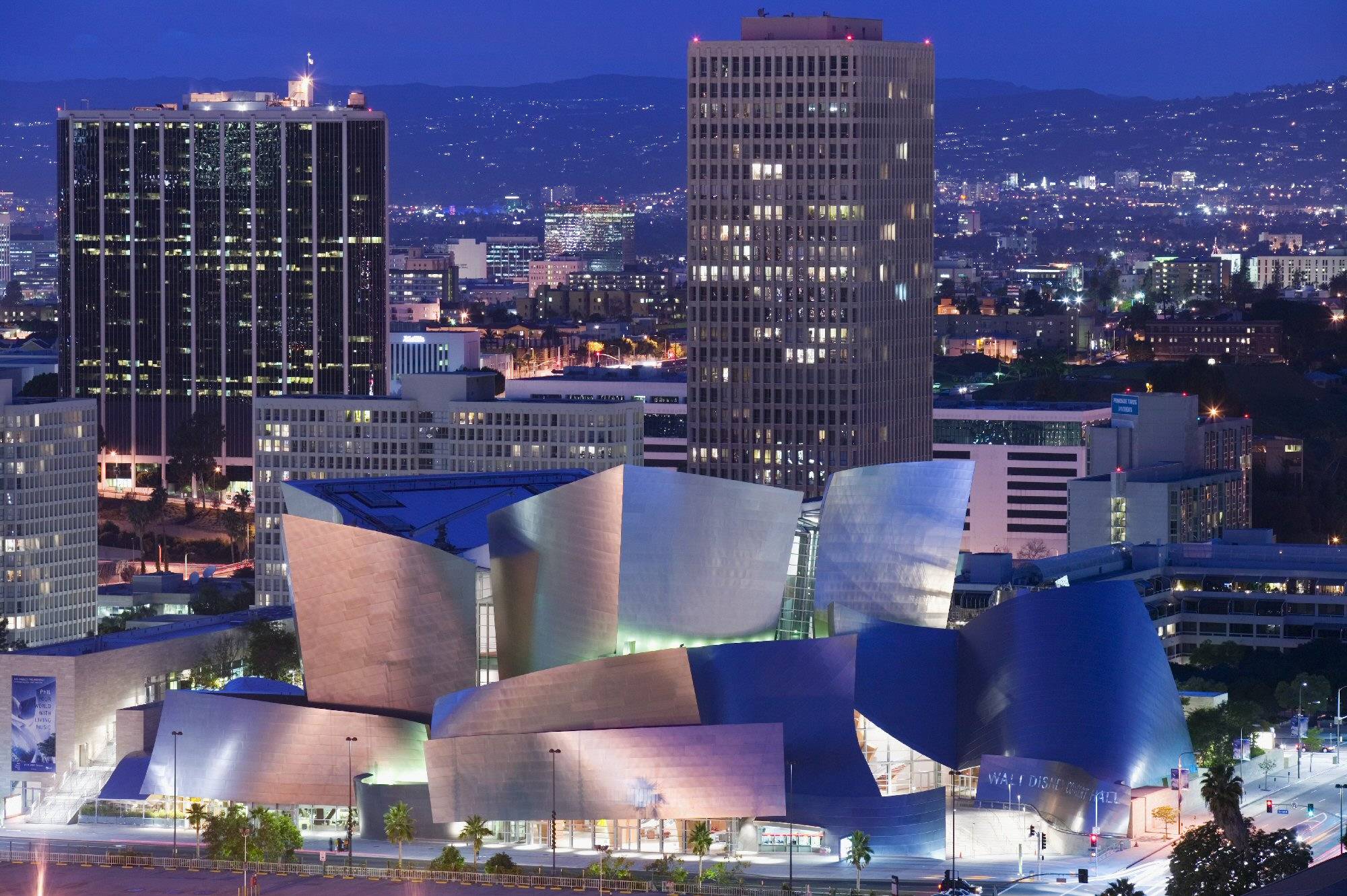
The wonderfully designed Walt Disney Concert Hall in Los Angeles, California, turns 10 years old this year. With its sweeping, idiosyncratic curves. metallic finish and public spaces, it is doing a lot (at least in LA terms) to revitalise the downtown area.
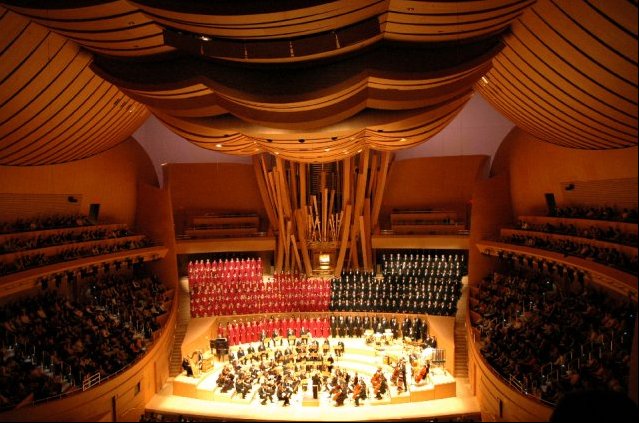
The interior is also beautifully designed, with seating in the round (limited audience seating behind the choir) and a very dramatic organ placement. The warm finish of the interior contrasts strikingly with the bright, metallic exterior.
The Los Angeles Philharmonic is celebrating the 10th anniversary of its Walt Disney Concert Hall with ‘insideOUT’, a number of special events taking place during September, October and November featuring music director Gustavo Dudamel, Esa-Pekka Salonen, Yo-Yo Ma, Leif Ove Andsnes, Yefim Bronfman and Julie Andrews.
There will also be public forums with Frank Gehry, designer of the concert hall (Oct 2, 15), who writes of his building: ‘One of the primary considerations when conceiving the design for Walt Disney Concert Hall was to preserve the iconic importance of the LA Phil, but break down the often imposing scale of a traditional concert hall. Walt Disney Concert Hall is not just a building for music, but a building for the people. From the inside out, the building was designed to respond to its surrounding, and serve as a gathering place.’
Semi-Partisan Sam hopes to make his own visit to the Disney Concert Hall in the coming few years.
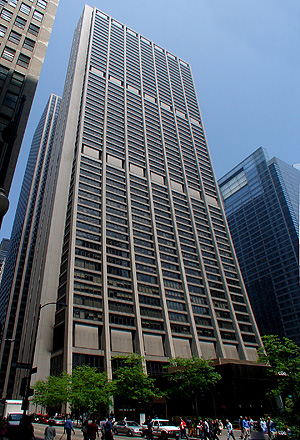
Apparently the glass panes of the new curved skyscraper under construction at 20 Fenchurch Street – nicknamed the “Walkie Talkie” – are reflecting and concentrating light in a rather unfortunate way so as to superheat and melt objects on the street.
20 Fenchurch Street. Image by AFP/Getty.
The Telegraph reports that a temporary scaffold and sun screen has been erected over the affected portion of the street, after rays reflected by the building were reported to have melted plastic components of a Jaguar car parked in a nearby parking bay, and enabled a man to fry an egg on the pavement:
Business owners in Eastcheap say the £200 million project has blistered paintwork, caused tiles to smash and singed fabric. A motorist has also said the intense heat melted part of his Jaguar.
Developers Land Securities and Canary Wharf said the screen was designed to prevent the “phenomenon”, caused by the current elevation of the sun in the sky, from taking place.
Baker Tom Logan said: “I’ve long suspected that London was trying to kill me, with the cumulative effects of pollution, stress and a generally harrowing atmosphere.
“Oh well. I suppose psychotic buildings firing lethal beams of pure energy is another thing we’ll have to get used to, like the congestion charge and parking permits.”
Speaking via a mouth-like orifice in the Gherkin, London said: “I shall also be using flying manhole covers to decapitate you. And look out for London Bridge turning into a giant metal snake with sewage-dripping fangs.”
It can certainly feel that way sometimes.
And finally, The Guardian reports that there are many other buildings around the world that cause similar problems:
Some of the burnished stainless steel panels of Frank Gehry’s Walt Disney Concert Hall in downtown Los Angeles, which opened in 2003, had to be sanded down to prevent drivers being blinded by the glare, and pedestrians fried by pavement hotspots that reached 60C. Residents across the street also threatened legal action over their sky-high air-conditioning costs.
The impact of buildings is by no means confined to heat and light. Skyscrapers with curved walls (notably in Chicago) have been known to accumulate large quantities of snow and ice on their surfaces before dumping them without warning on unsuspecting pedestrians below.
Beware when walking beneath the Chase Tower, Chicago in winter.
The only sensible conclusion to draw from all of this – you are not safe on your morning commute. Beware!
Although it is not brand new, the award for Best Thing Of The Day has to go to a discovery that I only just made – the Lego Architecture Studio set.
Best Thing Ever – Lego Architecture Set
Apparently it retails for around $150 USD and looks to be worth every darn penny.
Wired.com reports that the set comes with no instructions for constructing any one specific building, but rather with a hefty user manual that walks you through different architectural styles and practices, enabling the lucky owner to experiment with their own interpretations:
Architecture Studio, a new set from Lego, comes with 1,210 white and translucent bricks. More notable is what it lacks: namely, instructions for any single thing you’re supposed to build with it. Instead, the kit is accompanied by a thick, 277-page guidebook filled with architectural concepts and building techniques alongside real world insights from prominent architecture studios from around the globe. In other words, this box o’ bricks is a little different. Where past Lego products might have had the happy ancillary effect of nurturing youngsters’ interest in architecture, here, that’s the entire point.
Seventy-three different kinds of bricks are included in the set. But bricks are easy to find. It’s the guidebook that’s truly new. Its pages offer accessible overviews of basic architectural concepts, along with illustrated exercises for exploring them in Lego form. Pages on negative space and interior sections, for example, encourage budding builders to think not only about how their miniature creations look from the outside but also in terms of what sorts of spaces they contain within them.
What a brilliant idea. I was already impressed with the initial sets in the Lego Architecture series, such as Frank Lloyd Wright’s “Fallingwater” house, pictured below:
I would love to live there, but would settle for the Lego model
But even here the user is only following the preordained instructions transcribed from the original architect’s design. With the Lego Architecture Studio set, one is given all manner of different blocks, a thoroughly detailed and useful guide to help get into the architect frame of mind, and a blank slate on which to play. Brilliant.
Will Hutton is quite possibly the only person left in Britain who thinks that it would have been a good idea if we had joined the Euro at the currency’s inception (disclaimer: I thought so too at the time, but in my defence I was a naive sixteen-year-old and I didn’t know anything back then). So at this point in time we should probably take most of his public pronouncements with a very large pinch of salt.
However, when the bestselling author and economist writes about matters other than economics, he can sometimes make a lot of sense. Writing in The Guardian today, Hutton makes a very cogent point relating to architecture and town planning, and the way in which too much development in Britain today is focused solely on commercial and retail space, with little or no thought given to public areas or civic spaces that are often the heart of a neighbourhood.
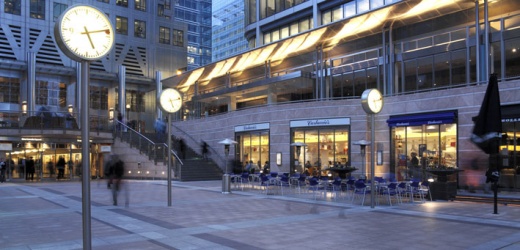
Canary Wharf – Hundreds of restaurants and shops, no public spaces
With regard to London’s Canary Wharf district (where I have experience of working), a large financial centre increasingly luring business away from the City of London, he writes:
Commercial developers behind the likes of Canary Wharf – the pioneer of vast, privately controlled spaces since emulated in the shopping centres of Liverpool One and Bristol’s Cabot Circus – want to reduce public space as much as they can. They want to be free to configure where we walk, what we visit and who has access because thus they can maximise sales per square foot of shopping and rents.
Public space costs money twice over: it has to be paid for by taxes (and we know many corporations do their utmost to avoid tax) and public space represents lost revenue. In a world in which everything has to be consecrated to “wealth generation”, providing a critical mass of public space that can be used for multiple public and social uses has been a burden too far in almost all recent large-scale urban regeneration projects throughout the country.
This is certainly true. While I love the architecture and the tall, glass and steel buildings that dominate the skyline in that part of the city (a little bit of lower Manhattan in London), it is also true that at times it can feel almost crushingly soulless. And the reason is precisely as Hutton states – almost every square foot of land is designed either to generate revenue, or to ease the passage of pedestrians so that they can move from making one transaction to the next, and then back to their office, with the utmost efficiency.
The most damning proof can be seen after the last Friday-night office revelers leave the bars and steak houses by the waterfront late on Friday night – until Monday morning, when the first bankers sleepily ascend from the tube station, the place is a ghost town for the duration of the weekend. Why go to Canary Wharf if you are not working there? And it is a terrible shame, because but for the addition of a small park, an area of grassland for people to picnic on, and a few other minor alterations, the area could be pleasant to visit at any time of the week.
Hutton continues:
One of the delights of Brighton’s Lanes or Oxford’s covered market is the possibility of escaping the tyranny of the shopping chains. You can go there just to hang out, shop, eat, browse or go for a stroll – and in this environment there is a chance to encounter the new shop, pub or restaurant. The insurgent is on level terms with the incumbent. Minton quotes many European architects who despair at our impoverished, weak municipal authorities unable to deliver such a social and public ethos compared with those in Europe: the Swiss, hardly tribunes of the left, have a strong civic tradition and fabulous livable cities. Why can’t we?
And he concludes:
Britain can do better than be a land fit for the owners of Westfield and Canary Wharf. It can be a place we want to live in; where we go to the city because we want to go to the city – not just to shop. The Victorians built great parks and civic spaces with great pride, openly revolting against the depredations of free market capitalism.
Of course, as with most Will Hutton articles, his central point is served alongside a healthy scoop of scepticism about capitalism and the free market, but in this case his well-worn views on that subject are worth enduring in order to appreciate the central message.
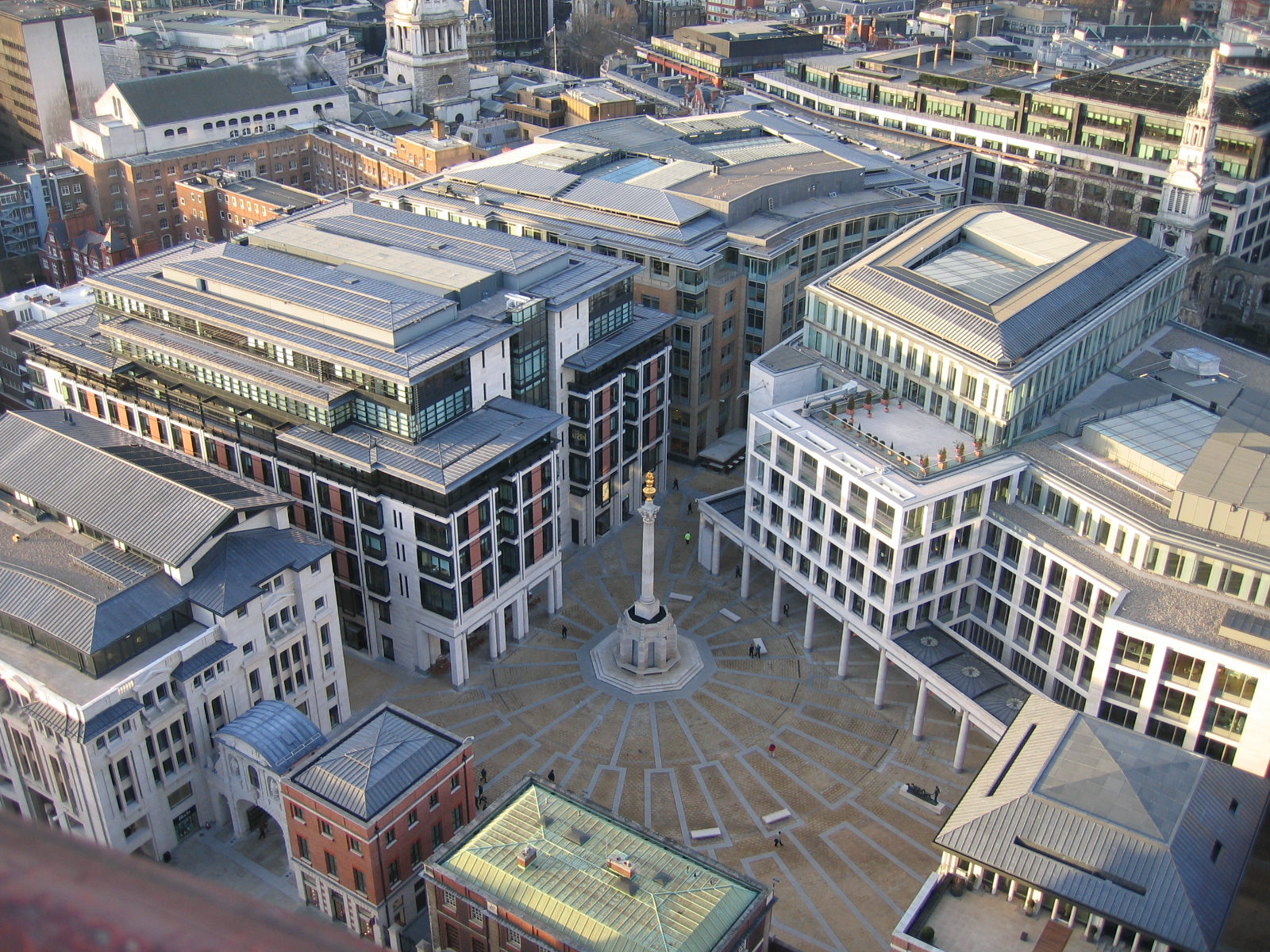
Many times, wandering around Canary Wharf or other similar developments (such as Paternoster Square near St Pauls) I feel almost resentful that in the midst of many areas in this wonderful city, there is nothing to do but eat and shop. Very few benches, almost no green space but a multitude of signs reminding me that this is privately owned land and that I must at all costs obey the directions of the ubiquitous security guards who patrol the courtyards and wield their authority.
Paternoster Square – a cathedral to consumerism next to St Paul’s Cathedral
To reiterate, I am not against any of these new developments – no Price Charles, I. I love the new architecture that is changing the face of London, and many of these new precincts have helped to revive struggling areas – the new Westfield shopping centres in Shepherds Bush and Stratford, for example.
But an insufficient balance has been struck in recent years, and given the current anti-establishment and (to some degree) anti-capitalist feeling currently roiling the country, it does not speak well that many of London’s newest, shiniest developments – with rare exceptions – serve as pure consumerist temples, with no civic heart.
As I was browsing The Spectator website earlier today, I noticed a link to a piece from their archives, an article written to mark the consecration of the newly built Coventry Cathedral on 25 May 1962, half a century ago:
Coventry Cathedral was a temporary spiritual home for me during my time studying at nearby Warwick University, particularly during my second year when the university forced us into off-campus housing in the city. Though I converted to Roman Catholicism at the age of eighteen, I quickly grew to love the Anglican service of Choral Evensong, which I would sometimes attend first at my college in Cambridge and later while studying at Warwick. Though these periods were not anything approaching a high water mark in my ebbing and flowing faith, I do have very fond memories of attending Choral Evensong in these places, and feeling closer to God when I did so.
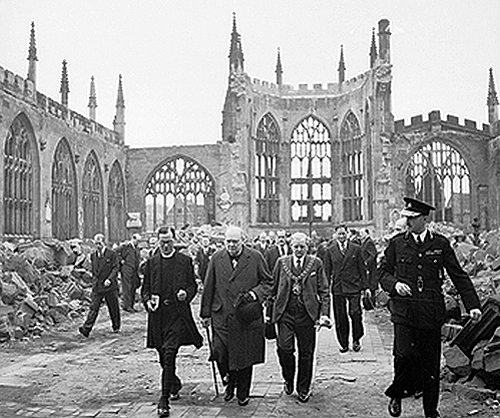
Coventry Cathedral is a particularly inspiring place. You can walk from the still, quiet, grey remains of the old Cathedral (largely destroyed during the Coventry Blitz on 14th November 1940) to the beautifully designed and lit tranquility of the new building, and the feeling when doing so is quite remarkable.
Prime Minister Churchill views the remains of the old Cathedral
The thoughts of the Spectator’s reviewer are worth quoting at some length:
As I stood just inside the glazed ‘west’ wall of Coventry Cathedral, beneath John Hutton’s gaily engraved angels — running, jumping and standing still — I was stunned by the richness of John Piper’s baptistery window, the absolute rightness of the Sutherland tapestry which fills the whole wall behind the altar and the simplicity and serenity of the ‘great barn’ itself — Sir Basil Spence’s own words — in which, from the main entrance, they are the only immediately visible works of art.
It would have been shattering enough simply to see the live version of the building I had admired in models and drawings for several years; it was much more disturbing to hear it. Just by chance, as I approached the cathedral it had been completed — by being filled with music. I cannot remember a more moving experience. With my hand still on one of the tiny bronze door knobs, sculpted as a child’s head by Epstein, I was hit simultaneously by shapes, colours and sounds — the fourteen slender pillars of reinforced concrete which suspend the timber- and-concrete vaulted canopy beneath the roof; the perpetual sunshine that bursts from the centre of deeper colours in the eighty-four-foot-high Piper window, and the familiar hymn tune which reached me — as I reminded myself in an effort to keep emotion in its place — by courtesy of Mr. David Lepine (performing with four manuals and seventy-three speaking stops) aided by acoustic slabs of cork and Weyroc, placed high above the vaulting, and the sound-absorbent surfaces of Sutherland’s Christ in Glory.
I half hoped that by turning my mind towards technical achievements of this kind I would suppress the urge to go away without having the impertinence to write a single word of adverse criticism about the cathedral. So I tore my thoughts away from the simple beauty of the font (a scooped-out boulder from the Holy Land) and Ralph Beyer’s superbly carved lettering on the white stone panels that flank the nave, and tried very hard to see the cathedral as an elegant box of functional tricks. But I had to give in. This is a great and humbling building — a building in which trivial criticisms merely make the critic himself feel trivial. Of course it is a box of functional tricks; but every trick is inspired and designed to help the real user of the building. This is a machine for Worshipping in — a cathedral built round the Communion service.
The ruins of the old Cathedral seamlessly morph into the new building designed by Sir Basil Spence
I like that phrase, “a machine for worshipping in”. I find that it describes very well the utility and efficiency of the building and its contents, as well as the streamlined, modern beauty of the furnishings and commissioned artworks. To my (very) amateur architecture enthusiast mind, Spence’s design epitomises the very best of mid-century architecture. Given the era in which it was commissioned, designed and built, the new cathedral could so easily have been a drab grey brutalist building (not that I object to all of those, but more on that in another blog post), one of many that were being enthusiastically erected up and down the country.
Light streams in through the stained glass of the baptistry window
I will always remember one occasion, one of the first times that I attended evensong at Coventry cathedral. Attendance was particularly light that particular Sunday evening, so one of the Deacons beckoned me from my normal seat in the Nave to sit in the row of seats behind the choir on the raised platform at the front of the church as they sometimes did when there were few attendees. Once I had been guided to my new, front-seat location, however, the Deacon was distracted by some other issue and neglected to tell any of the other arriving congregation members to follow my lead. Soon there was a small gaggle of twenty or so elderly parishioners sitting in their normal places in the Nave, and then me, sitting on the raised section behind the choir, with one of Sir Basil Spence’s soft spotlights gently highlighting my solitude.
And then the organ started to play.
The choir and ministers started to process through to their places from the back of the church, and as they got closer to me, I realised with growing alarm that two of the lead celebrants were walking down the same row that I was sitting on. Was I supposed to move out of their way, or stay there, or acknowledge them or ignore them? I decided to ignore them, and stood there like a lemon while the two men in pointy hats took up position next to me behind the choir. They didn’t seem to be put out at my presence so I figured that maybe I was okay. Not so much.
It wasn’t that anything bad happened; it’s just that in much the same way as you wouldn’t necessarily expect or want to be strapped in next to the pilot for the duration of a commercial flight from London to Paris, neither would you want to be sitting right next to the con-celebrant of a choral evensong service, between him and the congregation, in a large cathedral, when you are not that familiar with the order of service, and haven’t quite mastered the basics of when to stand up and sit down. That’s all I’m saying.
The following week I sat far enough back in the regular seats that the Deacon would not notice me before the service and invite me to “come on down”.
Anyway, enough of rambling anecdotes. I am out of practice at blogging and I’m pretty sure that I need an editor.
But let me close this post by wishing a very happy 50th birthday and a long life ahead to an old friend.









 Semi-Partisan Politics